WorldPath AIWORLDPATH•AI
Europe

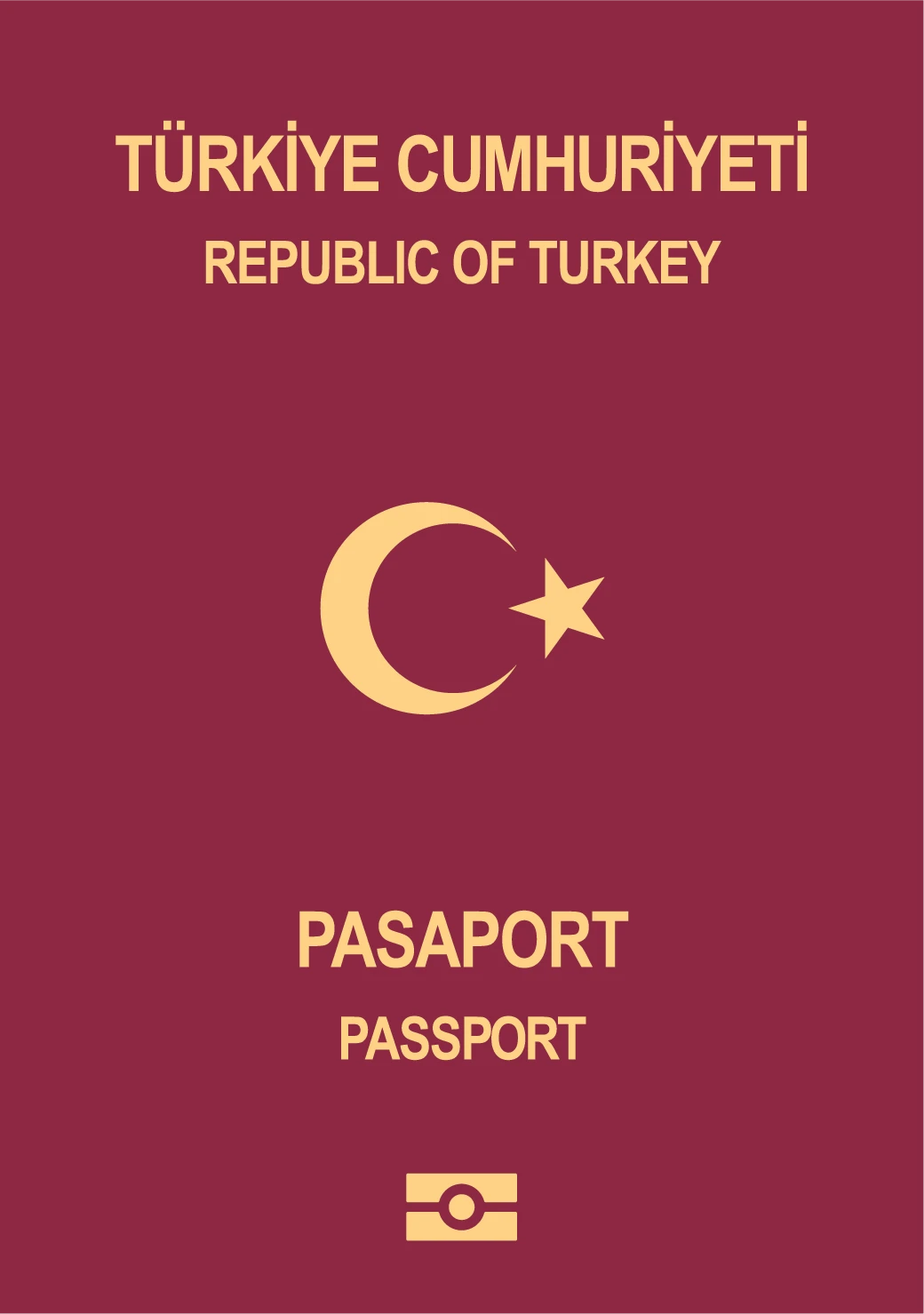
Turkey Passport

Ranked #45 Globally

The Turkey passport is a mid-tier travel document that opens a wide arc of Asia, the Middle East, the Balkans, and Latin America while still asking its holders to apply for a visa to most of Western Europe. In 2026 it ranks #45 worldwide, giving citizens visa-free or visa-on-arrival entry to 113 countries and territories. Turkey sits on two continents at once — its largest city, Istanbul, straddles Europe and Asia — and the passport mirrors that in-between position. It is also one of the few passports a person can obtain quickly through investment, often in well under a year, rather than waiting years to naturalise. Turkey allows dual citizenship, so new citizens keep their original nationality. This page explains how strong the passport really is, where it lets you travel freely, and the two routes to holding one.

45th
Global Ranking
113
Destinations
56.78
Mobility Score
Turkey Passport - Passport Power 52nd | worldpath.ai WRI

Turkey Passport Global Mobility Context

Turkey is a founding member of (the North Atlantic Treaty Organization, a 32-country defence alliance) and a member of the (the group of twenty major economies). It has been a candidate to join the (European Union, the bloc of 27 European states) since 1999, though those talks have stood still since 2018. These memberships give the passport diplomatic weight, even if they bring no free movement across Europe.

The passport's real strength is its reach into Asia and the wider region rather than into the West. Holders travel without a prior visa to much of Central Asia, the South Caucasus, the Balkans, and the Gulf, plus Japan, South Korea, Singapore, and Malaysia. Turkey also runs one of the world's largest diplomatic networks, with more than 250 embassies and consulates, so citizens abroad are rarely far from help with a lost document.

On security, the document is a biometric ePassport. A contactless chip inside stores the holder's photo and personal-page data, and it follows the (International Civil Aviation Organization) 9303 standard — the shared rulebook that lets airport e-gates worldwide read a chip in seconds. Turkey introduced this chip on 1 June 2010 and moved to a third-generation booklet on 25 August 2022, each step making the document harder to forge.
The Electronic Visa (e-Visa) Application System was launched on 17 April 2013 by the Ministry of Foreign Affairs of the Republic of Turkiye.

Turkey Passport at a Glance

Global rank (2026)

#45 worldwide in 2026, a mid-table position. Turkey sits near peers such as the Gulf states and several Latin American countries on the same band of global mobility.

Visa-free destinations

113 countries and territories visa-free or with a visa on arrival. The list is strong across Asia, the Balkans, the Middle East, and Latin America, but excludes most of Western Europe.

Document type

Biometric ePassport with a contactless chip that airport e-gates read. Turkey rolled out its first biometric passport on 1 June 2010 and its current third-generation design on 25 August 2022.

Page count

The standard booklet carries 60 pages, more than the typical 32-page document, leaving generous room for visa and entry stamps over a decade of travel.

Languages

Personal details are printed in Turkish and English, with French labels reflecting the long international convention for travel documents. The chip follows global aviation standards so machines abroad can read it.

Adult validity

Ten years for adult holders, which is the longest validity period international rules allow, so renewals come around only once a decade.

Child validity (under 16)

Up to five years for holders under 18, the shorter term used because a child's facial features change as they grow and the photo must stay current.

Dual citizenship

Allowed without limit. Turkey lets citizens hold other nationalities at the same time, so foreign nationals who naturalise do not have to give up the passport they already carry.

Issuing authority

The General Directorate of Civil Registration and Citizenship (in Turkish, Nufus ve Vatandaslik Isleri, or ), part of the Ministry of Interior. Embassies and consulates issue passports to citizens living abroad.

History

Turkey's modern passport law dates to 1950. The country joined the biometric era on 1 June 2010 and issued its latest chip-secured design from 25 August 2022.

Turkey Passport Visa-Free Destinations by Region

Regional Mobility

Economic Mobility Score: 56.78%Country GDP: 1.32%
Visa Exceptions
Turkey's reach is strongest in Latin America, Asia, and the Middle East. Europe scores low because the 27-state Schengen Area requires a visa; only non-Schengen states such as the Balkans, Ukraine, and Moldova are visa-free.

The five questions a Turkish traveller asks most have mixed answers. Japan, South Korea, and Singapore are open without a prior visa. The Balkans — Serbia, Albania, Bosnia, Montenegro, North Macedonia, and Kosovo — are all visa-free, making weekend trips easy. The Gulf state of Qatar admits Turkish citizens for 90 days. But the two most-requested Western destinations, the (the borderless travel zone covering most of Europe) and the United Kingdom, both require a visa applied for in advance.

Americas

Latin America is unusually friendly to the Turkey passport. Brazil and Argentina each grant 90 days visa-free, and Mexico admits Turkish citizens for up to 180 days with an electronic travel card. Much of the Caribbean is open too: the Bahamas allows an extended stay, Antigua and Barbuda gives 180 days, and several smaller islands wave the visa requirement. North America is the gap — the United States, Canada, and Mexico's neighbours to the north all require a visa secured before departure, so a New York or Toronto trip needs paperwork that a Buenos Aires trip does not.

Europe

Europe is where the Turkey passport is weakest, and it is the single biggest reason the document sits mid-table. The Schengen Area's 27 member states — Germany, France, Spain, Italy, the Netherlands, and the rest — all require Turkish citizens to apply for a visa first, with appointment waits and refusal rates that frustrate students and business travellers. The visa-free European map is instead the non-Schengen ring: Albania, Belarus, Bosnia, Georgia, Kosovo, Moldova, Montenegro, North Macedonia, Serbia, and Ukraine. For a country that has been an (European Union) membership candidate since 1999, the absence of free movement into the bloc is a daily reality, not a technicality.

Asia-Pacific

This is the passport's strongest region after Latin America. The post-Soviet states of Central Asia and the South Caucasus are wide open: Azerbaijan and Kyrgyzstan give 90 days, Georgia a full 360 days, and Kazakhstan and Uzbekistan 30 days each. Further east, Japan and South Korea each grant 90 days, Singapore 30, Malaysia three months, and Thailand and Indonesia admit Turkish visitors on arrival. Hong Kong and Macao are open as well. Mainland China, however, still requires a visa arranged in advance, as do India and Australia — so the Asia-Pacific map is generous but not complete.

Middle East

Turkey's regional ties show clearly here. Qatar admits citizens for 90 days, Iran and Jordan for three months each, and Lebanon issues a free entry permit at the border. Oman and Bahrain are reachable on arrival or through a quick electronic permit. These are short hops from Istanbul or Ankara and matter for the large numbers of Turkish citizens who work, trade, or have family across the Gulf and the Levant. A handful of neighbours still ask for a visa in advance, so it is worth checking the specific country before flying.

Africa

Africa has opened up alongside Turkey's expanding presence on the continent. North African neighbours across the Mediterranean — Morocco, Tunisia, and Egypt — are within easy reach, and Turkish citizens enter many sub-Saharan states either visa-free or with a visa issued on arrival, among them Kenya, Rwanda, Mauritius, the Seychelles, and several southern-African nations. The reach reflects the airline links and trade ties Turkey has built across Africa over the past two decades. As always with on-arrival rules, confirm the current fee and any electronic-permit step before departure.

Offshore Jurisdictions

For internationally mobile holders, several offshore and island financial centres are reachable without a prior visa, including the Bahamas and the British Virgin Islands, plus a spread of Caribbean islands that grant generous stays. These are the jurisdictions that matter to people who bank, incorporate, or hold property internationally. The list is solid for a mid-tier passport, though it is narrower than what top-ranked European or Asian documents unlock, so a holder planning offshore travel should map their specific destinations rather than assume blanket access.

Where a Visa Is Still Required

  • The Schengen Area — all 27 member states require a visa applied for before travel, the passport's largest single gap.
  • The United Kingdom and Ireland — both require a visa secured in advance.
  • The United States and Canada — both require a visa, though Turkey's 1954 commerce treaty opens the US E-2 investor route.
  • Australia and New Zealand — entry requires an electronic visa or visa arranged before departure.
  • Mainland China, India, and Russia — each requires a visa obtained ahead of the trip.

How to Get a Turkey Passport

1

Get a Residence Permit (or Invest)

There are two doors to a Turkey passport, and they split at the very first step. The ordinary door is to move to Turkey on a residence permit. Turkey issues short-term residence permits for reasons such as work, study, family ties, or simply renting a long-term home, and these permits are what start the clock toward citizenship by naturalisation.

The faster door skips residence entirely: citizenship by investment (, a programme that grants nationality in exchange for a qualifying economic contribution). Turkey's CBI route asks for one of several investments held for three years. The headline option is buying real estate worth at least USD 400,000 — a figure raised from USD 250,000 in June 2022. Alternatives include a USD 500,000 bank deposit, a USD 500,000 fixed-capital business investment, or creating jobs for at least 50 people. Investors do not need to live in Turkey or pass a language test, and a spouse and children under 18 are included.

Most readers will use one door or the other, not both. The residence route suits people who want to actually live in Turkey; the investment route suits people who want the passport quickly and can commit the capital.

2

Build Your Residency Time

This step applies to the ordinary naturalisation route, not the investment route. To naturalise, a foreign national must live in Turkey legally and continuously for five years before applying. The five years are counted back from the application date.

Continuity matters. An applicant may not spend more than a total of 180 days outside Turkey across the whole five-year window, or the clock can reset. The authorities are looking for evidence that a person genuinely intends to settle — a home, ties, and a steady presence — rather than a permit held on paper. Investors taking the route skip this step entirely, because the law treats their qualifying investment as the basis for citizenship and asks for no minimum residence.

3

Apply for Citizenship

Ordinary applicants who have completed five years of residence file for naturalisation with the General Directorate of Civil Registration and Citizenship (in Turkish, Nufus ve Vatandaslik Isleri, or ), the body inside the Ministry of Interior that decides citizenship. They must show good character, enough Turkish to handle daily life, and the means to support themselves and their family. A health check rules out conditions that pose a public-health risk.

Investors apply on a different track. Once their qualifying investment is confirmed by the relevant ministry, they move through a residence-permit-then-citizenship sequence that is handled largely in parallel and does not require the five-year wait or the language test. Both tracks end with a government decision granting Turkish citizenship. Because Turkey permits dual nationality, an approved applicant keeps any citizenship they already hold and need not renounce it.

4

Apply for the Passport

Citizenship comes first; the passport is the document that proves it for travel. Once a person is a Turkish citizen, they apply for the biometric passport through the General Directorate of Civil Registration and Citizenship, booking an appointment to give fingerprints and a photo. Citizens living abroad apply at a Turkish embassy or consulate instead.

The booklet issued is the third-generation biometric design in use since 25 August 2022, valid for ten years for adults and up to five years for those under 18. The chip inside follows international aviation standards, so the new citizen can use automated e-gates at airports that accept chipped passports. Investors who took the fast route reach this step the soonest — the whole journey from investment to passport in hand often takes well under a year.

Turkey's investment route is prominent enough to deserve a closer look on its own, because it is the reason many people hold the passport at all. It is a (citizenship-by-investment) programme — nationality granted in return for a qualifying economic contribution — and it is among the fastest in the world, frequently completing in roughly three to six months from a clean application.

The legal basis sits in Turkey's citizenship regulation, amended by presidential decree. The most-used option is real estate: buy property worth at least USD 400,000 and keep it for three years before reselling. That threshold was raised from USD 250,000 in June 2022 to steer the programme toward higher-value investors. Other qualifying routes, each also held for three years, include a USD 500,000 bank deposit in a Turkish bank, a USD 500,000 fixed-capital business investment, a USD 500,000 holding in government bonds or approved funds, or creating jobs for at least 50 Turkish workers.

What sets this route apart is what it does not ask for. There is no minimum residence period, no language test, and no requirement to live in Turkey before or after. A spouse and children under 18 are included in a single application. Because Turkey allows dual citizenship, investors keep their existing nationality. One practical caveat: this is a real-estate-driven programme, so currency swings in the Turkish lira and movements in the property market affect the true cost and the eventual resale value — points an investor should weigh before committing.

Comparison of Turkey Passport With Other Top Passports

Passport

Rank

Visa-free

Key edge

Singapore Passport

#1

192

Top-ranked passport — the visa-free benchmark

France/Italy/Spain/Greece Passports

#4

185

EU passports with full European free movement

United Arab Emirates Passport

#2

187

Regional peer in the wider Middle East

Antigua and Barbuda/Grenada Passports

#24

154

Investment-citizenship peers that cost less but rank lower

United States Passport

#10

179

Largest economy; the E-2 treaty route Turkey can use

Set beside other passports, the Turkey document is a clear mid-tier performer: stronger than its rank suggests for Asia and Latin America, but held back in Europe. The comparisons below show where it leads and trails.

Turkey vs the top-ranked passports. A top passport such as Singapore's reaches around 190 destinations visa-free, against Turkey's 113. The gap is almost entirely Western: Singapore unlocks the , the United Kingdom, and the United States without advance visas, while Turkish holders apply for all three. Turkey narrows the gap close to home, where Central Asia and the South Caucasus are easier for its citizens than for many higher-ranked holders.

Turkey vs an passport. This is the starkest contrast. A passport from an EU (European Union) state such as France, Italy, Spain, or Greece carries the right to live, work, and study in any of the 27 member states, plus visa-free US entry. The Turkey passport carries none of that European free movement, and its holders still need a Schengen visa. Turkey has been a membership candidate since 1999, but with talks frozen since 2018 the gap is wide.

Turkey vs investment and regional peers. Among passports won by investment, Turkey competes with Caribbean programmes such as Antigua and Barbuda's and Grenada's, which cost less but rank lower and lack its regional depth. Against the United Arab Emirates, a regional peer, Turkey trails slightly on destination count but offers a quicker path. Its edge here is the US E-2 investor visa, opened by a 1954 treaty — a route Caribbean-passport holders lack.

Pros and Cons of the Turkey Passport

Pros7 strengths
Cons7 frictions
  • 01Eligibility
    Investment Route to Citizenship in Months, Not Years
    Citizenship by investment can complete in roughly three to six months, far faster than the five-year naturalisation route or most countries' investment programmes.
    Fast CBI
  • 02Rights
    Keep Your Existing Nationality
    Turkey allows dual citizenship without limit. Foreign nationals who naturalise or invest do not have to renounce the passport they already hold.
    Dual OK
  • 03Standing
    Strategic Position Between Europe and Asia
    Turkey straddles two continents, and the passport reflects it — deep access east and south even where Western access is limited.
    2 continents
  • 04Mobility
    Strong Reach Across Asia, the Gulf, and Latin America
    Visa-free or visa-on-arrival to 113 destinations, including Japan, South Korea, Singapore, the Balkans, Qatar, Brazil, and Argentina.
    113 dest.
  • 05Mobility
    Access to the US Treaty Investor Visa
    A 1954 commerce treaty lets Turkish citizens apply for the US E-2 investor visa to run a business in the United States — a route most passports lack.
    US E-2
  • 06Validity
    Decade-Long Validity and a Roomy 60-Page Booklet
    Adult passports are valid ten years, the international maximum, and the standard booklet has 60 pages for stamps — renewals come only once a decade.
    10-yr book
  • 07Eligibility
    Investment Route Skips Residence and Language Tests
    The investment path asks for no minimum residence and no Turkish-language test, and includes a spouse and children under 18 in one application.
    No language
  • 01Mobility
    Most of Western Europe Requires a Visa
    Turkish citizens must apply in advance for a Schengen visa to enter the 27-state zone, with long appointment waits and notable refusal rates. This is the passport's biggest gap.
    Schengen visa
  • 02Standing
    No EU Free Movement Despite Candidate Status
    Turkey has been an EU (European Union) membership candidate since 1999, but accession talks have been frozen since 2018, so there is no right to live or work in the bloc.
    EU frozen
  • 03Cost
    Investment Threshold Raised to USD 400,000
    The real-estate investment minimum rose from USD 250,000 to USD 400,000 in June 2022, with a mandatory three-year holding period before resale.
    USD 400k
  • 04Cost
    Currency and Inflation Volatility
    The Turkish lira has seen sharp swings and high inflation. Because the investment route is property-led, currency moves affect the real cost and the resale value of the asset.
    Lira swings
  • 05Mobility
    Mid-Tier Global Mobility
    At #45 worldwide, the passport ranks below top European and Asian documents and unlocks far fewer Western destinations than higher-ranked peers.
    #45 mid
  • 06Mobility
    Major English-Speaking Hubs Need Visas
    The United Kingdom, United States, Canada, and Australia all require a visa arranged before travel, so business and study trips there need advance paperwork.
    UK/US/CA
  • 07Eligibility
    Slow Ordinary Naturalisation
    Without investment, naturalisation needs five years of continuous residence with under 180 days spent abroad, plus a Turkish-language and good-character review.
    5-yr route

Dual Citizenship and the Turkey Passport

Turkey places no cap on holding other nationalities. A person can be a Turkish citizen and a citizen of one or more other countries at the same time, which is why the investment route is attractive to people who have no wish to surrender their birth passport.

There is a rule that surprises new dual citizens at the border. When entering or leaving Turkey, a dual national is expected to use the Turkish passport — the country treats them first and foremost as its own citizen. Showing the foreign passport at a Turkish gate can cause confusion or delay.

Travelling elsewhere, a dual citizen chooses whichever passport gives the smoother entry. For a trip to Japan or Brazil, the Turkish passport works visa-free; for a trip into the , the other passport — if it is an (European Union) or other strong document — avoids the visa the Turkish one would need. Carrying both and picking the right one at each border is normal practice.

One thing to check is military service. Turkey has compulsory service for male citizens, and male dual nationals should confirm their status and any exemption or deferral rules with a Turkish consulate before travelling, as obligations can apply regardless of where a person lives.

Final Assessment

The Turkey passport is best understood as a regional powerhouse with a global gap. For travel across Asia, the South Caucasus, Central Asia, the Gulf, and Latin America, it is genuinely strong — often stronger in practice than its #45 rank implies, since those 113 destinations include places many higher-ranked passports cannot reach as easily. Its weakness is the West: no visa-free Schengen Area, United Kingdom, United States, or Canada, and no EU free movement at all.

On cost and speed, the two routes could not be more different. The ordinary route is slow but cheap — five years of living in Turkey, then naturalisation. The investment route is fast but capital-heavy — from USD 400,000 in property held three years, with citizenship often in three to six months and no residence or language requirement.

For the internationally mobile, the passport earns its place as a second nationality rather than a primary travel document for Western trips. Its standout features are speed of acquisition, dual-citizenship freedom, and the rare US E-2 investor route opened by a 1954 treaty. The honest trade-offs to watch are lira volatility, the three-year property lock, and the Schengen visa requirement that no amount of investment removes.

Turkey Passport FAQ

How much does Turkish citizenship by investment cost all-in?

The minimum investment is $400,000 in real estate. Total all-in costs for a single applicant range from $415,000 to $425,000, including title deed tax (~4%), government processing fees (~$574), residence permit, passport fees ($165/person), and legal fees ($3,000–$10,000). For a family of four, expect $425,000–$450,000 total. Alternative routes via bank deposit, bonds, or funds start at $500,000.

How long does it take to get Turkish citizenship by investment?

Turkish citizenship by investment typically takes 3 to 6 months from a complete application submission to passport issuance. No residency in Turkey is required during the process. There is no language test, cultural exam, or interview. The job creation pathway may take slightly longer — 4 to 8 months — due to business verification requirements.

Can I get a US E-2 Investor Visa with Turkish citizenship?

Yes. Turkey has an active E-2 Treaty Investor Visa agreement with the United States, making Turkish citizenship one of the few CBI passports that unlocks US market access. The E-2 visa allows Turkish citizens to live and work in the US by investing in a US business, with 60-month validity and indefinite renewals. Turkey also qualifies for the E-1 Treaty Trader Visa — the only CBI country with both.

Does Turkey allow dual citizenship?

Yes. Turkey fully permits dual and multiple citizenship under Article 44 of Turkish Citizenship Law No. 5901. There are no restrictions, reporting requirements, or limitations. US, UK, and EU nationals can acquire Turkish citizenship without affecting their existing passport. German residents of Turkish origin can now also hold both nationalities following Germany's citizenship reform effective June 27, 2024.

What countries can Turkish passport holders visit visa-free?

Turkish passport holders have visa-free or visa-on-arrival access to 113 destinations, including Japan, Singapore, South Korea, Malaysia, Brazil, Argentina, Chile, Colombia, and most of the Balkans. However, Turkish citizens require visas for all 27 Schengen/EU states, the US, UK, Canada, Australia, and New Zealand. Africa offers the broadest access with 45+ countries through visa-free, visa-on-arrival, or eVisa arrangements.

How does Turkey CBI compare with Caribbean citizenship programs?

Turkey offers full citizenship in 3–6 months at $400,000 — comparable in cost to St. Kitts or Grenada but with a fundamentally different value proposition. Caribbean passports reach more destinations (St. Kitts: 156, Grenada: 147 vs Turkey: 113), and include Schengen/UK access. However, Turkey delivers what no Caribbean program can: citizenship in a G20 economy, NATO membership, tangible real estate assets, and E-2 Treaty access to the United States.

Is the Turkish passport worth it for investors?

For the right investor profile, yes. The Turkish passport delivers exceptional ROI for entrepreneurs from non-E-2 Treaty countries (India, China, Pakistan, Russia) seeking US business access, investors wanting income-generating real estate in a major economy, and families needing a NATO-backed passport for banking and geopolitical credibility. It is not the strongest passport by visa count — but it is the most strategically positioned citizenship-by-investment option in the world.

What is the Turkish passport ranking in 2026?

In 2026, the Turkish passport ranks 46th on global passport rankings, granting visa-free or visa-on-arrival access to 113 destinations. Turkey climbed six places between 2024 and 2025, from 52nd to 46th. While the ranking remains below major Western passports, the Turkish passport offers unique strategic value: it is the only citizenship-by-investment passport from a NATO member and G20 economy.