WorldPath AIWORLDPATH•AI
Americas
Offshore Jurisdictions

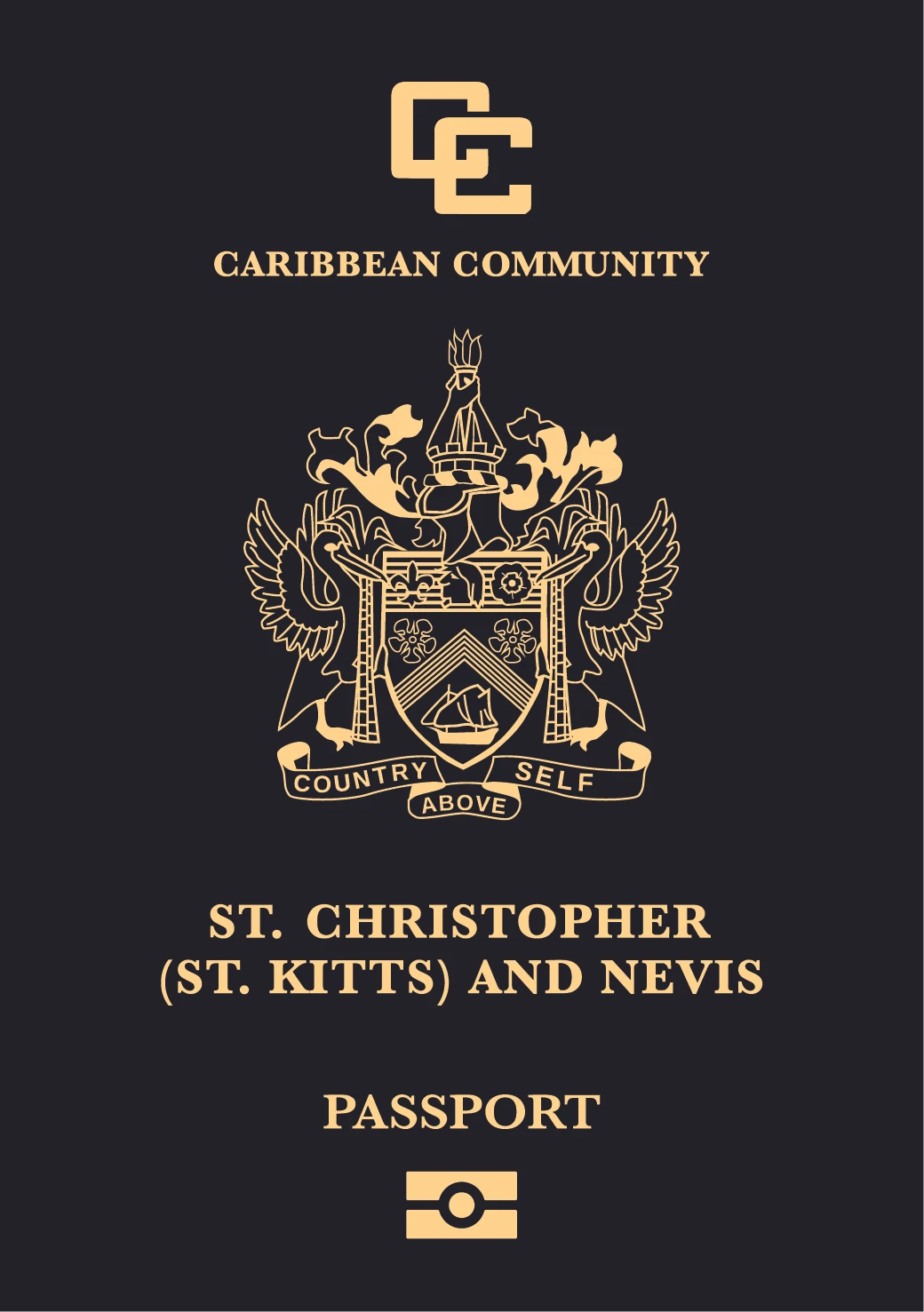
St. Kitts and Nevis Passport

Ranked #19 Globally

The St. Kitts and Nevis passport is one of the strongest documents a small nation issues. In 2026 it ranks #19 worldwide and lets holders enter 157 countries and territories without arranging a visa first, or with a quick visa-on-arrival. That list includes the (the borderless travel zone covering most of Europe), the United Kingdom, Singapore, Hong Kong, and most of South America. The country is a two-island federation in the eastern Caribbean and a member of (the Caribbean Community, a 15-nation regional bloc). It runs the world's oldest citizenship-by-investment route, opened in 1984, which lets approved applicants become citizens by making a qualifying financial contribution rather than living there for years. The federation allows dual citizenship and charges no tax on personal income, wealth, or inheritance.

19th
Global Ranking
157
Destinations
78.89
Mobility Score
St Kitts and Nevis Passport - Passport Power 25th | worldpath.ai WRI

St. Kitts and Nevis Passport Global Mobility Context

The strength of this passport comes from a long list of friendly borders, not from a large economy. St. Kitts and Nevis is one of the smallest countries on earth by population, yet its passport ranks #19 worldwide in 2026 and opens 157 destinations. That gap between size and reach defines it.

Most of the value sits in Europe. Holders enter the (the borderless travel zone covering most of Europe) for 90 days in any 180-day period, plus the United Kingdom and Ireland for short visits. Citizens also move freely among fellow (Organisation of Eastern Caribbean States) islands.

The document meets modern security rules. The federation joined the (International Civil Aviation Organization) Public Key Directory in September 2024 — the shared system airports use to confirm a passport chip is genuine at electronic gates. Its newest booklet uses a polycarbonate (hard plastic) data page that resists forgery, and from 14 April 2026 the government collects fingerprints and a facial scan from applicants.

Behind the travel benefits is the investor route that built the country's reputation. Opened in 1984, it is the oldest programme of its kind anywhere. For applicants who pass background checks, it is a legal path to a second citizenship without years of residence.
Established in 1984, the St. Kitts and Nevis Citizenship Programme is the world's first and most trusted Citizenship Programme initiative.

St. Kitts and Nevis Passport at a Glance

Global rank (2026)

#19 worldwide in 2026, the strongest passport of any Caribbean nation that offers a citizenship-by-investment route. Rank reflects how many places the holder can enter without a prior visa.

Visa-free destinations

157 countries and territories visa-free or with visa-on-arrival in 2026, including the 27-nation , the United Kingdom, Singapore, Hong Kong, Brazil, and most of South America.

Document type

Biometric ePassport with an electronic chip. It is also a (Caribbean Community) passport, sharing a common regional design used across member states.

Page count

Standard booklet of 32 pages, the common format for an ordinary passport used for tourism and business travel.

Languages

English, the official language of St. Kitts and Nevis. English-only printing keeps the document readable at borders worldwide without translation.

Adult validity

10 years for adult holders before renewal is required. A long validity period means fewer renewal trips and lower lifetime cost per year.

Child validity (under 16)

5 years for children, shorter than the adult term because a child's photo and appearance change quickly as they grow.

Dual citizenship

Permitted. St. Kitts and Nevis does not ask new citizens to give up an existing nationality, so holders may keep their original passport.

Issuing authority

The Government of St. Kitts and Nevis issues the passport through its passport office; investor applications are handled by the Citizenship by Investment Unit ().

History

An independent nation since 19 September 1983 and the home of the world's first citizenship-by-investment route, launched in 1984 under its Citizenship Act.

St. Kitts and Nevis Passport Visa-Free Destinations by Region

Regional Mobility

Economic Mobility Score: 78.89%Country GDP: 0.0011%
Visa Exceptions
Europe is the strongest region (Schengen plus the UK and Ireland), but a paid ETIAS form is planned from late 2026. The Americas score is high on South America and the OECS, yet the United States and Canada still require a visa.

A St. Kitts and Nevis passport reaches 157 destinations in 2026 without a prior visa or with a visa given on arrival. The headline wins for most holders are Europe's , the United Kingdom, Singapore, Hong Kong, and almost all of South America. The notable gaps are the United States, Canada, and Australia, which each require a visa or pre-clearance arranged before travel.

Americas

Travel across Central and South America is wide open. Brazil, Argentina, Chile, Colombia, Peru, and Ecuador admit holders without a visa for tourism, usually for 90 days. Closer to home, St. Kitts and Nevis belongs to the (Organisation of Eastern Caribbean States), so its citizens move freely among Antigua and Barbuda, Dominica, Grenada, Saint Lucia, and Saint Vincent and the Grenadines. The clear exceptions are the United States and Canada: both require a visa applied for in advance, though Canadians who hold a prior Canadian visa may use the simpler electronic travel authorisation route. For an island nation, the two largest North American economies remain the main missing pieces.

Europe

Europe is the centre of this passport's power. Holders enter the Schengen Area — the 27-country borderless zone — for up to 90 days in any 180-day period, covering France, Germany, Italy, Spain, the Netherlands, and the Nordic states. The United Kingdom grants stays of up to six months, and Ireland admits holders without a visa. From late 2026 the European Union plans to require (European Travel Information and Authorisation System) for visa-free visitors — a quick paid online form, not a visa, valid for three years. Russia is also visa-free for 90 days, which is unusual among strong passports and a small extra benefit here.

Asia-Pacific

Asia gives this passport some of its most useful long-haul access. Singapore admits holders for 30 days and Hong Kong for 90 days, two of the region's main business hubs. South Korea is reachable through its electronic travel authorisation, valid for short stays. Several Southeast Asian destinations, including Indonesia and Malaysia, allow visa-free or visa-on-arrival entry. The clear gap is mainland China, which still requires a visa for most visits. Australia and New Zealand also require entry to be arranged in advance through their online systems, so the Pacific is reachable but needs paperwork first.

Middle East

Coverage here is partial and worth checking before each trip. Several Gulf and Middle Eastern destinations grant a visa on arrival or a quick electronic visa to St. Kitts and Nevis holders, while others still ask for a visa arranged in advance. Because rules in this region change often and depend on the exact purpose of travel, holders should confirm the current requirement with the destination's embassy close to departure rather than relying on a fixed list.

Africa

Africa is mostly an on-arrival region for this passport. A good number of destinations, including popular ones for tourism and safari, issue a visa on arrival or accept an electronic visa applied for online before the trip. Visa-free entry without any form is less common across the continent. As with the Middle East, requirements shift frequently, so the safe approach is to confirm the rule for the specific country and travel date in advance.

Offshore Jurisdictions

Holders reach the Caribbean and Atlantic financial centres that matter to globally mobile families. The British Virgin Islands and the Cayman Islands admit St. Kitts and Nevis citizens for tourism, and Bermuda and the Turks and Caicos Islands are reachable as well. Because the country sits inside the Caribbean itself, much of this network is effectively local travel, which makes regional banking, property, and family trips simpler than for holders of a passport based outside the region.

Where a Visa Is Still Required

  • United States — a visa must be applied for in advance; there is no visa-waiver arrangement for St. Kitts and Nevis citizens.
  • Canada — a visitor visa is required, though holders with a prior Canadian visa may qualify for the simpler electronic travel authorisation.
  • Australia and New Zealand — entry must be arranged in advance through each country's online visa or travel-authorisation system.
  • Mainland China — a visa is required for most visits, with only narrow visa-on-arrival options for specific cities.
  • Parts of the Middle East and Africa — several destinations require a visa obtained before travel; confirm the current rule for each country and trip.

How to Get a St. Kitts and Nevis Passport

1

Choose an Investment Route

Most people who hold a St. Kitts and Nevis passport without family ties to the islands get it through the citizenship-by-investment () route — the legal path to citizenship in exchange for a qualifying financial contribution. There is no requirement to live in the country first, which is what sets this route apart from ordinary immigration. The first decision is which investment option to use.

The main option is the Sustainable Island State Contribution (). It is a one-time, non-refundable payment to a government fund. From 2026 the minimum is USD 250,000 for a single applicant or a family of up to four people, with set amounts added for each extra dependent. The SISC replaced an earlier fund, the Sustainable Growth Fund, on 27 July 2023.

The alternative is real estate. Applicants may buy an approved property from USD 325,000 (for a share in a designated development) or USD 600,000 for a qualifying private home, holding it for a set number of years before resale. A separate Public Benefit Option, also from USD 250,000, channels the investment into an approved national development project. Across all routes the federation set a regional price floor of USD 200,000 in July 2024 to stop programmes undercutting each other on price.

2

Pass Due Diligence and Apply

Every applicant goes through a background check before approval. The Citizenship by Investment Unit () — the government office that runs the programme — orders independent vetting on each person aged 16 and over. This step looks at the source of the money, criminal records, and any security concerns, and it is the reason the process is not simply a purchase.

Applications are filed through an authorised local agent, not directly by the individual. The agent prepares the file, which includes identity documents, police certificates, medical forms, and proof that the investment funds are legitimate. Government and due-diligence fees are paid at this stage, on top of the investment itself.

Standard processing usually takes several months. Applicants in a hurry may use the Accelerated Application Process (), which targets a decision in about 60 days for an extra fee of USD 25,000 per applicant. Since 2023 the federation has tightened its checks repeatedly, and from 14 April 2026 applicants must also give fingerprints and a facial scan as part of the file.

3

Receive Citizenship and the Certificate

If the application is approved, the government issues a certificate of registration, the legal proof of citizenship. For investor applicants this confirms citizenship without any need to have lived in the country. A 30-day minimum stay over five years was proposed in 2025 but has not taken effect, so as of 2026 there is no residency requirement attached to the investor route.

People with St. Kitts and Nevis parents or grandparents follow a different path. They apply for citizenship by descent, proving the family link with birth and marriage records. That certificate can take up to about six months to issue. Either way, the certificate of citizenship is the document needed before a passport can be requested.

St. Kitts and Nevis allows dual citizenship, so new citizens are not asked to give up another nationality. The certificate is also the basis for the country's tax position: it charges no personal income, wealth, or inheritance tax, and taxes only income earned inside the country.

4

Apply for the Passport

With a certificate of citizenship in hand, the holder applies for the passport itself through the government's passport office. The application captures the photo and, from 14 April 2026, the biometric data — fingerprints and a facial image — that the new electronic passport stores on its chip.

The passport issued is a biometric ePassport. Its chip follows the international (International Civil Aviation Organization) standard, the rulebook airports use to read passport chips at electronic gates. The federation joined the ICAO Public Key Directory in September 2024, the shared system that lets foreign borders confirm the chip is genuine.

An adult passport is valid for 10 years and a child's for 5 years. Renewal is a straightforward reapplication near the expiry date. Existing investor citizens who were issued passports before the biometric upgrade are being asked to enrol their biometrics by 2027, so the whole holder base moves onto the new secure document.

St. Kitts and Nevis offers citizenship by descent for people with a close family link to the islands, separate from the investor route. This is the path for those whose roots are in the federation rather than those buying in.

The basic rule is ancestry. A person qualifies if a parent or grandparent was born in St. Kitts and Nevis and held its citizenship. Some guidance extends the link to a great-grandparent, but the parent-or-grandparent line is the clear and commonly used basis. The applicant proves the connection with official birth and marriage certificates tracing back to the citizen relative.

The process runs through the certificate of citizenship. An applicant submits the family documents and, once approved, receives a certificate of registration confirming citizenship by descent. This step can take up to about six months. Only after the certificate is issued can the person apply for the passport.

Because the federation permits dual citizenship, a descent applicant does not have to give up another nationality to claim this one. There is no investment and no residence requirement for the descent route — the qualification is the documented family link alone.

Comparison of St. Kitts and Nevis Passport With Other Top Passports

Passport

Rank

Visa-free

Key edge

Singapore Passport

#1

192

Strongest passport in 2026 — the global mobility benchmark

France/Italy Passports

#4

185

EU citizenship — the right to live and work across 27 states

Antigua and Barbuda Passport

#24

154

Caribbean investor-citizenship peer with a similar route

Portugal Passport

#5

184

Residence-then-citizenship path that takes years, not months

United States Passport

#10

179

Large economy that still requires a visa from this passport

The St. Kitts and Nevis passport is best understood next to two groups: the strongest passports in the world, and its Caribbean neighbours that also offer citizenship by investment. Against the first it gives up Europe's labour rights and some mobility; against the second it edges ahead on reach.

Versus the strongest passports. The top-ranked passport in 2026 reaches about 192 destinations and the leading European Union passports about 185, against 157 here. The bigger difference is rights, not numbers: an (European Union) passport lets the holder live and work in 27 countries, while this one grants only the right to visit Europe, not to settle.

Versus its Caribbean peers. Among the eastern Caribbean nations with investor-citizenship routes — Antigua and Barbuda, Dominica, Grenada, and Saint Lucia — St. Kitts and Nevis holds the strongest passport in 2026, reaching slightly more destinations. All five share a price floor of USD 200,000 set in 2024, so they no longer compete on price. Processing speed, family rules, and reputation now decide between them.

Versus a residence-then-citizenship country. Portugal also leads to a strong passport, but only after years of legal residence and a language test. St. Kitts and Nevis skips that wait, granting citizenship up front with no need to live there. The trade-off is what each unlocks: Portugal gives EU rights, while St. Kitts and Nevis gives broad visa-free travel and a tax-light base, but no right to live in Europe.

Pros and Cons of the St. Kitts and Nevis Passport

Pros7 strengths
Cons7 frictions
  • 01Standing
    The World's Oldest Investor-Citizenship Route
    St. Kitts and Nevis opened the first citizenship-by-investment route in 1984. Four decades of operation give it the longest track record and a settled legal framework that newer programmes lack.
    1984 CBI
  • 02Mobility
    Strongest Passport of Any Caribbean Investor Nation
    Ranked #19 worldwide in 2026 with visa-free or visa-on-arrival access to 157 destinations, the highest reach among eastern Caribbean countries that offer citizenship by investment.
    157 dest.
  • 03Mobility
    Visa-Free to the United Kingdom and the Schengen Area
    Holders enter the 27-country Schengen Area for 90 days in any 180-day period and the United Kingdom for up to six months, covering the bulk of European business and leisure travel.
    UK + Schengen
  • 04Tax
    No Tax on Personal Income, Wealth, or Inheritance
    The federation levies no personal income, wealth, capital gains, or inheritance tax, and taxes only income earned inside the country. This is a core reason mobile families study the passport.
    No income tax
  • 05Rights
    Dual Citizenship Allowed With No Renunciation
    St. Kitts and Nevis does not require new citizens to give up an existing nationality, so holders keep their original passport alongside the new one.
    Dual OK
  • 06Support
    Optional 60-Day Accelerated Processing
    The Accelerated Application Process targets a decision in about 60 days for an added fee of USD 25,000 per applicant, far faster than the multi-year wait of residence-based citizenship.
    60-day AAP
  • 07Descent
    Open Citizenship Route for Descendants
    People with a parent or grandparent born in St. Kitts and Nevis can claim citizenship by descent, with no investment and no residence required — only documented family records.
    By descent
  • 01Mobility
    No Visa-Free Access to the United States
    The United States requires a visa applied for in advance, and Canada requires a visitor visa. The two largest North American economies are the main gaps in the passport's reach.
    No US visa-free
  • 02Rights
    No Right to Live or Work in Europe
    Visa-free entry to the Schengen Area allows visits only. Unlike a European Union passport, this document grants no right to settle, work, or study long-term in Europe.
    No EU rights
  • 03Cost
    Higher Minimum Cost Since the 2024 Reforms
    A regional price floor of USD 200,000 took effect in July 2024, and the main contribution route starts at USD 250,000. The programme is no longer a low-cost option among second citizenships.
    USD 200k floor
  • 04Eligibility
    Tightened Due Diligence and Biometrics
    Background checks have been strengthened repeatedly since 2023, and from 14 April 2026 every applicant must give fingerprints and a facial scan. Approval is conditional on passing these checks.
    Strict vetting
  • 05Mobility
    Lower Reach Than Top-Tier Passports
    At 157 destinations the passport trails the strongest passports, which reach about 185 to 192. For travellers needing the widest possible access, it is a strong but not leading document.
    Weaker than G7
  • 06Support
    Limited Consular Network Abroad
    As a small nation, St. Kitts and Nevis maintains few embassies and consulates worldwide, so citizens may have less in-person government support when travelling than holders of a large-country passport.
    Small network
  • 07Mobility
    Europe Adds a Paid Pre-Travel Form
    From late 2026 the European Union plans to require ETIAS, a paid online authorisation, for visa-free visitors. It is a quick form rather than a visa, but it adds a step and a small fee before each period of travel.
    ETIAS 2026

Dual Citizenship and the St. Kitts and Nevis Passport

St. Kitts and Nevis permits dual and multiple citizenship. A person who becomes a citizen, whether by investment or by descent, is not required to renounce any other nationality. This is a deliberate feature of the investor route, which is designed to add a citizenship rather than replace one.

The practical rule at borders. A dual citizen chooses which passport to show when entering a country. Many holders use the St. Kitts and Nevis passport for visa-free trips to Europe and the Caribbean and their original passport elsewhere. There is no obligation to tell either government which document was used for a given trip.

The tax angle. St. Kitts and Nevis does not tax foreign income, wealth, or inheritance, and citizenship alone does not create a tax bill there. But a citizen who is also a tax resident of another country still answers to that country's rules. Holding the passport does not by itself end any existing tax obligation elsewhere, so professional advice matters before relying on it for tax planning.

Keeping the status. Once granted, citizenship is generally held for life and passes to children, subject to the country's nationality law. Investor citizenship can in principle be revoked if it was obtained through fraud or if serious facts emerge later, which is why the up-front due-diligence step is so thorough.

Final Assessment

The St. Kitts and Nevis passport is the strongest document available through a Caribbean investor-citizenship route, ranking #19 worldwide in 2026 with 157 visa-free or visa-on-arrival destinations. Its biggest strengths are visa-free access to Europe's and the United Kingdom, a tax system with no charge on personal income, wealth, or inheritance, and the credibility of running the world's oldest programme of its kind since 1984.

Its limits are equally clear. The passport gives no visa-free entry to the United States or Canada, no right to live or work anywhere in Europe, and at a minimum cost from USD 250,000 it is no longer an inexpensive option. The 2024 regional price floor and the 2026 biometric and due-diligence rules mean applicants pay more and are vetted harder than in the past. For someone seeking broad visa-free travel, a tax-light base, and a fast, residence-free path to a second citizenship, it is a strong fit; for someone whose top priority is settling in North America or Europe, it is not the right tool.