WORLDPATHWORLDPATH•AI
Europe

Italy Passport

Ranked #4 Globally

Explore the Italy passport strength, visa-free access to 185 destinations, and global mobility ranking.

4th
Current Ranking
185
Destinations
88.5
Mobility Score
13th
Passport Power
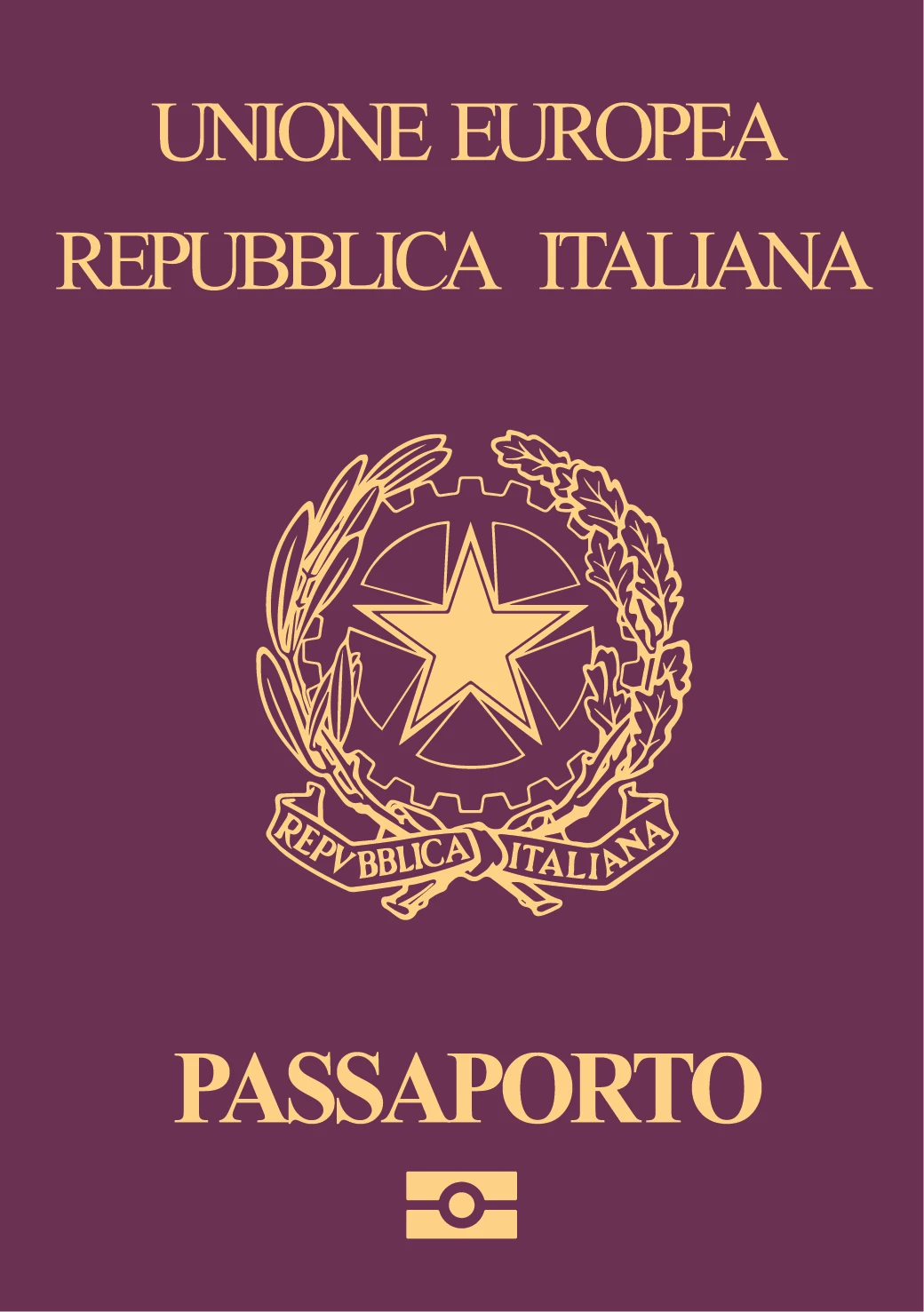
Italy Passport Cover

Geopolitical Value

As of April 2026, the Italian passport ranks 4th on the Henley Passport Index, with access to 185 visa-free or visa-on-arrival destinations — tied with Austria, Belgium, Finland, France, Germany, Greece, Ireland, the Netherlands, and Norway. Italy shares this cluster ranking with nine other EU states, reflecting the European Union's deep visa-liberalisation architecture and its bilateral agreements with virtually every major destination worldwide. On the Passport Index 2026, Italy ranks 13th with a mobility score of 173, reflecting a slightly different methodology that weights visa-free access relative to UNDP HDI scores. The Italian passport has demonstrated extraordinary stability over two decades: Belgium, France, Italy, Luxembourg, Japan, Singapore, Spain, and Sweden have all remained in the same position on the Henley Index over the past ten years, confirming Italy's consistent place at the global summit of travel documents. This stability contrasts sharply with the declining trajectory of historically strong passports like the United States (now 10th at 179 destinations), which has lost ground due to persistent visa-reciprocity imbalances. The Italian passport's geopolitical standing derives from three structural pillars: EU membership (providing Schengen-area freedom of movement, the world's largest single market, and diplomatic weight in bilateral negotiations), NATO alliance membership (conferring security credibility recognised by allied states), and Italy's status as a G7 and founding OECD member — delivering institutional recognition that translates directly into privileged access agreements.

Practical Advantages

Italian passport holders enjoy the broadest practical mobility of any travel document category. Schengen Area freedom of movement is unlimited — Italian citizens can live, work, and settle without restriction across all 29 Schengen states and all 27 EU member states. The passport delivers visa-free access to the United States (ESTA), Canada (eTA), the United Kingdom (ETA from 2024), Australia (ETA), New Zealand (NZeTA), Japan, South Korea, Singapore, Brazil, Argentina, Mexico, and virtually all of Latin America. Access extends to the UAE, Israel, South Africa, Morocco, Tunisia, and dozens of African states under various visa-on-arrival and eVisa arrangements. For investors and business owners, the Italian passport provides market-access depth that no non-EU passport can match: the right to establish and manage companies anywhere in the EU without work permits, to benefit from EU free movement for family members, and to access EU-level protections for assets, contracts, and intellectual property. It is important to state what Italian passport holders do not automatically receive: access to China requires an advance visa (though facilitated visa-on-arrival arrangements exist at some ports), India requires an advance visa, and several Gulf states require advance visas despite strong bilateral relations. However, these represent a small minority of global destinations and do not materially limit the document's practical utility.

Acquisition Pathways

Italy does not offer citizenship by direct investment. The Italian passport is acquired through three legitimate pathways: naturalisation by legal residence, citizenship by descent (Jure Sanguinis), and citizenship by marriage. Naturalisation after legal residence is the most structured pathway for international investors and relocators. Non-EU nationals must complete 10 years of continuous legal residence, holding an uninterrupted valid permesso di soggiorno. EU nationals face a reduced 4-year residency requirement. The full cost breakdown for the naturalisation route involves the initial residence programme (Investor Visa from €250,000 + €3,000–€10,000 legal fees), annual permit renewals (approximately €200–€500 per renewal in government fees), B1 Italian language certification (approximately €300–€600 for the CELI or CILS exam), naturalisation application fee (€250), and total legal support over 10 years (approximately €5,000–€20,000). The total all-in cost for a single investor naturalising via the Investor Visa route over 10 years is approximately €270,000–€540,000, depending on the investment chosen and legal support engaged. Citizenship by descent (Jure Sanguinis) allows direct-line descendants of Italian citizens to claim Italian nationality without any residency requirement, through documented proof of Italian ancestry and an unbroken chain of citizenship transmission. This route has no investment requirement and no language test; applicants simply require genealogical documentation, official translations, and apostilles. Processing at Italian consulates abroad takes 1 to 5 years, depending on jurisdiction. Citizenship by marriage requires 2 years of legal residence in Italy after marriage (or 3 years abroad), B1 language certification, and a clean criminal record.

Value Assessment

The Italian passport's investment thesis is straightforward: it delivers 185-destination access (versus 116–121 for Turkey's CBI passport), unrestricted EU residency and employment rights, and institutional credibility matching any passport in the world — at no direct investment premium beyond the underlying residency programme. For investors comparing the Italian route against Caribbean citizenship-by-investment programmes, the calculus involves time horizon and mobility priorities. St. Kitts and Nevis delivers a 3-month CBI pathway at a $250,000 donation and a passport scoring 156 destinations — faster but with no EU rights and inferior mobility. Grenada offers E-2 Treaty access to the US and 147 destinations in 3–6 months at a similar cost. The Italian route requires 10 years from first residence to passport but delivers a fundamentally superior document: full EU citizenship with permanent settlement rights across 27 member states, EU consular protection globally, and access to EU healthcare, education, and social infrastructure. For investors who have already executed an EU residency programme or who qualify via Jure Sanguinis, the Italian passport represents the highest-value travel document obtainable without an active CBI outlay. The Investor Visa minimum at €250,000 (startup route) makes the 10-year Italian citizenship pathway among the most cost-efficient EU passport routes, cheaper than Malta's CBI (€690,000+ minimum), Portugal's Golden Visa (€500,000 fund minimum, 5-year track), or Greece's pathway (€250,000–€800,000 real estate, 7+ year track).

Dual Citizenship

Italy fully permits dual and multiple citizenship without restriction. There is no requirement to renounce existing nationality upon acquiring Italian citizenship, and Italian citizens who naturalise in a foreign country retain their Italian passport. US nationals, UK nationals, Russian nationals, Indian nationals, and citizens of virtually all countries can acquire Italian citizenship without affecting their existing passports. The only practical exception involves countries that themselves prohibit dual citizenship (such as Singapore and Japan, which require renunciation of foreign citizenship upon naturalisation in those countries) — the restriction lies with the other country, not Italy. For the Jure Sanguinis route, there is no nationality restriction: descendants of Italian emigrants from any country can claim Italian citizenship regardless of their current nationality portfolio.

Final Assessment

The Italian passport is the gold standard for investors who can commit to a 10-year horizon or who qualify via descent. It is the strongest EU passport attainable through a residency-by-investment programme, delivering full EU citizenship rights rather than mere residency. Its ideal holder profile includes high-net-worth individuals seeking permanent EU settlement with full member-state rights, business owners requiring unrestricted EU market access and the ability to employ and establish companies across 27 countries, families seeking EU education and healthcare access for the next generation, and descendants of Italian emigrants who can claim citizenship at zero investment cost through Jure Sanguinis. Compared to Turkey (fast CBI, strong E-2 value but no EU access), Grenada (E-2 access plus 147 destinations, fast but no EU rights), and Portugal Golden Visa (5-year EU residency track but not direct citizenship), Italy offers the highest-quality outcome at a longer timeline. For investors who prioritise the destination over the journey, the Italian passport justifies a decade of commitment.

Frequently Asked Questions