WorldPath AIWORLDPATH•AI
Europe

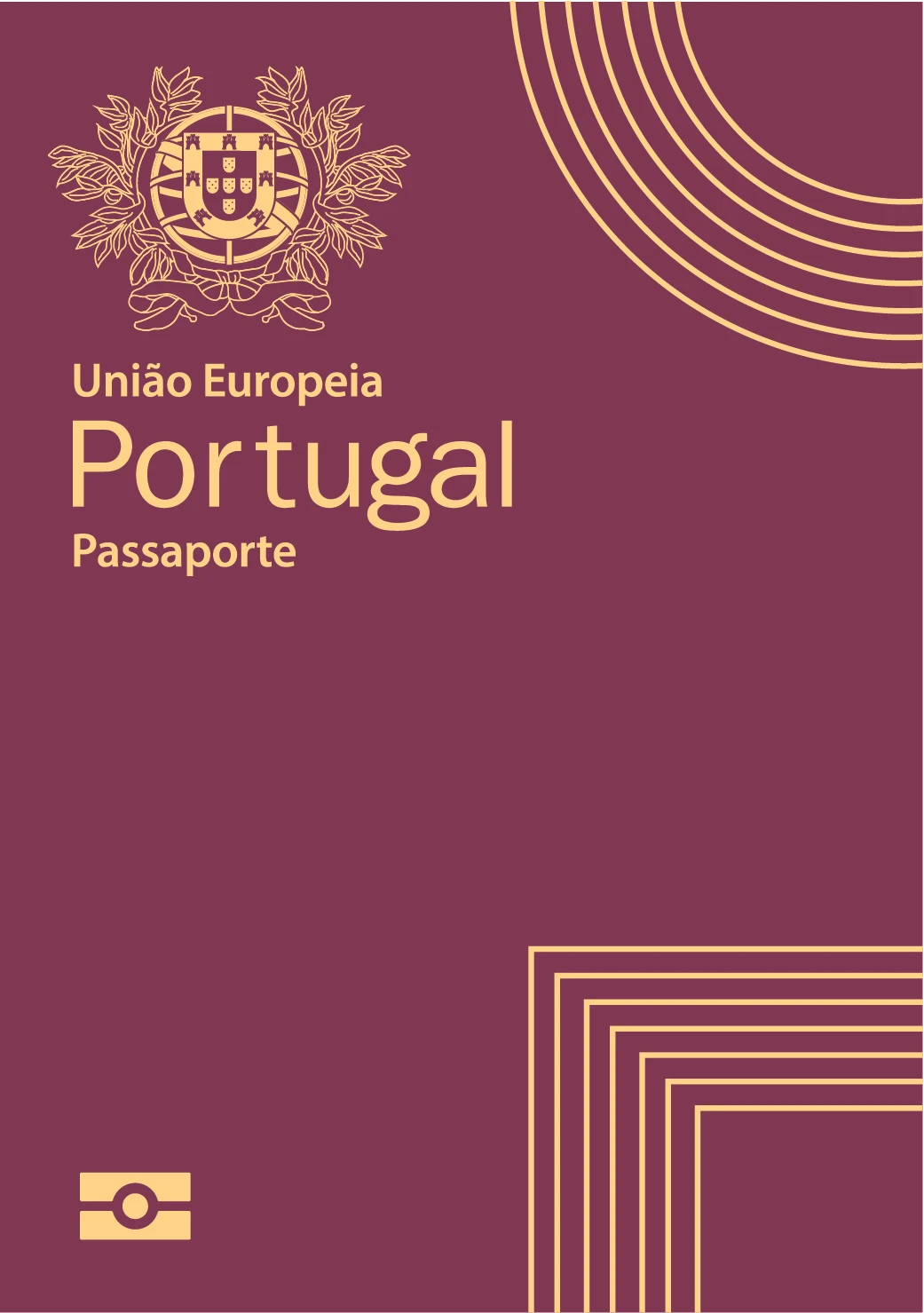
Portugal Passport

Ranked #5 Globally

In 2026, Portugal's passport sits in fifth place worldwide. Its holders can fly to 184 countries either without any visa at all or with a quick visa-on-arrival. That list includes the full (the borderless travel zone covering most of Europe), the United Kingdom, Japan, South Korea, Singapore, Brazil, and — since 1 December 2023 — mainland China. Portugal is a founding member of (the North Atlantic Treaty Organization, a 32-country military alliance), joined the (European Union, a 27-state political and economic union) in 1986, the Schengen Area in 1995, and the Eurozone in 1999. Under Lei Orgânica n.º 1/2026, in force since 19 May 2026, the naturalisation route runs 10 years of legal residence for most foreign nationals and 7 years for citizens of EU member states and countries — a preferential treatment that no other EU passport offers to the Lusophone bloc. The passport is issued only to Portuguese citizens by the Instituto dos Registos e do Notariado (), and Portugal has allowed unrestricted dual citizenship since 1981.

5th
Global Ranking
184
Destinations
94
Mobility Score
Portugal Passport - Passport Power 4th | worldpath.ai WRI

Portugal Passport Global Mobility Context

Portugal anchors a broad diplomatic stack. It is a founding member of (the North Atlantic Treaty Organization, a 32-country military alliance), a member of the (European Union, a 27-state political and economic union) since 1986, the since 1995, and the Eurozone since 1999. Portugal also founded the (Community of Portuguese Language Countries) in 1996 — a lusophone bloc linking Brazil, Angola, Mozambique, Cape Verde, Guinea-Bissau, São Tomé and íncipe, East Timor, and Equatorial Guinea.

Most countries grant Portuguese citizens visa-free entry on arrival. Portugal's diplomatic network runs around 78 embassies and 64 consulates-general abroad. The current Secretary-General is António Guterres, a former Portuguese prime minister, lifting the country's diplomatic visibility further.

Portugal has issued biometric ePassports since 28 August 2006, ahead of most EU peers. The contactless chip follows the 9303 standard (set by the International Civil Aviation Organization) — the rulebook airports use to read passport chips at e-gates. The data page is polycarbonate, a tough plastic harder to forge than the old paper-laminate kind. E-gates at Lisbon, Frankfurt, and Singapore Changi all read the chip natively.


Portuguese nationality is granted under the terms of the Portuguese Nationality Act. Dual nationality is permitted: the acquisition of a foreign nationality does not entail loss of Portuguese nationality, nor does Portugal require renunciation of a foreign nationality on the part of foreigners who wish to acquire Portuguese nationality.

Portugal Passport at a Glance

Global rank (2026)

#5 across major passport indices, tied with Austria, Belgium, Denmark, Ireland, Luxembourg, the Netherlands, Norway, and Sweden.

Visa-free destinations

184 destinations, including the full , the United Kingdom, Japan, South Korea, Singapore, Brazil, and mainland China (visa-free 30 days since December 2023).

Document type

ePassport with contactless biometric chip, compliant with the 9303 standard (the international airport-readable passport rulebook). Biometric ePassports issued since 28 August 2006.

Page count

32 pages standard. No extended option — Portugal does not issue a frequent-traveller variant.

Languages

Portuguese and English on every data page; key sections also translated into French. Bilingual labels match Passport Regulation 2252/2004.

Adult validity

10 years for adults aged 26 and over. 5-year validity issued to adults aged 18-25 to reflect the typical timing of biometric updates.

Child validity (under 16)

5 years for children aged 5-12; 2 years for children under 5. Renewals are required more often than adult passports because biometric features change.

Dual citizenship

Allowed without restriction since 3 October 1981 under Law 37/81 (the Portuguese Nationality Act). No cap on the number of nationalities, and no reporting duty when acquiring another.

Issuing authority

Instituto dos Registos e do Notariado ( — the Institute of Registries and Notaries). IRN handles citizenship and passport issuance; (the Agency for Integration, Migrations and Asylum) handles residence.

History

First modern Portuguese passport issued in 1937. The current -style burgundy biometric design rolled out on 28 August 2006, replacing the older machine-readable booklet.

Portugal Passport Visa-Free Destinations by Region

Regional Mobility

Economic Mobility Score: 94%Country GDP: 0.302%
Visa Exceptions
Europe shows 100% mobility because EU citizenship grants full freedom of movement; Russia and Belarus still require visas. The Asia-Pacific score reflects mainland China being added as visa-free in December 2023 and the broad reach into Southeast Asia and Oceania.

The Portuguese passport opens the labour market in 27 countries, plus visa-free entry to the United Kingdom (6 months), the United States under the Visa Waiver Program via an (Electronic System for Travel Authorization — a US Customs pre-screening, 90 days), Canada via an (Electronic Travel Authorization, 6 months), Japan (90 days), Brazil (90 days, extendable to 180), Singapore (90 days), and mainland China (30 days, visa-free since 1 December 2023). The US ESTA fee rose from USD 21 to USD 40 on 30 September 2025.

Americas

Visa-free across most of the region. The United States grants Portuguese citizens 90 days under the Visa Waiver Program; an ESTA approval is required before boarding. Canada grants 6 months under eTA. All Central American states, every Caribbean nation, and most South American countries — Argentina, Brazil, Chile, Peru, Colombia, Uruguay, Ecuador — grant visa-free entry, typically for 90 days. Mexico allows 180 days. Bolivia switched to visa-on-arrival in late 2024. Cuba issues a tourist card sold by airlines, not a traditional visa.

Europe

Full freedom of movement across the EU. As a Portuguese citizen you can live, work, study, set up a business, or retire in any of the 27 EU member states with no further permits — Berlin one year, Amsterdam the next. The same right extends to the (European Economic Area — the EU plus Iceland, Liechtenstein, and Norway) and Switzerland under a bilateral free-movement agreement. Inside the , Portuguese citizens cross internal borders without passport checks; the national identity card (Cartão de Cidadão) is also accepted for travel between Schengen states.

Outside the EU/EEA, the United Kingdom grants 6 months visa-free for tourism or short business. From 2 April 2025, Portuguese citizens travelling to the UK need a UK ETA (Electronic Travel Authorisation — a short online pre-screening, not a visa). The fee is GBP 16, rising to GBP 20 from 25 February 2026. The non-Schengen Balkans — Albania, Serbia, Bosnia and Herzegovina, North Macedonia, Montenegro, and Moldova — admit Portuguese citizens visa-free for 90 days. Russia and Belarus require full visas.

(European Travel Information and Authorisation System, a short online pre-screening for visa-exempt non-EU visitors entering Schengen) launches in Q4 2026 with a 12-month transitional and grace phase. ETIAS does not apply to Portuguese citizens travelling within Schengen — only to non-EU visitors entering. Similarly, (Entry/Exit System, the EU's biometric border-record platform that replaces passport stamps) is live since 12 October 2025 but applies only to non-EU passport holders crossing Schengen borders.

Asia-Pacific

Most of East and Southeast Asia is open to Portuguese citizens, either visa-free or by a visa-on-arrival stamp. Japan, South Korea, Singapore, and Malaysia allow 90 days. Hong Kong allows 180 days; Taiwan 90 days. Thailand allows 60 days. Indonesia uses visa-on-arrival. Vietnam grants 45 days visa-free for tourism. Sri Lanka uses an ETA. Mainland China became visa-free for Portuguese citizens on 1 December 2023 under a unilateral Chinese pilot policy; the window is 30 days for tourism, business, family visits, and transit, and the pilot was extended through 31 December 2026.

India still requires an e-Visa. Pakistan, Bangladesh, Bhutan, Tajikistan, and Turkmenistan still need Portuguese citizens to file an advance visa. In Oceania, Australia uses an Electronic Travel Authority (ETA) and New Zealand uses an (New Zealand Electronic Travel Authority — its visa-waiver pre-screening). Both are online and approve in minutes. Across the Pacific, Fiji, Samoa, Tonga, and Vanuatu admit Portuguese tourists visa-free for short leisure stays.

Middle East

The United Arab Emirates and Qatar grant Portuguese visitors a 30-day visa-on-arrival on landing. Saudi Arabia issues an e-visa online for tourism and family-visit purposes. Israel allows 90 days visa-free. Jordan and Oman issue Portuguese tourists a visa-on-arrival. Bahrain and Kuwait use an e-visa filed online beforehand. Lebanon allows 1 month visa-free. Iran requires a full visa with extra security checks. Iraq requires advance authorisation for most areas outside the Kurdistan Region.

Africa

Strong reach across the lusophone bloc and beyond. Portuguese citizens enjoy preferential treatment in Angola, Mozambique, Cape Verde, Guinea-Bissau, and São Tomé and íncipe under arrangements. Kenya, Rwanda, and Seychelles grant visa-free entry. Egypt, Morocco, Tanzania, Tunisia, Ethiopia, and Uganda use visa-on-arrival or e-visa. South Africa grants 90 days visa-free. Visa-required destinations include Libya, Sudan, Eritrea, Algeria, and several Central African states.

Offshore Jurisdictions

The Portuguese passport opens the offshore and financial-centre hubs most relevant to internationally mobile holders. The Cayman Islands and Bermuda admit Portuguese visitors for up to 6 months each. The British Virgin Islands and the Bahamas each grant Portuguese visitors a 90-day stay. Jersey, Guernsey, the Isle of Man, and Gibraltar admit Portuguese visitors visa-free under British Crown dependency rules. Mauritius and the Seychelles allow 60 to 90 days. Macao allows 90 days. Hong Kong admits Portuguese citizens for 180 days; Singapore for 90 days. Both also appear under Asia-Pacific as financial hubs.

Where a Visa Is Still Required

  • Russia and Belarus: full visa; consular capacity is limited and processing has slowed since 2022.
  • India: e-Visa, not visa-free entry.
  • China (long stays): the visa-free regime covers 30 days only; longer business or work stays still need a Z-visa or M-visa.
  • Iran, North Korea, Afghanistan, Turkmenistan, Yemen: full visa with extra security checks.
  • Algeria, Libya, Sudan, Eritrea, several Central African states: full visa required.
  • Cuba: a tourist card sold by airlines, not a traditional visa.

How to Get a Portugal Passport

1

Get Permanent Residency

Portugal offers several residency routes that, after a multi-year qualifying period, lead to eligibility for citizenship. The right route depends on your profile.

Golden Visa (Autorização de Residência para Investimento, ). Portugal's residence-by-investment programme. The real-estate route closed on 7 October 2023. Remaining qualifying options: at least €500,000 (roughly USD 583,000) into a -regulated venture capital or private equity fund, €250,000 (€200,000 in low-density areas) to cultural-heritage or artistic-production projects approved by GEPAC, €500,000 to public or private R&D institutions, €500,000 to capitalise or reinforce a Portuguese company while creating 5 permanent jobs, or the no-capital route of creating 10 permanent jobs (8 in low-density areas). Minimum physical presence is 7 days a year — the lowest in the . (Agency for Integration, Migrations and Asylum, since October 2023) is the processing authority.

Passive Income Visa. For applicants with stable passive income (pensions, dividends, rentals). The threshold tracks the Portuguese minimum wage — around €870 per month (USD 1,015) in 2026 for the main applicant, with smaller add-ons for dependants. The holder must spend the bulk of each year in Portugal. The route leads to a five-year residence permit, then permanent residency, then citizenship eligibility under the timelines set by Lei Orgânica n.º 1/2026.

Digital Nomad Visa. For remote workers earning at least four times the Portuguese minimum wage — about €3,480 per month (USD 4,055) from a non-Portuguese employer or client. Available as a one-year stay visa or a two-year residence peligibility for citizenshiprmit. The D8 was introduced in late 2022 and is now widely used.

Tech Visa, , and family routes. Skilled hires of certified Portuguese tech employers can use the Tech Visa. The EU Blue Card covers high-skill professionals, with a Portuguese salary threshold around €42,700 per year (USD 49,755) in 2026. Family sponsorship and student-to-work paths also exist.

The (Non-Habitual Resident) regime that gave new residents a 10-year flat-tax window on foreign income closed to new entrants on 31 December 2023. Its successor, the (Tax Incentive for Scientific Research and Innovation), in force since 1 January 2024, is narrower — limited to qualifying R&D, higher education, certified startups, and certain export-heavy sectors.

2

Build Residency History

Portuguese law now requires ten years of legal residence to apply for citizenship for most foreign nationals — seven years for citizens of the and (Community of Portuguese Language Countries: Brazil, Angola, Mozambique, Cape Verde, Guinea-Bissau, São Tomé and íncipe, East Timor). The clock starts from the date the first residence card is physically issued, not from the application date and not from arrival. Both rules took effect under Lei Orgânica n.º 1/2026, published in the Diário da República on 18 May 2026 and in force from 19 May 2026.

Continuous residence is the formal rule, but absences abroad are tolerated within the limits set by the Portuguese Nationality Act (Law 37/81 as amended by Lei Orgânica n.º 1/2026) and its regulation. Golden Visa holders meet the residency clock with only 7 days physical presence per year, the lowest in the EU. and holders typically spend a majority of the year in Portugal, which is also the threshold for becoming a Portuguese tax resident.

The new timeline does not erase what came before. Nationality applications submitted at the on or before 18 May 2026 continue to be decided under the previous five-year regime, protected by Article 7(2) of the transitional provisions. Golden Visa applicants whose submission fees were paid before that date have a stronger claim on the prior regime; those who applied after it should plan on the 10-year horizon. Permanent residency remains available after five years of legal residence and is unaffected by the citizenship reform — it is a separate immigration status, granted by rather than the IRN.

3

Apply for Citizenship

At the ten-year mark (or seven years for and nationals) you apply for citizenship through (Instituto dos Registos e do Notariado, the Institute of Registries and Notaries). The application is submitted at any Civil Registry Office in Portugal or at a Portuguese consulate abroad.

You need three things. First, proof of the required years of legal residence and a clean criminal record in Portugal, your home country, and any country you lived in for more than a year during the residency period. Second, proof of Portuguese language ability at (Common European Framework of Reference for Languages, lower-elementary level) — typically through the (Certificado Inicial de Português Língua Estrangeira), an official test run by the Camões Institute and Portuguese universities. CPLP-country citizens are exempt from the language test. Third, evidence of a genuine connection to the Portuguese community.

Total processing now runs 24 to 30 months from filing to the final decision because of a multi-year backlog at IRN. Successful applicants take a citizenship oath at a Civil Registry and receive the certificate. There is no civics test like Canada's or the United States' — language is the only formal knowledge requirement. End-to-end, from first residence card to passport in hand, the realistic horizon is now 12 to 13 years for non-EU, non-CPLP applicants and 9 to 10 years for EU and CPLP nationals, factoring in the card-issuance queue and the IRN nationality queue.

4

Apply for the Passport

Once you hold the citizenship certificate, you apply for the passport at a Citizen Shop (Loja do Cidadão), an Espaço Cidadão, or a Portuguese consulate.

You need a valid Cartão de Cidadão (national identity card), one biometric photo taken on site, fingerprints captured at the booth, and the application fee. The standard adult passport fee is €65 (roughly USD 70) for 10-year validity, processed in 6 working days. Premium one-day service costs €100 (roughly USD 116). Express two-day service is €85.

Renewals follow the same flow. Children's passports are €43 standard and require both parents' consent. Lost or stolen passports must be reported to the police before reapplication; the replacement fee is higher.

Portuguese consulates abroad issue passports for citizens resident outside Portugal. Processing times at consulates run longer (4 to 8 weeks) because production is centralised back in Portugal. Diplomatic and service passports are issued separately by the Ministry of Foreign Affairs.

The 4-step route above is for first-generation applicants without Portuguese ancestry. If you have a Portuguese parent, grandparent, or qualifying ancestry, faster paths exist.

Citizenship by descent. A child born outside Portugal to a Portuguese parent is Portuguese at birth, with no residency requirement, under Article 1 of the Portuguese Nationality Act (Law 37/81 as amended). The Portuguese parent registers the birth at a Portuguese consulate or civil registry; the child receives a certificate and can apply for a passport at any age. Descent extends to grandchildren (third generation) provided the grandparent never lost Portuguese nationality and the applicant either lives in Portugal or shows ties to the Portuguese community.

Sephardic Jewish descent. Law 30-A/2015 created a special naturalisation route for descendants of Portuguese Sephardic Jews expelled by the 1496 royal decree. The original rules accepted broad documentary and rabbinical evidence; tens of thousands of applications were filed between 2015 and 2022. In September 2022 the regime was tightened by Decree-Law 26/2022, raising the evidentiary bar and adding stricter community-link tests. Further amendments in 2024 narrowed processing further. Applications filed before the September 2022 tightening continue to be processed under the prior rules; new applications now face a much higher hurdle. Total processing for new applications runs 18 to 36 months, often longer where additional documents are requested.

Marriage and partnership. After 3 years of marriage or registered partnership with a Portuguese citizen, the foreign spouse can apply for citizenship without needing to live in Portugal, provided they show genuine ties. Adoption by a Portuguese citizen grants citizenship from the date of adoption.

The applicant in any of these routes does not need to live in Portugal for the descent or marriage paths. Once citizenship is granted, the passport is issued under the standard adult-passport process.

Comparison of Portugal Passport With Other Top Passports

Passport

Rank

Visa-free

Key edge

Singapore Passport

#1

192

Top-ranked passport

Germany Passport

#4

185

Top EU peer with broader global mobility

Spain Passport

#4

185

Iberian peer with comparable residency tools

Hungary Passport

#6

183

EU peer with lower-cost residence-to-citizenship route

United Kingdom Passport

#7

182

Former EU neighbour; English-speaking common-law peer

Ranks reflect 2026 global passport indices. Visa-free counts cross-checked against public data, including Wikipedia's Visa requirements for Portuguese citizens page.

Portugal vs the top tier (Germany, France, Italy, Spain). All five passports share the same EU rights — live, work, study, retire across 27 member states plus Iceland, Liechtenstein, Norway, and Switzerland. Mobility scores are similar (184 to 189 visa-free destinations across this group). For new applicants from outside the EU and , Portugal's standard naturalisation timeline is now 10 years (7 years for EU and CPLP nationals), in line with Spain and Italy. The structural advantages remain the CPLP network and unrestricted dual citizenship, 8 years in Germany, and 5 years in France. The other distinct edge is the CPLP network — preferential treatment of Portuguese citizens in Brazil, Angola, Mozambique, and the lusophone states is unavailable through any other EU passport.

Portugal vs the United States. The US passport offers slightly fewer visa-free destinations (around 180) but a much larger consular network. The bigger split is tax. The US taxes its citizens on worldwide income no matter where they live; Portugal taxes by residency. A Portuguese citizen who establishes non-resident status pays no Portuguese tax on foreign-source income. A US citizen pays (Internal Revenue Service) tax on the same income from Lisbon, Singapore, or Mexico City. US-Portuguese dual citizens face annual US filing, (Foreign Bank Account Report) disclosure of Portuguese accounts over USD 10,000, and (Foreign Account Tax Compliance Act) reporting at bank level.

Pros and Cons of the Portuguese Passport

Pros7 strengths
Cons7 frictions
  • 01Rights
    Live And Work Across 27 EU States
    A Portuguese passport carries full EU (European Union) citizenship, so you can settle, work, study, or retire in any of the 27 member states with no extra permit. From this Atlantic edge of Europe the same right reaches inland to Berlin or Amsterdam without paperwork.
    EU mobility
  • 02Mobility
    Visa-Free Or Easy Entry To 184 Places
    Holders reach 184 destinations without a prior visa, including the full Schengen Area, the United Kingdom, Japan, Singapore, Brazil, and mainland China (30 days, visa-free since December 2023).
    184 visa-free
  • 03Standing
    Sits In The Global Top Five For 2026
    Portugal ranks #5 across the major 2026 passport indices, tied with Austria, Belgium, Denmark, Ireland, Luxembourg, the Netherlands, Norway, and Sweden. That puts it among the strongest documents in the world.
    Ranked #5
  • 04Mobility
    Preferential Access In Lusophone Nations
    As a founder of the CPLP (Community of Portuguese Language Countries), Portugal gives its citizens preferential treatment across Brazil, Angola, Mozambique, and other Portuguese-speaking states. No other EU passport opens this lusophone network.
    CPLP ties
  • 05Eligibility
    Seven-Year EU/CPLP Route To Citizenship
    New applicants from EU member states and CPLP countries can naturalise after 7 years of legal residence — a meaningful discount on the standard 10-year route that applies to most other nationalities. France and Germany sit at 5 years, Spain and Italy at 10, so Portugal is neither the fastest nor the slowest in the EU, but the CPLP preference is structurally unique.
    7-yr EU/CPLP
  • 06Rights
    Unrestricted Dual Citizenship Since 1981
    Portugal has allowed multiple nationalities without limit since 1981 under the Nationality Act (Law 37/81). There is no cap on how many passports you hold and no duty to report acquiring another.
    Dual OK
  • 07Validity
    Ten-Year Adult Passport With Secure Chip
    Adults aged 26 and over get a 10-year passport. The biometric ePassport, issued since 2006, uses a tough polycarbonate data page and a chip built to the ICAO 9303 standard that airport e-gates read worldwide. ICAO is the International Civil Aviation Organization.
    10-year
  • 01Eligibility
    Portuguese Language Test To Naturalise
    Citizenship applicants must pass a Portuguese-language exam at CEFR Level A2, a basic-conversational standard. CEFR is the Common European Framework that rates language ability from A1 up to C2.
    A2 language
  • 02Eligibility
    Citizenship Queue Runs Two-Plus Years
    Even with the 7-year residence rule, the IRN (Institute of Registries and Notaries) processing queue adds roughly 24 to 30 months at the citizenship stage, so the end-to-end timeline is closer to 6 to 8 years.
    IRN backlog
  • 03Tax
    Old Tax Break Wound Down In 2024
    The Non-Habitual Resident (NHR) regime that gave new residents reduced tax has closed to new entrants. Its successor, the IFICI incentive, is far narrower and targets specific skilled professions.
    NHR closed
  • 04Eligibility
    Naturalisation Rules Are Politically Exposed
    Portugal's standard naturalisation period was extended from 5 to 10 years (7 years for EU and CPLP nationals) under Lei Orgânica n.º 1/2026, in force since 19 May 2026, after a December 2025 Constitutional Court ruling sent an earlier version back to Parliament for revision. The Golden Visa investment routes themselves were tightened in October 2023. New applicants should plan against the current 7/10-year framework, not the 5-year regime in older guides.
    Rules shift
  • 05Validity
    Children Renew Far More Often
    Children aged 5 to 12 get only a 5-year passport, and those under 5 just 2 years, because biometric features change as a child grows. Families face more frequent renewals than the 10-year adult cycle.
    5-yr children
  • 06Descent
    Sephardic Route Tightened Since 2022
    The special naturalisation route for descendants of Sephardic Jews was narrowed by a 2022 decree-law and tightened again in 2024, raising the evidence bar. New filings now face a much higher hurdle and 18 to 36 months of processing.
    Descent only
  • 07Document
    No Extended Booklet For Frequent Flyers
    The standard passport has 32 pages and Portugal issues no extended frequent-traveller variant. Travellers who fill pages with stamps must renew the whole booklet sooner.
    32 pages

Dual Citizenship and the Portuguese Passport

Portugal has allowed unrestricted dual citizenship since 3 October 1981, when Law 37/81 (the Portuguese Nationality Act) came into force. There is no cap on the number of nationalities a Portuguese citizen may hold. There is no reporting duty when you acquire another nationality, no annual disclosure, and no formal renunciation requirement when becoming Portuguese.

The operational rule at the border is straightforward: Portuguese citizens enter and leave Portugal on the Portuguese passport or Cartão de Cidadão. Showing a foreign passport at a Portuguese border crossing is permitted but creates extra checks. Inside the , internal borders typically have no passport control; the Cartão de Cidadão covers travel between member states.

Outside Portugal, a dual citizen picks the passport that fits each trip — visa-free reach versus the other country's entry rules. The Portuguese passport is the stronger choice in most destinations where Portugal outranks the alternative — almost everywhere outside states. Entering a country where your other citizenship is local is the exception: use the local passport. Brazil specifically requires Brazilian citizens to enter Brazil on a Brazilian passport, even if they also hold Portuguese citizenship; many CPLP states follow the same rule for their nationals.

Cross-citizenship tax catch. The United States is unusual here: it taxes its citizens on worldwide income for life, no matter where they live. Portugal taxes only residents. US-Portuguese dual citizens file annually with the (the US Internal Revenue Service), disclose Portuguese bank accounts over USD 10,000 under (Report of Foreign Bank and Financial Accounts), and live with (Foreign Account Tax Compliance Act) reporting at the bank level. Cross-border tax counsel is the norm for this group. Most other dual combinations — UK-Portuguese, German-Portuguese, Brazilian-Portuguese — face no equivalent worldwide tax conflict.

Bottom Line on the Portugal Passport

The Portuguese passport stands among the world's strongest. It ranks 5th globally in 2026 with 184 visa-free destinations. It carries full (European Union) labour and residence rights — the most valuable single mobility asset in international relocation. It comes with the shortest standard naturalisation route in the EU at five years, an unrestricted dual-citizenship regime since 1981, and a CPLP network that no other EU passport replicates.

The cost in time and money is moderate by EU standards. The Golden Visa fund route runs about USD 583,000 plus government and legal fees over the five-year qualifying period, with only 7 days a year of physical presence. The and routes carry no investment minimum but require the applicant to live in Portugal most of the year. Total time to passport in hand is 6 to 8 years end-to-end for new applicants, mostly because of the 24 to 30-month processing queue at the citizenship stage.

Headline advantages for the mobile holder: a top-5 passport, EU freedom of movement, residence-based tax with no worldwide-citizen liability, the lowest physical-presence requirement of any EU residence route, unrestricted dual citizenship, the CPLP gateway into Brazil and lusophone Africa, and visa-free 30 days in mainland China since December 2023. Adults aged 26 and over get a 10-year passport; the 5-year version for younger adults reflects biometric refresh cycles, not weaker rights.

Honest trade-offs. The tax regime is closed; the successor is narrower. The Golden Visa rules changed in October 2023 and remain politically exposed — a parliamentary bill to lengthen naturalisation from 5 to 10 years was vetoed in December 2025, but the policy direction is contested. The Sephardic descent route was tightened from 2022 onward. (European Travel Information and Authorisation System) does not affect Portuguese citizens since they are EU nationals, but the IRN backlog at the citizenship stage is real and not improving quickly. Applicants who can lock in current rules now reduce risk.

Portugal Passport FAQ

What is the Portugal passport ranking in 2025/2026?

The Portuguese passport ranks #5 globallyon global passport rankings (January 2026), granting visa-free or visa-on-arrival access to184 destinations. It consistently ranks among the world's top passports alongside Germany, France, Italy, and Spain — placing it firmly in the elite tier of global travel documents.

Is the Portugal Golden Visa still available in 2025/2026?

Yes — the Portugal Golden Visa (ARI) remains fully active. Real estate investment routes were eliminated in October 2023, but the program is thriving: 4,987 permits were granted in 2024 (+72% year-on-year). The primary route today is a €500,000 investment in CMVM-regulated funds. Cultural heritage donations from €250,000 are also eligible.

How long does it take to get Portuguese citizenship through the Golden Visa?

Portuguese citizenship via Golden Visa takes 5 years from the date of application — the fastest EU citizenship-by-investment timeline available. Spain takes 10 years, Italy 10 years, and Greece 7 years with mandatory full-time residency. Physical presence required is just 7 days per year.

What is the minimum investment for Portugal Golden Visa?

The minimum investment is €250,000 via a cultural heritage donation, or €500,000 via qualifying investment funds (the most popular route, used by ~78% of applicants). Real estate is no longer eligible. All-in costs for a single applicant taking the fund route range from €550,000 to €600,000.

Does Portugal allow dual citizenship?

Yes — Portugal allows unrestricted dual and multiple citizenship under Law No. 37/81. There are no renunciation requirements, reporting obligations, or conditions. US and UK citizens can become Portuguese without any conflict. Note: Indian and Chinese nationals should verify their home country's position, as neither country recognizes dual citizenship.

Which countries can I visit visa-free with a Portuguese passport?

Portuguese passport holders enjoy visa-free or visa-on-arrival access to 184 destinations, including the United States (ESTA), Canada (eTA), UK (ETA), Japan (90 days), China (30 days, through Dec 2026), Brazil, Singapore, Australia (eVisitor), UAE, and all 27 EU/Schengen countries. Visas are required for approximately 14 countries, including India, Russia, and North Korea.

Can I travel to the US with a Portuguese passport without a visa?

Yes — Portuguese passport holders enter the United States under the Visa Waiver Program (VWP) via ESTA authorization. This allows stays of up to 90 days for tourism or business. The ESTA fee is approximately $40 (increased from $21 in September 2025). Additionally, Portuguese nationals qualify for E-1 and E-2 Treaty visas under the AMIGOS Act (signed December 2022).

Can I get a Portuguese passport without living in Portugal?

Yes — through the Golden Visa, holders only need to spend 7 days per year in Portugal during the 5-year residency period. Citizenship by descent and citizenship by marriage also require no residency. Only standard naturalization and D7/D8 visa routes require significant physical presence (minimum 16 months per 2-year permit period).