WorldPath AIWORLDPATH•AI
Abstraction background for Plan B for Family
Europe

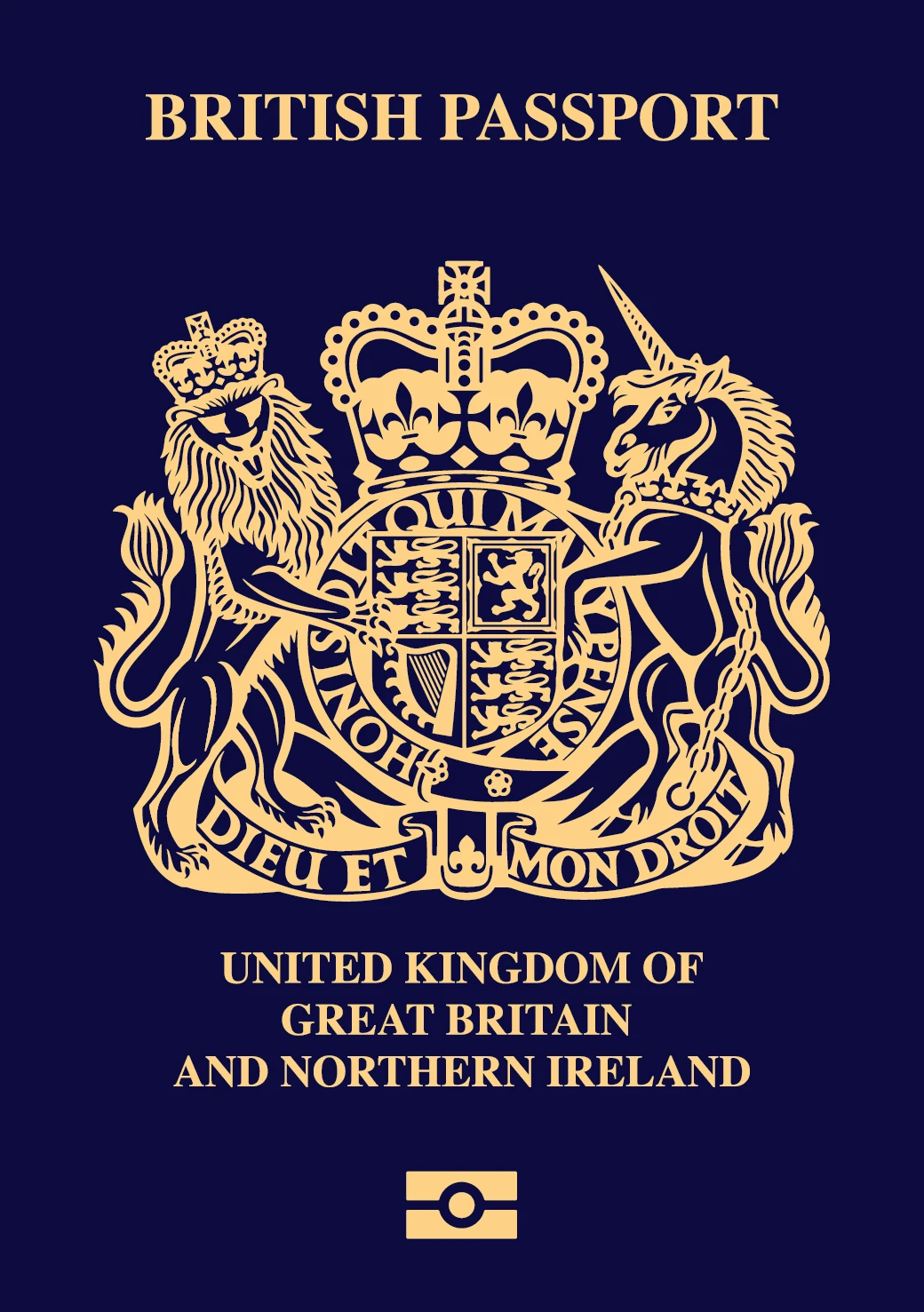
United Kingdom Passport

Ranked #6 Globally

In 2026, the United Kingdom passport sits in sixth place worldwide, tied with Hungary and Poland. Its holders can travel to 184 countries either without any visa at all or with a quick visa-on-arrival. That list covers the (the borderless travel zone covering most of Europe), the United States under the Visa Waiver Program, Japan, South Korea, and — from 17 February 2026 — mainland China for 30 days. Britain taxes its residents, not its citizens worldwide, which is the standard model in the (Group of Seven leading industrial democracies). The British passport is issued only to British citizens by (His Majesty's Passport Office). The UK closed its Tier 1 Investor route on 17 February 2022, so there is no buy-a-passport path. Brexit ended automatic free movement to the (European Union) on 31 December 2020.

6th
Global Ranking
184
Destinations
89.45
Mobility Score
United Kingdom Passport - Passport Power 6th | worldpath.ai WRI

United Kingdom Passport Global Mobility Context

The United Kingdom belongs to the (Group of Seven leading industrial democracies), (the North Atlantic Treaty Organization, a 32-country defence alliance), the (Organisation for Economic Co-operation and Development), the Commonwealth, and the United Nations. The country is a permanent member of the Security Council with veto power. Those memberships and the UN seat shape how border officers in every region read the British document.

Most countries grant British citizens visa-free entry on arrival. The Foreign, Commonwealth and Development Office runs roughly 280 diplomatic posts in over 160 countries — one of the largest consular networks worldwide, second only to the United States. That reach translates into how seriously border officers treat the document.

The UK has issued biometric ePassports since 6 February 2006. The current Series C generation rolled out from 10 March 2020 with a blue cover that replaced the burgundy -era design. The data page is polycarbonate (a hard plastic harder to forge than paper laminate). The chip follows 9303 (International Civil Aviation Organization standard used at airport e-gates worldwide). The cover reads 'His Majesty' since King Charles III acceded in September 2022.
HM Passport Office is the sole issuer of UK passports and responsible for civil registration services through the General Register Office.

United Kingdom Passport at a Glance

Global rank (2026)

#6 across major passport indices, tied with Hungary and Poland at 184 destinations

Visa-free destinations

184 destinations, including the entire , the United States, Japan, South Korea, and mainland China (from 17 February 2026 until 31 December 2026)

Document type

ePassport with a contactless biometric chip, 9303 compliant (the international rulebook airports use at e-gates), standard since 6 February 2006

Page count

34 pages standard; a 50-page jumbo book is available for frequent travellers at extra cost

Languages

English, with translations into French, Welsh, Scottish Gaelic, Irish, and Spanish across the inside pages

Adult validity

10 years from the date of issue, the only adult option since 10 September 2018

Child validity (under 16)

5 years only; families with young children renew passports twice as often as adults

Dual citizenship

Allowed without limit since the British Nationality Act 1948, with no cap and no duty to notify the Home Office

Issuing authority

His Majesty's Passport Office (), an executive agency of the Home Office

History

Earliest known British safe-conduct in 1641; first machine-readable passport in 1988; biometric ePassport in 2006; blue post-Brexit redesign issued from 10 March 2020

United Kingdom Passport Visa-Free Destinations by Region

Regional Mobility

Economic Mobility Score: 89.45%Country GDP: 3.73%
Visa Exceptions
Europe shows 98% — visa-free across the entire Schengen Area plus Ireland under the Common Travel Area, with Russia and Belarus the main exceptions still requiring visas. Asia-Pacific reach grew on 17 February 2026 when mainland China granted British citizens 30-day visa-free entry.

British citizens enter most of the world without a prior visa, but a few large markets have moved or are about to move from stamp-on-arrival to a quick online pre-screening. Schengen Europe stays visa-free for 90 days in any 180, with (European Travel Information and Authorisation System — a short pre-travel form) launching in Q4 2026. The United States allows up to 90 days under the Visa Waiver Program with an approved (Electronic System for Travel Authorization). Mainland China grants 30 days visa-free under a pilot policy in force from 17 February 2026 after the Starmer–Xi summit. Japan and South Korea allow 90 days. Ireland gives British citizens unlimited live-work-study rights under the Common Travel Area.

Americas

Visa-free or visa-on-arrival across most of the region. The United States grants British citizens up to 90 days under the Visa Waiver Program after an approved ESTA. Canada gives 6 months on a quick Electronic Travel Authorization. Mexico allows 180 days, the larger South American countries — Brazil, Argentina, Chile, Colombia, Peru, Uruguay — give 90 days visa-free, and almost every Caribbean state is open without a visa. The main exception in the Americas is Cuba, which since July 2025 requires an eVisa (a short online application that replaced the paper tourist card) rather than the traditional airline-issued tourist card.

Europe

British citizens enter the entire without a visa for stays up to 90 days within any 180-day window. That covers France, Germany, Italy, Spain, the Netherlands, Belgium, Austria, Switzerland, Greece, Portugal, the Nordic countries, the Baltics, and newer additions like Croatia, Bulgaria, and Romania. Outside Schengen, Ireland is fully open under the Common Travel Area, which gives British citizens the right to live, work, and study indefinitely. British citizens also enter the non-Schengen Balkans visa-free: Albania, Serbia, Bosnia and Herzegovina, North Macedonia, Montenegro, and Moldova.

ETIAS is scheduled to launch in Q4 2026 with a six-month transitional period followed by a six-month grace period, so the system effectively becomes mandatory for British travellers in 2027. ETIAS is not a visa. Approval takes minutes for most applicants and costs about €20 (roughly USD 22) for adults aged 18 to 70. Separately, the (Entry/Exit System — the European biometric border-record system that replaces passport stamps for non-European-Union travellers) began phased rollout on 12 October 2025 and has been fully operational across all 29 participating countries since 10 April 2026, with member states permitted to suspend checks temporarily during peak periods. British travellers entering Schengen have their fingerprints and a facial image captured at the first crossing; no separate application is required. Russia and Belarus continue to require a full visa with extra security checks.

Asia-Pacific

Across most of East and Southeast Asia, British citizens enter visa-free or pick up a visa at the airport. Japan, Singapore, and Malaysia allow 90 days. South Korea allows 90 days on a K- (Korea Electronic Travel Authorization). Hong Kong allows 180 days, Taiwan 90 days, Thailand 60 days. Indonesia uses visa-on-arrival. Vietnam offers 45 days visa-free for British tourists.

Mainland China became visa-free for British citizens from 17 February 2026 under a pilot policy running until 31 December 2026, announced after Prime Minister Keir Starmer's Beijing visit in late January 2026. The 30-day window for British travellers covers tourism, business, family visits, and transit; the stay cannot be extended in-country, and work, study, or journalism still require a visa. India still requires an eVisa (electronic visa) and so do Bangladesh, Pakistan, Bhutan, and several Central Asian states. In Oceania, Australia uses an Electronic Travel Authority and New Zealand uses an (New Zealand Electronic Travel Authority). Both are short online forms approved in minutes. Pacific island nations — Fiji, Samoa, Tonga, Vanuatu — grant visa-free entry for short stays.

Middle East

British citizens enter the United Arab Emirates, Qatar, and Oman without a visa for short stays (typically 30 days). Saudi Arabia issues an eVisa online for tourism and family visits. Israel allows 90 days visa-free. Bahrain and Kuwait offer visa-on-arrival or eVisa. Jordan grants visa-on-arrival, often fee-waived under the Jordan Pass scheme. Iran, Syria, and Yemen require full visas with limited consular processing.

Africa

Visa-on-arrival or eVisa in most major African destinations. South Africa, Botswana, Namibia, Morocco, Tunisia, Seychelles, Mauritius, and Rwanda allow visa-free entry for short stays. Kenya, Tanzania, Egypt, and Ethiopia issue eVisas online. Nigeria requires an eVisa from 1 May 2025, replacing the previous on-arrival option for tourists. Ghana, Liberia, Mali, Niger, and Central African Republic still require advance visas. Eritrea, Libya, and Sudan are visa-required with limited consular processing.

Offshore Jurisdictions

Visa-free across every major offshore and financial-centre jurisdiction relevant to internationally mobile holders. The Channel Islands (Jersey and Guernsey), the Isle of Man, and Gibraltar are part of the wider British family and admit British citizens without controls in most cases. The Cayman Islands, Bermuda, the British Virgin Islands, and the Bahamas allow 90 days to 6 months. Mauritius and the Seychelles allow 60 to 90 days. Liechtenstein and Monaco are visa-free under the Schengen framework.

Where a Visa Is Still Required

  • Russia and Belarus: full visa with extra security checks; processing has slowed since 2022.
  • Iran, Syria, Yemen, North Korea: full visa with extra security checks and current travel advisories.
  • India, Bangladesh, Pakistan: electronic visa, applied online before travel.
  • China for stays over 30 days, or for purposes other than the pilot's tourism, business, family visits, and transit categories.
  • Several African states (Ghana, Liberia, Mali, Niger, Eritrea, Central African Republic): advance visa.
  • Cuba: eVisa from 1 July 2025, replacing the airline-issued tourist card.

How to Get a United Kingdom Passport

1

Get a UK Visa with a Route to Settlement

The right UK visa depends on your profile. There is no buy-a-passport route — the Tier 1 Investor visa closed at 16:00 on 17 February 2022 and has not been replaced.

Skilled Worker visa — the default for sponsored employees.

Requires a Home Office–licensed sponsor and a salary of at least £41,700 (about USD 55,500) per year, the general threshold in force since 22 July 2025, or the published 'going rate' for the role, whichever is higher. Lower thresholds apply for roles on the Immigration Salary List and certain health-and-care roles. Most holders qualify for (Indefinite Leave to Remain — settled status that lasts indefinitely) after five continuous years.

Global Talent visa — for recognised leaders.

No sponsor needed. Applicants need endorsement by approved bodies for science, engineering, medicine, digital technology, the arts, or culture. The 'Exceptional Talent' tier can apply for ILR after three years; 'Exceptional Promise' qualifies after five.

Innovator Founder visa — for endorsed entrepreneurs.

Replaced the older Start-up and Innovator routes in April 2023, and is the closest current alternative to the closed Tier 1 Investor. There is no fixed minimum capital, but the business idea must be new, innovative, viable, and scalable, and must carry written endorsement from a Home Office–approved body that charges around £1,000 (about USD 1,270). ILR is reachable from three years.

Family routes.

Spouses, civil partners, and dependent children of British citizens or settled persons. Requires meeting the income minimum and the English requirement. ILR available after five years.

Ancestry and BN(O) routes.

Commonwealth citizens with a UK-born grandparent qualify for an Ancestry visa with full work rights and ILR after five years. Hong Kong British National (Overseas) holders use a separate five-year route, expanded on 9 February 2026 to include adult children of BN(O) holders applying independently.

2

Build Residency History and Qualify for ILR

After your initial visa, you must build continuous residence in the UK to qualify for . The standard rule today is five years of continuous lawful residence, with no more than 180 days outside the UK in any rolling 12-month window. Most work, family, and study-derived routes follow this five-year clock.

Before applying for ILR you must pass the Life in the UK Test — 24 questions across 45 minutes, scored 18 out of 24 to pass (75%), drawn from an official handbook covering British history, government, and everyday life. The test fee is £50 per attempt. You also need to demonstrate English language ability at level (the European common language framework, B1 being lower-intermediate), either through an approved test or through a degree taught in English.

Important pending change. The May 2025 Immigration White Paper proposes lifting the standard ILR qualifying period from five to ten years under a new 'Earned Settlement' model, with shorter timelines available for those who meet contribution criteria like salary level or priority occupations. A public consultation closed on 12 February 2026 and the Home Office signalled that rule changes would begin to take effect from April 2026. The five-year clock still applies for applications submitted before any change takes effect. Hong Kong BN(O) holders retain a five-year route. Check the latest position before applying.

3

Apply for British Citizenship by Naturalisation

Once you hold , you must wait 12 months before you can apply for citizenship by naturalisation under the British Nationality Act 1981 ( 1981). The waiting year is waived for spouses or civil partners of British citizens, who can apply for naturalisation immediately upon receiving ILR.

You must have been physically present in the UK at the start of the 5-year qualifying period, spent no more than 450 days outside the UK during those 5 years, and no more than 90 days outside the UK in the 12 months before applying. You must meet the 'good character' requirement (no recent serious offences), still pass the Life in the UK Test result if not already submitted at ILR, and demonstrate the English requirement.

The application fee from 8 April 2026 is £1,605 plus a £130 citizenship ceremony fee, totalling £1,735 (about USD 2,200 at the current 1.27 USD per 1 GBP rate). The fee is non-refundable if your application is refused. After approval you attend a citizenship ceremony in your local council area, take the citizenship oath of allegiance to the King, and receive your certificate of naturalisation. Total processing typically runs around six months from submission, sometimes faster.

4

Apply for the UK Passport

After receiving your certificate of naturalisation, you can apply for your first British passport through . There is no waiting period between citizenship and passport application. The standard online adult passport fee from 8 April 2026 is £102 (about USD 130) for a 10-year passport; the paper-form fee is £115.50. Applications from outside the UK cost £116.50 online or £130 by paper.

You need a digital passport-style photo that meets HMPO specifications (head and shoulders, plain background, taken within the last month), proof of identity (your naturalisation certificate or a counter-signed identity statement), and your full personal details. The countersignatory must have known you for at least two years and hold a recognised profession.

Standard processing aims for three weeks from submission to delivery. A one-week Fast Track service costs £166.50 and a one-day Premium service costs £239.50, both booked through a passport-office appointment. From 8 April 2026, all standard fees rose by about 8% to reflect inflation. Adults always receive a 10-year passport; children under 16 receive a 5-year passport that costs £66.50 online or £85.50 by paper.

Alternative Route: Citizenship by Descent ( 1981)

The four-step route above is for new applicants. If you have a British-born parent, you may already be British without realising it, and you can apply for the passport directly. If only a grandparent is British, your route depends on historical-discrimination rules now expanded by recent legislation.

Under the British Nationality Act 1981 (BNA 1981), a child born outside the UK on or after 1 January 1983 automatically becomes a British citizen if at least one parent was a British citizen 'otherwise than by descent' — meaning the parent was born in the UK, was registered, or was naturalised. A child born abroad to a parent who is themselves British 'by descent' is generally not British. This is the first-generation cut-off that historically limited transmission.

Two later reforms widened the door. Section 4G (introduced in 2010) allows people born after 1983 who would have become British automatically if their parents had been married at birth, to register as citizens. Section 4L (introduced by the Nationality and Borders Act 2022, in force from 28 June 2022) is a discretionary route for those who would have been British but for historic discrimination based on sex, marital status, or unfair Home Office practice. A successful Section 4L application can also reach 'otherwise than by descent' status, meaning the new citizen can transmit citizenship to their own children born abroad.

You need the birth certificate of the British ancestor, full lineage documents linking you to that ancestor (birth and marriage certificates), evidence supporting any discretion-based claim, and the application fee. Once granted, you apply for the passport directly using the standard adult form. Processing typically runs six to twelve months for direct registration; Section 4L discretionary applications can take longer because the Home Office assesses each case individually. The applicant does not need to live in the UK to register.

Comparison of United Kingdom Passport With Other Top Passports

Passport

Rank

Visa-free

Key edge

Singapore Passport

#1

192

Top-ranked passport

Germany/France/Italy Passports

#4

185

Former EU peers — automatic Schengen access

United States Passport

#10

179

English-speaking giant with worldwide tax

Australia Passport

#7

182

Commonwealth peer with strong Asia-Pacific reach

Ranks reflect 2026 global passport mobility indices. Visa-free counts are cross-checked against public records and the Wikipedia article on visa requirements for British citizens.

United Kingdom vs the United States. The UK has 184 visa-free destinations to the US's 179, a small mobility edge in 2026. The bigger gap is tax. The United States taxes its citizens on worldwide income for life; the UK taxes only residents. A British non-UK tax resident usually pays no UK tax on foreign income. A US citizen pays (Internal Revenue Service) tax on the same income from Lisbon or Singapore.

United Kingdom vs the top tier. Germany, France, and Italy sit at 185 destinations and grant unlimited labour-market access across all 27 EU (European Union) states. The UK lost that right when free movement ended on 31 December 2020. British citizens now face the same 90-day Schengen cap as Americans and need a national permit to live or work in any EU country. The UK wins on dual citizenship flexibility, unrestricted since the British Nationality Act 1948.

United Kingdom vs Singapore. Singapore tops the 2026 mobility rankings at #1 with 192 destinations, ten more than the UK. Singapore also bans dual citizenship for adults, so anyone naturalising there must give up every other nationality. The UK keeps you fully multi-national — a clear edge for global holders.

Pros and Cons of the United Kingdom Passport

Pros7 strengths
Cons7 frictions
  • 01Mobility
    Visa-Free or Visa-on-Arrival to 182 Destinations
    British citizens reach 182 places without a prior visa in 2026, including the entire Schengen Area, the United States, Japan, South Korea, and mainland China (visa-free since February 2026).
    182 dest.
  • 02Standing
    Ranked Seventh Among the World's Passports
    The UK document sits at #7 across the major 2026 indices, tied with Australia, Latvia, and Liechtenstein. It opens almost every advanced economy without advance paperwork.
    #7 rank
  • 03Standing
    Backed by G7, NATO, and a UN Security Council Veto
    The UK is in the G7, NATO (a 32-country defence alliance), the Commonwealth, and is a permanent veto-holding member of the UN Security Council. Those memberships shape how border officers in every region treat the document.
    Top diplomacy
  • 04Support
    One of the World's Largest Consular Networks
    The Foreign, Commonwealth and Development Office runs roughly 280 diplomatic posts in over 160 countries, second only to the United States. That reach means strong assistance for citizens travelling or living abroad.
    280 posts
  • 05Rights
    Unlimited Dual Citizenship Since 1948
    The British Nationality Act 1948 has allowed dual and multiple citizenship ever since, with no cap, no requirement to renounce other nationalities, and no duty to notify the Home Office about a second passport.
    Dual no cap
  • 06Rights
    Full Live-Work-Study Rights in Ireland
    Under the Common Travel Area, British citizens can live, work, and study in Ireland without limit or a permit, a freedom that survived Brexit and applies to no other EU country.
    CTA Ireland
  • 07Validity
    Adult Passport Valid for a Full 10 Years
    Since 10 September 2018 the 10-year book is the only adult option, so the document does not need frequent renewal during its life. Its biometric chip follows the ICAO 9303 standard used at airport e-gates worldwide.
    10-year
  • 01Mobility
    Lost EU Free Movement After Brexit
    Free movement ended on 31 December 2020. British citizens now face the same 90-day-in-180 Schengen cap as other non-EU visitors and need a national permit to live or work in any of the 27 EU states.
    No EU move
  • 02Mobility
    New Pre-Screening and Biometric Checks for Europe
    The EU's Entry/Exit System replaces manual passport stamps with biometric records at the border, and ETIAS (the European Travel Information and Authorisation System, a short online pre-travel form) launches in the fourth quarter of 2026 for British visitors.
    ETIAS/EES
  • 03Standing
    Trails the Top EU Passports on Reach
    Germany, France, and Italy sit at 185 to 186 destinations and add labour-market access across all 27 EU states. The UK's 182 destinations come without that right to settle and work.
    Behind EU top
  • 04Validity
    Children Under 16 Get Only a 5-Year Book
    Under-16s receive a passport valid for five years rather than ten, so families with young children renew about twice as often as adults do.
    Child 5-yr
  • 05Mobility
    A Visa Is Still Required for Several Countries
    Russia and Belarus need full visas with extra security checks; India, Bangladesh, and Pakistan require an e-visa applied for online. Nigeria moved to a required e-visa from 1 May 2025 and several African states still need an advance visa.
    Visa still
  • 06Mobility
    China Visa-Free Only for Short Tourist-Type Trips
    The mainland China visa waiver covers stays up to 30 days for tourism, business, family visits, and transit, under a pilot valid until 31 December 2026. Longer stays or other purposes still require a Chinese visa applied for in advance.
    China limits
  • 07Eligibility
    Naturalising Carries Substantial Government Fees
    Becoming British runs roughly GBP 8,000 to 15,000 in fees, including the Immigration Health Surcharge, the Life in the UK Test, a GBP 1,605 application, a GBP 130 ceremony from April 2026, and the first passport.
    Pricey route

Dual Citizenship and the British Passport

The United Kingdom has permitted dual and multiple citizenship under the British Nationality Act 1948 ( 1948), with no cap, no formal renunciation requirement when acquiring British nationality, and no duty to notify the Home Office about any other passport held. The principle has been carried forward in every later nationality reform, including the British Nationality Act 1981. The UK is one of the most permissive jurisdictions in the developed world on this question.

The operational rule that affects dual citizens day to day: when entering the UK, you should use a British or Irish passport (or a Certificate of Entitlement endorsed in your foreign passport, which costs £589). From 25 February 2026, full UK (Electronic Travel Authorisation — the UK's own short online pre-screening for visa-exempt visitors) enforcement means that anyone visa-exempt but without British or Irish citizenship needs an ETA before boarding a flight or ship to the UK. The ETA fee rose to £20 (about USD 25) on 8 April 2026, lasts two years or until the passport expires, and is not a visa.

Outside the UK, a dual citizen picks the passport with better entry rights at the border. The British document is the stronger choice in most destinations where the UK outranks the alternative. The exception is your other country of citizenship: many countries (the United States, India, the Philippines) require their citizens to enter on the national document. Dual nationals of countries that do not permit dual citizenship — India and China are the major cases — automatically lose the original nationality on acquiring British citizenship. India offers an Overseas Citizen of India card as a partial workaround; China does not.

On tax, the UK operates a residency-based system, not a citizenship-based one like the United States. British citizens living abroad who qualify as non-UK tax residents owe no UK tax on foreign income, face no exit tax, and have no worldwide reporting duty. The UK maintains more than 130 double-taxation treaties, including the US–UK Income Tax Treaty, which helps prevent double taxation for US–UK dual citizens who still owe (Internal Revenue Service) filing for life.

Bottom Line on the United Kingdom Passport

The UK passport is a top-tier global mobility document. It opens 182 countries on first arrival, carries the diplomatic standing of the (Group of Seven leading industrial democracies), (the North Atlantic Treaty Organization), and the Commonwealth, and benefits from one of the largest consular networks in the world. The blue post-Brexit redesign issued from 10 March 2020 includes a polycarbonate data page and an 9303 (International Civil Aviation Organization) chip read at e-gates in nearly every major airport.

Cost and time to get the document. The standard route runs five years of qualifying residence plus one year on , so roughly six years from a first visa to passport in hand. Direct costs run roughly £8,000 to £15,000 (about USD 10,000 to 19,000 at 1.27 USD per 1 GBP) for visa fees, Immigration Health Surcharge, the Life in the UK Test, the £1,605 naturalisation application and £130 ceremony from April 2026, and the £102 first passport. Hong Kong BN(O) holders pay less due to route-specific fee reductions.

Headline advantages. Dual citizenship is unrestricted, taxation is residency-based, and the document carries strong reach across the Americas, Asia-Pacific, Commonwealth, and (since 17 February 2026) mainland China. Access to Ireland under the Common Travel Area is unique — full live-work-study rights with no permit required. The descent route under BNA 1981, expanded by Section 4L in 2022, remains open to people with a British grandparent who lost out under earlier discrimination rules.

Honest trade-offs. Brexit took away automatic (European Union) labour-market access; a British passport will not get you a job in Berlin without a German residence permit. (the European pre-travel authorisation) launches in Q4 2026 and (the EU biometric border-record system) is rolling out now. The May 2025 Immigration White Paper proposes lifting the ILR qualifying period from five to ten years, with a final decision pending after the February 2026 consultation closed. The UK is not the fastest passport to acquire — but for the patient holder who values residency-based tax, unlimited dual citizenship, and a top-10 document, it remains a serious strategic asset.

United Kingdom Passport FAQ

How many countries can UK passport holders visit without a visa?

British citizens enter 184 destinations without a prior visa, including the entire Schengen Area (90 days in any 180), the United States under ESTA, Canada, Japan, South Korea, Hong Kong, the UAE, and — since 17 February 2026 — mainland China. Ireland is fully open under the Common Travel Area with unlimited live-work-study rights. Russia, Belarus, and India remain the main destinations still requiring a visa or eVisa.

Can British citizens travel to China without a visa in 2026?

Yes. Since 17 February 2026, British ordinary passport holders have been able to enter mainland China visa-free for up to 30 days, covering tourism, business, family visits, and transit. The pilot policy runs until 31 December 2026 and follows Prime Minister Starmer's January 2026 Beijing visit. Stays cannot be extended in-country, and work, study, or journalism still require a visa applied for in advance through a Chinese consulate.

How do you get a British passport as a foreigner?

The standard route runs through residency: obtain a UK visa with a path to settlement (Skilled Worker, Global Talent, Innovator Founder, or family routes), complete five years of continuous residence to qualify for Indefinite Leave to Remain, wait 12 further months, then naturalise as a British citizen. There is no citizenship-by-investment option — the Tier 1 Investor visa closed permanently in February 2022.

How long does it take to become a British citizen?

Roughly a minimum of six years: five years to settlement plus 12 months as a settled person before naturalisation, with processing adding about six months. Spouses of British citizens skip the 12-month wait, and Global Talent 'Exceptional Talent' holders settle in three years. Note the May 2025 White Paper proposes extending the standard qualifying period to ten years — a final decision is pending after the February 2026 consultation.

Can I claim a British passport through a parent or grandparent?

If a parent was British 'otherwise than by descent' — born, registered, or naturalised in the UK — you are likely British automatically and can apply for a passport directly. Grandparent claims run through the Ancestry visa (Commonwealth citizens, five years to settlement) or Section 4L registration, the 2022 route correcting historic discrimination. Descent registration takes six to twelve months and requires no UK residence.

Does the UK allow dual citizenship?

Yes, without restriction — the British Nationality Act 1948 permits unlimited dual and multiple citizenship, with no renunciation requirement and no duty to notify the Home Office. One operational rule matters: since 25 February 2026, dual nationals must enter the UK on a British passport or a Certificate of Entitlement ($785), as foreign passports alone no longer clear carrier checks. India and China revoke their nationality upon British naturalisation.

Do British citizens need ETIAS or EES for Europe?

British travellers are already registered under EES, the EU biometric border system fully operational since 10 April 2026 — fingerprints and a facial image are captured at the first Schengen crossing, with no advance application. ETIAS, a separate online pre-travel authorisation costing about $22, launches in Q4 2026 with transitional periods making it effectively mandatory from 2027. Neither is a visa; the 90-in-180-day Schengen limit still applies.

How much does it cost to become a British citizen?

The full journey from first visa to passport typically runs $ 10,700- 20,000 in government fees. The naturalisation application alone costs $2,310 from April 2026 ($2,140 application plus $173 ceremony), non-refundable if refused. Add visa fees across five-plus years, the Immigration Health Surcharge at roughly $1,400 per adult annually, the $67 Life in the UK Test, and the $136 first passport.

Related Information

Verified by

Sarah Mitchell
Senior Immigration Advisor
at WorldPath AI