WorldPath AIWORLDPATH•AI
Asia-Pacific

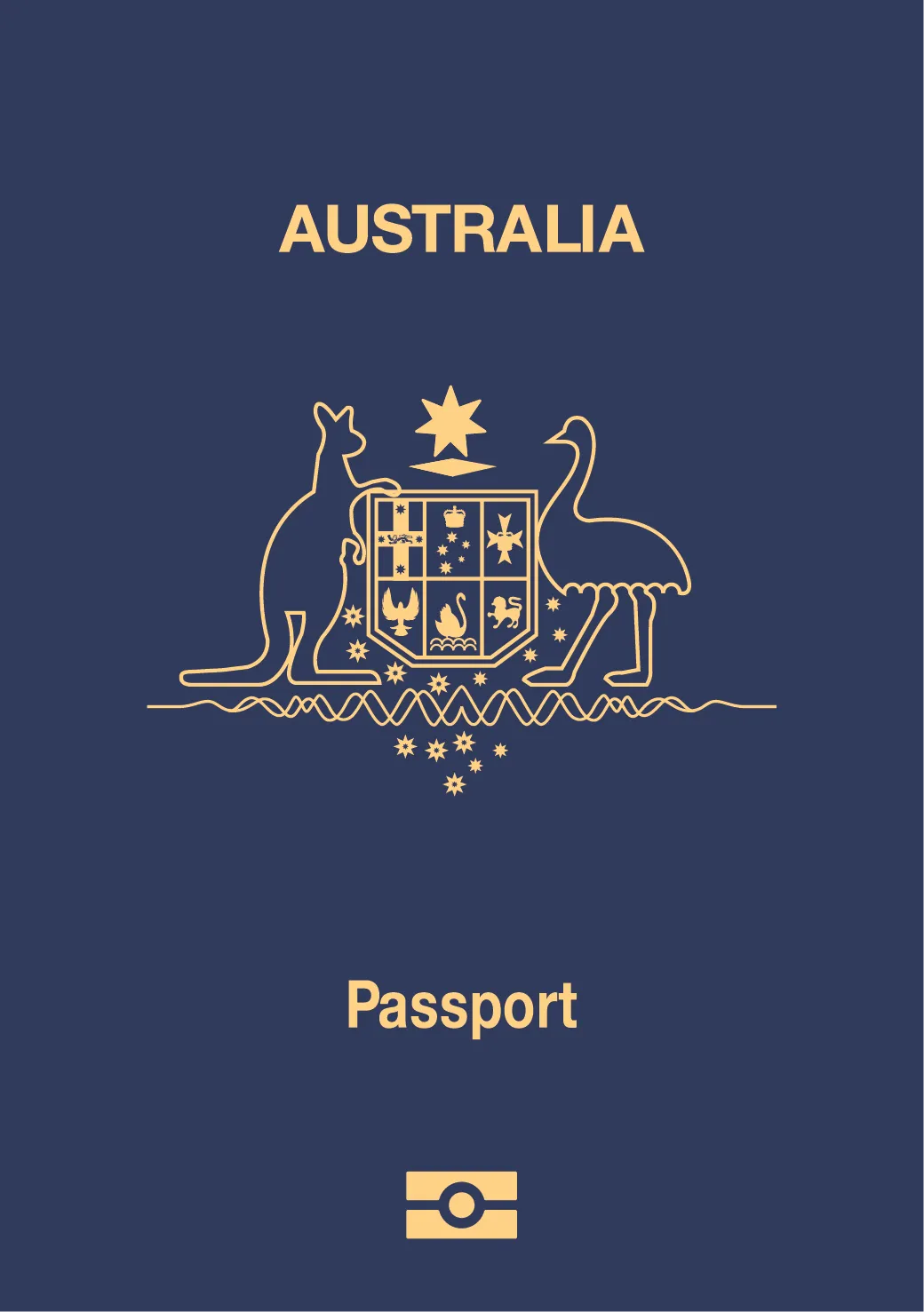
Australia Passport

Ranked #7 Globally

The Australia passport sits at #7 worldwide in 2026. Its holders can enter 182 destinations without a visa, or with a visa stamped on arrival. That short list includes the United States, which most strong passports cannot reach visa-free. Australia joined the US Visa Waiver Program (a scheme that lets approved nationalities skip the visa) back in 1996, so Australians travel there on a quick online approval instead. The passport is issued by the Australian Passport Office, part of (the Department of Foreign Affairs and Trade). There is no way to buy it. You become a citizen first, and that means living in Australia for years as a permanent resident before you qualify. This page explains where the passport takes you, how its strength is measured, and the exact steps from your first visa to the day you collect the document.

7th
Global Ranking
182
Destinations
87.4
Mobility Score
Australia Passport - Passport Power 6th | worldpath.ai WRI

Australia Passport Global Mobility Context

Australia's passport draws its strength from steady relationships rather than any single deal. The country is a stable common-law democracy, a member of the Commonwealth (the association of mostly former British territories), and part of the Five Eyes intelligence alliance. Partner governments treat the document as low-risk and wave Australians through with little paperwork.

The headline number is reach. By current global mobility indices, the passport opens 182 destinations in 2026 without a prior visa, placing it equal 7th in the world. The standout is the United States. Australia has been in the US Visa Waiver Program since 1996, so Australians travel there on a fast online pre-screening, not a visa interview. Most other top passports still need a full US visa.

The book is built to a high security standard. It is a biometric ePassport, carrying a chip with the holder's photo and details that clears automated e-gates in seconds. The current R series, issued from September 2022, prints the data on a hard polycarbonate page that resists forgery.

Support abroad is broad. Australia runs more than 100 embassies, high commissions, and consulates, and shares emergency consular help with Canada. A traveller stuck where Australia has no office can often turn to a Canadian one.
Australian citizenship represents full and formal membership of the community of the Commonwealth of Australia, and Australian citizenship is a common bond, involving reciprocal rights and obligations, uniting all Australians, while respecting their diversity.

Australia Passport at a Glance

Global rank (2026)

Equal 7th in the world in 2026, sharing the spot with the United Kingdom. The ranking counts how many places a passport opens without a prior visa.

Visa-free destinations

182 destinations open without a visa, or with a visa issued on arrival. The set spans the Americas, Europe, and the Asia-Pacific region.

Document type

Biometric ePassport with a chip airports read at e-gates. The current R series, launched in September 2022, uses a hard polycarbonate (tough plastic) data page.

Page count

42 visa pages in the standard book. That is enough for years of frequent travel before the pages fill up and a renewal is needed.

Languages

Printed in English, the national language of Australia. Machine-readable fields follow a global standard so border systems everywhere can scan them.

Adult validity

Valid for 10 years for adults aged 16 and over. Applicants aged 75 and over may choose a shorter 5-year book at a lower fee.

Child validity (under 16)

Valid for 5 years for children under 16. Young faces change quickly, so the shorter term keeps the photo a reliable match at the border.

Dual citizenship

Allowed since 4 April 2002, when the rule that stripped citizenship for taking another nationality was repealed. No reporting duty applies afterwards.

Issuing authority

Issued by the Australian Passport Office, an arm of (the Department of Foreign Affairs and Trade). Applications are lodged through Australia Post outlets.

History

Australia issued its first biometric ePassport on 24 October 2005. The newest R series arrived in September 2022 with upgraded anti-forgery features.

Australia Passport Visa-Free Destinations by Region

Regional Mobility

Economic Mobility Score: 87.4%Country GDP: 1.76%
Visa Exceptions
Radar values estimate visa-free reach by region from the 2026 mobility data, where 100 means near-total access. Australia scores highest in Europe and its home Asia-Pacific region.

For most Australians, the everyday value of the passport shows up across five travel zones. Europe's gives 90 days, the United States and Japan are open on simple online or visa-free terms, and the Asia-Pacific neighbourhood is largely barrier-free. The sections below walk through each region, the stay you get, and the few places that still ask for a visa in advance.

Americas

The Americas are the rare strength of this passport. The United States admits Australians under its Visa Waiver Program: you buy an (Electronic System for Travel Authorization, an online pre-screening) for two years of use and stay up to 90 days a trip. Canada works much the same way by air, asking for an (electronic Travel Authorisation) and granting six-month visits. Across Latin America, from Mexico and Brazil to Argentina and Chile, Australians enter visa-free for stays that usually run 90 days. The British Virgin Islands and the Bahamas each give a 90-day welcome, handy for Australians breaking up the very long haul to the Caribbean with a US stopover.

Europe

Europe is wide open. Australians spend up to 90 days in any 180-day period across the Schengen Area, the borderless travel zone covering most of the continent. From late 2026 they will first buy an (European Travel Information and Authorisation System, a cheap online travel permit, not a visa). A separate (Entry/Exit System, Europe's new electronic record of arrivals and departures) is also rolling out, replacing the passport stamp with a digital log. The United Kingdom sits outside Schengen and asks Australians for an Electronic Travel Authorisation, valid two years, before granting visits of up to six months. Ireland stays visa-free with its own separate six-month rule.

Asia-Pacific

This is Australia's home region, and the access is deep. New Zealand is the closest case of all: Australians can live, work, and stay there indefinitely under a shared travel arrangement, with no visa to apply for. Japan and South Korea admit Australians visa-free for 90 days, and Singapore, Malaysia, and Thailand are equally simple for short stays. China runs a visa-free pilot for Australian tourists that grants 30-day visits and is currently set to run until 31 December 2026. Pacific neighbours such as Fiji and Vanuatu welcome Australians without a prior visa, which keeps the islands an easy short-haul escape.

Middle East

The Gulf is largely friction-free for short trips. The United Arab Emirates gives Australians a visa-free stay on arrival, which makes Dubai and Abu Dhabi natural refuelling stops on the long flights between Australia and Europe. Qatar and Bahrain admit Australians on arrival as well, and Israel is visa-free for tourism. Saudi Arabia offers a quick electronic visa bought online rather than visa-free entry, so a little planning is needed before a Riyadh or Jeddah trip.

Africa

Africa mixes open doors with a few advance steps. Southern Africa is the easy part: South Africa, Botswana, and Namibia admit Australians visa-free for stays around 90 days, and Mauritius and the Seychelles welcome them for beach holidays without a prior visa. Across the rest of the continent, the common pattern is a visa-on-arrival or a cheap e-visa arranged online, including for Kenya, Tanzania, and Egypt. A handful of countries still require a visa from an embassy before departure, so Australians planning a wider African route should check each leg early.

Offshore Jurisdictions

Australians reach the major offshore and financial-centre territories without a visa, which is useful for anyone managing money or business across borders. The Cayman Islands and Bermuda allow visits of up to six months, while the Channel Islands of Jersey and Guernsey, plus the Isle of Man and Gibraltar, are open as British-linked territories. Hong Kong gives Australians a generous 90-day stay, and Macau admits them visa-free as well, rounding out a clean set of Asian and Atlantic hubs.

Where a Visa Is Still Required

  • Russia: a full visa from a Russian mission is required before travel; there is no visa-free or visa-on-arrival option for Australians.
  • China beyond the pilot: the 30-day visa-free tourist pilot runs only until 31 December 2026, and business or longer stays still need a visa.
  • India: entry runs on an e-visa applied for online ahead of the trip, not visa-free arrival.
  • Saudi Arabia: an electronic visa must be bought online before departure, though approval is usually quick.
  • Several Central African and a few other states: a visa must be obtained from an embassy in advance, so route-plan early.

How to Get a Australia Passport

1

Qualify for Permanent Residency

The Australia passport has no shortcut. There is no investor passport and no donation route. The old business and investor visa scheme, the (Business Innovation and Investment Program), closed to new applicants on 31 July 2024, so a wealthy applicant cannot simply buy a way in. Everyone starts by becoming a permanent resident, which means winning the right to live in Australia for good.

Most people get there through skilled migration. You lodge an Expression of Interest in SkillSelect, the government's online system that ranks applicants by points. Points come from your age, English ability, qualifications, and work experience. You need at least 65 points just to enter the pool, but in practice many in-demand occupations need scores above 85 to receive an invitation. The highest scorers in each round are invited to apply for a permanent visa.

Other routes lead to the same place. Employer sponsorship, a partner visa through an Australian spouse, or family sponsorship can all end in permanent residency. Whichever door you use, the goal of this first step is identical: hold a permanent resident () visa, the status that starts your citizenship clock.

2

Build Your Residency History

Citizenship is earned by time spent living in Australia. The law asks for four years of lawful residence in total before you apply. At least the final 12 months of that must be held as a permanent resident, not on a temporary visa.

Two absence limits keep the requirement meaningful. Across the whole four-year window you may spend no more than 12 months outside Australia. And in the 12 months right before you apply, you may be away for no more than 90 days. Long postings abroad can therefore reset or delay the clock, so many applicants plan their travel carefully in the run-up.

A useful tool helps here: the Department of Home Affairs publishes an online residence calculator that counts your eligible days for you. Time spent in Australia on an earlier temporary visa often counts toward the four years, even though only the last year must be as a permanent resident.

3

Apply for Citizenship

Once you meet the residence rule, you apply for citizenship by conferral. The application fee is modest by global standards, AUD 575 for a standard adult applicant, with concessions for children and low-income applicants. That is a world away from the six- and seven-figure sums charged by the investor schemes some other countries run.

Most adults aged 18 to 59 sit the citizenship test. It is a 20-question multiple-choice test on Australian values, history, government, and the rights and responsibilities of citizens. You must answer at least 15 of the 20 correctly, a 75% pass mark, and every question on Australia's democratic values must be right. People under 18 or aged 60 and over are excused from the test.

After the department approves your application, the last legal step is the citizenship ceremony. There you make the Australian Citizenship Pledge, a public promise of loyalty to Australia and its people and laws. You are not a citizen until the pledge is made; most approved applicants attend a ceremony within six months.

4

Apply for the Passport

Citizenship comes first; the passport follows. Only Australian citizens may hold the passport, so the document is the final reward at the end of the journey, not a step along the way.

You apply through the Australian Passport Office, the (Department of Foreign Affairs and Trade) agency that issues the book. Forms are completed online and then lodged in person at an Australia Post outlet, where staff check your identity and take your photo. A standard 10-year adult passport costs AUD 422 as of 1 January 2026; a 5-year book for a child or a senior costs AUD 213.

Processing usually takes about three weeks for a routine application, with faster priority handling available for an extra fee. Once issued, the 10-year adult book gives you the full reach described on this page: 182 destinations open with little or no paperwork, the US among them.

Australia also grants citizenship by descent, a route for people born outside Australia to an Australian-citizen parent. It is not an immigration pathway, since there is no need to move to or live in Australia. Instead it is a way to confirm a citizenship that effectively passed down through the family at birth.

The core rule is one generation. A child born overseas can claim citizenship by descent if at least one parent was an Australian citizen at the time of the birth. The claim is made by application to the Department of Home Affairs, with the parent's citizenship and the family link evidenced by official documents.

The limit bites in the next generation. If the Australian-citizen parent had themselves only acquired citizenship by descent (rather than by birth in Australia or by grant), they must have spent a total of two years lawfully present in Australia at some point before they can pass citizenship to their own overseas-born child. This stops the line running on forever through families with no real connection to the country.

The application fee is modest, in the low hundreds of Australian dollars, and there is no points test, no residence requirement, and no language exam. For the children of Australians living abroad, descent is the simplest route of all to the passport, sidestepping the years of skilled migration that other applicants face.

Comparison of Australia Passport With Other Top Passports

Passport

Rank

Visa-free

Key edge

Singapore Passport

#1

192

World's top-ranked passport and an Asia-Pacific neighbour

New Zealand Passport

#7

182

Closest peer: Commonwealth and Five Eyes partner sharing a travel zone

United Kingdom/Canada Passports

#6

184

Commonwealth ranking equal and immigration-system mirror

France Passport

#4

185

EU passport with the right to live in 27 states

United States Passport

#10

179

Largest economy; taxes citizens worldwide for life

The Australia passport sits just below the global leaders, level with the United Kingdom and a notch under Singapore. Its profile is closest to the other large Commonwealth democracies. Two features set it apart: rare US visa-free access, and no investor route now the buy-in scheme has closed.

Versus New Zealand. New Zealand is the natural twin: both are Commonwealth democracies in the Five Eyes alliance, sharing a travel zone that lets their citizens live in each other's country without a visa. The passports rank within a place or two and open almost the same map. Australia's edge is slightly wider reach.

Versus the United Kingdom and Canada. The United Kingdom is Australia's ranking equal, and Canada is the immigration mirror: a points-based skilled-migration system feeding a multi-year residence path to citizenship. All three allow dual citizenship, issue 10-year adult books, and reach the US on the same easy online terms.

Versus Singapore and Europe. Singapore holds the world's strongest passport and opens more destinations, but offers no living rights abroad. A French passport carries the right to live and work across all 27 member states of the (European Union), which no Australian passport matches. Australia's counter is visa-free US entry that most EU passports lack.

On cost and tax. Australia taxes residents on worldwide income, but tax follows residence, not the passport: an Australian who becomes a non-resident abroad is generally taxed only on Australian-source income. That is gentler than the United States, which taxes citizens worldwide for life.

Pros and Cons of the Australia Passport

Pros7 strengths
Cons7 frictions
  • 01Mobility
    Top-7 Document for Visa-Free Travel
    Visa-free or visa-on-arrival in 182 destinations, ranking equal 7th worldwide in 2026 alongside the United Kingdom. Covers the Schengen Area, Japan, South Korea, and the Americas.
    182 dest.
  • 02Mobility
    Rare Visa-Free Access to the United States
    Australia has been in the US Visa Waiver Program since 1996, so Australians visit on a quick ESTA pre-screening, not a visa interview. Most strong passports cannot reach the US visa-free.
    US visa-free
  • 03Rights
    Dual Citizenship Fully Allowed
    Australia has permitted dual citizenship since 4 April 2002. You can become Australian without giving up another nationality, and there is no reporting duty afterwards.
    Dual OK 2002
  • 04Standing
    Live and Work in New Zealand
    A shared travel arrangement lets Australians live, work, and stay in New Zealand indefinitely with no visa to apply for. Few passports carry such a deep regional right.
    NZ travel zone
  • 05Support
    Broad Consular Network
    More than 100 Australian embassies and consulates, plus a long-standing arrangement to share emergency help with Canada where Australia has no office of its own.
    100+ posts
  • 06Validity
    Long Adult Validity
    Adult passports last 10 years, so renewals are infrequent. The book holds 42 visa pages, enough for years of heavy travel before it fills up.
    10-year
  • 07Document
    Modern, Hard-to-Forge Book
    A biometric chip clears e-gates in seconds. The R series, issued from September 2022, uses a tough polycarbonate data page far harder to alter than paper.
    ePassport
  • 01Eligibility
    Investor Route Closed in 2024
    The Business Innovation and Investment Program shut to new applicants on 31 July 2024. There is now no golden-visa or donation route; money alone cannot secure the passport.
    No buy-in
  • 02Eligibility
    High Bar for Skilled Migration
    Skilled applicants enter the SkillSelect pool at 65 points, but in-demand occupations often need scores above 85 to win an invitation. The system favours the young and highly qualified.
    85+ points
  • 03Mobility
    New European Entry Steps
    From late 2026 Australians must buy an ETIAS online travel permit before Schengen trips, and the EES digital border-record adds an electronic check at the frontier.
    ETIAS / EES
  • 04Mobility
    Long Distances to Major Hubs
    Australia's location means long-haul flights to Europe and North America, usually with a stopover. The passport's reach is wide, but reaching it costs hours in the air.
    Far away
  • 05Tax
    Residents Taxed on Global Income
    Australian residents are taxed on income earned anywhere in the world. The duty follows residence, not the passport, so non-residents are generally taxed only on Australian-source income.
    Worldwide tax
  • 06Validity
    Short Validity for Children
    Children under 16 get a 5-year book, not the 10-year adult term, so families with young children renew more often and pay the fee again sooner.
    5 yr children
  • 07Eligibility
    Years of Residence Required
    Citizenship needs four years of lawful residence, with the final year held as a permanent resident. Strict absence limits mean long trips abroad can delay the clock.
    4-year wait

Dual Citizenship and the Australia Passport

Australia has allowed dual citizenship since 4 April 2002. Before that date, an adult who voluntarily took another country's citizenship automatically lost their Australian one under an old rule. That rule was repealed, and today you can hold Australian citizenship alongside any number of others. There is no annual disclosure and no requirement to renounce a former nationality.

A warning for older dual nationals. The repeal was not made retrospective. Australians who took up a second citizenship before 4 April 2002, as adults and by their own choice, may have lost their Australian status on that earlier day without realising it. Anyone in that position should confirm their standing with the Department of Home Affairs rather than assume the passport is still valid.

Which passport to use where. When entering Australia, dual citizens should travel on their Australian passport, because that is the document proving the automatic right to enter. Abroad, the choice is practical: present the Australian passport where it gives the wider access, but use a local passport when entering a country where you also hold its citizenship, since many states require their own citizens to enter on the national document.

The tax angle for US dual citizens. One pairing needs care. The United States taxes its citizens on worldwide income for life, while Australia taxes by residence. An Australian-American living in Australia can therefore owe filings to both tax systems each year, managed through the Australia-US tax treaty and US foreign-income rules. Specialist cross-border tax advice is the norm for this group, not a luxury.

Final Assessment of the Australia Passport

The Australia passport is a high-value travel document anchored in stable institutions rather than in any single agreement. Ranked equal 7th in 2026 with visa-free or visa-on-arrival access to 182 destinations, it carries one benefit most rivals lack: visa-free entry to the United States through the Visa Waiver Program. Add full dual-citizenship freedom, a 10-year adult book, a modern biometric design, and one of the world's broadest consular networks, and the everyday travel experience is close to the best available.

The cost is patience and merit, not cash. With the investor program closed since July 2024, there is no way to buy in. Skilled applicants face a competitive points test and four years of residence, the last as a permanent resident, before they can apply. For those willing to earn it, and for the overseas-born children of Australians who can claim it by descent, the result is a stable, globally respected passport with a rare key to the United States and a unique open door to New Zealand.

Australia Passport FAQ

What is Australia's WRI score for 2026?

Australia's WRI Mobility score for 2026 stands at 87.4 out of 100, placing it among the top tier of passport destinations on the WorldPath Relocation Index. The score reflects 182 visa-free destinations, rare access to the United States under the Visa Waiver Program, and a fully biometric travel document with a 10-year adult validity. The overall WRI figure weighs mobility alongside residency, tax, safety, and investment conditions.

What entry steps do Australians face when visiting Europe from 2026 onward?

Two new European border systems are rolling out that will affect Australians. ETIAS — the European Travel Information and Authorisation System — is an inexpensive online travel permit required before entering Schengen Area countries, expected to be mandatory from late 2026. Separately, the Entry/Exit System replaces the physical passport stamp with a digital record at the frontier. Neither is a visa, and neither affects the 90-day Schengen allowance within the 180 days. Advance purchase of ETIAS before travel is the only new step.

Can Australians travel to the United States without a visa?

Yes. Australia has been in the US Visa Waiver Program since 1996, so Australians travel to the United States on an ESTA — an online pre-screening that costs a small fee and remains valid for two years. Each trip allows a stay of up to 90 days. Most top-10 passports cannot reach the US on those terms, which makes this the most cited practical edge of the Australian document.

How long does it take to get Australian citizenship in 2026?

The minimum path runs to roughly five to six years in practice. You first need four years of lawful residence in Australia, with the final 12 months held as a permanent resident — and strict absence caps apply throughout. Once eligible, the citizenship application itself takes around 8 to 14 months to decide at the 90th percentile, followed by a ceremony within six months of approval. There is no investor shortcut.

Is there an investor visa or golden visa route to an Australian passport?

No. The Business Innovation and Investment Program — Australia's closest equivalent to a golden visa — closed to new applicants on 31 July 2024. There is now no donation or investment route to Australian citizenship or permanent residency. Every pathway begins with a merit-based visa: skilled migration, employer sponsorship, a family connection, or a partner visa. Money alone does not move the queue.

What does Australian citizenship cost to apply for in 2026?

The standard adult application fee for citizenship by conferral is AUD 575 (Form 1300t), as set by the Department of Home Affairs for the 2025–26 financial year. A concession rate of AUD 80 applies to holders of a valid government Pensioner Concession Card. Children under 16 applying on the same form as a responsible parent pay nothing. The fee is non-refundable once the application has been assessed.

Does Australia allow dual citizenship?

Yes, and without conditions. Australia has permitted dual or multiple citizenship since 4 April 2002, when the old rule that stripped citizenship upon voluntary acquisition of another nationality was repealed. There is no disclosure requirement and no limit on the number of passports you hold. One important caveat: the repeal was not retrospective. Australians who took a second citizenship before that date as an adult may have lost their Australian status automatically and should confirm their standing with the Department of Home Affairs.

What are the biggest obstacles to getting an Australian passport?

Three friction points dominate. First, the residence requirement: four years of lawful presence with strict 90-day absence caps in the final year means long postings abroad reset the clock. Second, the skilled migration points test is competitive — most in-demand occupations require scores above 85 to receive an invitation, favouring the young and highly qualified. Third, there is no buy-in route since the investor programme closed in 2024. Patience and merit are the only currencies that work.