
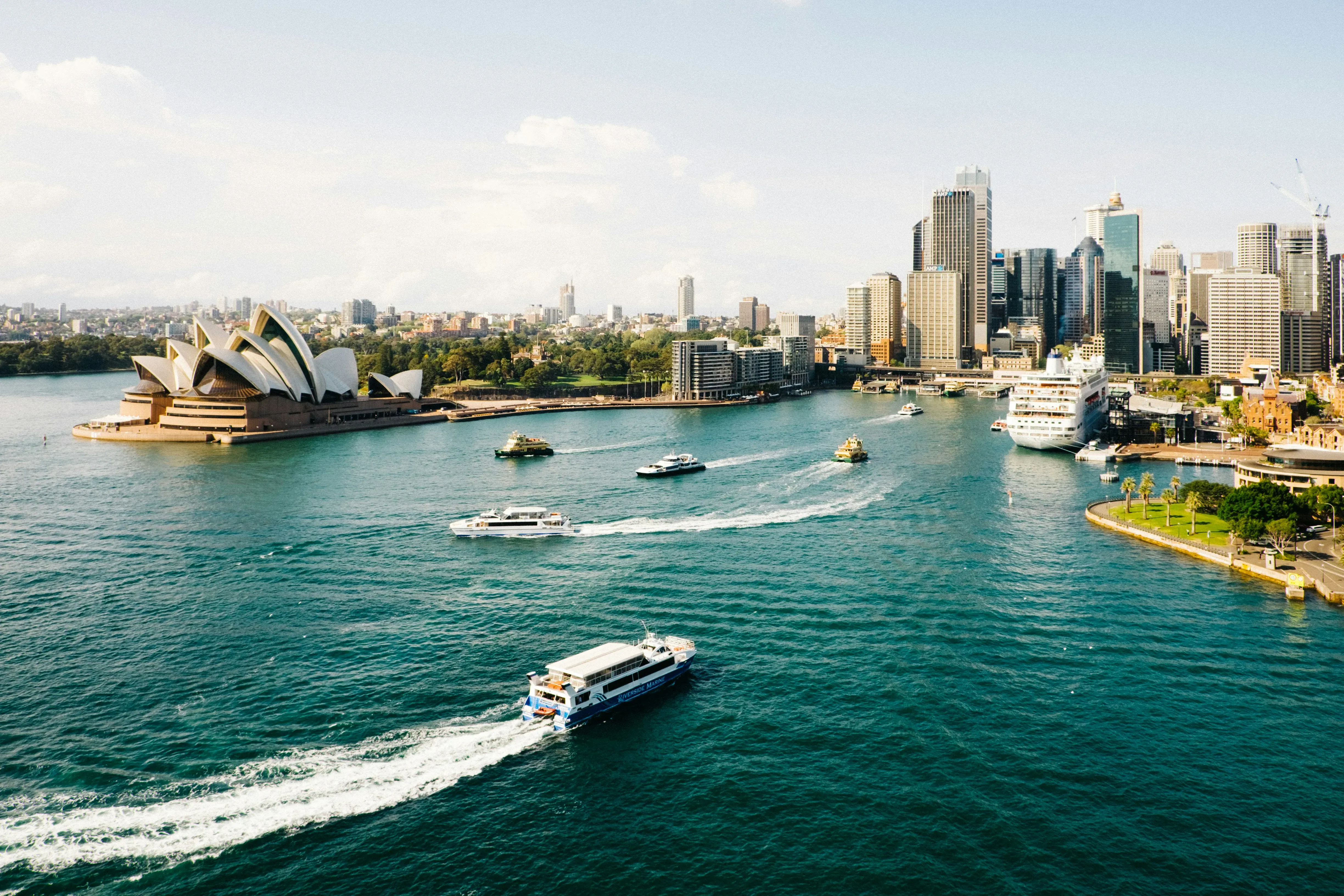
Australia Overview
Australia is a federal parliamentary constitutional monarchy and the world's sixth-largest country by area at 7,692,024 km², occupying an entire continent in the southwestern Pacific. King Charles III is head of state, represented by the Governor-General; Prime Minister Anthony Albanese (Australian Labor Party) heads government since May 2022 and was re-elected in May 2025. The Commonwealth of Australia consists of six states (New South Wales, Victoria, Queensland, Western Australia, South Australia, Tasmania) and two self-governing territories (Australian Capital Territory, Northern Territory), with Canberra as federal capital. The legal system runs on English common law inherited from the British colonial period and modernised through the Australia Acts 1986. Australia is a member of the United Nations, the , the , the Commonwealth of Nations, the , +6, the Pacific Islands Forum, AUKUS, Five Eyes, and the Quadrilateral Security Dialogue. The Australian Dollar (AUD) is the currency, freely floating; English is the de facto national language. Population is approximately 27 million.
On This Page
- 1.Australia Overview
- 1.1How Does Australia Compare?
- 1.2Who does Australia fit?
- 1.3Pros and Cons of Relocating to Australia
- 1.4Australia leads on Education — WRI 92.0 / 100
- 1.5Australia leads on Safety — WRI 88.0 / 100
- 1.6Residence
- 1.7Taxes on Personal Income
- 1.8Cost of Living
- 1.9Healthcare System
- 1.10Education System
- 1.11Banking & Finance
- 1.12Cryptocurrency Regulation
- 1.13Real Estate Market
- 2.Frequently Asked Questions
Quick Facts
- Passport Rank: 7
- Visa-Free Destinations: 185
- Capital: Canberra
- Population: 27.1 million (ABS Q4 2024)
- Area: 7,692,024 km² (6 states + 2 territories)
- Currency: Australian Dollar (AUD); 1 AUD ≈ 0.7138 USD (May 2026 spot)
- Official languages: English (de facto national)
- Religions: Christianity 43.9%, no religion 38.9%, Islam 3.2%, Hinduism 2.7%, Buddhism 2.4%, other 8.9% (ABS 2021 Census)
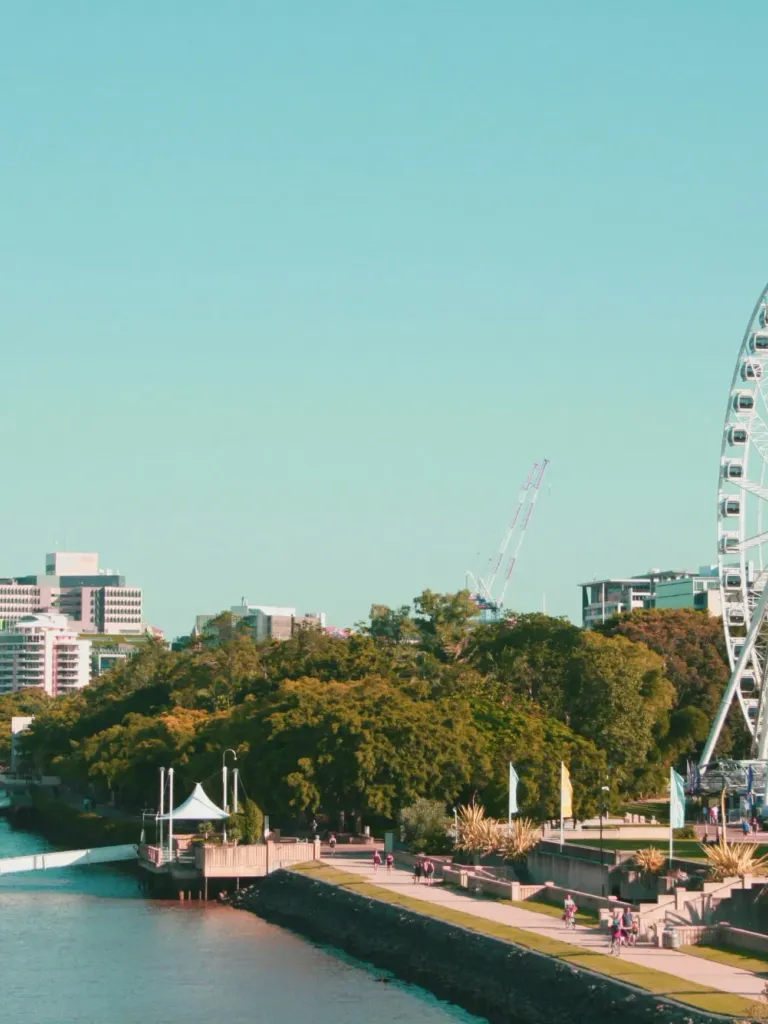
Key Indicators
- GDP (Nominal): $1,790 billion (World Bank 2024)
- Unemployment Rate: 4.0% (ABS 2024)
- Human Development Index: 0.946 (Very High, Rank: 10, HDR 2024)
- GDP per Capita: $65,530 (World Bank 2024)
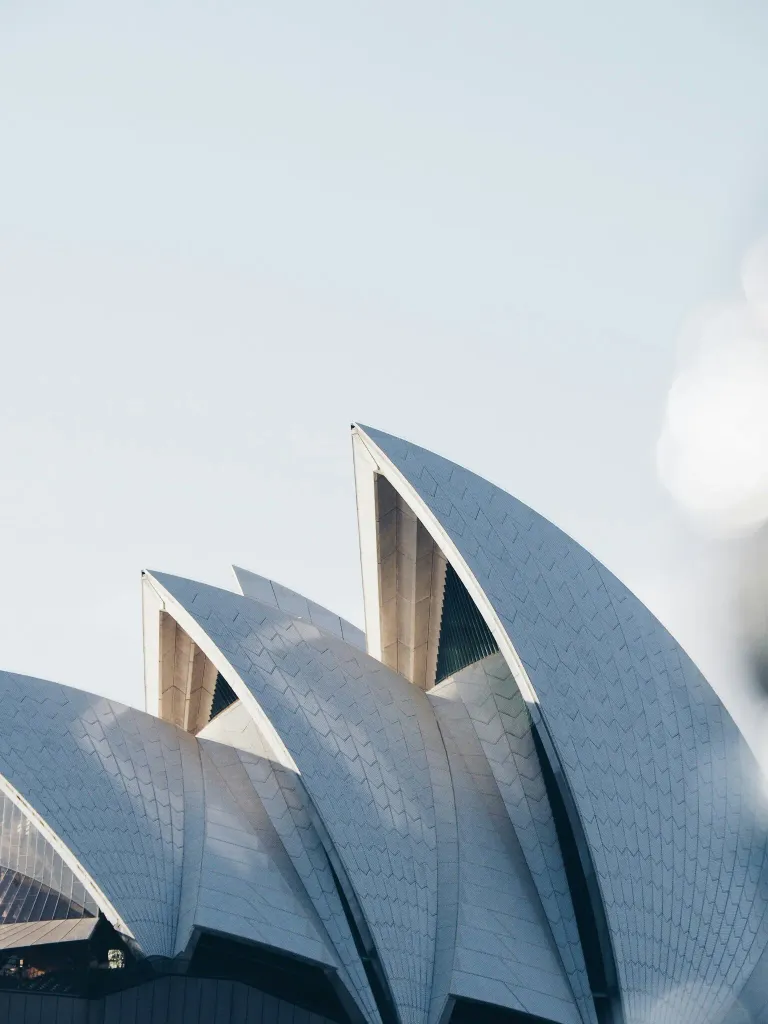
Safety & Governance
- Global Peace Index (IEP): 1.434 (Rank: 18, GPI 2025)
- Press Freedom Index (RSF): 73.32 (Rank: 39, RSF 2024)
- Corruption Perception (TI): 76/100 (Rank: 12, CPI 2025)
- Gini Coefficient (WB): 34.3 (ABS, most recent)

Health & Environment
- PM2.5 Air Pollution: 7.5 µg/m³ (WHO 2024)
- Air Quality Category: Good
- ND-GAIN Adaptation Index: 70.5 (Rank: 7, ND-GAIN 2023)
- Life Expectancy: 83.4 years (WHO 2024)
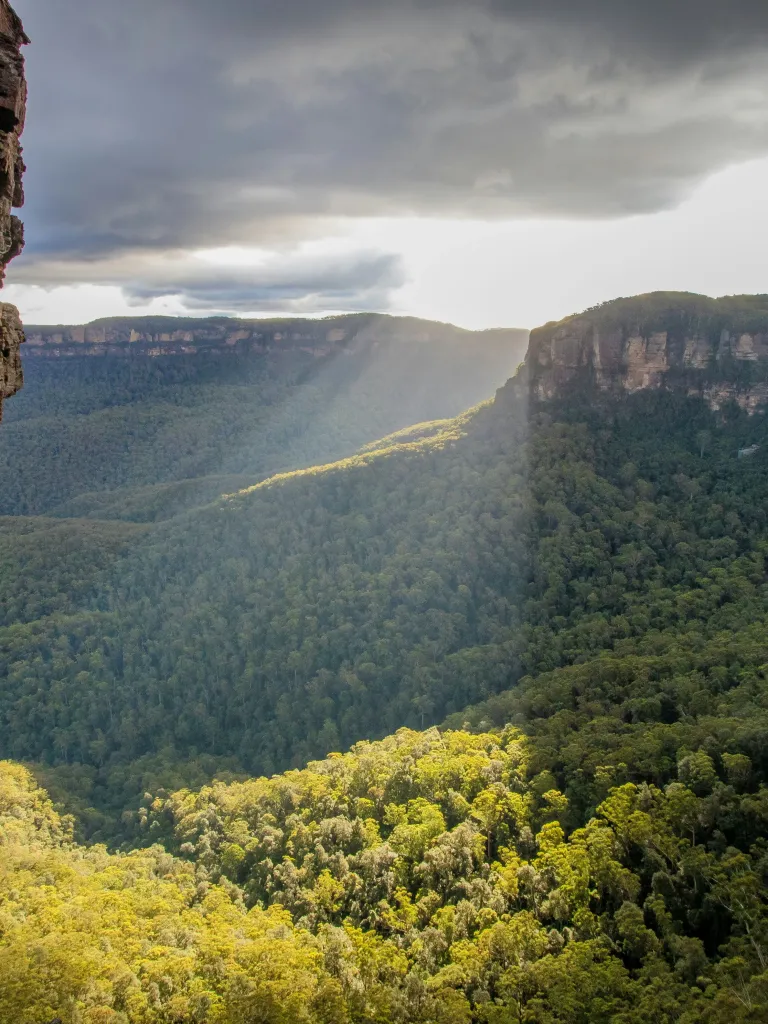
The proposition for an investor or relocator is unusually clean: the world's 7th-strongest passport with 185 visa-free destinations, the Group of Eight universities (Melbourne, Sydney, ANU, UNSW, Monash, UQ, Adelaide, UWA) anchoring the deepest top-100-globally-ranked higher-education system in the southern hemisphere, the National Innovation Visa launched in late 2024 for exceptional-talent applicants, English common-law jurisdiction, and a structurally favourable position as the OECD's largest economy in the Indo-Pacific outside Japan and South Korea. The cost is also clean: the Significant Investor Visa (SIV) and the entire Business Innovation and Investment Programme () were permanently closed on 21 July 2024 following Migration Review findings, removing pure-capital investment pathways; standard naturalisation requires 4 years of residence with an English-language test and citizenship test; top marginal income tax of 45% (plus 2% Medicare Levy) on worldwide income for residents above $135,500 makes the post-arrival tax position significantly heavier than Mediterranean or Caribbean alternatives; Sydney and Melbourne cost-of-living rank among the world's most expensive cities; and geographic distance from European and North American hubs adds meaningful relocation friction. Australia does not try to be for everyone — it is clear from the start who it is for.
How Does Australia Compare?
Summary
On the worldpath.ai WRI 2026, Australia (79.9) sits between Singapore (80.9) and Grenada (79.8), in a peer group anchored by Luxembourg (81.5) above and Turkey (77.2) below. Australia leads decisively on Education through the Group of Eight universities and on Safety with one of the world's lowest violent-crime rates, but trails on Residency since the July 2024 closure of the Significant Investor Visa and the entire Business Innovation and Investment Programme.
How Australia stacks up against its closest peers on the WRI 2026:
Where Australia wins: Australia leads the peer group on Education at 92, ahead of Luxembourg at 88, Grenada at 82, and Turkey at 75, just behind Singapore at 94. The driver is not subtle: the Group of Eight Australian universities (Melbourne, Sydney, ANU, UNSW, Monash, UQ, Adelaide, and UWA) all sit in the global top-100 across QS, Times Higher Education, and Shanghai rankings, with Melbourne and ANU consistently in the top 30. The IB and British IGCSE / A-Level frameworks are widely available across Sydney, Melbourne, Brisbane, Perth, and Adelaide international schools. Safety at 88 also leads decisively, ahead of Luxembourg at 66.8, Grenada at 72, and Turkey at 69 (Singapore at 91.1 sits just ahead); Global Peace Index 2025 ranks Australia at 18, an improvement on the prior year, with the Corruption Perceptions Index 2025 at 76 of 100 (rank 12). Investment at 82 sits behind Luxembourg at 90 and Singapore at 91 but comfortably ahead of Grenada at 75 and Turkey at 70; the Australian Securities Exchange (ASX) is the 16th-largest equity market globally by capitalisation, with the deepest superannuation pension pool outside the United States ($3.7 trillion AUD in trust).
Where Australia lags: Australia trails the peer group on Residency at 60, materially below Grenada at 90, Turkey at 85, Luxembourg at 78, and Singapore at 62. The driver is the closure of the Significant Investor Visa and the entire Business Innovation and Investment Programme on 21 July 2024, leaving the National Innovation Visa (Subclass 858) as the principal investment-adjacent route — which screens on innovation criteria rather than pure capital deployment and is selective by design. Skilled Independent (Subclass 189) and Employer Sponsored (Subclass 482 TSS / 186 ENS) routes remain available but are points-based and require either occupation-list alignment or employer sponsorship. Citizenship at 78 trails Grenada at 90 () and Turkey at 85 (CBI), but leads Luxembourg at 74 and Singapore at 48; the standard naturalisation timeline is 4 years of residence with an English-language proof and citizenship test, faster than UK or Singapore but slower than CBI peers. Retirement at 75 trails Grenada at 85 (territorial tax), Luxembourg at 82, and Singapore at 75 tied; the absence of a dedicated retirement visa since the Investor Retirement Visa (Subclass 405) closure plus high cost-of-living constrain retiree positioning. Grenada's Citizenship at 90 and Singapore's Business at 97 mark specific niches Australia does not directly compete on.
Who does Australia fit?
Summary
Australia fits exceptional-talent applicants via the National Innovation Visa (Subclass 858), skilled professionals on Subclass 189 / 190 / 491 points-tested routes, families prioritising Group of Eight university access, and senior international executives on employer-sponsored 482 TSS / 186 ENS. It does not fit pure-capital investors (SIV closed July 2024), fast-citizenship seekers (4-year minimum naturalisation), foreign retirees (no dedicated retiree visa, high cost), or HNW residents seeking territorial taxation (Australia taxes worldwide).
Right fit:
- Exceptional-talent applicants on the National Innovation Visa — Subclass 858 NIV launched late 2024 with three streams: high-performing entrepreneurs, major investors (drawing on prior Significant Investor Visa strength), and global researchers; Austrade nomination required; selective innovation-driven criteria targeting sectors of national importance and venture-capital industry roles; permanent residency direct grant.
- Skilled professionals on points-tested routes — Skilled Independent Subclass 189 (no employer needed, points-tested with occupation list), Skilled Nominated 190 (state nomination), and Skilled Work Regional 491 (provisional 5-year); standard points threshold 65+, competitive across IT, engineering, healthcare, accounting, trades; Permanent Migration Program 185,000 places annually.
- Families prioritising Group of Eight university access — Melbourne, Sydney, ANU, UNSW, Monash, UQ, Adelaide, and UWA all in global top-100; Australian secondary education delivers ATAR university-entry plus IB and IGCSE/A-Level at international schools; ~$30,000-50,000 per year per child for top international schools in Sydney/Melbourne, domestic students fee-free at public schools.
- Senior international executives on employer-sponsored routes — Temporary Skill Shortage Subclass 482 (4-year visa, employer-nominated, mid-skill or specialist), Employer Nomination Scheme Subclass 186 (permanent, requires Subclass 482 prior or direct entry pathway), Skilled Employer Sponsored Regional 494; $73,150 minimum salary threshold (TSMIT) from July 2024.
Wrong fit:
- Pure-capital investors — Significant Investor Visa (Subclass 188C, AUD 5M complying investment) and the entire Business Innovation and Investment Programme (BIIP, Subclass 188) permanently closed on 21 July 2024; National Innovation Visa requires innovation criteria, not capital alone; Australia is one of few major OECD economies without an active capital-only residence-by-investment programme as of May 2026.
- Fast-citizenship seekers — standard naturalisation requires 4 years of lawful residence including at least 12 months as Permanent Resident, plus English-language proof, citizenship test, citizenship ceremony, and Australian-values undertaking; no citizenship-by-investment route exists.
- Foreign retirees — the Investor Retirement Visa (Subclass 405) closed for new applications in July 2018 and the Retirement Visa (Subclass 410) closed permanently in 2019; no dedicated retirement visa is available; resident retirees face worldwide income taxation at standard progressive rates plus 2% Medicare Levy; high Sydney/Melbourne cost-of-living relative to retiree economics.
- HNW residents seeking territorial taxation — Australia taxes residents on worldwide income at 16/30/37/45% progressive plus 2% Medicare Levy from $135,500; capital gains taxed within income (50% discount on 12-month+ holdings); no territorial-equivalent regime; the Stage 3 tax cuts that took effect 1 July 2024 reduced the bracket structure but did not introduce a Beckham-style inpatriate regime.
- Anyone allergic to FIRB property friction — non-resident property buyers require Foreign Investment Review Board (FIRB) approval at $14,100-31,200 application fee depending on property value plus 8% NSW foreign-buyer surcharge stamp duty (7% Victoria, 8% Queensland); non-residents may generally buy only newly-built or off-plan properties, not established second-hand homes.
Pros and Cons of Relocating to Australia
- 01MobilityAustralian passport rank 7 globally, 185 visa-freeAustralian passport at rank 7 globally (tied with Czechia, Malta, Poland) with 185 visa-free or visa-on-arrival destinations; covers Schengen, US ESTA, UK, Japan, Singapore, Hong Kong, Canada, New Zealand; dual citizenship permitted; full Five Eyes intelligence-sharing nationality privileges.Top-6 passport, 185 VF
- 02EducationAll 8 Go8 universities in global top-100Group of Eight (Go8) — Melbourne, Sydney, ANU, UNSW, Monash, UQ, Adelaide, UWA — all in global top-100 (QS/Times Higher Ed/Shanghai); Melbourne and ANU consistently top 30; deepest top-100 university concentration in southern hemisphere; international schools deliver IB/IGCSE/A-Level at $30k-50k/yr per child.Group of Eight unis
- 03HealthcareUniversal Medicare for residentsMedicare provides free or subsidised healthcare to citizens, permanent residents, and reciprocal-treaty temporary residents (UK, NL, NZ, Ireland, Sweden, Italy, Slovenia, Norway, Malta, Finland, Belgium); GP/specialist consultations, public hospital care, PBS prescription medications; private supplementation $150-300/month/individual; life expectancy 83.4 yrs (WHO 2024).Medicare universal
- 04SafetyGPI 2025 rank 18, homicide rate 0.9/100kGlobal Peace Index 2025 rank 18 of 163 (improvement on prior 19); homicide rate 0.9 per 100,000 — one of lowest globally; CPI 2025 76/100 rank 12; Five Eyes member; lived security in Sydney North Shore, Melbourne inner-east, Brisbane inner, Perth western suburbs excellent by international standards.GPI rank 18, low crime
- 05ComplianceEnglish common law + state Supreme Courts + High CourtAustralia runs on English common law inherited from British colonial period and modernised through Australia Acts 1986; six state Supreme Courts plus federal Family Court and Federal Court; High Court of Australia is apex constitutional and appellate court; commercial contracts enforceable through internationally-recognised system.English common law
- 06TaxationInheritance tax abolished 1979, no wealth taxFederal inheritance tax abolished 1979, last state (Tasmania) abolished 1978; no federal wealth tax; no gift tax; dividend imputation (franking credit) system refunds Australian corporate tax already paid at marginal-rate-equivalent level; CGT 50% discount on 12-mo+ holdings.No IHT, no wealth tax
- 07InvestmentCompulsory super pool $3.7T AUD globally 4th largestCompulsory employer-paid Superannuation Guarantee 11.5% of salary (rising to 12% from July 2025); Australian superannuation pool $3.7 trillion AUD — the 4th-largest pension pool globally after US/Japan/Canada; mature professional-services + capital-markets infrastructure on ASX (16th-largest equity market globally).AUD 3.7T super pool
- 01ResidencySignificant Investor + BIIP permanently closedSignificant Investor Visa (Subclass 188C, AUD 5M complying investment) and entire Business Innovation and Investment Programme (BIIP, Subclass 188) permanently closed 21 July 2024 by Labour government following Migration Review; National Innovation Visa Subclass 858 replaces — selective innovation-only criteria, not capital alone; pre-21-Jul-2024 applications continue processing.SIV+BIIP closed Jul 2024
- 02TaxationTop marginal 45% + 2% Medicare on worldwide incomeAustralian tax residents taxed on worldwide income at progressive 16/30/37/45% (Stage 3 cuts since 1 July 2024) plus 2% Medicare Levy; effective rate for $400k earner ~40% federal+Medicare; no territorial regime; no Beckham-style inpatriate flat-tax; structural drag on retiree and HNW relocator positioning vs Mediterranean alternatives.Worldwide tax residents
- 03Citizenship4 years residence + English + citizenship testStandard naturalisation requires 4 years lawful residence including 12 months as Permanent Resident, plus English-language proof, Australian-values undertaking, citizenship test, and citizenship ceremony; no citizenship-by-investment route; dual citizenship permitted post-grant.4-yr citizenship + tests
- 04Real EstateFIRB approval + 7-8% stamp duty surchargeNon-resident foreign buyers require Foreign Investment Review Board (FIRB) approval — $14k-84k+ fees scaling with property value — and may generally buy only new-build/off-plan; 7-8% foreign-buyer surcharge stamp duty stacked on top of standard 4-5.75% (total 12-13.5%); annual land-tax surcharge in NSW + Victoria + Queensland.FIRB foreign-buyer rules
- 05Cost of LivingSydney & Melbourne among world's most expensive citiesSydney CBD 1BR rent $2,400-3,600/month; family of 3 Sydney North Shore $7,500-13,000/mo including international school $30k-50k/yr per child; Sydney property prices up 35-50% since 2020; transit $210/mo Opal Card unlimited zones 1-3; private health insurance $150-300/mo/individual.Sydney/Melbourne cost
- 06RetirementRetirement visas closed 2018-19Investor Retirement Visa Subclass 405 closed for new applications July 2018; Retirement Visa Subclass 410 closed permanently 2019; no dedicated retirement-visa pathway; foreign retirees face standard 4-year residence path or family-stream visas (Parent Subclass 103 with 30+ year wait or Contributory Parent 143 at $50,000+ AUD contribution fee plus 3-12 month medical assurance).No retiree visa
- 07GeographyLong-distance from European + N American hubsSydney-London 23 hours flight, Sydney-NYC 22 hours via LAX, Sydney-Frankfurt 22 hours via Singapore; geographic isolation adds operational friction for global executives and family visits; offset by Indo-Pacific positioning (5h to Singapore, 6h to Tokyo) but adds meaningful relocation friction for non-Pacific origins.Geographic distance
Australia leads on Education — WRI 92.0 / 100
Australia posts an Education score of 92, leading the WRI 2026 peer group ahead of Luxembourg at 88, Grenada at 82, Turkey at 75, and behind Singapore at 94. The driver is the Group of Eight universities — Melbourne, Sydney, ANU, UNSW, Monash, UQ, Adelaide, and UWA — all of which sit in the global top-100 across QS, Times Higher Education, and Shanghai rankings, with Melbourne and ANU consistently in the top 30. Australia has the deepest top-100-globally-ranked higher-education concentration in the southern hemisphere, supported by federal Tertiary Education Quality and Standards Agency (TEQSA) regulation. The secondary-school system delivers the Australian Tertiary Admission Rank (ATAR) for university entry, organised by state Boards of Studies; the New South Wales Higher School Certificate, the Victorian Certificate of Education, and the Queensland Certificate of Education are the principal frameworks. International schools in Sydney (the International Grammar School, the Australian International School, the German International School), Melbourne (the Melbourne International School, the German International School Melbourne), Brisbane (Brisbane Grammar School, the International School of Brisbane), Perth (the International School of Western Australia), and Adelaide (St Peter's College) deliver International Baccalaureate, IGCSE, A-Level, French and German national curricula at $30,000-50,000 per year per child. Public schools are tuition-free for citizens, permanent residents, and most temporary-visa-holder dependents (with some state-by-state variation on contributions for non-citizen students). University tuition is capped at approximately $11,300 per year for domestic Commonwealth Supported Place students; international students pay $35,000-65,000 per year at top institutions ($60,000+ for medicine, dentistry, and engineering at Group of Eight universities). The Australian Government Research Training Scheme funds PhD programmes for Australian and international students at qualifying universities.
Australia leads on Safety — WRI 88.0 / 100
Australia posts a Safety score of 88, leading Luxembourg at 66.8, Grenada at 72, and Turkey at 69 decisively while sitting behind Singapore at 91.1 in the WRI 2026 peer group. The country ranks 18 of 163 in the Global Peace Index 2025 (an improvement on the prior year's ranking of 19), supported by a homicide rate of 0.9 per 100,000 (one of the lowest globally) and stable democratic institutions since federation in 1901. The Corruption Perceptions Index 2025 (released February 2026) places Australia at rank 12 of 182 globally with a score of 76 out of 100, down 1 point year-on-year reflecting ongoing institutional-integrity concerns flagged by the National Anti-Corruption Commission established in 2023. Reporters Without Borders Press Freedom Index 2024 places Australia at rank 39 with a score of 73.32, flagged by RSF as a meaningful step below comparable English-language democracies (Canada, New Zealand, UK), reflecting media-concentration concerns and the Murdoch-empire dominance of national print media. Violent crime is materially below averages; petty theft and bicycle theft in central Sydney, Melbourne, and Brisbane CBDs are the predominant operational concerns. Women's-safety lived experience is strong nationally; Indigenous Australian communities in remote Northern Territory and Western Australia experience higher domestic-violence and crime rates that pull headline rural-area indicators down without affecting expat-tier urban relocator experience. The lived security experience in Sydney North Shore (Mosman, Lane Cove, Crows Nest), Melbourne inner-east (Toorak, South Yarra, Hawthorn), Brisbane inner (New Farm, West End, Paddington), Perth western suburbs (Subiaco, Cottesloe, Claremont), and Canberra Inner-South is excellent by international standards. Australia is a Five Eyes member; the Australian Security Intelligence Organisation and Australian Federal Police provide internationally-recognised counter-terrorism and law-enforcement capacity.
Residence
Australia applies a residence-based personal income tax regime: tax residency triggers on the "183-day test" (physical presence of 183+ days in a financial year, July-June), the "resides test" (ordinary residence under common-law principles), or the "domicile test" (domicile of choice in Australia with no permanent place of abode abroad). Tax residents are taxed on worldwide income at progressive rates plus the 2% Medicare Levy and (for higher earners without private health insurance) the Medicare Levy Surcharge of 1-1.5%. The 4-Year Working Holiday tax regime applies a flat 15% rate to qualifying Working Holiday Makers (Subclass 417, 462). There is no Controlled Foreign Company tax regime in the OECD-typical sense, though the Foreign Income Tax Offset and the CFC regime in Division 7A of the Income Tax Assessment Act 1936 cover specific arrangements. Residence permits are administered by the Department of Home Affairs (DHA, immi.homeaffairs.gov.au), with the National Innovation Visa (Subclass 858) nomination process running through the Australian Trade and Investment Commission (Austrade). Principal HNW-relevant routes: the National Innovation Visa for exceptional-talent applicants with permanent-resident direct grant; Skilled Independent (Subclass 189, points-tested with no employer needed); Skilled Nominated (Subclass 190, state nomination); Employer-Sponsored Temporary Skill Shortage (Subclass 482, employer-nominated, 4-year term); Employer Nomination Scheme (Subclass 186, permanent); and Distinguished Talent (Subclass 124/858). The Significant Investor Visa (Subclass 188C, AUD 5M complying investment) and the entire Business Innovation and Investment Programme (BIIP, Subclass 188) permanently closed on 21 July 2024. Pre-21-July-2024 applications continue processing under prior rules. Permanent residency leads to citizenship after 4 years of lawful residence including 12 months as , plus English-language proof, citizenship test, and Australian-values undertaking. Dual citizenship is permitted across all routes.
Safety sits at 88 in the WRI 2026, leading the peer group except for Singapore. The Global Peace Index 2025 places Australia at rank 18 (up from 19), the Corruption Perceptions Index 2025 at 76 of 100 with rank 12, and Reporters Without Borders Press Freedom Index 2024 at rank 39 with a score of 73.32. Violent crime is materially below G7 averages; petty theft and bicycle theft in Sydney, Melbourne, and Brisbane CBDs are the predominant operational concerns. The lived security experience for expat residents in Sydney North Shore, Melbourne inner-east, Brisbane inner, Perth western suburbs, and Canberra Inner-South is excellent. Five Eyes membership and Australian Security Intelligence Organisation capacity underpin counter-terrorism resilience.
Taxes on Personal Income
Australia applies a residence-based personal income tax regime administered by the Australian Taxation Office (ATO). Tax residents are taxed on worldwide income on the arising basis at progressive rates (Stage 3 cuts effective 1 July 2024): 0% on the first $13,000 ($18,200 AUD); 16% from $13,000 to $32,000 ($18,201-$45,000 AUD); 30% from $32,000 to $96,400 ($45,001-$135,000 AUD); 37% from $96,400 to $135,500 ($135,001-$190,000 AUD); 45% above $135,500 ($190,001 AUD). From 1 July 2026, the 16% bracket drops to 15%, with a further reduction to 14% scheduled for 2027-28 subject to future budget decisions. The 2% Medicare Levy applies on top across all brackets; the Medicare Levy Surcharge of 1-1.5% applies to high-income residents without private hospital insurance. Non-residents are taxed only on Australian-source income at flat rates: 32.5% from the first dollar to $96,400, 37% to $135,500, 45% above; non-residents do not receive the $13,000 tax-free threshold or LITO and do not pay the Medicare Levy. Capital gains are taxed within income at marginal rates with a 50% discount applied to assets held more than 12 months by individuals. There is no inheritance tax (abolished federally in 1979, last state Tasmania abolished it 1978), no wealth tax, no gift tax. Dividends from Australian-resident companies receive the dividend imputation (franking credit) system, which fully refunds Australian corporate tax already paid at the marginal-rate-equivalent level. Goods and Services Tax (GST) is 10% standard, with some essential exemptions. Corporation tax is 25% for small/medium companies (turnover under $50M AUD) and 30% for large companies. The effective tax rate for a $400,000-earning Australian resident is approximately 38-40% federal plus 2% Medicare; combined with high Sydney/Melbourne cost-of-living, this is the structural feature that constrains Australia's retiree and HNW relocator positioning relative to Mediterranean or Caribbean tax-shelter alternatives.
Cost of Living
Australia runs one of the highest cost-of-living profiles in our top-tier WRI peer group, with significant Sydney/Melbourne versus regional spread. A single professional in Sydney CBD, North Sydney, Surry Hills, or Bondi budgets $3,800-6,200 a month for a one-bedroom apartment at $2,400-3,600, utilities, transit ($210 per month for Opal Card unlimited zones 1-3), and basic groceries; the same lifestyle in Melbourne CBD, South Yarra, Carlton, or St Kilda runs $3,400-5,500, in Brisbane CBD, New Farm, or West End $2,800-4,500, in Perth or Adelaide $2,500-4,000, and in regional cities (Newcastle, Wollongong, Geelong, Gold Coast) $2,400-3,700. A family of three in Sydney North Shore or Melbourne inner-east budgets $7,500-13,000 a month including a two- or three-bedroom rental at $4,000-7,500, transit (private vehicle expected outside CBDs), groceries, and international school fees ($30,000-50,000 per year per child at the International Grammar School, the German International School, or the Australian International School); the same family in Brisbane or Perth runs $5,500-9,000, in regional cities $4,500-7,500. Inexpensive restaurant meals average $18-30 per person; mid-range $50-90 per person; Sydney trains are $4-8 per ride, $210 monthly for unlimited. Private health insurance for working-age residents covers gap-supplement private hospital cover and ancillary at $150-300 per month per individual, $400-700 per couple. Medicare provides universal public coverage to citizens, permanent residents, and reciprocal-agreement temporary residents. A mid-range second-hand vehicle runs $14,000-25,000; new mid-range $30,000-50,000. Sydney property prices have risen 35-50% since 2020, contributing to recent migration outflows from Sydney to Brisbane and to regional cities; cost-of-living adjustment remains material for new arrivals from European or US markets.
Healthcare System
Australia runs a universal healthcare system through Medicare, established under the Health Insurance Act 1973, with subsequent expansion through the National Health Reform Act 2011. Medicare provides free or subsidised access to general practitioner services, public hospital care, specialist consultations (with co-payment), pathology, imaging, and the Pharmaceutical Benefits Scheme (PBS) for prescription medications at $33 per script (or $7.70 for concession-card holders). Medicare is automatically available to citizens, permanent residents, and to temporary residents from countries with Reciprocal Health Care Agreements with Australia (the United Kingdom, the Netherlands, New Zealand, the Republic of Ireland, Sweden, Italy, Slovenia, Norway, Malta, Finland, Belgium); other temporary residents typically maintain Overseas Visitor Health Cover or Overseas Student Health Cover at $80-200 per month per individual. Federal Medicare is complemented by state and territory hospital systems, with major public hospitals including the Royal Prince Alfred Sydney, the Alfred Melbourne, the Princess Alexandra Brisbane, the Royal Perth Hospital, and the Royal Adelaide Hospital. Wait times for non-urgent public-system specialist procedures vary by state and procedure, from 3 weeks for category 1 to 12+ months for category 3 cosmetic-adjacent procedures, prompting strong private health insurance adoption: 45% of Australians hold private hospital cover through Medibank, Bupa, HCF, NIB, AHM, or Australian Unity, at $150-300 per month per adult for hospital-and-extras cover. Private specialist consultations run $200-400, private hospital day rates $1,200-2,500. Tertiary specialist care is comparable to OECD upper-middle norms; Australia performs and trains for complex cardiac, oncology, neurosurgery, and organ-transplant cases domestically. Life expectancy is 83.4 years (WHO 2024), in the upper tier of OECD countries. Mental health access has expanded materially under the Better Access Initiative, providing Medicare-subsidised psychologist sessions.
Education System
Australia runs a comprehensive education system delivered jointly by federal, state, and territory governments. Public schools are free and compulsory for citizens, permanent residents, and most temporary-visa-holder dependents from ages 5-6 through 16-17, with some state-by-state variation on age and on contribution requirements for non-citizen students. The Australian Tertiary Admission Rank (ATAR) provides university-entry assessment, organised through state Boards of Studies, including the NSW Higher School Certificate, the Victorian Certificate of Education, the Queensland Certificate of Education, and parallel frameworks in WA, SA, Tasmania, ACT, and NT. Catholic and independent (private) schools serve approximately 35% of Australian students at $5,000-30,000 per year for Catholic systemic and $15,000-50,000 per year for independent private schools (Sydney Grammar, Geelong Grammar, Melbourne Grammar, King's School Parramatta, Scotch College Melbourne, Wesley College). International schools in major cities (the International Grammar School Sydney, the German International School Sydney, the Australian International School, the Melbourne International School, the German International School Melbourne, the French International School of Sydney) deliver International Baccalaureate, IGCSE, A-Level, French and German national curricula at $30,000-50,000 per year. At the tertiary level, the Group of Eight (Go8 — Melbourne, Sydney, ANU, UNSW, Monash, UQ, Adelaide, UWA) sits in the global top-100; Melbourne and ANU consistently in the top 30. Domestic student tuition is capped at approximately $11,300 per year for Commonwealth Supported Place; international students pay $35,000-65,000 per year at top institutions, $60,000+ for medicine, dentistry, and engineering at Group of Eight universities. The Tertiary Education Quality and Standards Agency (TEQSA) provides federal quality assurance. The Australian Government Research Training Scheme funds PhD programmes for Australian and international students at qualifying universities. Vocational Education and Training (VET) is delivered through TAFE institutes nationally at $1,500-8,000 per year for AQF Certificate III-IV programmes.
Banking & Finance
Australia's banking system is supervised by the Australian Prudential Regulation Authority (APRA) under the Banking Act 1959, with capital markets regulated by the Australian Securities and Investments Commission (ASIC) and monetary policy run by the Reserve Bank of Australia (RBA). The system is dominated by the Big Four banks — Commonwealth Bank of Australia, Westpac, ANZ, and National Australia Bank — which collectively hold approximately 75% of domestic banking-sector assets. Macquarie Group is the largest non-Big-Four bank and a global investment-banking presence. The Australian Securities Exchange (ASX) is the 16th-largest equity market globally by capitalisation at approximately $2.8 trillion USD market cap, with the deepest superannuation pension pool outside the United States ($3.7 trillion AUD in compulsory employer-contributed retirement savings). Account opening for non-residents requires a Tax File Number (TFN, issued by ATO), valid visa or residence permit, proof of Australian address, and identity documents under AML/CTF Act 2006 standards; standard opening 1-3 weeks. Foreign credit history does not transfer; new residents build local credit from zero. Mortgage rates for residents run 6.0-6.5% variable and 5.8-6.5% fixed over 25-30 year maturities (May 2026); non-residents face 1-2% premium and 60-65% maximum LTV vs 80-95% for residents. FIRB approval is required for non-resident property purchase. and are in force; Australia is a CRS pioneer with deep tax-information-exchange treaty network across 140+ jurisdictions. The Reserve Bank's Project Acacia explored a wholesale CBDC through 2024 with no immediate retail CBDC commitment; AUD remains the primary settlement currency. Open Banking is established under the Consumer Data Right framework since 2020.
Cryptocurrency Regulation
Australia treats cryptocurrency as a CGT asset rather than currency for tax purposes; disposals are subject to capital gains tax within marginal income tax rates with the 50% discount applied to assets held more than 12 months by individuals. Mining, staking, and airdrop income are taxed as ordinary income at marginal rates (16-45% plus 2% Medicare Levy). Crypto-as-payment for goods or services follows standard 10% GST on the underlying transaction. Crypto-asset service providers (Digital Currency Exchanges, DCEs) are regulated by AUSTRAC (Australian Transaction Reports and Analysis Centre) under AML/CTF Act 2006 registration requirements; AUSTRAC maintains a public DCE register and has actively enforced AML obligations against domestic and offshore-licensed crypto exchanges operating with Australian residents. The Treasury launched a comprehensive crypto-asset regulatory framework proposal in 2023-24 covering token classification, licensing of digital-asset facilities, custody requirements, and consumer protection; phased rollout through 2026-27 expected. Stablecoins are addressed under the Payment Systems (Regulation) Act 1998 amendment framework; the Reserve Bank is exploring wholesale CBDC integration through Project Acacia. Crypto-asset advertising falls under ASIC market-conduct rules; consumer-protection enforcement against misleading promotion has been active since 2022, including penalties against major exchanges marketing leveraged products into Australian retail. Australia is materially more regulated than most Asia-Pacific peers but offers clear regulatory baseline through AUSTRAC + ASIC + Treasury framework alignment, distinguishing it from permissive Web3 jurisdictions (UAE, Singapore, El Salvador) while remaining significantly more developed than member states outside MiCA.
Real Estate Market
Australia restricts foreign ownership of residential property: non-resident foreign buyers must obtain Foreign Investment Review Board (FIRB) approval and may generally purchase only new-build or off-plan residential properties (not established second-hand homes). FIRB application fees scale with property value, running $14,100 for properties under $1M, $28,200 for $1M-$2M, $84,600 for $2M-$3M, and continuing in $42,300 increments above $3M. Temporary residents may purchase one established dwelling for own occupation subject to FIRB approval. Acquisition costs for foreign buyers total approximately 12-18% of transaction value: FIRB fee plus stamp duty (which varies significantly by state — NSW 4% baseline plus 8% foreign-buyer surcharge for total 12%, Victoria 5.5% plus 8% surcharge for total 13.5%, Queensland 5.75% plus 8% surcharge, Western Australia 4.95% plus 7% surcharge), plus 1-2% legal-and-conveyancing fees, 0.5-1% building/pest inspection. Annual land tax runs 1.6% above the relevant state threshold for foreign owners (NSW), with foreign-owner surcharge stacked on top in most states. Prime Sydney (Mosman, Lane Cove, Cremorne Point, Vaucluse, Bellevue Hill, Bondi) runs $11,000-18,000 AUD per square metre ($7,850-12,850 USD/m²); inner Melbourne (Toorak, South Yarra, Hawthorn) $9,000-15,000 AUD/m² ($6,425-10,700 USD/m²); inner Brisbane $5,500-9,500 AUD/m² ($3,925-6,780 USD/m²); inner Perth $5,000-9,000 AUD/m². Outer suburbs of Sydney and Melbourne average $4,500-8,000 AUD/m². Gross rental yields run 2.5-4% on prime Sydney long-term lets, 3.5-5% in Melbourne, 4-6% in Brisbane and Perth, and 5-7% in regional cities. Mortgage rates for non-resident buyers run 7-9% fixed over 25-30 year maturities at 60-65% maximum LTV. Transactions typically close in 6-12 weeks from offer acceptance through Settlement.


