
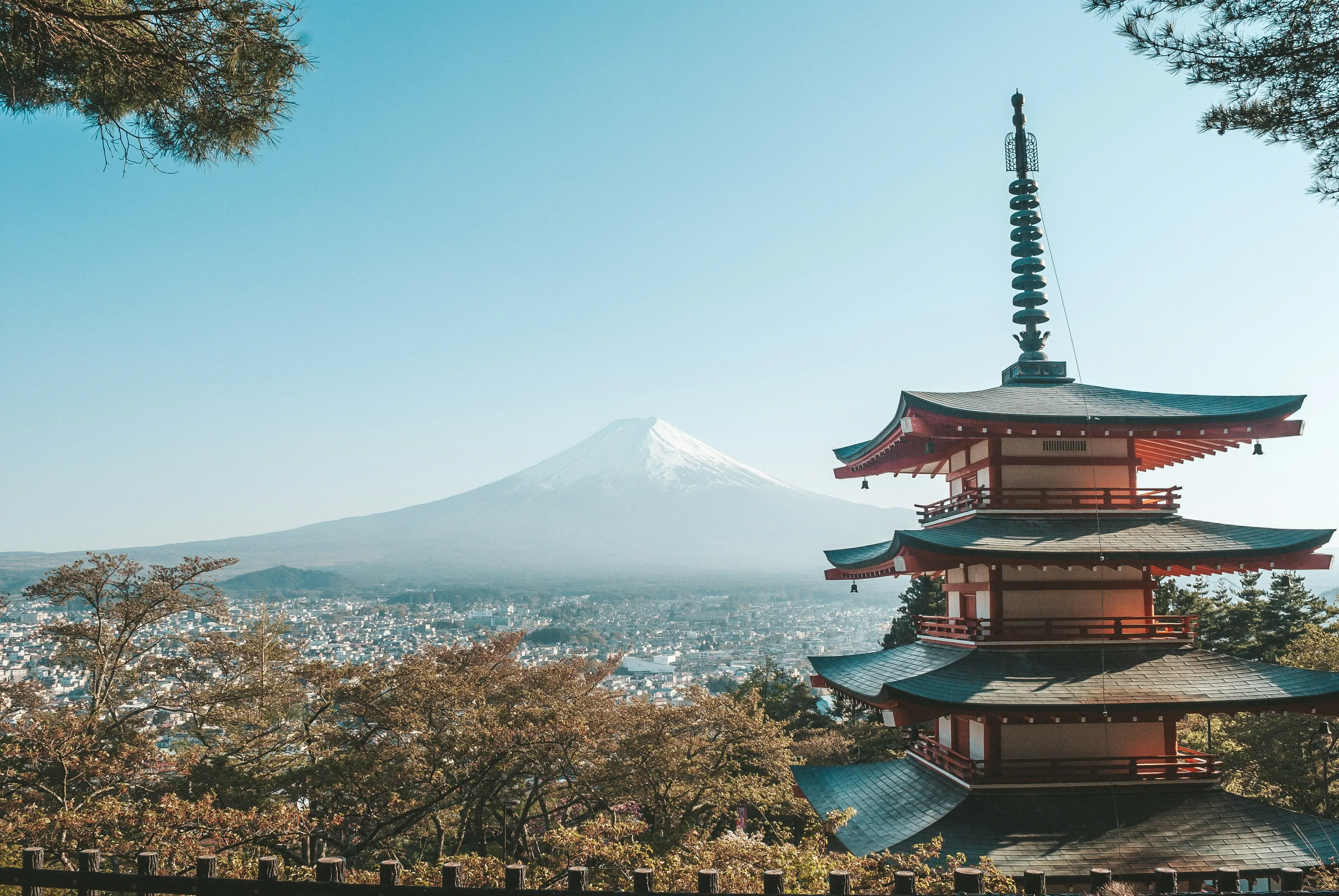
Japan Overview
Japan is a constitutional monarchy of 123 million residents under Emperor Naruhito (since 2019) and a parliamentary democracy governed by the Liberal Democratic Party for most of the post-1955 era. The country is a founding member, founding member, and a Quadrilateral Security Dialogue (Quad) partner with the US, India, and Australia; it is not a member of the or any equivalent treaty bloc, though bilateral economic-partnership agreements (CPTPP, EU-Japan EPA, RCEP) provide broad market access. The legal system runs on civil law under the 1947 Constitution drafted under US occupation; Article 9 commits Japan to renounce war and maintain only Self-Defense Forces, though recent reinterpretations have expanded the SDF's collective-defense scope. Tokyo, on the Kantō Plain, has been the capital since 1869 and is the political, financial, and cultural centre; Osaka, Kyoto, Yokohama, Fukuoka, and Sapporo anchor the regional cities.
On This Page
- 1.Japan Overview
- 1.1How Does Japan Compare?
- 1.2Who does Japan fit?
- 1.3Pros and Cons of Relocating to Japan
- 1.4Japan leads on Education — WRI 90.0 / 100
- 1.5Japan leads on Safety — WRI 89.0 / 100
- 1.6Residence
- 1.7Taxes on Personal Income
- 1.8Cost of Living
- 1.9Healthcare System
- 1.10Education System
- 1.11Banking & Finance
- 1.12Cryptocurrency Regulation
- 1.13Real Estate Market
- 2.Frequently Asked Questions
Quick Facts
- Passport Rank: 2
- Visa-Free Destinations: 187
- Capital: Tokyo
- Population: 123 million
- Area: 377,975 km²
- Currency: Japanese Yen (JPY)
- Official languages: Japanese
- Religions: Shinto 70%, Buddhism 67% (many observe both), Other/None 13%
Key Indicators
- GDP (Nominal): $4.1 trillion
- Unemployment Rate: 2.5%
- Human Development Index: 0.920 (Very High)
- GDP per Capita: $33,138
Safety & Governance
- Global Peace Index (IEP): 1.44 (Rank: 11, GPI 2024)
- Press Freedom Index (RSF): 68.34 (Rank: 70, RSF 2024)
- Corruption Perception (TI): 73/100 (Rank: 16, CPI 2024)
- Gini Coefficient (WB): 32.9
Health & Environment
- PM2.5 Air Pollution: 10.8 µg/m³
- Air Quality Category: Moderate
- ND-GAIN Adaptation Index: 64.8 (Rank: 28, ND-GAIN 2024)
- Life Expectancy: 84.3 years
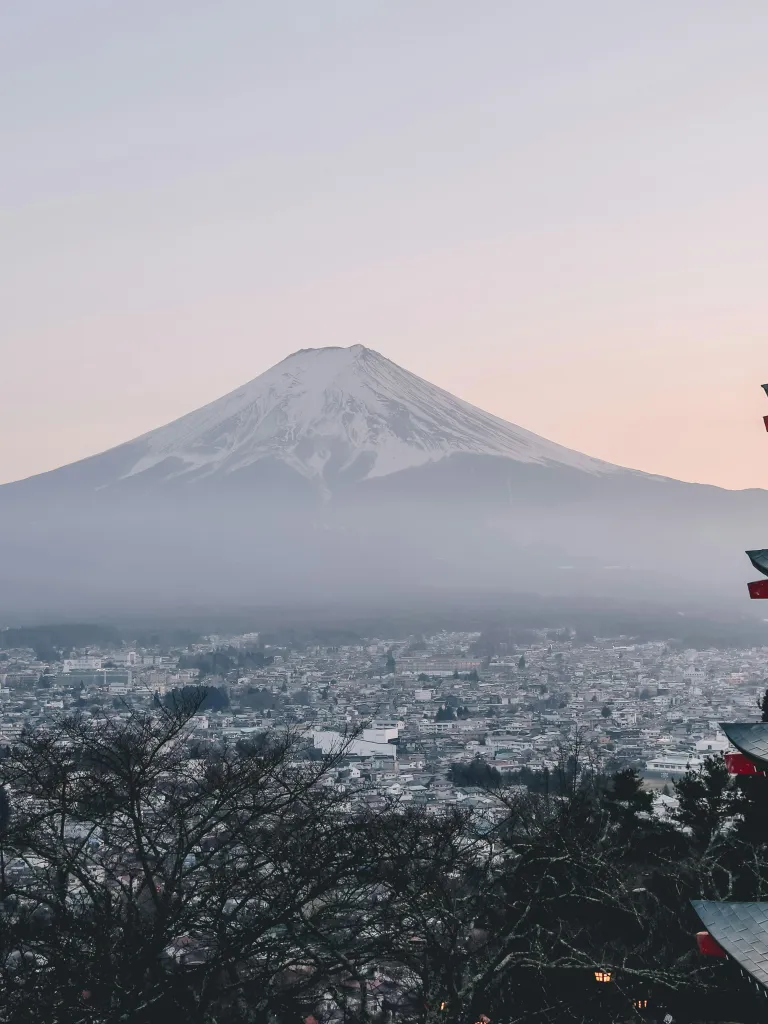
The proposition for an investor or relocator is unusually clean: one of the world's strongest passports (rank 2 globally, 187 destinations visa-free), top-decile safety (Global Peace Index rank 11) and education (PISA-leading public system, the University of Tokyo and Kyoto University in the global top 30), the world's longest life expectancy at 84.3 years, and the programme delivering permanent residency in as little as one year for top international talent. The cost is also unusually clean: no dual citizenship under Japanese law (naturalisation requires renunciation of all other nationalities), a top combined income tax rate near 55%, inheritance tax progressive up to 55% (among the world's highest), crypto trading taxed up to 55% as miscellaneous income, and a Japanese-language barrier across most administrative and professional pathways. Japan does not try to be for everyone — it is clear from the start who it is for.
How Does Japan Compare?
Summary
Japan (WRI 70.2, global rank 15) sits between El Salvador (72.4) and Portugal (70.1) in the live peer group, with the United States (72.9) and Panama (69.7) completing the comparison. Japan tops the peer group on Education (90.0) and Safety (89.0); the structural lags are on Citizenship (40.0, the lowest in the group), Investment (65.0), and Residency (60.0), reflecting the no-dual-citizenship requirement, the absence of an investor-residency route, and the Japanese-language barrier across most administrative pathways.
How Japan stacks up against its closest peers on the WRI 2026:
Where Japan wins: Education (90.0) tops the peer group: 2 points clear of the United States (88), 16 ahead of El Salvador (58), 26 ahead of Portugal (63.7), 48 ahead of Panama (42). PISA-leading public-school performance and the University of Tokyo (rank ~28 globally) anchor the score. Safety (89.0) also tops the group decisively: 13 points clear of Portugal (76), 14 ahead of Panama (74.9), 17.4 ahead of El Salvador (71.6), 23 ahead of the United States (66). GPI rank 11 of 163 and homicide rate around 0.3 per 100,000 are structural. Retirement (74.0) and Business (72.0) sit mid-pack.
Where Japan lags: Citizenship (40.0) is by far the weakest in the peer group — the Nationality Act requires Japanese naturalisation applicants to renounce all other nationalities, with discretionary Ministry of Justice approval; El Salvador (80), Panama (55), Portugal (54.8), and the US (52) all sit materially above. Investment (65.0) is also last in the group (vs US 89, El Salvador 75, Panama 74, Portugal 72.2) — the absence of an investor-residency route below the /J-Skip points threshold and the punitive 55% capital-gains treatment on crypto pull the score below peer levels. Residency (60.0) trails Panama (88), El Salvador (74), and Portugal (72.8);Japan has no Golden Visa, no Citizenship-by-Investment, and no dedicated lifestyle/retiree visa.
Who does Japan fit?
Summary
Japan fits top international talent qualifying for J-Skip or HSP fast-track permanent residency, founders building research-intensive ventures in Tokyo or Osaka, senior international executives moving with Japanese MNCs, and families prioritising public-school education and top-decile safety. It is a poor fit for applicants seeking a Golden Visa or Citizenship-by-Investment, dual-citizenship seekers, retirees relying on territorial taxation, lifestyle relocators wanting English-language administrative ease, and crypto traders given the punitive tax treatment.
Right fit:
- Top international talent qualifying for J-Skip or HSP fast-track — J-Skip (Special Highly Skilled Professional, launched April 2023) delivers a 1-year fast-track to permanent residency for applicants earning $170,000+ OR holding a master's from a top-ranked university plus $130,000+ salary plus 2 years of research; standard HSP delivers 1-3 year fast-track based on a points calculation.
- Founders building research-intensive ventures in Tokyo or Osaka — Business Manager Visa from approximately $33,000 capital plus 2 full-time employees (or capital plus a dedicated office); Tokyo and Osaka anchor the Asian deep-tech, robotics, and bioscience research ecosystems; J-Startup programme provides government support for selected ventures.
- Senior international executives moving with Japanese MNCs — Toyota, Sony, Honda, Hitachi, Mitsubishi, Nintendo, SoftBank, and 1,800+ Japanese-headquartered MNCs provide an established pipeline for senior international talent; HSP fast-track is routinely available for senior expatriate roles.
- Families prioritising public-school education and top-decile safety — PISA-leading public schools (free for residents, conducted in Japanese), top-decile global safety with homicide rate around 0.3 per 100,000, and the world's longest life expectancy at 84.3 years deliver one of the most family-friendly developed-economy profiles globally.
Wrong fit:
- Applicants seeking a Golden Visa or Citizenship-by-Investment — Japan has no Golden Visa, no Citizenship-by-Investment programme, and no investor route below the HSP/J-Skip points threshold; the Business Manager Visa requires active business operations, not passive investment.
- Dual-citizenship seekers — the Nationality Act requires Japanese citizens to choose a single nationality by age 22; naturalisation applicants must renounce all other nationalities, with discretionary approval at the Ministry of Justice.
- Retirees relying on territorial taxation — Japan taxes worldwide income on permanent tax residents (5+ years in last 10) at progressive rates up to 55% combined; there is no -equivalent new-resident incentive and no dedicated pensioner flat tax.
- Lifestyle relocators wanting English-language administrative ease — Japanese is the de facto official language; municipal offices, tax filings, healthcare paperwork, and most business interactions outside top-tier MNCs and HSP-track employers operate in Japanese; sworn translation and Japanese-fluent intermediaries are essential.
- Crypto traders — Japan classifies crypto income as 'miscellaneous income' under the Income Tax Act, taxable at progressive personal rates up to 55%; the regime is among the world's most punitive for active crypto traders, with no special long-term holding exemption.
Pros and Cons of Relocating to Japan
- 01MobilityWorld's 2nd-Strongest PassportWorld's 2nd-strongest passport opening 187 destinations visa-free; G7 membership, Quad partner, and dense diplomatic network.187 visa-free, rank 2
- 02SafetyTop-Decile SafetyTop-decile safety: Global Peace Index rank 11 of 163, homicide rate around 0.3 per 100,000, and one of the most predictable urban environments globally for women's safety at any hour.GPI rank 11
- 03EducationGlobally-Leading Public EducationGlobally-leading public education: PISA-leading scores in mathematics and science; the University of Tokyo (rank ~28 globally) and Kyoto University (rank ~50 globally) anchor a deep university tier.PISA leader + Todai
- 04HealthcareWorld's Longest Life ExpectancyWorld's longest life expectancy at 84.3 years; universal healthcare coverage via National Health Insurance (NHI) or Employees' Health Insurance (EHI), with 30% out-of-pocket co-payment on most care.84.3 yr life expectancy
- 05ResidencyJ-Skip Fast-Track to PRJ-Skip (Special HSP, launched April 2023) delivers 1-year fast-track to permanent residency for top international talent; standard HSP route provides 1-3 year fast-track.J-Skip 1-yr PR
- 06Cost of LivingCost-of-Living Advantage for USD EarnersJapanese yen weakness through 2024-2025 (~150-160 JPY/USD) materially reduces cost of living for USD-denominated earners; central Tokyo 1-bedroom rents around $1,300-$2,000/month.JPY weakness ~155/USD
- 07BusinessAsia's Deepest R&D EcosystemTokyo, Osaka, and Kyoto anchor Asia's deepest deep-tech, robotics, automotive, bioscience, and design ecosystems; J-Startup programme provides government support for selected ventures.Tokyo/Osaka R&D hubs
- 01CitizenshipSingle-Nationality RequirementNo dual citizenship under Japanese law: naturalisation requires renunciation of all other nationalities, with discretionary Ministry of Justice approval; Citizenship dimension (40.0) is among the lowest in the WRI index.No dual citizenship
- 02TaxationHigh Top Marginal Tax RateTop combined personal income tax rate near 55% (45% national + 10% local inhabitant tax) — among the world's highest; capital gains taxed at 20.315%.55% top combined
- 03TaxationPunitive Inheritance TaxInheritance tax progressive 10-55% — among the world's highest; spouse exemption applies but rates rise quickly for direct-line and other heirs.Inheritance 10-55%
- 04CryptoPunitive Crypto TaxationCrypto trading taxed up to 55% as miscellaneous income under the Income Tax Act; no special long-term holding exemption; one of the world's most punitive crypto-tax regimes.Crypto up to 55%
- 05LanguageJapanese Language BarrierJapanese language is essential for most administrative, healthcare, and professional pathways outside top-tier MNCs and HSP-track employers; sworn translation and Japanese-fluent intermediaries are standard.Japanese-only admin
- 06DemographicsAging Population + Slow GrowthAging population (29% over 65), structural deflation cycles, and a labour market that historically rewards seniority over lateral hiring — challenging for mid-career foreign professionals outside specialist tracks.29% over 65
- 07Real EstateReal Estate Depreciation PatternReal estate depreciates: residential buildings in Japan are conventionally written down to near-zero value over 30 years (land retains value); the akiya (abandoned home) phenomenon affects 9 million+ properties outside major metros.Building depreciation
Japan leads on Education — WRI 90.0 / 100
Japan's Education score of 90.0 reflects one of the world's most consistent educational performance records. The public school system, free for residents and conducted in Japanese, has placed at or near the top of OECD PISA assessments in mathematics, science, and reading for two decades. The structurally distinctive feature is the school-attached extracurricular ecosystem (juku cram schools, club activities, after-school clubs), which extends formal learning hours significantly. At university level, the University of Tokyo and Kyoto University sit in the global top 50; Osaka, Tohoku, Tokyo Institute of Technology, and Keio anchor the next tier. Japanese university tuition runs approximately $5,000/year for national universities and $7,000-$11,000/year for private universities — among the lowest for high-ranked research universities globally, though most undergraduate programmes are conducted in Japanese. International school options cluster in Tokyo: the American School in Japan (ASIJ), the British School in Tokyo, Nishimachi International School, Saint Mary's International School, and Yokohama International School, with primary and secondary fees running $25,000-$35,000/year. The trade-off for non-Japanese-speaking families is the gap between the world-leading public system (which most expat children cannot meaningfully access) and the international-school market that runs at a fraction of the public-system enrolment scale.
Japan leads on Safety — WRI 89.0 / 100
Japan's Safety score of 89.0 reflects one of the world's most predictable security environments: Global Peace Index rank 11 of 163 with a score of 1.26, Corruption Perception Index 73 of 100 (rank 16 of 180), and a homicide rate around 0.3 per 100,000 — one of the lowest in any developed economy. The structural drivers are unusual: extremely low firearm ownership (handguns effectively banned for civilians), a culture of public-order enforcement that prioritises community policing through the koban (police box) network, and a justice system with a 99%+ conviction rate that produces very high deterrence. Petty crime is concentrated in Tokyo's Kabukicho and Roppongi nightlife districts but at rates materially below most Western European or US cities. Women's safety is high across the country at any hour, including on the dense late-night JR, Tokyo Metro, and Toei Subway networks; the women-only train cars on major lines during rush hour are a structural response to a specific historical issue (chikan groping) rather than a reflection of broader violence. The trade-off is Japan's Press Freedom rank 70 of 180, substantially lower than top G7 peers, reflecting institutional self-censorship through the Kisha Club press-club system that grants exclusive access to government and corporate sources in exchange for favourable coverage norms.
Residence
Japan's tax residency runs on a three-tier framework. (1) Permanent tax resident (Japanese national or foreign resident with domicile in Japan for 5+ years in the last 10): worldwide income taxation. (2) Non-permanent tax resident (foreign resident with domicile in Japan but <5 years in last 10): Japan-sourced income plus foreign income remitted to Japan. (3) Non-resident: Japan-sourced income only. Tax residents pay national income tax at progressive 5-45% on top of a flat 10% local inhabitant tax (residence tax), bringing the top combined effective rate near 55%. Capital gains on listed securities are taxed at a flat 20.315% (15% national + 5% local + 0.315% special reconstruction surtax). There is no wealth tax. Japan participates in OECD automatic exchange and is -compliant. The residence permit stack runs through several categories: the Business Manager Visa (approximately $33,000 capital plus 2 employees or office space), the Highly Skilled Professional (HSP) Visa (points-based, 70+ pts on education, salary, age, language, and activity criteria; 5-year permit with fast-track in 1-3 years), and J-Skip (Special HSP, launched April 2023, for applicants earning $170,000+ or holding a master's from a top-ranked university plus $130,000+ salary plus 2 years of research; 1-year fast-track to PR).
Safety is the other half of the residency case, and Japan delivers on this dimension as strongly as almost anywhere. The Global Peace Index rank 11 of 163 and homicide rate around 0.3 per 100,000 place Japan among the calmest urban environments in any developed economy. Petty crime concentrates in Tokyo's Kabukicho and Roppongi nightlife districts; outside specific entertainment zones, day-to-day safety is among the most consistent globally. Women's safety is high across the country at any hour, including on the late-night JR, Tokyo Metro, and Toei Subway networks. The trade-off is the Press Freedom rank 70 of 180, substantially below top G7 peers, reflecting the institutional Kisha Club press-club system and self-censorship norms in mainstream Japanese media; investigative journalism on government and corporate matters operates within tighter informal constraints than in Western European or Anglo-Saxon peers.
Taxes on Personal Income
Japan's personal income tax is a seven-band progressive structure on top of a flat 10% local inhabitant tax. National rates: 5% (up to ~$13,000), 10% (~$13k-$26k), 20% (~$26k-$45k), 23% (~$45k-$58k), 33% (~$58k-$120k), 40% (~$120k-$260k), 45% (above $260k). The local inhabitant tax adds 10% flat, bringing top combined to approximately 55%. Capital gains on listed securities are taxed at 20.315% (15% national + 5% local + 0.315% special reconstruction surtax that applies through 2037). Dividends taxed similarly; alternative aggregated-income treatment available for unlisted shares. Inheritance tax runs progressive 10-55% — among the world's highest — with a basic deduction of approximately $200,000 plus $40,000 per heir, plus spouse-specific reductions; direct-line and unrelated heirs face the full rate scale on amounts above the threshold. Gift tax mirrors inheritance with separate annual exemption around $730. There is no wealth tax. Consumption tax (VAT) is 10% standard (8% on food, beverages, books, and newspapers). A Japanese tax resident earning $500,000 lands at an effective combined rate near 47%, in line with high-tax European peers and significantly above territorial-regime Asia-Pacific peers like Singapore (~19%) or Hong Kong (~17%).
Cost of Living
Japan is materially cheaper than most developed-economy peers for USD-denominated earners — the yen's 30-40% depreciation against the dollar since 2021 has reshaped the cost-of-living calculation. A single professional in central Tokyo should plan around $2,000-$3,000/month for a comfortable life: rent, transport, dining, private health cover supplement. A 1-bedroom in central Tokyo (Minato, Shibuya, Shinjuku, Chiyoda) runs $1,300-$2,200/month; central Osaka (Umeda, Namba) $700-$1,200/month; Kyoto $700-$1,400/month; smaller cities (Fukuoka, Sapporo, Hiroshima) $500-$900/month. A family of three lands $4,000-$6,500/month in Tokyo including international school fees averaged across the year. Vehicle ownership is moderate ($25,000-$45,000 for a new mid-range sedan, but parking in Tokyo runs $300-$600/month per car); most residents use the dense JR, Tokyo Metro, Toei Subway, and Shinkansen networks. National Health Insurance (NHI) or Employees' Health Insurance (EHI) is mandatory and income-based; supplementary private cover runs $50-$200/month. Restaurant prices: a casual meal $8-15, a mid-range dinner $30-60, a top tasting menu $200-500+.
Healthcare System
Japan runs a universal healthcare system through two main schemes: National Health Insurance (NHI) for self-employed, unemployed, and retired residents, and Employees' Health Insurance (EHI) for company employees and their dependents. Both schemes are mandatory for all residents (foreigners enrolled within 30 days of arrival), with premiums calculated as a percentage of income (typically 5-10% split between employer and employee for EHI; income-scaled for NHI). The standard out-of-pocket co-payment is 30% on most care, with reductions for low-income residents and children. The system delivers consistently high quality and access: specialist consultations are direct-access (no GP gatekeeping), wait times are short (typically same-week for routine specialist appointments), and Japan has one of the world's highest densities of MRI and CT scanners per capita. Specialist consultation runs $30-$80 cash; an inpatient day $200-$500; complex procedures handled at the major university hospitals (Todai Hospital, Keio, Kyoto University Hospital, Osaka University Hospital). Life expectancy of 84.3 years is among the world's highest, reflecting healthcare quality, low pollution outside specific industrial zones, a Japanese-style diet pattern (low red meat, high fish, high vegetables), and a culture of preventive medical screening.
Education System
Japan's education system is structured around six years primary, three years lower-secondary (compulsory), and three years upper-secondary (non-compulsory but ~98% attendance), followed by university or vocational tracks. The public system is free at primary and lower-secondary levels (including textbooks for compulsory grades) and tuition-charged but heavily subsidised at upper-secondary; instruction is in Japanese throughout. The structurally distinctive feature is the supplementary juku (cram school) and yobikō (prep school) ecosystem, which extends formal study hours significantly and prepares students for the highly competitive university entrance examination system. At university level, the University of Tokyo (Todai) and Kyoto University sit in the global top 50; Osaka, Tohoku, Tokyo Institute of Technology, Keio, and Waseda anchor the next tier. National-university tuition runs approximately $5,000/year; private universities $7,000-$11,000/year — among the lowest for top-ranked research universities globally, though most undergraduate programmes are in Japanese (English-medium graduate programmes are increasingly available). International school options cluster in Tokyo (ASIJ, British School in Tokyo, Nishimachi International, Saint Mary's, Sacred Heart, K. International, Yokohama International) and Kobe (Canadian Academy), with primary and secondary fees running $25,000-$35,000/year. The trade-off for non-Japanese-speaking families is the gap between the world-leading public system (effectively closed to children without Japanese fluency) and the international-school market that operates at a fraction of public-system scale.
Banking & Finance
Opening a Japanese bank account requires a Resident Card (Zairyū Card), a Japanese phone number, and a registered address with the local municipality (jūmin-hyō registration); most retail banks require these in person and conduct onboarding in Japanese. The dominant local banks are the "Big Three" megabanks: MUFG (Mitsubishi UFJ Financial Group), SMBC (Sumitomo Mitsui), and Mizuho; Japan Post Bank remains the largest retail network by branch count. Foreign-friendly options include Shinsei Bank (Mandarin and English signage), SBI Net Bank (online-first, English interface), and Rakuten Bank. International private banking is limited: Citibank Japan retains some HNW client business; foreign private banks operate through limited Japanese subsidiaries. Foreign credit history does not transfer; most newcomers wait 6-12 months of Japanese income records and Japan-issued credit-card use to build a local credit profile. Mortgages for foreign buyers are available at moderate down payments (20-30%) at rates currently around 0.4-1.5% on 30-35 year terms — one of the world's lowest mortgage-rate environments. There are no exchange controls. Japan participates in OECD CRS automatic exchange (since 2018) and is FATCA-compliant. The Bank of Japan (BOJ) is the central bank; the Financial Services Agency (FSA) acts as integrated financial supervisor.
Cryptocurrency Regulation
Japan was the first country to formally regulate cryptocurrency as a payment instrument under the Payment Services Act (2017), and the FSA licenses crypto exchanges through a strict registration regime: bitFlyer, Coincheck, GMO Coin, BitTrade, Liquid, and roughly 30 other licensed Crypto Asset Exchange Service Providers (CAESPs) operate under FSA oversight. Tax treatment is the regime's defining feature and most punitive aspect: crypto gains by individuals are classified as "miscellaneous income" under the Income Tax Act, taxed at progressive personal rates up to 55% combined (45% national + 10% local), with no special long-term holding exemption and no flat 20.315% treatment as listed-securities gains receive. Crypto-as-payment is permitted and crypto businesses must report transactions; AML/KYC follows travel-rule standards with strict implementation since 2023. Self-custody is unrestricted at the federal level. The regime has produced one of the world's most regulated and consumer-protective crypto markets, but the tax structure is materially more punitive than peer jurisdictions like Singapore (0% CGT) or Switzerland (0% CGT on private crypto), driving many Japanese active traders to relocate tax residency for major realised gains.
Real Estate Market
Foreign buyers can purchase Japanese real estate without nationality-based restrictions at the federal level, though the Land Use Restriction Act of 2021 restricts purchases within designated security zones near US military bases, JSDF facilities, and critical infrastructure. The structural feature of the Japanese real estate market is building depreciation: residential buildings are conventionally depreciated to near-zero value over 30 years (land retains value), unlike most Western markets where buildings hold long-term value. The akiya (abandoned home) phenomenon affects 9 million+ properties outside major metros, with prefectures like Wakayama, Tokushima, and Akita running formal "akiya banks" listing abandoned homes available at nominal prices (often $5,000-$30,000) with renovation requirements. The headline urban numbers: prime central Tokyo (Minato, Shibuya, Chiyoda, Bunkyo) condominiums average $8,000-$15,000/m²; Osaka prime $4,500-$7,500/m²; Kyoto prime $5,000-$8,000/m². Real-estate transfer tax (acquisition tax) runs approximately 3% of taxable value for residential property; registration tax adds 1.5%; annual property tax (fixed asset tax + city planning tax) runs ~1.4-2.0% of taxable value. Mortgages for foreign B/HSP-permit buyers are widely available at 0.4-1.5% on 30-35 year fixed-or-floating terms — one of the world's most favourable mortgage-rate environments. Gross rental yields run 3-5% in central Tokyo and 5-8% in non-prime urban; long-term capital appreciation has averaged 1-3% annually in prime Tokyo with significant non-prime stagnation.


