WorldPath AIWORLDPATH•AI
Asia-Pacific

Japan Passport

Ranked #2 Globally

In 2026, Japan's passport sits in joint second place worldwide alongside South Korea and the United Arab Emirates. Its holders can fly to 187 countries either without a visa or with a quick visa-on-arrival. Japanese citizens reach the entire (the borderless travel zone covering most of Europe) without controls, the United States visa-free under the Visa Waiver Program, and — under a Beijing arrangement extended through 31 December 2026 — mainland China for 30-day stays. The passport is issued only to Japanese nationals by (the Ministry of Foreign Affairs), through prefectural passport centres across the country. Japan does not sell citizenship, and naturalisation now requires ten years of residency under screening standards that took effect on 1 April 2026.

2nd
Global Ranking
187
Destinations
96.17
Mobility Score
Japan Passport - Passport Power 1st | worldpath.ai WRI

Japan Passport Global Mobility Context

Japan is a founding (Group of Seven major industrial democracies) member, an (Organisation for Economic Co-operation and Development) member, and a long-running top contributor to United Nations operations. That stack shapes how every border officer reads a Japanese passport.

(Ministry of Foreign Affairs) runs about 230 missions worldwide and the country remains one of the largest official development assistance donors in the OECD. Wide diplomatic reach translates directly into how seriously border officers treat the document.

Japan rolled out (International Civil Aviation Organization) 9303-compliant biometric ePassports at national scale on 20 March 2006, ahead of any peer at that time. The contactless chip carries the holder's photo and biographical data, and is read natively by e-gates at Singapore Changi, Tokyo Haneda, Seoul Incheon, and the European Union's (Entry/Exit System — the biometric border-record platform that became fully operational on 10 April 2026).

The 24 March 2025 generation added anti-counterfeit imagery drawn from Hokusai's Edo-period "Thirty-Six Views of Mount Fuji" woodblock prints across the visa pages. Layered anti-forgery design and low refusal rates hold the document near the top of the index.

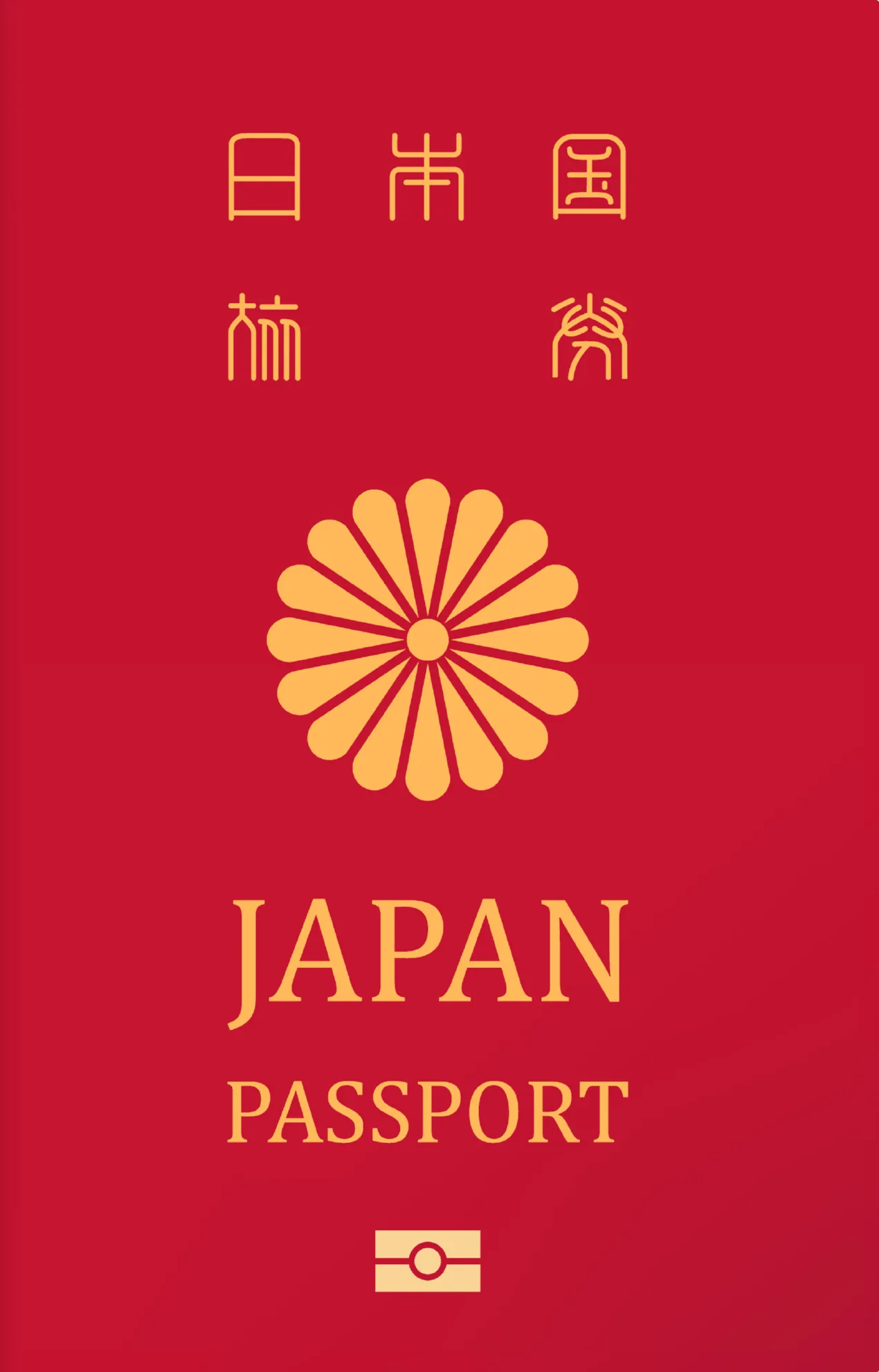
The Japanese passport is an international travel and identity document issued exclusively to Japanese nationals by the Minister for Foreign Affairs to facilitate entry into foreign countries and territories.

Japan Passport at a Glance

Global rank (2026)

#2 worldwide, tied with South Korea and the United Arab Emirates at 187 visa-free destinations per the leading mobility indices, second only to Singapore (192).

Visa-free destinations

187 destinations covering the full , the United States, the United Kingdom, mainland China (extended through 31 December 2026), every (Group of Seven) economy, and most (Association of Southeast Asian Nations) member states.

Document type

Biometric ePassport with a contactless chip following the international (International Civil Aviation Organization) 9303 standard. Japan began issuing ePassports on 20 March 2006; the latest design rolled out on 24 March 2025.

Page count

51 pages in the ten-year ordinary passport, issued by (Ministry of Foreign Affairs) through prefectural passport centres in all 47 prefectures.

Languages

Japanese and English on every printed field of the bearer's data page; security notices appear only in Japanese.

Adult validity

10 years for adults aged 18 and over. From 1 July 2026, the five-year option for adults was abolished — adults can only apply for the 10-year ordinary passport.

Child validity (under 16)

5 years for applicants under 18. The 10-year option is not available to minors, so families with young children renew more frequently.

Dual citizenship

Not permitted for adults. Under Articles 11 and 14 of the Nationality Act, a Japanese citizen who voluntarily acquires another nationality automatically loses Japanese nationality, and a person with multiple nationalities must choose one before age 22.

Issuing authority

(Ministry of Foreign Affairs), with operational issuance handled by prefectural passport centres under the Consular Affairs Bureau. The Minister for Foreign Affairs is the formal issuing authority under the Passport Act.

History

Earliest Japanese travel documents date to 1866; the first passport regulations were enacted in 1900; machine-readable passports launched in 1992; biometric ePassports since 20 March 2006; new design released 24 March 2025.

Japan Passport Visa-Free Destinations by Region

Regional Mobility

Economic Mobility Score: 96.17%Country GDP: 4.44%
Visa Exceptions
Asia-Pacific shows 98% regional mobility — Japan reaches mainland China visa-free under the current Beijing arrangement through 31 December 2026, with a unilateral 30-day window for tourism, business, and family visits. North Korea and a handful of conflict-zone destinations still require a full visa. Some destinations require a short online pre-authorisation (ESTA, ETA, eVisitor, NZeTA, or e-visa) before arrival.

The headline destinations a Japanese traveller reaches with no prior visa are the United States (via the Visa Waiver Program and an — Electronic System for Travel Authorization — pre-screening), Canada (via an online authorisation), the United Kingdom (via an ETA from 8 January 2025), the full (90 days within any 180-day window), Australia (eVisitor or ETA), and mainland China (30-day stays under the unilateral Beijing arrangement now extended through 31 December 2026).

Americas

Japan and the United States have shared a Visa Waiver Program slot since 1988 — Japanese visitors fly to the US after applying for an ESTA online pre-screening and pay USD 21 for two years of multi-entry approval. Canada uses a separate eTA online form approved in minutes for air travel. Mexico admits Japanese citizens visa-free for 180 days, Brazil for 90 days within a rolling 180-day window, and every Central American republic plus Costa Rica, Panama, the Dominican Republic, and most South American states — Argentina, Chile, Peru, Colombia, Uruguay, Ecuador — accept Japanese passports without a visa for short tourism stays.

Europe

Japanese passport holders enter the entire 29-country Schengen Area without a visa for stays of up to 90 days within any 180-day window. That covers France, Germany, Italy, Spain, the Netherlands, Belgium, Austria, Switzerland, Greece, Portugal, the Nordic countries, the Baltics, and newer Schengen members Croatia, Bulgaria, and Romania. The non-Schengen Balkans — Albania, Serbia, Bosnia and Herzegovina, Montenegro, North Macedonia, and Moldova — also accept Japanese visitors without paperwork. The United Kingdom shifted to an ETA (Electronic Travel Authorisation) regime on 8 January 2025; Japanese travellers now apply online, pay GBP 16, and receive a two-year multi-entry approval before flying. (the European Travel Information and Authorisation System), the European Union's online pre-screening, is scheduled for late 2026 with a six-month transition; once enforced, Japanese visitors will apply online for a EUR 7 three-year approval. The (Entry/Exit System — the biometric border-record platform replacing manual passport stamps) became fully operational on 10 April 2026.

Asia-Pacific

This is where the Japanese passport's regional pedigree shows most clearly. Japan resumed visa-free access to mainland China on 30 November 2024 under a unilateral Beijing pilot covering tourism, business, family visits, and transit; the arrangement was extended on 4 November 2025 to run through 31 December 2026, with 30-day stays per visit. South Korea grants Japanese visitors 90 days visa-free; the K-ETA pre-screening exemption for Japanese citizens runs through 31 December 2025. Taiwan allows 90 days, Hong Kong 90 days, Macau 90 days, Thailand 60 days, Vietnam 45 days, Malaysia and Singapore 30-90 days, Indonesia 30 days on arrival. Australia and New Zealand use online eVisitor and (New Zealand Electronic Travel Authority) forms approved in minutes. Japanese travellers reach almost every Pacific island nation — Fiji, Samoa, Tonga, Palau, the Marshall Islands — without prior paperwork.

Middle East

The Gulf Cooperation Council states are an easy entry point for Japanese passengers transiting Doha or Dubai. The United Arab Emirates and Qatar grant 30 days visa-free, Oman 14 days, and Saudi Arabia issues a 90-day e-visa online for tourism or family visits. Israel uses an (Electronic Travel Authorisation Israel) approved online before arrival. Jordan, Bahrain, and Kuwait offer visa-on-arrival or e-visas. Iran technically grants Japanese citizens 15 days visa-free, but Japan's foreign ministry currently advises against non-essential travel to Iran on security grounds.

Africa

Visa-free or visa-on-arrival entry covers most of the African destinations a Japanese traveller is likely to reach. South Africa, Tunisia, Morocco, Senegal, Mauritius, and Botswana grant 90 days without prior paperwork. Kenya now uses an ETA (Electronic Travel Authorisation) online application at USD 32.50 for 90 days. Egypt, Tanzania, Rwanda, Ethiopia, Madagascar, Uganda, and Zambia issue e-visas or visa-on-arrival for short stays. The African destinations that still require a full advance visa — Ghana, Liberia, Mali, Sudan, the Republic of Congo, and several Central African states — are mostly destinations Japan's foreign ministry advises citizens to avoid for security reasons.

Offshore Jurisdictions

The international financial centres that matter to internationally mobile Japanese holders are open without paperwork. The Cayman Islands and Bermuda grant six months visa-free for tourism. The British Virgin Islands and the Bahamas each admit Japanese visitors for 90 days — a convenient short-stay window for travellers connecting via Miami or Newark. The Channel Islands (Jersey and Guernsey), the Isle of Man, and Gibraltar are visa-free as British dependencies under the same UK-Japan understanding. Hong Kong (90 days) and Singapore (30 days), both Asian financial hubs, double as offshore jurisdictions and are also covered above under Asia-Pacific.

Where a Visa Is Still Required

  • Russia: Full e-visa required; Japan's foreign ministry advises against non-essential travel since 2022.
  • India: 30-60 day e-visa applied online before travel.
  • North Korea: Full visa with additional screening; Japan's foreign ministry advises against all travel.
  • Turkmenistan: Full visa with a letter of invitation required.
  • Ghana, Liberia, Mali, Sudan, the Republic of Congo, several Central African states: Full embassy visa required; non-essential travel discouraged.

How to Get a Japan Passport

1

Get the Right Long-Stay Visa

There is no investor passport, no donation route, and no citizenship-by-investment programme. The path to a Japanese passport starts with a long-stay visa in one of Japan's resident-status categories under the Immigration Control and Refugee Recognition Act.

The most common entry points are the Engineer/Specialist in Humanities/International Services visa for skilled professionals, the (Highly-Skilled Professional) visa launched in May 2012, the Business Manager visa for company founders, the Spouse of Japanese National visa, and the and visas introduced in 2023 for top international graduates and very high earners.

The HSP visa runs on a points table. Education, salary, age, professional achievements, and Japanese language proficiency are scored; a candidate scoring 70 or more qualifies for , and 80 or more puts the applicant on the fast track. The J-Skip visa grants direct status to researchers and engineers earning JPY 20 million or more per year, or business managers earning JPY 40 million or more, bypassing the points table.

The Engineer visa, the Business Manager visa, and the HSP visa each issue a residence card valid for one to five years and renewable. Most Japanese language schools also offer a one-year student visa that converts to a work visa after graduation. Spouse-of-Japanese-National visas issue a similar residence card with broader work rights.

2

Build the Required Residency History

From 1 April 2026, the Ministry of Justice doubled the standard residency requirement for naturalisation from five years to ten years of continuous lawful residence in Japan. Tax-verification reviews extended from one year to five, and social-insurance reviews extended from one year to two. The ten-year baseline applies to all applications whose decisions are released on or after that date.

Three shortcuts compress the ten-year baseline. The visa lets a candidate apply for permanent residency after three years if they hold 70+ points, or after only one year with 80+ points; permanent residency in turn opens the path to naturalisation. The Spouse of Japanese National visa allows naturalisation after three years of marriage and one year of Japanese residence. The third shortcut applies to descendants of Japanese nationals (third-generation or earlier under the Long-Term Resident visa), who face shorter residency tests but the same Japanese-language and character requirements.

The ten years must be unbroken. Absences over 90 days in any single trip, or absences totalling more than about 120 days a year, reset the clock for naturalisation purposes. Tax compliance is reviewed across the full five-year window — late filings, unpaid resident tax, or unpaid social-insurance premiums are routine grounds for rejection under the 2026 standards.

3

Apply for Citizenship at the Legal Affairs Bureau

Naturalisation applications are filed in person at the applicant's regional Legal Affairs Bureau (Houmu-kyoku) under the Ministry of Justice. There is no online application — the applicant assembles a paper file and submits it through the bureau covering the applicant's address of registered residence.

Five legal tests govern approval under the Nationality Act. The applicant must be at least 18 years old; have lived in Japan for the required period (ten years from 1 April 2026); be of upright conduct under Article 5(1)(iii); have a stable livelihood without reliance on public assistance; and either hold no other nationality or commit in writing to lose the other on naturalisation, since Japan does not permit dual citizenship for adults.

Required documents include the residence certificate (juminhyo), the certified family register that will be created on naturalisation, full tax-payment records for the previous five fiscal years, social-insurance payment records, an income statement, marriage and birth certificates from the home country (with apostille and Japanese translation), and a hand-written personal-history statement in Japanese covering education, employment, and residence history.

Processing takes 12 to 18 months from filing to decision. There is no application fee — naturalisation in Japan is genuinely free of charge at the government level — although applicants almost always engage a gyoseishoshi (administrative scrivener) or immigration attorney for the paperwork; market rates run JPY 150,000 to 350,000.

4

Apply for the Passport at a Prefectural Passport Centre

Once the Minister of Justice publishes the naturalisation in the Official Gazette (Kanpou) and the new family register is created at the applicant's municipal office, the new citizen is eligible to apply for a Japanese passport. Applications are filed in person at the prefectural passport centre covering the applicant's address.

Required documents are the new family register copy (koseki tohon) issued within the past six months, a photo identity document, and one -compliant photograph 35 mm by 45 mm taken within the previous six months. The applicant may bring a previous foreign passport for biographical reference; it will not be confiscated, but the surrender of any other nationality is a separate process handled with the relevant foreign embassy.

Under the revised Passport Act in force from 1 July 2026, the application fee for the ten-year ordinary passport was reduced to about JPY 9,000 (about USD 60 at May 2026 exchange rates), down from the prior JPY 16,000. The five-year passport for minors costs about JPY 4,500. Processing takes six to ten working days at most prefectural centres; the applicant collects the passport in person and signs for it at the counter.

The first passport is the ordinary biometric ePassport with a contactless ICAO 9303 chip. The current 24 March 2025 design uses anti-counterfeit security imagery drawn from Hokusai's woodblock-print series across the visa pages. There is no separate cost for the chip or for the underlying biometric registration.

Alternative Route: Birth and Recovery Routes under the Nationality Act

Japan does not have a citizenship-by-descent application route in the way that Italy, Ireland, or Hungary do. Japanese nationality is acquired at birth under Article 2 of the Nationality Act if at least one parent is a Japanese national at the time of the child's birth, regardless of the place of birth. Children born in Japan to foreign parents do not acquire Japanese nationality at birth — Japan follows jus sanguinis (citizenship by descent through a parent), not jus soli (citizenship by place of birth).

For someone born to Japanese parents abroad, the path is a reservation of nationality (kokuseki ryuho) filed by the parent within three months of birth at the Japanese consulate covering the birthplace. If the reservation is filed in time, the child holds Japanese nationality and can apply for a Japanese passport directly. If the reservation is missed, the child loses Japanese nationality under Article 12 and can only recover it under Article 17 by filing a notification of nationality choice while ordinarily resident in Japan before age 22.

A separate notification route exists under Article 17 for former Japanese nationals who lost the nationality under Article 11 by voluntarily acquiring foreign citizenship as adults. Recovery requires filing a kokuseki saishutoku-kyoka shinsei (application to permit nationality reacquisition) at the Ministry of Justice while the applicant is ordinarily resident in Japan. The Minister has discretion to refuse, and approval is rare in practice — the route is typically used by elderly returnees or by those who lost nationality involuntarily during the wartime or post-war periods.

There is no fast-track for descendants of pre-war emigrants comparable to Italy's iure sanguinis or Israel's Law of Return. Japanese-descended persons living abroad — the so-called nikkeijin community in Brazil, Peru, the United States, and elsewhere — may qualify for the Long-Term Resident visa (teijuusha visa) under a special administrative regime, which grants broad work rights and a clear path to permanent residency but not automatic citizenship.

Comparison of Japan Passport With Other Top Passports

Passport

Rank

Visa-free

Key edge

Singapore Passport

#1

192

Same global top tier; comparable Asia mobility

Germany/France/Italy Passports

#4

185

EU citizenship — live and work in 27 states

United Kingdom Passport

#7

182

Common-law peer; English-speaking financial hub

United States Passport

#10

179

Worldwide-tax contrast on a similar mobility tier

Where the Japanese passport stands at the top of the index depends on which axis the comparison runs along — pure mobility, (European Union) labour-market access, or tax exposure. The picks below frame each contrast through a Japanese holder's perspective.

Japan vs Singapore. Singapore sits at #1 with 192 destinations; Japan sits at joint #2 with 187. Both unlock the deepest Asia-Pacific mobility on the index, and the five-destination gap is concentrated in a handful of Caribbean and African states. The meaningful contrast is policy: Singapore prohibits dual nationality too, but naturalises in roughly two years against Japan's ten-year baseline from April 2026.

Japan vs the EU top tier. A German, French, or Italian passport ranks at #4 with 185 destinations but unlocks something Japan cannot: free movement to live, work, and settle in all 27 EU states. A Japanese visitor reaches the visa-free for 90 days per 180; a German citizen can move to Lisbon on a Tuesday and start work on Wednesday. For long-term EU work, Japanese citizens need a national permit and sponsorship.

Japan vs the United States. The United States sits at #8 with 182 destinations. The mobility gap is narrow on paper but meaningful: Japan reaches mainland China visa-free under the current Beijing arrangement, while US citizens still need a Chinese visa. The deeper contrast is tax exposure — the United States taxes citizens on worldwide income for life through the (Internal Revenue Service) and (Foreign Account Tax Compliance Act); Japan taxes by residency.

Pros and Cons of the Japan Passport

Pros7 strengths
Cons7 frictions
  • 01Mobility
    Among The World's Most Powerful Passports
    Japan sits at joint second on the 2026 mobility indices with 187 visa-free destinations, behind only Singapore and tied with South Korea and the United Arab Emirates.
    #2 ranked
  • 02Mobility
    Visa-Free To Every G7 Economy And Mainland China
    Holders reach all Group of Seven partners plus mainland China, which is visa-free through end-2026 under a Beijing arrangement that most Western travellers cannot use.
    G7 + China
  • 03Mobility
    Streamlined Entry To The US And UK
    Japan has held a US Visa Waiver Program slot since 1988, so visitors travel on a quick online ESTA pre-screening, and reach Britain on an equally simple electronic authorisation.
    Easy US/UK
  • 04Standing
    Founding G7 Member With Wide Diplomatic Reach
    As a Group of Seven and OECD (Organisation for Economic Co-operation and Development) member running about 230 missions abroad, Japan's document is read as low-risk by border officers everywhere.
    G7 standing
  • 05Document
    National-Scale Biometric ePassports Since 2006
    Japan rolled out chip-embedded ePassports on the ICAO 9303 standard (International Civil Aviation Organization) in March 2006, ahead of its peers, easing e-gate clearance worldwide.
    Early chip
  • 06Validity
    Ten-Year Validity For Adult Holders
    Adults aged 18 and over carry a ten-year booklet, the longest standard term, meaning fewer renewal trips to a prefectural passport centre over a lifetime.
    10-yr adult
  • 07Document
    Generous Fifty-One-Page Booklet For Frequent Flyers
    The ten-year ordinary passport carries 51 pages, giving frequent travellers ample room for stamps and visas before a replacement is needed.
    51 pages
  • 01Rights
    Dual Citizenship Not Permitted For Adults
    Under Articles 11 and 14 of the Nationality Act, a Japanese citizen who voluntarily takes another nationality automatically loses Japanese nationality. Adults generally cannot hold two passports.
    No dual
  • 02Rights
    Multinationals Must Pick One Nationality By Age 22
    A person born with more than one nationality must formally choose a single one before turning 22. Failing to elect Japanese can cost them their Japanese citizenship.
    Choose by 22
  • 03Eligibility
    Ten-Year Baseline Before Naturalisation
    From April 2026, the standard residence requirement to naturalise as Japanese runs about ten years, far longer than Singapore's roughly two-year path for a comparable passport.
    10-yr wait
  • 04Descent
    Citizenship Passes Mainly By Parentage, Not Birthplace
    Japan follows strict jus sanguinis (citizenship by blood), so being born on Japanese soil grants no automatic nationality. A claim almost always needs a Japanese-citizen parent.
    Blood only
  • 05Mobility
    No Right To Settle Or Work In The EU
    Japanese citizens visit Europe's Schengen zone visa-free for 90 days only. To live or take a job long-term in any European Union state they need a national permit and a sponsor.
    No EU work
  • 06Validity
    Short Five-Year Validity For Children
    Applicants under 18 get a five-year booklet with no ten-year option, so families with young children renew passports more frequently than adults do.
    5-yr child
  • 07Rights
    Foreign Naturalisation Strips Japanese Nationality
    Becoming a citizen of another country by choice automatically ends Japanese nationality. Emigrants who naturalise abroad forfeit their Japanese passport rather than keeping both.
    Lose on swap

Dual Citizenship — the Operational Rules

Japan does not permit dual citizenship for adults. The rule comes from two articles of the 1950 Nationality Act, both still in force and confirmed as constitutional by the Tokyo High Court in October 2024.

Article 11 — automatic loss on foreign naturalisation. If a Japanese citizen voluntarily acquires a foreign nationality as an adult — for example by naturalising elsewhere — Japanese nationality is lost automatically the moment the foreign citizenship vests. There is no notification or hearing. The former Japanese national must surrender the Japanese passport and notify the Ministry of Justice and the local family register office. The Tokyo High Court confirmed Article 11 as constitutional in October 2024 after a 2021 challenge brought by Japanese nationals living abroad.

Article 14 — the choice of nationality. A person who acquires multiple nationalities at birth (typically a child born to a Japanese parent and a foreign parent in a jus-soli country) must choose one nationality before turning 22 under Article 14. The choice is made by notifying the local family register office. Those who do not declare by the deadline may be asked by the Minister of Justice to make the choice within one month; further failure may result in automatic loss of Japanese nationality.

Enforcement in practice. Enforcement of Article 11 against Japanese citizens who quietly acquire a second nationality while living abroad has been historically rare — there is no global database that catches the change, and the loss is self-reported. Many Japanese citizens born with dual nationality do not formally choose by age 22; the deadline is enforced only when triggered, typically when the person applies for a new passport or registers a birth. The practical effect is grey-zone tolerance for the dual-at-birth case and a hard line on the adult-naturalisation case.

The border rule. A Japanese citizen who also holds a foreign passport must enter Japan on the Japanese passport. Using the foreign passport at a Japanese port of entry can trigger secondary inspection and questions about the status of the Japanese nationality on file. Abroad, the holder presents the passport that best fits the destination.

Bottom Line on the Japan Passport

The Japan passport stands as one of the strongest by pure mobility, second only to Singapore on the 2026 index and tied with South Korea and the at 187 destinations. The combination of (Group of Seven major industrial democracies) standing, deep diplomatic reach through 230 missions, and a biometric ePassport rolled out earlier than any peer keeps the document smooth at every border.

The structural advantages are concrete. Mobility reaches mainland China under the current Beijing arrangement through 31 December 2026, the United States under the Visa Waiver Program since 1988, and the full for short stays. From 1 July 2026, the 10-year ordinary passport costs about JPY 9,000 (around USD 60), down from JPY 16,000. Japan taxes by residency rather than by citizenship: a Japanese national who establishes non-resident status pays no Japanese tax on foreign income, and the first five years of residence as a non-permanent-resident taxpayer carry a remittance-based regime that shields offshore income from Japanese tax.

The structural costs are equally concrete. From 1 April 2026, naturalisation requires ten consecutive years of lawful residence — double the prior five-year baseline — and Japan does not permit dual citizenship for adults. The Article 11 rule means a foreign professional naturalising as Japanese must give up their original nationality, and Article 14 means a child born with two nationalities must pick one by age 22. The visa shortens the path to permanent residency to one to three years for qualifying high earners, but the underlying naturalisation clock still runs ten years from first registration in most cases.

For the internationally mobile, the 10-year validity, the recent fee reduction, and Japan's residency-based tax regime are major advantages. Holders must accept that Japan does not run a citizenship-by-investment market, that the dual-citizenship door is closed for adult naturalisation, and that ten years is now the residency baseline. The document is best suited for those willing to invest a decade in residence, language, and integration in exchange for treaty-anchored nationality with the deepest Asia-Pacific mobility.

Japan Passport FAQ

What is the Japan passport ranking in 2026?

As of January 2026, the Japanese passport ranks 2nd globally on global passport rankings with visa-free or visa-on-arrival access to 187 destinations — tied with South Korea and behind only Singapore (192 destinations). On the Passport Index 2026, Japan ranks 4th with a Mobility Score of 173/193. Japan has held a top-3 position on since 2018 and is among the most stable passports in the index, having never dropped below 3rd place in the past decade.

How many countries can you visit visa-free with a Japanese passport?

Japanese passport holders have visa-free, visa-on-arrival, or ETA access to 187 destinations. Key access zones include all 29 Schengen states, the US (ESTA), UK (ETA), Canada, Australia, New Zealand, China (restored 2025), South Korea, Singapore, Brazil, Argentina, and virtually all of Latin America and Southeast Asia. Fewer than 15 global destinations remain inaccessible — primarily North Korea and a handful of conflict-affected states.

Does Japan allow dual citizenship?

No. Japan prohibits dual citizenship under the Nationality Act. Anyone naturalising as Japanese must permanently renounce all prior citizenships. US citizens must formally expatriate at a US embassy, which is irrevocable. Japanese citizens who acquire foreign nationality must renounce their Japanese passport within two years. Children of mixed parentage may hold dual nationality until age 22. As of April 2026, no legislation permitting dual citizenship has been enacted, though the issue remains politically active.

How long does it take to get Japanese citizenship?

The minimum realistic timeline is 5 years of continuous legal residence (for HSP 80+ points holders or J-Skip qualifiers) plus 8–12 months of naturalisation processing. The standard investor route via Business Manager Visa requires 10 years of residence before permanent residency eligibility, followed by naturalisation. All routes require renunciation of prior citizenship, Japanese language proficiency, financial self-sufficiency, and full tax and social insurance compliance throughout the residence period.

Is the Japanese passport the strongest in the world?

By global passport rankings (January 2026), Japan ranks 2nd globally with 187 visa-free destinations — second only to Singapore (192). It surpasses all Caribbean CBI passports (St. Kitts: 156, Grenada: 147), all EU passports except those in the same top cluster, and outperforms the US passport (179 destinations, 10th rank). Japan uniquely regained visa-free access to China in 2025, an access that most top-ranked Western passports do not currently provide.

Can I get Japanese citizenship through investment?

No. Japan has no citizenship by investment programme. The closest pathway is the Business Manager Visa, requiring a registered company with minimum ¥5 million capital. This leads to permanent residency after 10 years (or 3 years with ¥100 million investment), and citizenship after a further naturalisation process requiring renunciation of all prior nationalities. The total minimum timeline is 5–10 years; there is no shortcut to immediate citizenship.

How does the Japanese passport compare to other top passports?

The Japanese passport (188 destinations, Rank 2) surpasses Italy (185, Rank 4), Germany (185, Rank 4), the US (179, Rank 10), and all Caribbean CBI passports. It provides China access that most EU passports lack (restored 2025). The key distinction: Japan requires full citizenship renunciation and a 5–10 year residence commitment, while EU passports (Germany, Italy, France) permit dual citizenship. For investors considering the Japanese passport, the mobility premium over EU alternatives is approximately 3–5 destinations — the true value is China access and the institutional credibility of a G7 issuing country.

What are the requirements for naturalisation in Japan?

Standard naturalisation requires: 5 years of continuous legal residence (shorter for spouses of Japanese nationals and HSP visa holders), Japanese language proficiency at a functional conversational level, financial self-sufficiency with no dependency on public assistance, a clean criminal record in Japan and abroad, full compliance with Japanese tax, pension, and social insurance obligations, and formal renunciation of all prior citizenships. The Ministry of Justice has full discretionary authority and does not guarantee approval even when all criteria are met. Updated operational guidelines effective April 1, 2026 apply stricter compliance verification.

Verified by

Sarah Mitchell
Senior Immigration Advisor
at WorldPath AI