WorldPath AIWORLDPATH•AI
Abstraction background for New Business Domicile
Americas

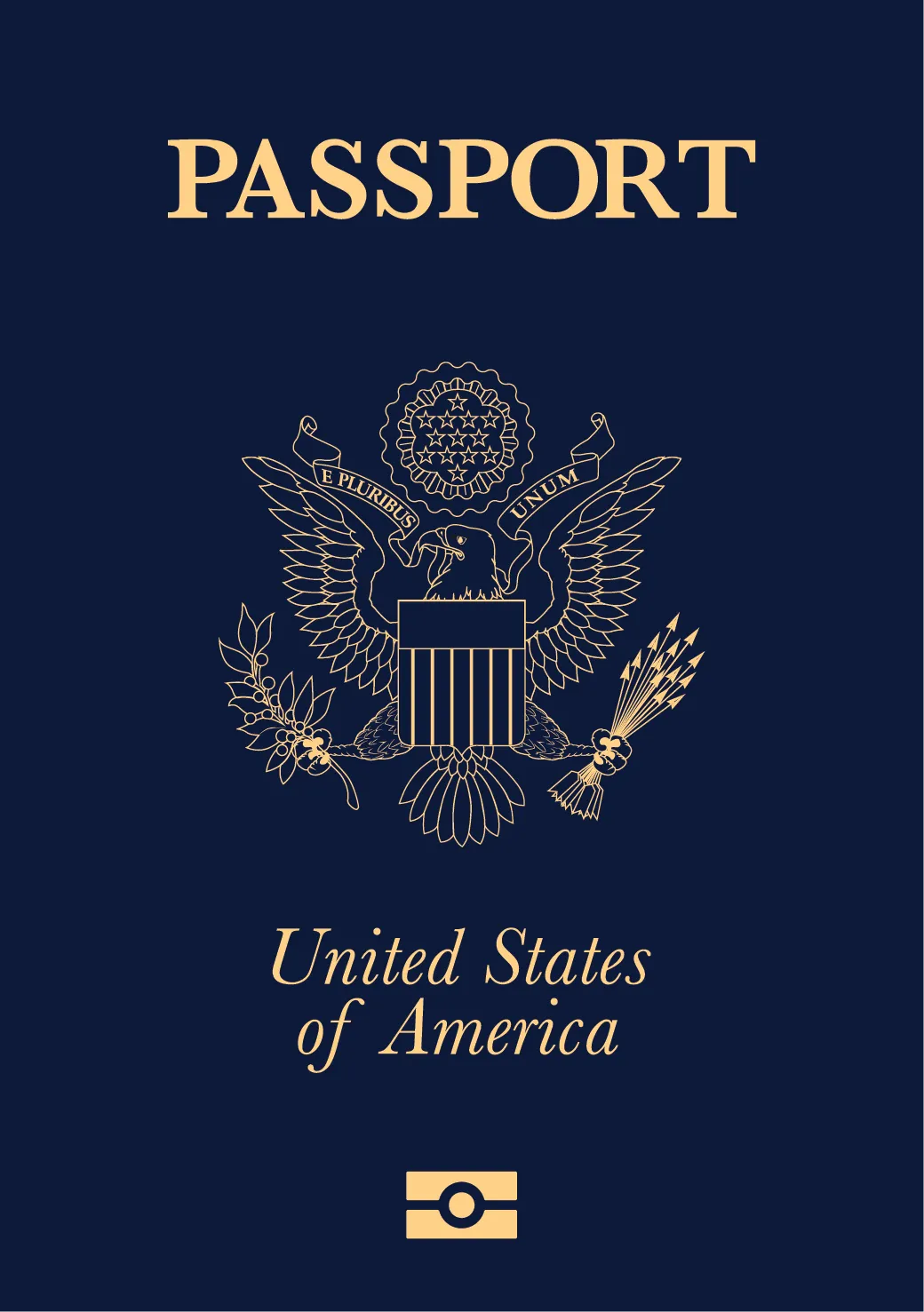
United States Passport

Ranked #10 Globally

In 2026, the United States passport sits at tenth place worldwide, tied with Iceland. Its holders can fly to 179 destinations either without any visa at all or with a quick visa-on-arrival. That list includes the entire (the borderless travel zone covering most of Europe), the United Kingdom, Japan, South Korea, Singapore, and — under a pilot programme running through 31 December 2026 — mainland China for 30-day stays. The US passport is issued only to US citizens by the Department of State. The single biggest difference between this document and other (the seven largest industrial democracies) passports is tax: the United States taxes its citizens on worldwide income for life, no matter where they live. That obligation follows you to Lisbon, Singapore, or Mexico City, and it shapes every cross-border decision a US citizen makes.

10th
Global Ranking
179
Destinations
87
Mobility Score
United States Passport - Passport Power 9th | worldpath.ai WRI

United States Passport Global Mobility Context

The United States belongs to the (the seven largest industrial democracies), (the North Atlantic military alliance), the (the Organisation for Economic Co-operation and Development), and the United Nations Security Council as a permanent veto-wielding member. That diplomatic stack shapes how border officers everywhere read the document.

Most countries grant Americans visa-free entry or visa-on-arrival. The United States runs roughly 270 bilateral diplomatic posts in 174 countries — the second-largest consular network in the world, behind China. Wide diplomatic reach translates into how seriously border officers and consular partners treat the document.

The State Department has issued only biometric ePassports since August 2007. The Next Generation Passport rolled out in 2021 with a polycarbonate (durable plastic) data page and laser-engraved personal details that are harder to forge. The contactless chip follows the International Civil Aviation Organization ( (International Civil Aviation Organization — the body that sets passport-chip standards)) 9303 standard — the global rulebook airports use to read passport chips at e-gates. E-gates at Singapore Changi, Tokyo Haneda, and Frankfurt read the US chip directly, clearing Americans in seconds.

A U.S. passport is the best evidence of U.S. citizenship and remains the property of the U.S. Government. With it, U.S. citizens are entitled to enter most countries for short visits without a visa, or with a visa on arrival.

United States Passport at a Glance

Global rank (2026)

#10 across major passport indices, tied with Iceland

Visa-free destinations

179 destinations, including the , the UK, Japan, South Korea, Singapore, and (until 31 December 2026) mainland China

Document type

ePassport with biometric chip, 9303 compliant (mandatory for all books since August 2007)

Page count

26 pages standard; 50-page version available for frequent travellers

Languages

English, French, and Spanish on the data page and emergency instructions

Adult validity

10 years from the date of issue, for applicants aged 16 and over

Child validity (under 16)

5 years only — children under 16 cannot get the 10-year version. Families renew passports about twice as often.

Dual citizenship

Allowed under long-standing State Department policy; no formal ceiling on the number of nationalities held

Issuing authority

United States Department of State

History

First US passports issued in 1775; the State Department gained sole authority to issue passports under the Act of 23 August 1856

United States Passport Visa-Free Destinations by Region

Regional Mobility

Economic Mobility Score: 87%Country GDP: 32.38%
Visa Exceptions
Europe is near-complete for short stays, but ETIAS pre-authorisation applies from Q4 2026 and EES biometrics already apply. Some Sahel and Middle East destinations require a visa or have suspended services in 2026.

(): visa-free for 90 days in any 180-day window; (European Travel Information and Authorisation System — a quick online pre-screening, not a visa) pre-authorisation required from Q4 2026. United Kingdom: visa-free for 6 months. Canada and Mexico: visa-free under the United States–Mexico–Canada Agreement ( (US-Mexico-Canada Agreement, the renamed ), the successor to NAFTA). Japan, South Korea, and Singapore: 90 days visa-free each. Mainland China: 30 days visa-free under a pilot policy that runs through 31 December 2026.

Americas

Visa-free across most of the region. Canada and Mexico grant Americans 6-month visitor stays under the long-standing USMCA framework. Every Central American state, every Caribbean nation except Cuba, and most South American countries — Argentina, Chile, Peru, Colombia, Uruguay — grant visa-free entry. Brazil reimposed an e-visa requirement on US, Canadian, and Australian visitors effective 10 April 2025, and confirmed in early 2026 that Americans still need the e-visa even after Brazil added visa-free entry for Chinese nationals. Cuba requires a tourist card, sold through airlines, not a traditional visa.

Europe

Americans enter the entire Schengen Area without a visa for stays up to 90 days within any 180-day window. The Schengen list for Americans includes France, Germany, Italy, Spain, the Netherlands, Belgium, Austria, and Switzerland. It also covers Greece, Portugal, the Nordics, the Baltics, Croatia, Bulgaria, and Romania.

Beyond Schengen, Americans get 6 months in the United Kingdom and 90 days in Ireland. Americans also enter the non-Schengen Balkans visa-free: Albania, Serbia, Bosnia and Herzegovina, North Macedonia, Montenegro, and Moldova.

ETIAS (European Travel Information and Authorisation System — a short online pre-screening, similar to the US (Electronic System for Travel Authorization — the US online pre-screening for visa-waiver visitors)) is scheduled to launch in Q4 2026 with a transitional period. The system effectively becomes mandatory for Americans in 2027. ETIAS is not a visa. Approval takes minutes for most applicants and costs around 20 euros for adults aged 18 to 70.

Separately, the EU Entry/Exit System ( (Entry/Exit System — the EU's biometric border-record replacement for manual passport stamps)) became fully operational on 10 April 2026. Americans entering Schengen now have four fingerprints and a facial image captured on first crossing, replacing manual passport stamps. EES is captured at the Schengen border on first crossing — Americans file nothing in advance.

Asia-Pacific

Most of East and Southeast Asia is visa-free for Americans or grants a visa at the airport. Japan, South Korea, Singapore, and Taiwan each allow 90 days visa-free. Malaysia allows 90 days. Hong Kong allows 90 days. Thailand allows 60 days. Indonesia uses visa-on-arrival. Vietnam uses an e-visa. The Philippines allows 30 days visa-free.

Mainland China became visa-free for Americans on 30 December 2025 under a unilateral pilot policy from Beijing. The window is 30 days per visit for tourism, business, family visits, and transit. Americans should expect the China window to close on 31 December 2026 unless Beijing renews the pilot. India still requires an e-visa, and Americans are limited to twice per calendar year. Americans still need an advance visa for Pakistan, Bangladesh, Bhutan, Tajikistan, and Turkmenistan.

In Oceania, Australia uses an Electronic Travel Authority ( (Electronic Travel Authority — a short online pre-screening tied to your passport)) and New Zealand uses an (New Zealand Electronic Travel Authority). Americans file each one online; both are approved in minutes and linked to the passport number, not stamped. Fiji, Samoa, Tonga, and Vanuatu admit Americans visa-free for short tourist stays.

Middle East

The United Arab Emirates and Qatar each grant Americans a 30-day visa-on-arrival. Saudi Arabia opens an online e-visa to Americans on tourism or family-visit grounds. Israel allows 90 days visa-free. Jordan, Bahrain, Oman, and Kuwait issue Americans a visa-on-arrival or an e-visa. Iran requires a full visa and is currently rated Level 4 (Do Not Travel) by the State Department. Regional embassy services are partially suspended in 2026 amid the wider Middle East conflict.

Africa

Most major African destinations issue Americans a visa-on-arrival or an e-visa. Morocco, South Africa, and Mauritius allow visa-free entry for short stays. Kenya uses an electronic Travel Authorization (eTA) — online and approved quickly. Tanzania, Egypt, and Rwanda use visa-on-arrival or e-visa. Ethiopia uses an e-visa. Visa-required destinations include Libya, Sudan, Eritrea, and several Sahel states; Chad, Mali, Burkina Faso, and Gabon suspended visa services for US citizens in 2025.

Offshore Jurisdictions

Every major offshore and financial-centre jurisdiction admits Americans visa-free. The Cayman Islands and Bermuda allow 6-month visits. Americans get 90 days each in the British Virgin Islands and the Bahamas. Jersey, Guernsey, the Isle of Man, and Gibraltar admit Americans visa-free as British dependencies. Mauritius and the Seychelles allow 60 to 90 days. Hong Kong and Singapore each admit Americans for 90 days; both also appear in the Asia-Pacific list above as financial hubs.

Where a Visa Is Still Required

  • Russia: Full visa; processing has been minimal since 2022 because the United States closed its consulates in Russia.
  • India: E-visa, capped at two trips per calendar year.
  • Brazil: E-visa since 10 April 2025, retained for US citizens in 2026.
  • Iran, North Korea, Yemen, Syria: Visa with extra security checks; the US passport requires a special validation from the State Department before travel to North Korea.
  • Cuba: A tourist card sold by airlines, not a traditional visa.
  • Several Sahel states: Visa services suspended in 2025 for US citizens (Chad, Mali, Burkina Faso, Gabon).

How to Get a United States Passport

1

Get Permanent Residency

There is no shortcut. You must first hold a US Green Card (the common name for a Lawful Permanent Resident card). The main routes are below.

Family sponsorship.

Spouses, parents, minor unmarried children, and other close family of US citizens can apply through immediate-relative or family-preference categories. Spouses of US citizens are the largest category and get the fastest path: there is no annual cap on green cards for spouses of US citizens.

Employment-based green cards ( through ).

EB-1 covers extraordinary-ability applicants, outstanding professors, and multinational executives. covers advanced-degree professionals; the National Interest Waiver () under EB-2 lets some applicants skip the employer-sponsorship step. covers skilled and professional workers. EB-5 is the investor route: invest 800,000 US dollars in a Targeted Employment Area ( — a rural area or high-unemployment census tract) or 1,050,000 US dollars in any other location. Those thresholds, set by the EB-5 Reform and Integrity Act of 2022, hold through 2026 and adjust for inflation in January 2027.

Diversity Visa lottery.

Each year 55,000 green cards are awarded to applicants from countries with low recent immigration to the US. Open to most nationalities, but excludes nationals of high-volume sender countries (Mexico, India, China, the Philippines, and several others, with the list set each year).

Refugee and asylum routes.

Refugees admitted from abroad and asylum-seekers granted protection inside the US become eligible for a green card after one year of approved status. These are humanitarian routes, not application routes for typical applicants.

Temporary work visas as a bridge.

Many applicants enter the US first on H-1B (the cap-subject specialty-occupation visa), L-1 (intra-company transferee), O-1 (extraordinary ability), or TN (the United States–Mexico–Canada Agreement professional visa, available only to Canadians and Mexicans). These visas do not grant permanent residency on their own; you transition to a green card later, usually via an employer-sponsored EB-2 or EB-3 petition.

2

Build Residency History

You must hold lawful permanent resident status for 5 years before applying for citizenship — 3 years if you are married to and living with a US citizen.

You must also be physically present in the United States for at least 30 months out of those 5 years (18 months out of 3 for spouses). Any single absence of 6 months or more is presumed to break continuous residence; absences of 1 year or more break it automatically unless a narrow exception applies.

3

Apply for Citizenship

Submit Form N-400 (Application for Naturalization) to (United States Citizenship and Immigration Services). The 2026 filing fee is 710 US dollars online or 760 by paper, with a reduced fee for low-income applicants and a full waiver for honourably discharged military.

Most adults must pass an English test (basic reading, writing, speaking) and a civics test. Applications filed from 20 October 2025 use the 2025 test (20 oral questions from a list of 128; 12 to pass); earlier filings use the 2008 test (10 from 100; 6 to pass).

After the interview and test, you take the Oath of Allegiance and receive the Certificate of Naturalization. National average processing in early 2026 is about 7 to 8 months from filing to oath.

4

Apply for the Passport

Once you hold the Certificate of Naturalization, you can apply for a US passport. Use Form if this is your first US passport (the standard case for new citizens). Most applicants apply in person at a passport acceptance facility — typically a US Post Office or a public library.

You need the Certificate of Naturalization, government-issued photo ID, a recent passport photo that meets State Department specs (2 by 2 inches, plain background, taken within 6 months), and the fees.

Fees in 2026: 130 US dollars application fee plus a 35 US dollars execution (acceptance) fee for the adult passport book, totalling 165 US dollars. Add 60 US dollars for expedited service (reducing routine processing to 2–3 weeks). The passport card costs 30 US dollars plus the same 35 US dollars execution fee, but it is only valid for land and sea travel to Canada, Mexico, Bermuda, and the Caribbean — not for air travel anywhere.

Routine processing in 2026 runs 4 to 6 weeks for the standard service, or 2 to 3 weeks for expedited. Adult passports are valid for 10 years; passports issued to applicants under 16 are valid for 5 years.

Alternative Route: Citizenship by Descent (US INA (Immigration and Nationality Act — the principal US federal immigration statute) section 301)

If you have a US citizen parent, you may have been born a US citizen automatically — without ever needing to naturalise. The legal basis is Section 301 of the Immigration and Nationality Act ( (Immigration and Nationality Act — the principal US federal immigration statute) — the master US immigration law).

The rules depend on whether one or both parents were US citizens at the time of birth, whether the parents were married, and the year the child was born. For children born on or after 14 November 1986 with one US citizen parent and one non-citizen parent, the US citizen parent must have been physically present in the United States for at least 5 years before the child's birth, including at least 2 years after the parent's 14th birthday. For children born before 14 November 1986, the requirement was 10 years total, with at least 5 after age 14.

If both parents were US citizens at the time of the child's birth abroad, the rule is gentler: only one of the two parents needs to have had a US residence before the child's birth (no minimum number of years).

Citizenship under INA 301 is granted automatically at birth — you do not apply for it. To document it, the US citizen parent files a Consular Report of Birth Abroad () with the nearest US embassy or consulate, usually within the child's first year of life. The CRBA is the proof-of-citizenship document, equivalent to a US-issued birth certificate.

Once you have a CRBA (or other proof of citizenship at birth), you apply for the US passport directly using the standard adult or minor passport forms. Total timeline from CRBA filing to first US passport in hand is typically 6 to 12 months.

Comparison of United States Passport With Other Top Passports

Passport

Rank

Visa-free

Key edge

Singapore Passport

#1

192

Top-ranked passport

Germany/France/Italy Passports

#4

185

EU citizenship — live and work in 27 states

United Kingdom Passport

#6

184

Five Eyes peer with comparable global mobility

Canada Passport

#7

183

Closest neighbour; no citizenship-based tax abroad

Ranks reflect 2026 global passport indices. Visa-free counts cross-checked against the Wikipedia visa-requirements summaries for each country.

United States vs Canada

Canada beats the US on two dimensions for internationally mobile holders. Mobility is the smaller one: 182 visa-free destinations for Canada versus 179 for the US in 2026. The larger one is tax. The US taxes citizens on worldwide income for life; Canada taxes only residents. A Canadian who breaks tax residence owes Ottawa nothing further on foreign income. A US citizen pays (Internal Revenue Service) tax on the same income from Lisbon, Singapore, or Mexico City, with relief through the Foreign Earned Income Exclusion ( (Foreign Earned Income Exclusion — a US tax provision shielding qualifying foreign-earned income from US tax) — 132,900 US dollars per person in 2026) and the Foreign Tax Credit.

United States vs the (European Union) top tier

France, Germany, Italy, and Spain sit at 185 destinations in 2026 and unlock something the US passport does not: free movement and labour-market access across all 27 EU states. Settle in Berlin one year, Lisbon the next, no paperwork in between. A US passport unlocks visa-free travel into Schengen, but not a labour-market permit.

Pros and Cons of the United States Passport

Pros7 strengths
Cons7 frictions
  • 01Mobility
    Visa-Free or Visa-on-Arrival to 179 Destinations
    Americans enter 179 places without a prior visa in 2026, including the whole Schengen Area, the UK, Japan, South Korea, and Singapore. A 30-day visa-free pilot for mainland China runs through 31 December 2026.
    179 dest.
  • 02Standing
    Ranked Tenth Among the World's Passports
    The US document sits at #10 across the major 2026 passport indices, tied with Iceland. It opens nearly every advanced economy and most of the Americas without paperwork in advance.
    #10 rank
  • 03Standing
    Backed by G7, NATO, and a UN Security Council Veto
    The US is in the G7 (the seven largest industrial democracies), NATO (the North Atlantic military alliance), and is a permanent veto-holding member of the UN Security Council. That diplomatic weight shapes how border officers everywhere read the document.
    Top diplomacy
  • 04Support
    Second-Largest Consular Network on Earth
    The State Department runs roughly 270 diplomatic posts across 174 countries, the world's second-biggest consular footprint after China. Wide reach means strong on-the-ground help for citizens abroad.
    270 posts
  • 05Validity
    Adult Passport Valid for a Full 10 Years
    Anyone aged 16 or over gets a 10-year book from the date of issue, so the document does not need frequent renewal during its life.
    10-year
  • 06Rights
    Dual Citizenship Allowed With No Cap
    Long-standing State Department policy lets Americans hold other nationalities. You can naturalise abroad without losing US citizenship, and there is no formal limit on how many passports you may hold.
    Dual OK
  • 07Document
    Forgery-Resistant Next Generation ePassport
    Since 2021 the book uses a polycarbonate (durable plastic) data page with laser-engraved details. Its chip follows the ICAO 9303 standard (the global rulebook airports use), so e-gates at Changi, Haneda, and Frankfurt clear Americans in seconds.
    NGP chip
  • 01Tax
    Taxed on Worldwide Income for Life
    The US taxes its citizens on income earned anywhere in the world, even while living abroad. A 2025 tax law left this unchanged, so an American in Lisbon or Singapore still owes the IRS (Internal Revenue Service, the US federal tax agency).
    Worldwide tax
  • 02Tax
    Annual Filing and Foreign-Asset Reporting Abroad
    Citizens overseas must file a US return every year, report foreign bank accounts over set thresholds under FBAR, and disclose foreign assets under FATCA. Relief like the Foreign Earned Income Exclusion shields about USD 132,900 per person in 2026, not everything.
    FATCA/FBAR
  • 03Validity
    Children Under 16 Get Only a 5-Year Book
    Under-16s cannot get the 10-year version; their passport lasts five years. Families with young children end up renewing roughly twice as often as adults.
    Child 5-yr
  • 04Mobility
    New Pre-Screening to Enter Europe From Late 2026
    From the fourth quarter of 2026 Americans must get ETIAS approval before Schengen trips (the European Travel Information and Authorisation System, a quick online pre-check, not a visa). The EU's biometric Entry/Exit System also adds friction at the border.
    ETIAS 2026
  • 05Mobility
    No Right to Live or Work in the EU
    A US passport gives visa-free Schengen visits of up to 90 days in any 180, but no labour-market access. To settle in an EU country you still need a national residence or work permit.
    No EU work
  • 06Mobility
    A Visa Is Still Required for Several Countries
    Russia, India (an e-visa capped at two trips a year), and Brazil (an e-visa since April 2025) all require advance paperwork. Several Sahel states (Chad, Mali, Burkina Faso, Gabon) suspended visa services for US citizens in 2025.
    Visa still
  • 07Standing
    Ranking Has Slipped Over Recent Years
    The US passport has fallen from #4 to #10 on the main mobility index as other countries opened more borders faster, leaving it behind the top tier of the EU, the UK, and several Asian states.
    Slid to #10

Dual Citizenship and US Worldwide Taxation

The United States allows dual citizenship under long-standing State Department policy. US law does not require a citizen to choose between US citizenship and another nationality. You can naturalise in a foreign state without losing your US citizenship, provided you do not formally renounce the US one. The Exclusive Citizenship Act of 2025 — a bill that would end dual citizenship — was introduced in Congress but is not law; current legislative-forecasting estimates put its chance of enactment at roughly 3 percent.

The border rule

Dual citizens must enter and leave the United States on a US passport. This is a statutory rule, not a recommendation: 22 USC § 212a requires a US passport for entry by a US national, with limited exceptions. Showing a foreign passport at a US border can mean secondary inspection, delays, or refusal of boarding by the airline before you ever reach the US border.

The abroad rule

Abroad, dual citizens pick which passport to present at each border. The US passport is the stronger choice in most destinations where the US outranks the alternative. The exception is the country whose second passport the dual citizen also holds. Use the local passport instead. States like Mexico, Italy, India, and the Philippines require their nationals to enter on the national passport.

The tax catch — the single biggest issue

US tax law follows the citizen, not the residence: an American owes US tax on worldwide income for life. The US and Eritrea are the only countries that use this citizenship-based model. Wherever a US citizen lives — Toronto, Lisbon, Singapore, Mexico City — they file a US tax return every year, report foreign bank accounts above set thresholds under , disclose foreign assets under , and pay US tax on income above the (132,900 US dollars per person in 2026). The One Big Beautiful Bill Act, signed on 4 July 2025, did not change this. The Foreign Tax Credit prevents most pure double taxation, but the filing burden and the cost of cross-border tax counsel are real and recurring.

Bottom Line on the United States Passport

The United States passport is a top-tier travel document with serious structural costs that other top-tier passports do not carry. With visa-free or visa-on-arrival access to 179 destinations — including the , the UK, Japan, South Korea, Singapore, and (through 31 December 2026) mainland China — it delivers broad travel access across the world's major economic zones. Its diplomatic weight, the second-largest consular network in the world, and the depth of US commercial reach all add real-world value at borders and in emergencies.

Cost to obtain

There is no shortcut for non-citizens. Most applicants get a green card first (through family or employment), hold it for 5 years (or 3 if married to a US citizen), pass an English test, pass a civics test, and take the Oath of Allegiance. The N-400 fee is 710 US dollars (online) or 760 US dollars (paper) in 2026; the passport itself is 165 US dollars for a first-time adult applicant. Total realistic timeline from green card to passport in hand is 5 to 6 years for most paths, 3 to 4 for spouses of US citizens.

Advantages for the mobile holder

Ten-year validity, broad visa-free reach, and a dual-citizenship-friendly policy are strong advantages. The FEIE shields the first 132,900 US dollars of foreign-earned income (2026) from US tax. The State Department's consular network — the second-largest in the world — means an embassy is usually nearby. The passport is also a working travel document straight after the oath, with no waiting list and no separate citizenship-by-investment programme to manage.

Trade-offs to watch

Worldwide income taxation, FATCA, and FBAR are the headline trade-offs. Many foreign banks decline US citizens because of FATCA overhead. (European Travel Information and Authorisation System — a quick online pre-screening, not a visa) from Q4 2026 and (Entry/Exit System — the European Union's biometric border-record replacement for manual passport stamps) biometrics already in place add small friction at the Schengen border. The US has dropped from #4 to #10 on the main passport indices over the past two decades — the third-largest decline among the world's passports — and lost seven visa-free destinations in the past year alone.

United States Passport FAQ

How strong is the US passport in 2026?

As of January 2026, the US passport ranks 8th globally on global passport rankings with visa-free or visa-on-arrival access to 186 destinations. assigns a Mobility Score of 90/100. The US maintains the world's largest consular network with over 270 embassies and consulates, providing unmatched citizen protection globally.

How much does the EB-5 Investor Visa cost in 2026?

The EB-5 program requires a minimum investment of $800,000 (TEA) or $1,050,000 (standard). Government fees total about $8,115, including the I-526E ($4,675 with surcharge), I-485 ($1,440), I-765 ($260), and I-131 ($630). Naturalization (N-400) costs $710–$760. Legal fees typically range from $25,000–$50,000, with regional center fees of $50,000–$75,000. The realistic all-in cost is $900,000–$1,000,000 (TEA) or $1,100,000–$1,200,000 (standard). Unlike donation-based programs, the EB-5 investment may be recoverable, though returns are not guaranteed.

Does the USA allow dual citizenship?

Yes. The United States permits dual and multiple citizenship with no legal prohibition. However, the US is one of only two countries that taxes citizens on worldwide income regardless of where they live. US citizens abroad must file annual tax returns (Form 1040), report foreign accounts exceeding $10,000 (FBAR), and comply with FATCA reporting. Renunciation costs $2,350 and triggers an exit tax.

How long does it take to get US citizenship?

Timelines vary by pathway. EB-5 investors in rural and TEA set-aside projects may receive a conditional green card in 6–12 months, while others typically wait 24–36 months. After the 2-year conditional period, I-829 processing averages about 46 months, followed by 5 years of residency before citizenship—totaling 8–10 years. Family-based cases take 12–24 months for a green card plus 3–5 years residency (4–7 years total). Employment-based routes range from 1–10+ years for a green card depending on category and nationality, plus 5 years residency. Naturalization processing takes 8–14 months. No pathway leads to citizenship in under 4 years.

US passport vs Canadian passport — which is stronger?

The Canadian passport (ranked 6th, 188 destinations) slightly outperforms the US passport (ranked 8th, 186 destinations) in pure mobility terms. However, the US passport provides access to the world's largest economy and most extensive consular protection. The decisive difference is taxation: Canada taxes by residency while the US taxes by citizenship globally.

What are the tax implications of US citizenship?

The United States taxes citizens on worldwide income regardless of residence, a system shared only with Eritrea. Americans abroad must file annual tax returns (Form 1040), report foreign accounts over $10,000 (FBAR), and comply with FATCA for assets above $200,000. The Foreign Earned Income Exclusion allows up to $130,000 for 2025 (rising to $132,900 for 2026). Foreign tax credits help avoid double taxation. Capital gains are taxed at 0–20% plus a 3.8% surtax. Estate tax applies to global assets above $13.99 million (2025). These rules make US citizenship one of the most tax-intensive globally.

Can I get a US green card through EB-5 from any country?

The EB-5 program is available to nationals of virtually all countries, with no nationality-based exclusions. However, visa availability is subject to per-country caps, which have historically created multi-year backlogs for applicants from India, China, and Vietnam. The 2022 EB-5 Reform and Integrity Act created reserved visa categories that bypass some country-cap limitations.

What documents are needed for US immigration?

Requirements typically include: valid passport, birth certificate with certified translation, police clearance certificates, medical examination by a USCIS-designated civil surgeon, tax returns for the past 3-5 years (for sponsors), employment verification letters, educational credentials, proof of financial support (I-864 Affidavit of Support for family-based), and completed USCIS forms.

Related Information

Verified by

Sarah Mitchell
Senior Immigration Advisor
at WorldPath AI