WorldPath AIWORLDPATH•AI
Americas
Offshore Jurisdictions

Grenada Passport

Ranked #27 Globally

Grenada is a small island nation in the eastern Caribbean, and its passport punches well above the country's size. In 2026 it sits at #27 worldwide, letting holders reach 147 destinations without a visa or with one on arrival. That list includes the (the borderless travel zone covering most of Europe), the UK, and mainland China. Grenada is one of only four countries on earth whose citizens can travel visa-free to China, Russia, the Schengen Area, and the UK at once. It is also the only Caribbean passport tied to a US business-visa treaty: citizens can apply for the US E-2, a visa for running a business you invest in. Grenada lets you keep your old citizenship, charges no worldwide income tax, and offers a citizenship-by-investment route with no need to move there. The passport is issued by the Immigration and Passport Department under the Royal Grenada Police Force.

27th
Global Ranking
147
Destinations
71
Mobility Score
Grenada Passport - Passport Power 31st | worldpath.ai WRI

Grenada Passport Global Mobility Context

Grenada's strength is unusual for a country of about 100,000 people. The passport ranks #27 in 2026 and opens 147 destinations without a visa or with one on arrival. For a Caribbean nation, that reach into Europe and Asia is rare.

Three doors set it apart. Mainland China admits Grenadians visa-free for 30 days, a privilege no other Caribbean investment passport carries. The grants 90 days in any 180, and Russia adds another 90. The UK takes Grenadians for up to six months after an online Electronic Travel Authorisation, or (a quick pre-screening, not a visa). Grenada is one of only four nations whose passport unlocks China, Russia, Schengen, and the UK at once.

The passport also links to the United States in a way money usually cannot buy. Since 3 March 1989 Grenada has held an E-2 treaty with the US. That lets a Grenadian apply for the E-2 visa to live in the US while running a business they invest in. People from large countries with no E-2 treaty sometimes become Grenadian first to reach it.

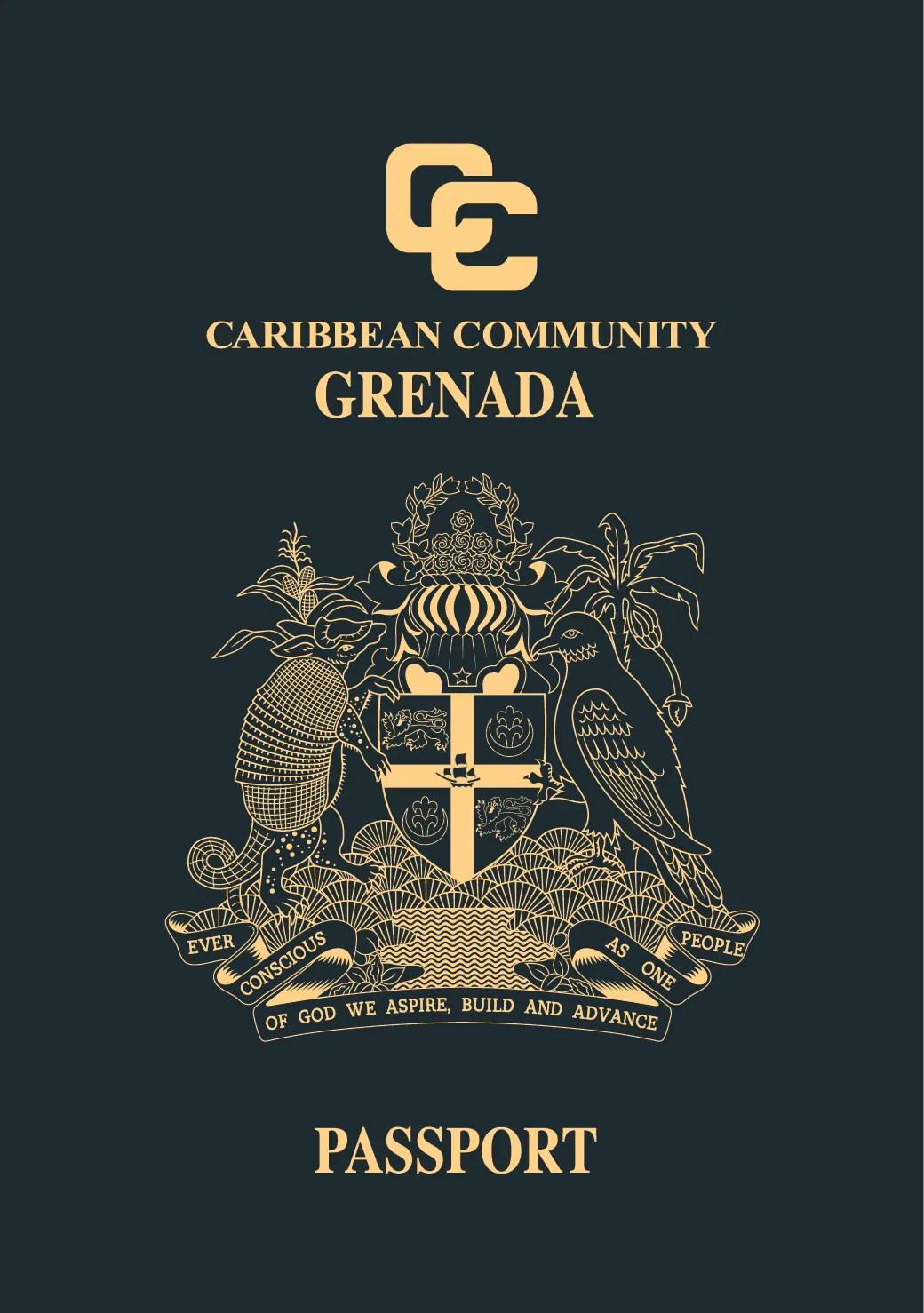
The document is modern. It carries a biometric chip built to the international 9303 standard, the rulebook airport e-gates use to read passports. Grenada issues it in the shared (Caribbean Community) format, so it also serves as a regional travel document.
The right of free movement to Grenada, China, Russia, Singapore, the UK, and Europe's Schengen Area, among others.

Grenada Passport at a Glance

Global rank (2026)

#27 worldwide, tied with a small group of mid-tier passports; one of the strongest in the Caribbean for visa-free reach.

Visa-free destinations

147 destinations visa-free or visa-on-arrival, including the , the UK, mainland China, Russia, Singapore, and Hong Kong.

Document type

Biometric ePassport with an embedded chip, compliant with the international 9303 standard that airport e-gates read worldwide.

Page count

36 pages, in the shared (Caribbean Community) passport design used across the regional bloc.

Languages

English, the official language of Grenada and the language printed on the passport's data page.

Adult validity

10 years for adults, after which the passport must be renewed; one of the longer validity terms among Caribbean passports.

Child validity (under 16)

5 years for children under 16, reflecting how quickly a child's photo and appearance change.

Dual citizenship

Allowed. Grenada lets you hold another nationality at the same time, so you need not give up your current passport.

Issuing authority

The Immigration and Passport Department, which sits under the Royal Grenada Police Force, prints and issues every passport.

History

Grenada began issuing its own passports after independence in 1974 and adopted the format in 2006; biometric chips arrived in July 2018.

Grenada Passport Visa-Free Destinations by Region

Regional Mobility

Economic Mobility Score: 71%Country GDP: 1.39%
Visa Exceptions
Europe scores highest because the full Schengen Area, the UK (with an ETA), and Russia are open to Grenadians. The Americas score is held down by visa requirements for the United States and Canada; the Asia-Pacific score reflects visa-free China but visa requirements for Japan, Australia, and South Korea.

Grenada's 147-destination list leans on three pillars rarely found together in one Caribbean passport: visa-free China for 30 days, the full for 90 days, and the United Kingdom for six months after a quick online check. Add Russia, Singapore, and Hong Kong, and a Grenadian holder can plan a round-the-world itinerary touching every inhabited continent with little paperwork. The two big gaps are North America and developed Asia: the United States, Canada, Japan, and Australia all still ask Grenadians for a visa.

Americas

Within its own neighbourhood the passport travels freely. Every fellow (Caribbean Community) state waves Grenadians through, with Trinidad and Tobago allowing 180 days. Central America is open too: Costa Rica, Nicaragua, and Panama admit visitors for up to three months. Most of South America follows, including Argentina, Brazil, Chile, Colombia, Ecuador, Peru, and Uruguay; Colombia stretches to 180 days. The headline exceptions sit at the top of the map. The United States and Canada both require a visa applied for in advance, and Mexico waves the rule only for travellers who already hold a US, Canadian, UK, or Schengen visa.

Europe

Europe is where the Grenada passport shines brightest. All 29 countries of the Schengen Area admit Grenadians for 90 days in any 180-day window, covering nearly the whole continent from Portugal to Finland. Beyond Schengen, Ireland, Cyprus, and the western Balkan states — Serbia, Montenegro, Bosnia and Herzegovina, and Moldova — are open without a visa. Russia is unusually generous, granting 90 days within any 180. The United Kingdom takes Grenadians for up to six months once they obtain an Electronic Travel Authorisation, or (a low-cost online permit for visa-exempt visitors). A handful of states, such as Belarus, still require a full visa.

Asia-Pacific

This region is a story of one big win and several closed doors. Mainland China admits Grenadians visa-free for 30 days — a benefit no rival Caribbean investment passport offers, which is a major reason buyers from China itself sometimes seek Grenadian nationality. Hong Kong and Macao each grant 90 days, and Singapore gives 30. Malaysia, the Philippines, the Maldives, and Pacific states like Fiji are visa-free as well. The trade-off is that wealthy East Asia stays guarded: Japan asks for a visa, South Korea requires a K-ETA online permit, and both Australia and New Zealand need an electronic visa or authority before travel.

Middle East

The Middle East mostly runs on electronic permits rather than open borders for Grenadians. There is little pure visa-free entry here. Instead, Iran, Jordan, Qatar, Saudi Arabia, and Bahrain issue an eVisa (an electronic visa bought online before the trip) or a visa on arrival. Iran and Iraq grant 30 days this way. Israel uses an electronic travel authorisation good for three months. The United Arab Emirates is the notable hold-out, asking Grenadians to arrange a visa in advance rather than picking one up at the airport.

Africa

Africa is broadly reachable, though usually through a permit rather than a stamp-free border. A solid block of countries is fully visa-free, among them Mauritius, Rwanda, Botswana, Kenya's neighbour Tanzania, Senegal, Ghana, and Zimbabwe, with stays of 30 to 90 days. Many more — Egypt, Ethiopia, Nigeria, Morocco, Madagascar, and Mozambique — sell an eVisa or grant a visa on arrival. The continent's larger economies are the exceptions: South Africa, Algeria, and Tunisia all ask Grenadians for a visa arranged ahead of travel.

Offshore Jurisdictions

Because Grenada sits inside the Caribbean, its passport naturally reaches the region's offshore and financial-centre islands. The Cayman Islands and Bermuda admit Grenadians for up to six months, and the British Virgin Islands and the Bahamas allow stays measured in months rather than days. These are the same low-tax jurisdictions where internationally mobile families often bank, incorporate, or hold property, so the access is practical rather than merely scenic for holders building cross-border affairs.

Where a Visa Is Still Required

  • United States and Canada — both require a visitor visa applied for in advance; the E-2 business-visa treaty is a separate route, not visa-free tourism.
  • Japan, Indonesia, and (via electronic permits) South Korea, Australia, and New Zealand in the Asia-Pacific.
  • United Arab Emirates in the Gulf, plus Kuwait, Oman, and Lebanon.
  • South Africa, Algeria, Tunisia, and several Central African states in Africa.
  • A small set of European outliers such as Belarus.

How to Get a Grenada Passport

1

Choose Your Route to Citizenship

Most countries make you live there for years before citizenship. Grenada is different. Its main route is citizenship by investment ( — gaining a passport by making an approved economic contribution), set up under the Grenada Citizenship by Investment Act of 2013. There is no requirement to live in or even visit Grenada to qualify, although the government has signalled it may add a short minimum-stay rule in future, so check the current terms before you apply.

There are two investment options. The first is a one-time gift to the National Transformation Fund (), a government fund that pays for public projects such as roads, schools, and clinics. The minimum NTF contribution is USD 235,000 for a single applicant or a family of up to four, with set amounts added for each extra dependent. This money is not returned.

The second option is real estate: buy at least USD 270,000 of property in a government-approved project and hold it for a minimum of five years, plus a government fee. After five years you may sell the property to another investor. Both options also carry due-diligence and processing fees. The investment minimums sit above a USD 200,000 floor that Grenada and its Caribbean neighbours jointly agreed in 2024 to keep their programmes credible.

The ordinary route to citizenship — moving to Grenada, becoming a permanent resident, and naturalising over several years of residence — also exists for people who genuinely relocate, marry a citizen, or descend from Grenadians. For most applicants worldwide, though, the investment route is the realistic path, so the steps below follow it.

2

Submit Through a Licensed Agent and Pass Due Diligence

Grenada does not accept applications directly from individuals. You must apply through a government-licensed local agent, who assembles the file and submits it to the Investment Migration Agency, the official body that runs the programme.

Every applicant aged 16 and over goes through strict due-diligence background checks. Investigators verify the source of the funds, criminal records, and identity. This vetting is the main reason the programme is accepted by partner countries, and it is also why the process takes a few months rather than weeks.

3

Receive Approval and Make the Investment

If the checks are clear, the government issues an . Only then do you transfer the agreed investment — the (National Transformation Fund) contribution or the property purchase — together with the official fees.

From a complete submission, approval and citizenship typically take about four to six months. Because there is no residency or physical-presence test during this period, applicants generally continue living wherever they already do while the file is processed.

4

Apply for the Passport

Once citizenship is granted, you receive a naturalisation certificate, and the Immigration and Passport Department issues the passport itself. The adult passport is valid for 10 years; a child's is valid for 5 years.

The document is a biometric ePassport with an embedded chip built to the international 9303 standard — the rulebook that lets airport e-gates worldwide read it. It is issued in the shared (Caribbean Community) format, so it works as a regional travel and residence document as well as a global one. With the passport in hand, the visa-free destinations and the US E-2 business-visa route described above become available.

Grenada offers a route most large nations do not: citizenship by investment, with the US E-2 visa as its standout prize. The E-2 is a United States visa that lets someone from a treaty country move to the US to direct a business they have invested a substantial sum in. It can be renewed indefinitely as long as the business runs, and it covers a spouse and children under 21.

The catch for many people is that the E-2 is only open to citizens of countries that hold an E-2 treaty with the US. Large nations including China, India, Brazil, Nigeria, and Vietnam do not. Grenada does — its treaty has been in force since 3 March 1989 — and it is the only Caribbean country offering citizenship by investment that also carries E-2 eligibility.

This creates a two-step path. An investor first obtains Grenadian citizenship through the National Transformation Fund () contribution or an approved real-estate purchase. As a new Grenadian, they can then apply for the US E-2 visa based on a separate business investment in the United States. The Grenadian passport does not grant US residence by itself; it unlocks eligibility to apply for the E-2.

Two points keep expectations realistic. First, the E-2 is a temporary business visa, not a US green card, and it does not lead automatically to permanent residence. Second, becoming Grenadian for E-2 purposes still means clearing the same due-diligence checks and paying the same investment minimums as any other applicant. The appeal is access to the US market through a small, fast, tax-light citizenship — not a shortcut around US immigration screening.

Comparison of Grenada Passport With Other Top Passports

Passport

Rank

Visa-free

Key edge

Singapore Passport

#1

192

Top-ranked passport — about 195 destinations versus Grenada's 147

Portugal/Hungary Passports

#5

184

EU citizenship: live and work in 27 states for life

Antigua and Barbuda Passport

#24

154

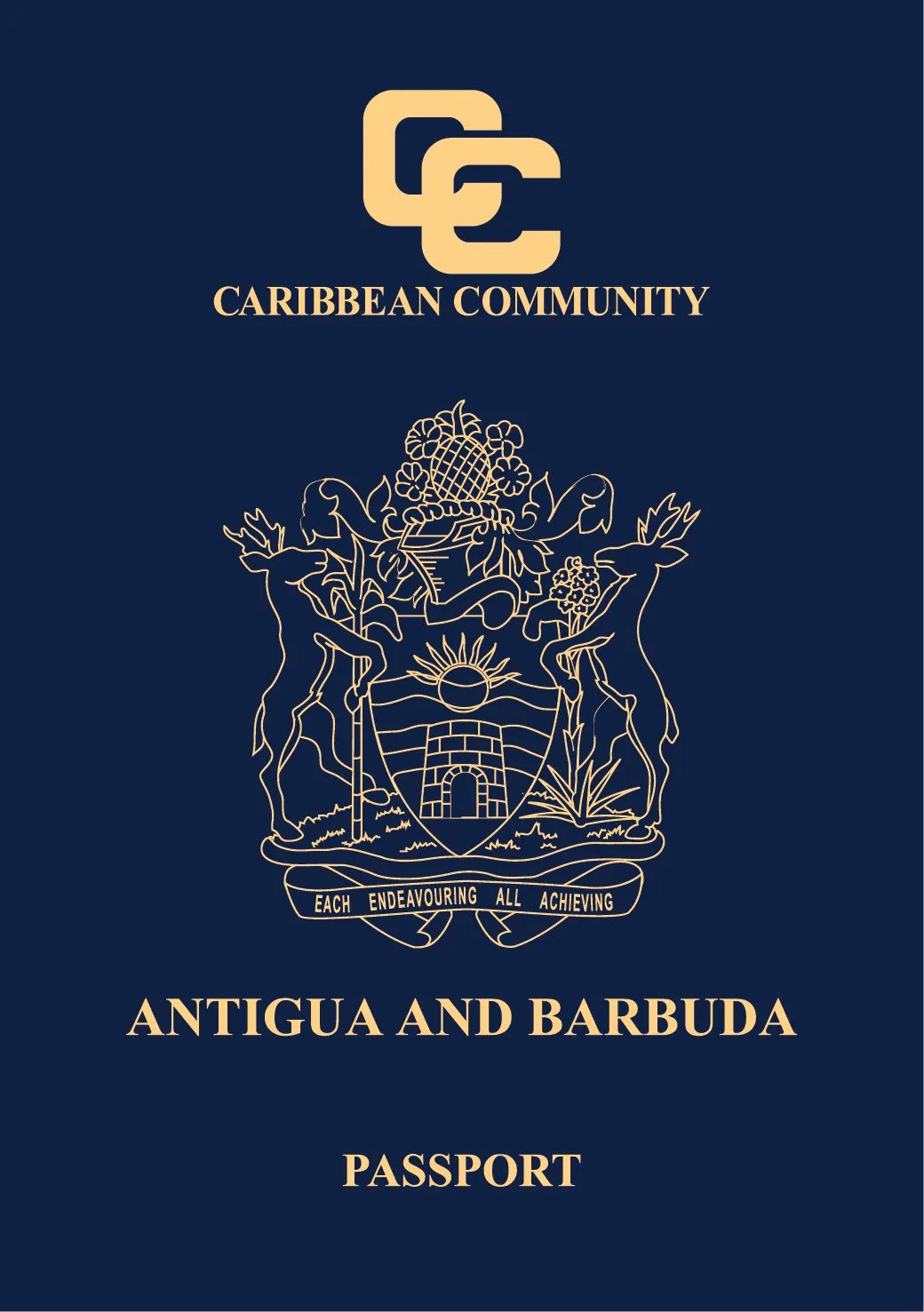
Caribbean investment peer with a comparable visa-free count

United States Passport

#10

179

Largest economy; the E-2 route targets it but it stays visa-required

A passport ranked #27 with 147 destinations is strong for its region but mid-tier globally. Three contrasts show where Grenada sits: raw mobility versus the global leaders, citizenship rights versus the European Union, and the trade-offs versus other Caribbean programmes.

Against the global mobility leaders. The top passports reach far more places. Singapore, at #1, opens around 195 destinations against Grenada's 147. The gap sits in developed Asia and North America, where Grenada needs visas for Japan, Australia, the US, and Canada. What Grenada keeps that most leaders do not is visa-free mainland China alongside the US E-2 business-visa treaty.

Against European Union citizenship. An (European Union) passport such as Portugal's or Hungary's lets the holder live, work, and study in any of 27 member states for life — a right Grenada cannot offer, since its Schengen access is capped at 90 days. The flip side is speed: an EU citizenship usually takes years, while a Grenadian one can be secured in months without moving. Grenada sells mobility and a US route; the EU sells the right to settle in Europe.

Against other Caribbean investment passports. Among Caribbean programmes the visa-free counts are close — Antigua and Barbuda and St Kitts and Nevis sit in the same band as Grenada. Grenada's edge is hard to copy: it alone has visa-free mainland China, and it alone lets citizens pursue the US E-2 visa. For Asia access or a US business move, that tilts the choice toward Grenada.

Pros and Cons of the Grenada Passport

Pros7 strengths
Cons7 frictions
  • 01Mobility
    Only Caribbean Passport With a US Business-Visa Treaty
    Grenada has held a US E-2 treaty since 3 March 1989. Citizens can apply for the E-2 visa to live in the US while running a business they invest in — a route closed to citizens of China, India, and Brazil.
    E-2 to USA
  • 02Mobility
    Visa-Free Mainland China for 30 Days
    Grenada is the only Caribbean citizenship-by-investment passport with visa-free entry to mainland China, for up to 30 days. This is why buyers from China itself sometimes seek Grenadian nationality.
    China VF
  • 03Mobility
    China, Russia, Schengen, and the UK All Visa-Free
    Grenada is one of only four nations on earth whose citizens reach China, Russia, the Schengen Area, and the UK without a prior visa — a combination most far higher-ranked passports cannot match.
    4-of-4 club
  • 04Eligibility
    Citizenship Without Living in Grenada
    The investment route asks for no residency or physical-presence period before or after approval, so applicants keep living wherever they already do. A short minimum-stay rule is under review for the future.
    No move
  • 05Eligibility
    Fast Route From Application to Passport
    A complete investment application typically reaches approval and citizenship in about four to six months, far quicker than the multi-year naturalisation timelines of most countries.
    ~4-6 mo
  • 06Rights
    No Need to Give Up Your Current Citizenship
    Grenada allows dual citizenship, so holders keep their original nationality. There is no requirement to renounce another passport to become Grenadian.
    Dual OK
  • 07Tax
    No Tax on Worldwide Income
    Grenada does not tax the worldwide income of its citizens. Holders who are not tax-resident there are taxed only on Grenada-source income, a draw for internationally mobile families.
    No WW tax
  • 01Mobility
    No Visa-Free Travel to the US or Canada
    Grenadians still need a visitor visa for the United States and Canada. The E-2 treaty unlocks a business visa, not visa-free tourism, so North America is not freely open.
    No US/CA
  • 02Mobility
    Mid-Tier Reach Versus Top Passports
    At 147 destinations the passport trails leaders like Singapore (around 195). The gap falls in developed Asia and North America, where Japan, Australia, the US, and Canada all require visas.
    #27
  • 03Rights
    No Right to Live or Work in Europe
    Schengen access is capped at 90 days in any 180 as a visitor. Unlike an EU passport, a Grenadian one gives no right to settle, work, or study long-term anywhere in Europe.
    90-day EU
  • 04Cost
    Investment Cost Plus Fees
    The route starts at a non-refundable USD 235,000 fund gift or a USD 270,000 property purchase, on top of due-diligence and processing fees. It is a real financial commitment, not a token charge.
    From $235k
  • 05Eligibility
    Strict Due-Diligence Screening
    Every applicant aged 16 and over faces background and source-of-funds checks. Vetting protects the programme's standing with partner countries but adds time, paperwork, and the risk of refusal.
    Vetting
  • 06Support
    Limited Consular Network Abroad
    As a country of about 100,000 people, Grenada has few embassies and consulates worldwide. Travellers needing in-person help abroad may have to rely on the nearest Commonwealth or partner mission.
    Small net
  • 07Document
    Hurricane-Belt Location
    Grenada lies in the Atlantic hurricane belt. For investors choosing the real-estate option, that means weighing storm exposure and insurance costs on any property held for the required five years.
    Storm risk

Dual Citizenship and the Grenada Passport

Grenada allows dual citizenship outright, and the official Citizenship by Investment Committee confirms it in writing. You may become Grenadian while keeping the passport you already hold, and there is no cap on how many nationalities you carry. For investment-route applicants this is essential: almost no one gives up an existing citizenship to add a Caribbean one, so the no-renunciation rule is part of what makes the programme attractive.

The border rule travellers should know. Holding two passports does not let you mix them on a single trip. The practical habit is to enter and leave each country on the same document, then present the passport that gives the best access for where you are going. A Grenadian-British dual citizen, for example, would show the British passport at the UK border and reach for the Grenadian one only where it travels better, such as visa-free China.

What dual status does not change. A second passport does not erase the duties of your first nationality. If your original country taxes its citizens worldwide, or requires military service or annual reporting, becoming Grenadian does not cancel any of it. The Grenadian passport adds rights and destinations; it does not subtract another country's existing claims on you, so it pays to check your home country's rules before applying.

Bottom Line on the Grenada Passport

The Grenada passport is a specialist tool, not an all-rounder. Ranked #27 with 147 destinations, it will not match a top European or Asian passport for sheer reach, and it leaves the United States, Canada, and Japan behind a visa. Judged only on the number of green squares on a mobility map, it is solidly mid-tier.

Its value is in what almost no other passport combines. Visa-free mainland China, the four-way China-Russia-Schengen-UK access, and a US E-2 business-visa treaty sit on top of a fast, no-residency, tax-light citizenship-by-investment route. For an internationally mobile family — especially one from a large country shut out of the E-2, or one that needs reliable Asia and Europe access — that bundle is genuinely hard to find elsewhere.

The honest caveats are cost and scope. Securing it means a non-refundable contribution from USD 235,000 plus fees and a real due-diligence review, and the passport buys mobility and a US business route rather than the right to live in the US or Europe. Read that way — as affordable global access with a rare US and China angle, not as a path to Western residence — Grenada is one of the most useful investment passports available in 2026.

Grenada Passport FAQ

How much does Grenada citizenship by investment cost in 2026?

The most affordable route is the National Transformation Fund (NTF) donation at $235,000 for a single applicant or a family of up to four. Adding due diligence fees ($5,000 per adult aged 17+), application and processing fees ($1,500 per adult, $500 per minor), and legal representation ($15,000–$25,000), the realistic all-in cost is $260,000–$275,000 for a single applicant and $280,000–$310,000 for a family of four. The real estate route starts at $270,000 (shared ownership) or $350,000 (sole ownership), plus a $50,000 government fee, bringing total costs to $350,000–$490,000, depending on the structure. At roughly $1,770 per visa-free destination via the NTF route, Grenada delivers strong value relative to its Caribbean peers.

Can I get a US E-2 Investor Visa with Grenada citizenship?

Yes — this is Grenada's single most important differentiator. Grenada has held a bilateral investment treaty with the United States since 1989, making all Grenadian citizens eligible for the US E-2 Investor Visa. The E-2 allows you to live, work, and manage a business in the US by investing typically $100,000 or more in an American enterprise. It is issued for up to 5 years and is renewable indefinitely — effectively functioning as long-term US residency. No prior residence in Grenada is required; CBI citizenship alone establishes eligibility. No other Caribbean CBI programme — not Saint Kitts, Dominica, Antigua, or St. Lucia — offers E-2 access.

How many countries can I visit visa-free with a Grenada passport?

As of January 2026, Grenada passport holders enjoy visa-free or visa-on-arrival access to 147 destinations, ranking 27th. Key destinations include all 27 Schengen Area countries (90 days), the United Kingdom (6 months), mainland China (30 days), Singapore, Hong Kong, Russia (90 days), Brazil, and virtually all of Latin America and the Caribbean. Grenada is one of only five countries globally offering simultaneous visa-free access to China, Russia, the Schengen Area, and the UK. Visas are still required for the United States, Canada, Australia, and Japan — though US access is achievable through the E-2 Investor Visa route.

Does Grenada allow dual citizenship?

Yes. Grenada fully permits dual and multiple citizenship with no restrictions, reporting requirements, or prohibitions under the Citizenship Act of 1976. US, UK, and EU nationals can acquire Grenadian citizenship without affecting their existing passports. However, not all home countries reciprocate: India does not recognise dual citizenship, so obtaining a Grenada passport requires surrendering the Indian passport (though OCI status remains available). Nationals of China, the UAE, and Saudi Arabia should consult legal counsel before applying, as their home countries may automatically revoke their citizenship upon acquiring a second nationality. For most applicants, dual citizenship is straightforward and creates a powerful complementary mobility stack.

How long does it take to get Grenada citizenship by investment?

Processing takes 6 to 12 months depending on the route and application completeness. The NTF donation pathway is faster at 6–9 months from submission to passport issuance. The real estate route takes 8–12 months due to additional property due diligence. No travel to Grenada is required during the application — the entire process can be completed remotely through an authorised agent. The most common cause of delays is incomplete documentation or triggered background checks. Once approved, the passport itself is issued within 2–4 weeks of the oath of allegiance, which can be taken at a Grenadian embassy or consulate abroad.

Can I open a European bank account with a Grenada passport?

Yes, but with important caveats. As a Grenadian citizen, you can legally apply for bank accounts across Europe, particularly in countries where you have visa-free access. In practice, however, many European banks apply enhanced due diligence to CBI passport holders, and some institutions may decline applications from newer CBI citizens without established European ties. Countries with more accessible banking for Caribbean passport holders include Portugal, Latvia, and Lithuania. Having a Grenadian passport alongside existing banking relationships, a European address, or business activities in Europe significantly improves acceptance. Opening accounts remotely has become more difficult post-2020 due to tightened AML/KYC rules across the EU.

Can my family be included in the Grenada CBI application?

Yes. Grenada's CBI programme supports comprehensive family inclusion. The NTF donation of $235,000 covers a single applicant or a family of up to four (spouse plus two children). Additional dependants cost $25,000 each. Eligible family members include your spouse or common-law partner, children under 30 (if financially dependent and unmarried), parents and grandparents aged 55+ of either the main applicant or spouse, and siblings of the main applicant who are unmarried, childless, and under 18. All included family members receive full Grenadian citizenship and their own passports simultaneously. Children born after naturalisation automatically qualify for citizenship.

Do I need to live in Grenada to get or keep citizenship?

Currently, no — but this is changing in 2026. As of early 2026, Grenada's CBI programme has no residency requirement for either obtaining or maintaining citizenship. However, new rules taking effect around April–June 2026 will introduce a mandatory 30-day presence requirement within 5 years of obtaining citizenship. Specifically, the main applicant must visit Grenada for at least 5 days within 12 months of receiving the passport, with the remaining 25 days shareable among family members over the following 4 years. This is a significant policy change that brings Grenada closer to Caribbean peers who have introduced similar presence requirements.