WorldPath AIWORLDPATH•AI
Americas
Offshore Jurisdictions

Dominica Passport

Ranked #26 Globally

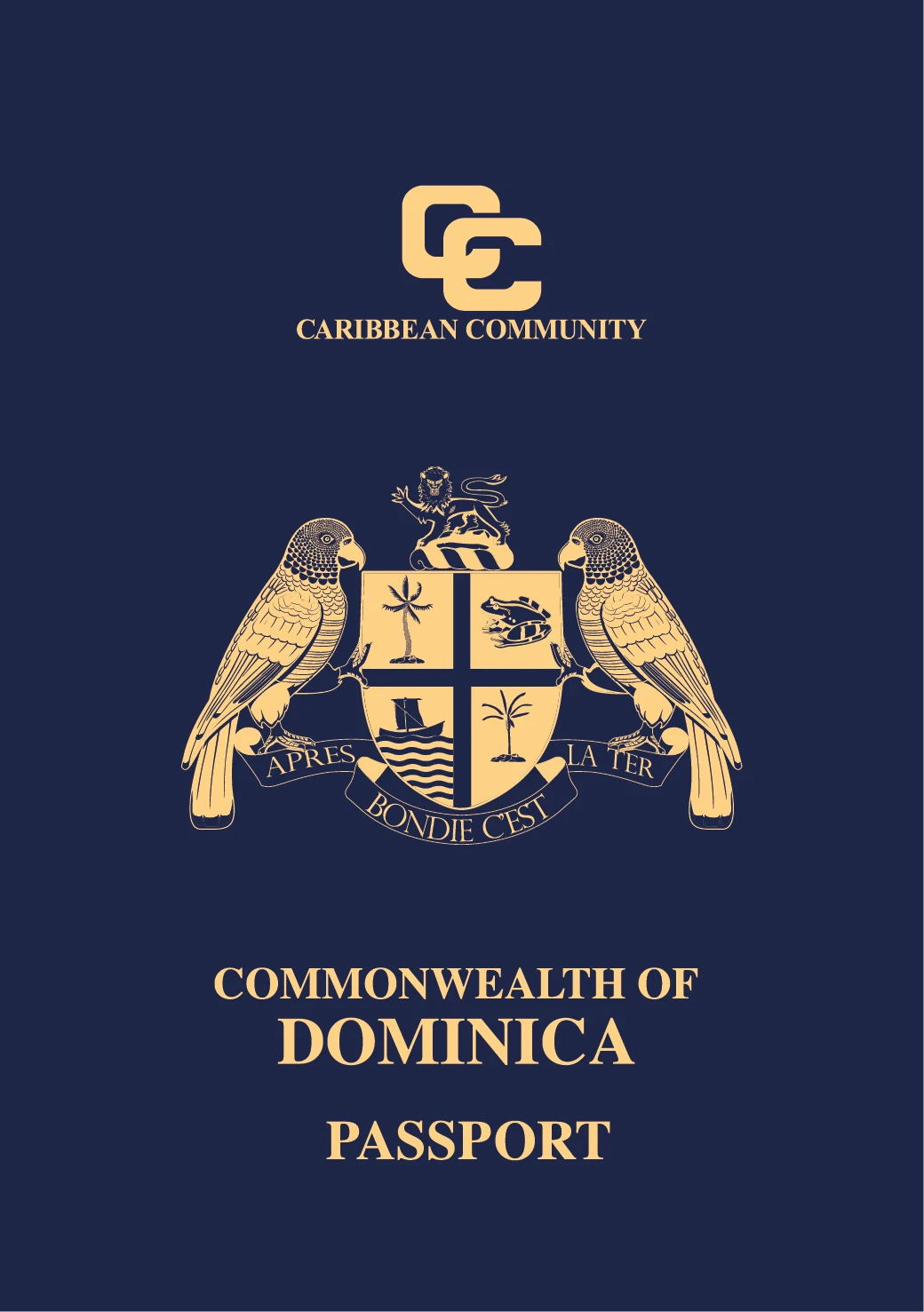
The Dominica passport, issued by the Commonwealth of Dominica, opens 145 visa-free or visa-on-arrival destinations and sits at 26th worldwide in current public 2026 mobility rankings. Dominica is an English-speaking republic in the Eastern Caribbean and a member of (the Caribbean Community trade bloc) and the (Organisation of Eastern Caribbean States). The passport's reach is shaped by two things: a 2023 mutual visa-exemption deal with China that gave holders 30-day stays in mainland China, and a 1993 citizenship-by-investment () programme — the oldest CBI route in the world — that issues passports to approved investors. The CBI route is regulated by the Citizenship by Investment Unit () inside the Ministry of Finance in Roseau, the capital.

26th
Global Ranking
145
Destinations
71.5
Mobility Score
Dominica Passport - Passport Power 33rd | worldpath.ai WRI

Dominica Passport Global Mobility Context

Dominica layers three mobility networks onto one small-island citizenship. (the Caribbean Community customs union) gives free movement across 15 member states. The (the borderless travel zone covering 29 European countries) admits holders for 90 days in any 180-day window. The 2023 mutual visa-exemption with mainland China — rare outside (the seven largest industrial democracies) issuers — adds 30-day stays. The combined reach is 145 destinations per current public mobility data.

Commonwealth membership adds a second layer. Independence on 3 November 1978 as a republic within the Commonwealth of Nations makes Dominica holders Commonwealth citizens by default — useful for the quick-entry policies many Commonwealth states extend to peers and additive to the CARICOM regional rights.

Document modernisation is the third strength. The biometric ePassport, rolled out on 19 July 2021 after a USD 13 million system upgrade, embeds facial, fingerprint, and iris data on a contactless chip that follows the 9303 standard (the International Civil Aviation Organization rulebook airports use to read passport chips at e-gates). The booklet uses the regional CARICOM common-template design, recognised at most destinations from neighbouring island issuers.
The new biometric e-passport reflects Dominica's commitment to maintaining the highest international standards for travel documents, ensuring secure, efficient, and globally accepted passports for all our citizens — at home and abroad.

Dominica Passport at a Glance

Global rank (2026)

#26 worldwide across major 2026 public passport mobility rankings, level with several mid-tier European, Asian, and Caribbean issuers — the strongest position any Eastern Caribbean small-state passport has held in two decades.

Visa-free destinations

145 countries and territories reachable visa-free or with visa-on-arrival, including the 29 Schengen states and mainland China — a reach that punches above the country's 73,000-resident size.

Document type

Biometric ePassport in standard (Caribbean Community) format. Black cover for ordinary holders carries the national coat of arms and the CARICOM logo, signalling the regional travel community.

Page count

32 pages for ordinary booklets and 64 pages for the frequent-traveller booklet — both options follow the regional common-template specification used across the bloc.

Languages

English is the sole official language printed on the passport, reflecting Dominica's British colonial heritage; many residents also speak Kwéyòl (a French-based creole) at home, but it is not a document language.

Adult validity

10 years for holders aged 16 and over, matching the international 9303 standard (the technical rulebook airports use for machine-readable passports).

Child validity (under 16)

5 years for minors under 16. Renewal must happen before expiry, and almost every destination in Dominica's visa-free list expects 6 months of remaining validity on entry.

Dual citizenship

Permitted without restriction since the Modification of Enactments Order 1978 — Dominica does not require new naturalised citizens to renounce their original nationality, which is the legal foundation of the programme.

Issuing authority

Passport and Immigration Department, headquartered at Police Headquarters on Bath Road in Roseau. Biometric production runs from the central passport office; overseas adoption stations operate from select Dominica embassies.

History

Republic within the Commonwealth since 3 November 1978. Biometric ePassports rolled out on 19 July 2021 after a USD 13 million system upgrade, replacing the older non-chip booklet.

Dominica Passport Visa-Free Destinations by Region

Regional Mobility

Economic Mobility Score: 71.5%Country GDP: 0.689%
Visa Exceptions
Europe excludes the United Kingdom (visa required since 19 July 2023). Americas excludes the United States, Canada, and Mexico. Asia-Pacific excludes Japan, Australia, New Zealand. Most other gaps are e-visa-based and resolved a few days before travel.

The most-used visa-free corridors for Dominica holders are the for 90-day European trips, the bloc for regional family and business travel, mainland China for 30-day stays under the 2023 bilateral exemption, Hong Kong and Singapore for 30 and 30 days, respectively, and the Russian Federation for 90 days. Outside this short list, most major business or leisure routes need either a quick electronic travel authorization or an embassy visa, with the United Kingdom and the United States being the two notable visa-required outliers.

Americas

The Caribbean and Latin America anchor Dominica's strongest regional position. CARICOM (the Caribbean Community customs union) grants free movement across the 15 member states, so Antigua and Barbuda, the Bahamas, Barbados, Belize, Guyana, Jamaica, St Kitts and Nevis, St Lucia, St Vincent, Suriname, and Trinidad and Tobago all open as same-day arrivals. Further south, Argentina, Brazil, Colombia, Ecuador, Peru, and Panama each admit Dominica visitors for 90 days without a visa, a holdover from broad Latin American mobility policies the region applies to small-state issuers. Canada, Mexico, and the United States are the three holdouts — each requires a pre-trip visa, with Canada offering an Electronic Travel Authorization ( — an online pre-screening, not a full visa) only after consular review.

Europe

Europe is the single biggest payoff in the Dominica passport. The 29-country Schengen Area admits Dominica holders for 90 days within any 180-day rolling window without a visa, covering all the major business and leisure hubs from Lisbon to Helsinki. Schengen entry now requires a EUR 7 (European Travel Information and Authorization System — an online pre-screening that links to the passport chip) when its enforcement phase begins, and the (Entry/Exit System — the European Union biometric border-record platform) replaces passport stamps with automated face scans at e-gates. Outside Schengen, Ireland, Croatia, Romania, Bulgaria, Cyprus, Serbia, and Albania remain visa-free; the United Kingdom moved Dominica off its visa-free list on 19 July 2023, so a Standard Visitor visa is now required for UK trips — a change that prompted ongoing diplomatic talks the Dominica government has confirmed remain active in 2025.

Asia-Pacific

Asia is where the 2023 China deal gives Dominica an edge that other small-state Caribbean issuers also share, but few outside the region do. Mainland China admits Dominica passport holders for 30 days under the mutual exemption that took effect on 16 March 2023. Hong Kong, Macau, Malaysia (30 days), the Philippines (30 days), Singapore (30 days), South Korea (30 days), and Thailand (60 days) round out the visa-free Asian list. Japan, Australia, and New Zealand are visa-required for Dominica holders — Australia and New Zealand offer their Electronic Travel Authority and (New Zealand Electronic Travel Authority) online systems, respectively, but only to selected issuers, with Dominica not currently on either list.

Middle East

The Middle East is largely an electronic-visa or visa-on-arrival territory for Dominica holders. Israel admits ordinary Dominican passports without a visa for 90 days. Jordan and Lebanon offer visa-on-arrival for short stays. The Gulf Cooperation Council ( — Saudi Arabia, the United Arab Emirates, Qatar, Bahrain, Oman, and Kuwait) requires pre-trip e-visas for tourism, generally issued within 1-3 working days at modest fees. Turkey grants a visa on arrival for 30 days. Iran and Iraq require advance consular visas.

Africa

Africa splits roughly half visa-free and half e-visa for Dominica holders. Kenya, Tanzania, Rwanda, Mauritius, Senegal, the Seychelles, Cape Verde, Madagascar, Mozambique, Zambia, and Zimbabwe each grant either visa-free entry or a 30-day visa-on-arrival at the airport border. Nigeria, Ethiopia, Egypt, Ghana, and Côte d'Ivoire issue e-visas online within a few business days. South Africa is the largest visa-required exception in the region — Dominica holders need a pre-trip embassy visa, typically issued from the South African mission in Trinidad.

Offshore Jurisdictions

Offshore financial centres line up well for Dominica passport holders thanks to the regional CARICOM relationship. The British Virgin Islands, the Cayman Islands, and Anguilla each admit Dominica holders without a visa as Commonwealth peers, the Cayman window stretching to 6 months and the BVI to 6 months. Bermuda admits Dominica nationals for 90 days. The Channel Islands of Jersey and Guernsey and the Isle of Man follow United Kingdom entry rules, which, after 19 July 2023, means Dominica holders need a visa here too — a meaningful gap for offshore finance work that previously ran through these Crown Dependencies.

Where a Visa Is Still Required

  • United States — from 1 January 2026, Presidential Proclamation 10998 suspended new US visa issuance to Dominican nationals and cut existing visa validity to a three-month single entry.
  • United Kingdom — Standard Visitor visa required since 19 July 2023; this also applies to the Jersey, Guernsey, and Isle of Man Crown Dependencies.
  • Canada — temporary resident visa required; an eTA (Electronic Travel Authorization) is granted only after consular review.
  • Japan, Australia, New Zealand — pre-trip visa required from the relevant embassy; visa-waiver schemes do not currently cover Dominica.
  • Russia — note that Russia is visa-free for 90 days for Dominica holders, but Western sanctions and onward travel restrictions can complicate the trip in practice.

How to Get a Dominica Passport

1

Choose a CBI Investment Route

The fastest legal route to a Dominica passport for non-Dominicans is the Citizenship by Investment Programme launched in 1993 — the oldest route in the world. Applicants pick between two investment options, both regulated by the Citizenship by Investment Unit () inside the Ministry of Finance in Roseau. The Economic Diversification Fund ( — a state-managed development fund that channels CBI money into schools, hospitals, sports infrastructure, and small-business support) requires a non-refundable contribution of USD 200,000 for a single applicant under the harmonised minimum introduced after the Memorandum of Agreement signed on 20 March 2024 by Antigua and Barbuda, Dominica, Grenada, and St Kitts and Nevis. The alternative is a government-approved real estate investment with a USD 200,000 minimum and a three-year minimum holding period before resale.

Both routes carry mandatory due-diligence and processing fees on top of the headline contribution. The CBIU charges USD 1,000 in processing per application, USD 7,500 in for the main applicant (USD 4,000 for each dependent aged 16 and over), USD 500 per person for the Certificate of Naturalisation, and USD 1,000 per person for the mandatory interview for applicants aged 16 and over — the interview is virtual unless an in-person session is requested. The EDF contribution scales: USD 250,000 covers the main applicant plus three qualifying dependants, with USD 25,000 added per extra dependant under 18 and USD 40,000 per extra dependant aged 18 and over. Dominicans by birth or descent do not go through CBI — they qualify by ordinary citizenship and skip directly to step 4.

2

File the Citizenship Application Through a Licensed Agent

applications can only be filed through a -licensed — the government does not accept direct retail submissions. The licensed agent compiles the application package, runs an initial document check, and submits to the CBIU on behalf of the applicant. The package must include a notarised passport bio-page copy, a notarised birth certificate, a police clearance certificate (issued within the past six months) from every country the applicant has lived in for more than six months since age 16, a medical certificate confirming HIV-negative status, and a sworn affidavit declaring source of funds for the investment.

Once filed, the CBIU runs background through an international compliance firm contracted to the unit, then issues either an approval, a request for further information, or a refusal. Applicants from a Designated Restricted Country list maintained by the CBIU — currently including Iran, North Korea, and a small number of others — are not eligible; the list updates periodically and the licensed agent confirms eligibility before filing. Refused applicants forfeit the due-diligence and processing fees but recover the investment contribution; approved applicants pay the investment in full upon receiving the Letter of Approval.

3

Complete the Investment and Receive Naturalisation

Once the Letter of Approval is issued, the applicant transfers the investment funds (USD 200,000 or the approved real estate purchase price) through the licensed agent's escrow account. The then issues the Certificate of Naturalisation and registers the applicant as a citizen of the Commonwealth of Dominica. Citizenship in Dominica carries automatic Commonwealth citizenship as a side-effect, useful for travel to the 56 Commonwealth member states.

Total processing time from filing to citizenship is typically 3 to 6 months, with the CBIU publishing 60-day fast-track service-level targets for clean applications and longer windows for applicants whose raises follow-up questions. Real estate applications take longer than EDF because the property purchase legal completion adds an extra leg. Dual citizenship is permitted without restriction under the 1978 Modification of Enactments Order, so investors retain their original nationality and acquire Dominica as a second citizenship.

4

Apply for the Dominica Passport

Once the Certificate of Naturalisation is issued and registered, the new citizen applies for the Dominica biometric ePassport through the Passport and Immigration Department at Police Headquarters, Bath Road in Roseau. The form requires the Certificate of Naturalisation, a recent biometric-style photo (35 mm by 45 mm, white background), two witnesses who are Dominican professionals (lawyer, doctor, justice of the peace), and the passport fee in Eastern Caribbean dollars or USD equivalent.

Biometric enrolment is in-person — the applicant attends a passport adoption station to provide fingerprint, facial, and signature data that is encoded onto the ePassport chip. Overseas applicants who do not travel to Dominica use one of the embassy adoption stations operating in the United Arab Emirates and a handful of other locations agreed with the Government of Dominica. Processing time is typically 5 to 10 working days for in-country applicants and 3 to 6 weeks for overseas issuance via diplomatic pouch. The booklet is the standard common-template biometric ePassport described in the At a Glance section above, with a 10-year validity for adults and 5-year validity for children under 16.

There is no descent-based or by-blood route to Dominica citizenship for adults born outside the country to a Dominica-citizen parent without going through the ordinary registration process. Under the 1978 Constitution and the Citizenship Act, citizenship by descent is automatic only for the first generation born abroad to a Dominica-citizen parent who was themselves born in Dominica — the chain does not extend further unless the foreign-born descendant registers within Dominica during a defined eligibility window.

For naturalisation outside the (Citizenship by Investment) route, Dominica permits ordinary residency-based naturalisation after seven years of continuous lawful residence in the country, demonstrated good character, basic working knowledge of English, and an oath of allegiance to the Commonwealth of Dominica. This route is rarely used by international applicants — almost all foreign-born Dominica citizens enter via the CBI programme described in step 1. Marriage to a Dominica citizen shortens the residency requirement to three years.

Caribbean Community () skilled-national status is a separate freedom-of-movement scheme that gives certain professionals from member states the right to live and work in Dominica without a work permit — it does not, however, lead to Dominica citizenship by itself. Skilled nationals who acquire ordinary permanent residency may eventually petition for naturalisation under the seven-year rule.

Comparison of Dominica Passport With Other Top Passports

Passport

Rank

Visa-free

Key edge

Singapore Passport

#1

192

World #1 mobility benchmark — context for the upper bound of any passport league table

Antigua and Barbuda Passport

#24

154

Caribbean Citizenship by Investment peers — the natural comparison set for Dominica buyers

Portugal Passport

#5

184

EU residency-then-citizenship route — Golden Visa comparator for investor-track applicants

United States Passport

#10

179

Largest economy with citizenship-based worldwide tax exposure

Dominica's passport sits in the upper-middle of the global mobility league. The rank of #26 with 145 destinations beats most non- (Organisation for Economic Co-operation and Development) issuers but lands below (European Union) passports. Natural comparisons run against Caribbean (Citizenship by Investment) peers and benchmark passports.

Dominica vs Caribbean CBI peers. Across the five Caribbean CBI peers (Antigua, Dominica, Grenada, St Kitts, St Lucia), Dominica matches the USD 200,000 Economic Diversification Fund minimum set out in the 20 March 2024 Memorandum of Agreement; St Lucia sits at USD 240,000. Dominica's 1993 launch is the oldest. St Kitts and Antigua edge ahead on mobility.

Dominica vs Singapore. Singapore tops 2026 tables with 192 destinations — 47 more than Dominica- with the gap concentrated in the US, UK, and Pacific OECD access. Singapore offers no investment route; Dominica's CBI gives a path that Singapore does not.

Dominica vs Portugal. Portugal is the key EU comparator: the Golden Visa is the highest-profile non-Caribbean investor route, reaches around 184 destinations, and grants EU citizenship — but the path is five years of residency. Dominica is faster (3-9 months) and trades off the EU layer.

Dominica vs the United States. The US passport allows entry to around 179 destinations — 34 more than Dominica. The US path is naturalisation after a Green Card, with investor visas at USD 800,000-1,050,000. Dominica costs less, processes faster, and avoids US citizenship-based worldwide tax.

Pros and Cons of the Dominica Passport

Pros7 strengths
Cons7 frictions
  • 01Mobility
    Strong Mid-Tier Mobility for a Small State
    145 visa-free destinations per current public mobility data — well ahead of most non-OECD (Organisation for Economic Co-operation and Development) issuers and unusual for a country of 73,000 residents.
    145 dest.
  • 02Mobility
    Full 29-Country Schengen Window
    90-day visa-free stays in any 180-day window across the 29 Schengen states — the single largest mobility benefit on the passport.
    Schengen 90d
  • 03Mobility
    Mutual Visa Exemption with Mainland China
    30-day visa-free entry to mainland China under the bilateral agreement that took effect on 16 March 2023 — a rare privilege outside major economies.
    China 30d
  • 04Eligibility
    Lowest-Tier Caribbean CBI Minimum
    USD 200,000 minimum contribution to the Economic Diversification Fund matches the lowest of the five Caribbean CBI programmes and undercuts St Lucia by USD 40,000.
    USD 200k
  • 05Eligibility
    Fast Processing for Investor Citizenship
    Total processing time from filing to citizenship is typically 3 to 6 months — far quicker than any residency-based route to an EU or G7 passport.
    3-6 mo.
  • 06Rights
    Dual Citizenship Without Restriction
    Permitted since the Modification of Enactments Order 1978 — no requirement to renounce the original nationality, central to the CBI offering.
    Dual OK
  • 07Standing
    World's Oldest CBI Programme
    Launched in 1993, Dominica's CBI route is the longest-running of its kind — useful provenance when banks and reviewers assess programme legitimacy.
    1993
  • 01Mobility
    United Kingdom Visa Required
    United Kingdom moved Dominica off its visa-free list on 19 July 2023 — visitors now need a Standard Visitor visa, with talks to restore the waiver ongoing.
    No UK
  • 02Mobility
    United States Visa Required
    From 1 January 2026, Presidential Proclamation 10998 suspended new US visa issuance to Dominican nationals and cut existing visa validity to a three-month single entry; the embassy interview runs from Bridgetown in Barbados, the regional consular hub — a meaningful gap for business travellers.
    No US
  • 03Mobility
    Canada Visa Required
    Canada admits Dominica holders only via a pre-trip visa, with the Electronic Travel Authorization granted only after consular review — limits North America access.
    No Canada
  • 04Standing
    Continuing EU (European Union) Scrutiny of CBI
    The European Commission has flagged Caribbean CBI programmes including Dominica's for due-diligence concerns; the Schengen visa-free arrangement remains in place but is monitored.
    EU scrutiny
  • 05Mobility
    Pacific OECD Block Visa-Required
    Japan, Australia, and New Zealand all require pre-trip embassy visas — none of the three operates an Electronic Travel Authority waiver for Dominica holders.
    No Japan/AU/NZ
  • 06Support
    Limited Consular Footprint Abroad
    Dominica's small population means thin diplomatic representation — most consular emergencies for Dominica holders are handled through Commonwealth peers or sister CARICOM missions.
    73k pop.
  • 07Support
    Acute Natural-Disaster Exposure
    Hurricane Maria in September 2017 destroyed an estimated 226% of GDP and required a multi-year rebuild — operational risk affects passport issuance during major storm seasons.
    Hurricane risk

Dual Citizenship and Tax Reporting

Dominica fully permits dual citizenship under the Modification of Enactments Order 1978. A naturalised Dominica citizen — whether through , descent, or ordinary residency — keeps the original nationality without restriction. The Constitution of the Commonwealth of Dominica (Section 101) and the Citizenship Act (Sections 8 and 20) together form the legal basis.

Tax position of Dominica citizens. Dominica taxes on a residency basis, not a citizenship basis. A Dominica passport holder who lives outside the country pays no Dominica income tax on foreign-source income, foreign capital gains, foreign inheritance, foreign gifts, or foreign-source pensions. There is also no wealth tax. This contrasts sharply with the United States, which taxes its citizens worldwide regardless of residency — one of the operational reasons high-net-worth Americans sometimes pursue a second passport like Dominica's.

Reporting obligations to Dominica. Dominica does not require its citizens to file a tax return when they are non-resident and have no Dominica-source income. There is no annual filing obligation, no asset-disclosure form, and no exit tax on emigration. The country participates in the (Common Reporting Standard) — the (Organisation for Economic Co-operation and Development) automatic exchange of financial account information — so foreign banks holding accounts for Dominica citizens may forward account data to Dominica tax authorities, but no return is required.

Original-nationality obligations are unaffected. Acquiring Dominica citizenship does not affect the original nationality's tax or reporting rules. United States citizens who naturalise in Dominica still file US Form 1040 and the (Report of Foreign Bank and Financial Accounts), plus any other US obligations. (European Union) citizens who naturalise in Dominica retain their EU rights and EU obligations. The Dominica layer is additive — it adds Caribbean and Commonwealth rights without subtracting from the underlying citizenship.

Bottom Line on the Dominica Passport

The Dominica passport in 2026 is a serious mid-tier mobility document with a unique selling point: it is the fastest legitimate path to a Commonwealth-citizen, dual-allowed second passport that includes 90-day Schengen and 30-day mainland China access. The total investment of USD 200,000 plus due-diligence and processing fees of roughly USD 10,000-15,000 for a single applicant, with 3-6 month processing, is the lowest-friction route into the upper-middle of the global mobility league.

Who this passport fits. Investors who want a fast second passport with strong Caribbean, Latin American, Chinese, and Schengen mobility, who do not need United Kingdom, United States, or Pacific OECD visa-free access (or already hold a passport with those rights), and who plan to remain non-resident in Dominica for tax purposes. Investors who already hold an EU passport gain less from Dominica than those who hold a passport with weaker Schengen access.

Who this passport does not fit. Buyers whose travel pattern is dominated by United Kingdom, United States, or Australia trips will find the Dominica passport leaves the main gaps unfilled. Buyers who want EU citizenship rights — to live and work across 27 EU states — should look at Portugal's residency-then-citizenship Golden Visa instead, accepting the slower five-year path. Buyers who place high value on the global standing of the issuing country may prefer St Kitts (1984 CBI, slightly higher rank) or Malta (EU member, much higher fee).

Dominica Passport FAQ

What is Dominica’s WRI score for 2026?

Dominica scores 59.3 out of 100 on the WorldPath Relocation Index 2026, ranking 30th globally. It leads on Citizenship (87.0) — the world's most affordable CBI passport — and Residency (77.0), since the programme requires no time on the island. Its lowest dimensions are Education (35.0) and Retirement (47.0), held down by the absence of international schools and basic healthcare infrastructure.

How many countries can you visit visa-free with a Dominica passport in 2026?

Dominica passport holders reach 145 destinations visa-free or via visa-on-arrival, including all 29 Schengen states for 90-day stays, mainland China for 30 days, Singapore, Hong Kong, and most of Latin America. Notable gaps are the United States, United Kingdom, Canada, Japan, Australia, and New Zealand — all of which require a pre-trip visa. From January 2026, US visa issuance to Dominican nationals was suspended under Presidential Proclamation 10998.

Did the United States restrict Dominica passport holders in 2026?

Yes. Presidential Proclamation 10998, effective 1 January 2026, suspended new B-1/B-2, immigrant, and student visa issuance to Dominican nationals, citing the CBI programme's lack of a residency requirement as a vetting risk. Existing US visas were simultaneously cut from ten-year multiple-entry to three-month single-entry validity. Dominica and Antigua are the only Caribbean CBI countries affected — Saint Kitts, Grenada, and Saint Lucia retain standard ten-year visa terms.

How much does a Dominica passport cost through the CBI programme?

The minimum is USD 200,000 via a non-refundable donation to the Economic Diversification Fund for a single applicant, or USD 250,000 for a family of up to four — the lowest entry point among Caribbean CBI programmes. Additional mandatory fees cover due diligence (USD 7,500 for the main applicant), processing (USD 1,000), a mandatory interview, and the Certificate of Naturalisation. Total all-in cost for a single applicant runs roughly USD 210,000–215,000.

How long does it take to get a Dominica passport through CBI?

The official CBIU service-level target is four to six months for a clean, well-prepared application. In practice, under current processing workloads, six to nine months is a more realistic expectation from filing to the Certificate of Naturalisation. The passport itself is issued five to ten working days after biometric enrolment for in-country applicants, or three to six weeks via diplomatic pouch for overseas applicants using an embassy adoption station.

Does a Dominica passport allow dual citizenship?

Yes, without restriction. Dominica has permitted dual citizenship since the Modification of Enactments Order 1978 — new citizens are not required to renounce their original nationality, and there is no disclosure or notification requirement to the Dominican government. This is the legal foundation of the CBI programme. A Dominica passport adds Caribbean, Commonwealth, and Schengen mobility without removing any rights attached to the holder's original citizenship.

Does holding a Dominica passport create any tax obligations?

No. Dominica taxes on a residency basis, not citizenship. A passport holder who lives outside Dominica owes no Dominican tax on foreign income, capital gains, inheritance, or wealth. Tax residency begins only after 183 days on the island annually. There is no annual filing obligation and no exit tax. The country participates in the OECD Common Reporting Standard, so foreign banks may share account data with Dominican authorities, but no return is required from non-residents.

Is the Dominica passport at risk of losing Schengen visa-free access?

The risk is real, but no suspension has been enacted as of mid-2026. The European Commission has cited Caribbean CBI programmes without residency requirements — including Dominica's — as grounds for a potential review of visa-free Schengen access. Dominica has also recorded elevated Schengen visa rejection rates among its passport holders, which the EU has flagged specifically. Schengen access remains in place; holders should treat it as a benefit to monitor rather than a permanent guarantee.