WorldPath AIWORLDPATH•AI
Americas

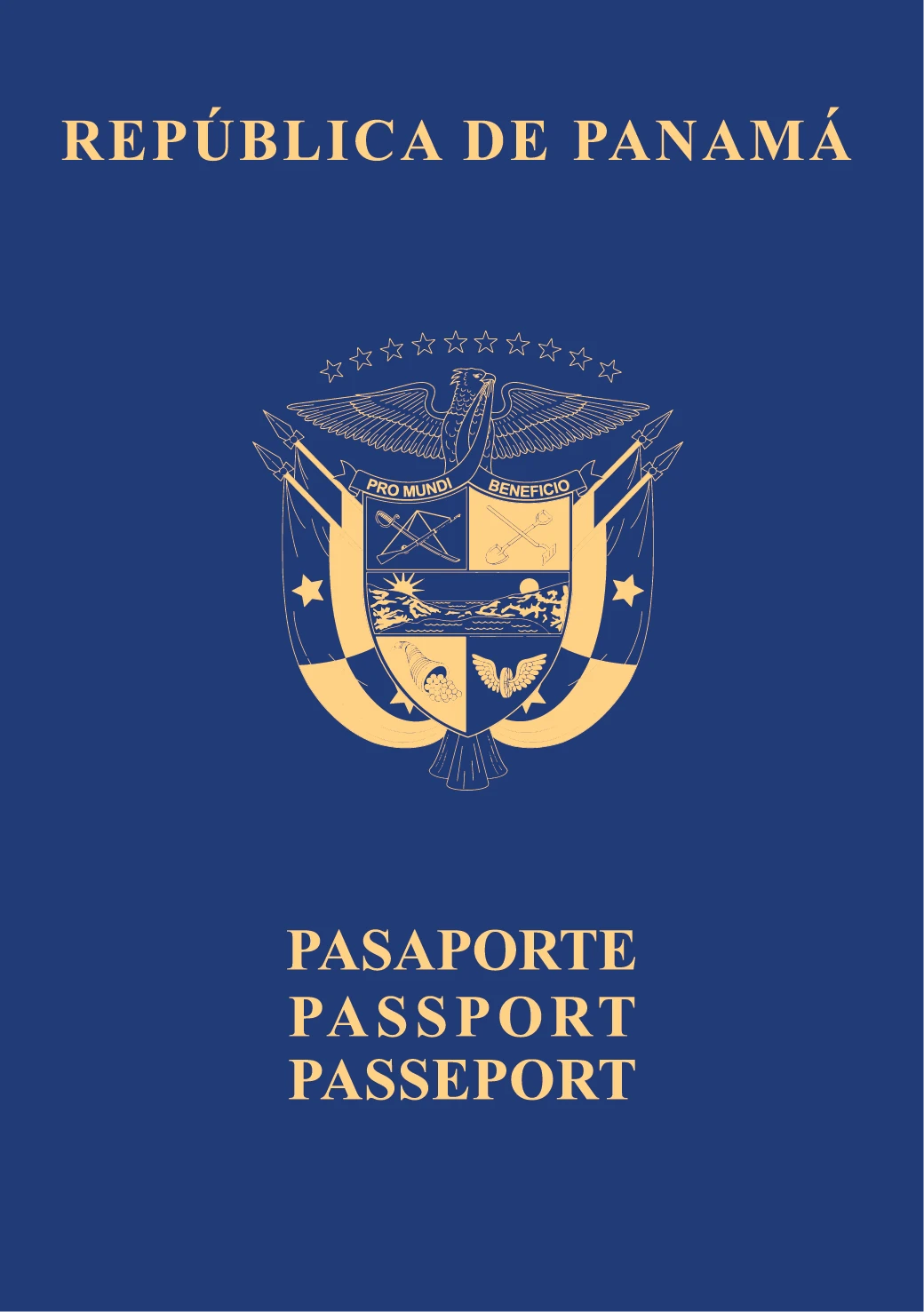
Panama Passport

Ranked #28 Globally

In 2026, Panama's passport sits in 25th place worldwide. Its holders can travel to 147 countries and territories either without a visa or with a quick visa-on-arrival. That list covers the entire (the borderless travel zone covering most of Europe), the United Kingdom, Japan, and South Korea. Panama only taxes income earned inside the country. Money you earn abroad is not taxed at all, a rule known as territorial taxation. The country also runs on the US dollar, which circulates beside the local balboa at a fixed one-to-one rate. Those features pull in retirees, remote workers, and business owners who want a stable base. The passport is issued only to Panamanian citizens by the Passports Authority of Panama. There is no 'buy-a-passport' route, but the Friendly Nations Visa (a residency permit for citizens of about 50 countries) is a simple path to permanent residency.

28th
Global Ranking
148
Destinations
73
Mobility Score
Panama Passport - Passport Power 32nd | worldpath.ai WRI

Panama Passport Global Mobility Context

Panama trades on location. The Panama Canal links the Atlantic and Pacific oceans and carries a large share of world shipping, making the country a logistics and banking hub far bigger than its 4.5 million people. That hub status, plus membership of the United Nations and the Organization of American States, shapes how border officers read the document.

The passport reaches 148 destinations on visa-free or visa-on-arrival terms. The standout is Europe: Panamanians enter the whole without a visa, which many richer economies still cannot. Russia is visa-free too, reflecting Panama's trade-first foreign policy.

Panama issues a biometric electronic passport, in use since January 2014. A contactless chip stores the holder's photo and data, following the international 9303 standard (the International Civil Aviation Organization rulebook that airport e-gates use to read passport chips). The data page is bilingual in Spanish and English.

The country's financial standing has improved. In October 2023 Panama left the international money-laundering watchlist run by the Financial Action Task Force (, the global standard-setter against financial crime). In March 2024 the European Commission followed with Panama's removal from its own list of high-risk third countries. Both delistings lifted a cloud over the country's reputation since 2016 and eased cross-border banking.
The Passports Authority of Panama is the only entity of the Panamanian state authorised to issue, regulate, and govern the use of the passport in the Republic of Panama.

Panama Passport at a Glance

Global rank (2026)

#28 across major passport indices in 2026, in the same band as several mid-tier European and Latin American passports

Visa-free destinations

148 destinations, including the full , the United Kingdom, Japan, South Korea, and most of Central and South America

Document type

Electronic passport with a biometric chip, compliant with the international 9303 standard that airport e-gates read

Page count

32 visa pages in the standard book, with a larger 64-page version available for frequent travellers

Languages

The personal-details page is printed in Spanish and English; the courtesy message also appears in French

Adult validity

5 or 10 years; the applicant chooses the term, and the 10-year book is the usual pick for regular travellers

Child validity (under 16)

Minors are normally issued the shorter 5-year book, so families renew a child's passport more often than an adult's

Dual citizenship

Allowed in practice; the constitution asks naturalised citizens to renounce a prior nationality, but the oath is rarely enforced abroad

Issuing authority

Passports Authority of Panama (Autoridad de Pasaportes de Panama, or ), a dedicated agency created in 2013

History

Panama became independent in 1903; the modern electronic passport with a biometric chip was introduced in January 2014

Panama Passport Visa-Free Destinations by Region

Regional Mobility

Economic Mobility Score: 73%Country GDP: 0.086%
Visa Exceptions
Europe scores high because Panamanians enter the full Schengen Area visa-free, but the Americas score is held down by the United States and Canada, which both require a visa. Several destinations need an e-visa or a visa arranged before arrival.

The Panamanian passport is strongest close to home and across Europe. A traveller from Panama City can reach the , the United Kingdom, and almost every neighbour in the Americas without applying for a visa first. The big gaps are the two largest economies to the north: both the United States and Canada require a full visa, which is the single biggest limit on this passport. The table below sets out the rules for the destinations Panamanians use most.

Americas

Travel inside the Americas is mostly open. Every Central American neighbour, Mexico, and most of South America, including Argentina, Brazil, Chile, Colombia, and Peru, admit Panamanians without a visa. The Caribbean is similarly easy for short tourist stays. The exceptions sit at the top of the map: the United States requires a visitor visa, applied for at an embassy, and Canada requires its own visitor visa. Panama is not part of the United States Visa Waiver Programme, so there is no quick online travel form like the one Europeans use. For a passport otherwise built around hemisphere mobility, these two refusals are the most felt.

Europe

Europe is where this passport punches above its rank. Panamanians enter the entire Schengen Area without a visa for up to 90 days in any 180-day window. That covers France, Germany, Italy, Spain, the Netherlands, and the Nordic and Baltic states, plus newer members Croatia, Bulgaria, and Romania. The visa waiver flows from a short-stay agreement Panama signed with the European Union (the political and economic union of 27 European states).

Two new European systems change the routine from late 2026. (the European Travel Information and Authorisation System, a short paid online pre-screening that is not a visa) becomes the norm for visa-exempt visitors like Panamanians, with a small fee and approval usually granted within minutes. Separately, (the Entry/Exit System, an automated border record that captures fingerprints and a photo on first arrival) replaces manual passport stamps across the Schengen Area. The United Kingdom sits outside both schemes but now asks Panamanians for an Electronic Travel Authorisation (a quick online permit) before a stay of up to six months.

Asia-Pacific

Asia is a mixed picture for the Panamanian holder. The strongest links are in the northeast: Japan and South Korea both grant visa-free entry for short visits, and Singapore admits Panamanians without a visa. Further south, much of Southeast Asia uses a visa-on-arrival or an electronic visa rather than open entry. The two giants are harder: mainland China requires a visa arranged in advance, and India issues an electronic visa that must be approved before travel. In the Pacific, Fiji and several island states allow short tourist stays without a visa.

Middle East

Gulf access leans on visas-on-arrival and electronic permits. The United Arab Emirates and Qatar issue short visit permits on arrival or online, and Saudi Arabia offers an electronic tourist visa. Israel admits Panamanians without a visa for short stays. Most other states in the region, including Iran, expect a visa arranged before departure, sometimes with extra security screening for first-time visitors.

Africa

African travel runs mainly on arrival visas and electronic permits rather than open borders. Popular destinations such as Egypt, Kenya, Morocco, Rwanda, Tanzania, and Namibia let Panamanians enter visa-free or grant a permit on arrival or online for short trips. A band of states, including Libya, Sudan, and Eritrea, still requires a visa fixed in advance, so a Panamanian planning a wider African trip should confirm each country's rule before booking.

Offshore Jurisdictions

The small finance-centre territories matter to Panama because the country is itself a regional banking hub. Panamanians reach the Cayman Islands, Bermuda, and the British Virgin Islands on visa-free or permit-on-arrival terms for short stays, and the Bahamas admits them without a visa. The Channel Islands and Gibraltar follow British entry rules. For a holder running cross-border accounts out of Panama City, this offshore reach is a practical convenience rather than a tourist perk.

Where a Visa Is Still Required

  • United States: a full B1/B2 visitor visa, applied for at an embassy. Panama is not in the Visa Waiver Programme.
  • Canada: a visitor visa arranged before travel.
  • China and India: a visa or an electronic visa approved in advance.
  • Australia: an online visitor visa rather than visa-free entry.
  • Parts of Africa and the Middle East: Libya, Sudan, Eritrea, and Iran require a visa fixed before departure.

How to Get a Panama Passport

1

Get Permanent Residency

Citizenship starts with legal residency, and Panama offers several routes. The best-known is below.

The Friendly Nations Visa.

The Friendly Nations Visa () is a residency permit open to citizens of about 50 approved countries, including the United States, Canada, the United Kingdom, most of the European Union, Australia, and Japan. Since a 2021 reform, an applicant must show a genuine economic to Panama: a job with a local company, real estate worth at least USD 200,000, or a fixed bank deposit of at least USD 200,000 held for a set term. The reform replaced the old, looser version that granted residency almost on arrival.

How the Permit Works.

An approved applicant first receives a two-year temporary residency. After those two years, the holder applies to convert it into permanent residency. Processing of the initial filing typically takes about four to six months. Other routes exist for retirees with a lifetime pension (the long-standing Pensionado programme) and for larger investors under a separate Qualified Investor permit, but the Friendly Nations route is the one most relocators use. The Pensionado Visa is the most-used alternative. It grants immediate permanent residency to foreigners with a lifetime pension of $1,000 per month or more (or $750 combined with a $100,000 property purchase). The Qualified Investor Visa grants permanent residency in 45-60 business days from $300,000 in real estate (threshold reverts to $500,000 after 15 October 2026), $500,000 in Panamanian securities, or $750,000 in a 5-year fixed-term bank deposit. Both routes count toward the 5-year residency clock for naturalisation, just like the Friendly Nations Visa.

2

Build Residency History

Panamanian law requires five continuous years of legal residency before you can ask for citizenship. That clock starts once you hold residency, not from your first visit.

Long absences can break the continuity, so the safe approach is to treat Panama as your real home base during these years and keep records that prove it: rental or property documents, local bank statements, and entry and exit stamps. A shorter three-year route exists for foreigners married to a Panamanian citizen or with a Panamanian-born child, but the standard wait is five years.

3

Apply for Citizenship

After five years of residency, you file a naturalisation application with the government. The legal basis is Article 10 of the Panamanian Constitution.

You must show three things: a command of the Spanish language, a basic knowledge of Panamanian geography, history, and how the government works, and proof of your continuous residency. The constitution also asks the applicant to declare renunciation of any prior nationality during the oath. In practice this declaration is symbolic for many applicants, because countries such as the United States do not treat a foreign oath as giving up citizenship. Processing is handled through the courts and the electoral authority and can run well over a year, so plan for patience at this stage.

4

Apply for the Passport

Once you are a citizen, you receive a Panamanian identity card (the cedula) and can then apply for the passport.

Applications go to the Passports Authority of Panama, in person at one of its offices. You need your citizenship documents, the national identity card, and a recent photo that meets the agency's specifications. The standard government fee is 100 balboas (about USD 100, since the balboa is fixed one-to-one with the dollar), with a reduced rate for seniors and people with a disability card. You choose a 5-year or 10-year book at this point. Standard processing takes a few working days, and an express option is available for an added fee.

The four-step route above is for people who move to Panama and naturalise. If you already have a Panamanian parent, you may be a citizen from birth and can skip the residency clock entirely.

Panama grants citizenship by descent (citizenship passed down by blood, known in law as jus sanguinis) to a child born abroad to a Panamanian mother or father. The child does not need to have lived in Panama. The route is about proving the family link rather than building residency, which makes it far faster than naturalisation.

To register, you gather your own birth certificate, the Panamanian parent's birth certificate or identity card, and documents tying the two together. These are filed through a Panamanian consulate abroad or with the civil registry inside the country. Once the registration is approved, the child is recorded as a Panamanian citizen, receives the national identity card, and can apply for the passport using the standard adult or minor form.

Panama also applies jus soli (citizenship by place of birth): almost anyone born on Panamanian soil is a citizen automatically, regardless of the parents' nationality. That rule mainly benefits children born in the country rather than applicants abroad, but it is worth knowing for families who relocate while planning to have children.

Comparison of Panama Passport With Other Top Passports

Passport

Rank

Visa-free

Key edge

Singapore Passport

#1

192

Strongest passport in 2026 and the global mobility benchmark

France/Italy/Spain Passports

#4

185

European Union citizenship with the right to live and work in 27 states

Portugal Passport

#5

184

Fellow relocator favourite that ends in an EU passport, but over a longer wait

United States Passport

#10

179

Larger economy that still requires a visa from Panamanians and taxes worldwide income

Ranks below reflect 2026 global passport indices. Visa-free counts are cross-checked against public records of entry rules for Panamanian citizens.

Panama versus the United States. These two passports trade places depending on what you value. The United States document reaches more destinations, but it carries a tax cost that few others do: the United States taxes its citizens on worldwide income for life, wherever they live. Panama does the opposite. It only taxes income earned inside the country, so a Panamanian living off foreign earnings pays no Panamanian tax on it. For a globally mobile earner, that contrast can outweigh the gap in visa-free reach.

Panama versus an European Union passport. A passport from France or Italy grants the right to live and work across all 27 European Union states, settling in one and then another with no paperwork between. Panama's passport unlocks visa-free travel into the but never the right to work there. What Panama offers instead is a shorter, cheaper road to the document: five years of residency through the Friendly Nations route, against the decade or more European naturalisation usually demands.

Panama versus Portugal. Both are favourites with relocators, and both end in a respected passport after a residency period. Portugal leads on what it unlocks, because Portuguese citizenship is European Union citizenship with full free movement. Panama answers with money: a dollar economy, no tax on foreign income, and a lower cost of living. The choice is European rights against a lighter tax and currency setup.

Pros and Cons of the Panama Passport

Pros7 strengths
Cons7 frictions
  • 01Tax
    No Tax on Income Earned Outside Panama
    Panama uses a territorial tax system. Only income sourced inside the country is taxed. Pensions, dividends, and salary earned abroad are not taxed at all, which is the single biggest draw for internationally mobile residents.
    0% foreign
  • 02Standing
    A Dollar Economy With No Currency Risk
    Panama runs on the US dollar, which circulates beside the local balboa at a fixed one-to-one rate. Residents face no exchange-rate swings on dollar savings, a rare stability among emerging-market relocation options.
    US dollar
  • 03Mobility
    Visa-Free to All of Schengen Europe
    The passport reaches 148 destinations without a prior visa, including the entire Schengen Area, the United Kingdom, Japan, and South Korea. Full Schengen access is stronger than several wealthier economies manage.
    148 dest.
  • 04Eligibility
    A Simple Residency Path for 50 Nations
    The Friendly Nations Visa gives citizens of about 50 approved countries a clear, well-trodden route to permanent residency. It is one of the more straightforward residency programmes in the Americas.
    FNV route
  • 05Eligibility
    Citizenship After Five Years of Residency
    Naturalisation needs five continuous years of legal residency, dropping to three for those married to a citizen or with a Panamanian-born child. That is shorter than the decade many European countries require.
    5-year
  • 06Standing
    A Trade and Banking Hub by Geography
    The Panama Canal makes the country a global shipping and financial centre far larger than its size suggests. United Nations and Organization of American States membership backs the passport's standing at borders.
    Canal hub
  • 07Descent
    Citizenship by Birth and by Bloodline
    A child born on Panamanian soil is a citizen automatically, and a child born abroad to a Panamanian parent can claim citizenship by descent without ever living in the country.
    Jus soli
  • 01Rights
    Renunciation Asked for at Naturalisation
    The constitution asks naturalised citizens to declare they give up a prior nationality. The oath is rarely enforced abroad, so many keep both passports in practice, but the legal text is a deterrent for some applicants.
    Renounce
  • 02Mobility
    The United States Requires a Full Visa
    Panama is not in the United States Visa Waiver Programme. A Panamanian needs a B1/B2 visitor visa applied for at an embassy. Neighbouring Canada also requires a visitor visa.
    US visa
  • 03Eligibility
    A Spanish Language Test to Naturalise
    Naturalisation requires a command of Spanish plus a knowledge test on Panamanian history, geography, and government. Applicants from non-Spanish-speaking countries must reach a working level of the language first.
    Espanol
  • 04Mobility
    Mid-Tier Mobility, Not Top-Tier
    At 148 destinations the passport ranks 28th in 2026, well behind the European and East Asian leaders that reach 180-plus. Strong for the region, but not a global front-runner on raw travel reach.
    #28 rank
  • 05Standing
    A Reputation Recovering From Past Scrutiny
    Panama spent years on financial-crime watchlists after the 2016 offshore-leak scandal. It exited the FATF grey list in October 2023 and the EU high-risk list in March 2024, but extra banking checks abroad can linger.
    AML past
  • 06Validity
    Children Renew More Often Than Adults
    Minors are normally issued the shorter 5-year passport rather than the 10-year adult book. Families with young children face more frequent renewals and tighter child photo rules.
    5-yr child
  • 07Eligibility
    A Slow Naturalisation Decision
    The citizenship decision runs through the courts and the electoral authority and often takes well over a year after the five-year residency is complete. The route rewards patience, not speed.
    Court wait

Dual Citizenship and the Panama Passport

Panama's position on holding two passports is unusual, and it confuses many applicants. The short version: dual citizenship is widely held in practice, but the constitution's wording is cautious, and the rule differs depending on how you became Panamanian.

Citizens by birth. Anyone who is Panamanian by birth, whether born on Panamanian soil or to a Panamanian parent abroad, keeps that citizenship for life. Taking another country's nationality does not cost them their Panamanian one. This group can freely hold two or more passports with no reporting duty.

Citizens by naturalisation. Article 10 of the constitution asks a foreigner who naturalises to declare that they renounce their previous nationality. In legal theory this points to a single-nationality rule for naturalised citizens. In practice the declaration is often symbolic, because the country of origin usually does not recognise a foreign oath as a valid surrender of its citizenship. Many naturalised Panamanians from the United States, Canada, and Europe continue to hold and use their original passports.

Which passport to use where. The practical rule abroad is to travel on whichever passport opens the most doors at your destination. A Panamanian-American heading to Europe might use the Panamanian book for visa-free Schengen entry, while using the United States passport to enter the United States, which still requires a visa from Panamanians. Inside Panama, a citizen should enter and leave on the Panamanian document.

Bottom Line on the Panama Passport

The Panama passport is a regional strong performer with a financial twist. On raw travel reach it ranks 28th in 2026 with 148 visa-free destinations, which is solid but not top-tier: full Schengen access and easy travel across the Americas, but a hard stop at the United States and Canada, which both demand a visa. For most holders, the document's real value is not the stamp count. It is what comes attached to the nationality.

That attachment is a territorial tax system and a dollar economy. A Panamanian living off income earned outside the country pays no Panamanian tax on it, and savings sit in US dollars without currency risk. Pair that with a five-year route to citizenship through the Friendly Nations Visa, and the appeal to retirees, remote workers, and business owners becomes clear. The trade-offs are real: a Spanish-language test, a slow court-run naturalisation, and a reputation still recovering from past financial scrutiny, even after the country left the grey list in October 2023 and the AML high-risk list in March 2024.

The verdict: Panama suits the internationally mobile person who cares more about a stable, low-tax home base than about a top-ranked travel document. Those who need deep visa-free reach or the right to live and work across Europe will look to a stronger passport. Those who want a foothold in the Americas, a dollar economy, and a realistic five-year path to a second citizenship will find few easier options.

Panama Passport FAQ

Does Panama offer citizenship by investment?

No — Panama does not offer by investment. All pathways require residency first, followed by 5 years of continuous permanent residency before naturalization. However, the Qualified Investor Visa ($300,000 in real estate) grants immediate permanent residency in 30–45 business days, making it the fastest route toward eventual citizenship.

How long does it take to get a Panama passport from start to finish?

The total timeline ranges from 7 to 12 years depending on the route: 7–10 years via the Qualified Investor Visa, 9–12 years via the Friendly Nations Visa, and approximately 5 years via marriage to a Panamanian citizen. After obtaining permanent residency, naturalization requires 5 years of continuous residence, a Spanish-language exam, and presidential approval.

Is the Panama passport worth it for long-term investors?

Yes — for investors prioritizing long-term value over speed. The Panama passport offers 148 visa-free destinations, zero tax on foreign-sourced income, a fully dollarized economy, no inheritance tax, and the world's most generous retiree program. Compared to Caribbean CBI programs, Panama delivers superior tax efficiency, economic stability, and a fraction of the upfront cost.

Can I keep my existing citizenship if I naturalize in Panama?

Yes, in practice. Panama allows dual citizenship de facto. The naturalization oath to renounce prior citizenship is widely recognized as symbolic and unenforceable — Panama does not notify foreign governments or verify renunciation. US citizens, UK citizens, and most EU nationals can freely hold both passports. Citizens of countries that formally prohibit dual citizenship (e.g., China, UAE) should verify their home country's rules.

What are the Panama Friendly Nations Visa requirements in 2026?

The Friendly Nations Visa is available to citizens of 50 designated countries including the US, UK, Canada, Australia, and most EU nations. Applicants must demonstrate one of three ties to Panama: employment with a Panamanian company (plus a $5,000 bank deposit), purchase of $200,000+ in real estate, or a $200,000 fixed-term bank deposit. Government fees are approximately $1,050 for the main applicant; total costs run $5,000–$7,000.

How does Panama's territorial tax system work for foreign residents?

Panama taxes only income earned within Panama. All foreign-sourced income — from investments, business operations, rental properties, or remote employment outside Panama — is completely exempt from Panamanian income tax. There is also no capital gains tax on foreign assets, no inheritance tax, and no wealth tax. The economy is fully dollarized, eliminating currency exchange risk.

What is the Qualified Investor Visa $300,000 real estate deadline?

The current $300,000 minimum threshold for the Qualified Investor Visa real estate route has been extended through October 2026. After that date, the requirement is expected to rise to $500,000—investors who qualify before the deadline lock in permanent residency under the lower threshold. The visa grants immediate permanent residency in 30–45 business days with no provisional period.

How does the Panama passport compare to Caribbean CBI passports?

Panama offers comparable Schengen access to Caribbean CBI programs (St. Kitts: 156 destinations; Grenada: 147; Panama: 148) but with key structural advantages: zero tax on foreign income, a USD economy, 90+ international banks, and the Panama Canal's geopolitical leverage. The tradeoff is time — Caribbean CBI delivers a passport in 3–9 months at $200,000–$250,000+; Panama's naturalization takes 7–12 years but at a fraction of the cost.