
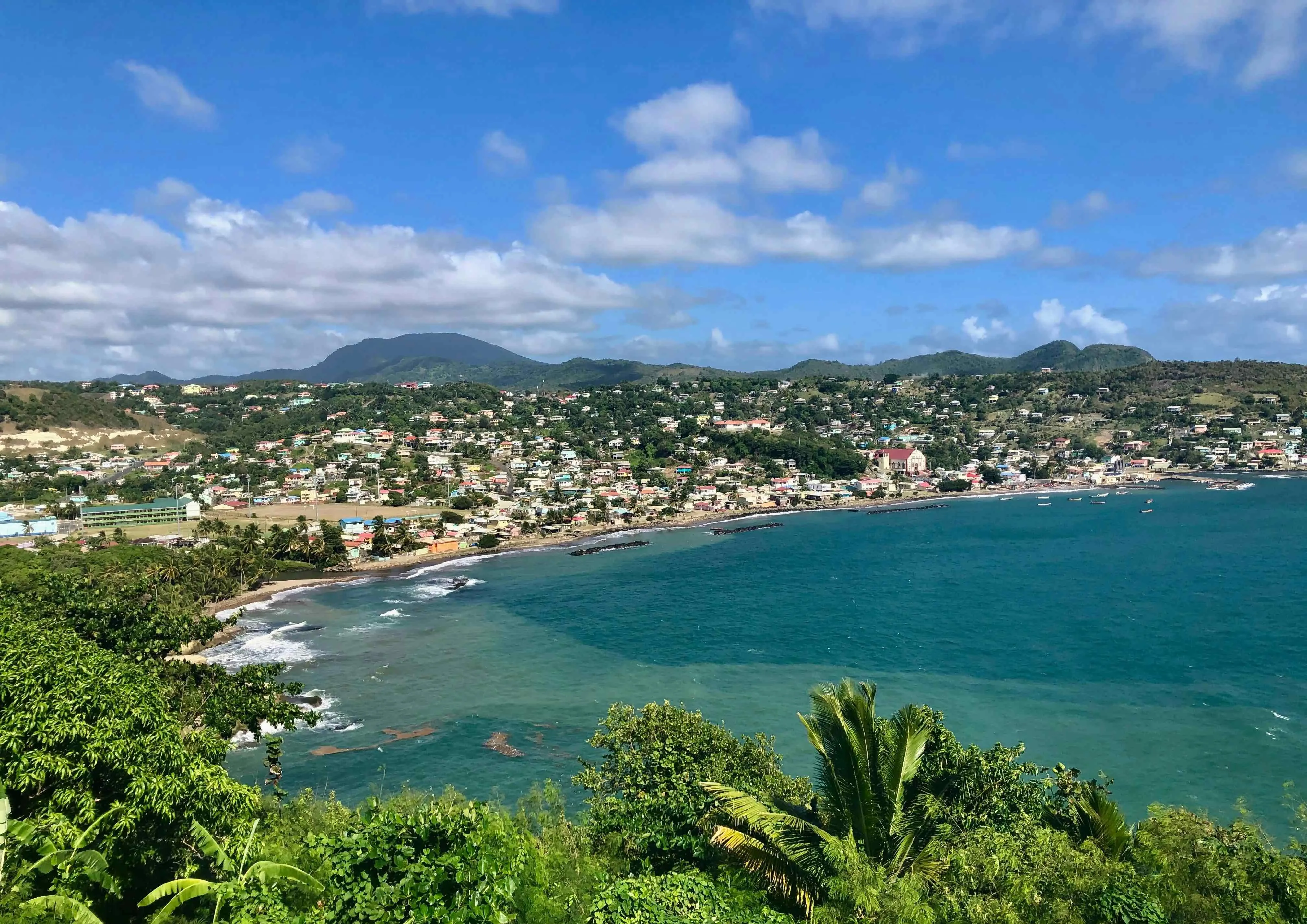
Dominica Overview
Dominica is the Commonwealth of Dominica — the Nature Isle, a rugged, rainforested volcanic island of about 67,000 people between the French departments of Guadeloupe and Martinique. It is a parliamentary republic, with a President as head of state rather than the British monarch, which sets it apart from most of its Eastern Caribbean neighbours; it belongs to , the Organization of Eastern Caribbean States, the United Nations, and the Commonwealth, and uses the East Caribbean dollar pegged at 2.70 to the US dollar. Its economy is small and increasingly built on two things: eco-tourism and the sale of citizenship, which now funds well over half the national budget.
On This Page
- 1.Dominica Overview
- 1.1How Does Dominica Compare?
- 1.2Who does Dominica fit?
- 1.3Pros and Cons of Relocating to Dominica
- 1.4Dominica leads on Citizenship — WRI 87.0 / 100
- 1.5Dominica leads on Residency — WRI 77.0 / 100
- 1.6Residence
- 1.7Taxes on Personal Income
- 1.8Cost of Living
- 1.9Healthcare System
- 1.10Education System
- 1.11Banking & Finance
- 1.12Cryptocurrency Regulation
- 1.13Real Estate Market
- 2.Frequently Asked Questions
Quick Facts
- Passport Rank: 26
- Visa-Free Destinations: 145
- Capital: Roseau
- Population: 67,000
- Area: 751 km²
- Currency: East Caribbean dollar (XCD)
- Official languages: English
- Religions: Roman Catholic 52%, Protestant 30%, other/none 18%
Key Indicators
- GDP (Nominal): $689 million (World Bank, 2024)
- Unemployment Rate: ~11% (2024 est.)
- Human Development Index: 0.740 (High, HDR 2025)
- GDP per Capita: $10,400 (World Bank, 2024)
Safety & Governance
- Global Peace Index (IEP): Not ranked (micro-state, GPI 2025)
- Press Freedom Index (RSF): Not ranked (RSF 2026)
- Corruption Perception (TI): 60/100 (Rank: 37, CPI 2024)
- Gini Coefficient (WB): No national survey since 2009
Health & Environment
- PM2.5 Air Pollution: 11 µg/m³ (est., 2023)
- Air Quality Category: Good
- ND-GAIN Adaptation Index: 53.8 (Rank: 64, ND-GAIN 2023)
- Life Expectancy: 71.0 years (2024)
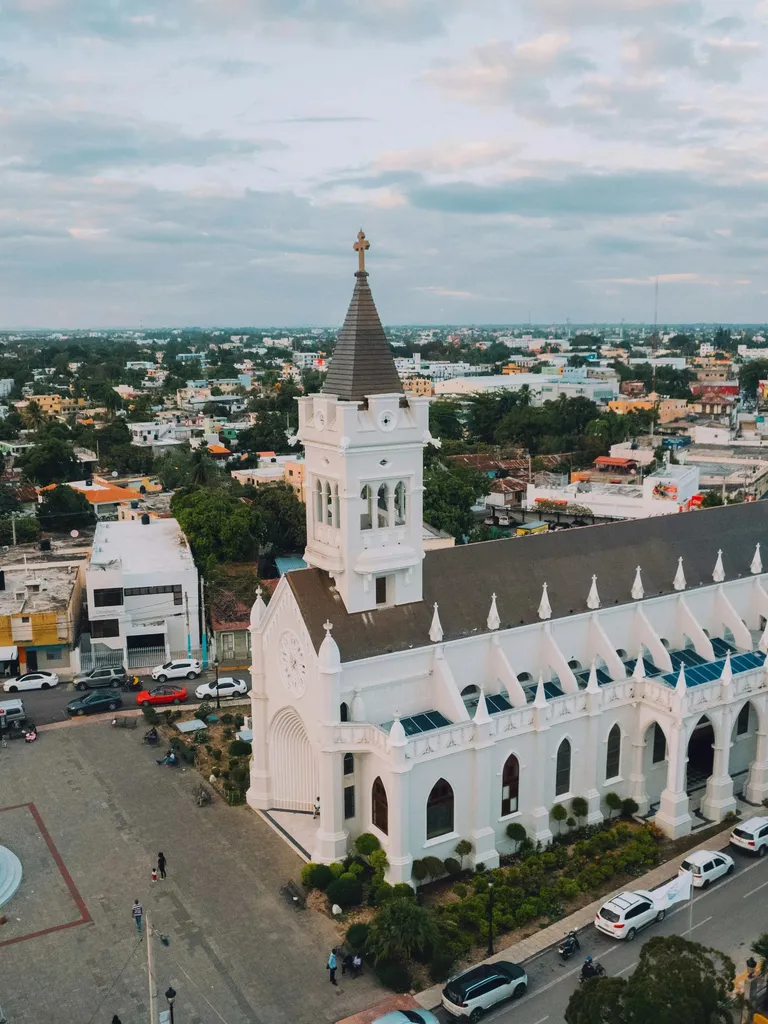
The proposition is the most affordable of its kind: for a donation of $200,000, an investor and family receive citizenship in three to six months, with no residence requirement, dual nationality allowed, and no tax on foreign income. The cost is concentration and exposure — an economy dependent on the passport, a basic healthcare system, and a position in the hurricane belt that Maria, in 2017, turned into a catastrophe worth more than two years of national output. Dominica does not try to be for everyone; it is clear from the start who it is for.
How Does Dominica Compare?
Summary
Dominica sits in the lower-middle of the WRI 2026, beside the other Eastern Caribbean citizenship islands. It offers the cheapest passport of the group and the lowest violent crime, but the smallest economy, the thinnest services, and the heaviest exposure to hurricanes.
How Dominica stacks up against its closest peers on the WRI 2026:
Where Dominica wins: Dominica's clearest advantage is Citizenship at 87.0 — the highest score among the Caribbean peers in this group and well ahead of Georgia at 40.0 and Serbia at 54.0. The $200,000 donation is the lowest entry point in the Caribbean, below Saint Kitts and Nevis at 93.0 points but above Saint Lucia at 88.0 on price, and the route requires no time on the island. Residency at 77.0 matches Saint Lucia and trails Georgia by just one point (78.0); the no-stay structure and zero foreign-income tax make it competitive across the full peer group. On Safety within the Caribbean subset, Dominica's 56.0 is comfortably ahead of Saint Lucia's 48.0, and violent crime running in the single digits annually gives it a meaningful day-to-day advantage over its island neighbours.
Where Dominica lags: The gaps are structural and significant against the full peer group. Business at 54.0 is the weakest dimension relative to peers: Georgia and Serbia both score 70.0 here, a 16-point deficit that reflects Dominica's tiny domestic market, wound-down offshore sector, and limited connectivity. Education at 35.0 ties St. Kitts and Nevis for last in the group — there is no international school and no university since Ross relocated to Barbados after Hurricane Maria, and Serbia's 53.0 and Georgia's 43.0 illustrate how far behind the Caribbean pair sit. Retirement at 47.0 ties Saint Lucia and trails Georgia (53.0), Serbia (52.0), and Saint Kitts (52.0): basic healthcare that pushes serious cases off-island and permanent hurricane exposure are the two factors that depress this score and are unlikely to change. On Safety, Georgia's 63.5 and Serbia's 58.0 both exceed Dominica's 56.0, a reminder that the peer group here is not purely Caribbean, and that natural-disaster risk counts against the island even where street crime does not.
Who does Dominica fit?
Summary
Dominica fits investors who want the cheapest reliable second passport and a tax-light base they will not live in, and nature-minded buyers drawn to eco-tourism property. It is a poor fit for families needing schools and healthcare, or anyone who cannot absorb hurricane risk.
Right fit:
- Cost-conscious second-citizenship buyers — a $200,000 donation, the lowest in the Caribbean, grants a passport in months.
- Globally mobile investors — non-residents pay no tax on foreign income, and there is no capital gains, inheritance, or wealth tax.
- Eco-tourism property investors — -approved resorts like Secret Bay and the Hilton-branded Tranquillity offer income with the passport.
- Plan-B citizenship seekers — dual nationality is permitted, with no residence or visit requirement.
Wrong fit:
- Families with school-age children — there is no international school and no university on the island.
- Anyone needing dependable healthcare — serious cases require evacuation to Martinique or Barbados.
- Risk-averse buyers — Dominica sits in the hurricane belt, where Maria caused damage worth 226% of GDP in 2017.
- US-bound travellers — no US visa-free access, and the UK revoked visa-free entry in 2023.
- Anyone wanting a deep economy to work in — output is tiny and concentrated on tourism and CBI revenue.
Pros and Cons of Relocating to Dominica
- 01CitizenshipWorld's most affordable CBIA $200,000 donation grants full citizenship in three to nine months, the lowest threshold of any citizenship-by-investment programme.Cheapest CBI passport
- 02ResidencyCitizenship with zero stayApplicants never need to live on or visit the island; the process is completed remotely through a licensed agent.No residence needed
- 03TaxationTax-free for non-residentsNon-residents pay no tax on foreign income, and there is no capital gains, inheritance, or wealth tax.No foreign-income tax
- 04Mobility145 destinations incl. China and RussiaThe passport opens around 145 destinations visa-free, unusually including both China and Russia alongside the Schengen Area.China + Russia access
- 05SafetySafest of the CBI islandsViolent crime is low and the US assigns its safest Level-1 advisory; homicides run in the single digits most years.Low crime
- 06LanguageEnglish is the official languageAll official, legal, and business processes run in English, easing relocation for applicants.English-speaking
- 07Cost of LivingAmong the cheapest Caribbean islandsA one-bedroom near Roseau rents from about $285 a month; the lack of mass tourism keeps housing low.Cheap to live
- 01StabilityExposed to the hurricane beltHurricane Maria caused damage worth 226% of GDP in 2017; catastrophic-storm exposure is a permanent structural risk.Hurricane exposure
- 02MobilityNo US visa-free; UK revoked 2023The passport has no US visa-free access, and the UK revoked visa-free entry in 2023, with Ireland following in 2024.No US access
- 03MobilitySchengen access at riskThe EU named citizenship-by-investment as grounds to suspend Schengen access, and cited Dominica's high rejection rate.EU suspension risk
- 04EducationNo international school or universityThere is no international school, and Ross University relocated to Barbados after Hurricane Maria in 2019.No schools
- 05HealthcareSerious cases need evacuationHealthcare covers primary care only; complex cases require evacuation to Martinique, Guadeloupe, or Barbados.Basic healthcare
- 06EconomyOver-reliant on passport revenueCitizenship sales fund well over half the national budget, a concentration the IMF has flagged as a risk.CBI-dependent budget
- 07Real EstateTiny, illiquid property marketThe property market is small with no central registry; most foreign buying runs through CBI-approved eco-resorts.Illiquid property
Dominica leads on Citizenship — WRI 87.0 / 100
Dominica leads on Citizenship with a WRI score of 87.0, built on the most affordable citizenship-by-investment programme in the world. A non-refundable donation to the Economic Diversification Fund of $200,000 for a single applicant, or $250,000 for a family of up to four, delivers a passport with no requirement to live on or visit the island, and dual nationality is allowed. An approved real estate purchase of $200,000 is the alternative route. Processing runs six to nine months in practice, with four to six months the official target for well-prepared files. The passport opens around 145 destinations visa-free or visa-on-arrival, and unusually, it includes China and Russia alongside the and Singapore. The mobility picture has deteriorated on two fronts. The United Kingdom revoked visa-free access in 2023, Ireland followed in 2024, and the European Union has signalled that the programme itself could cost Dominica its Schengen access. More sharply, from January 2026 the United States suspended the issuance of B-1/B-2 visitor visas, immigrant visas, and student and exchange-visitor visas to Dominican nationals under Presidential Proclamation 10998, citing the programme's lack of residency requirement as a vetting risk; existing valid US visas were simultaneously cut from ten-year multiple-entry terms to three-month single-entry, a downgrade that affects Antigua and Dominica and does not apply to Saint Kitts, Grenada, or Saint Lucia. The passport is cheap and fast; its mobility is the most contested of the group.
Dominica leads on Residency — WRI 77.0 / 100
Dominica leads on Residency with a WRI score of 77.0, for the same reason its citizenship score is high: the investment route skips residency entirely. A successful applicant becomes a citizen outright, so there is no minimum stay, no permit renewal, and no qualifying period to serve. Those who prefer to live on the island without buying citizenship use a renewable temporary permit that leads to permanent residence after five years, on modest fees and at the minister's discretion. English is the official language, which removes a common relocation hurdle, and the tax treatment is the genuine attraction: foreign income of non-residents is untaxed, and there is no capital gains, inheritance, or wealth tax anywhere in the system. What the score cannot capture is what living here actually demands — patience with basic infrastructure, distance from specialist services, and an annual hurricane season. Residency is effortless to obtain; the island asks more of those who actually settle.
Residence
Residence and tax residence are separate in Dominica, and for the investor, that separation is the entire appeal. Citizenship by investment confers a passport without creating any tax exposure: a citizen who does not live on the island is a non-resident and owes nothing on foreign income, taxed only on Dominica-source earnings. Tax residence begins at 183 days in the country, or with a permanent home and a month's presence; from there, the system is close to territorial, leaving most foreign income of residents untaxed in practice. For those relocating in full, a temporary residence permit renews annually and converts to permanent residence after five continuous years, with citizenship by naturalization possible after seven; there is no dedicated retiree visa. The island has no social insurance scheme on the scale of larger states.
Safety in Dominica is genuinely good by Caribbean standards, with one large asterisk. Violent crime is low — the United States rates it Level 1, its safest advisory tier, and homicides run in the single digits most years, a fraction of the rates on neighbouring islands. The community is small and tight, and foreigners report feeling secure. The asterisk is nature, not crime. Dominica sits squarely in the Atlantic hurricane belt, and Hurricane Maria in 2017 was an existential event, causing damage and losses worth 226% of GDP and stripping the island of crops, power, and a major employer. The country has rebuilt around a formal climate-resilience strategy, but the exposure is permanent, and it is the dominant safety consideration for anyone treating Dominica as a home rather than a passport.
Taxes on Personal Income
Dominica is a territorial-leaning, low-tax jurisdiction, and for the non-resident investor, it is close to tax-free. There is no capital gains tax, no inheritance or estate tax, no gift tax, and no wealth tax. Personal income tax applies to residents on a banded scale, with the first roughly $11,000 exempt and a top rate of 35% above about $30,000 of chargeable income, but foreign income of residents is largely left alone, and a non-resident citizen pays nothing on income earned abroad. The corporate rate is 25%. Value-added tax is 15%, with a reduced 10% on hotels and basic items zero-rated. The offshore-company regime that once offered tax-exempt structures was wound down at the end of the last decade, so the planning today is simply the non-resident position: live elsewhere, and Dominica taxes none of your worldwide income. For most CBI investors, the effective rate on foreign earnings is zero.
Cost of Living
Dominica is one of the cheapest places to live in the Caribbean, a direct result of its lack of mass tourism. Rents are low: a one-bedroom near Roseau runs from about $285 to $400 a month, and even expat-quality housing rarely passes $600. A single person can live on $1,200 to $1,600 a month comfortably, a couple on $1,800 to $2,500. The catch is imports — almost all manufactured goods arrive by sea under a 15% VAT, so packaged food, electronics, and vehicles cost noticeably more than the rents would suggest, while local produce and fish are cheap. Utilities run $100 to $150 a month, and internet, much improved since Maria, is serviceable rather than fast. There is no domestic-helper economy of scale, though help is affordable. For a modest, nature-centred life, Dominica is genuinely inexpensive; for an imported, modern-conveniences life, less so.
Healthcare System
Healthcare is basic, and honesty here matters more than reassurance. The public system centres on the Dominica-China Friendship Hospital in Roseau, opened in 2019 and the best-equipped public facility in the smaller Eastern Caribbean states, with the region's only public MRI — but specialist depth is thin, equipment and supplies can run short, and physician density is well below regional norms. Private options are very limited, with a single private hospital and a few clinics, where a consultation runs $50 to $200. For anything serious, the plan is evacuation: Martinique and Guadeloupe are short flights, Barbados a longer one, and an air ambulance can cost $15,000 to $50,000. Comprehensive international health insurance with evacuation cover is non-negotiable, not optional. Life expectancy is about 71 years. Dominica handles primary care and routine emergencies; for everything beyond that, the realistic answer is off-island.
Education System
Education is the island's thinnest dimension for a relocating family, and the gap widened sharply in 2017. Public schooling is free, compulsory to sixteen, and taught in English on the Caribbean curriculum, with reasonable literacy results, but it is built for locals. There is effectively no international school: no confirmed International Baccalaureate or foreign-curriculum institution operates on the island, so expatriate families rely on local private schools, the national system, or boarding off-island in Barbados or further afield. Higher education was reshaped by Hurricane Maria, which drove Ross University School of Medicine — for forty years a major offshore medical school and a significant employer — to relocate permanently to Barbados in 2019. What remains is a smaller offshore medical school, a distance campus of the University of the West Indies, and the local Dominica State College. For a family with children past the early years, schooling is the strongest argument against settling here.
Banking & Finance
Banking in Dominica is workable for residents and harder for everyone else. The Eastern Caribbean Central Bank runs the shared currency and its dollar peg, with the National Bank of Dominica the main retail institution. A non-resident can open a personal account, but generally must appear in person — remote opening is not the norm — and provide full source-of-funds documentation. The structural problem is de-risking: international correspondent banks treat Dominica-licensed institutions as higher risk, which has thinned correspondent relationships and made the island's once-sizeable offshore banking sector difficult to operate. The international-business-company regime was effectively closed at the end of the last decade. Dominica reports under both and the common reporting standard, so account data reaches home tax authorities. For a newly naturalized citizen, the practical reality is that a local account requires presence and paperwork, and most continue to bank elsewhere. The system is small, conservative, and under external scrutiny.
Cryptocurrency Regulation
Dominica has no dedicated cryptocurrency law, which leaves digital assets in a grey zone rather than a regulated framework. Crypto is not illegal, and the island's financial regulator has signalled interest in a fintech sandbox, but there is no licensing regime for exchanges or custodians of the kind Saint Lucia enacted, and anti-money-laundering rules apply only through the general financial-services framework. For the individual, the tax position is straightforward by default: there is no capital gains tax, so personal crypto gains are not taxed as capital, and a non-resident owes nothing on foreign-sourced gains. The regional central-bank digital currency, DCash, in which Dominica took part, was shut down in 2024, and the East Caribbean dollar remains the only legal tender. The upshot for a crypto-holding investor is benign but unstructured: favourable tax treatment, little regulatory infrastructure, and a framework that may yet be written.
Real Estate Market
Foreigners can buy property in Dominica, but outside the citizenship programme, it is expensive to do so: a non-citizen needs an Alien Landholding Licence costing around 10% of the purchase price, on top of the usual conveyancing. The citizenship route removes that entirely — buying into an approved development from $200,000 waives the licence — which is why almost all foreign purchasing flows through a small set of branded eco-resorts: Secret Bay, the Marriott-affiliated Anichi, the Hilton-branded Tranquillity, and a handful of others. The open market is tiny and illiquid, with no central registry; entry-level apartments can be found under $100,000 and three-bedroom homes under $170,000, while resort residences run from $200,000 to several million. Transaction costs for a non-CBI foreign buyer reach 15% or more once the landholding licence is counted, against roughly 5% to 6% for a CBI buyer who is exempt. Yields are modest on long lets and more attractive on managed eco-tourism units, but exit is slow. Property here is best understood as part of a citizenship and tourism play, not a liquid asset.


