

St. Kitts and Nevis Overview
St. Kitts and Nevis is a Caribbean federal parliamentary democracy under a constitutional monarchy, the smallest sovereign state in the Americas by area at 261 km² and the smallest by population at approximately 52,600. The Federation consists of the islands of Saint Kitts (Saint Christopher) and Nevis, with Basseterre as federal capital on Saint Kitts and Charlestown as the Nevis administrative seat; Nevis enjoys constitutional autonomy through the Nevis Island Administration. The legal system runs on English common law, with King Charles III as head of state represented by a Governor-General. St. Kitts and Nevis is a member of the Commonwealth, the Caribbean Community (), the Organisation of Eastern Caribbean States (), the Eastern Caribbean Currency Union (), the United Nations, and the . The East Caribbean Dollar () is the currency, pegged at 2.7 XCD = $1 USD since 1976 through the Eastern Caribbean Central Bank. English is the sole official language.
On This Page
- 1.St. Kitts and Nevis Overview
- 1.1How Does St. Kitts and Nevis Compare?
- 1.2Who does St. Kitts and Nevis fit?
- 1.3Pros and Cons of Relocating to St. Kitts and Nevis
- 1.4St. Kitts and Nevis leads on Citizenship — WRI 93.0 / 100
- 1.5St. Kitts and Nevis leads on Investment — WRI 78.0 / 100
- 1.6Residence
- 1.7Taxes on Personal Income
- 1.8Cost of Living
- 1.9Healthcare System
- 1.10Education System
- 1.11Banking & Finance
- 1.12Cryptocurrency Regulation
- 1.13Real Estate Market
- 2.Frequently Asked Questions
Quick Facts
- Passport Rank: 23
- Visa-Free Destinations: 156
- Capital: Basseterre
- Population: 52,600 (World Bank 2024)
- Area: 261 km² (Saint Kitts 168 km² + Nevis 93 km²)
- Currency: East Caribbean Dollar (XCD); pegged 2.7 XCD = $1 USD since 1976
- Official languages: English (sole official); Kittitian Creole spoken informally
- Religions: Protestant 75.6%, Roman Catholic 5.9%, Hindu 1.8%, other 7.7%, none 8.8%
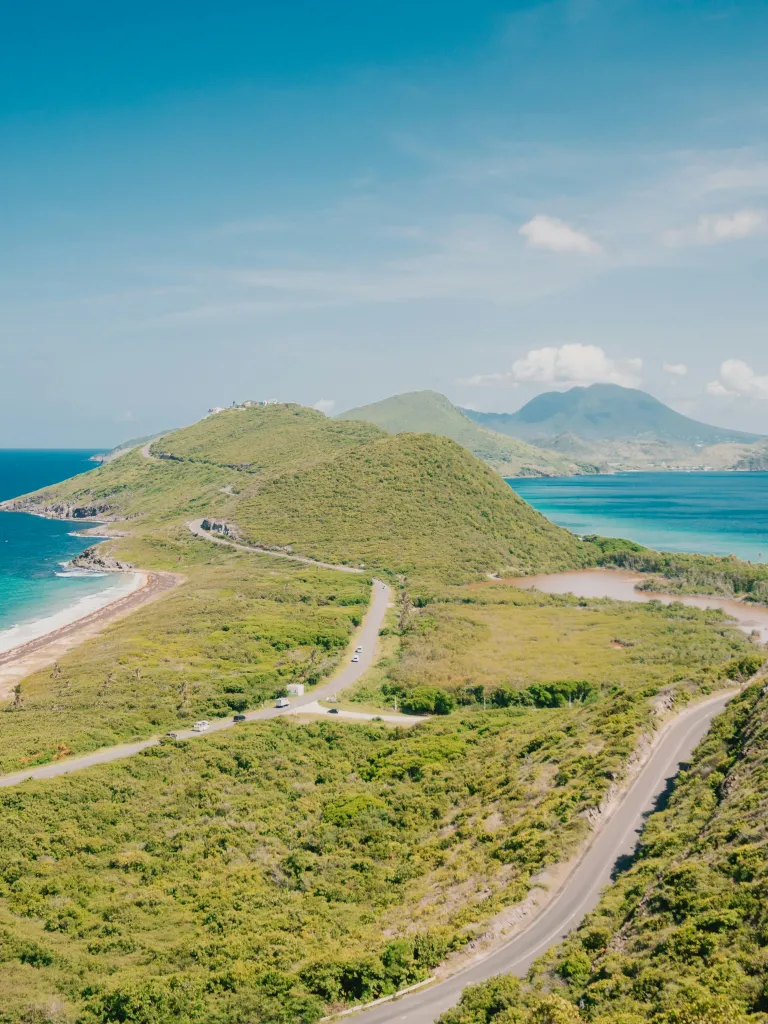
Key Indicators
- GDP (Nominal): $1.14 billion (World Bank 2024)
- Unemployment Rate: 5.0% (ILO model 2024)
- Human Development Index: 0.840 (Very High, Rank: 58, HDR 2024)
- GDP per Capita: $22,158 (World Bank 2024)
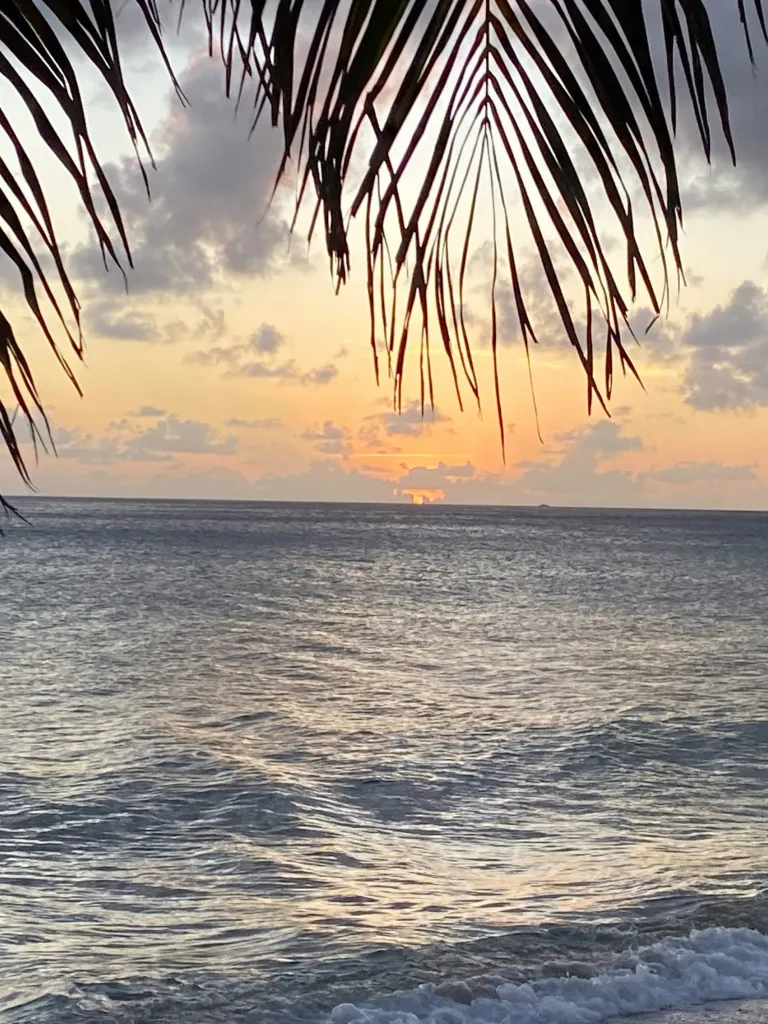
Safety & Governance
- Global Peace Index (IEP): Not ranked (GPI excludes <100k population states)
- Press Freedom Index (RSF): 62.83 (Rank: 68, RSF 2024)
- Corruption Perception (TI): Not ranked (CPI 2025 excludes Saint Kitts)
- Gini Coefficient (WB): Not available (last World Bank measure pre-2010)
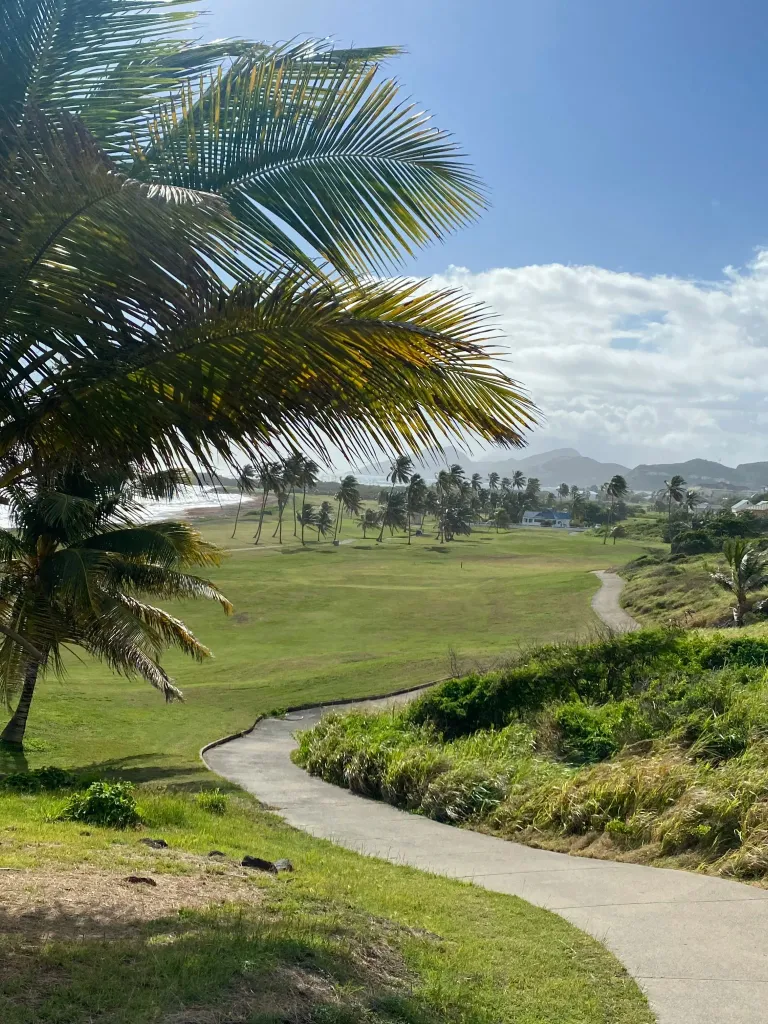
Health & Environment
- PM2.5 Air Pollution: 8.1 µg/m³ (WHO 2024)
- Air Quality Category: Good
- ND-GAIN Adaptation Index: Not ranked (ND-GAIN 2023 excludes Saint Kitts)
- Life Expectancy: 72.1 years (WHO 2024)

The proposition for an investor or relocator is unusually clean: the world's oldest Citizenship-by-Investment programme (established by the Citizenship Act 1984) administered by the Citizenship by Investment Unit (), Sustainable Island State Contribution () from $250,000 for a single applicant or family of up to four, zero personal income tax abolished in 1980, no capital gains tax, no inheritance tax, and a passport at rank 23 globally with 156 visa-free destinations including Schengen and the United Kingdom. The cost is also clean: a 30-day physical-residency requirement within 5 years of citizenship was announced on 8 January 2026 and biometric collection became mandatory from 14 April 2026 in a broader programme-credibility reform; no income tax means no double-taxation treaty network of any depth; the Education and Healthcare dimensions sit in the lower band of our peer group due to the size of the Federation; and the property market carries 7-year resale restriction on real-estate purchases. St. Kitts and Nevis does not try to be for everyone — it is clear from the start who it is for.
How Does St. Kitts and Nevis Compare?
Summary
On the worldpath.ai WRI 2026, St. Kitts and Nevis (61.9) sits between Uruguay (62.3) and Saint Lucia (59.5), with Vanuatu (63.8) anchoring the peer group above and Dominica (59.3) anchoring it below. St. Kitts and Nevis posts the highest Citizenship score in the entire WRI 2026 index at 93, leads on Investment, and trails on Business and, to a lesser extent, Education and Retirement, in line with the structural constraints of being the smallest sovereign state in the Americas; its Safety score of 57 sits mid-table in this peer group, ahead of Saint Lucia and Dominica but behind Vanuatu and Uruguay.
How St. Kitts and Nevis stacks up against its closest peers on the WRI 2026:
Where St. Kitts and Nevis wins: St. Kitts and Nevis posts the highest Citizenship score in the entire WRI 2026 index at 93, leading Saint Lucia at 88, Dominica at 87, Vanuatu at 78, and Uruguay at 57.8 in the peer group. The driver is not subtle: the Citizenship by Investment Unit (CIU) administers the world's oldest CBI programme, established under the Citizenship Act 1984 and continuously refined for over four decades. The Sustainable Island State Contribution (SISC) from $250,000 grants citizenship in approximately 4-6 months from submission with no prior residency requirement (a 30-day-within-5-years physical-residency requirement was announced in January 2026 but is forward-looking). The Approved Real Estate route at $325,000 condominium share or $600,000 approved private home delivers the same passport with a 7-year resale restriction. Investment at 78 leads the peer group, ahead of Vanuatu at 72, Saint Lucia at 66, Dominica at 63, and Uruguay at 53; the combination of zero personal income tax, no capital gains tax, full XCD-USD currency peg, and ECCU monetary union integration provides a structurally advantageous tax-residency anchor.
Where St. Kitts and Nevis lags: St. Kitts and Nevis ranks third of five on Safety at 57, trailing Vanuatu at 89 and Uruguay at 70.3 but ahead of Dominica at 56 and Saint Lucia at 48 — the homicide rate in Saint Kitts has been a long-standing regional issue and elevated property crime in central Basseterre and northern Saint Kitts is the predominant operational concern, particularly outside expat-tier enclaves in Frigate Bay, South Friars Bay, and Nevis. Education at 35 ties Dominica for second-lowest in the peer group ahead of only Vanuatu at 22, trailing Uruguay at 48 and Saint Lucia at 38; the international school market is limited to one principal institution (Saint Kitts International Academy in Morgan Heights) plus Nevis International Secondary School, and secondary students bound for European or North American universities typically transition abroad. Retirement at 52 ties Vanuatu at 52, trails Uruguay's 86.3 by a wide margin, and sits just ahead of Saint Lucia and Dominica at 47 apiece. Business at 50 is the lowest in the peer group, trailing Saint Lucia at 58, Vanuatu at 55, Dominica at 54, and Uruguay at 53.2; the Federation's $1.14 billion GDP limits institutional depth. Vanuatu's Safety at 89 and Uruguay's Retirement at 86.3 mark specific niches St. Kitts and Nevis does not directly compete on.
Who does St. Kitts and Nevis fit?
Summary
St. Kitts and Nevis fits HNW investors using the world's oldest CBI for a 4-6 month passport with zero personal income tax, tax-residency optimisation seekers leveraging the no-CGT no-IHT regime, regional offshore-banking operators wanting an ECCU base, and second-passport seekers needing strong Schengen and UK access. It does not fit primary-residence relocators wanting deep healthcare and education infrastructure, families with secondary-school-age children, retirees seeking healthcare quality matching North American or European norms, or anyone requiring deep capital markets and professional-services depth.
Right fit:
- HNW investors using the world's oldest CBI — Citizenship by Investment Unit (CIU) administers the original 1984 programme, with Sustainable Island State Contribution (SISC) from $250,000 for single applicant or family of up to four; Approved Real Estate from $325,000 (condominium share) or $600,000 (approved private home) with 7-year resale restriction; Approved Public Benefactor Option from $250,000; 4-6 month processing through accelerated track.
- Tax-residency optimisers under zero-income-tax regime — St. Kitts and Nevis levies zero personal income tax (abolished 1980), no capital gains tax, no inheritance tax, no wealth tax, no gift tax; corporate income tax 33%; VAT 17% standard; the 183-day physical-presence rule applies for tax residency with the new 30-day-within-5-years CBI residency requirement (announced January 2026, forward-looking implementation).
- Regional offshore-banking operators — full Eastern Caribbean Currency Union (ECCU) integration with XCD pegged 2.7:1 to USD since 1976; Bank of Nevis, Saint Kitts-Nevis-Anguilla National Bank, plus international offshore-banking sector under supervision; -compliant since 2016, participant since 2018; -recognised tax-information-exchange treaty network with 30+ countries.
- Second-passport seekers prioritising Schengen and UK access— Kittitian passport at rank 23 globally with 156 visa-free or visa-on-arrival destinations; free entry, United Kingdom 6-month visa-on-arrival, China 30 days, Russia, Hong Kong, Singapore visa-free; combines well with the US E-2 visa eligibility through grandfathered treaty (note: Saint Kitts does NOT have an active US E-2 treaty unlike Grenada — Caribbean E-2 access is Grenada-only).
Wrong fit:
- Primary-residence relocators wanting deep institutional infrastructure — Federation population approximately 52,600 limits the operational scale of healthcare, education, professional services, and consumer markets; complex medical, legal, financial, and educational services routinely route to Trinidad and Tobago, Barbados, the United States, or Canada.
- Families with secondary-school-age children — international school market limited to Saint Kitts International Academy in Morgan Heights, Cayon Secondary, Verchilds High School, and Nevis International Secondary School; no IB or A-Level institution at full programme depth; secondary students bound for European, US, or Canadian universities typically transition abroad for the final two or three years.
- Retirees seeking healthcare matching OECD norms — Joseph N. France General Hospital in Basseterre and Alexandra Hospital in Charlestown anchor the public system; no CT or MRI scanner on either island as of 2026; complex specialist procedures (cardiac, oncology, advanced trauma, neurosurgery) require medical evacuation to Trinidad, Barbados, Miami, or New York; international health insurance with evacuation coverage non-negotiable for expat residents.
- Anyone requiring deep capital-markets and professional-services depth — Federation's $1.14 billion GDP cannot support the institutional depth of Cyprus, Grenada, or larger Caribbean peers; Eastern Caribbean Securities Exchange (ECSE) has shallow liquidity; no Saint Kitts-headquartered Tier-1 private banking outside the offshore-banking sector.
- Applicants uncomfortable with biometric collection and rolling reform — biometric data collection (fingerprints + facial recognition) became mandatory for new CBI applications from 14 April 2026; existing citizens must submit biometrics by 31 July 2027; 30-day-within-5-years residency requirement announced 8 January 2026 reflects ongoing programme-credibility reform that may continue to add applicant-side compliance burden.
Pros and Cons of Relocating to St. Kitts and Nevis
- 01CitizenshipWorld's oldest CBI programme since 1984Citizenship by Investment Unit (CIU) administers the world's oldest CBI under the Citizenship Act 1984; SISC from $250,000 single/family of 4; Approved Real Estate $325k condo or $600k home (7-yr resale); Approved Public Benefactor Option from $250k; 4-6 months processing through accelerated track.CBI 1984: oldest globally
- 02TaxationPersonal income tax abolished 1980St. Kitts and Nevis abolished personal income tax in 1980 — not reintroduced since; no capital gains tax (beyond 20% on real estate sold within 12 months); no inheritance, wealth, or gift tax; corporate tax 33%, unchanged since 2024; VAT 17% standard.Zero personal income tax
- 03MobilityKittitian passport rank 23, 156 visa-freeKittitian passport at rank 23 globally with 156 visa-free or visa-on-arrival destinations; Schengen free entry, UK 6-month visa-on-arrival, China 30 days, Russia, Hong Kong, Singapore visa-free; dual citizenship permitted across all routes.Passport rank 23, 156 VF
- 04CurrencyXCD pegged 2.7:1 to USD since 1976East Caribbean Dollar (XCD) pegged at 2.7 XCD = $1 USD since 1976 through Eastern Caribbean Central Bank; eliminates currency-conversion friction for North American capital; full capital mobility; FATCA-compliant since 2016, CRS since 2018.XCD-USD peg 2.7:1
- 05ComplianceEnglish common law + Privy Council apexSt. Kitts and Nevis runs on English common law inherited from British colonial period (independence 1983); Eastern Caribbean Supreme Court trial and appeal courts; Judicial Committee of the UK Privy Council remains the apex court of final appeal; commercial contracts enforceable through internationally-recognised court system.English common law
- 06LanguageEnglish sole official languageEnglish is the sole official language of St. Kitts and Nevis (a Kittitian Creole exists in informal contexts); zero linguistic friction for North American, British, Australian, or English-fluent international relocators; CBI applications and federal administration entirely in English.English-only jurisdiction
- 07MobilityCARICOM + OECS + ECCU bloc accessFederation membership in CARICOM (Caribbean Community, 15 member states) grants Kittitian citizens free-movement-and-work rights across the bloc subject to CARICOM Skills Qualification; OECS Treaty grants additional integration with 6 other Eastern Caribbean states; ECCU monetary union provides currency-stable economic anchor.CARICOM + ECCU access
- 01SafetySafety dimension trails peer groupSafety 57 — third of five in the WRI 2026 peer group, trailing only Vanuatu and Uruguay; St. Kitts and Nevis is not ranked in GPI (population below ~100k threshold) or CPI; elevated property crime and historically above-Caribbean-average homicide rate; expat-tier enclaves (Frigate Bay, South Friars Bay, South-East Peninsula, Nevis) offer materially lower exposure than central Basseterre.Safety 57: peer lowest
- 02HealthcareNo CT/MRI on either island; complex care abroadJoseph N. France General Hospital + Alexandra Hospital Nevis deliver primary/secondary care only; no CT or MRI scanners on either island as of 2026; complex specialist cases route to Trinidad, Barbados, Miami, or New York via medical evacuation; international insurance with evacuation $300/mo individual standard; life expectancy 72.1 years.Healthcare medevac only
- 03EducationEducation dimension lowest after VanuatuEducation 35 — second-lowest in peer group; international school market limited to Saint Kitts International Academy + Nevis International Secondary; no full IB or A-Level institution at deep programme depth; secondary students bound for European/US/Canadian universities typically transition abroad final 2-3 years.Education depth limited
- 04StabilityJune-November Atlantic hurricane exposureFederation sits in Atlantic hurricane belt with active June-November season; Hurricane Beryl 2024 largely spared St. Kitts and Nevis but climate-risk insurance is operationally non-optional for property owners; 2017 Hurricanes Irma and Maria caused regional damage though St. Kitts and Nevis were less affected than neighbours.Hurricane Atlantic risk
- 05Citizenship30-day residency req announced January 202630-day-within-5-years physical-residency requirement announced 8 January 2026 (forward-implementation); biometric collection mandatory for new CBI applications from 14 April 2026; existing citizens must submit biometrics by 31 July 2027; reform package adds modest applicant-side compliance burden.CBI residency req 2026+
- 06Real EstateApproved Real Estate 7-year resale restrictionApproved Real Estate CBI route imposes 7-year resale restriction (extended from prior 5-yr): $325k condominium unit or share or $600k approved private home; non-CBI buyers require Alien Land Holding Licence at 10% of property value; total acquisition costs 13-17% for non-CBI buyers including transfer tax.CBI real estate 7-yr lock
- 07StabilityGDP $1.14B limits institutional depthFederation GDP $1.14 billion (World Bank 2024) cannot support deep financial-services, capital-markets, or specialist-services infrastructure; Eastern Caribbean Securities Exchange (ECSE) shallow liquidity; complex professional services routinely route to Trinidad, Barbados, or Miami; small population (~52,600) limits operational scale.Small economy, $1.14B GDP
St. Kitts and Nevis leads on Citizenship — WRI 93.0 / 100
St. Kitts and Nevis posts the highest Citizenship score in the entire WRI 2026 index at 93, decisively ahead of Saint Lucia at 88, Dominica at 87, Vanuatu at 78, and Uruguay at 57.8 in the peer group. The driver is the world's oldest Citizenship-by-Investment programme, established under the Citizenship Act 1984 and continuously refined for over four decades. The Citizenship by Investment Unit (CIU) administers three current routes under the Citizenship by Investment (Saint Christopher and Nevis) Act and the Citizenship by Investment Regulations 2017 (as amended): the Sustainable Island State Contribution (SISC) from $250,000 for a single applicant or family of up to four; the Approved Real Estate route at $325,000 condominium unit or share or $600,000 approved private home (7-year resale restriction); the Approved Public Benefactor Option from $250,000 for designated public-benefit projects. Processing runs 4-6 months from submission through Accelerated Application Process, with all applications subject to background checks across four international due-diligence agencies, in-person biometric appointment (mandatory from 14 April 2026), and CIU and federal Cabinet approval. A 30-day-within-5-years physical-residency requirement was announced on 8 January 2026, signalling a shift from pure donation-CBI to a residency-anchored programme; existing citizens are unaffected but new applicants from forward-implementation date will need to plan for a modest in-country presence. Dual citizenship is permitted. The Kittitian passport opens 156 destinations visa-free or visa-on-arrival, covering Schengen Area, the United Kingdom on 6-month visa-on-arrival, China 30 days, Russia, Hong Kong, Singapore, and most of Latin America and Africa. Family inclusion: spouse, children under 30, parents 55+, dependent siblings under 30.
St. Kitts and Nevis leads on Investment — WRI 78.0 / 100
St. Kitts and Nevis posts an Investment score of 78, leading the WRI 2026 peer group ahead of Vanuatu at 72, Saint Lucia at 66, Dominica at 63, and Uruguay at 53. The driver is the combination of zero personal income tax, no capital gains tax, no inheritance tax, no wealth tax, and full Eastern Caribbean Currency Union integration that delivers a structurally favourable tax-residency anchor for global investors. Personal income tax was abolished in 1980; the Federation has not collected personal income tax for over four decades. Corporate income tax sits at 33%, applied to resident companies on worldwide income and to non-residents on Federation-source income, with carve-outs for International Business Companies (IBCs) under the Companies Act and exempt-company structures. Capital mobility is fully unrestricted under the ECCU framework; the East Caribbean Dollar peg at 2.7 XCD = $1 USD since 1976 removes currency-conversion risk for North American capital. The Eastern Caribbean Central Bank (ECCB) and the Financial Services Regulatory Commission (FSRC) jointly supervise the financial-services sector. St. Kitts and Nevis is FATCA-compliant since 2016 and a full CRS participant since 2018, with tax-information-exchange treaty coverage across 30+ countries. The Approved Real Estate CBI route layers physical-asset investment ($325,000-$600,000 entry) onto the citizenship grant, with 7-year resale restriction to control speculative cycles. Investment-friendly features that drive the score include the offshore International Business Company regime, the Limited Partnership Act framework, the Multiform Foundations Act 2003 for asset-protection structures, and the Trust Act for trust formation under English common law. The Federation's Eastern Caribbean Securities Exchange (ECSE) listing is available though liquidity remains shallow; the deeper opportunity is offshore-banking and structuring for global HNW operations rather than local capital-market participation.
Residence
St. Kitts and Nevis uses a 183-day physical-presence rule for tax residency: individuals present in the Federation for 183 or more days in a calendar year are tax-resident. CBI citizens are NOT automatically tax residents — citizenship grants the passport and citizenship rights, but tax residency is established separately through physical presence or election. Citizens living abroad without 183 days of Saint Kitts presence remain tax non-resident in Saint Kitts. There is no Controlled Foreign Company (CFC) regime, no transfer-pricing framework comparable to OECD norms, and no exit tax. Residence permits for non-CBI applicants are administered by the Federal Department of Immigration under the Ministry of National Security; standard categories include work permits (employer-sponsored), temporary residence for retirees and economically self-sufficient applicants, and skilled-migration categories under CARICOM Skills Qualification. The CBI route bypasses the standard residence-to-citizenship timeline entirely: applicants receive citizenship directly without first holding residence. The 30-day-within-5-years residency requirement announced on 8 January 2026 introduces a modest physical-presence anchor for new CBI applicants from forward-implementation date. Dual citizenship is permitted across all routes. Standard naturalisation outside the CBI requires 14 years of residence under the Immigration Act, which is operationally impractical given the limited non-CBI immigration channels.
Safety sits at 57 in the WRI 2026 peer group, ahead of Saint Lucia and Dominica but behind Vanuatu and Uruguay. St. Kitts and Nevis is not ranked in the Global Peace Index (GPI excludes states with population below approximately 100,000), the Corruption Perceptions Index (CPI excludes the Federation), or ND-GAIN — limitations of the indices themselves rather than data-quality issues. Reporters Without Borders Press Freedom Index 2024 places St. Kitts and Nevis at rank 68 with a score of 62.83. The structural Safety concern is elevated property crime and a homicide rate that has long been above Caribbean regional averages; central Basseterre and parts of northern Saint Kitts (Sandy Point, Cayon) carry meaningfully higher property-crime exposure than expat-tier enclaves in Frigate Bay, South Friars Bay, the South-East Peninsula, and Nevis (Charlestown, Pinney's Beach, Cades Bay). Hurricane exposure: the Federation sits in the Atlantic hurricane belt with active June-November season; Hurricane Beryl in July 2024 largely spared St. Kitts and Nevis (significant damage was concentrated in Grenada's Carriacou and the SVG Grenadines), but climate-risk insurance is operationally non-optional for property owners.
Taxes on Personal Income
St. Kitts and Nevis levies zero personal income tax — abolished in 1980 and not reintroduced since. There is no withholding tax on resident-paid dividends, interest, or royalties to Kittitian tax residents. Non-resident withholding tax runs at 15% on dividends, interest, and certain royalties paid to non-residents. Capital gains are exempt from local tax, including disposals of Saint Kitts real estate held more than 12 months (gains on properties sold within 12 months are subject to a 20% short-term capital gains tax under the Capital Gains Tax Act). There is no inheritance tax, no wealth tax, and no gift tax. Corporate income tax is 33%, applied to resident companies on worldwide income and to non-residents on Saint Kitts-source income; the rate has held at 33% since 2024 even as the 2026 Budget tightens the conditions attached to legacy duty and incentive concessions, and International Business Companies under the Companies Act, exempt limited partnerships, and Multiform Foundations continue to enjoy specific tax-exempt treatment under their respective acts. Value Added Tax (VAT) is 17% standard, 10% reduced (tourism services), 0% essentials. Property transfer tax runs at 12% of property value (split between buyer and seller by negotiation); annual property tax is 0.2% residential and 0.3% commercial on assessed market value. Social Security contributions total 5% employee and 5% employer (10% combined) up to a $4,800 monthly ceiling, plus 1% Employment Injury contribution. The effective tax burden for a foreign-pension retiree resident in St. Kitts and Nevis is 0% federally on the pension itself — the Federation's structural attraction is the absence of personal income tax combined with the CBI passport stack.
Cost of Living
St. Kitts and Nevis runs a Caribbean-island cost-of-living profile with significant Saint Kitts versus Nevis variation and meaningful imported-goods premium. A single professional in Basseterre or Frigate Bay (expat-tier residential zones) budgets $2,800-4,500 a month for a one-bedroom apartment at $1,500-2,800, utilities including air conditioning ($200-400 per month), transit, and basic groceries; the same lifestyle in central Saint Kitts outside expat areas runs $2,000-3,200, and in Nevis at Charlestown, Pinney's Beach, or Newcastle $2,500-4,000. A family of three at a mid-range expat lifestyle budgets $4,300 per month at the lower bound and $7,500 at the upper bound including a two- or three-bedroom rental at $2,200-4,500, transit (private vehicle expected; no urban metro and limited public bus), groceries (with significant imported-goods premium of 30-60% over US prices), and Saint Kitts International Academy or Nevis International Secondary School fees at $11,000-19,000 per year per child. Inexpensive restaurant meals average $18-30 per person; mid-range restaurants $40-65 per person; bottled water is essential and adds $40-80 per household per month. Private health insurance with international evacuation coverage runs $300 per month per individual at the comprehensive tier — non-negotiable given the limitations of Federation healthcare. A mid-range second-hand vehicle imported from North America or the UK runs $14,000-25,000. Annual residence permit fees for non-CBI residents run $400-2,000 per applicant depending on category. CBI citizens face no recurring federal residency fees. The XCD-USD peg removes currency-conversion friction.
Healthcare System
St. Kitts and Nevis runs a thin federal healthcare system. Joseph N. France General Hospital in Basseterre is the federal flagship public hospital, with Alexandra Hospital in Charlestown serving Nevis; both deliver primary, secondary, and limited acute care. Critical limitations define the healthcare landscape: there are no CT or MRI scanners on either island as of 2026, no cardiac catheterisation laboratory, no oncology infrastructure beyond basic chemotherapy administration, and no neurosurgical capacity. Complex specialist cases route to Trinidad and Tobago (Eric Williams Medical Sciences Complex), Barbados (Queen Elizabeth Hospital), Miami (University of Miami Health, Jackson Memorial), or New York (NYU Langone, Mount Sinai) via medical evacuation insurance. International health insurance with evacuation coverage is non-negotiable for expat residents at $300 per month per individual; plans with full US hospital network access run $500-800 per month per couple. Private clinics in Basseterre (Cardin Home, Olympus Medical Centre) and Nevis (Memorial Square Clinic) provide primary care, basic diagnostics, and routine procedures, with private specialist consultations at $80-180 and private hospital day rates at $400-800. The Federation's offshore medical-school sector (University of Medicine and Health Sciences UMHS, Windsor University School of Medicine on Saint Kitts; Medical University of the Americas on Nevis) provides a meaningful expatriate medical-professional presence, but those institutions serve US/Canadian student bodies rather than the local healthcare delivery system. Life expectancy is 72.1 years (WHO 2024), in the lower-middle Caribbean range and a meaningful gap to OECD norms. Medical tourism is not a structural feature — Saint Kitts is a medical-evacuation-from jurisdiction, not a medical-evacuation-to jurisdiction.
Education System
Public education in St. Kitts and Nevis is free and compulsory for 12 years (ages 5-17), following the Caribbean Examinations Council (CXC) framework administered by the Ministry of Education, Sustainable Development, Youth and Social Empowerment. Primary education runs 7 years (ages 5-12), secondary education 5 years (ages 12-17), with CXC Caribbean Secondary Education Certificate (CSEC) examinations at age 16 and Caribbean Advanced Proficiency Examinations (CAPE) at age 18. The state-school system delivers credible primary education with significant resourcing constraints at the secondary level; Cayon Secondary, Verchilds High School, Basseterre High School, Saddlers Secondary, and the Charlestown Secondary School in Nevis anchor the public secondary network. The international school market is limited to Saint Kitts International Academy in Morgan Heights (American + IGCSE curriculum at $11,000-19,000 per year), the Lyn Jeffers School Sandy Point (American curriculum), and the Nevis International Secondary School (American + IB at $9,000-15,000 per year); no full IB or A-Level institution exists at deep programme depth. Secondary students bound for European, US, or Canadian universities typically transition abroad for the final two or three years. At the tertiary level, the University of the West Indies Open Campus delivers undergraduate-tier programmes by distance, and the Federation hosts a significant offshore medical-school sector — University of Medicine and Health Sciences (UMHS), Windsor University School of Medicine, and Medical University of the Americas (MUA) on Nevis — serving primarily US and Canadian medical-degree students rather than local higher-education demand. No Saint Kitts-based institution sits in the global top 500 ranking by QS or Times Higher Education. CBI dependant visa holders and resident permit holders access public education immediately upon residency registration; international schools accept any registered resident.
Banking & Finance
St. Kitts and Nevis operates within the Eastern Caribbean Currency Union (ECCU) under the Eastern Caribbean Central Bank (ECCB) supervisory framework, with offshore-financial-services regulation through the Financial Services Regulatory Commission (FSRC). The system houses Saint Kitts-Nevis-Anguilla National Bank (SKNANB, the largest commercial bank in the Federation), the Bank of Nevis (Nevis-headquartered), Republic Bank St. Kitts and Nevis (Trinidad-headquartered subsidiary), and the Royal Bank of Canada Caribbean. Account opening for foreigners requires a valid passport, proof of residence (CBI grant letter accepted for new citizens, or residence permit for non-CBI residents), reference letters from existing bank relationships, and source-of-funds documentation under AML standards; processing typically runs 2-6 weeks depending on KYC complexity. Foreign credit history does not transfer; new residents build local credit from zero, with structured-banking relationships available through SKNANB and Republic Bank within 6-12 months of arrival. Mortgages for non-citizens are available with terms generally more restrictive than for citizens: 50-60% maximum LTV at 6.5-8.5% fixed over 15-25 year maturities (May 2026); CBI citizens access citizen-grade terms (70-80% LTV at 5.5-7%). St. Kitts and Nevis is fully FATCA-compliant since 2016 (Model 1 IGA with the United States) and a full CRS participant since 2018, with automatic exchange of financial information with 100+ jurisdictions. The offshore-banking and IBC sector under the FSRC remains a meaningful component of the financial-services economy. The Eastern Caribbean Central Bank launched DCash — the world's first CBDC from a currency-union central bank — in March 2021; the pilot was scaled back in 2024 with permanent regulatory frameworks under development.
Cryptocurrency Regulation
Cryptocurrency is legal under the Virtual Asset (Service Providers) Act 2020, amended in 2024 to align with FATF Recommendation 15 on virtual asset service providers (VASPs). The Financial Services Regulatory Commission (FSRC) administers VASP licensing for exchanges, custodians, and crypto-asset issuers operating with St. Kitts and Nevis residents; licensing requires substance presence, capital adequacy, and AML/CFT compliance under the FATF framework. Tax treatment is highly favourable: given zero personal income tax, individual crypto-asset disposals are not subject to local tax regardless of holding period (the 20% short-term capital gains tax that applies to real estate sold within 12 months does not extend to crypto-asset disposals). Mining income is not taxed at the individual level; corporate-scale mining operations fall under the 25% corporate income tax framework. Crypto-as-payment for goods and services is permitted but follows standard 17% VAT on the underlying transaction. The Eastern Caribbean Central Bank's DCash CBDC was piloted across the ECCU from March 2021 and was scaled back in 2024; St. Kitts and Nevis participated in the pilot through limited DCash circulation in Basseterre and Charlestown but DCash is no longer in active retail distribution. St. Kitts and Nevis is not a Web3 hub on the order of the BVI or the Cayman Islands but combines a credible VASP licensing framework with the zero-personal-income-tax regime to create a competitive base for crypto-focused HNW relocators. Crypto-asset advertising falls under FSRC consumer-protection rules; aggressive promotion targeting Kittitian retail investors triggers enforcement action.
Real Estate Market
Foreigners can purchase St. Kitts and Nevis property through two pathways. Non-CBI buyers require an Alien Land Holding Licence (ALHL) issued by the federal Cabinet at a cost of 10% of property value, with processing typically completed in 6-12 weeks; the ALHL covers both St. Kitts and Nevis property, though Nevis Island Administration consent is required for Nevis purchases. CBI applicants under the Approved Real Estate route bypass the ALHL fee for CIU-designated developments and qualify for citizenship from $325,000 (condominium unit or share) or $600,000 (approved private home), with a mandatory 7-year resale restriction. Acquisition costs total approximately 13-17% of transaction value for non-CBI buyers: 10% ALHL plus 12% property transfer tax (split between buyer and seller by negotiation, with 6-7% effectively borne by buyer), 1-2% legal fees, 0.5-1% registry fees. Annual property tax runs 0.2% on residential market value and 0.3% on commercial; cadastral valuations are typically 60-90% of market price for tax assessment. Property prices average $5,750 per square metre nationally, with Basseterre central areas at $4,500-6,500 per square metre, the South-East Peninsula and Frigate Bay coastal property at $7,000-12,000, and prime Nevis beachfront (Pinney's Beach, Cades Bay, Newcastle) at $6,500-15,000. Saint Kitts Marriott Resort, Park Hyatt Saint Kitts, and Four Seasons Resort Nevis anchor the luxury hospitality sector and benchmark high-end residential pricing nearby. Gross rental yields run 4-6% in Basseterre long-term lets and 6-10% on short-term Frigate Bay and Nevis vacation rentals during the November-April peak season. CBI-approved developments at hotels, resort condominiums, and approved private home tracts typically run $325,000-1,500,000 entry points and bundle the citizenship application with the property purchase; the 7-year resale restriction caps developer-side liquidity but supports long-term value retention. Hurricane risk: the Federation sits in the Atlantic hurricane belt with active June-November season; climate-risk insurance is operationally non-optional. Transactions typically close in 8-16 weeks from offer acceptance through Land Registry-recorded contract.


