

Antigua and Barbuda Overview
Antigua and Barbuda is a twin-island Caribbean state and a member of the Commonwealth, the United Nations, the Organisation of Eastern Caribbean States (), and the Caribbean Community (). A constitutional monarchy under the British Crown, with King Charles III as head of state and a Westminster-style parliamentary system. The legal system runs on English common law inherited from British colonial administration; commercial disputes route through the Eastern Caribbean Supreme Court. The federation spans 443 km² across two main islands plus Redonda, with a population of 93,000 and an economy of $1.9 billion in nominal GDP (2024) anchored in tourism, financial services, and Citizenship by Investment receipts. The Antiguan passport sits at rank 24 globally in 2026 with visa-free or visa-on-arrival access to 154 destinations including the UK, , Singapore, and Hong Kong.
On This Page
- 1.Antigua and Barbuda Overview
- 1.1How Does Antigua and Barbuda Compare?
- 1.2Who does Antigua and Barbuda fit?
- 1.3Pros and Cons of Relocating to Antigua and Barbuda
- 1.4Antigua and Barbuda leads on Citizenship — WRI 82.0 / 100
- 1.5Antigua and Barbuda leads on Retirement — WRI 78.0 / 100
- 1.6Residence
- 1.7Taxes on Personal Income
- 1.8Cost of Living
- 1.9Healthcare System
- 1.10Education System
- 1.11Banking & Finance
- 1.12Cryptocurrency Regulation
- 1.13Real Estate Market
- 2.Frequently Asked Questions
Quick Facts
- Passport Rank: 24
- Visa-Free Destinations: 154
- Capital: St. John's
- Population: 93,000 (World Bank 2024)
- Area: 443 km²
- Currency: Eastern Caribbean Dollar (XCD; pegged at 2.70 per USD)
- Official languages: English (official)
- Religions: Protestant 68%, Roman Catholic 8%, other Christian 12%, none / other 12%

Key Indicators
- GDP (Nominal): $1.9 billion (World Bank 2024)
- Unemployment Rate: 11% (ILO modelled 2024)
- Human Development Index: 0.778 (High, HDR 2024)
- GDP per Capita: $20,430 (World Bank 2024)
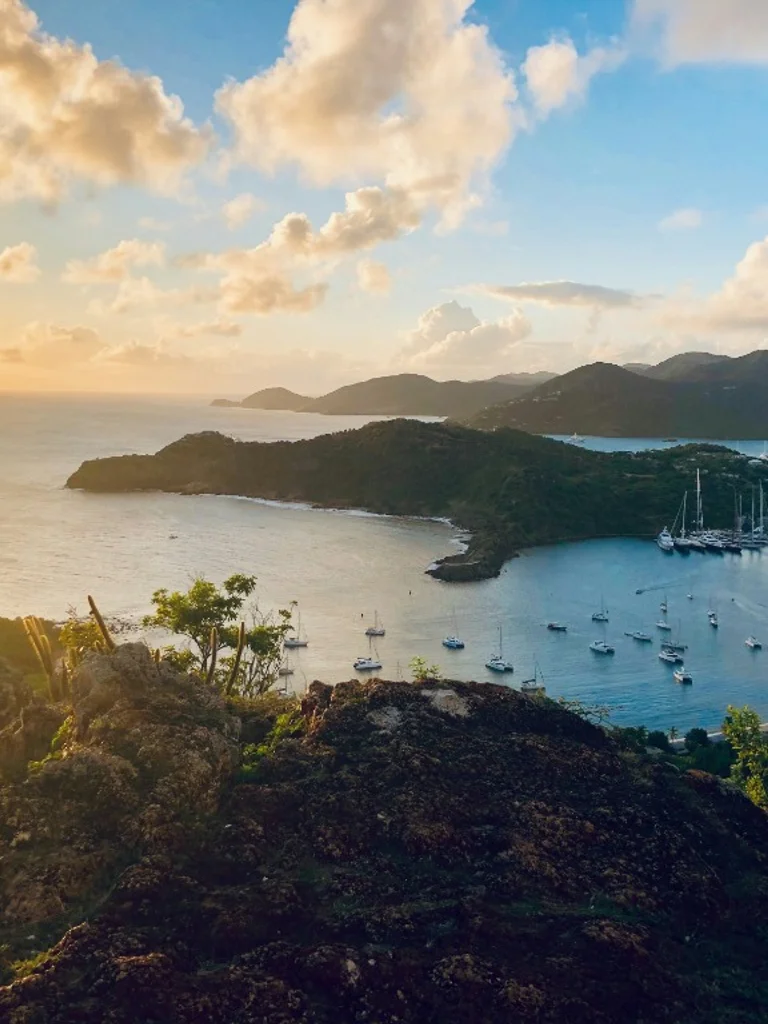
Safety & Governance
- Global Peace Index (IEP): 1.97 (regional indicator triangulation — not separately ranked in GPI 2025, population below 1M threshold)
- Press Freedom Index (RSF): 62.40 (RSF 2025)
- Corruption Perception (TI): 60/100 (CPI 2024 — mid-Caribbean)
- Gini Coefficient (WB): 48.0 (World Bank, most recent)
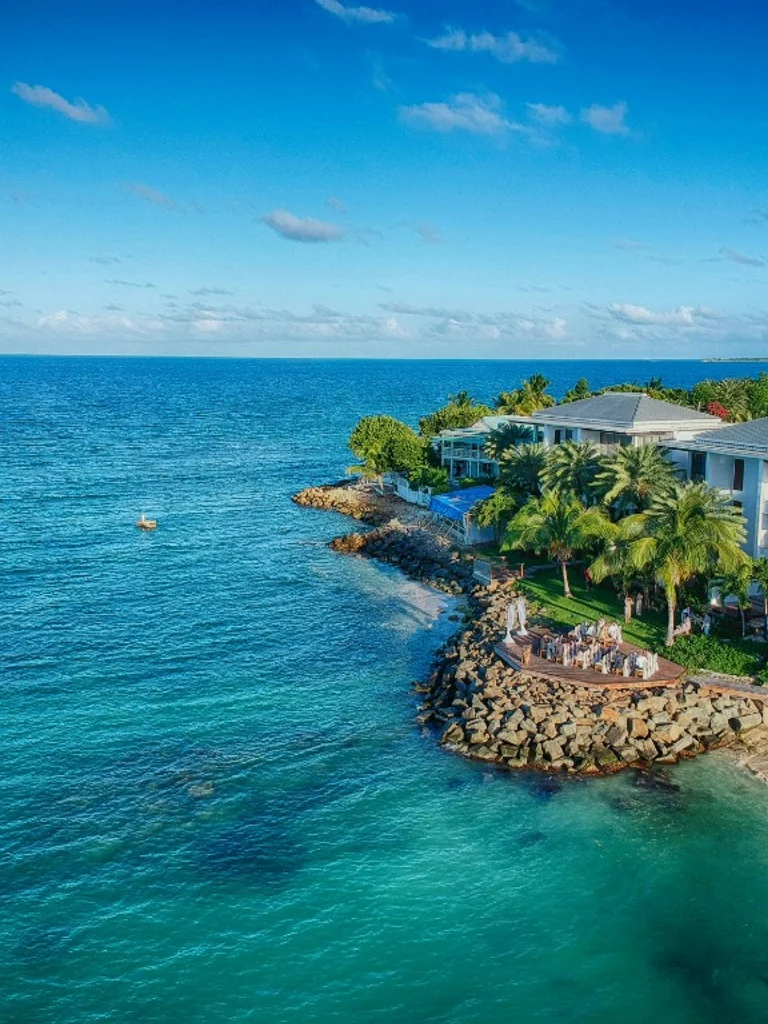
Health & Environment
- PM2.5 Air Pollution: 8.1 µg/m³ (WHO 2024)
- Air Quality Category: Good
- ND-GAIN Adaptation Index: 44.3 (ND-GAIN 2023)
- Life Expectancy: 77 years (WHO 2024)
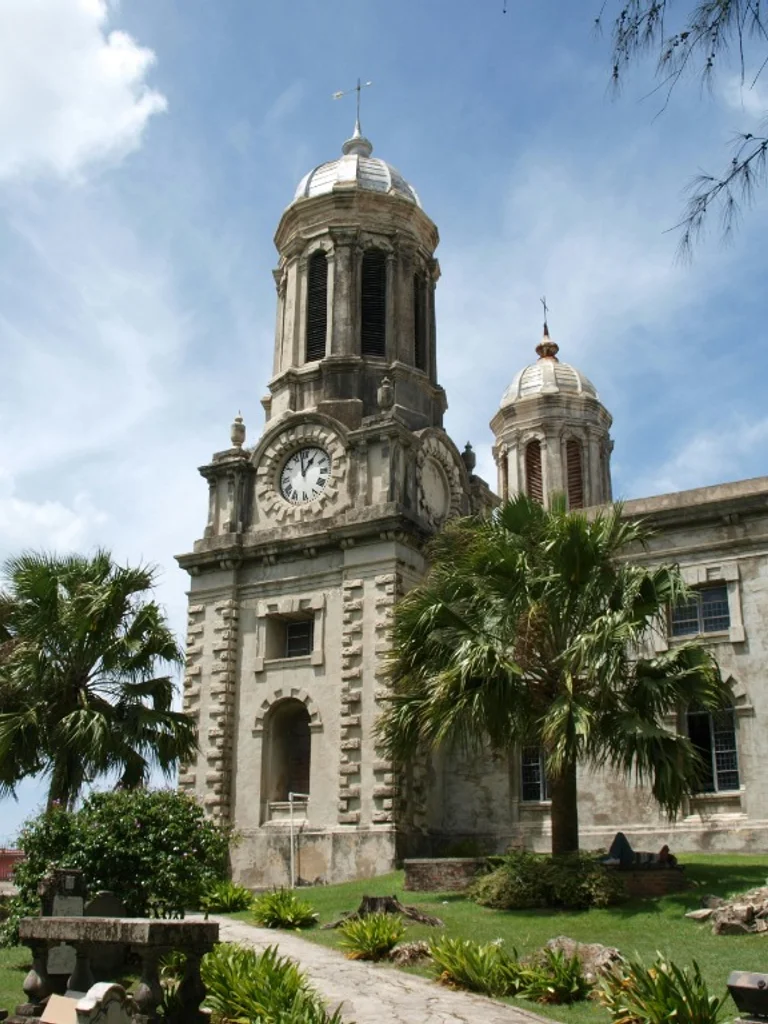
The proposition for an investor or relocator is unusually clean: the Citizenship by Investment Programme (since 2013) delivers a Caribbean Commonwealth passport from a $230,000 non-refundable National Development Fund contribution (raised from $100,000 on 1 August 2024) or $300,000 in approved real estate, processed in 5-7 months under the Citizenship by Investment Unit (). Personal income tax is 0% (abolished in 2016), there is no capital gains or inheritance tax, and the legal system runs on English common law. The cost is also clean: 25% corporate tax for active businesses, 15% ABST consumption tax, a small domestic market, and from October 2025 the Eastern Caribbean Citizenship by Investment Regulation Authority (ECCIRA) introduces a mandatory 30-day residency requirement over the first 5 years for new citizens. Antigua and Barbuda does not try to be for everyone — it is clear from the start who it is for.
How Does Antigua and Barbuda Compare?
Summary
On the worldpath.ai WRI 2026, Antigua and Barbuda (68.5) sits between Spain (69.0) and Germany (66.8), in a peer group anchored by Greece (69.2) and Cyprus (66.6). Antigua and Barbuda leads the group on Citizenship at 82.0 and Investment at 71.0, and trails on Safety at 62.0 and Education at 58.0; Cyprus joined this peer band in May 2026.
How Antigua and Barbuda stacks up against its closest peers on the WRI 2026:
Where Antigua and Barbuda wins: Antigua and Barbuda tops the peer group on Citizenship at 82.0, well ahead of Germany at 70, Greece at 57, Spain at 50, and Cyprus at 45. The driver is not subtle: the Citizenship by Investment Programme delivers a Commonwealth passport from $230,000 in contribution or $300,000 in approved real estate in 5-7 months, with dual citizenship permitted and visa-free or visa-on-arrival access to 154 destinations including the UK, Schengen, and Singapore. Retirement at 78.0 sits third in the peer group behind Spain at 88 and Greece at 79, ahead of Cyprus at 76 and Germany at 51, supported by 0% personal income tax and the new ECCIRA-compliant CBI residency framework. Business at 64.0 trails Cyprus at 65 by a single point but leads Spain at 62, Greece at 61, and Germany at 60, supported by English common law commercial courts and the FSRC IBC / LLC offshore-structuring frameworks.
Where Antigua and Barbuda lags: Antigua and Barbuda posts the lowest Safety score in the peer group at 62.0, behind Spain at 85.6, Germany at 81.0, Greece at 80.9, and Cyprus at 69.0. The homicide rate at roughly 12 per 100,000 is meaningful for a 93,000-person jurisdiction; Caribbean drug-trafficking transit and seasonal hurricane exposure shape the score. Education at 58.0 is tied with Cyprus at the lower end of the group, trailing Germany at 82, Greece at 68, and Spain at 68; no Antiguan university ranks in the global top 500, and international school depth is limited. Investment at 71.0 leads Germany at 69, Greece at 66, and Spain at 65, but trails Cyprus at 78 — Cyprus's combination of membership and a 78 Investment score marks the specific niche Antigua and Barbuda does not directly compete on.
Who does Antigua and Barbuda fit?
Summary
Antigua and Barbuda fits HNW investors and family principals using the CBI, fast-citizenship seekers needing a Commonwealth passport, founders building offshore-financial-services structures, and lifestyle relocators seeking 0% personal income tax in an English-common-law Caribbean jurisdiction. It does not fit applicants requiring a deep professional labour market, anyone allergic to ECCIRA's new 30-day residency rule, or buyers prioritizing top-decile safety or top-tier education.
Right fit:
- HNW investors and family office principals — Citizenship by Investment from $230,000 in NDF contribution (single or family of 4) or $300,000 in approved real estate (5-year holding period); dual citizenship permitted; second-passport diversification with visa-free Schengen and UK access.
- Fast citizenship seekers needing a Commonwealth passport — 5-7 month processing through the Citizenship by Investment Unit (CIU); no minimum stay during application; from October 2025 a mandatory 30-day residency requirement over the first 5 years under ECCIRA.
- Founders building offshore-financial-services structures — DIFC / ADGM / Cayman alternative jurisdiction with English common law commercial courts, no withholding tax on most outbound flows, and the Eastern Caribbean Securities Regulatory Commission (ECSRC) framework.
- Lifestyle relocators seeking 0% personal income tax — Antigua abolished personal income tax in 2016; no capital gains tax, no inheritance tax; only consumption tax (15% ABST) and property tax (0.1-0.5% annual) apply to residents.
Wrong fit:
- Anyone needing a deep professional labour market — population 93,000 with a tourism-and-CBI-dominated economy; specialised employment opportunities outside hospitality, financial services, and government are limited.
- Applicants allergic to ECCIRA's new residency requirement — effective October 2025, OECS CBI jurisdictions including Antigua and Barbuda enforce a 30-day residency requirement over the first 5 years for new CBI citizens, plus a yearly Declaration of Presence and Investment.
- Buyers prioritizing top-decile safety — homicide rate around 12 per 100,000 is meaningful for a 93,000-person federation; Caribbean drug-trafficking transit exposure is real.
- Anyone allergic to hurricane-season risk — June-November Atlantic hurricane season brings periodic Category 3-5 storms; 2017 Hurricane Irma destroyed 90% of Barbuda structures.
- Buyers chasing top-tier education — no Antiguan university in the global top 500; international school market is shallow; secondary-level students bound for US, UK, or Canadian universities typically transition abroad.
Pros and Cons of Relocating to Antigua and Barbuda
- 01CitizenshipCitizenship by Investment from $230,000 NDFCitizenship by Investment from $230,000 NDF. Antigua CBI delivers a Commonwealth passport from $230,000 in non-refundable NDF contribution (single or family of 4), $300,000 in approved real estate (5-year hold), $1,500,000 in sole business investment (or $400,000 per investor in a joint venture totalling at least $5,000,000), or $260,000 in the UWI Fund (family of 6+); 5-7 month processing.CBI from $230,000
- 02MobilityCaribbean passport at world rank 24, 154 visa-freeAntiguan passport at rank 24 globally in 2026, up from rank 27 in 2025; visa-free or visa-on-arrival access to 154 destinations including the UK, Schengen, Singapore, and Hong Kong; dual citizenship permitted.154 visa-free, rank 24
- 03TaxationZero personal income tax on worldwide incomePersonal income tax abolished in 2016; no capital gains tax, no inheritance tax, no gift tax, no wealth tax; only individual federal exposure is 15% ABST consumption tax (12% tourism / hospitality).0% personal income tax
- 04BankingEnglish common law jurisdictionLegal system inherited from British colonial administration; Eastern Caribbean Supreme Court runs commercial disputes; English-language jurisdiction; favoured for offshore financial structuring through the FSRC IBC and LLC frameworks.English common law
- 05Citizenship5-7 month CBI processing through CIUCitizenship by Investment Unit (CIU, cip.gov.ag) handles all CBI applications with 5-7 month processing typical for clean applicants; no minimum stay during application; rigorous due-diligence is the rate-limiting step.5-7 month CBI processing
- 06MobilityCommonwealth and CARICOM memberFounding member of the OECS and CARICOM; Commonwealth member with King Charles III as head of state; CARICOM nationals with Caribbean Skills Qualification Certificate move freely between member states without sponsorship.Commonwealth + CARICOM
- 07CurrencyXCD pegged to USD at 2.70 since 1976The Eastern Caribbean dollar has been pegged to the US dollar at 2.70 XCD per USD since 1976 without devaluation; ECCB-administered currency union across eight Eastern Caribbean states provides regional monetary stability.XCD-USD peg since 1976
- 01SafetyLowest Safety score in peer group at 62.0Homicide rate roughly 12 per 100,000 driven by Caribbean drug-trafficking transit exposure; petty crime in St John's harbour and tourist hubs is moderate; women's safety in residential zones is strong but population scale makes small absolute crime numbers move the rate meaningfully.Safety score 62
- 02CitizenshipECCIRA 30-day residency over 5 years from Oct 2025Effective October 2025, OECS CBI jurisdictions including Antigua and Barbuda enforce a 30-day residency requirement over the first 5 years for new CBI citizens, plus a yearly Declaration of Presence and Investment subject to verification through immigration and land-registry records. Separately, since January 2026 Antigua and Barbuda has been included in a U.S. Visa Bond Pilot Program under which a subset of new B-1/B-2 visa applicants may be required to post a financial bond; existing valid U.S. visas are unaffected and diplomatic negotiations to remove the requirement are ongoing.ECCIRA 30-day residency
- 03LifestyleAtlantic hurricane season June-NovemberAnnual Atlantic hurricane season brings periodic Category 3-5 storms; 2017 Hurricane Irma destroyed 90% of Barbuda structures and triggered full population evacuation; insurance premiums and construction codes reflect the recurring exposure.Hurricane season risk
- 04EconomyPopulation 93,000 with limited specialised employmentPopulation 93,000 with a tourism-and-CBI-dominated economy; specialised employment opportunities outside hospitality, financial services, and government are limited; HNW relocators typically work remotely or run businesses from the federation rather than seeking local employment.Shallow labour market
- 05BankingMortgage rates 6.5-8.5% for foreign buyersForeign-resident mortgage rates run 6.5-8.5% fixed at 15-25 year maturity, 30-40% minimum down, meaningfully higher than EU rates given the smaller ECCB market; banks tightened underwriting since the 2020-2021 Caribbean banking-system pressures.Mortgage rates 6.5-8.5%
- 06EducationNo top-500 university; shallow international school marketNo Antiguan university sits in the global top 500; international school depth is limited (Island Academy IB-style and a handful of faith-based schools); secondary students bound for US, UK, or Canadian universities typically transition abroad.Education ceiling
- 07Cost of LivingImported consumer goods carry meaningful premiumAll consumer goods are imported and carry shipping, ABST 15%, and customs-duty loading; central St John's grocery basket runs 30-50% above Florida equivalent; electricity is among the highest in the region due to diesel-fired generation.High imported-goods cost
Antigua and Barbuda leads on Citizenship — WRI 82.0 / 100
Antigua and Barbuda posts the highest Citizenship score in the WRI 2026 peer group at 82.0, well ahead of Vanuatu at 78, Uruguay at 57.8, Greece at 57, and Spain at 50. The driver is not subtle:The Citizenship by Investment Programme (since 2013) is one of the longest-established and most active Caribbean CBI routes, delivering a Commonwealth passport from $230,000 in non-refundable National Development Fund contribution (raised from $100,000 on 1 August 2024 under the OECS-wide minimum-price baseline of $200,000), $300,000 in approved real estate (5-year holding), $1,500,000 in sole approved business investment (or joint investment of at least $5,000,000 shared between a minimum of two investors, each contributing no less than $400,000), or $260,000 in the University of West Indies Fund (family of 6+). The Citizenship by Investment Unit (CIU, .gov.ag) runs rigorous due-diligence with 5-7 month processing typical for clean applicants. Dual citizenship is permitted, the passport opens 154 destinations visa-free including the UK, Schengen, Singapore, and Hong Kong, and standard naturalization (non-CBI) remains available after 7 years of ordinary residence under the Immigration Department. The October 2025 ECCIRA framework adds binding regional rules — 30-day residency over the first 5 years, annual approval caps, and yearly Declaration of Presence and Investment — without changing the headline contribution thresholds.
Antigua and Barbuda leads on Retirement — WRI 78.0 / 100
Antigua and Barbuda posts a Retirement score of 78.0, third in its peer group between Spain at 88, Uruguay at 86.3, and Greece at 79, ahead of Vanuatu at 52. The proposition is shaped by tax simplicity rather than a dedicated pensioner regime: 0% personal income tax on worldwide income (Antigua abolished it in 2016), no capital gains tax, and no inheritance tax mean foreign pensions and investment income flow without local taxation. Property tax runs 0.1-0.5% annually on assessed value and consumption tax (ABST) sits at 15% on most goods and services (12% on tourism and hospitality). Climate is tropical year-round with two main seasons (dry December-April, wet/hurricane June-November); life expectancy is 77 years (WHO 2024). The healthcare system runs through Mount St John's Medical Centre (public) and the Adelin Medical Centre plus several private clinics; residents typically maintain US or European supplementary medical insurance for complex procedures. CBI grants citizenship and full residency rights without a minimum stay; ECCIRA from October 2025 adds the 30-day-over-5-years residency requirement. Sailing communities (English Harbour, Falmouth) attract significant retirees from the UK, US, Canada, and Northern Europe.
Residence
Antigua and Barbuda applies territorial taxation: residents and non-residents pay 0% personal income tax on worldwide income (abolished in 2016). Tax residency for treaty purposes triggers on 183 days physically present in the federation in the calendar year, or domicile. Residence permits are administered by the Department of Immigration (Ministry of Foreign Affairs, International Trade & Immigration, immigration.gov.ag), with the Citizenship by Investment Unit (CIU, cip.gov.ag) handling all CBI-track applications. The standard residency permit is available after 4 years of legal ordinary residence (1 year if married to an Antiguan citizen, 2 years for "person of independent means", 1 year for tertiary-education students); permanent residence after 7 years. The CBI route grants full citizenship and residency rights immediately upon approval, with 5-7 month processing typical. CARICOM nationals with a Caribbean Skills Qualification Certificate move freely without sponsorship. From October 2025 the Eastern Caribbean Citizenship by Investment Regulation Authority (ECCIRA) imposes a binding 30-day residency requirement over the first 5 years for new CBI citizens, plus a yearly Declaration of Presence and Investment subject to verification through immigration and land-registry records. Work permits run 1 year initial, renewable, with fees ranging $300-3,000 per year by skill category.
Safety sits at 62.0 in the WRI 2026, the lowest in the peer group. The Global Peace Index does not separately rank Antigua and Barbuda due to its population size (93,000 sits below the GPI 1-million threshold), but regional indicators place the federation in the moderate-Caribbean band: homicide rate around 12 per 100,000 (driven by drug-trafficking transit exposure rather than political instability), petty crime in tourist hubs (St John's harbour, Jolly Harbour), and Atlantic hurricane-season risk (Category 3-5 storms periodically; 2017 Irma destroyed 90% of Barbuda structures). Corruption Perceptions Index 2024 places Antigua at 60/100, mid-Caribbean. The trade-off: political stability is high (uninterrupted parliamentary democracy since 1981 independence), institutional rule of law follows English common law, and women's safety on the street is strong in tourist and residential zones.
Taxes on Personal Income
Antigua and Barbuda has no personal income tax (abolished in 2016) on either Antigua-source or worldwide income for residents. The principal individual tax exposure is consumption: 15% Antigua and Barbuda Sales Tax (ABST) on most goods and services, with a reduced 12% rate for tourism and hospitality activities; ABST returns are monthly. There is no federal capital gains tax for individuals, no inheritance tax, no gift tax, no wealth tax, and no withholding tax on most outbound dividends or interest paid to residents. Property tax runs 0.1-0.5% annually on assessed value; property transfer taxes total 10% (7.5% paid by seller, 2.5% paid by buyer) on the higher of consideration or assessed value. Corporate tax for active businesses operated by individuals runs at the standard 25% rate (10% for commercial banks, insurance, oil, and telecommunications); IBC and offshore-financial-services regimes operate under separate frameworks regulated by the Financial Services Regulatory Commission (FSRC). The effective rate on $500,000 of foreign investment income for an Antiguan tax resident is effectively 0% federally, with only consumption-based ABST exposure on local spending — the headline draw for the CBI relocation market.
Cost of Living
Antigua and Barbuda runs a moderate-to-high cost of living for a Caribbean federation, with significant import-cost loading on consumer goods. A single professional in central St John's or Jolly Harbour budgets $2,500-3,800 a month for a one-bedroom rental, utilities, transit / car, and basic groceries; the same lifestyle in a quieter residential area (Falmouth, English Harbour, Dickenson Bay) runs $2,000-3,200. A family of three in central St John's budgets $5,000-8,500 a month including a two-bedroom rental at $1,800-3,200, transport, groceries, and international school fees; Barbuda outside the resort zones runs significantly lower at $2,500-4,000 for a comparable family lifestyle. Inexpensive restaurant meals average $15-22 per person, with significant tourist-zone premium; tap water is potable but most residents drink bottled or filtered. Health insurance for non-citizen residents runs $1,800-4,500 a year per couple given the limited local hospital capacity. A second-hand mid-range vehicle runs $12,000-22,000 and is the default transit mode outside St John's. Electricity is one of the highest costs in the region due to imported diesel-fired generation.
Healthcare System
Antigua and Barbuda's public healthcare runs through Mount St John's Medical Centre (MSJMC) in St John's, the federation's main hospital, plus regional clinics under the Medical Benefits Scheme (MBS). Coverage is open to citizens and registered residents through MBS contributions; non-citizen residents typically supplement with private insurance. The system handles general medicine, routine surgery, maternity, and emergency care competently but routinely refers complex specialist cases to Barbados, Trinidad, the US, or the UK for cardiology, oncology, neurology, and specialised paediatrics. Private clinics include the Adelin Medical Centre and several specialist practitioner offices in St John's and Jolly Harbour. A general practitioner consultation runs $50-100, a specialist visit $120-250, a private hospital day $400-900. Mandatory health insurance for residence-permit renewal runs $1,800-4,500 per year for a couple; many CBI relocators maintain US, UK, or international insurance for complex care. Life expectancy is 77 years (WHO 2024), lower than EU averages and reflective of Caribbean-region health-system depth limitations. Medical evacuation insurance is recommended for HNW relocators given the small island scale.
Education System
Antigua and Barbuda runs a state-funded public education system through the Ministry of Education for citizens and residents, with primary and secondary schooling free of tuition and Cambridge-style examinations at the secondary exit point. Public schools are taught in English (the federation's official language and de facto first language). The international school market is shallow: the Island Academy International School (IB-style, K-12, ~$10,000-15,000/year) and a handful of private faith-based schools (St Anthony's, Christ the King) cover most expat demand. Secondary-level students bound for US, UK, or Canadian universities typically transition abroad for their final years. There is no Antiguan university in the global top 500; the University of the West Indies operates an Open Campus presence in Antigua delivering distance and blended programmes, and the American University of Antigua College of Medicine (AUA) runs a four-year MD programme attracting predominantly US-bound medical students. CBI receipts to the University of the West Indies Fund ($260,000 family-of-6+ option) directly support regional tertiary education capacity. Public schools are open to children of any registered resident, including CBI citizens, with no separate fees.
Banking & Finance
Antigua and Barbuda's banking system runs through the Eastern Caribbean Central Bank () currency union — eight Eastern Caribbean states share the pegged at 2.70 per USD since 1976. The federation hosts the regional big-three (ACB Caribbean, First Caribbean International Bank, Republic Bank), CIBC Caribbean, and several offshore-licensed banks under FSRC oversight. Account opening for residents requires CBI passport or residence permit, valid ID, proof of address, and source-of-funds documentation; offshore IBC accounts run separate KYC under FSRC. Foreign credit history does not transfer; expats build local credit from zero with secured cards. Mortgages for foreigners typically require 30-40% down, with fixed 15-25 year rates at 6.5-8.5% (May 2026) — meaningfully higher than EU rates given the smaller market and ECCB monetary policy. EU and US capital mobility is unrestricted; the XCD-USD peg has held without devaluation since 1976. Antigua and Barbuda was removed from the and EU AML grey lists in earlier rounds and is fully / compliant. The Financial Services Regulatory Commission (FSRC) runs International Business Corporation (IBC) and Limited Liability Company (LLC) regimes for offshore structuring.
Cryptocurrency Regulation
Antigua and Barbuda regulates crypto-assets under the Digital Assets Business Act (DABA) 2020, which licenses crypto exchanges, custodians, and digital-asset businesses through the Financial Services Regulatory Commission (FSRC). The legal status of cryptocurrencies is recognised, though they are not legal tender. Antigua has positioned itself as a Caribbean Web3 friendly jurisdiction, with the Antigua and Barbuda Web3 Initiative attracting blockchain and digital-asset operators since 2022. Capital gains on crypto held personally are not taxed under the 0% personal income tax regime; crypto-to-crypto swaps are not separately taxed. Crypto-as-payment for goods or services follows standard 15% ABST. The Eastern Caribbean Central Bank (ECCB) ran a Caribbean CBDC pilot ("DCash") from 2021-2024 in which Antigua and Barbuda participated; the pilot was suspended for redesign in 2024 with a successor CBDC under development. There is no federal capital gains exemption needed since none exists. Antigua and Barbuda is not a Web3 hub on the order of Switzerland, Dubai, or Singapore, but the DABA framework plus 0% personal tax draws individual crypto investors and small-to-mid digital-asset operators.
Real Estate Market
Foreigners can buy Antigua and Barbuda residential and commercial property freely, subject to obtaining an Alien Land Holding Licence (cost approximately 5% of the property value, processed through the Ministry of Finance). CBI applicants buying through approved real-estate projects are exempt from the licence requirement during the CBI application. Property transfer taxes total 10% on the higher of consideration or assessed value, split 7.5% seller / 2.5% buyer. Stamp duty 2%. Notary and legal fees run 1-2%; property registry 0.5%. Annual property tax: 0.1-0.5% of assessed value. Prime developed areas include Jolly Harbour (marina villas, $700,000-2,500,000), Dickenson Bay (beachfront, $500,000-3,000,000), English Harbour and Falmouth (yachting-community villas, $600,000-2,000,000), and the Hodges Bay / Cedar Grove developments ($400,000-1,200,000). Barbuda has a separate land-tenure framework — most Barbuda land is communally held under the Barbuda Land Act and was historically not subject to private ownership, though post-Hurricane Irma reconstruction has introduced limited individual leasehold zones. CBI-approved real-estate projects (Pearns Point, Hodges Bay Resort, Tamarind Hills, Callaloo Cay) offer the $300,000 minimum 5-year-hold entry. Gross rental yields run 4-7% on long-term lets, 8-12% on short-term tourist rentals during peak season. Non-resident mortgage rates 6.5-8.5% fixed, 30-40% minimum down.


