
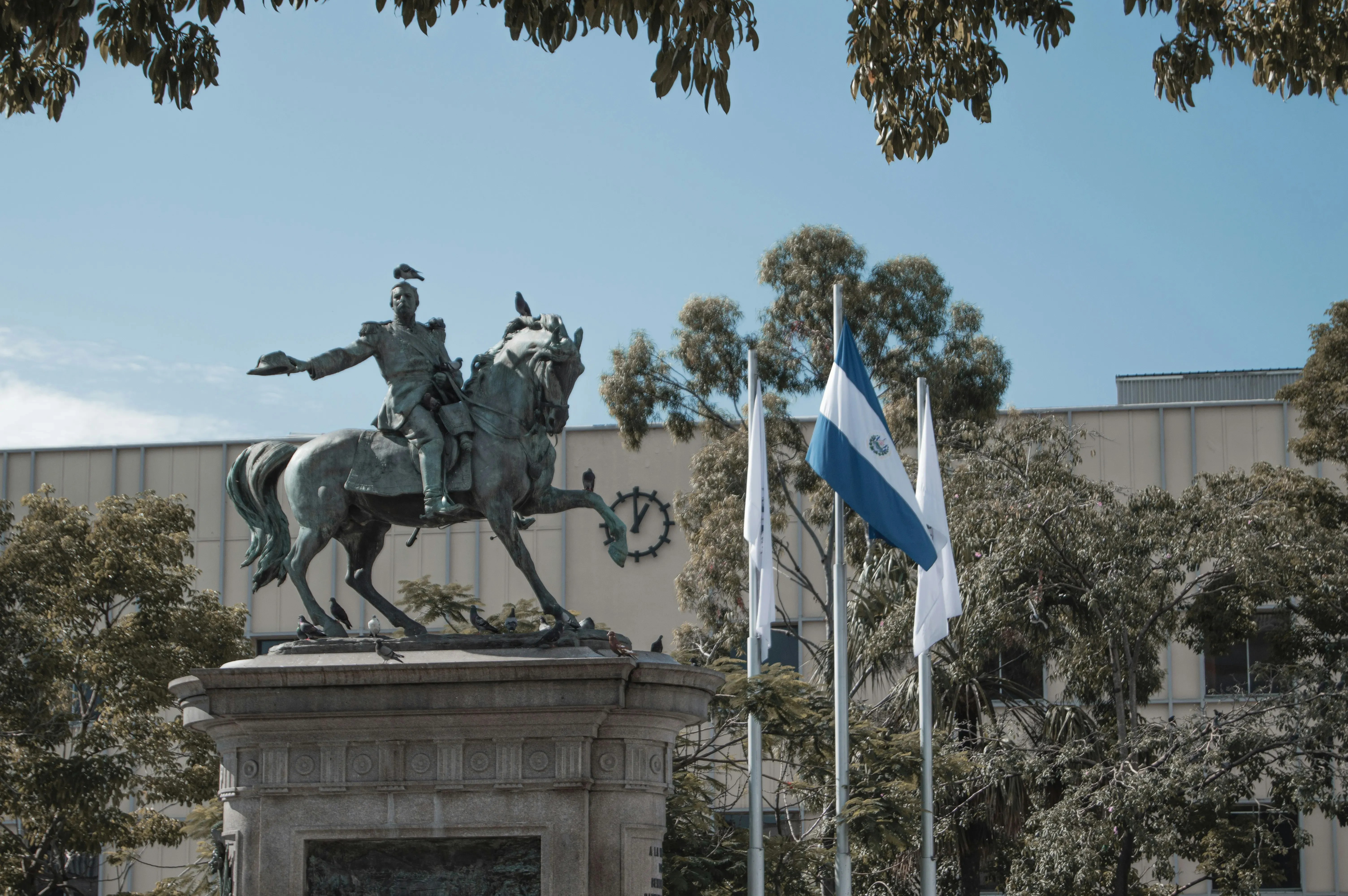
El Salvador Overview
El Salvador is the smallest republic in Central America, occupying 21,041 km² of Pacific coastline between Guatemala and Honduras. A presidential republic under the 1983 Constitution, with Nayib Bukele serving as President since June 2019 and re-elected in February 2024 for a second consecutive term. The legal system runs on civil law in the Latin American tradition. El Salvador is a founder of the United Nations, the Organization of American States, and the Central American Integration System (), and it shares CAFTA-DR free-trade access with the United States. The US Dollar has been sole legal tender since the 2001 Monetary Integration Law; Bitcoin was added as a parallel legal currency in 2021 and then reformed in February 2025 under the IMF $1.4 billion Extended Fund Facility agreement.
On This Page
- 1.El Salvador Overview
- 1.1How Does El Salvador Compare?
- 1.2Who does El Salvador fit?
- 1.3Pros and Cons of Relocating to El Salvador
- 1.4El Salvador leads on Citizenship — WRI 80.0 / 100
- 1.5El Salvador leads on Retirement — WRI 76.0 / 100
- 1.6Residence
- 1.7Taxes on Personal Income
- 1.8Cost of Living
- 1.9Healthcare System
- 1.10Education System
- 1.11Banking & Finance
- 1.12Cryptocurrency Regulation
- 1.13Real Estate Market
- 2.Frequently Asked Questions
Quick Facts
- Passport Rank: 36
- Visa-Free Destinations: 132
- Capital: San Salvador
- Population: 6.37 million (World Bank 2024)
- Area: 21,041 km²
- Currency: United States Dollar (USD); sole legal tender since 2001 Monetary Integration Law
- Official languages: Spanish (official)
- Religions: Catholic ~44%, Protestant/Evangelical ~38%, unaffiliated ~17%, other ~1%
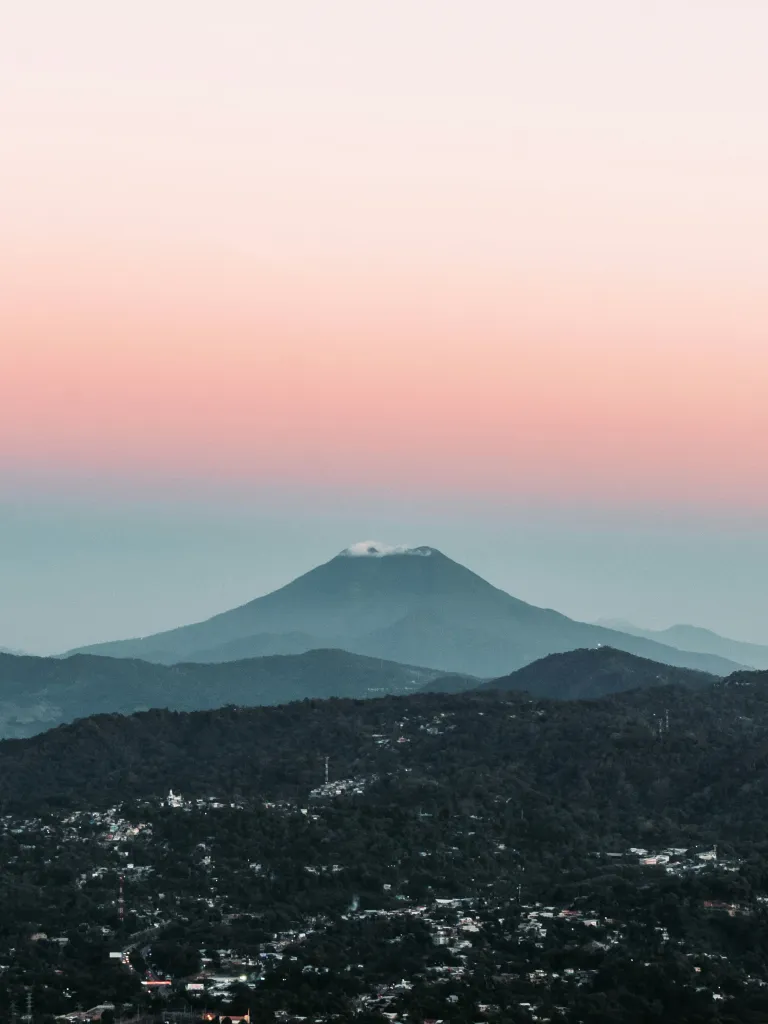
Key Indicators
- GDP (Nominal): $35.36 billion (World Bank 2024)
- Unemployment Rate: 4.7% (ILO model 2024)
- Human Development Index: 0.678 (Medium, HDR 2024)
- GDP per Capita: $5,580 (World Bank 2024)
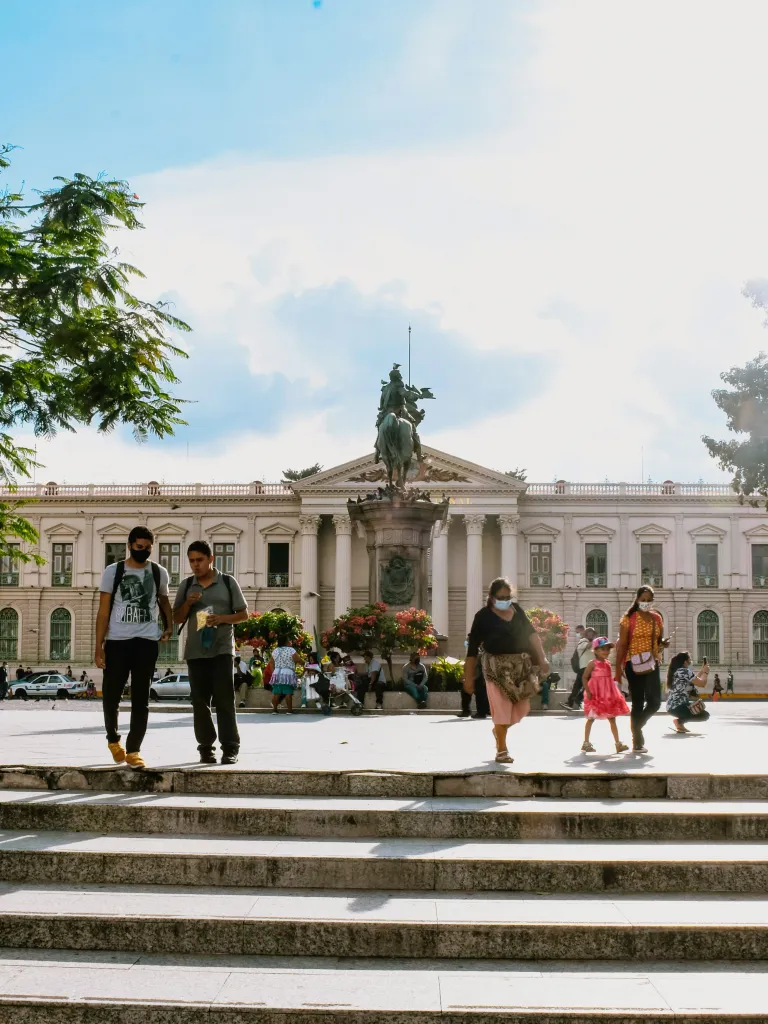
Safety & Governance
- Global Peace Index (IEP): 2.25 (Rank: 107, GPI 2024)
- Press Freedom Index (RSF): 45.0 (Rank: 143, RSF 2026)
- Corruption Perception (TI): 32/100 (Rank: 120, CPI 2025)
- Gini Coefficient (WB): 39.8 (World Bank, most recent)
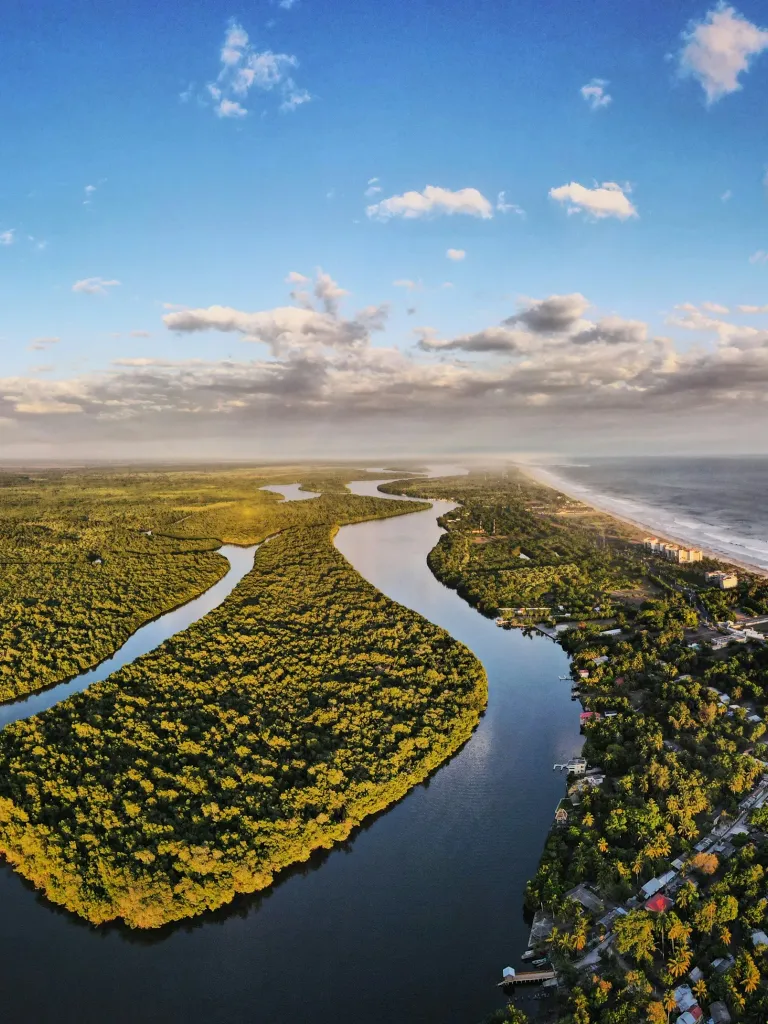
Health & Environment
- PM2.5 Air Pollution: 4.2 µg/m³ (WHO 2024)
- Air Quality Category: Good
- ND-GAIN Adaptation Index: 44.0 (Rank: 109, ND-GAIN 2023)
- Life Expectancy: 74.5 years (WHO 2024)
The proposition for an investor or relocator is unusually clean: territorial taxation that exempts all foreign-source income, a fully dollarised economy that eliminates currency risk, the fastest crypto-funded citizenship route in the world via the Freedom Visa from $1,000,000 in Bitcoin or , and a temporary residency presence requirement reduced to 90 days per year in March 2025. The cost is also clean: a passport at rank 36 globally (132 visa-free destinations), the Bukele administration's State of Exception in force since March 2022 with the highest incarceration rate in the world, and an education and healthcare infrastructure that is shallow outside San Salvador's private sector. El Salvador does not try to be for everyone — it is clear from the start who it is for.
How Does El Salvador Compare?
Summary
On the worldpath.ai WRI 2026, El Salvador (72.4) sits between the United States (72.9) and Japan (70.2), in a peer group anchored by Italy (73.2) above and Portugal (70.1) below. El Salvador leads the group decisively on Citizenship through the Freedom Visa, ties with Italy on Investment, and posts the group's highest Residency score outside Italy. It trails on Education — the weakest dimension in the peer group — and on Safety by index metrics, despite a record-low homicide rate.
How El Salvador stacks up against its closest peers on the WRI 2026:
Where El Salvador wins: El Salvador leads the peer group decisively on Citizenship at 80, well ahead of Portugal at 54.8, Italy at 58, United States at 52, and Japan at 40. The driver is not subtle: the Freedom Visa (Adopting El Salvador) under Legislative Decree 286 + 747 grants citizenship within 2-4 months from a $1,000,000 contribution in Bitcoin or USDT to government development funds, with no physical residency requirement to maintain status; spouse and dependent children join for $999 each. No other country in the peer group offers an investment-to-passport route on this timeline. Investment at 75 ties with Italy at 75 and leads Portugal at 72.2 and Japan at 65, behind only the United States at 89. Residency at 74 leads Portugal at 72.8, Japan at 60, and the United States at 55, behind only Italy at 78.5 — the combination of territorial taxation, 90-day annual presence under Decreto 531 (March 2025), and no CFC regime makes the Salvadoran residency footprint unusually light for investors maintaining a global lifestyle. Retirement at 76 leads Portugal at 74.4, Japan at 74, and the United States at 62, behind only Italy at 88 — the territorial tax shelters foreign pension income, and the Pensionado Visa from $1,100/month is one of the cheapest dedicated retiree routes in the Americas.
Where El Salvador lags: El Salvador trails the peer group on Education at 58, behind Japan at 90, United States at 88, Italy at 74, and Portugal at 63.7. No Salvadoran university sits in the global top 500; the public MINEDUCYT system runs with classes of up to 50 students and limited capacity outside the Escuela Americana and a handful of San Salvador private schools. Safety at 71.6 sits second-lowest in the peer group behind the United States at 66, and meaningfully below Japan at 89, Portugal at 76, and Italy at 73 — the homicide rate has collapsed from 106 per 100,000 in 2015 to 1.36 per 100,000 in 2025 under the State of Exception, but the Global Peace Index 2024 still places the country at rank 107 and the Press Freedom Index 2026 at rank 143 (down 8 places), reflecting ongoing civil-liberty concerns. Business at 72 ties with Japan at 72 and trails Portugal at 73.6, Italy at 61 — the notable exception in the peer group — and the United States at 91.
Who does El Salvador fit?
Summary
El Salvador fits HNW investors using the Freedom Visa for a 2-4 month crypto-funded citizenship route, foreign retirees on the Pensionado from $1,100/month, remote workers and digital nomads on the Rentista plus territorial taxation, and Bitcoin-native operators leveraging the preserved capital-gains exemption. It does not fit applicants needing top-tier education infrastructure, families uncomfortable with the State of Exception's civil-liberty trade-offs, anyone requiring a strong passport for primary mobility, or buyers seeking -class healthcare outside San Salvador's private sector.
Right fit:
- HNW investors using the Freedom Visa — Adopting El Salvador (Legislative Decree 286 + 747) requires $1,000,000 in Bitcoin or USDT to government development funds; initial approval in 4-6 weeks, total timeline to citizenship 2-4 months; spouse and dependent children under 18 (or under 25 if full-time students) added at $999 each; no physical residency required to maintain status; world's first crypto-funded .
- Foreign retirees on modest pension income — Pensionado Visa requires only $1,100/month in foreign pension income; territorial tax exempts all foreign pension and investment income; temporary residency presence reduced to 90 days/year by Decreto 531 (March 2025); fully dollarised economy eliminates currency risk for North American capital.
- Remote workers and digital nomads — Rentista Visa requires $1,500/month in passive foreign income (rentals, dividends, royalties); territorial taxation exempts all foreign-source income; USD legal tender; 90-day annual presence requirement; San Salvador and the Surf City beach corridor offer fibre internet and an established coworking footprint.
- Bitcoin-native operators — the Bitcoin Law's individual capital-gains exemption survived the February 2025 IMF-driven reform; Comisión Nacional de Activos Digitales (CNAD) licenses Bitcoin Service Providers under a clear regulatory framework; Bitcoin City and the Surf City corridor remain the most concrete crypto-relocation environments in Latin America.
Wrong fit:
- Families needing top-tier education infrastructure — no Salvadoran university in the global top 500; international school market concentrated in 4-5 San Salvador institutions (Escuela Americana, Escuela Británica, Lycée Français, Deutsche Schule); secondary-level students bound for European or US universities typically transition abroad.
- Applicants uncomfortable with State of Exception trade-offs — emergency powers in force since March 2022 with approximately 91,000 people detained without warrants under Bukele's anti-gang campaign; world's highest incarceration rate; civil-liberty concerns flagged by Human Rights Watch and the Office of the High Commissioner.
- Anyone needing a strong passport for primary mobility — Salvadoran passport sits at rank 36 globally (132 visa-free destinations) — useful for Latin America and the but materially weaker than Italian, Japanese, US, or Portuguese passports.
- Buyers requiring EU-class public healthcare — MSPAS public system runs with significant capacity constraints outside San Salvador; private hospital network (Hospital de Diagnóstico, Hospital de la Mujer, Centro Médico Escalón) delivers regional-standard care but complex specialist procedures often route to Mexico City, Houston, or Miami.
- Investors seeking sovereign-grade credit — Fitch holds El Salvador at B- (mid-junk) post-IMF deal; political risk concentrated around the Bukele administration's institutional consolidation; Bitcoin Treasury holdings (~6,100 BTC publicly tracked) add policy-driven volatility to the public-finance picture.
Pros and Cons of Relocating to El Salvador
- 01CitizenshipWorld's first crypto-funded CBI; 2-4 monthsAdopting El Salvador (Legislative Decree 286 + 747) grants citizenship in 2-4 months against $1M in Bitcoin or USDT to government development funds; spouse/dependents $999 each; no physical residency requirement to maintain status; world's first crypto-funded CBI.Freedom Visa $1M BTC CBI
- 02TaxationForeign income exempt; Bitcoin gains 0% for individualsTerritorial taxation: only Salvadoran-source income taxed (0-30% progressive); all foreign pensions, dividends, capital gains, royalties exempt regardless of residence; Bitcoin capital-gains exemption for individuals preserved after Feb 2025 IMF reform; no inheritance, wealth, or gift tax.Territorial tax + 0% BTC
- 03CurrencyUSD sole legal tender since 2001 Monetary Integration LawUS Dollar is sole legal tender since the 2001 Monetary Integration Law; eliminates currency-conversion friction for North American capital; full dollarisation gives El Salvador exchange-rate stability that floating-currency LATAM peers cannot match.US Dollar legal tender
- 04RetirementPensionado Visa from $1,100/month foreign pensionPensionado Visa requires $1,100/month in foreign pension income; one of the cheapest dedicated retiree visa thresholds in the Americas; territorial taxation shelters foreign pension income at 0%; 90 days/year presence under Decreto 531 (Mar 2025).Pensionado from $1,100/mo
- 05SafetyHomicide rate 1.36 per 100k record lowHomicide rate collapsed from 106/100k in 2015 to 1.36/100k in 2025 under Bukele's State of Exception (Mar 2022 onwards); one of lowest in Western Hemisphere; ~91,000 detained under emergency powers; trade-off civil-liberty concerns flagged by HRW and UN.Homicide rate 1.36/100k
- 06ResidencyTemporary residency: 90 days/year (reduced from 9 mo Mar 2025)Decreto 531 of March 17 2025 (effective March 31) reduced annual physical-presence requirement for temporary residents from 9 months to 90 calendar days, consecutive or accumulated; material easing for Pensionado / Rentista / Freedom Visa holders maintaining lifestyle elsewhere.Decreto 531: 90 days/year
- 07Real EstateForeigners same rights as citizens; full freeholdForeigners can buy Salvadoran property with full ownership rights identical to citizens including freehold title, mortgage registration, and inheritance; only restrictions: 1km border buffer (Ministry of Defense permit) and 245-hectare agricultural cap; closing ~5% of transaction; 30-90 day completion.Full property rights
- 01StabilityEmergency powers since Mar 2022; ~91k detainedState of Exception in force since March 2022 with approximately 91,000 people detained without warrants under anti-gang campaign; world's highest incarceration rate; civil-liberty concerns flagged by Human Rights Watch, the UN OHCHR, and the Inter-American Commission on Human Rights.State of Exception 2022+
- 02EducationEducation score 58, lowest in peer groupNo Salvadoran university in the global top 500; international school market concentrated in 4-5 San Salvador institutions; MINEDUCYT public system runs classes up to 50 students; secondary students bound for top European or US universities typically transition abroad.Education depth limited
- 03MobilitySalvadoran passport rank 36 globally, 132 visa-freeSalvadoran passport sits at rank 36 globally (132 visa-free destinations), useful for Latin America and Schengen but materially weaker than Italian, Japanese, US, or Portuguese passports for primary mobility.Passport rank 36, 132 VF
- 04StabilityFitch B- sovereign; ~6,100 BTC public holdingsFitch holds El Salvador at B- (mid-junk) post-IMF $1.4B EFF agreement (Dec 2024); National Treasury holds ~6,100 BTC publicly tracked, adding crypto-policy volatility to public finance; Bukele administration consolidation flagged as institutional concentration risk.Fitch B-, BTC volatility
- 05HealthcareSpecialist care concentrated in San Salvador private hospitalsPrivate hospitals in San Salvador (Hospital de Diagnóstico, Centro Médico Escalón, Hospital de la Mujer) deliver regional-standard care; public MSPAS system under capacity constraints; complex specialist cases route to Mexico City, Houston, or Miami via 2-3 hour flights.Healthcare SS-centric
- 06StabilityRSF Press Freedom Index 2026 rank 143 (-8)Reporters Without Borders Press Freedom Index 2026 places El Salvador at rank 143 of 180, dropping 8 places year-on-year; significant decline since 2014; 43 journalists fled the country between March and June 2025 amid government pressure on independent media.Press freedom rank 143
- 07CryptoBTC legal-tender status reformed; voluntary acceptanceBitcoin Law reformed February 2025 under IMF $1.4B agreement: BTC no longer mandatory for private-sector acceptance; tax payments in BTC removed; public-sector use confined; individual capital-gains exemption on BTC preserved; CNAD continues to license Bitcoin Service Providers.BTC Law reformed Feb 2025
El Salvador leads on Citizenship — WRI 80.0 / 100
El Salvador posts the highest Citizenship score in the WRI 2026 peer group at 80, decisively ahead of Italy at 58, Portugal at 54.8, the United States at 52, and Japan at 40. The driver is the Freedom Visa, formally "Adopting El Salvador," launched in December 2024 under Legislative Decree 286 (reforming Article 152) and Decree 747. The route grants Salvadoran citizenship 2-4 months from initial application against a $1,000,000 contribution in Bitcoin or USDT directed to government development funds for culture, security, technology, and social welfare projects, with no physical residency requirement to maintain status once granted. Spouse and dependent children under 18 (or under 25 if full-time students) join the application at $999 per member. The route is administered by the Adopting El Salvador programme office in partnership with Tether for crypto custody, with citizenship grants finalised through the Asamblea Legislativa procedure. Standard naturalisation outside the Freedom Visa runs 5 years of legal residence with Spanish-language proficiency, reduced to 1 year for nationals of Spain and other Latin American Spanish-speaking countries under Article 90 of the Constitution. Dual citizenship is permitted across all routes. The Salvadoran passport opens 132 destinations visa-free (rank 36 globally), covering Schengen, the UK on visa-on-arrival, and most of South America.
El Salvador leads on Retirement — WRI 76.0 / 100
El Salvador posts a Retirement score of 76, leading Portugal at 74.4, Japan at 74, and the United States at 62 in the WRI 2026 peer group, behind only Italy at 88. The proposition combines tax simplicity with cost-of-living depth: territorial taxation exempts all foreign pension and investment income from Salvadoran tax (PwC 2026), the US Dollar is sole legal tender since 2001 (eliminating currency-conversion friction for North American retirees), and the Pensionado Visa requires only $1,100 per month in foreign pension income — one of the cheapest dedicated retiree visa thresholds in the Americas. Decreto 531 (effective March 31, 2025) reduced the annual physical-presence requirement for temporary residents from 9 months to 90 calendar days, consecutive or accumulated, materially easing the lifestyle commitment relative to the prior regime. Climate is tropical year-round, with the highland towns of Apaneca, Ataco, and Juayúa in the Ruta de las Flores delivering 15-22°C average temperatures at altitude (800-1,500m). Life expectancy is 74.5 years (WHO 2024), in the lower-middle range for Latin America but trending up. Healthcare in San Salvador matches regional standards through Hospital de Diagnóstico, Centro Médico Escalón, and Hospital de la Mujer; complex specialist care often routes to Mexico City, Houston, or Miami via 2-3 hour flights. Cost of living runs 41.9% below the United States excluding rent and 48.7% below including rent, with a typical retired-couple budget of $1,800-3,200 per month outside the capital.
Residence
El Salvador applies territorial taxation to both residents and non-residents: only El Salvador-source income is taxed, while all foreign-source income (foreign pensions, dividends from foreign companies, capital gains on foreign-located assets, royalties on foreign-registered IP) is exempt regardless of residence status. Tax residency triggers on 200 or more consecutive days of physical presence in the calendar year, or having El Salvador as the main source of income. There is no Controlled Foreign Company (CFC) regime; Salvadoran-resident individuals are not taxed on the income of their foreign companies. Residence permits are administered by the Dirección General de Migración y Extranjería (DGME, migracion.gob.sv) under the Ministry of Justice and Public Security. Temporary residency under Pensionado, Rentista, and traditional Investor routes requires 90 calendar days of physical presence per year (Decreto 531, March 2025 — down from the prior 9-month rule), consecutive or accumulated. Permanent residency follows 3 years of temporary residence; standard naturalisation requires 5 years total (1 year for Spanish and Latin American Spanish-speaking nationals under Article 90 of the Constitution). The Freedom Visa under Legislative Decree 286 / 747 bypasses the standard route, granting citizenship in 2-4 months with no presence requirement. Consular visas and bilateral treaty exemptions route through the Ministerio de Relaciones Exteriores (rree.gob.sv).
Safety sits at 71.6 in the WRI 2026, second-lowest in El Salvador's peer group but reflecting a profound transformation. The Global Peace Index 2024 places El Salvador at rank 107 (score 2.25, up 21 places from the prior rank 128 — the largest single-year improvement worldwide), and the Corruption Perceptions Index 2025 (released February 2026) places the country at rank 120 globally with a score of 32/100. Reporters Without Borders Press Freedom Index 2026 places El Salvador at rank 143 (down 8 places from the prior year), reflecting government pressure on independent media. The headline statistic is the homicide rate: from 106 per 100,000 in 2015 (one of the world's most violent countries) to 1.36 per 100,000 in 2025 (one of the lowest in the Western Hemisphere) under President Bukele's State of Exception, in force since March 2022. The trade-off is widely documented: approximately 91,000 people detained without warrants under emergency powers, the world's highest incarceration rate, civil-liberty concerns raised by Human Rights Watch and the UN Office of the High Commissioner. The lived security experience for expat residents in San Salvador's Escalón, Santa Elena, and Surf City beach corridor is genuinely transformed.
Taxes on Personal Income
El Salvador applies territorial personal income taxation. Residents and non-residents are taxed only on El Salvador-source income at progressive rates: 0% on the first $4,064 of annual income, 10% on the bracket from $4,064 to $9,143, 20% on $9,143 to $22,857, and 30% above $22,857 (PwC 2026). All foreign-source income, including foreign pensions, dividends from foreign companies, capital gains on foreign-located assets, and royalties on foreign-registered intellectual property, is fully exempt regardless of residence status. Capital gains on Salvadoran assets sold after a 12-month holding period are taxed at a flat 10% on the net gain; sales within 12 months of purchase are taxed at the ordinary 25-30% corporate rate. There is no inheritance tax, no wealth tax, and no gift tax. Dividends paid to non-resident individuals are subject to a 5% withholding tax; interest on government securities and certain qualifying bank deposits is exempt. IVA (El Salvador's VAT-equivalent) runs at 13% on most goods and services. Bitcoin capital gains for individuals remain exempt from income tax under the Bitcoin Law, even after the February 2025 reform that removed Bitcoin's legal-tender status and mandatory-acceptance provisions. The effective tax rate on a foreign-pension retiree resident in El Salvador is 0% federally — the structural draw for the Pensionado relocation market.
Cost of Living
El Salvador runs one of the cheapest cost-of-living profiles in Central America's investor-relevant tier — 41.9% below the United States excluding rent and 48.7% below including rent. A single professional in San Salvador (Escalón, Santa Elena, San Benito) budgets $1,200-1,800 a month for a one-bedroom rental at $740 in the city centre or $450-650 in surrounding districts, utilities, transit, and basic groceries; the same lifestyle in Santa Tecla, Antiguo Cuscatlán, or the Surf City corridor runs $900-1,400, and in highland towns of Apaneca, Ataco, or Juayúa $700-1,100. A family of three in central San Salvador budgets $2,800-4,200 a month including a two- or three-bedroom rental at $900-1,400, transit, groceries, and international school fees ($10,000-18,000 per year at Escuela Americana, Escuela Británica, or Lycée Français); the same family in Santa Tecla or Surf City runs $2,200-3,500. Inexpensive restaurant meals average $4-9 per person; San Salvador city buses cost $0.25-0.35 per ride. Private health insurance for non-citizen residents runs $1,500-3,500 per year per couple. A second-hand mid-range vehicle runs $9,000-16,000 and remains the default transit mode outside central San Salvador. USD legal tender removes currency-conversion friction for North American capital.
Healthcare System
El Salvador runs a public-private split with the public MSPAS (Ministerio de Salud Pública y Asistencia Social) covering citizens and registered workers and a deep private hospital sector concentrated in San Salvador. Public coverage is open to citizens and permanent residents at point of use but operates under significant capacity constraints — wait times for non-urgent specialist appointments routinely run weeks to months, and rural facilities outside the capital offer general medicine with stabilisation-only complex care. Expats almost universally rely on private hospitals: Hospital de Diagnóstico (San Salvador), Centro Médico Escalón, Hospital de la Mujer, and Hospital Centro Pediátrico deliver Latin American regional-standard care. A specialist private consultation runs $30-70, a private hospital day $200-600, and a typical outpatient procedure $400-1,200. Complex specialist cases (high-risk cardiac, oncology, neurosurgery) often route to Mexico City, Houston, or Miami via 2-3 hour flights, and most expat insurance plans build in this routing. Mandatory private health insurance for non-citizen residents runs $1,500-3,500 per year per couple; plans with US hospital coverage run $3,500-7,500. Life expectancy is 74.5 years (WHO 2024), in the lower-middle range for Latin America but improving year-on-year. Medical tourism is modest but growing in dental and cosmetic procedures at 50-70% discounts to North American pricing.
Education System
El Salvador runs a Spanish-language public education system through MINEDUCYT (Ministerio de Educación, Ciencia y Tecnología), with primary and secondary schooling free for citizens and permanent residents. The public system is underfunded — class sizes reach 50 students at primary level, infrastructure varies widely between San Salvador metropolitan and rural departments, and PISA-equivalent assessments place outcomes below norms. The international school market is concentrated in 4-5 San Salvador institutions serving the predominant expat demand: Escuela Americana (American + IB Diploma, $10,000-18,000 per year), Escuela Británica (British + IGCSE, $8,000-15,000), Lycée Français Antoine et Consuelo de Saint-Exupéry (French + International Baccalaureate, $6,000-12,000), and Deutsche Schule San Salvador (German + IB, $5,000-10,000). The Surf City beach corridor and Santa Tecla host smaller emerging schools serving the digital-nomad expat wave. Secondary students bound for European, US, or Canadian universities typically transition abroad for the final two years. At university level, no Salvadoran institution sits in the global top 500; the Universidad de El Salvador (UES, public) and Universidad Centroamericana José Simeón Cañas (UCA, Jesuit) deliver the largest undergraduate programmes, with Escuela Superior de Economía y Negocios (ESEN) providing English-language business-school programming. Medium of instruction in public schools is Spanish; international schools accept any registered resident with no separate fees beyond tuition.
Banking & Finance
El Salvador's banking system is supervised by the Superintendencia del Sistema Financiero (SSF), with monetary policy administered by the Banco Central de Reserva (BCR), though the latter's macro mandate is constrained by full dollarisation since the 2001 Monetary Integration Law. The system houses 10+ licensed banks ranging from international Tier-1 (Citi, Scotiabank, Banco Davivienda, Banco Promerica) to regional and specialised institutions. Account opening for non-citizen residents requires a NIT (Salvadoran tax identification number issued by the Ministerio de Hacienda), valid residence permit or temporary visa, proof of address, and source-of-funds documentation. KYC has tightened materially under AML standards since 2022; opening a corporate account routinely runs 2-6 weeks with full documentation. Foreign credit history does not transfer, so expats build local credit from zero. Mortgages for non-citizen residents are limited in the domestic banking market, with 20-year fixed-rate terms at 7-9% (May 2026) and 30-40% minimum down for non-residents versus 10-15% minimum for citizens with established credit. Capital mobility is fully unrestricted; and are in force. The Comisión Nacional de Activos Digitales (CNAD) regulates Bitcoin Service Providers (BSP) and crypto-asset custody under the Digital Assets Issuance Law and the Bitcoin Law (reformed February 2025), and licensed crypto exchanges interface with the conventional banking sector through dedicated USD-BTC corridors. International remittances from Salvadoran emigrants (predominantly the United States) account for approximately 24% of GDP, the deepest remittance corridor in the Americas.
Cryptocurrency Regulation
El Salvador remains the most Bitcoin-friendly jurisdiction in the Americas despite the February 2025 reform of the 2021 Bitcoin Law. Under the original Bitcoin Law, Bitcoin became legal tender in September 2021, the first sovereign legal-tender adoption globally. The reform, negotiated under the IMF $1.4 billion Extended Fund Facility agreement of December 2024, removed Bitcoin's mandatory-acceptance provisions for the private sector, ended Bitcoin acceptance for tax payments, and confined Bitcoin use by the public sector. Bitcoin retains a residual legal-tender status but is now formally "not currency" under the reformed law, and private-sector acceptance is voluntary. Critically, the Bitcoin Law's capital-gains exemption for individuals on Bitcoin-denominated gains survived the reform — Salvadoran tax residents pay 0% on Bitcoin appreciation. The Comisión Nacional de Activos Digitales (CNAD) administers the Digital Assets Issuance Law, licensing Bitcoin Service Providers (BSP) including exchanges, custodians, and crypto-asset issuers operating with Salvadoran residents. Capital gains on other crypto-assets follow the territorial regime: exempt when held as foreign-source intangibles, and Salvadoran-source crypto income taxed under the standard 10-30% individual brackets. Bitcoin City (Conchagua, La Unión) and the Surf City corridor remain the most concrete crypto-relocation environments in Latin America. The National Treasury continues to hold approximately 6,100 BTC publicly tracked, though IMF-mandated halts on additional purchases took effect in early 2025.
Real Estate Market
Foreigners can buy Salvadoran residential and commercial property freely under the 1983 Constitution, with full ownership rights and the same fees as Salvadoran citizens, including freehold title, mortgage registration, and inheritance. Two restrictions apply: properties within 1 km of an international land border require Ministry of Defense authorisation, and rural agricultural holdings exceeding 245 hectares per person are not available to either citizens or foreigners. Acquisition costs total approximately 5% of the transaction value, including a 3% real-estate transfer tax (Impuesto de Transferencia de Bienes Raíces) on transactions above $28,571, registry and notary fees of 1-1.5%, and legal-fee allocations of 0.5-1.0%. Annual property tax (Impuesto Predial) is structured at the municipal level and runs 0.1-0.5% of the assessed cadastral value, often considerably below market value. Prime San Salvador (Escalón, Santa Elena, San Benito) runs $1,400-2,800 per square metre on residential apartments; the Surf City beach corridor (Zonte, Tunco, Sunzal) and La Libertad coast runs $1,800-3,500 per square metre on beachfront property; emerging districts such as Soyapango and Apopa run $600-1,200 per square metre, 20-35% below the capital. Highland towns of Apaneca, Ataco, and Juayúa offer mountain-view villas at $700-1,500 per square metre. Gross rental yields run 6-9% on long-term San Salvador apartment lets and 8-12% on short-term Surf City vacation rentals during peak season. Real-estate transactions typically close in 30-90 days from offer acceptance; non-resident mortgage rates run 7-9% fixed at 20-year maturity with 30-40% minimum down.


