
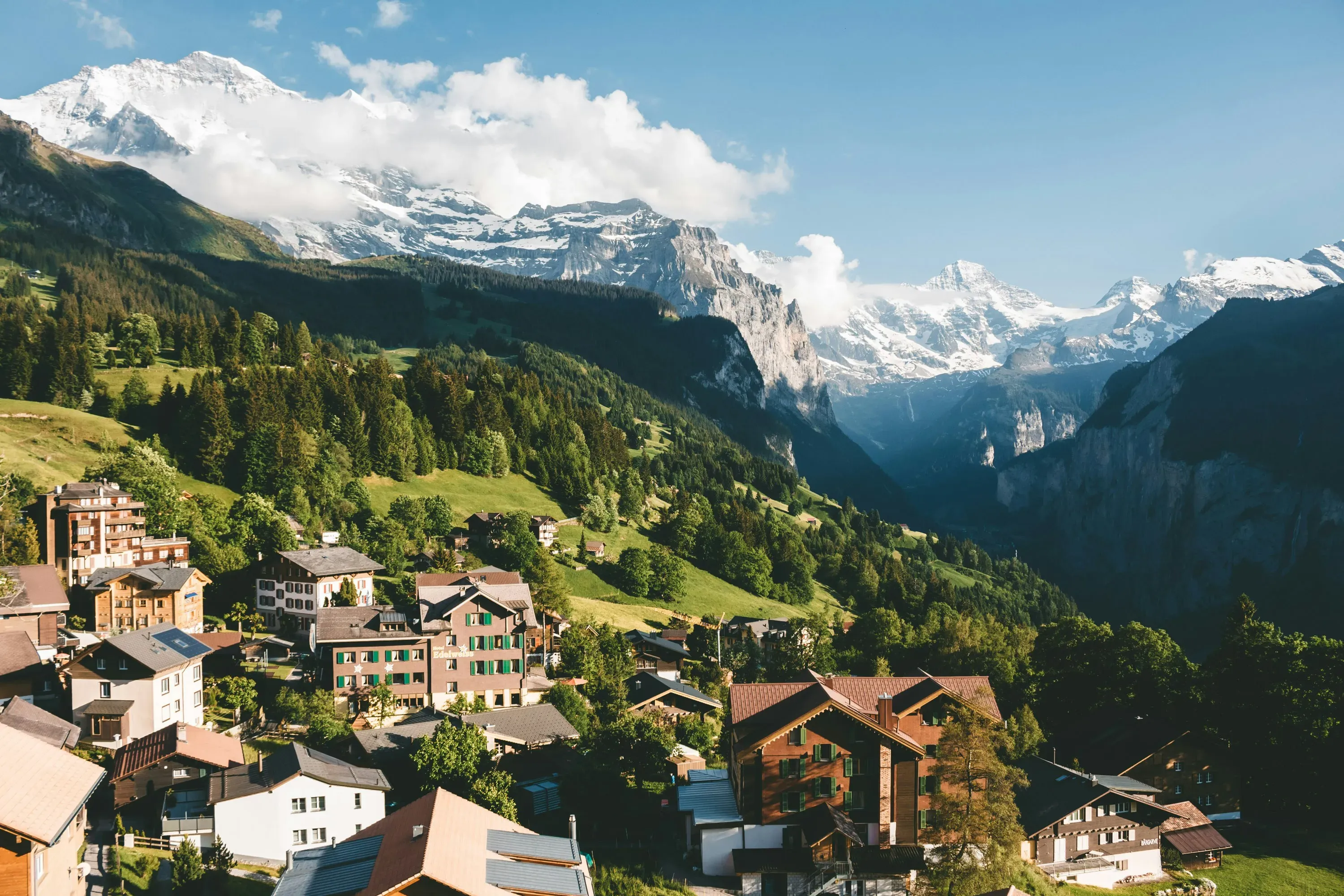
Switzerland Overview
Switzerland is a federal directorial republic of 8.97 million residents in Central Europe, organised across 26 cantons under armed neutrality since the Congress of Vienna (1815) and governed by a rotating 7-member Federal Council since the modern federal Constitution of 1848. The country is not a European Union member but joined in 1960 and the in 2008, operating bilateral agreements with the rather than EU treaty obligations. The legal system runs on civil law under the Swiss Federal Constitution (1999 revision) with extensive cantonal sovereignty over taxation, education, and police, and a direct-democracy framework (federal initiative requires 100,000 signatures; cantonal referendums are a regular legislative tool). Bern is the federal seat; Zurich is the largest city and financial centre; Geneva houses the , WHO, , and CERN, with French as the local language.
On This Page
- 1.Switzerland Overview
- 1.1How Does Switzerland Compare?
- 1.2Who does Switzerland fit?
- 1.3Pros and Cons of Relocating to Switzerland
- 1.4Switzerland leads on Safety — WRI 92.7 / 100
- 1.5Switzerland leads on Education — WRI 92.0 / 100
- 1.6Residence
- 1.7Taxes on Personal Income
- 1.8Cost of Living
- 1.9Healthcare System
- 1.10Education System
- 1.11Banking & Finance
- 1.12Cryptocurrency Regulation
- 1.13Real Estate Market
- 2.Frequently Asked Questions
Quick Facts
- Passport Rank: 4
- Visa-Free Destinations: 185
- Capital: Bern
- Population: 8.97 million
- Area: 41,285 km²
- Currency: Swiss Franc (CHF)
- Official languages: German, French, Italian, Romansh
- Religions: Christian 64%, Non-religious 27%, Muslim 6%, Other 3%
Key Indicators
- GDP (Nominal): $1.04 trillion
- Unemployment Rate: 2.4%
- Human Development Index: 0.970 (Very High)
- GDP per Capita: $115,620
Safety & Governance
- Global Peace Index (IEP): 1.34 (Rank: 10, GPI 2024)
- Press Freedom Index (RSF): 83.98 (Rank: 9, RSF 2024)
- Corruption Perception (TI): 80/100 (Rank: 6, CPI 2024)
- Gini Coefficient (WB): 33.1
Health & Environment
- PM2.5 Air Pollution: 8.2 µg/m³
- Air Quality Category: Good
- ND-GAIN Adaptation Index: 73.6 (Rank: 7, ND-GAIN 2024)
- Life Expectancy: 83.8 years
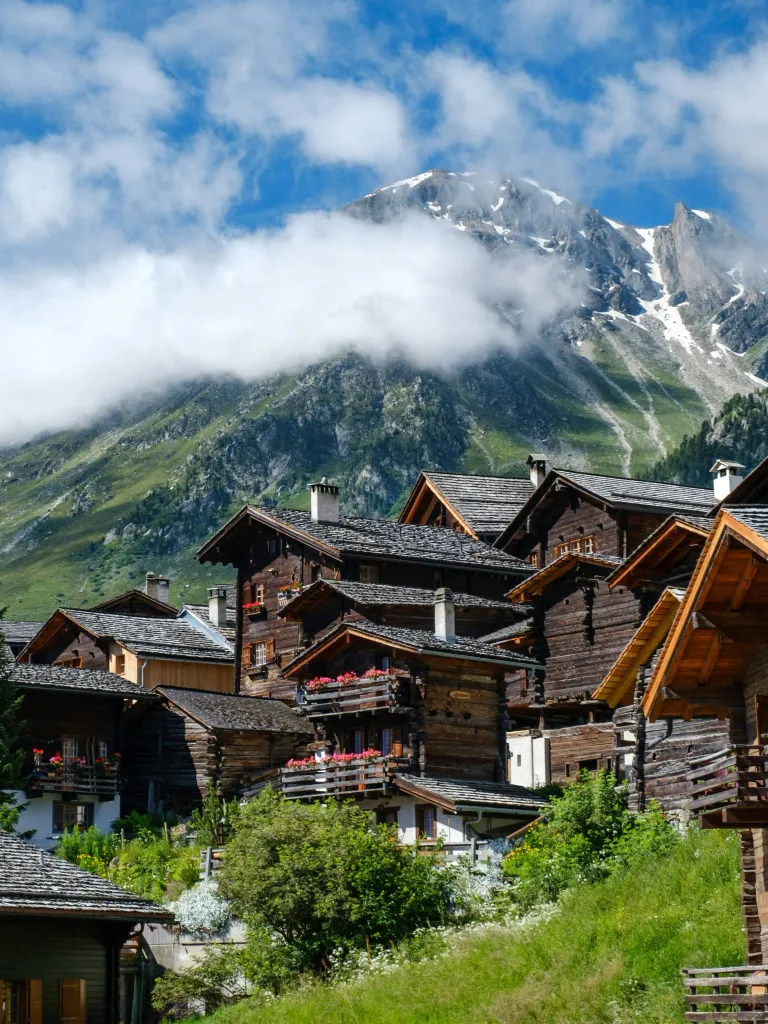
The proposition for an investor or relocator is unusually clean: top-decile safety and governance (GPI rank 10, CPI rank 6, Press Freedom rank 9), the Forfait fiscal regime for non-employed wealthy foreign residents in cantons such as Vaud, Valais, Geneva, Ticino, and Grisons, two of Europe's top engineering universities (ETH Zurich and EPFL Lausanne), the world's largest cross-border wealth-management ecosystem at approximately $6.5 trillion in AUM, and a passport opening 185 destinations visa-free. The cost is also unusually clean: a 10-year federal naturalisation timeline with cantonal-language requirement and discretionary municipal vote, the Lex Koller foreign-property restrictions (holiday-home permits quota-limited and not granted in major cities), cost of living among the world's highest, and wealth tax in every canton at 0.1-1.0% of net worth. Switzerland does not try to be for everyone — it is clear from the start who it is for.
How Does Switzerland Compare?
Summary
Switzerland (WRI 83.0, global rank 2) sits between Canada (83.4) and Luxembourg (81.5) in the live peer group, with Singapore (80.9) completing the comparison. Switzerland tops the peer group on Safety (92.7) and Retirement (85.0), and ranks second on Education (92.0); the structural lags are on Citizenship (58.0), Residency (72.0), and Investment (88.0), where Canada's accessible naturalisation, Luxembourg's residency programme, and Singapore's capital-markets depth all sit above.
How Switzerland stacks up against its closest peers on the WRI 2026:
Where Switzerland wins: Safety (92.7) tops the peer group: 1.6 points clear of Singapore (91.1), 8.7 ahead of Canada (84), and 25.9 ahead of Luxembourg (66.8). Top-decile GPI rank (10 of 163), Corruption Perception Index rank 6 of 180, and homicide around 0.5 per 100,000 deliver one of the calmest urban environments in any developed-economy peer. Retirement (85.0) tops the group (Canada 83, Luxembourg 82, Singapore 75) — supported by universal LAMal healthcare, life expectancy 83.8, and the Forfait fiscal regime for non-employed wealthy residents. Education (92.0) sits second only to Canada and Singapore at 94 — ETH Zurich and EPFL Lausanne in the global top 15 anchor the score.
Where Switzerland lags: Citizenship (58.0) trails Canada's 76 and Luxembourg's 74 by wide margins, beating only Singapore's 48 — the 10-year federal residency plus 2-5-year cantonal/municipal residency plus B1 cantonal-language requirement plus discretionary municipal vote produces a 12-15-year naturalisation track. Residency (72.0) trails Canada's 79 and Luxembourg's 78 — non-EU work permits are quota-based (~8,500/year), and the Forfait fiscal regime requires non-employed status and CHF 400k-1M minimum assessed income. Investment (88.0) trails Singapore's 91 and Luxembourg's 90;though Switzerland's $6.5 trillion cross-border wealth-management is the world's largest, the friction of Forfait minimums and Lex Koller property restrictions pulls the dimension score below capital-markets peers.
Who does Switzerland fit?
Summary
Switzerland fits HNW non-employed wealthy retirees using the Forfait fiscal regime, senior international executives moving with Swiss-headquartered MNCs, founders building research-intensive ventures, and EU/EFTA citizens taking advantage of free movement. It is a poor fit for fast-citizenship seekers, non-EU applicants on standard work-permit quotas, mid-career professionals on average salaries given the cost of living, applicants seeking unrestricted property ownership, and digital nomads outside specific cantonal pathways.
Right fit:
- HNW non-employed wealthy retirees using the Forfait fiscal regime — minimum assessed income of approximately $470,000 (Vaud), $850,000 (Geneva), or canton-specific levels in Valais, Ticino, and Grisons; effective rate 20-30% of assessed income; B-permit (5-year renewable) leading to C-permit (permanent) after 10 years for non-EU applicants.
- Senior international executives moving with Swiss-headquartered MNCs — Nestlé, Roche, Novartis, ABB, Glencore, and 600+ multinational HQs in Switzerland; work-permit quotas are tight but routinely granted for senior specialists; cantonal tax competition (Zug ~22% combined, Lucerne ~25%, Geneva ~46%) allows tax-residency optimisation.
- Founders building research-intensive ventures — ETH Zurich and EPFL Lausanne anchor one of Europe's deepest deep-tech ecosystems; the Crypto Valley in Zug (200+ blockchain companies, FINMA licensing, DLT Act 2021) supports Web3 and fintech; Innosuisse and Swiss federal grants for R&D-heavy startups.
- EU/EFTA citizens taking advantage of free movement — bilateral agreements with the EU since 2002 grant EU/EFTA citizens free movement, no quota for B-permits, and after 5 years of legal residence the C-permit (permanent) becomes available; tax residency follows the standard 30-day or 90-day rule.
Wrong fit:
- Fast-citizenship seekers — 10 years federal residence plus 2-5 years cantonal/municipal residence plus B1 cantonal language plus a discretionary municipal vote results in a 12-15-year naturalisation track for most applicants.
- Non-EU applicants on standard work-permit quotas — non-EU permits are quota-based (~8,500/year nationally), tightly enforced, and preference is given to senior specialists; entry-level non-EU professionals face structural limits.
- Mid-career professionals on average salaries given the cost of living — rents of $4,000-$6,000/month for a 1-bedroom in central Zurich or Geneva, mandatory LAMal health insurance at $360-$580/month per adult, and one of the world's highest grocery and restaurant cost bases price most mid-career relocators out.
- Applicants seeking unrestricted property ownership — Lex Koller restricts foreign property purchases: primary residence requires B/C permit; holiday-home purchases are quota-limited to specific cantons (Valais, Graubünden, Ticino, parts of Vaud Riviera) and not granted in Zurich, Geneva, Bern, Basel, or Lausanne.
- Digital nomads outside specific cantonal pathways — Switzerland does not issue a dedicated digital nomad visa; EU/EFTA citizens can work remotely under free movement, but non-EU applicants need a standard work permit tied to a Swiss employer or self-employment authorisation.
Pros and Cons of Relocating to Switzerland
- 01SafetyTop-Decile Safety & GovernanceTop-decile safety and governance: Global Peace Index rank 10 of 163, Corruption Perception Index rank 6 of 180, Press Freedom rank 9 of 180, and homicide rate around 0.5 per 100,000.GPI rank 10
- 02BankingWorld's Largest Wealth-Management EcosystemWorld's largest cross-border wealth-management ecosystem at approximately $6.5 trillion in AUM; 240+ banks including UBS, Pictet, Lombard Odier, Julius Bär, and Vontobel.$6.5T cross-border AUM
- 03TaxationLump-Sum Taxation for HNWForfait fiscal lump-sum taxation regime for non-employed wealthy foreign residents in cantons of Vaud, Valais, Geneva, Ticino, Grisons, Lucerne, Schwyz, and Bern; effective rates of 20-30% of assessed income with cantonal minimums from $470,000.Forfait fiscal
- 04TaxationCanton-Level Corporate Tax CompetitionCanton-level corporate tax competition: Zug ~11.85% effective, Lucerne ~12.3%, Geneva ~14% — among the lowest in any developed-economy peer.Zug ~11.85% corp
- 05CryptoEstablished Crypto JurisdictionCrypto Valley in Zug (200+ blockchain companies); DLT Act 2021 framework; FINMA-licensed crypto banks (SEBA, Sygnum since 2019); 0% capital gains tax on private crypto holdings for individuals.Crypto Valley + DLT Act
- 06MobilityStrong Passport + Schengen Access4th-strongest passport globally opening 185 destinations visa-free; full Schengen access (since 2008) and bilateral EU labour-mobility agreement.185 visa-free + Schengen
- 07EducationTop-15 Engineering UniversitiesETH Zurich and EPFL Lausanne both in the global top 15 for engineering and sciences; federal university tuition approximately $1,400/year — one of the lowest in any developed-economy peer.ETH + EPFL top-15
- 01Real EstateForeign Property RestrictionsLex Koller restricts foreign property purchases: holiday-home permits are quota-limited (approximately 1,500/year nationally) and not granted in Zurich, Geneva, Bern, Basel, or Lausanne; primary residence requires B/C permit.Lex Koller
- 02CitizenshipLong Naturalisation Track10-year federal naturalisation plus 2-5 years cantonal/municipal residency plus B1 cantonal-language requirement plus discretionary municipal vote; total track typically 12-15 years.12-15 yr to citizenship
- 03TaxationWealth Tax in Every CantonWealth tax in all 26 cantons at 0.1-1.0% of net worth — a distinctive Swiss feature not present in most European peers.Wealth tax 0.1-1%
- 04Cost of LivingWorld-Top Cost of LivingCost of living among the world's highest: rents of $4,000-$6,000/month for a 1-bedroom in central Zurich or Geneva; mandatory LAMal health insurance at $360-$580/month per adult, not income-based.$4-6k/mo rent Zurich
- 05ResidencyNon-EU Quota ConstraintsNon-EU work permits are quota-based (~8,500/year nationally) and tightly enforced; entry-level non-EU professionals face structural limits.~8.5k non-EU permits/yr
- 06TaxationCanton Tax DisparityCantonal tax disparity is enormous: Geneva combined effective max ~46% versus Zug ~22% — choice of canton has more impact than choice of country for many tax-residency decisions.Zug 22% vs Geneva 46%
- 07MobilityOutside EU Labour MarketNot an EU member: Swiss citizens have full Schengen mobility but do not enjoy EU labour-market access; Swiss companies do not automatically operate under EU corporate-residency rules.Not EU member
Switzerland leads on Safety — WRI 92.7 / 100
Switzerland's Safety score of 92.7 is among the highest in the WRI 2026, and the reason is not subtle: GPI rank 10 of 163 globally with a score of 1.34, Corruption Perception Index 80/100 (rank 6 of 180), and Press Freedom rank 9 of 180. The homicide rate sits at approximately 0.5 per 100,000 — one of the lowest in the developed world — and the cantonal Kantonspolizei plus federal Fedpol operate one of Europe's most calibrated security frameworks. Petty crime is concentrated in Zurich's Limmatquai-Niederdorf strip and Geneva's Pâquis district but at rates materially below most Western European capitals. Women's safety is high across the country at any hour, including the late-night S-Bahn and tram networks that run dense schedules in Zurich, Geneva, Bern, and Basel. The trade-off is the surveillance and compliance density: mandatory residence registration with the municipal Einwohnerkontrolle within 14 days of arrival, / automatic exchange on banking, and a fully transparent fiscal-information sharing framework with EU and partners since 2017.
Switzerland leads on Education — WRI 92.0 / 100
Switzerland's Education score of 92.0 reflects two parallel realities. The public school system (free for residents, conducted in the cantonal official language: German, French, Italian, or Romansh) ranks at the top of OECD PISA assessments and supports a uniquely dual track: academic Gymnasium leading to Matura and university, or apprenticeship-based Berufsbildung that trains roughly 70% of Swiss youth in technical, administrative, and craft professions — a structurally different model from Anglo-Saxon peers. At university level, ETH Zurich (Eidgenössische Technische Hochschule) and EPFL Lausanne sit in the global top 15 across engineering, sciences, and computer science; the University of Zurich, University of Geneva, University of Basel, and IMD Lausanne round out a deep tier. Federal university tuition runs approximately $1,400/year, one of the lowest in any developed-economy peer for research universities of this calibre. International school options are strong: Zurich International School and International School of Zurich North, the International School of Geneva (founded 1924, the oldest in the world), International School of Basel, and a long bench of French, German, American, and British curriculum schools, with primary and secondary fees running $25,000-$45,000/year.
Residence
Switzerland's tax residency is established by either domicile (intent to remain plus physical presence) or by the 30-day rule (30 consecutive days physical presence with gainful employment) or the 90-day rule (90 days without employment). Tax residents are subject to federal income tax (progressive 0-11.5%) plus cantonal and municipal income tax that varies dramatically by canton: Zug combined effective maximum ~22%, Lucerne ~25%, Zurich ~40%, Geneva ~46%. Wealth tax applies in all 26 cantons at 0.1-1.0% of net worth — a distinctive Swiss feature. Capital gains on private investments (movable property) are 0% for individuals; real estate capital gains are taxed at cantonal level. Social charges (AHV/IV/EO) run approximately 10.6%, split 50/50 with employer on local employment. The Forfait fiscal lump-sum taxation regime is available in approximately 11 cantons (Vaud, Valais, Geneva, Ticino, Grisons, Lucerne, Schwyz, Bern, Obwalden, Nidwalden, Uri) for non-employed foreign residents — tax base assessed at 5× annual rent or 5× rental value of property, with cantonal minimums from approximately $470,000 in Valais to $850,000 in Geneva. Switzerland's residency permit stack runs L-permit (short-term <12 months), B-permit (5-year renewable, work-based or Forfait-based), C-permit (permanent, after 10 years for non-EU or 5 years for EU/EFTA), and G-permit (frontalier cross-border worker).
Safety is the other half of the residency case. Switzerland sits at rank 10 of 163 on the Global Peace Index with a score of 1.34, in the top decile globally and one of the calmest urban environments in any developed-economy peer. The homicide rate at approximately 0.5 per 100,000 is among the developed world's lowest. Petty crime is concentrated in Zurich's Limmatquai-Niederdorf strip and Geneva's Pâquis district but at rates materially below most Western European capitals. Women's safety is high across the country at any hour, including on the late-night public transport networks. Governance is structurally strong: Corruption Perception Index 80/100 (rank 6 of 180) and Press Freedom rank 9 of 180. The trade-off is administrative density: every Swiss resident must register with the municipal Einwohnerkontrolle within 14 days of arrival, with cascading consequences for cantonal taxation, social-security registration, mandatory LAMal health insurance enrolment within 3 months, and Forfait-fiscal assessment notification where applicable.
Taxes on Personal Income
Switzerland's personal income tax is a three-tier federal-cantonal-municipal structure that produces a wider canton-by-canton range than almost any peer jurisdiction. Federal income tax is progressive 0-11.5%, capped at the top bracket of approximately $850,000. Cantonal and municipal taxes add on top, varying enormously: Zug combined effective maximum ~22%, Lucerne ~25%, Schwyz ~26%, Geneva ~46%, Vaud ~42%, Zurich ~40%. Wealth tax applies in all 26 cantons at 0.1-1.0% of net worth — a distinctive Swiss feature absent from most European peers. Capital gains on private movable property (shares, bonds, crypto held as private assets) are 0% for individuals; real-estate capital gains are taxed at cantonal level (Zurich 25-50% sliding scale based on holding period). Inheritance and gift tax is cantonal: most cantons exempt spouses and direct line entirely (Schwyz exempts all; Geneva 0% direct line; Valais 0% direct line); collateral and unrelated rates run 5-50% depending on canton and relationship. VAT is 8.1% (one of Europe's lowest). The Forfait fiscal lump-sum regime offers non-employed wealthy foreign residents a tax base of 5× rent or rental value, with cantonal minimums from $470,000 (Valais) to $850,000 (Geneva); effective rate 20-30% of assessed income. A Swiss resident in Geneva earning $500,000 faces an effective combined rate near 40%; the same resident in Zug lands closer to 22% — a structural delta that drives much of Swiss tax-residency planning.
Cost of Living
Switzerland is among the world's most expensive countries on most metrics, and there is no point pretending otherwise — the cost reflects a high-wage economy with the world's largest cross-border banking sector, tight housing supply, and a strong Swiss Franc. A single professional in central Zurich or Geneva should plan around $5,000-$6,500/month for a comfortable life: rent, transport, dining, mandatory LAMal health insurance. A 1-bedroom in central Zurich (Kreis 1-6, Niederdorf, Seefeld) runs $3,500-$5,500/month; central Geneva (Vieille Ville, Eaux-Vives, Pâquis) $3,000-$5,000/month; central Basel $2,000-$3,200/month; smaller cities (Lucerne, Lausanne, Bern) $1,800-$2,800/month. A family of three lands $10,000-$16,000/month including international school fees averaged across the year. Vehicle ownership is straightforward but expensive ($35,000-$70,000 for a new mid-range sedan, $1,800/year insurance, $1,800/year fuel). LAMal mandatory health insurance is not income-based and runs $360-$580/month per adult; private supplemental insurance adds $100-$300/month. Restaurant prices: a casual meal $25-40, a mid-range dinner $60-120, a top tasting menu $250-500+. Public transport (SBB, ZVV, TPG) is among the densest and most punctual networks in Europe; a half-fare card costs approximately $200/year.
Healthcare System
Switzerland runs a private compulsory health insurance system: every resident must enroll in LAMal (Loi sur l'assurance-maladie) within 3 months of arrival, choosing from approximately 50 insurers competing on price and coverage detail. Premiums are not income-based — every adult pays an individual premium of $360-$580/month, with children at $80-$150/month — and basic LAMal covers all medically necessary care across the country including hospitalisation, specialist consultations, prescription drugs, and emergency care. Out-of-pocket franchise (deductible) options run $360-$2,800/year, with higher deductibles bringing lower monthly premiums. Specialist consultation runs $150-$300 private; an inpatient day $800-$1,800 (LAMal-covered for residents); complex procedures handled at the five university hospital centres (USZ Zurich, HUG Geneva, CHUV Lausanne, USB Basel, Inselspital Bern). Wait times for elective specialist appointments run 2-6 weeks in the private sector. Life expectancy of 83.8 years is among the world's highest, reflecting healthcare quality, low pollution, strong Mediterranean and Alpine diet patterns, and a culture of preventive medicine.
Education System
Switzerland's education system runs on cantonal lines under federal coordination, with instruction in the cantonal official language: German in 17 cantons, French in 4 (Geneva, Vaud, Neuchâtel, Jura), Italian in Ticino, and one bilingual or trilingual canton (Bern, Fribourg, Valais; Graubünden additionally uses Romansh). The public school system is free for residents and consistently ranks at the top of OECD PISA assessments; the structurally distinctive feature is the dual-track system splitting students at age 15-16 into either academic Gymnasium (leading to Matura and university) or Berufsbildung apprenticeship that trains roughly 70% of Swiss youth in technical, administrative, and craft professions. At university level, ETH Zurich and EPFL Lausanne sit in the global top 15 for engineering, sciences, and computer science; the University of Zurich, University of Geneva, University of Basel, and IMD Lausanne (top-3 global MBA) round out a deep tier. Federal university tuition runs approximately $1,400/year for Swiss residents and $1,400-$3,000/year for international students — one of the lowest in any developed-economy peer for research universities of this calibre. International school options: Zurich International School, International School of Zurich North, the International School of Geneva (founded 1924, the oldest in the world), International School of Basel, plus French, German, American, and British curriculum schools; primary and secondary fees run $25,000-$45,000/year.
Banking & Finance
Opening a Swiss bank account requires a B-, C-, or L-permit and full KYC including source-of-funds documentation, proof of address in Switzerland, and a personal interview; private banking onboarding typically requires a minimum relationship size of CHF 500,000-1,000,000 ($580,000-$1,160,000). The dominant local banks are UBS (consolidated with Credit Suisse in 2023, now the dominant Swiss universal bank), Raiffeisen Group (cooperative network), and the cantonal banks (Zürcher Kantonalbank, Banque Cantonale de Genève, Berner Kantonalbank). The private-banking tier is among the world's deepest: Pictet, Lombard Odier, Julius Bär, Vontobel, Mirabaud, EFG International, Bordier & Cie, Edmond de Rothschild (Switzerland), and Banque Bonhôte. The sector hosts 240+ banks and approximately $6.5 trillion in cross-border assets under management — the world's largest cross-border wealth-management ecosystem. Mortgages for foreign B/C-permit buyers are available at 70-80% loan-to-value at rates currently around 1.5-2.5% on 5-15 year fixed terms (one of Europe's lowest mortgage-rate environments). There are no exchange controls. Switzerland joined OECD CRS automatic exchange in 2017 and is -compliant — Swiss banking secrecy for foreign clients was effectively abolished. The Swiss National Bank (SNB) is the central bank; FINMA acts as integrated financial supervisor.
Cryptocurrency Regulation
Switzerland is one of the world's most established crypto jurisdictions, anchored by Crypto Valley in Zug — home to approximately 200 blockchain and crypto-asset companies including the Ethereum Foundation, Cardano (IOHK), Tezos, and Web3 Foundation. The regulatory framework runs under the DLT Act (Distributed Ledger Technology Act, in force 2021) which created a new "DLT trading facility" licence category and recognised crypto assets as distinct legal categories. FINMA licenses crypto-asset banks under standard banking law: SEBA Bank and Sygnum Bank obtained Swiss banking licences in 2019 and operate full-service crypto banking. Tax treatment: crypto held as private assets is subject to wealth tax (cantonal, 0.1-1.0% of value at year-end) but 0% capital gains tax for individuals on disposal — making Switzerland one of the most tax-efficient jurisdictions for private crypto investors. Professional crypto trading (frequent, leveraged, or with borrowed capital) can trigger reclassification as self-employed income, taxable at marginal rates. Self-custody is unrestricted; FINMA enforces travel-rule AML standards at licensed exchanges. Stablecoins and tokenised securities operate under the standard DLT Act framework.
Real Estate Market
Foreign property ownership in Switzerland is governed by the Lex Koller (Federal Act on the Acquisition of Real Estate by Persons Abroad, 1983 amended 1997). Primary residence requires a B- or C-permit; without a permit, foreign nationals cannot own primary-residence property. Holiday-home permits are quota-limited to approximately 1,500/year nationally and granted only in specific cantons (Valais, Graubünden, Ticino, parts of Vaud Riviera) — never in Zurich, Geneva, Bern, Basel, or Lausanne. Commercial property is generally available to foreign buyers without restriction. The headline numbers: prime Zurich (Kreis 1, Seefeld, Goldküste) condominiums average $18,000-$28,000/m²; prime Geneva (Vieille Ville, Champel, Eaux-Vives) $15,000-$22,000/m²; prime Basel $11,000-$16,000/m²; non-prime urban $7,000-$11,000/m²; alpine resort areas (Gstaad, Verbier, Zermatt, St. Moritz) $20,000-$50,000/m² in prime addresses. Real-estate transfer tax is cantonal: 1-3% of value typically borne by the buyer. Annual property tax is cantonal and modest — typically 0.1-0.3% of taxable value. Mortgages for foreign B/C-permit buyers are available at 70-80% loan-to-value at rates around 1.5-2.5% on 5-15 year fixed terms. Gross rental yields run 2.5-3.5% in central Zurich and Geneva, 4-5% in non-prime urban. Long-term capital appreciation has averaged 5-7% annually nationally over the past decade, with alpine-resort segments compounding faster.


