
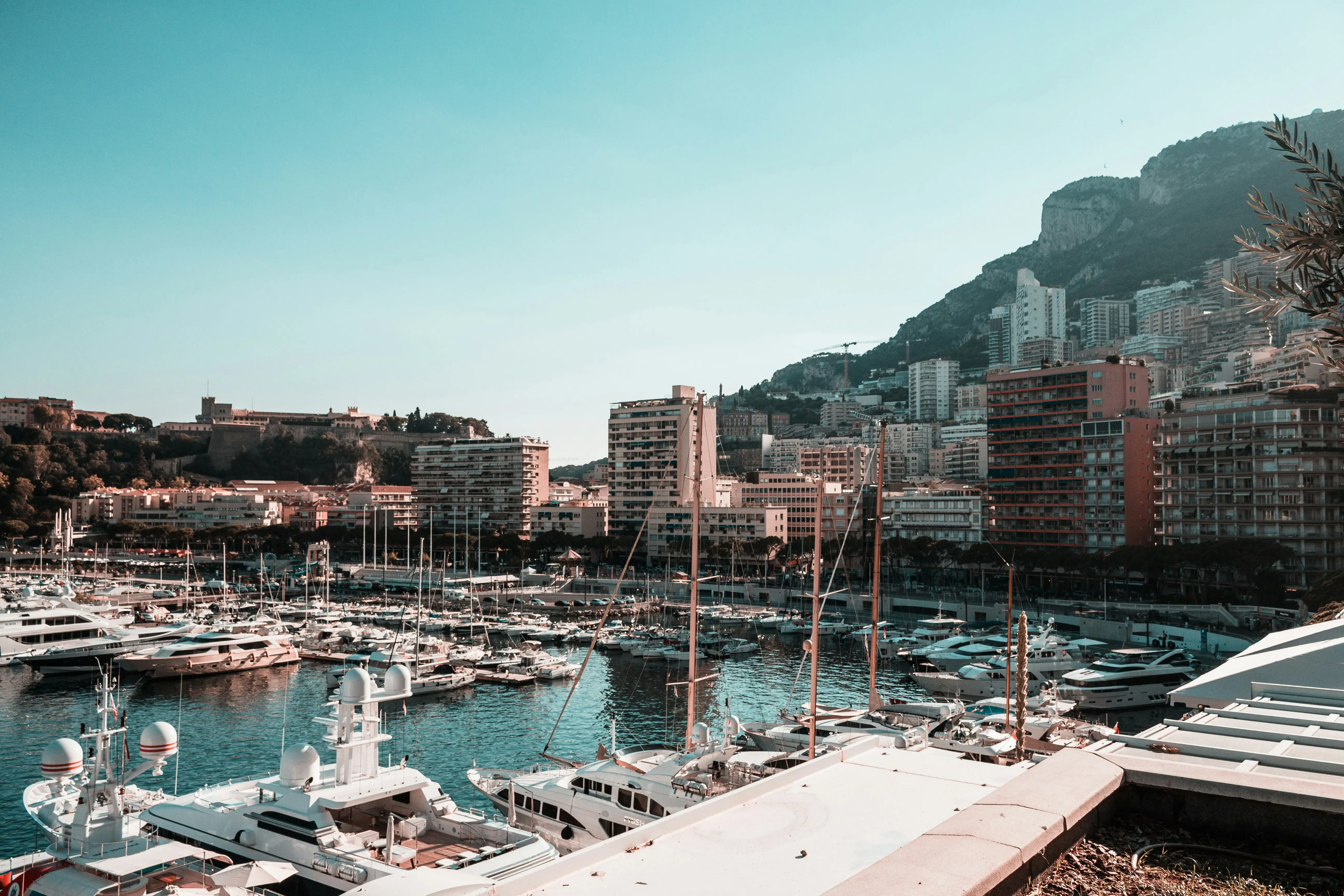
Monaco Overview
Monaco is a 2.08 km² sovereign constitutional monarchy on the French Riviera, governed by the House of Grimaldi continuously since 1297 under His Serene Highness Prince Albert II of Monaco. The country is not a European Union member but operates within the customs union via the 1963 bilateral treaty with France, is part of the Schengen free-movement area through the same treaty, and uses the euro under a monetary convention with the European Central Bank. The legal system runs on French civil law adapted under the 1962 Constitution, with the Princely Cabinet exercising executive authority and the National Council holding legislative power.
On This Page
- 1.Monaco Overview
- 1.1How Does Monaco Compare?
- 1.2Who does Monaco fit?
- 1.3Pros and Cons of Relocating to Monaco
- 1.4Monaco leads on Retirement — WRI 95.0 / 100
- 1.5Monaco leads on Investment — WRI 90.0 / 100
- 1.6Residence
- 1.7Taxes on Personal Income
- 1.8Cost of Living
- 1.9Healthcare System
- 1.10Education System
- 1.11Banking & Finance
- 1.12Cryptocurrency Regulation
- 1.13Real Estate Market
- 2.Frequently Asked Questions
Quick Facts
- Passport Rank: 12
- Visa-Free Destinations: 176
- Capital: Monaco
- Population: 38,857
- Area: 2.08 km²
- Currency: Euro (EUR)
- Official languages: French
- Religions: Roman Catholic 90%, Other 10%
Key Indicators
- GDP (Nominal): $11.13 billion
- Unemployment Rate: 2.1%
- Human Development Index: 0.956 (Very High)
- GDP per Capita: $288,001
Safety & Governance
- Global Peace Index (IEP): Not ranked independently (city-state)
- Press Freedom Index (RSF): Not ranked independently (city-state)
- Corruption Perception (TI): Not ranked independently (city-state)
- Gini Coefficient (WB): Not published
Health & Environment
- PM2.5 Air Pollution: 11.2 µg/m³
- Air Quality Category: Moderate
- ND-GAIN Adaptation Index: Not ranked independently
- Life Expectancy: 86.0 years
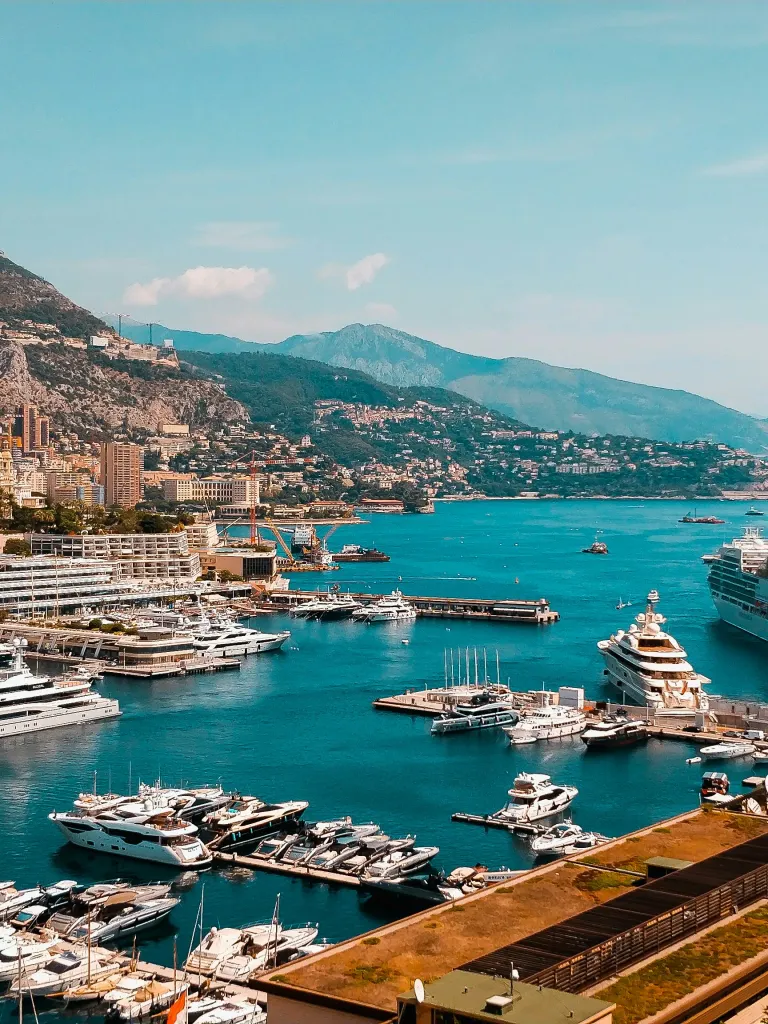
The proposition for an investor or relocator is unusually clean: zero personal income tax for non-French residents (since 1869), zero capital gains tax, zero wealth tax, zero direct-line inheritance tax, no annual property tax, and one of Europe's deepest private-banking ecosystems at roughly €135 billion in assets — approximately 4× annual GDP. The cost is also unusually clean: the world's most expensive residential real estate at $55,000-$110,000/m² in prime districts, a €500,000 minimum bank deposit for residency (most banks ask €1 million or more in practice), the discretionary nature of Monégasque citizenship granted by Sovereign Order from the Prince only a handful of times per year, and a 2.08 km² footprint that limits school, neighbourhood, and lifestyle variety. Monaco does not try to be for everyone — it is clear from the start who it is for.
How Does Monaco Compare?
Summary
Monaco (WRI 75.8, global rank 8) sits between the United Kingdom (76.1) and the United Arab Emirates (74.3) in the live peer group, with Turkey (77.2) and France (74.2) bracketing the comparison. Monaco leads the group decisively on Retirement (95.0) and tops on Investment (90.0); the structural lag is Citizenship (30.0, the lowest in the group), where Turkey's dominates at 85.0.
How Monaco stacks up against its closest peers on the WRI 2026:
Where Monaco wins: Where Monaco wins: Retirement (95.0) tops the peer group decisively — 15 points clear of France (80), 17 ahead of Turkey (78), 20 ahead of the (75), and 23 ahead of the UK (72). The combination of zero personal income tax, zero capital gains, zero direct-line inheritance, no annual property tax, and an 86-year life expectancy delivers a tax-free retirement environment that no peer in this group matches. Investment (90.0) leads the group (vs UAE 88, UK 85, France 74, Turkey 70) — backed by approximately €172 billion in assets held across Monaco's licensed financial institutions at roughly 4× GDP, and a resident tax profile that compounds capital tax-free. Education (88.0) ties with the UK at the top of the group, ahead of France (85), Turkey (75), and the UAE (72).
Where Monaco lags: Citizenship (30.0) is by far the weakest score in the peer group — Turkey's CBI (85) and France's 10-year naturalisation pathway (65) both offer accessible routes to a second passport, while Monaco's discretionary Sovereign-Order process delivers only a handful of naturalisations per year, with mandatory renunciation of all prior nationalities. Safety (74.1) trails the UK (85) and the UAE (79.7) on the composite — though Monaco's near-zero homicide rate is among the world's lowest, the principality sits outside the formal GPI dataset, which constrains the WRI safety score. Residency (72.0) trails Turkey (85) and the UAE (85); the €500,000 minimum bank deposit plus the world's most expensive residential real estate filter the audience tightly, leaving France (70) as the only peer with a lower residency score.
Who does Monaco fit?
Summary
Monaco fits HNW retirees and family-office principals, senior financial professionals, top-tier sports figures, and UHNW principals seeking a premium European base outside EU corporate-residency rules. It is a poor fit for lifestyle relocators on affordable budgets, anyone seeking a citizenship pathway, French citizens hoping for the 0% PIT regime (excluded by treaty), mid-career professionals on standard salaries, and families wanting curriculum variety.
Right fit:
- HNW retirees and family-office principals — zero personal income tax, zero capital gains tax, zero wealth tax, zero direct-line inheritance tax, and 86-year life expectancy; the principality has the highest concentration of HNW retirees in Europe per capita and a mature service-provider ecosystem (private bankers, tax advisors, estate planners, lifestyle managers).
- Senior financial professionals — private bankers, asset managers, family-office staff, and hedge-fund principals: tax-free salary and bonus income, French/English/Italian bilingual capital markets, and 24+ banks anchored around the Larvotto and Monte Carlo districts.
- Top-tier sports figures — Formula 1 drivers, tennis players (Monte-Carlo Masters), professional sailors, and other elite athletes: 0% tax on prize money for residents, an established expat ecosystem, and a sporting-events calendar throughout the year.
- UHNW principals seeking a premium European base outside EU corporate-residency rules — Schengen access via France, EU customs union, no EU corporate-residency obligations, and a discreet operating environment that supports both holding-company structures and personal lifestyle.
Wrong fit:
- Lifestyle relocators on affordable Mediterranean budgets — Monaco runs the world's most expensive residential real estate market; a comparable Mediterranean lifestyle is materially cheaper across the border in France (Nice, Cannes, Antibes) or in Italy (Sanremo, Bordighera).
- Anyone seeking a citizenship pathway — Monégasque naturalisation is discretionary by the Sovereign Order and granted to typically a handful to a dozen applicants per year after 10 years of residency; dual citizenship is not permitted.
- French citizens seeking the 0% personal income tax regime — the 1963 bilateral treaty with France taxes French citizens at French rates on worldwide income regardless of Monaco residency.
- Mid-career professionals on standard salaries — the €500,000 minimum bank deposit for residency, plus rents of $5,500-$9,000/month for a 1-bedroom, prices most mid-career relocators out; Monaco is structurally a HNW destination.
- Families wanting curriculum variety — international schooling in the principality is concentrated at the International School of Monaco (ISM); families seeking British, American, German, or alternative curricula typically commute to schools in Nice or Cap d'Ail.
Pros and Cons of Relocating to Monaco
- 01TaxationZero Individual TaxationZero personal income tax for non-French residents since 1869, zero capital gains tax, zero wealth tax, and zero direct-line inheritance tax — one of the cleanest tax profiles for individuals globally.0% PIT/CGT/wealth
- 02BankingDeep Private-Banking Ecosystem24+ private banks holding approximately €135 billion in total assets (roughly 4× annual GDP); names include wealth-management institutions BNP Paribas Wealth Management, CFM Indosuez, Julius Baer, Société Générale Private Banking, J. Safra Sarasin, EFG, Edmond de Rothschild, and CMB.€135B / 4× GDP
- 03EconomyWorld's Highest GDP per CapitaWorld's highest GDP per capita at $288,001 (2024); unemployment at 2.1%, and a tax base concentrated in financial services, real estate, and the cluster of HNW residents who anchor the local economy.$288k/capita
- 04MobilitySchengen Access via FranceSchengen free-movement access and EU customs-union membership via the 1963 bilateral treaty with France, without EU corporate-residency or harmonised-tax obligations.Schengen via FR
- 05SafetyPolice-Dense Public SafetyOne of the world's densest police presences at roughly 1 officer per 80 residents, supported by city-wide CCTV (1,500+ cameras across 2.08 km²) and one of the lowest violent-crime rates of any urban area globally.1:80 police ratio
- 06HealthcareAmong the World's Longest Life ExpectanciesLife expectancy of 86.0 years — among the longest globally — supported by the French-aligned Centre Hospitalier Princesse Grace and a private-clinic network with French-trained specialists.86 years
- 07Real EstateZero Annual Property TaxNo annual property tax on real estate; combined with zero PIT, zero CGT, zero wealth tax, and zero direct-line inheritance tax, Monaco's resident tax profile is one of the cleanest in the developed world.0% property tax
- 01CitizenshipCitizenship Effectively ClosedMonégasque citizenship is granted at the personal discretion of the Prince via Sovereign Order — typically only a handful to a dozen naturalisations per year — after 10 years of legal residence, and acquisition requires renunciation of all other nationalities.~10 grants/year
- 02Real EstateWorld's Most Expensive Real EstatePrime residential real estate runs $55,000-$110,000 per square metre in Monte Carlo, La Rousse, Larvotto, and Fontvieille — the most expensive per-square-metre market on earth, with approximately 80% of property owned by non-Monégasques.$55-110k/m²
- 03ResidencyHigh Financial ThresholdResidency under the Carte de Séjour requires a minimum €500,000 deposit/maintained balance in a Monaco bank (most banks ask €1 million or more in practice), plus proof of accommodation, ongoing means, certificate of good character, and private health insurance.€500k+ deposit
- 04GeographyLimited Physical SpaceMonaco's 2.08 km² area limits residential capacity, school options (one dedicated international school), neighbourhood variety, and access to land or open green space; reaching nature typically requires crossing into France.2.08 km²
- 05TaxationFrench Citizens Pay French TaxFrench citizens resident in Monaco are taxed at French rates on worldwide income under the 1963 bilateral treaty; the 0% personal income tax regime applies only to non-French Monaco residents.FR citizens excluded
- 06EducationLimited Schooling ChoiceLimited international-curriculum schooling — the International School of Monaco (ISM) is essentially the only dedicated international school on the principality; most expat families either use ISM, Lycée Albert I, or commute to French international schools in Nice or Cap d'Ail.1 IB school (ISM)
- 07ComplianceHigh Compliance FrictionMonaco joined the OECD Automatic Exchange of Information (CRS) in 2018 and is FATCA-compliant; banks operate under strict source-of-funds and KYC rules, and SICCFIN enforces FATF AML standards aggressively — the proposition is tax efficiency on declared wealth, not opacity.CRS + FATF
Monaco leads on Retirement — WRI 95.0 / 100
Monaco's Retirement score of 95.0 is the highest in the WRI 2026, and the reason is not subtle: zero personal income tax for non-French residents since 1869, zero capital gains tax, zero wealth tax, and zero direct-line inheritance tax for spouses, parents, and children. Life expectancy sits at 86.0 years — among the longest globally — supported by the French-aligned Centre Hospitalier Princesse Grace and a private-clinic network with French-trained specialists; daily life within walking distance of the Mediterranean and the 18-degree-Celsius year-round climate are part of why HNW retirees consistently choose Monaco over the broader French Riviera. The trade-off is the entry filter: the €500,000 minimum bank deposit, ongoing means requirements, and prime real estate at $55,000-$110,000/m² price the vast majority of retirees out. The retirement audience Monaco fits is specifically HNW: the proposition holds only for those who clear the entry, and once inside, the combination of zero individual taxation and premium private banking is structurally difficult to replicate elsewhere in Europe.
Monaco leads on Investment — WRI 90.0 / 100
Monaco's Investment score of 90.0 reflects one of Europe's deepest private-banking ecosystems: 24+ banks holding total assets of approximately €135 billion (roughly 4× annual GDP), with BNP Paribas Wealth Management, J. Safra Sarasin, EFG International, Edmond de Rothschild, Compagnie Monégasque de Banque (CMB), CFM Indosuez Wealth, Pictet & Cie, and Banque Havilland the headline names. The resident tax profile — zero personal income tax, zero capital gains tax, zero wealth tax — compounds capital tax-free for residents who clear the entry filter. The Association Monégasque des Activités Financières (AMAF) regulates the sector under Service d'Information et de Contrôle sur les Circuits Financiers (SICCFIN) AML oversight. There is no investor visa with a sub-€500,000 entry tier; the €500,000 bank deposit (proven and maintained) is the residency anchor, though most private banks now require a minimum relationship of €1 million or more in practice. Monaco joined in 2018 and is -compliant: banking is fully transparent to declaring jurisdictions, and the proposition is tax efficiency on declared wealth rather than opacity.
Residence
Monaco tax residency requires Carte de Séjour status (the residence permit issued by the irection de la Sûreté Publique) plus a demonstrated physical presence in Monaco — the official minimum under Monégasque law is 3 months per calendar year, verified through utility bills, banking records, and entry/exit records. Note that a higher de facto presence threshold (typically 6 months) applies specifically to applicants for the Privileged Carte de Séjour (the 10-year card), and is commonly — but incorrectly — conflated with the baseline residency requirement. Tax residents pay zero personal income tax (one of only a handful of jurisdictions globally with no PIT), zero capital gains tax, zero wealth tax, and zero direct-line inheritance tax for spouses, parents, and children. Inheritance between siblings runs 8-10%; uncles/aunts/nephews/nieces
13-16%; unrelated parties 16%. The Carte de Séjour stack runs Temporary (1 year, renewable up to 3 years total), Ordinary (3 years, granted after 3 years on Temporary), and Privileged (10 years, typically after 6+ years on Ordinary, and subject to demonstrated sustained presence). The application requires a €500,000 minimum bank deposit or ongoing balance in a Monaco bank (most banks now require €1 million or more), proof of accommodation in Monaco, proof of ongoing means, certificate of good character, and private health insurance. French citizens are excluded from the 0% PIT regime under the 1963 bilateral treaty: French residents in Monaco continue paying French income tax on worldwide income. As of 2026, applicants holding Iranian, Russian, or Belarusian nationality should expect extended processing times due to enhanced sanctions compliance reviews.
Safety is the other half of the residency case. Monaco operates one of the world's densest police presences (approximately 500 officers across the Sûreté Publique and Carabiniers du Prince for 38,000 residents, a ratio of roughly 1:80) supported by city-wide CCTV — 1,500+ cameras across 2.08 km² — and a near-total absence of violent crime. Women's safety is high across the principality at any hour. Monaco is not formally listed in the Global Peace Index because of its size, but the day-to-day reality is one of the calmest urban environments in Europe. The trade-off is the corresponding surveillance density: privacy expectations are calibrated to the small-state context, and bank-level KYC/AML scrutiny is among the most rigorous globally; Monaco joined OECD CRS in 2018 and SICCFIN enforces standards aggressively.
Taxes on Personal Income
Monaco's personal income tax has been zero for residents since 1869, one of only a handful of jurisdictions globally with no PIT, no capital gains tax, no wealth tax, and no direct-line inheritance tax. The structural exception is for French citizens, who pay French income tax on worldwide income under the 1963 bilateral treaty regardless of Monaco residency. Corporate tax (Impôt sur les Bénéfices) applies at 25% only to companies generating more than 25% of turnover from operations outside Monaco — pure Monaco-domestic companies are largely exempt. Inheritance tax is 0% for direct line (spouses, parents, children), 8-10% siblings, 13-16% uncles/aunts/nephews/nieces, and 16% unrelated. There is no wealth tax. Real-estate transfer tax runs 4.5% if a mortgage is involved or 7.5% on cash purchases; there is no annual property tax. VAT is 20% under the French customs union. Dividends, interest, and rental income from Monaco sources are taxed at 0% for individuals. A Monaco resident earning $500,000 from international sources lands at an effective rate near 0% on personal income — the lowest of any developed-economy peer in the index.
Cost of Living
Monaco is the world's most expensive market on most metrics, and there is no point pretending otherwise: the principality is a self-selecting destination for households able to absorb the cost of entry. A single professional should plan around $7,500-$10,000/month for a comfortable life — rent, transport, dining, private health cover. A 1-bedroom in a standard residential building runs $5,500-$9,000/month; the same in a prime address (Monte Carlo, Larvotto, La Rousse) $8,000-$15,000+/month. A family of three lands $18,000-$30,000/month including ISM school fees averaged across the year. Vehicle ownership is straightforward but premium-skewed; most residents walk (Monaco is small enough to cross on foot in 25 minutes) or use the urban bus network. Comprehensive private health insurance for a single expat runs $250-$500/month. Restaurant prices: a casual meal $30-50, a mid-range dinner $80-150, a top tasting menu $250-500+ (Monaco hosts 5+ Michelin-starred restaurants on 2 km²). Domestic helper or nanny costs run $4,000-$8,000/month.
Healthcare System
Monaco runs a French-aligned high-quality healthcare system anchored by the Centre Hospitalier Princesse Grace (CHPG), the only public hospital in the Principality. Operating across three sites — the main clinical campus, Cap Fleuri, and A Qietüdine — the CHPG has a total capacity of approximately 851 beds and places, staffed by around 2,917 medical and non-medical personnel as of 2024. A new CHPG campus is under active construction, with the first phase expected to receive patients in 2026 and full completion planned for 2032; the new facility will offer approximately 490 beds and 22 operating rooms. Residents on the Carte de Séjour register with the Caisses Sociales de Monaco (structurally similar to the French Sécurité Sociale) and access coverage in parallel to French residents; non-residents and short-term visitors typically carry private international health insurance. Specialist consultation runs $80–$200 private; an inpatient day $700–$1,500; complex procedures are typically referred to CHU Nice or Paris for the highest-acuity cases. Comprehensive private expat insurance for a single $250–$500/month; for a family $700–$1,500/month. Life expectancy of 86.7 years ( WPP 2026) is among the world's highest, reflecting healthcare quality, low pollution, Mediterranean diet, and demographic concentration among HNW retirees.
Education System
Monaco's education system runs on two parallel tracks. The French-curriculum public system is anchored by Lycée Albert I, the principal secondary school (free for residents, following the French national curriculum to the Baccalauréat), supported by a network of public primary and middle schools; instruction is in French. International schooling is concentrated at the International School of Monaco (ISM) — the principality's only dedicated international school, offering IB Primary Years Programme, Middle Years Programme, and Diploma Programme curricula in English, with tuition running $25,000-$35,000/year. Many expat families also use the nearby French international schools in Nice (Mougins School, the International School of Nice) or Cap d'Ail (Collège International de Cannes), commuting via the dense Côte d'Azur rail and motorway network. There is no traditional university on the principality; tertiary education typically takes place at the Université Côte d'Azur in Nice and Sophia Antipolis, French grandes écoles in Paris, or top-tier European and US universities. The International University of Monaco (IUM) offers MBA and specialist master's programmes in English on the principality, with strong family-business and luxury-management tracks.
Banking & Finance
Opening a Monaco bank account requires Carte de Séjour status (or a documented application in progress) plus comprehensive KYC including source-of-funds documentation, proof of address in Monaco, and a personal interview at the bank. Most private banks require a minimum relationship size of €1 million or more (the €500,000 residency threshold is the floor; practical onboarding typically requires more). The dominant local banks are CMB (Compagnie Monégasque de Banque), CFM Indosuez Wealth (Crédit Agricole group), Société Générale Private Banking, and Banque Havilland; international private banks include HSBC Private Bank, BNP Paribas Wealth Management, J. Safra Sarasin, EFG International, Edmond de Rothschild, and Pictet & Cie. The sector holds approximately €135 billion in total assets (roughly 4× annual GDP). Monaco joined OECD CRS automatic exchange in 2018 and operates under FATCA: banking is fully transparent to declaring jurisdictions, and the proposition is tax efficiency on declared wealth rather than opacity. There are no exchange controls (euro-zone via the monetary convention). The Banque de France acts as monetary authority via the 2002 convention; AMAF and SICCFIN handle sector supervision and AML enforcement.
Cryptocurrency Regulation
Monaco's crypto regime is anchored by Loi 1.528 (2020) — the foundational digital-asset framework that establishes registration requirements for crypto-asset service providers (CASPs) and Initial Coin Offerings (ICOs). The regime requires a permit from the Minister of State, with the Direction du Budget et du Trésor and AMSF (Autorité Monégasque de Sécurité Financière) overseeing licensing and AML. Capital gains on crypto for resident individuals are zero: there is no individual capital gains tax in Monaco regardless of asset type, so crypto trading falls outside any specific tax category for individuals. Crypto-as-payment is permitted, with VAT (20%) potentially applicable on crypto-to-goods transactions under French customs-union rules. Self-custody is unrestricted; bank-side crypto integration is selective but growing, with several private banks now offering crypto-asset custody and trading for qualifying clients. Monaco has positioned the principality as a crypto-aware financial centre, though the regulatory environment is closer to selective licensing than fully open. There is no separate crypto-income tax category, as personal income tax is zero across the board.
Real Estate Market
Foreign buyers can purchase Monégasque real estate freely: there are no nationality-based restrictions and approximately 80% of property in Monaco is owned by non-Monégasques. The headline numbers are the per-square-metre prices: $55,000-$110,000/m² in Monte Carlo, La Rousse, Larvotto, and Fontvieille (the four prime districts), with Monte Carlo's Tour Odéon penthouses reaching above $200,000/m². Outside prime, smaller residential apartments in less central districts trade at $25,000-$45,000/m². Real-estate transfer tax (droits d'enregistrement) runs 4.5% of value if a mortgage is involved, or 7.5% on cash purchases — typically borne by the buyer. There is no annual property tax in Monaco. Rental yields run 2-3% gross in prime districts (extreme price appreciation compresses yield), 3-4% in non-prime. Long-term capital appreciation has averaged 4-5% annually nationally over the past decade, with prime-district segments compounding faster. Mortgages for foreign buyers are available at 50-70% loan-to-value at French and Monégasque private-bank rates currently around 4-5%; the same banks typically require a wealth-management relationship as part of the lending decision.


