

France Overview
France is a founding member of the European Union and the Eurozone, a founding member of and the Security Council (permanent seat), and a member of the , , and . A semi-presidential republic under the 1958 Constitution of the Fifth Republic, with the President directly elected for a 5-year term. The legal system runs on civil law derived from the Napoleonic Code. France is the 's second-largest economy at $3.36 trillion in nominal GDP (2024) and Western Europe's largest by area (643,801 km²), spanning continental France, Corsica, and overseas departments and collectivities across the Caribbean, South America, the Indian Ocean, and the South Pacific. The French passport sits at rank 4 globally in 2026, with visa-free or visa-on-arrival access to 185 destinations, tied with 11 other EU members.
On This Page
- 1.France Overview
- 1.1How Does France Compare?
- 1.2Who does France fit?
- 1.3Pros and Cons of Relocating to France
- 1.4France leads on Education — WRI 85.0 / 100
- 1.5France leads on Retirement — WRI 80.0 / 100
- 1.6Residence
- 1.7Taxes on Personal Income
- 1.8Cost of Living
- 1.9Healthcare System
- 1.10Education System
- 1.11Banking & Finance
- 1.12Cryptocurrency Regulation
- 1.13Real Estate Market
- 2.Frequently Asked Questions
Quick Facts
- Passport Rank: 4
- Visa-Free Destinations: 185
- Capital: Paris
- Population: 68.4 million (World Bank 2024)
- Area: 643,801 km²
- Currency: Euro (EUR)
- Official languages: French (official); English widely used in business and tourism
- Religions: Christianity 47%, unaffiliated 40%, Islam 10%, other 3%
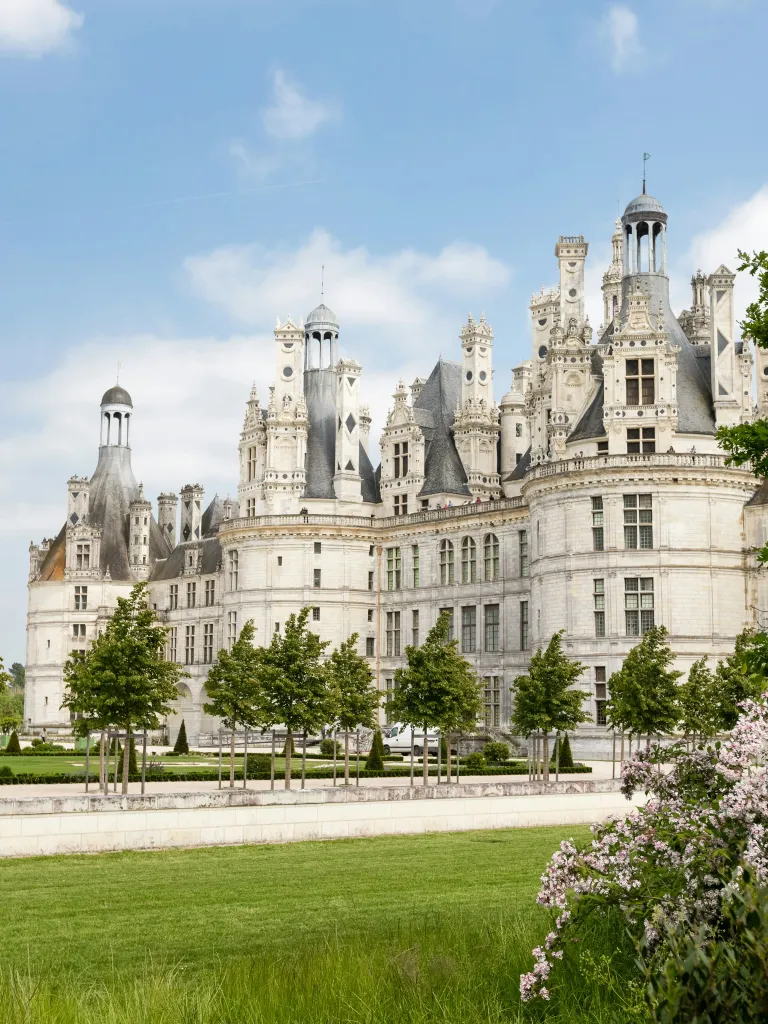
Key Indicators
- GDP (Nominal): $3,362 billion (World Bank 2024)
- Unemployment Rate: 7.5% (INSEE / Eurostat 2025)
- Human Development Index: 0.920 (Very High, HDR 2024)
- GDP per Capita: $48,981 (World Bank 2024)
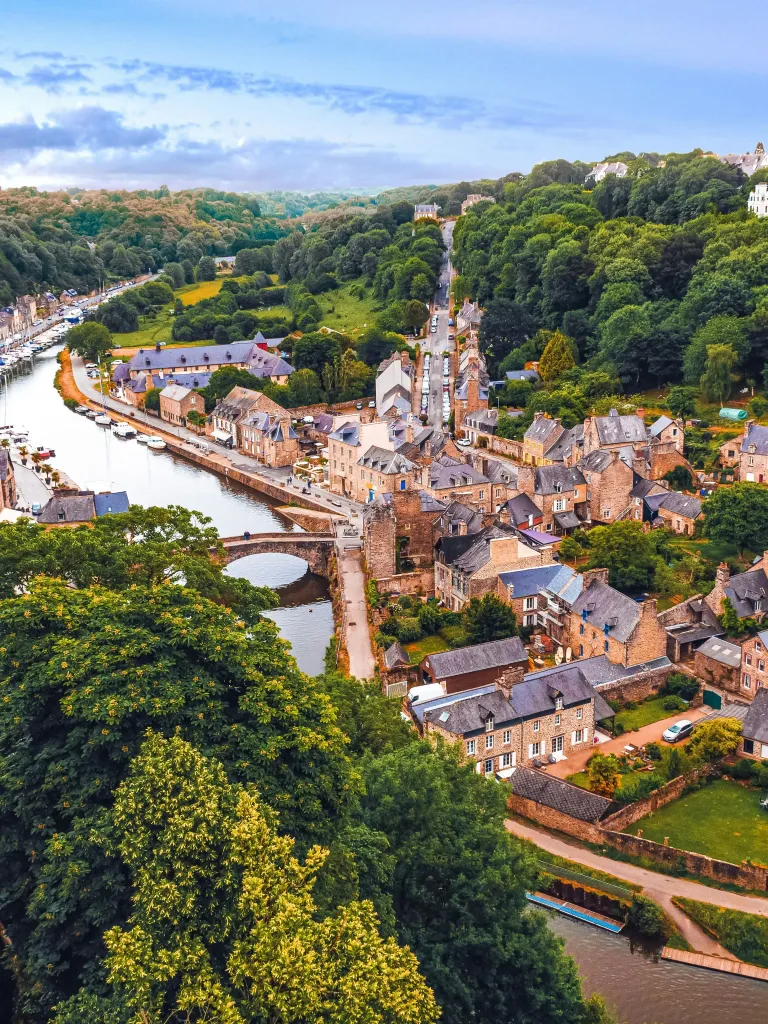
Safety & Governance
- Global Peace Index (IEP): 1.97 (GPI 2025 — lower half of Western Europe)
- Press Freedom Index (RSF): 76.62 (RSF 2025)
- Corruption Perception (TI): 66/100 (Rank: 27, CPI 2024)
- Gini Coefficient (WB): 32.0 (World Bank 2022)
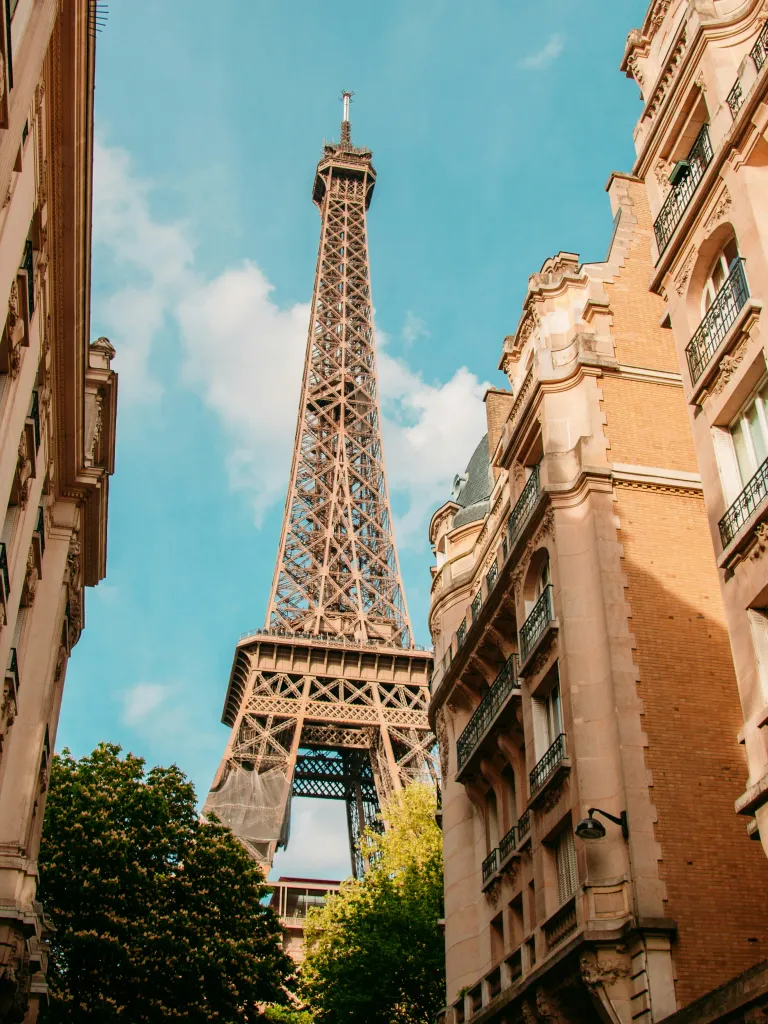
Health & Environment
- PM2.5 Air Pollution: 10.2 µg/m³ (WHO 2024)
- Air Quality Category: Moderate
- ND-GAIN Adaptation Index: 64.3 (ND-GAIN 2023)
- Life Expectancy: 83.0 years (WHO 2024)
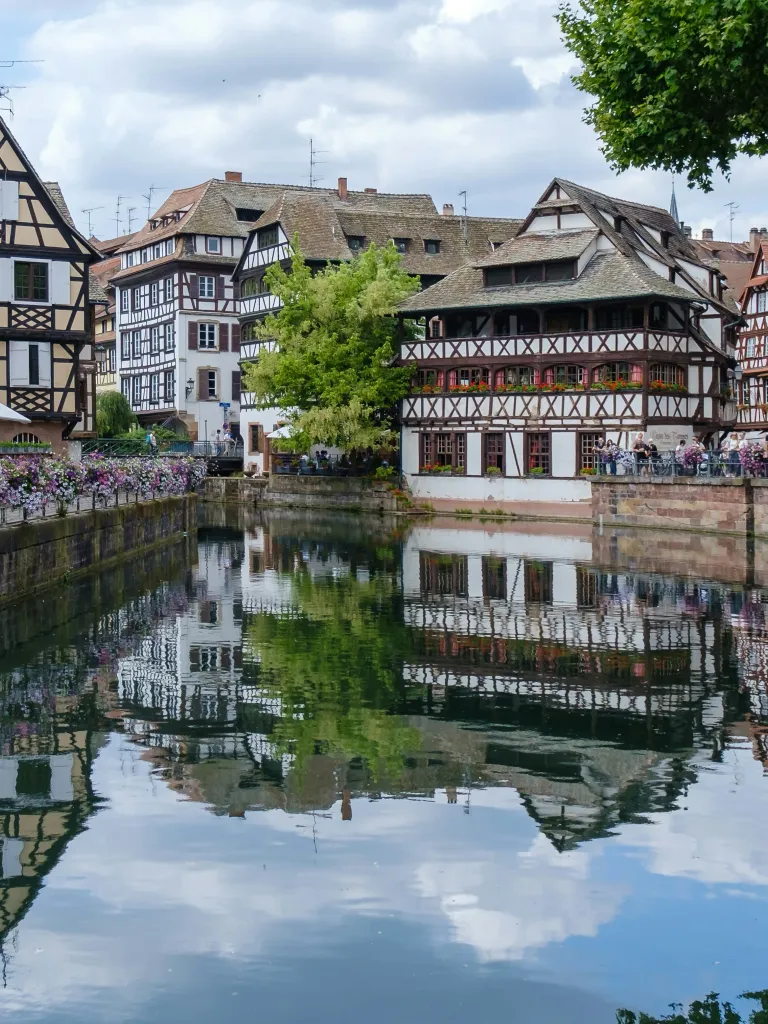
The proposition for an investor or relocator is unusually clean: full Schengen and EU single-market access, a 5-year route to French naturalization (2 if you hold a French master's degree or render "important services"), a Talent Passport residence track for skilled professionals and investors from $46,000 in salary or $349,000 in investment capital, and one of the world's most extensive public healthcare systems. The cost is also clean: top effective income tax above 55% on the highest brackets, a 1.7-2.0% IFI wealth tax on real estate above $1,512,000, a 2026 step-up to a mandatory civic exam plus French for residency and naturalization, and a fee schedule that climbs sharply on 1 May 2026. France does not try to be for everyone — it is clear from the start who it is for.
How Does France Compare?
Summary
On the worldpath.ai WRI 2026, France (74.2) sits between the United Arab Emirates (74.3) and Hungary (73.5), in a peer group anchored by Monaco (75.8) above and Italy (73.2) below. France leads the group on Citizenship and is near the top on Education and Retirement; it trails on Residency, Investment, and Business — -style investor-residence is not the French proposition.
How France stacks up against its closest peers on the WRI 2026:
Where France wins: France tops the peer group on Citizenship at 65.0, ahead of Hungary at 62.0, Italy at 58.0, Monaco at 30.0, and UAE at 20.0 — the 5-year naturalization timeline (reducible to 2 years with a French master's degree) plus permitted dual citizenship gives France the most accessible EU passport pathway in the group. Education at 85.0 sits second only to Monaco's 88.0, ahead of Italy at 74.0, UAE at 72.0, and Hungary at 72.0: France runs five universities in the global top 100, the École Polytechnique / ENS / HEC Paris cluster, and one of Europe's deepest international-school markets. Retirement at 80.0 is third-strongest in the group — behind Monaco at 95.0 and Italy at 88.0, and ahead of UAE at 75.0 and Hungary at 65.0 — delivered through universal Sécurité Sociale coverage, life expectancy of 83.0 years, a climate spread from Mediterranean Provence to Atlantic Brittany, and a Long-Stay Visitor Visa route accessible to any retiree with passive income above French minimum wage.
Where France lags: France posts the lowest Residency score in the peer group at 70.0, behind UAE at 85.0, Italy at 78.5, Hungary at 74.0, and Monaco at 72.0. The Talent Passport is category-specific with no Golden Visa equivalent, routine residence permits carried a 117-day average wait in 2024 before the 2026 reforms, and the January 2026 mandatory civic exam plus B2 French requirement raised the bar for multi-year permits and naturalization. Investment at 74.0 trails Monaco at 90.0, UAE at 88.0, and Italy at 75.0; Business at 72.0 trails UAE at 90.0, Monaco at 82.0, and Hungary at 78.0. UAE's Residency at 85.0 and Monaco's Investment at 90.0 mark specific niches France does not directly compete on, where investment-led residence is the headline proposition.
Who does France fit?
Summary
France fits senior international executives and specialists on the Talent Passport, founders and investors meeting the $349k investor or $35k business-creator threshold, foreign retirees on the long-stay visitor visa, and families pursuing EU citizenship after 5 years of legal residence. It does not fit fast-citizenship seekers, applicants allergic to a civic exam plus B2 French, or buyers chasing low-tax residence — France is a high-tax, deep-public-services jurisdiction.
Right fit:
- Senior international executives and specialists — the Talent Passport for "Qualified Employee" requires a $46,000 gross annual salary; the variant requires $69,000; the "Company Director" category requires $76,000 in salary and a director role; all run an initial 4-year permit, renewable, with a simplified Talent Family permit for spouse and minor children.
- Founders building EU-facing or French-market ventures — the Talent Passport for "Business Creator" requires a $35,000 investment plus a viable business plan; the "Investor" category requires $349,000 of qualifying capital in a French company; the French Tech Visa subset runs through 26 accredited tech ecosystem partners.
- Foreign retirees with stable passive income — the Long-Stay Visitor Visa (VLS-TS visiteur) requires demonstrated passive income at French minimum wage (~$22,000/year for a single applicant) plus health insurance and accommodation; renewable annually, no work permitted; no dedicated 7% pensioner regime as in Italy or Greece.
- Families pursuing EU citizenship after legal residence — naturalization after 5 years of continuous legal residence (reducible to 2 years with a French master's degree or "important services"), dual citizenship permitted; from January 2026 the B2 French language test and mandatory civic exam apply.
Wrong fit:
- Fast citizenship seekers — France does not offer citizenship by investment; the 5-year naturalization timeline is firm except for the master's-degree shortcut to 2 years.
- Anyone allergic to a civic exam and B2 French — effective 1 January 2026, multi-year permits require French + civic exam; the 10-year resident card requires + civic; naturalization requires B2 + civic (40-question multiple-choice, 80% pass).
- Buyers chasing low-tax residence — top effective income tax above 55% (45% IRPEF + CSG/CRDS surcharges + high-income surtaxes); the 1.7-2.0% IFI wealth tax applies to real estate above $1,512,000 globally for French tax residents.
- Investor-residence shoppers comparing Golden Visa programmes — France has no Golden Visa equivalent; the Talent Passport Investor route requires $349,000 of qualifying capital in a French company plus a director or operating role, not passive real-estate investment.
- Anyone allergic to French administrative paperwork — the ANEF online platform launched but processing carried a 117-day average wait in 2024; the 2026 "Global Plan" reform targets 55 days but rollout is uneven across prefectures.
Pros and Cons of Relocating to France
- 01MobilityEU passport at world rank 4 with 185 visa-freeFrench passport at rank 4 globally in 2026, tied with 11 other EU members; visa-free or visa-on-arrival access to 185 destinations including the US, Schengen, Japan, and Australia.Top-4 passport, 185 VF
- 02CitizenshipCitizenship after 5 years (2 with French master's)France offers the most accessible EU naturalization in its peer group: 5 years of continuous legal residence, reducible to 2 years if you hold a French master's degree or render "important services"; dual citizenship permitted.5-year naturalization
- 03Residency4-year Talent Passport from $46,000 salaryTalent Passport (Passeport talent) covers EU Blue Card ($69k+), Qualified Employee ($46k+), Company Director ($76k+), Business Creator ($35k+), Investor ($349k+); initial 4-year permit, renewable, with simplified Talent Family for spouse and children.Talent Passport $46k+
- 04HealthcareSécurité Sociale plus mutuelle top-upFrench Sécurité Sociale reimburses 70-80% of most procedures with mutuelle private top-up; life expectancy 83 years (WHO 2024); OECD top-decile on outcomes per dollar spent.Top public healthcare
- 05EducationFive universities in the global top 100Université PSL, Sorbonne, École Polytechnique, ENS Paris, and HEC Paris all sit in the global top 100; Grandes Écoles cluster (CentraleSupélec, Mines ParisTech, ESSEC, ESCP) produces a disproportionate share of European engineering and business leadership.5 universities top-100
- 06MobilityEU + Schengen + UN Security Council permanent seatFounding member of the EU, Eurozone, Schengen, and NATO; UN Security Council permanent seat with veto; G7, G20, OECD member with global diplomatic footprint.EU + Schengen + UN P5
- 07LifestyleClimate spread from Mediterranean to AlpineClimate spans Mediterranean Provence-Côte d'Azur, Atlantic temperate Brittany / Loire, Alpine Haute-Savoie, and continental Alsace; 643,801 km² of varied geography plus overseas departments across the Caribbean, South America, and Pacific.Mediterranean to Alpine
- 01TaxationTop effective income tax above 55%Top marginal IRPEF 45% plus CSG/CRDS surcharges (~10-11%) plus 3-4% high-income surtax pushes the effective rate above 55% on the highest brackets; CDHR ensures minimum 20% effective at $291k income.~55% top effective
- 02Taxation1.7-2.0% IFI wealth tax on real estateImpôt sur la Fortune Immobilière (IFI) applies to real estate held globally by French tax residents above $1,512,000 net value at progressive 0.5-1.5% rates; no equivalent IVAFE-style tax on foreign financial assets.IFI wealth tax
- 03CitizenshipMandatory civic exam + B2 French from 2026Effective 1 January 2026, naturalization requires both a 40-question civic exam (80% pass) and B2 French; multi-year permits require A2 + civic, 10-year resident card requires B1 + civic. Significant step-up from prior B1 requirement.Civic exam + B2 French
- 04BureaucracyResidence permit $407, naturalization $300 from May1 May 2026: standard residence permit fee rose from $263 to $407; naturalization fee from $64 to $300 (a 364% increase); the 2026 fee schedule is among the highest in the EU-15.May 2026 fee hikes
- 05BureaucracyAverage 117-day wait for residence-permit processingANEF online platform launched but processing carried a 117-day average wait in 2024 before the 2026 "Global Plan" reform; the target is 55 days but rollout is uneven across prefectures.117-day permit waits
- 06InvestmentNo Golden Visa equivalent in FranceFrance killed CBI long ago; the Talent Passport Investor route requires $349,000 of qualifying capital in a French company plus a director or operating role, not passive real-estate investment.No Golden Visa
- 07SafetyGPI 1.97 reflects recurrent civil-unrest cyclesGlobal Peace Index 2025 places France in the lower half of Western Europe at 1.97; the score reflects 2018-2019 Gilets Jaunes, 2023 pension-reform protests, 2023 Nahel riots, and 2015 Bataclan / 2016 Nice attacks legacy.Periodic civil unrest
France leads on Education — WRI 85.0 / 100
France posts the second-highest Education score in the WRI 2026 peer group at 85.0, behind only Monaco's 88 and well ahead of Italy at 74, UAE at 72, and Hungary at 72. The drivers are not subtle. France runs five universities in the global top 100 across QS, THE, and ARWU rankings (Université PSL, Sorbonne, École Polytechnique, ENS Paris, and HEC Paris), plus the Grandes Écoles network (CentraleSupélec, Mines ParisTech, ESSEC, ESCP) that produces a disproportionate share of European engineering and business leadership. PISA 2022 places France around the OECD average in reading and mathematics, with significant socio-economic dispersion. The international school market is one of the deepest in Europe, with 80+ international schools across Paris, Lyon, Marseille, Toulouse, and Aix-Provence running American, British (IB), German, and bilingual curricula. Primary international school fees run $14,000-26,000/year; secondary and IB Diploma fees reach $30,000-38,000 at the top of the market (the International School of Paris, École Jeannine Manuel, the British School of Paris). Public schools (école / collège / lycée) are open to children of any registered resident with no tuition.
France leads on Retirement — WRI 80.0 / 100
France posts a Retirement score of 80.0, third in its peer group between Monaco at 95 and Italy at 88, ahead of UAE at 75 and Hungary at 65. The proposition is not a dedicated pensioner tax regime (no 7% flat tax as in Italy or Greece) but the public infrastructure: the French Sécurité Sociale provides universal healthcare with 70-80% reimbursement on most procedures, supplemented by mutuelle private top-up insurance for the remaining co-pay; life expectancy is 83.0 years (WHO 2024), among the highest in Europe. Cost of living outside Paris is moderate by Western European standards (a comfortable retirement in Bordeaux, Toulouse, or Montpellier runs $3,500-5,000/month for a couple). The Long-Stay Visitor Visa (VLS-TS visiteur) is the standard retirement route: demonstrated passive income at French minimum wage ($22,000+/year), full Schengen health insurance, and accommodation; renewable annually for 5 years, then convertible to a 10-year resident card. France-Etats-Unis and France-UK tax treaties protect against double taxation of foreign pensions but the underlying French income tax brackets still apply on French-source income. Climate spreads from Mediterranean (Provence-Côte d'Azur) to Atlantic temperate (Brittany, Loire) to Alpine (Haute-Savoie).
Residence
France applies worldwide taxation to tax residents and French-source taxation to non-residents. Tax residency triggers on any of three tests: 183 days physically present in France in the calendar year, France as the centre of personal interests (foyer), or France as the centre of economic interests (professional activity or principal investments). CFC rules apply to controlled foreign companies in low-tax jurisdictions; IFI wealth tax applies to real estate held globally by French tax residents above the $1,512,000 threshold. Residence permits are administered by the Ministère de l'Intérieur — Direction Générale des Étrangers en France (DGEF) through the ANEF online platform; consular visas through France-Visas (france-visas.gouv.fr). The Talent Passport (Passeport talent) runs an initial 4-year residence permit, renewable, for senior employees, founders, investors, and "high-talent" categories. From 1 January 2026, multi-year residence permits require A2 French plus a 40-question civic exam (80% pass); the 10-year resident card requires B1 French plus civic; naturalization requires B2 French plus civic. From 1 May 2026, the standard residence permit fee rose from $263 to $407, and naturalization from $64 to $300 — a 364% increase. The naturalization track requires 5 years of continuous legal residence, reducible to 2 years for holders of a French master's degree.
Safety sits at 75.8 in the WRI 2026, third in France's peer group behind Hungary at 87.5 and UAE at 79.7. The Global Peace Index 2025 places France in the lower half of Western Europe at 1.97, reflecting recurrent civil-unrest episodes (2018-2019 Gilets Jaunes, 2023 pension-reform protests, 2023 Nahel riots) and the legacy of the 2015 Bataclan and 2016 Nice attacks; the Corruption Perceptions Index 2024 score of 66/100 places France at rank 27 globally, mid-tier Western European. Petty crime in central Paris, Marseille, and Lyon tourist zones is moderate; women's safety on the street varies meaningfully by arrondissement. The trade-off: deep institutional infrastructure and rule of law sit alongside visible periodic civil-unrest cycles.
Taxes on Personal Income
France's national IRPEF runs five brackets on a per-quotient-familial basis: 0% to $13,000, 11% to $32,000, 30% to $107,000, 41% to $228,000, and 45% above $228,000. Two surtaxes layer on high incomes: 3% on taxable income above $291,000 (single) or $582,000 (couple), and 4% above $582,000 (single) or $1,163,000 (couple). The CDHR contribution ensures a minimum 20% effective rate on adjusted income above $291,000 (single) or $582,000 (couple). Social surcharges — CSG (9.2-10.6%), CRDS (0.5%), and other levies up to 7.5% — apply on employment income, rental income, interest, dividends, and capital gains. Under the 2026 Social Security Financing Law, effective 1 January 2026, CSG on capital income increased from 9.2% to 10.6%, raising the élèvement Forfaitaire Unique (PFU) flat tax from 30% to 31.4% for dividends, capital gains on securities, and most non-property investment income. Interest income is taxed at 31.4%; dividends remain taxable at 30% PFU (12.8% income tax + 18.6% social charges, though PFU on dividends in certain structures also reaches 31.4%). Assurance-vie contracts and unfurnished rental income remain at 17.2% social charges. IFI wealth tax: 0.5-1.5% on net real estate held globally by French tax residents above $1,512,000. Inheritance tax: 5-45% for direct heirs (significant exemptions per child), 35-55% for siblings, 60% for non-relatives. The effective rate at $500,000 income before any optimisation sits in the 47-52% band, broadly in line with Germany and above Italy.
Cost of Living
France is mid-range among Western European economies on a like-for-like basis, with a meaningful Paris-to-regions spread. A single professional in central Paris (1st-8th arrondissements) budgets $3,500-5,000 a month for a one-bedroom rental, utilities, transit, and basic groceries; the same lifestyle in central Lyon, Marseille, or Bordeaux runs $2,400-3,400, and in mid-sized regional cities (Toulouse, Nantes, Strasbourg) $2,000-2,800. A family of three in central Paris budgets $7,000-12,000 a month including a two-bedroom rental at $2,800-4,500, transport, groceries, and modest school costs; outside Paris the same family runs $4,500-7,500. Inexpensive restaurant meals average $16-22 per person; the Paris monthly Navigo transit pass is $108 (zones 1-5, all of Île-de-France). Health insurance — the mandatory employer-funded Sécurité Sociale base plus mutuelle top-up — runs $1,800-3,600 a year per couple. Domestic helpers are common at $14-18 an hour for cleaning. French regions outside Paris offer some of the best price-to-amenity ratios in the EU-15.
Healthcare System
France's national health system (Sécurité Sociale) is universal and reimburses 70-80% of most procedures, with mutuelle private top-up insurance covering most or all of the remaining co-pay; the system consistently ranks in the OECD top decile on outcomes per dollar spent. Coverage is open to all registered residents with PUMA (Protection Universelle Maladie) enrollment after 3 months of stable residence. Life expectancy is 83.0 years (WHO 2024), among the highest in Europe; preventable mortality is well below the OECD average. Public hospitals (CHU networks in Paris, Lyon, Marseille, Toulouse, and the regional CHRU) deliver consultant-led care with no upfront patient cost for the insured portion. Private clinics run in parallel and are widely used to bypass non-urgent public-system wait times for diagnostics and elective surgery — a private specialist consultation runs $35-90 (with reimbursement), a private hospital day $200-600. The American Hospital of Paris and the Hertford British Hospital (Levallois-Perret) deliver English-language private care. Medical tourism is significant for elective and aesthetic procedures.
Education System
France runs two parallel education realities. The public system (école, collège, lycée) serves nearly all French families with no tuition through university, ranks slightly above OECD average on international comparison tests, and operates entirely in French, a meaningful barrier for expat children mid-stream in another curriculum but with strong outcomes once integrated. The international school market is one of the deepest in Europe: the International School of Paris (IB Continuum, $26,000-38,000/year), the British School of Paris (English National Curriculum + IB Diploma, $22,000-32,000), École Jeannine Manuel (bilingual French-English, $14,000-22,000), Lycée Français International, the American School of Paris, plus IB and bilingual schools in Lyon, Marseille, Toulouse, and Bordeaux. Public schools are open to children of any registered resident, including Talent Passport and Long-Stay Visitor visa holders, with no separate fees. At university level, five French institutions sit in the global top 100 — Université PSL, Sorbonne, École Polytechnique, ENS Paris, and HEC Paris — alongside the Grandes Écoles network (CentraleSupélec, Mines ParisTech, ESSEC, ESCP) that produces a disproportionate share of European engineering and business leadership. Tuition at public universities for EU residents runs $400-1,000/year; non-EU students pay $3,200-4,100/year for licence/bachelor's and $3,900 for master's.
Banking & Finance
French banking runs through a dense system of national universal banks: BNP Paribas, Société Générale, Crédit Agricole, BPCE (Banque Populaire / Caisse d'Épargne), Crédit Mutuel, and La Banque Postale, plus the digital challengers (Boursorama, Hello bank, N26 France). Account opening for non-EU residents requires titre de séjour (residence permit), justificatif de domicile (proof of address), and ID; some banks decline non-EU non-residents entirely or require an in-branch interview. Foreign credit history does not transfer; expats build local credit from zero. Mortgages for foreign residents typically require 20-30% down vs 10-20% for established residents, with fixed 20-25 year rates at 3.2-3.9% (May 2026, ECB-influenced). EU capital mobility is unrestricted; the euro is the currency; Banque de France is the central bank under the ECB Single Supervisory Mechanism. France is fully integrated with , , and EU AML; the AMF (Autorité des Marchés Financiers) regulates investment services, while the ACPR handles bank supervision. Traditional bank account opening runs 1-3 weeks; digital options (Revolut, N26, Wise) are faster but with limited mortgage and corporate-card functionality.
Cryptocurrency Regulation
France regulates crypto-assets under MiCA (Markets in Crypto-Assets, EU Regulation 2023/1114), fully phased in by end-2025, layered on the prior PACTE Law 2019 PSAN (Prestataire de Services sur Actifs Numériques) regime. The Autorité des Marchés Financiers (AMF) runs registration and licensing for crypto exchanges, custodians, and brokers; the ACPR handles prudential oversight. Capital gains on crypto held personally are taxed at the PFU flat rate (30%, rising to 31.4% from 2026) for occasional disposals above the €305 annual exemption; professional crypto traders are taxed at standard IRPEF brackets up to 45% plus social surcharges. Crypto-to-crypto swaps are not taxable unless the counter-asset is a MiCA-classified e-money token (most stablecoins), which triggers realization. Crypto-as-payment for goods or services follows standard French VAT at 20%. Retail derivatives leverage follows ESMA caps. France is among the more active EU crypto jurisdictions — Paris hosts a dense Web3 ecosystem around Station F and the École Polytechnique cluster, and the AMF was the first EU regulator to license crypto-asset service providers under the PACTE framework in 2020.
Real Estate Market
Foreigners can buy French residential and commercial property freely under EU and reciprocity rules, with full ownership rights and the same fees as French buyers. Acquisition costs include "frais de notaire" 7-8% on existing property (registration tax 5.8%, notary fees 1.0-1.5%, security tax 0.1%, fund 0.1%), 2-3% on new builds (registration tax 0.7% + 20% VAT on the property price). Annual taxes: taxe foncière (paid by owner, 0.5-1.5% of cadastral value) and taxe d'habitation (suspended on primary residence since 2023, applies to second homes). The IFI wealth tax (impôt sur la fortune immobilière) applies to real estate held globally by French tax residents above $1,512,000 in net value, at progressive rates 0.5-1.5%. Prime central Paris (1st-7th arrondissements) runs $11,200-16,300/m²; outer Paris (19th-20th) $9,100-11,700/m². Outside Paris: Lyon $4,300-7,000/m², Marseille $3,500-5,200/m², Bordeaux $4,600-7,500/m², Nice $5,500-12,000/m², Cannes/Saint-Tropez $9,000-18,000/m². French regions outside top-tier cities run $2,800-4,000/m². Gross rental yields run 3-4% in Paris, 4-6% in Lyon and Bordeaux, 5-7% in regional cities. Non-resident mortgage rates 3.2-3.9% fixed at 20-25 year maturity, 20-30% minimum down.


