WorldPath AIWORLDPATH•AI
Americas
Offshore Jurisdictions

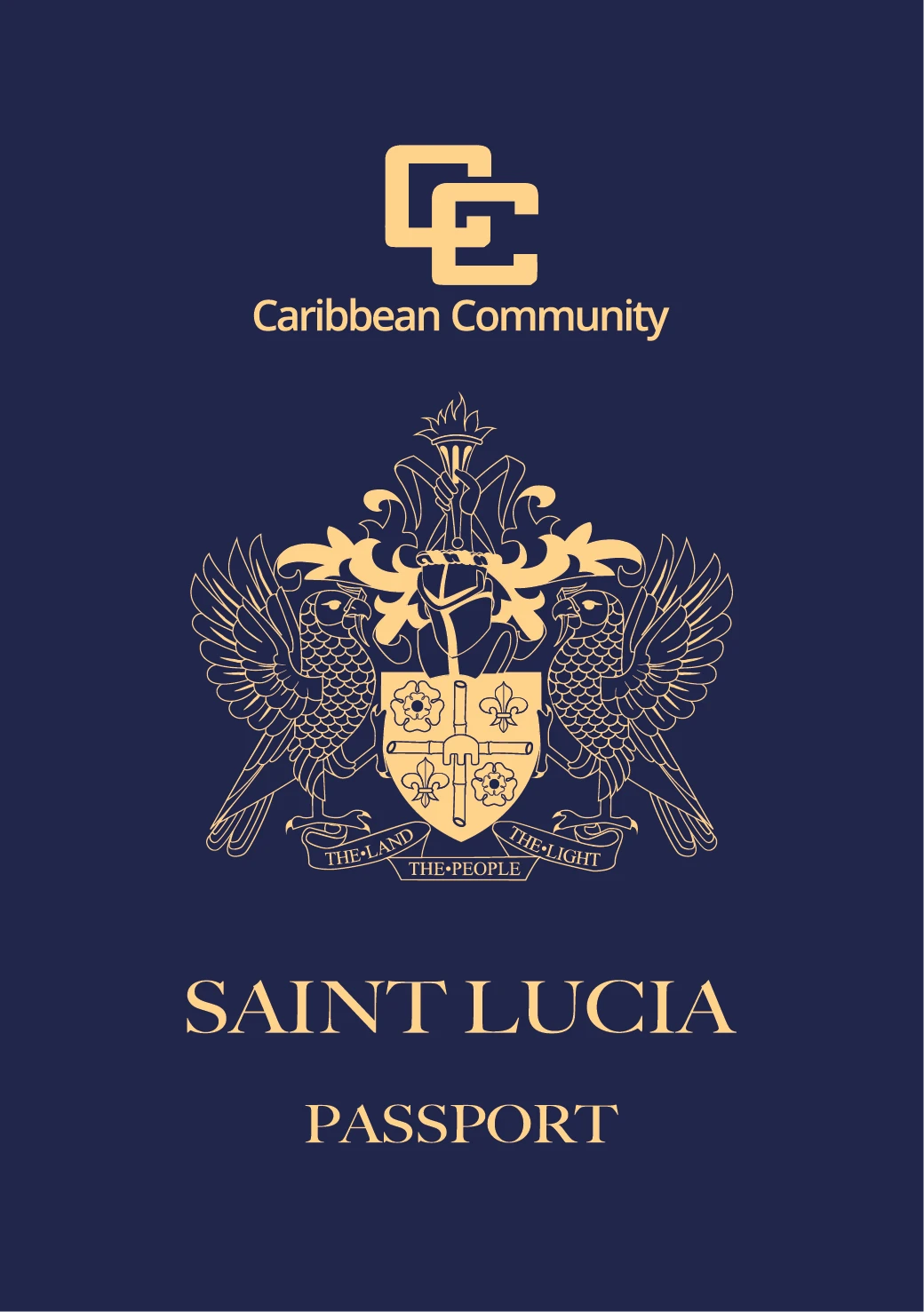
St Lucia Passport

Ranked #27 Globally

The Saint Lucia passport is one of the strongest Caribbean travel documents and the headline benefit of the country's investor-citizenship route. In 2026 it sits at #27 worldwide and reaches 144 countries and territories without arranging a visa first, or with one given on arrival. That list spans the (the borderless travel zone covering most of Europe), the United Kingdom, Singapore, Hong Kong, and most of the Caribbean and South America. Saint Lucia is a small island nation in the Eastern Caribbean, a Commonwealth realm under King Charles III, and a member of both (the Caribbean Community) and the (the Organisation of Eastern Caribbean States). Citizenship is open through descent to grandparents, marriage, seven years of residence, or the Citizenship by Investment Programme launched in 2015, and new citizens keep their original nationality.

27th
Global Ranking
144
Destinations
73.5
Mobility Score
St Lucia Passport - Passport Power 32nd | worldpath.ai WRI

St Lucia Passport Global Mobility Context

Saint Lucia's passport draws its strength from a Commonwealth network and from coordinated Caribbean diplomacy through (the Caribbean Community) and (the Organisation of Eastern Caribbean States). Decades of bilateral visa-free deals with Europe and the United Kingdom are why a nation of about 184,000 people sits at #27 worldwide in 2026.

Reach rests on three pillars: full visa-free entry to the for 90 days and to the United Kingdom on a quick online travel permit; free movement across the wider Caribbean and most of South America; and a set of Asian financial hubs added by recent bilateral deals, with Singapore at 30 days and Hong Kong at 90.

The document is biometric. The Royal Saint Lucia Police Force Immigration Department began issuing an ePassport in July 2022; the chip follows (International Civil Aviation Organization) 9303 standards used at airport e-gates worldwide. A ten-year adult validity took effect on 5 August 2025.

An open citizenship system sits behind the travel benefits. A 2024 amendment extends descent to grandchildren born abroad, and the Citizenship by Investment Programme — run by the Unit since 2015 — offers an investor route from USD 240,000. Dual nationality is kept without renunciation outside ordinary naturalisation.
Tens of thousands of Saint Lucian descendants living in diaspora communities around the world will benefit from the amended Citizenship of Saint Lucia Act.

St Lucia Passport at a Glance

Global rank (2026)

#27 worldwide in 2026, near the top of the Caribbean group and just below the European Union mid-tier. The rank reflects how many places a holder can enter without arranging a visa in advance.

Visa-free destinations

144 countries and territories are visa-free or with visa-on-arrival in 2026, including the 27-nation , the United Kingdom, Singapore, Hong Kong, and the wider Caribbean and Latin American neighbourhood.

Document type

Biometric ePassport with an electronic chip, first rolled out in July 2022 and upgraded under the Caribbean common-design standard. The chip is read at airport e-gates worldwide.

Page count

Standard 32-page booklet for an ordinary passport, with a longer 48-page version available on request for people who travel often or fill the document quickly.

Languages

English is the official language and is the primary script on the booklet. French and Spanish glossary headings appear alongside English to ease regional and Schengen-Area border processing.

Adult validity

Ten years for adult holders since the 5 August 2025 reform announced by Prime Minister Philip J. Pierre. Before that date adult passports were issued for a five-year term.

Child validity (under 16)

Five years for minor holders, kept shorter than the adult document because a child's photograph and physical appearance change quickly. Renewal happens more often than the adult ten-year term.

Dual citizenship

Allowed without renunciation. A new citizen, including an investor-route applicant, is not asked to surrender any other nationality, and a Saint Lucian who naturalises elsewhere keeps Saint Lucian status.

Issuing authority

The Immigration Department of the Royal Saint Lucia Police Force issues every passport, under the authority of the Ministry of National Security and the Citizenship Office at the Office of the Prime Minister.

History

Saint Lucia issued its first passports after independence on 22 February 1979. The biometric ePassport began in July 2022, and the longer ten-year adult term took effect on 5 August 2025.

St Lucia Passport Visa-Free Destinations by Region

Regional Mobility

Economic Mobility Score: 73.5%Country GDP: 0.00255%
Visa Exceptions
The Americas score reflects deep OECS and CARICOM free movement, full South American reach, and the United States and Canada visa gap. Europe is strong through the Schengen Area, the United Kingdom, and Ireland, with a paid ETIAS pre-screening planned from late 2026.

A Saint Lucia passport reaches 144 destinations in 2026 without a prior visa or with a visa stamped on arrival. The headline wins for most holders sit in Europe — the full and the United Kingdom — together with Singapore, Hong Kong, and the entire Caribbean and most of South America. The single largest gap is the United States, which requires a visitor visa to be applied for at a US embassy in advance. Canada also requires entry to be arranged before travel, and mainland China still asks for a visa for most trips.

Americas

Coverage across the Americas is one of the deepest parts of this passport. Inside the Caribbean and Central America, almost every border is open: (Organisation of Eastern Caribbean States) members let Saint Lucians enter on a national identity card alone, and (Caribbean Community) partners admit holders for short tourism without paperwork. South American capitals are reachable without a visa for tourism in Argentina, Brazil, Chile, Colombia, Ecuador, Peru, and Bolivia. The clear exceptions sit in North America: the United States requires a visitor visa secured at an embassy beforehand, and Canada requires either a visitor visa or an electronic travel authorisation for travellers who already hold a recent Canadian or United States visa.

Europe

Europe is the longest-haul prize on the list and the section that lifts the global ranking. Holders enter the Schengen Area — the 27-country borderless travel zone — for up to 90 days in any 180 days, covering France, Germany, Italy, Spain, the Netherlands, Greece, Portugal, and the Nordic states. The United Kingdom admits Saint Lucians for up to six months through the new (Electronic Travel Authorisation), a low-cost online travel permit launched for Commonwealth visa-exempt visitors. Ireland is visa-free, and so are non-Schengen Balkan states such as Serbia and Montenegro. From late 2026, the European Union plans to require (European Travel Information and Authorisation System), a similar online pre-screening valid for three years. The separate (Entry/Exit System), a biometric border-record programme, captures fingerprints at the first Schengen crossing.

Asia-Pacific

Asia gives the passport some of its most useful long-haul access. Singapore admits Saint Lucians for 30 days without a visa, Hong Kong allows 90 days, and South Korea grants entry through its online K-ETA travel permit for short stays. Several Southeast Asian destinations follow the same pattern: Malaysia is visa-free for 30 days, Indonesia issues a visa on arrival, and the Philippines admits holders for short-term tourism. Mainland China is the clear gap and still requires a visa for most trips, although Macao admits Saint Lucians for short stays. Australia and New Zealand each require their online visa or travel-authorisation system to be arranged in advance, so the southern Pacific is reachable but always with paperwork.

Middle East

Coverage here is partial and worth checking close to each trip. Israel admits Saint Lucians without a visa for short tourism, Jordan and Iran grant a visa on arrival, and a small group of states either issue an electronic visa applied for online or accept a paid online travel permit. The wealthy Gulf states are mixed: some accept an electronic visa and others require a full visa arranged in advance at an embassy or through a sponsor. Because rules across the region change often and depend on the exact purpose of the trip, holders should confirm the current requirement before booking rather than relying on a fixed list.

Africa

Africa is mostly an on-arrival region for a Saint Lucia passport. Popular safari and beach destinations such as Kenya, Tanzania, Rwanda, the Seychelles, Botswana, and Mauritius issue a visa on arrival or accept an electronic visa bought online before the trip, with typical stays of 30 to 90 days. South Africa is visa-free for short-term tourism, which is a useful anchor for the southern part of the continent. Outright no-paperwork entry without any form is less common across Africa than in Europe. As with the Middle East, requirements shift frequently, and the safe approach is to confirm the rule for the specific country and travel date in advance.

Offshore Jurisdictions

The passport reaches the offshore and financial-centre territories that internationally mobile families use for banking, property, and company registration. Inside the Caribbean, the British Virgin Islands and the Cayman Islands admit Saint Lucians without a visa, Bermuda allows visits of up to six months, and the Turks and Caicos Islands are reachable as part of the wider United Kingdom-linked group. Hong Kong sits at 90 days and Singapore at 30 — two of the world's main private-banking and dispute-resolution hubs. For a holder managing cross-border affairs, this regional offshore network keeps family travel and account access straightforward without extra visa steps.

Where a Visa Is Still Required

  • United States — a visitor visa must be applied for at a US embassy in advance; Saint Lucia is not in the US Visa Waiver Programme, so there is no (Electronic System for Travel Authorisation) option.
  • Canada — a visitor visa is required, though holders with a recent prior Canadian visa may qualify for the simpler electronic travel authorisation.
  • Mainland China — a visa is required for most visits; Hong Kong and Macao remain open without a visa.
  • Australia and New Zealand — entry must be arranged in advance through each country's online visa or travel-authorisation system.
  • Japan — a visitor visa is required and must be arranged at a Japanese diplomatic mission before departure.
  • Parts of the Gulf and Africa — several destinations require a visa obtained before travel; confirm the current rule for each country and trip.

How to Get a Saint Lucia Passport

1

Get Permanent Residency

There is one official residence-based route to a Saint Lucia passport: become a Saint Lucian citizen first, and citizenship begins with legal residence in the country. Saint Lucia is small enough that the path runs through actually living on the island for a long stretch rather than through any quick administrative shortcut. The first step is permanent residency, granted by the Department of Immigration of the Royal Saint Lucia Police Force after an initial period of lawful presence on a long-term visa.

An applicant files with the Immigration Department and the Citizenship Office at the Office of the Prime Minister, providing a birth certificate, a clean police-record check from every country of recent residence, proof of accommodation in Saint Lucia, and evidence of stable income or means of support. There is no minimum-investment requirement for the residency route, which sets it apart from the investor channel covered separately below. Some applicants begin with a self-employment or work permit and convert once the immigration record is in place.

Crucially, the clock that counts toward citizenship by naturalisation runs from the date residency is granted, not the date the applicant first arrived, so the timing depends on completing the residency paperwork rather than on the entry date. The applicant must continue to live in Saint Lucia in good standing for the qualifying period set out in the Citizenship of Saint Lucia Act, with absences kept short enough to show real settlement on the island.

2

Build Residency History

Saint Lucia sets a seven-year qualifying period for ordinary naturalisation, written into the Citizenship of Saint Lucia Act. The applicant must have either lived in the country, worked for the Government of Saint Lucia, or combined residence and government service over those seven years before applying for the citizenship certificate.

During this period the applicant is expected to genuinely live on the island. The practical test, applied by the Citizenship Office and the Department of Immigration, is that absences should be short and not cumulative; long stretches outside the country can reset or reduce the residence clock. Holders are generally expected to spend most of each year in Saint Lucia and to maintain a real address, local utilities, and a documented pattern of ties such as work, study, or community involvement.

Applicants also build the evidence of integration that the citizenship stage will require: a local address with rental or ownership papers, enrolment of any minor children in Saint Lucia schools, and a basic understanding of English. English is the official language, so day-to-day life and the citizenship paperwork are both conducted in it; Saint Lucian Creole, the locally-spoken French-based creole, is widely used in conversation but is not required for the legal process.

3

Apply for Citizenship

Once the seven-year residence is complete, the applicant petitions the Citizenship Office under the Office of the Prime Minister for legal citizenship by naturalisation. Saint Lucia recognises citizenship by birth, by descent, by registration (which includes marriage and the investor route), and by naturalisation; a residence-based applicant becomes a citizen by naturalisation under the Citizenship of Saint Lucia Act.

The application is assessed for good character, financial standing, and genuine settlement. The applicant submits the police-record checks, full residence history, proof of integration, and witness statements from Saint Lucian citizens who can vouch for character and time in the country. The Citizenship Office verifies the seven-year residence period, runs additional security checks, and presents the file to the Cabinet for approval. On approval, the applicant takes an oath of allegiance and receives the citizenship certificate.

One feature is specific to Saint Lucia: citizenship by ordinary naturalisation is the one category in which dual nationality is not always automatically permitted under the existing Citizenship Act, although in practice the country tolerates it and a 2024 amendment extends dual citizenship outright to descendants of Saint Lucians. Applicants who came through the marriage, descent, or investor routes face no such restriction and keep any other passport without question.

4

Apply for the Passport

With citizenship confirmed, the holder applies for the passport itself through the Immigration Department of the Royal Saint Lucia Police Force, the agency that issues every Saint Lucian travel document. The application captures the photograph and the biometric data stored on the new electronic passport's chip, and the applicant signs the document in person at the immigration office in Castries or at an authorised consulate abroad.

The passport issued is a biometric ePassport. Its chip follows the international (International Civil Aviation Organization) 9303 specification used at airport e-gates worldwide, and the booklet matches the Caribbean common security standard adopted across the region. The fee schedule is published by the Royal Saint Lucia Police Force and an appointment is booked online through the official government portal at govt.lc.

Adult passports issued since 5 August 2025 carry a ten-year validity, replacing the previous five-year booklet at no additional cost — a reform announced by Prime Minister Philip J. Pierre. Children under 16 continue to receive a shorter five-year document. Either passport is renewed by reapplying near the expiry date, and the Immigration Department also issues an express service for urgent travel inside one to five working days.

Saint Lucia offers two faster routes outside the seven-year residence path: citizenship by descent for people with Saint Lucian ancestry, and the Citizenship by Investment Programme run by the (Citizenship by Investment) Unit since 2015. Both routes deliver the same passport and the same dual-citizenship rights as a naturalised citizen, without the residence requirement.

The descent route reaches three generations after a 2024 reform. The Citizenship of Saint Lucia Act was amended on 26 June 2024 to grant citizenship to people born outside Saint Lucia whose father, mother, grandfather, or grandmother is a Saint Lucian citizen by birth. Before the amendment, only children of Saint Lucian citizens qualified. The applicant proves the family link with certified birth and marriage certificates tracing back to the Saint Lucian relative, and the certificate of citizenship is issued by the Citizenship Office.

The investor route is set out in the Citizenship by Investment Act, No. 14 of 2015, and is administered by the CIP Unit (Citizenship by Investment Unit), a statutory body under the Office of the Prime Minister. The programme offers four investment options. The first is a non-refundable contribution to the (National Economic Fund) — a one-time donation of USD 240,000 for a single applicant or a main applicant plus up to three qualifying dependants, set in line with the 1 July 2024 price floor. The second is a real-estate purchase from USD 300,000 in a project pre-approved by the Cabinet of Ministers and held for at least five years. The third is a non-interest-bearing investment of USD 300,000 in government bonds, plus a USD 50,000 administrative fee. The fourth is an enterprise project from USD 3.5 million as a sole investor or a USD 6 million joint venture with a minimum of USD 1 million per individual partner, creating three or six permanent jobs, respectively.

runs in parallel and is the longest stage. A non-refundable USD 7,500 due diligence fee applies to the primary applicant — USD 5,000 per additional dependent over 16 — the background check is carried out by independent agents, and decisions follow at Cabinet level. The official target is a 90-day pre-approval letter, though six-month waits have been common since the 2024 regional reset. The applicant takes the oath, completes the investment in escrow, and receives the certificate of registration; the passport is then issued through the Immigration Department.

Comparison of St Lucia Passport With Other Top Passports

Passport

Rank

Visa-free

Key edge

Singapore Passport

#1

192

Top-ranked passport in 2026 — the global mobility benchmark

Antigua and Barbuda Passport

#24

154

Caribbean investor-citizenship peer — broader Schengen reach

Grenada Passport

#29

147

Caribbean peer with the rare visa-free mainland-China benefit

Portugal Passport

#5

184

Residence-then-citizenship route ending in European Union rights

United States Passport

#10

179

Large economy that still requires a visa from this passport

The Saint Lucia passport is best understood next to four groups: the global leaders, the Caribbean investor-citizenship peers, the residence-based European routes, and the large Western economies that still require a visa. Against the leaders, it gives up some mobility; against Caribbean peers, it sits roughly mid-pack; against European routes, it wins on speed and cost; against North America, it is held back by the missing US and Canada access.

Versus the strongest passports. The top-ranked passport reaches 192 destinations in 2026 against 144 here. The gap looks larger than it is because Saint Lucia still covers the high-value sets — the , the United Kingdom, Singapore, and Hong Kong — and gives them up only at the North American and developed-Asia perimeter.

Versus the Caribbean investor peers. Inside the regional investor-citizenship group, Saint Lucia sits roughly mid-table by reach. It trails Antigua and Barbuda, Grenada, and St Kitts and Nevis on raw visa-free counts and lacks the visa-free mainland China access that Grenada uniquely holds. The trade-off is a transparent Unit fee schedule and a published seven-year non-investor route that the peers do not all offer.

Versus a residence-based European route. A European Union passport from Portugal or Italy grants the right to live, work, and study across 27 member states, while Saint Lucia offers only 90-day Schengen visits. What it gives in exchange is months instead of years through the investor route, a tax-light Caribbean base, and no European Union tax-reporting expectations.

Pros and Cons of the Saint Lucia Passport

Pros7 strengths
Cons7 frictions
  • 01Mobility
    Strong Caribbean Travel Document With Deep European Reach
    Ranked #27 worldwide in 2026 with visa-free or visa-on-arrival access to 144 countries, including the full Schengen Area, the United Kingdom, Singapore, and Hong Kong — the destinations most internationally mobile families actually use.
    144 dest.
  • 02Eligibility
    Structured Investor Route at the Regional Price Floor
    The Citizenship by Investment Programme offers four published routes, starting at a USD 240,000 contribution to the National Economic Fund or USD 300,000 in approved real estate, set on the 1 July 2024 OECS regional price floor.
    From $240k
  • 03Descent
    Descent Route Reaches Grandparents
    A 2024 amendment to the Citizenship of Saint Lucia Act lets people born outside Saint Lucia claim citizenship if a parent or grandparent is Saint Lucian by birth, with no residence and no investment required, on certified family documents alone.
    3 generations
  • 04Rights
    Dual Citizenship Kept Without Renunciation
    Investor, descent, marriage, and registration applicants are never asked to surrender any other nationality, and a Saint Lucian who naturalises elsewhere keeps Saint Lucian status. Only ordinary naturalisation carries a narrow case-by-case rule.
    Dual OK
  • 05Rights
    Free Regional Movement Across Eight Neighbouring States
    As an OECS and CARICOM member, the passport lets holders enter Antigua and Barbuda, Dominica, Grenada, St Kitts, St Vincent, Barbados, Trinidad and Tobago, and the rest of the regional family on a national identity card or for indefinite stays.
    OECS+CARICOM
  • 06Tax
    No Worldwide Income Tax on Citizenship Alone
    Saint Lucia taxes residents on income earned in the country and does not tax non-residents on foreign-source income, so simply holding the passport does not create a worldwide tax bill in the way a US passport does for its holders.
    Tax-light
  • 07Document
    Modern Ten-Year Biometric Passport
    Adult passports issued since 5 August 2025 carry a ten-year validity at no extra cost, on a biometric ePassport rolled out in July 2022 with the chip used at airport e-gates worldwide.
    10-year book
  • 01Mobility
    No Visa-Free Access to the United States
    The United States requires a visitor visa applied for in advance at a US embassy; Saint Lucia is not part of the US Visa Waiver Programme. Canada also requires entry to be arranged in advance.
    No US visa-free
  • 02Mobility
    Mainland China Still Requires a Visa
    Mainland China asks Saint Lucians to obtain a visa for most visits — unlike the Grenada passport, which holds a visa-free 30-day arrangement. Macao and Hong Kong remain open without a visa, but the mainland is not.
    No China access
  • 03Mobility
    Lower Global Reach Than Top-Tier Passports
    At 144 destinations, the passport trails the leaders, which reach roughly 190 to 195. For travellers who need the widest possible access, it is a strong regional document rather than a leading global one.
    Mid-tier reach
  • 04Rights
    No Right to Live or Work in the European Union
    Visa-free entry to the Schengen Area allows visits of up to 90 days only. Unlike a European Union passport, a Saint Lucia passport grants no right to settle, work, or study long-term in any member state.
    No EU rights
  • 05Eligibility
    Ordinary Naturalisation Is a Seven-Year Path
    Without using the investor or descent route, the Citizenship Act requires seven years of residence, government service, or a combination — slower than the three-to-five-year paths offered by some peers and faster than several European options.
    7-yr non-investor
  • 06Eligibility
    Investor Route Adds Non-Refundable Due-Diligence Cost
    Every investor-route applicant pays a USD 5,000 due-diligence fee on top of the headline contribution, plus government processing fees per dependant. The fee is non-refundable even if the application is denied.
    $5k DD fee
  • 07Mobility
    Europe Adds a Paid Pre-Travel Form in Late 2026
    From late 2026 the European Union plans to require ETIAS, a paid online travel permit, for visa-free visitors entering Schengen. It is a quick pre-screening rather than a visa, but it adds a small fee and a step before each travel period.
    ETIAS 2026

Dual Citizenship and the Saint Lucia Passport

Saint Lucia permits dual citizenship in every route to its passport other than ordinary naturalisation, and even in that category practice is generous. A descent applicant, a marriage applicant, and an investor-route applicant are each accepted without giving up any other nationality, and a Saint Lucian-born citizen who later naturalises in another country does not lose Saint Lucian status. The 2024 amendment to the Citizenship of Saint Lucia Act tightened that pattern further for the diaspora line.

The practical rule at borders. A dual citizen chooses which passport to present when entering a country. Many holders use the Saint Lucia document for visa-free trips to Europe, the United Kingdom, and Singapore, and reach for a different passport when entering the United States, Canada, or mainland China, where Saint Lucia does not have visa-free access. Neither Saint Lucia nor the second country expects to be notified about which booklet a traveller used on any individual trip.

Tax angle for new citizens. Saint Lucia taxes its residents mainly on income earned inside the country and does not impose tax on non-residents' foreign income. Holding the passport by itself does not make a person a Saint Lucian tax resident, so taking the citizenship does not automatically add a Saint Lucian tax filing. A citizen who is a tax resident of another country still answers to that country's worldwide-income rules; professional advice matters before relying on the passport for tax planning.

The narrow ordinary-naturalisation case. The one historical limit applied to citizens by ordinary naturalisation under the Citizenship of Saint Lucia Act. In practice the country has accepted other nationalities in this category for decades, and the 2024 amendment moved the broader rule firmly toward acceptance. Applicants in any other category — descent, marriage, registration, or investor — never faced this question and continue to keep their first passport throughout.

Bottom Line on the Saint Lucia Passport

The Saint Lucia passport is one of the strongest documents available through a Caribbean investor-citizenship route, ranking #27 worldwide in 2026 with 144 visa-free or visa-on-arrival destinations. Its biggest strengths are visa-free access to the and the United Kingdom, dual nationality kept without renunciation, free movement across the and neighbourhood, a structured investor route at the published 1 July 2024 regional price floor, and a modern ten-year biometric ePassport upgraded in 2022 and extended in 2025.

Its limits are clear. The passport gives no visa-free entry to the United States, Canada, mainland China, Japan, or Australia, no right to live or work in the European Union, and at 144 destinations it sits below the global leaders. Ordinary naturalisation takes seven years, and the investor route adds non-refundable due-diligence and processing fees on top of the headline contribution. For someone seeking broad visa-free travel, a tax-light Caribbean base, dual nationality kept by default, and a fast investor-route option to a second citizenship, Saint Lucia is a strong fit; for someone whose top priority is visa-free travel to North America or the right to settle long-term in Europe, it is not the right tool.

St Lucia Passport FAQ

What are the biggest challenges in getting a Saint Lucia passport by investment?

Three obstacles stand out. First, due diligence has tightened since the 2024 regional reset, pushing approval timelines from the official 90 days to six months and increasing rejections for unclear sources of funds. Second, the $7,500 fee per applicant is non-refundable, even if the application is denied. Third, applicants need a licensed agent, since the CIP Unit does not accept direct submissions, adding cost and a layer of dependency on intermediary quality.

Can Saint Lucia passport holders travel to the UK visa-free in 2026?

Not visa-free in the traditional sense. The United Kingdom reimposed a formal entry requirement for Saint Lucian nationals in March 2026, replacing visa-free access with an Electronic Travel Authorisation — a low-cost online permit applied for before each trip. Stays of up to six months remain available, but the ETA must be secured in advance. The change reduces the passport's unconditional mobility to Europe.

How do you get a Saint Lucia passport through investment?

The Citizenship by Investment Programme, administered by the CIP Unit since 2015, offers four routes: a $240,000 non-refundable donation to the National Economic Fund (single applicant or family of up to four), approved real estate from $300,000, government bonds from $300,000 plus a $50,000 fee, or an enterprise project from $3.5 million. A $7,500 due-diligence fee applies to every primary applicant. No visit to the island is required.

Does Saint Lucia allow dual citizenship for passport holders?

Yes. Investor-route, descent, marriage, and registration applicants are never asked to renounce another nationality, and a Saint Lucian who naturalises elsewhere keeps Saint Lucian status. A 2024 amendment extended this outright to diaspora descendants. Only ordinary naturalisation (the seven-year residence path) carries a narrow historical restriction, though in practice the country has accepted dual nationality in this category for decades.

Will Saint Lucia passport holders need ETIAS to enter Europe?

Yes, from late 2026. The European Union plans to require ETIAS — the European Travel Information and Authorisation System — for all visa-free visitors entering the Schengen Area, including Saint Lucian nationals. It is a paid online pre-screening valid for three years, not a visa, so Schengen access itself is not revoked. Separately, the EU's Entry/Exit System will capture biometric data at the first Schengen border crossing.

How does the Saint Lucia passport compare to Grenada and St. Kitts and Nevis?

Saint Lucia ranks 29th with 144 visa-free destinations. Grenada sits at 27th with 147 destinations and uniquely holds visa-free mainland China access Saint Lucia lacks. St. Kitts and Nevis ranks 19th with 157 destinations — the strongest of the three. All three programmes start at $240,000–$250,000, require no residence, and permit dual nationality. Saint Lucia's advantage is a transparent CIP Unit fee schedule and broader published route options.

Can you claim a Saint Lucia passport through descent?

Yes. A 2024 amendment to the Citizenship of Saint Lucia Act extended the descent route to grandchildren born abroad: anyone whose father, mother, grandfather, or grandmother is a Saint Lucian citizen by birth can apply. No investment and no residence are required — only certified birth and marriage certificates tracing back to the Saint Lucian ancestor. The certificate of citizenship is issued by the Citizenship Office at the Office of the Prime Minister.

Does holding a Saint Lucia passport create a tax obligation?

No. Unlike a US passport, Saint Lucia citizenship alone does not trigger worldwide tax reporting. The country taxes residents on locally sourced income and does not tax non-residents on foreign income. A CBI passport holder who lives abroad remains a non-resident for Saint Lucian tax purposes and owes nothing on foreign earnings. Tax residency requires a permanent home on the island plus 183 days of presence in a calendar year.