WorldPath AIWORLDPATH•AI
Europe

Serbia Passport

Ranked #30 Globally

In 2026, Serbia's passport sits in 30th place worldwide. Its holders can fly to 135 countries either without any visa at all or with a quick visa-on-arrival. That list covers the whole (the borderless travel zone covering most of Europe), mainland China, and Russia at the same time — a combination only a handful of passports offer. Serbia is an (European Union) candidate country, with accession negotiations open since 2014. Serbia taxes residents (people who live there), not citizens worldwide, so a holder who lives abroad does not file Serbian tax on foreign earnings. The passport is issued only to Serbian citizens by the (Ministry of the Interior). Naturalisation takes three years of permanent residence on the standard route, with a discretionary fast-track for notable individuals approved by Presidential decree.

30th
Global Ranking
135
Destinations
70
Mobility Score
Serbia Passport - Passport Power 30th | worldpath.ai WRI

Serbia Passport Global Mobility Context

Serbia's mobility profile is the rare one that opens both East and West on one document. access lets holders cross 29 European states without a border check for 90 days in any 180-day window. China lifted visas in October 2017 and Russia did the same in 2009 for 30-day stays. Most Western passports cover one of these blocs but not all three.

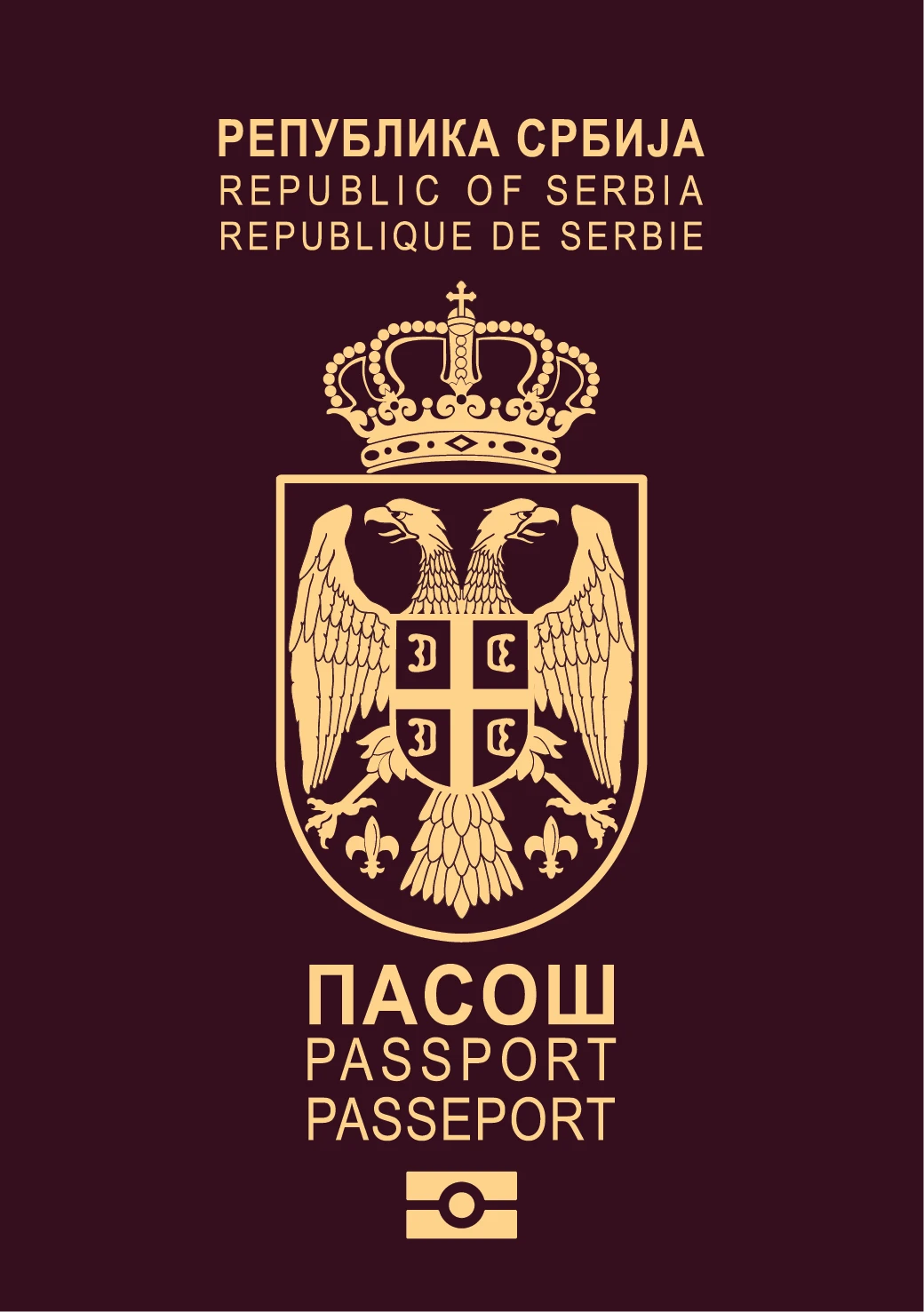
The document meets 9303 (the rulebook airports use to read passport chips at e-gates). The biometric chip went live in July 2008 and was upgraded in April 2026 alongside a cover refresh to burgundy — the (European Union) standard colour. Biometric upgrades were a precondition for Schengen visa-liberalisation in 2009.

Serbia opened EU accession negotiations in January 2014 after receiving formal candidate status in March 2012. Twenty-two of 35 negotiation chapters are open and two are provisionally closed. The accession path is conditional on rule-of-law reforms and the normalisation of relations with Kosovo.

Tax positioning is plain. Serbia uses residence-based taxation: only people living in Serbia file Serbian tax on worldwide income. Once a holder moves abroad and breaks Serbian residency, the passport carries no global tax-filing obligation — unlike US citizenship, which taxes its holders globally for life.
A passport can be used exclusively by the person to whose name it has been issued. The competent authority in charge of internal affairs of the Republic of Serbia issues biometric passports.

Serbia Passport at a Glance

Global rank (2026)

30th worldwide — one of the steepest climbs of the last 20 years, up from rank #70 in 2006 after Schengen visa-liberalisation in 2009 and bilateral deals with China and Russia.

Visa-free destinations

135 countries and territories — including all 29 Schengen states, mainland China, Russia, Japan, South Korea, Singapore, the , and most of South America.

Document type

Burgundy biometric ePassport (electronic passport with a chip inside the cover). Burgundy is the -standard cover colour; the design was refreshed in April 2026.

Page count

32 pages for visa stamps and entry/exit stamps in the standard adult booklet.

Languages

Three languages on the document — Serbian written in the Cyrillic alphabet, Serbian written in the Latin alphabet, and English.

Adult validity

10 years for holders aged 18 and over — the same as most (Group of Seven leading economies) passports.

Child validity (under 16)

Five years for children aged 3 to 14, and three years for children under 3, then renewed.

Dual citizenship

Allowed by reciprocity — Serbia recognises a second nationality only when the other country also accepts dual nationality with Serbia. Most and Western states qualify.

Issuing authority

(Ministry of the Interior — Ministarstvo unutrašnjih poslova). (Ministry of Foreign Affairs) consulates issue passports to Serbs living abroad.

History

First biometric ePassport rolled out on 7 July 2008, the same year visa-free Schengen access opened politically. Cover refreshed to burgundy in April 2026.

Serbia Passport Visa-Free Destinations by Region

Regional Mobility

Economic Mobility Score: 70%Country GDP: 0.1%
Visa Exceptions
Radar values reflect the share of each region's destinations accessible visa-free or visa-on-arrival to Serbian passport holders, drawn from the 135-destination 2026 visa-free list.

Holders can fly to 135 places without a prior visa: across most of Europe under Schengen rules, into mainland China and Russia under bilateral agreements, into Japan and South Korea on tourist visa-waivers, and across most of South America. The geographic spread — full Schengen plus the two largest non-Western powers — is uncommon for a non-member of the (European Union).

Americas

South America is wide open on a Serbian document. Brazil, Argentina, Chile, Peru, Colombia, and Uruguay each allow 90 days visa-free per stay. Central America is friendly too: Costa Rica, Panama, and Nicaragua admit holders without a prior visa. Across the Caribbean, Antigua and Barbuda allows 6 months, Barbados 90 days, and Saint Kitts and Nevis 90 days. The United States and Canada do require a visa in advance — both will accept a (US business/tourist visa) or a TRV (Canadian Temporary Resident Visa) but neither participates in a visa-waiver with Serbia.

Europe

The (29 European states with no internal border checks) admits Serbian passport holders for 90 days within any 180-day window, a rule in place since 19 December 2009 when the European Council lifted the short-stay visa requirement. The United Kingdom still requires a visa for tourism and business stays. Outside Schengen, the Western Balkan neighbours run a near-zero-friction circle: Albania, Bosnia and Herzegovina, Kosovo, Montenegro, North Macedonia, and Turkey all admit Serbian holders for 90 days, and an internal ID card (no passport needed) works across most of that ring. From late 2026, the (European Travel Information and Authorisation System) electronic pre-screening will be required for Schengen entry; it is not a visa, just a quick online check costing €20 valid three years.

Asia-Pacific

China is the headline visa-free destination on this passport. The bilateral mutual visa-waiver entered into force in October 2017 and grants 30 days per stay within a 60-day window — a treaty agreement, not a Beijing-discretionary pilot. Russia is next: 30 days per stay under the 2009 visa-waiver, capped at 90 days per calendar year. Japan and South Korea both grant 90 days for tourism (South Korea via the K- electronic pre-screening). Singapore admits holders for 30 days. Across Southeast Asia, Indonesia (30 days), Thailand (60-day eVisa or 15-day visa-on-arrival), and Malaysia (30-day eVisa) cover the main destinations. The single big gap is Australia and New Zealand, both of which still require a paid eVisa.

Middle East

The United Arab Emirates admits Serbian passport holders for 90 days without a prior visa — the deepest Gulf access on the document. Israel grants 90 days under an ETA (Electronic Travel Authorisation) pre-screening. Iran allows 15 days visa-free. Turkey allows 90 days visa-free, useful for Balkan-linked routings. The rest of the Gulf (Bahrain, Jordan, Kuwait, Oman, Qatar) is handled by eVisa or visa-on-arrival in 14- to 90-day blocks; only Saudi Arabia still requires a full pre-issued visa for most purposes.

Africa

Visa-free access in Africa is selective. Gambia (90 days), Mauritius (60-day visa-on-arrival), and Zambia (90 days) admit holders without a prior visa. The continent's big tourist economies — Egypt (30-day eVisa or visa-on-arrival), Kenya (eTA), Ethiopia, Rwanda, Senegal, Tanzania, and Nigeria — accept holders on eVisa or visa-on-arrival within 30 to 90 days. South Africa is the notable gap and still requires a full pre-issued visa. Across the continent the practical pattern is: get the eVisa online before you fly.

Offshore Jurisdictions

The offshore-financial picture is mixed for Serbian holders. The Dutch Caribbean is open: Aruba allows 30 days, Curaçao 90 days, and Sint Maarten 90 days. The UK overseas territories (Bermuda, the British Virgin Islands, the Cayman Islands, Turks and Caicos) require a visa, as does the US Virgin Islands group. So holders relying on offshore-finance hubs should plan around the BOTC (British Overseas Territories Citizen) network's visa requirement; the Dutch-Caribbean cluster is the realistic alternative.

Where a Visa Is Still Required

  • United States — B1/B2 visitor visa needed in advance; Serbia is not in the US Visa Waiver Program.
  • Canada — TRV (Temporary Resident Visa) or eTA required depending on travel mode.
  • United Kingdom — Standard Visitor visa required for tourism and short business.
  • Australia and New Zealand — paid eVisa or (New Zealand Electronic Travel Authority) required.
  • South Africa, Saudi Arabia, Nigeria (full visa), and most Central African states — pre-issued visa needed.

How to Get a Serbia Passport

1

Get a Residence Permit

There is one official route to a Serbia passport: become a Serbian citizen first. There is no investor-passport scheme, no donation route, no fast-track for wealthy applicants outside of the discretionary Article 19 exception for nationally significant contributions. Citizenship in turn requires permanent residency, which requires going through one of Serbia's standard residency programmes first. The whole chain runs through the (Ministry of the Interior).

The standard route starts with a temporary residence permit (boravišna dozvola), valid for up to one year and renewable. Common grounds include employment, business ownership, self-employment, family reunification with a Serbian citizen or resident, study at an accredited Serbian institution, and recently a digital-nomad-style remote-work permit. The temporary permit is the entry door; without it, the permanent-residence and citizenship clocks do not start.

After holding a temporary residence permit continuously, the holder applies for permanent residence (stalno nastanjenje). The standard wait is three years of continuous lawful temporary residence in most categories; family reunification cases with a Serbian spouse can apply after fewer years. Permanent residence has no expiry but the holder must remain physically tied to Serbia and not be absent for more than one continuous year. Permanent residence is what unlocks the naturalisation clock.

2

Build Residency History

Once permanent residence is granted, the naturalisation clock begins. Serbia's nationality law requires at least three years of uninterrupted permanent residence to apply for citizenship by admission — far shorter than the 5-to-10-year norm in most of Europe. The 3-year count starts from the date the permanent-residence card was issued, not from the day the applicant first set foot in Serbia.

During these three years, the applicant must keep Serbia as their habitual home. Long trips abroad are permitted but the residence test breaks if absences add up to more than 12 continuous months. The applicant must also keep a clean criminal record in Serbia and abroad, and must be able to demonstrate financial self-sufficiency — typically a tax return, employment contract, or business income statement covering the years on the application.

A signed declaration that the applicant considers Serbia their country (a statement of allegiance to Serbia) is also part of the file. This is a written affirmation, not an oath in front of a judge. Children born to a permanent-resident parent inherit residency status automatically and do not restart the clock when the parent naturalises.

3

Apply for Citizenship

The citizenship application is filed at a local police directorate of the (Ministry of the Interior), or at a Serbian consulate abroad. The headline state fee is 25,000 Serbian dinars (about USD 230 at 2026 reference rates), plus modest stamp and document-translation costs. There is no separate language test or formal civics test on the standard naturalisation route; the requirement is permanent residence, clean criminal record, financial self-sufficiency, and the signed allegiance statement.

Three faster routes shortcut the standard three-year wait. First: marriage to a Serbian citizen with three years of marriage plus permanent residence in Serbia drops the residency requirement. Second: ethnic Serbs and members of the Serbian diaspora can naturalise under simplified provisions without the three-year residence requirement, by showing a Serbian ethnic connection — proof of Serbian heritage through documents, language, or community ties. Third: the Article 19 Citizenship by Exception, granted by Presidential decree, allows the Government to admit foreign nationals whose contribution in science, culture, sport, the arts, business, or diplomacy is in Serbia's national interest. Notable athletes, business founders, and cultural figures have used this route.

The Serbian Government reviews the file and the President signs the decree. Standard processing runs about 9 to 12 months; the Article 19 fast-track can finish in three to six months. Approval requires release from prior nationality only where the law of the other country demands it — most and Anglo-Saxon states allow dual citizenship with Serbia, so most applicants keep both passports.

4

Apply for the Passport

Once the citizenship decree is signed, the new citizen books a passport appointment at any police station — or at a Serbian diplomatic or consular mission abroad. Biometric data are captured on the spot: photograph, fingerprints, and a signature. The standard state fee is 4,500 Serbian dinars (about USD 42 at 2026 reference rates) for the adult 10-year booklet, with reduced rates for children's shorter-validity booklets.

The booklet is produced at the central state-printer in Serbia, not abroad, so consular-issued passports take longer to arrive than passports collected in person at a Belgrade or Niš MUP office. The legal processing deadline is 60 days from biometric capture; standard cases run 30 to 45 days, while consular cases abroad run 6 to 10 weeks because the printed booklet has to be shipped through the diplomatic pouch.

Adult passports are valid for 10 years; children's passports run 3 to 5 years depending on age band. The passport is collected in person — the applicant or an authorised representative signs for delivery — and an old passport is cancelled and returned on collection. Serbia keeps standard and emergency-travel-document tracks for lost-abroad cases, and any Serbian embassy can issue a temporary one-trip travel document within 1-2 business days.

Serbia recognises citizenship by descent — jus sanguinis (right of blood) — so a child born to a Serbian citizen parent acquires Serbian nationality automatically at birth, no matter where the birth happens. This is the route most foreign-born descendants of Serbian emigrants use. The applicant has to prove a direct line of descent from at least one Serbian citizen at the time of the applicant's birth, with civil records — birth certificates, marriage certificates, baptism records — covering each generation on the line.

The descent line has a hard generation limit. Under the 2004 Citizenship Law, descent-based citizenship is acquired by birth abroad to at least one Serbian-citizen parent, and the applicant must be entered onto the Serbian register of citizens before the age of 23. After age 23, the descent route shuts unless the applicant has been living continuously in Serbia for an extended period. So the practical window is: gather paperwork in your teens and early twenties, and register before the 23rd birthday.

Ethnic Serbs and members of the Serbian diaspora can also qualify under a simplified naturalisation route that does not require three years of permanent residence. The applicant must show that they belong to the Serbian people or have a Serbian ethnic connection — proof typically uses old family civil records, a signed declaration of Serbian belonging, and (in practice) some evidence of community or language ties. There is no minimum stay-in-Serbia requirement on this branch; the file can be submitted at a consulate abroad.

Children adopted by a Serbian citizen acquire Serbian nationality automatically if they are minors at adoption and the adoption is registered in the Serbian civil register. Spouses of Serbian citizens have their own simplified route: three years of marriage plus permanent residence in Serbia drops the standard three-year naturalisation clock — see step 3 for the marriage-based and Article 19 fast-tracks.

Comparison of Serbia Passport With Other Top Passports

Passport

Rank

Visa-free

Key edge

Singapore Passport

#1

192

Global top-ranked benchmark — what maximum mobility looks like.

France/Italy/Spain Passports

#4

185

EU big states: full Schengen plus residency rights across 27 countries.

Turkey Passport

#45

113

Closest EU candidate peer with similar regional positioning.

Georgia Passport

#41

120

Non-EU European peer with comparable EU-candidate trajectory.

United States Passport

#10

179

Worldwide-tax US passport — broader mobility, heavier tax cost.

Serbia's passport sits in the upper-middle global tier — above most of the Western Balkans and the Middle East, below the (European Union) member states and the global top tier. The unusual edge is Schengen-plus-China-plus-Russia on one document.

Serbia vs Singapore (rank #1). Singapore opens 192 visa-free destinations against Serbia's 135. The Anglosphere is the gap — the US, Canada, UK, Australia, and New Zealand do not admit Serbian holders without a prior visa. Singapore does not have visa-free access to Russia, though, so a Singaporean cannot land in Moscow without a visa while a Serbian can.

Serbia vs the EU top tier. EU member-state passports unlock Schengen plus the right to live, work, and study in any of 27 states — a right Serbia does not yet have. They also open visa-free Anglosphere mobility through the US (Electronic System for Travel Authorization), the Canadian , the (New Zealand Electronic Travel Authority), and Australia's eVisa.

Serbia vs Turkey and Georgia. Turkey and Georgia are the closest non-EU European peers — both EU candidates or aspirants. Serbia's 135 visa-free destinations outpace Turkey's 113 and Georgia's 120, sitting above both on global reach. Georgia has closed the gap significantly in recent years — it now stands just 15 destinations behind Serbia — but Turkey remains a more distant third, held back by slower diplomatic progress on Schengen liberalisation.

Serbia vs the United States. The US passport opens 179 destinations against Serbia's 135 but carries a heavy tax cost: the US taxes citizens on worldwide income for life. Serbia uses residence-based taxation, so a Serbian holder living abroad owes Serbia nothing on foreign income — a structural advantage the US document does not match.

Pros and Cons of the Serbia Passport

Pros7 strengths
Cons7 frictions
  • 01Mobility
    Strong Upper-Mid-Tier Mobility for a Non-EU Passport
    135 visa-free or visa-on-arrival destinations in 2026, ranking 30th globally — well above most of the Western Balkans and most of the Middle East, and the highest 20-year climb of any passport (up from rank #70 in 2006).
    135 dest.
  • 02Mobility
    Full Schengen 90/180 Without Visa
    Holders move across 29 Schengen states for 90 days within any 180-day window — a right granted in December 2009 after Serbia met biometric-passport and border-cooperation conditions.
    Schengen
  • 03Mobility
    Rare East-Bloc Mobility Combo
    Visa-free entry to mainland China since October 2017 and Russia since 2009 — a combination that no Western EU or G7 passport currently matches on a single document.
    China + Russia
  • 04Eligibility
    Short Naturalisation Wait
    Three years of uninterrupted permanent residence is the standard wait for citizenship by admission — among the shortest in Europe; most EU states require 5 to 10 years.
    3-year route
  • 05Tax
    Residence-Based Taxation
    Serbia taxes only people who live in Serbia, not citizens worldwide, so the passport carries no global tax-filing obligation once the holder moves abroad and breaks Serbian tax residency.
    Residence tax
  • 06Eligibility
    Discretionary Fast-Track for Notable Contributors
    The Article 19 Citizenship by Exception lets the Government grant citizenship by Presidential decree to athletes, scientists, artists, and other individuals of national interest — bypassing the three-year residency wait.
    Article 19
  • 07Standing
    EU Accession Trajectory Open Since 2014
    Serbia opened EU accession negotiations in January 2014 after receiving formal candidate status in March 2012 — 22 of 35 negotiation chapters are open, two provisionally closed.
    EU candidate
  • 01Mobility
    Major Anglosphere Markets Require a Visa
    The United States, the United Kingdom, Canada, Australia, and New Zealand all require a pre-issued visa or paid eTA for Serbian holders — a significant gap for business travellers heading to those five markets.
    US/UK visa
  • 02Rights
    Not Yet an EU Member-State Passport
    Holders cannot live, work, or study in EU states under freedom-of-movement rules — only the 90-day tourist allowance. EU labour-market access still requires a national work permit until accession completes.
    Not EU yet
  • 03Rights
    Dual Citizenship Allowed Only by Reciprocity
    Serbia recognises dual nationality only when the other country also accepts dual nationality with Serbia. Most EU and Western states qualify, but some Asian states (e.g., China, Japan, South Korea) still demand renunciation.
    Dual reciprocity
  • 04Mobility
    Limited African Visa-Free Reach
    Only Gambia, Mauritius (visa-on-arrival), and Zambia admit Serbian holders without prior paperwork. South Africa, Egypt's tourist hub, and most of West Africa require an eVisa or full visa.
    Africa gap
  • 05Document
    Slow Consular Issuance Abroad
    The legal processing deadline is 60 days, and consular cases typically run 6 to 10 weeks because every booklet is printed in Serbia and shipped through the diplomatic pouch — slower than EU member-state passports issued at consulates.
    60-day target
  • 06Descent
    Descent Has a Generation Limit
    Citizenship by descent must be claimed before the applicant's 23rd birthday under the 2004 Nationality Law — older descendants of Serbian emigrants can no longer use the descent route and must go through the simplified-naturalisation diaspora track instead.
    Article 38
  • 07Validity
    ETIAS Pre-Authorisation From Late 2026
    Serbian holders will need an ETIAS (European Travel Information and Authorisation System) electronic pre-screening for Schengen entry from Q4 2026 — €20 valid three years, not a visa but an extra step.
    ETIAS €20

Dual Citizenship — When Serbia Allows Two Passports

Serbia allows dual citizenship by reciprocity. This means a Serbian citizen can hold a second passport — but only when the other country also accepts dual citizenship with Serbia, and only when the other country's law lets its own citizens hold a Serbian passport at the same time. The reciprocity test is run case by case at the moment of naturalisation.

The reciprocity rule. When a foreign national naturalises in Serbia, the file asks whether they have been released from their prior nationality. If the prior nationality's law allows the holder to keep that citizenship while becoming Serbian, no renunciation is required. If the prior law forces renunciation (as is the case in China, Japan, India, and South Korea), the Serbian process either waits for the renunciation evidence or proceeds and leaves the citizen to deal with the other country's rules separately. Most (European Union), North-American, and Latin-American countries fall on the reciprocity-friendly side.

Born-dual citizens. Children born abroad to a Serbian citizen parent — even one — acquire Serbian nationality automatically at birth and can hold the other parent's nationality at the same time. There is no later forced choice. A Serbian-Italian child or a Serbian-American child keeps both passports for life. The same rule applies to adopted minors entered in the Serbian civil register before age 18.

The border rule. At the Serbian border, a dual national must present their Serbian passport when entering or leaving Serbia. Outside Serbia, the dual national chooses which passport to present at each border — often the most convenient one for the destination. When dealing with consulates abroad, dual nationals can only invoke the protection of the country whose passport they are currently using; Serbian consulates cannot help a Serbian national in their other citizenship country.

Reporting and tax. Serbia does not require dual citizens to file an annual nationality report, and there is no -style (US Foreign Account Tax Compliance Act, a citizenship-linked reporting regime) information-sharing tied to Serbian citizenship. Tax is run on residence, not citizenship, so dual nationals living outside Serbia owe Serbian tax only on Serbia-source income. The other country's tax rules apply separately and can include worldwide-income obligations — the United States in particular taxes its citizens on worldwide income for life, regardless of their other passport.

Bottom Line on the Serbia Passport

For a non-EU European document, the Serbian passport is a strong piece of mobility. The headline numbers — rank 30, 135 visa-free destinations — sit comfortably above most of the Middle East and most of the Western Balkans. The differentiator is structural: full Schengen plus mainland China plus Russia on one document is a combination only a handful of passports can offer in 2026.

Best fit. Internationally mobile professionals, founders, and investors who move regularly between Europe, East Asia, and the post-Soviet space. People with Serbian heritage who can use the descent or diaspora track. Athletes, scientists, and notable contributors who qualify for the Article 19 fast-track. People who want a short three-year naturalisation wait without giving up an existing nationality and who do not need full EU residence rights.

Weaker fit. Travellers whose work is concentrated in the United States, the United Kingdom, Canada, Australia, or New Zealand — five markets that still require a pre-issued visa for Serbian holders. People who want to live and work anywhere in the EU under freedom-of-movement rules; that remains an EU member-state benefit, not a Serbian benefit. People hunting a quick investor-passport route — Serbia does not run a citizenship-by-investment programme; Article 19 is discretionary, not transactional.

Final assessment. Serbia in 2026 is on a clear upward trajectory: rising on global mobility rankings for two decades, halfway through EU accession negotiations, and unusually well-positioned for travel between major non-Western powers. The passport is at its most useful for holders who already have global mobility on another document and want a strategic second one — and for diaspora descendants reclaiming a that the 2004 Nationality Law deliberately preserved.

Serbia Passport FAQ

Which countries can Serbian passport holders visit visa-free in 2026?

Serbian passport holders reach 135 destinations without a prior visa, covering all 29 Schengen states for 90 days per stay, mainland China for 30 days, Russia for 30 days, Japan and South Korea for 90 days, the UAE for 90 days, Singapore for 30 days, and most of South America. The five destinations still requiring a pre-issued visa are the United States, Canada, the United Kingdom, Australia, and New Zealand.

Can Serbian passport holders travel to Russia and China without a visa?

Yes — and it's a rare combination. Serbian citizens enter mainland China visa-free for 30 days within a 60-day window under a bilateral agreement active since October 2017, and Russia visa-free for 30 days per stay (capped at 90 days per calendar year) under a 2009 deal. Add full Schengen access on top, and Serbia holds one of the only passports offering Western Europe, China, and Russia simultaneously without a prior visa. Most G7 and EU passports cover Schengen and China but lack visa-free Russia entry entirely.

Can I get Serbian citizenship through investment?

No. Serbia has no citizenship-by-investment programme and no golden passport route. The only way to a Serbian passport is through the standard naturalisation path: temporary residence, then three years of permanent residence, then an application decided at the state's discretion. The sole exception is Article 19, a discretionary Presidential decree for individuals of exceptional national interest — scientists, athletes, artists — which is not transactional.

How long does it take to get Serbian citizenship in 2026?

The minimum timeline is roughly six years: three years of continuous temporary residence to qualify for permanent residence, then three further years of permanent residence before filing a naturalisation application. Processing runs nine to twelve months after filing. There is no language test on the standard route, but the applicant must demonstrate financial self-sufficiency and a clean criminal record. The Article 19 fast-track can be completed in three to six months, but is entirely discretionary.

What is the cost of getting a Serbian passport in 2026?

The state fee for citizenship naturalisation is 25,000 Serbian dinars, approximately $230 at 2026 rates, plus modest translation and stamp costs. Once citizenship is granted, the adult biometric passport costs a further 4,500 dinars, roughly $42. There are no programme fees, no investment thresholds, and no agent fees mandated by the state — Serbia's passport path is among the cheapest in Europe once residency is established.

Does Serbia allow dual citizenship?

Serbia allows dual citizenship by reciprocity: a Serbian citizen may hold a second passport only when the other country also permits its own citizens to hold Serbian nationality simultaneously. Most EU, North American, and Latin American states qualify. The main exceptions are China, Japan, India, and South Korea, all of which require renunciation. Children born abroad to at least one Serbian parent acquire dual nationality automatically at birth with no later forced choice.

Does the Serbian passport give access to the EU for work and residency?

No. The Serbian passport grants visa-free tourist access to the Schengen Area for 90 days within any 180-day window, but it carries no right to live, work, or study in EU member states. That right belongs exclusively to EU citizenship. Until Serbia completes accession — 22 of 35 negotiation chapters are open, two provisionally closed — Serbian nationals working in the EU still require individual national work permits from each member state.

Can I claim Serbian citizenship by descent in 2026?

Yes, but within strict limits. A child born abroad to at least one Serbian citizen parent acquires nationality automatically at birth. For older descendants of Serbian emigrants, the descent route requires registration on the Serbian civil register before the applicant's 23rd birthday under the 2004 Nationality Law. After 23, the standard descent path closes; the alternative is the simplified diaspora naturalisation route, which requires proving Serbian ethnic connection through family documents but no minimum stay in Serbia.