WorldPath AIWORLDPATH•AI
Europe

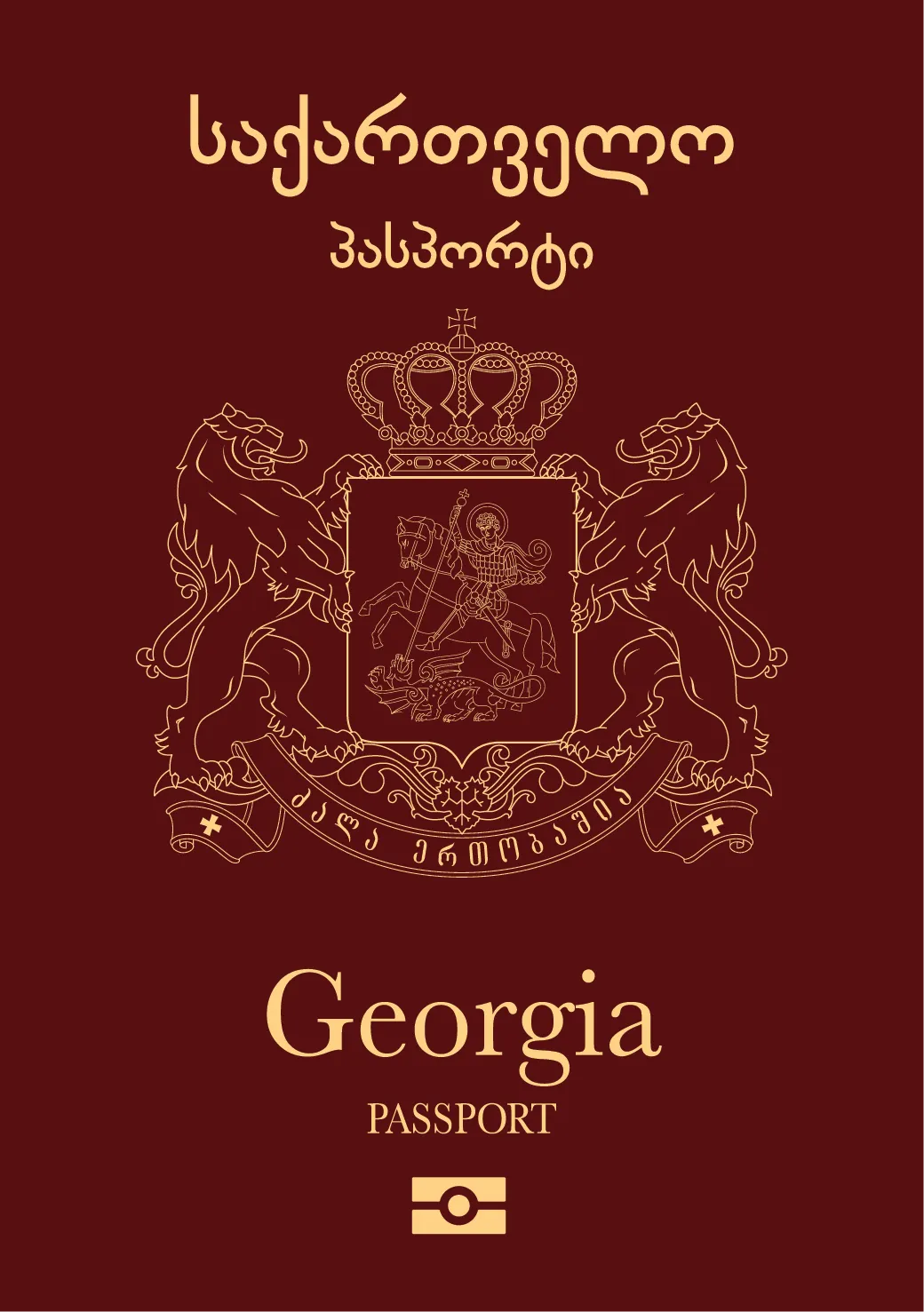
Georgia Passport

Ranked #41 Globally

In 2026, Georgia's passport sits in 41st place worldwide, tied with the Federated States of Micronesia and Palau. Its holders can travel to 120 countries either without a visa or with a quick visa-on-arrival. Georgia joined the (the borderless travel zone covering most of Europe) visa-free regime on 28 March 2017, after the (European Union, a 27-state political and economic union) granted Georgian biometric passport holders short-stay visa liberalisation. Georgia received EU candidate-country status on 14 December 2023, but accession has been on a de facto hold since June 2024 after a domestic foreign-influence law was passed in Tbilisi. The passport is issued by the Public Service Development Agency under the Ministry of Justice of Georgia. A special investor-citizenship procedure opened in February 2025.

41st
Global Ranking
120
Destinations
58.29
Mobility Score
Georgia Passport

Georgia Passport Global Mobility Context

Georgia is an (the European Union, a 27-state political and economic union) candidate country since 14 December 2023. It is a Council of Europe member since 1999, and a member of the United Nations and the World Trade Organization. Georgia maintains an Association Agreement and a Deep and Comprehensive Free Trade Area with the EU since 2014.

Most countries grant Georgians visa-free or visa-on-arrival entry in 2026. Per global mobility indices, the Georgian passport has climbed from the 60s in the mid-2010s to 41st in 2026. The headline milestone is the 28 March 2017 short-stay visa waiver to the for biometric-passport holders. Georgia runs roughly 48 diplomatic missions abroad.

Georgia has issued biometric ePassports since 2010, an early adopter in the region. The third generation rolled out in autumn 2016, and an updated design with modernised national symbols entered issuance in October 2025. The chip follows 9303 (the International Civil Aviation Organization standard that airports use to read passport chips at e-gates). The data page is printed in Georgian and English; biographical fields use Georgian Mkhedruli script with Latin transliteration.
The transition to the biometric passport issuing system significantly increases the reliability of the documents issued by Georgia. Biometric passport is a highest technology and counterfeit-protected travel document.

Georgia Passport at a Glance

Global rank (2026)

#41 across major passport indices, tied with the Federated States of Micronesia and Palau

Visa-free destinations

120 destinations, including the full , Turkey on ID-card entry, , Israel via , and mainland China since 2024

Document type

ePassport with biometric chip, 9303 compliant; the second-generation biometric document has been issued since 2010

Page count

36 pages standard; no extended option on the ordinary passport

Languages

Georgian and English on the data page; biographical fields are dual-script (Georgian Mkhedruli and Latin transliteration)

Adult validity

10 years for the standard adult passport, issued to applicants aged 18 and over

Child validity (under 16)

3 years for minors under 18 (no separate 16-cutoff in Georgian rules)

Dual citizenship

Generally not allowed by default since the 2014 Organic Law; the President may grant by exception for state-interest cases or retained foreign citizenship

Issuing authority

Public Service Development Agency (, Sajaro Reestri's Servisebis Saagento) under the Ministry of Justice of Georgia

History

First Georgian passports issued by the Democratic Republic of Georgia from 1918 to 1921; modern biometric ePassport issued since 2010; third-generation security update from autumn 2016

Georgia Passport Visa-Free Destinations by Region

Regional Mobility

Economic Mobility Score: 58.29%Country GDP: 0.034%
Visa Exceptions
Europe shows 71 per cent: Schengen + Western Balkans are visa-free, but the UK, Ireland, Russia, and Belarus still require a visa. The Americas score is dragged down by visa requirements for the US, Canada, and Mexico. The Middle East is one of Georgia's strongest regions thanks to Turkey ID-card entry, UAE, Israel ETA, and Iran 45-day visa-free.

The five most-asked-about destinations split into wins and losses for Georgians. The gives 90 days within any 180-day window visa-free since 28 March 2017 (biometric passport required). Turkey accepts a Georgian national ID card for entry, not even a passport, for stays up to 90 days. The United Arab Emirates allows 90 days visa-free. The United States, the United Kingdom, Canada, and Japan all still require a full visa for ordinary Georgian passport holders — a major mobility gap that distinguishes Georgia from the (European Union) passports it geographically resembles. Mainland China is visa-free for 30 days under a Beijing pilot in force since 2024.

Americas

Visa-required for most of North America. The United States, Canada, and Mexico all require a visa for Georgian passport holders. Across the Caribbean, Antigua and Barbuda, Bahamas, Barbados, Dominica, Dominican Republic, Grenada, Haiti, Saint Lucia, and Saint Vincent and the Grenadines grant visa-free entry. In South America, Argentina, Brazil, Chile, Colombia, Ecuador, Paraguay, Peru, Suriname, and Uruguay are visa-free. Costa Rica, El Salvador, Guatemala, Honduras, and Guyana still require advance visas. The Americas are the weakest region for the Georgian passport — the absence of US, Canadian, and Mexican access shapes the regional mobility score.

Europe

Georgians enter the entire Schengen Area without a visa for stays up to 90 days within any 180-day window, since 28 March 2017. That covers France, Germany, Italy, Spain, the Netherlands, Belgium, Austria, Switzerland, Greece, Portugal, the Nordic countries, the Baltics, plus newer additions like Croatia, Bulgaria, and Romania. The biometric passport is required — Georgians with older non-biometric documents still need a visa.

The United Kingdom and Ireland require advance visas. The non-Schengen Western Balkans — Albania, Serbia, Bosnia and Herzegovina, North Macedonia, and Montenegro — all grant visa-free entry to Georgians for up to 90 days. Russia and Belarus require advance visas; consular capacity for Russian visas has slowed materially since 2022. Note: from 6 March 2026, the EU suspended visa-free travel for holders of Georgian diplomatic, service, and official passports for 12 months. Ordinary biometric passports are not affected by that suspension.

Asia-Pacific

Visa-free entry to a handful of major destinations; e-visa or visa-on-arrival in many others. Thailand allows 60 days visa-free. Malaysia and the Philippines allow 30 days visa-free. Cambodia, Laos, Indonesia, and Myanmar use a mix of e-visa and visa-on-arrival. Vietnam uses an e-visa. Singapore requires an e-visa application. Japan and South Korea still require advance visas for ordinary Georgian passport holders — two notable closed doors in East Asia.

Mainland China is visa-free for Georgians for 30 days under a Beijing pilot policy in force since 2024. The 30-day window admits Georgian nationals for tourism, business, family visits, and transit; longer stays still need a full Chinese visa. India requires an e-visa. Pakistan, Bangladesh, and Bhutan require advance visas; Sri Lanka and Nepal offer visa-on-arrival. In Oceania, Australia uses an e-visa system and New Zealand requires a full visa. Fiji grants 4-month visa-free entry — the longest in the region for Georgian holders.

Middle East

The Middle East is one of the stronger regions for the Georgian passport. The United Arab Emirates and Qatar allow visa-free entry for up to 90 and 30 days. Turkey allows ID-card entry for up to 90 days — Georgians do not even need a passport for Turkish visits, an arrangement unique to a handful of neighbouring states. Israel uses an (Electronic Travel Authorisation Israel), a short online pre-screening introduced in 2025. Saudi Arabia issues e-visas online. Iran is visa-free for 45 days, an unusual arrangement reflecting historical regional ties. Bahrain, Jordan, Kuwait, and Oman offer e-visa or visa-on-arrival.

Africa

Mostly e-visa or visa-on-arrival across the continent. Egypt, Tanzania, Uganda, Rwanda, Nigeria, and Ethiopia use e-visas or visa-on-arrival. Kenya requires an Electronic Travel Authorisation (, a short online pre-screening) since January 2024. Mauritius and the Seychelles allow 60 to 90 days visa-free. Morocco still requires an advance visa. South Africa has announced visa-free access for Georgians but had not implemented it as of May 2026. Visa-required destinations include Libya, Sudan, Eritrea, and several Central African states, often with significant processing delays.

Offshore Jurisdictions

Visa-free in several offshore and financial-centre jurisdictions. The Cayman Islands, British Virgin Islands, and the Bahamas allow short visa-free stays for Georgians. The Channel Islands (Jersey and Guernsey), the Isle of Man, and Gibraltar follow UK visa rules — and the UK requires a visa for Georgians, so most British Crown dependencies do not grant visa-free access. Mauritius and the Seychelles allow 60 to 90 days. Hong Kong and Singapore offer limited visa-free or e-visa access. The offshore picture is weaker than for EU passport holders, because the UK and Crown dependencies are closed.

Where a Visa Is Still Required

  • United States, Canada, and Mexico: Full visa for ordinary Georgian passport holders.
  • United Kingdom and Ireland: Full visa.
  • Japan, South Korea, and New Zealand: Full visa.
  • China: Currently visa-free for 30 days under the 2024 pilot, but a full Chinese visa is required for stays beyond that or for working/studying.
  • Russia and Belarus: Full visa; processing has slowed since 2022.
  • Most of the Sahel and North Africa (Libya, Sudan, Eritrea, Algeria, Morocco): Full visa, often with long processing.
  • Australia: e-visa (online application required before boarding).

How to Get a Georgia Passport

1

Get the Qualifying Residence Permit

The standard path begins with a Georgian residence permit. Several types qualify.

Work, study, or family residence permit — the default route for most applicants.

Employment with a Georgian company, an Intra-Company Transfer from a multinational, enrolment at a Georgian university, or family reunification with a Georgian resident all open a residence permit. These permits are issued for one to six years and are renewable. Time on a temporary permit counts fully toward the 10-year residence requirement for citizenship by naturalisation.

Investor Residence Permit — real-estate or business route.

Georgia has run an Investor Residence Permit since 2014. Two principal sub-tracks exist. First, the real-estate short-term permit: purchase non-agricultural property at a minimum value of USD 150,000 (raised from USD 100,000 on 1 March 2026 by the amended Law on the Legal Status of Aliens). The permit is valid for one year and renewable. Second, the investment residence permit at USD 300,000 in qualifying business or property, which delivers a five-year permit on first issuance. Both routes count toward the 10-year naturalisation timeline.

tax-residency status — separate from immigration permit.

Georgia offers a High Net Worth Individual (HNWI) tax-residency certificate for applicants meeting GEL 3,000,000 in global assets or GEL 200,000 annual income for three years, plus a Georgia connection (USD 500,000 in Georgian property or a Georgian residence permit). HNWI status delivers Georgian tax residency without the 183-day physical-presence rule and grants 0 per cent personal income tax on most foreign-source income. HNWI is a tax status, not a residence permit; it does not by itself count toward citizenship.

Permanent residence after 6 years on a temporary permit.

After six years on a temporary permit, the applicant may apply for a permanent residence permit. The permanent permit grants the right to live and work without further work-permit checks. From there, the remaining time counts toward the 10-year naturalisation requirement.

2

Build Residency History

You must be lawfully resident in Georgia for a total of 10 years before applying for citizenship by naturalisation. The count is cumulative legal residence, including temporary and permanent permit years.

Shorter timelines apply in specific cases. Spouses of Georgian citizens may apply after 5 years of marriage and residence. The zero-residence simplified routes are: the President's by-exception citizenship for state-interest cases (covered in Step 4 below), and the Special Contribution Citizenship route launched in February 2025. To keep the residence-status alive, you must avoid extended uninterrupted absences from Georgia.

3

Apply for Citizenship

Submit the naturalisation application to the Public Service Development Agency on the prescribed form, in Georgian. Supporting documents include: certified birth and marriage certificates, evidence of 10 years of legal residence, proof of livelihood and stable accommodation, and a clean criminal record from Georgia and from every country where you have lived for more than six months.

Three tests stand between the applicant and approval. First, a Georgian-language proficiency test administered by the Public Service Development Agency, conducted in Georgian, assessing reading, writing, and conversational ability at a working intermediate level. Second, a history-of-Georgia exam — multiple-choice and short-answer questions in Georgian on key events, figures, and dates. Third, a basics-of-Georgian-law exam covering the Constitution of Georgia, the structure of government, and citizen rights and duties, also in Georgian. The three tests are bundled into a single examination day at a Public Service Hall. Exemptions are rare and limited to applicants with disabilities preventing testing, or cases granted under the President's by-exception procedure.

After passing all three tests, the applicant takes the oath of allegiance to Georgia and the President signs the citizenship decree. Total processing for the standard route runs about 12 months from application to oath. Note that Georgia does not allow dual citizenship by default — applicants are typically required to renounce their prior nationality, unless their case qualifies for the Presidential exception.

4

Apply for the Passport

You must hold a Georgian citizenship decree and an identity card before you can apply.

Adults inside Georgia apply at any Public Service Hall, a branch of the Public Service Development Agency, or via the agency's online portal. Applicants abroad apply at any Embassy or Consulate of Georgia. The application requires a recent biometric photograph (35 x 45 mm, plain background, taken within six months), a valid Georgian identity card, fingerprints collected on the spot, and the prescribed administrative-service fee.

Standard processing runs 10 working days; faster options at higher fees deliver the passport in 5, 3, or 1 working days. The 2026 standard adult-passport fee is GEL 150 (around USD 56 at the May 2026 reference rate of GEL 0.37 to USD 1); same-day expedited service is GEL 350 (around USD 130). Children under 18 pay GEL 75 (around USD 28). The passport is issued for 10 years for adults and 3 years for minors. The passport is collected in person at the service centre or, for applications abroad, picked up at the relevant diplomatic mission.

The four-step route above is for new applicants without a Georgian connection. If you have a Georgian parent or grandparent, or if you make a qualifying contribution to Georgia, two faster paths exist.

Citizenship by descent (jus sanguinis): under Article 10 of the Organic Law of Georgia on Georgian Citizenship (enacted 30 April 2014), a child born to at least one Georgian-citizen parent is automatically a Georgian citizen, regardless of place of birth and with no generation cap. The applicant proves the parent's Georgian citizenship through a Georgian birth certificate or passport, then registers the child's birth with a Georgian consulate or the Public Service Development Agency. There is no residence requirement, no language test, and no exam. Processing typically runs 3 to 6 months. Important caveat: because Georgia does not allow dual citizenship by default, a person automatically Georgian by descent who also acquires a foreign citizenship later must apply to Georgia for permission to keep both — otherwise the foreign citizenship can trigger termination of the Georgian one.

Citizenship by exception (Article 17.2): the President of Georgia may grant Georgian citizenship to a person making a qualifying contribution to the state interest, with no residence, language, or exam requirement. This is the legal basis for the Special Contribution Citizenship Programme launched on 24 February 2025. The programme offers three investment options: EUR 3,000,000 in a Georgian business creating at least 10 local jobs; EUR 2,000,000 (about USD 2.16 million) into a state-approved fund held for a minimum five-year period; or a non-refundable government contribution of EUR 300,000 (about USD 324,000), currently available at a discounted rate of EUR 250,000 (about USD 270,000) for early applicants — the discount is described as time-sensitive without a fixed end date. Processing runs 3 to 6 months from a complete application. Approval under this route also grants dual-citizenship rights, since the President's by-exception grant carries an explicit waiver of the renunciation requirement.

Comparison of Georgia Passport With Other Top Passports

Passport

Rank

Visa-free

Key edge

Singapore Passport

#1

192

Top-ranked passport

Germany Passport

#4

185

Top EU passport — Schengen visa-free benchmark

Turkey Passport

#45

113

Closest regional neighbour with stronger network

United Arab Emirates Passport

#2

187

Wealth-hub peer with broader visa-free reach

Serbia Passport

#30

135

Non-EU European peer with comparable mobility

Ranks below come from 2026 passport indices and Georgian data on bilateral visa rules. As a mid-tier document, the Georgian passport compares against three peer groups: the (European Union, a 27-state political and economic union), the EU candidates, and Caribbean investor-passport jurisdictions.

Georgia vs the EU passport peers. EU passports rank in the top 10 with 180-plus destinations and EU labour-market access. Georgia at #41 with 120 does not match those numbers, and a Georgian passport does not unlock the right to live or work in any EU state — the 2017 waiver is for short stays only. The mobility gap most affects the US, UK, Canada, and Japan — all visa-free for EU passports, all visa-required for Georgians.

Georgia vs neighbouring EU candidates. Ukraine, Moldova, Serbia, and Albania hold mid-tier rank with Schengen visa-free access. Their passports range from #35 to #45 with 120 to 145 destinations. Georgia's differentiator is the active investor-residence and investor-citizenship offering — the special-contribution route at EUR 250,000 to EUR 300,000 is faster than any standard EU-candidate naturalisation.

Georgia vs Caribbean passports. Caribbean CBI (Citizenship by Investment) programmes — St Kitts and Nevis, Dominica, Antigua and Barbuda — deliver a passport in 6 to 12 months for USD 200,000 to USD 250,000, with 140 to 155 destinations. Georgia's special-contribution route is comparable but lower in mobility (120). Georgia adds 0 per cent tax on foreign-source income for tax residents — a structuring angle no Caribbean CBI passport offers.

Pros and Cons of the Georgia Passport

Pros7 strengths
Cons7 frictions
  • 01Mobility
    Visa-Free Short Stays Across The Schengen Area
    Biometric-passport holders can spend 90 days in any 180-day period across Europe's Schengen zone without a visa, an arrangement in place since March 2017.
    Schengen-free
  • 02Mobility
    Visa-Free Or Visa-On-Arrival To 120 Destinations
    Georgian travellers reach 120 places without a prior visa in 2026, a sharp climb from the 60s a decade earlier, including Turkey on a national ID card alone.
    120 places
  • 03Document
    Early Adopter Of The Biometric ePassport
    Georgia has issued chip-embedded ePassports since 2010, ahead of most regional peers. The chip follows the ICAO 9303 standard (International Civil Aviation Organization) that airport e-gates read.
    Early chip
  • 04Eligibility
    Faster Investor Citizenship Than EU Candidates
    A by-exception contribution route grants citizenship in roughly three to six months, quicker than any standard naturalisation among neighbouring European Union candidate states.
    Fast route
  • 05Tax
    No Tax On Foreign-Source Income For Some Residents
    High-net-worth individuals who become Georgian tax residents can owe zero per cent on income earned outside the country, a structuring angle most rival programmes do not offer.
    0% on foreign
  • 06Validity
    Full Ten-Year Validity For Adult Passports
    The standard adult booklet, issued from age 18, stays valid for ten years before renewal, the maximum term used by most countries.
    10-yr adult
  • 07Descent
    Citizenship By Blood With No Generation Cap
    A child of at least one Georgian-citizen parent is automatically a citizen wherever they are born, with no limit on how the line passes down and no residence or language test.
    By descent
  • 01Mobility
    No Right To Live Or Work In The EU
    The Schengen waiver covers short visits only. A Georgian passport gives no right to settle or take a job in any European Union state, unlike the EU passports Georgia geographically resembles.
    No EU work
  • 02Mobility
    Visa Required For The US, UK, Canada, And Japan
    Four of the most-requested destinations stay closed to ordinary Georgian holders, who must obtain a full visa in advance. This gap is the passport's weakest point for frequent travellers.
    Big doors shut
  • 03Rights
    Dual Citizenship Banned By Default
    Since the 2014 Organic Law, taking a foreign nationality can terminate the Georgian one unless the President grants a rare by-exception waiver. Most citizens cannot freely hold two passports.
    No dual
  • 04Standing
    EU Candidate, Not Yet A Member
    Georgia has held European Union candidate status only since December 2023. Membership and the free-movement rights that come with it remain years away and are not guaranteed.
    Not in EU
  • 05Standing
    Strained Relations With Russia And Belarus
    Both Russia and Belarus require advance visas from Georgians, and consular processing for Russian visas has slowed sharply since 2022 amid regional tensions.
    Russia risk
  • 06Standing
    EU Froze Visa-Free Travel For Official Passports
    From March 2026 the European Union suspended its short-stay visa waiver for holders of Georgian diplomatic, service, and official passports for twelve months. Ordinary biometric booklets are unaffected.
    Official ban
  • 07Validity
    Short Three-Year Validity For Children
    Passports for minors under 18 expire after just three years, so families with young children must reapply and pay fees far more often than for an adult booklet.
    3-yr child

Dual Citizenship and the Georgian Passport

Georgia generally does not allow dual citizenship. The Organic Law of Georgia on Georgian Citizenship of 30 April 2014 sets the rule: a Georgian citizen who voluntarily acquires another nationality without prior consent from the Georgian state has their Georgian citizenship terminated automatically. The 2017 constitutional amendments confirmed the same principle. This is a meaningful contrast with most (European Union) and (Group of Seven major advanced economies) passports, where dual citizenship is the default and unrestricted.

Two narrow exceptions exist. First, the Presidential exception under Article 17 of the Organic Law: the President may grant Georgian citizenship to a person of recognised state-interest value, with the right to retain their existing nationality. This is the route used for the Special Contribution Citizenship Programme launched in February 2025 and for ethnic-Georgian repatriation cases. Second, a Georgian citizen acquiring another nationality may apply in advance for state consent — if granted, both citizenships are kept lawfully.

At the border, Georgian citizens entering Georgia present the Georgian passport. Showing only a foreign document at a Georgian crossing can flag the holder for an interview, even if a state-consent letter exists. Abroad, dual citizens with lawful both-status pick the stronger passport for the destination — typically the foreign one for visa-required destinations (the US, the UK, Canada, Japan) and the Georgian one for Schengen short stays and Turkey ID-card entry.

The tax angle. Georgia taxes residents on Georgian-source income and exempts most foreign-source income for (High Net Worth Individual) tax-resident status holders — effectively 0 per cent on most foreign earnings, with no 183-day physical-presence rule. For dual citizens whose other country taxes by residency, this is a powerful structuring tool. For dual citizens whose other country taxes citizens on worldwide income (notably the US), that home-country tax obligation still applies regardless of Georgian residency.

Bottom Line on the Georgian Passport

The Georgian passport is a mid-tier travel document with two distinctive features. Rank #41 in 2026 with 120 visa-free destinations places it behind every EU passport and most country passports, but ahead of most Central Asian, African, and South-Asian passports. The full , Turkey on ID-card entry, the United Arab Emirates, Israel via , and Iran (45 days visa-free) are the headline wins. The headline gaps are the US, the UK, Canada, Japan, and South Korea — all closed without a visa.

The cost of obtaining the passport depends sharply on the route. Standard naturalisation takes 10 years of legal residence plus the three-test Georgian-language, history, and Constitution examination — roughly USD 3,000 to USD 8,000 in fees and document costs across the journey, before the cost of living. The Investor Residence Permit (real estate USD 150,000 or business USD 300,000) accelerates the residency build but not the 10-year naturalisation count. The Special Contribution Citizenship route at EUR 250,000 to EUR 300,000 delivers the passport in 3 to 6 months — by far the fastest path, and one of the fastest investor passports anywhere.

For the internationally mobile holder, the headline advantages are: 10-year passport validity, Schengen-area visa-free access since 2017, Turkey ID-card entry, the HNWI 0 per cent foreign-income tax structuring (separate from the passport itself), and the unusual mix of 45-day Iran access and Schengen access in one document. Georgia is also one of the few non-EU European-adjacent countries with an active investor-citizenship route as of 2026.

Honest trade-offs to watch. The dual-citizenship default of no is the biggest one — most standard naturalisation applicants must renounce their prior nationality. The US, UK, Canada, and Japan visa-required status limits the passport's utility for Western business travel. EU accession has been on de facto hold since June 2024 after Tbilisi's foreign-influence law — full EU membership is not on a near-term timeline. The 2026 increase in the real-estate residence threshold from USD 100,000 to USD 150,000 raised the entry cost. For applicants prioritising Schengen short-stay access plus a tax-residency structure with 0 per cent foreign-income tax, the Georgian passport remains one of the most efficient mid-tier options.

Georgia Passport FAQ

How strong is the Georgian passport in 2026?

In 2026 the Georgian passport sits at 41st in the global passport rankings, tied with the Federated States of Micronesia and Palau, and gives holders visa-free or visa-on-arrival access to 120 destinations. That places Georgia comfortably ahead of most non-EU (European Union, a 27-state political and economic union) post-Soviet states and below the EU member tier. The biggest single boost came on 28 March 2017, when the EU lifted short-stay visa requirements for Georgian biometric-passport holders. Travel to mainland China has been visa-free for 30 days since a 2024 Beijing pilot. The headline gaps are the United States, the United Kingdom, Canada, and Japan, which still require a full visa.

Can Georgians travel to the European Union visa-free?

Yes. Since 28 March 2017, holders of a Georgian biometric passport can enter the Schengen Area (the borderless travel zone covering most of Europe) without a visa for up to 90 days in any rolling 180-day window. The right covers tourism, business meetings, family visits, study trips, and unpaid cultural or sports stays — but not paid employment. A biometric ePassport is required; older non-biometric documents still need a Schengen visa. From 6 March 2026 the EU (European Union) suspended visa-free travel for holders of Georgian diplomatic, service, and official passports for 12 months — ordinary travel passports are not affected.

Is mainland China visa-free for Georgian passport holders?

Yes, for short stays. Under a Beijing pilot policy in force since 2024, ordinary Georgian passport holders can enter mainland China visa-free for up to 30 days for tourism, business meetings, family visits, or transit. Stays longer than 30 days, paid work, study, and journalism still require a full Chinese visa applied for in advance at a Chinese consulate. Hong Kong and Macao operate their own immigration rules and grant separate visa-free windows of 14 and 30 days respectively. The pilot has been renewed in 12-month increments; check the embassy site before booking long trips.

Does Georgia allow dual citizenship?

Dual citizenship in Georgia is allowed only by special permission from the President of Georgia, granted case-by-case under the 2014 Organic Law on Georgian Citizenship. A foreigner naturalising as Georgian must in principle renounce their previous nationality; an exception is the special investor-citizenship procedure that opened in February 2025, which grants Georgian citizenship without a renunciation step for qualifying investors. Native-born Georgians who acquire another citizenship abroad technically lose Georgian citizenship by operation of law, but can apply to retain it before naturalising elsewhere. The rules are stricter than in most EU (European Union) states — plan the order of acquisition carefully.

Is Georgia going to join the European Union?

Georgia received EU (European Union, a 27-state political and economic union) candidate-country status on 14 December 2023, the same day as Moldova. Accession has been on de facto hold since June 2024, after the Georgian Parliament passed a foreign-influence law that the European Commission described as incompatible with EU values. Brussels has frozen pre-accession funding and paused negotiations on opening formal chapters. The Association Agreement and Deep and Comprehensive Free Trade Area, both in force since 2014, remain in effect. Re-engagement depends on changes to the foreign-influence law and on the conduct of future Georgian elections.

How can I get Georgian citizenship as a foreigner?

Three ordinary routes exist. Standard naturalisation requires 10 years of lawful, continuous residence in Georgia, a Georgian-language exam, and passing a basic history and law test. Citizenship by descent is open to anyone with a Georgian parent or grandparent, with no residency requirement, on presentation of birth and marriage records. A special investor-citizenship procedure opened in February 2025, granting Georgian citizenship to investors who place qualifying capital in priority sectors approved by the Government of Georgia. All applications are filed with the Public Service Development Agency under the Ministry of Justice, the same body that issues the biometric passport.

Georgia passport vs Turkey passport — which is stronger?

On the 2026 indices the Georgian passport (rank 41, 120 visa-free destinations) sits a few places ahead of the Turkish passport (rank 45, 118 visa-free destinations) for raw mobility. The picture changes by destination: Georgian holders enter the Schengen Area visa-free since 2017 while Turks still need a Schengen visa, but Turkey runs roughly 240 diplomatic and consular missions worldwide against Georgia's 48, which often means faster on-the-ground service and a CBI (Citizenship by Investment) route at USD 400,000 in real estate. For travel-only purposes Georgia is the stronger document; for global business presence Turkey's network is deeper.

Why do Georgians still need a visa for the US, UK, and Canada?

The United States, the United Kingdom, and Canada have not concluded a visa-waiver agreement with Georgia. Each country sets its own list of visa-exempt nationalities and weighs overstay risk, irregular-migration trends, and document-security standards before adding a country. For the US, the Visa Waiver Programme requires both a sub-3% B-visa refusal rate and several security agreements that Georgia has not fully met. Canada operates a similar list and last reviewed Georgia in 2023 without granting eTA-only access. The UK reviews its visa national list every few years; Georgia remained on it after the 2024 review. Until policy changes, ordinary Georgian passport holders apply for a full visitor visa for each of the three.