
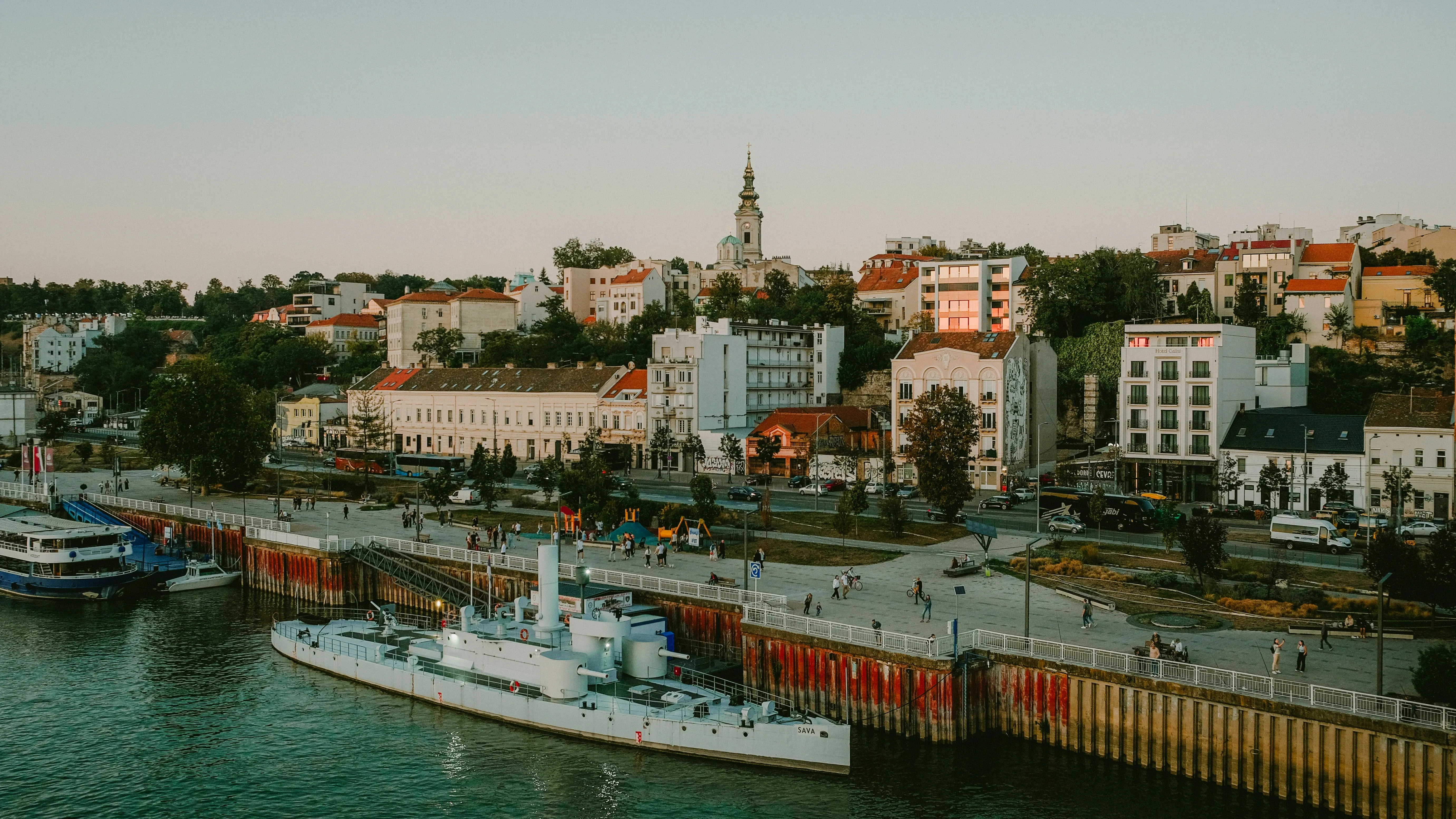
Serbia Overview
Serbia sits at the crossroads of Central Europe and the Balkans, a parliamentary republic of about 6.6 million people built around the Danube and its capital, Belgrade. It is a European Union candidate in slow accession talks, not a member, and it is not in , Schengen, or the eurozone; it keeps its own currency, the dinar, and a declared military neutrality. The legal system is civil-law. What makes the passport unusual is its reach: Serbian citizens travel visa-free to the , to China, and to Russia at once, a combination almost no other passport offers.
On This Page
- 1.Serbia Overview
- 1.1How Does Serbia Compare?
- 1.2Who does Serbia fit?
- 1.3Pros and Cons of Relocating to Serbia
- 1.4Serbia leads on Business — WRI 70.0 / 100
- 1.5Serbia leads on Residency — WRI 60.0 / 100
- 1.6Residence
- 1.7Taxes on Personal Income
- 1.8Cost of Living
- 1.9Healthcare System
- 1.10Education System
- 1.11Banking & Finance
- 1.12Cryptocurrency Regulation
- 1.13Real Estate Market
- 2.Frequently Asked Questions
Quick Facts
- Passport Rank: 30
- Visa-Free Destinations: 135
- Capital: Belgrade
- Population: 6.6 million
- Area: 88,499 km²
- Currency: Serbian dinar (RSD)
- Official languages: Serbian
- Religions: Serbian Orthodox 85%, Catholic 5%, Muslim 3%, other/none 7%
Key Indicators
- GDP (Nominal): $90 billion (World Bank, 2024)
- Unemployment Rate: 8.7% (2025)
- Human Development Index: 0.833 (Very High, HDR 2025)
- GDP per Capita: $13,500 (World Bank, 2024)
Safety & Governance
- Global Peace Index (IEP): 1.914 (Rank: 64, GPI 2025)
- Press Freedom Index (RSF): 50.79 (Rank: 104, RSF 2026)
- Corruption Perception (TI): 33/100 (Rank: 116, CPI 2025)
- Gini Coefficient (WB): 31.7 (Eurostat, 2023)
Health & Environment
- PM2.5 Air Pollution: 19.1 µg/m³ (2024)
- Air Quality Category: Moderate
- ND-GAIN Adaptation Index: 51.4 (Rank: 80, ND-GAIN 2024)
- Life Expectancy: 76.6 years (2024)
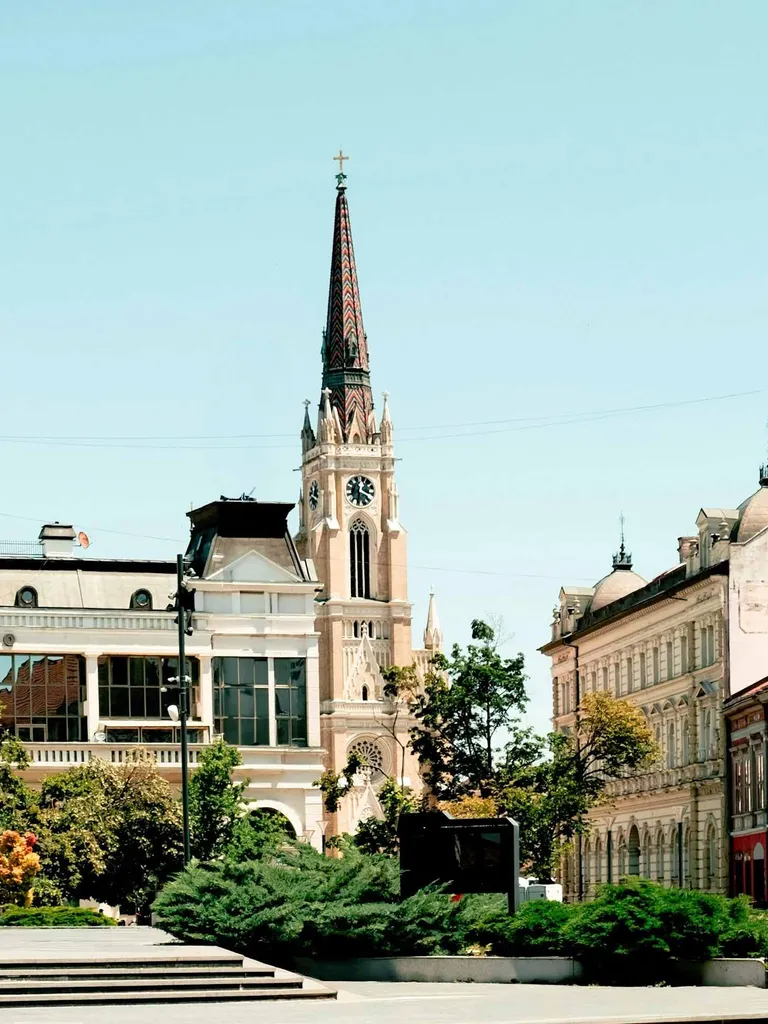
The proposition for a relocator is a low-cost European base that is genuinely easy to enter and to build on: a flat 10% income tax, a 15% corporate rate, company formation for the price of a coffee, and a residence permit available to anyone who owns a flat here. The cost is institutional, not financial — corruption and the rule of law are real weaknesses, rights do not come with the residence, and the road to a passport is long and discretionary. Serbia does not try to be for everyone; it is clear from the start who it is for.
How Does Serbia Compare?
Summary
Serbia sits in the middle of its WRI 2026 peer group, ranked 30th globally between Georgia (29th) and Namibia (31st). Its scores split sharply: it leads the group on Business and Education, and holds its own on Safety — but it is decisively weaker than most peers on Residency and Retirement, and its governance numbers are the worst in the cluster.
How Serbia stacks up against its closest peers on the WRI 2026:
Where Serbia wins: Serbia leads the peer group on Business at 70.0, tying Georgia and sitting well above Namibia (55.0), St. Kitts and Nevis (50.0), and Sierra Leone (30.0). The driver is simple mechanics: a 15% corporate tax, company formation for about $1 in capital, and a flat-rate paušal regime for software contractors that keeps the effective burden low and the bookkeeping minimal. Education at 53.0 is the clearest gap Serbia opens over the rest of the table — Georgia scores 43.0, Namibia 45.0, Sierra Leone 42.0, and St. Kitts and Nevis only 35.0. That advantage is relative rather than absolute — Serbian schools still test below the average — but no other country in this peer cluster comes close. Safety at 58.0 tops St. Kitts and Nevis (57.0), though it trails both Namibia (78.0) and Sierra Leone (77.8), where street crime is lower but institutional risk is a different kind of problem altogether.
Where Serbia lags: The gap is most visible on Residency: Sierra Leone scores 85.0 and Georgia 78.0, both well ahead of Serbia's 60.0, while St. Kitts and Nevis (62.0) also edges it out. On Investment, Serbia's 55.0 ties Sierra Leone and trails Georgia (59.0) and St. Kitts and Nevis (78.0), which benefits from a mature citizenship-by-investment programme that commands a premium among wealth-preservation buyers. Retirement is a flat weakness at 52.0 — matching St. Kitts and Nevis exactly, but beaten by Georgia (53.0) and far below Namibia (70.0), which targets retirees explicitly with low cost of living and stable residency terms. Citizenship at 54.0 is mediocre across the board: Serbia offers no investment route, naturalisation is discretionary and slow, and the passport, while useful for Schengen access, cannot match St. Kitts and Nevis at 93.0, where a passport is the entire product.
Who does Serbia fit?
Summary
Serbia fits people who want a cheap, low-tax European base to work or build from, and who can navigate a Cyrillic-language bureaucracy. It is a poor fit for anyone who needs EU rights, top-tier schools and hospitals, or a fast, reliable passport.
Right fit:
- IT contractors and freelancers — the flat-rate paušal regime and two dedicated freelancer tax models keep the effective burden low.
- Founders and small-business owners — a 15% corporate rate, about $1 in company capital, and company ownership as a basis for residence.
- Budget-conscious lifestyle relocators — a residence permit from owning a flat of any value, in one of Europe's cheapest capitals.
- Crypto investors — a 15% gains tax that falls to zero after ten years, plus a 50% reinvestment exemption.
Wrong fit:
- HNW investors seeking a wealth-preservation hub — weak rule of law and no investor programme.
- Anyone needing EU rights — Serbia is a candidate, not a member, and residence buys no EU access.
- Families prioritising schools and healthcare — below-OECD schooling and a strained public health system.
- Fast-passport seekers — naturalisation is slow and discretionary, with no investment route.
- Those unwilling to deal with bureaucracy in Serbian — most official processes run in Serbian and Cyrillic.
Pros and Cons of Relocating to Serbia
- 01TaxationOne of Europe's lowest income taxesSalary income is taxed at a flat 10%; investment income, dividends, and capital gains at 15%, with no wealth tax.10% flat income tax
- 02BusinessCheap, fast company formationA limited company can be founded with about $1 of share capital and 100% foreign ownership, registered in a few days.$1 company setup
- 03ResidencyBuy a flat, get residenceOwning residential property of any value, with no minimum threshold, qualifies a foreigner for a renewable 3-year residence permit.Property = residence
- 04MobilityVisa-free to Schengen, China and RussiaThe Serbian passport opens around 135 destinations visa-free, including the Schengen Area, China, and Russia at once.Rare passport reach
- 05CryptoCrypto gains untaxed after ten yearsDigital-asset gains are taxed at 15%, falling to zero after a ten-year hold, with a 50% exemption for reinvestment in a Serbian company.Crypto 0% at 10 yrs
- 06Cost of LivingAmong Europe's cheapest capitalsCentral Belgrade rents run about $650 to $900 a month, and the city made all public transport free in 2025.Very low cost
- 07ResidencyPermanent residence in three yearsPermanent residence is available after three continuous years, cut from five in 2023, with lenient absence rules.3-year PR
- 01StabilityCorruption and weak institutionsCorruption ranks 116th worldwide and the rule of law is the weakest in the Western Balkans, a material risk for long-term commitments.Weak rule of law
- 02MobilityEU candidate, not a memberSerbia is in slow EU accession talks; residence and citizenship grant no right to live or work in the EU.No EU rights
- 03CitizenshipLong, discretionary naturalisationNaturalisation needs three years of permanent residence and is granted at the state's discretion, with no investment route.Slow citizenship
- 04InvestmentNo golden visa or CBISerbia has no residence-by-investment or citizenship-by-investment programme with a fixed threshold.No investor visa
- 05LifestyleBelgrade winters are heavily pollutedSerbia's average PM2.5 is roughly four times the WHO guideline, and Belgrade ranks among the world's most polluted capitals in winter.Air pollution
- 06EducationSchools test below the OECD averageSerbian pupils score below the OECD average across maths, reading, and science, and no university reaches the global top 100.Below-OECD schools
- 07LanguageBureaucracy runs in SerbianMost residence, tax, and naturalisation processes operate in Serbian and Cyrillic, with limited English at local offices.Serbian-only admin
Serbia leads on Business — WRI 70.0 / 100
Serbia leads on Business with a WRI score of 70.0, and the pitch is almost entirely about cost and speed. The corporate tax rate is a flat 15%, among the lowest in Europe, and a limited company (d.o.o.) can be founded with about $1 of share capital and registered in a few days. Foreign owners can hold 100% of a Serbian company. For the people who actually drive the inflows — software contractors — the country offers a lump-sum paušal regime and two dedicated freelancer tax models that keep the effective burden low and the bookkeeping minimal. Layered on top are a 200% deduction for domestic R&D, an IP-box that exempts most qualifying royalty income, and a ten-year tax holiday for very large investors. The catch is the one that runs through everything here: enforcement and the courts are weak, and a contract is only as good as the institution behind it.
Serbia leads on Residency — WRI 60.0 / 100
Serbia leads on Residency with a WRI score of 60.0, the result of a system rebuilt in 2023 to pull people in. The headline route is property: buying a flat of any value — there is no minimum threshold — entitles the owner to a temporary residence permit, now granted for up to three years at a stretch. Employment, company ownership, family ties, and Serbian descent are all separate grounds, and the unified (jedinstvena dozvola) merged residence and work authorisation into one online application that is decided in about two weeks. Permanent residence follows after three continuous years, cut from five, and the absence rules are lenient enough that you need not live here full-time. The honest limits: everything happens in Serbian, the offices are slow in practice, and none of it carries EU rights, because Serbia is a candidate, not a member.
Residence
Residence in Serbia is unusually easy to obtain and unusually cheap to maintain. A temporary permit flows from employment, from founding a company, from family, from study, or simply from owning a home, and since 2023 a single permit combines residence and the right to work in one document. Tax residence is a separate question: spend more than 183 days in Serbia, or centre your life here, and you are taxed on worldwide income — though at a flat 10% on salary, the rate rarely stings. There is no national savings fund to buy into, but employees and the self-employed pay social contributions of roughly a third of gross income, split between worker and employer and capped above about $7,300 a month. Permanent residence arrives after three years, and from there a passport is reachable in theory, though naturalisation is discretionary and slow.
Safety is a mixed picture worth stating plainly. Day-to-day, Serbia is calm: violent crime is low, the homicide rate sits near 1.3 per 100,000, and Belgrade is one of the safer European capitals to walk at night. What pulls the safety score down is governance, not street crime. Corruption ranks among the worst in Europe, press freedom has to 104th in the world in 2026, and the rule of law is the weakest in the Western Balkans — the kind of weakness that surfaces when you need a court, not when you walk home. Large anti-corruption protests have run through the country since late 2024. The personal-safety case is strong; the institutional one is not, and an honest relocation decision has to hold both.
Taxes on Personal Income
Serbia taxes personal income at a flat 10% on salary, one of the simplest regimes in Europe, with the first roughly $340 a month exempt. High earners face an additional annual surtax of 10%, then 15%, but only on income above about $54,000, so most residents never meet it. Investment income, dividends, and capital gains are each taxed at a flat 15%, and capital gains fall to zero on assets held more than ten years. There is no wealth tax. Inheritance passes tax-free between parents, children, and spouses, and at 1.5% to 2.5% for everyone else. VAT is 20%, with a 10% reduced rate on food, utilities, and accommodation. Foreign income is taxable for residents, but a foreign-tax credit prevents double taxation. An employee earning $500,000 would face an effective income-tax rate in the low teens, far below Western Europe, though Serbia is not where most people at that income choose to register.
Cost of Living
Serbia is one of the cheapest places to live in Europe, and the gap with the West is the whole point. A one-bedroom flat in central Belgrade rents for roughly $650 to $900 a month; Novi Sad runs lower, and smaller cities like Niš lower still. A single professional can live comfortably on about $700 a month beyond rent, a figure that would not cover groceries in Munich. The average Serbian net salary is around $1,200 a month, which anchors local prices well below eurozone levels. Belgrade made all city public transport free at the start of 2025, a genuine rarity for a European capital of its size. The trade-offs show up in quality rather than price: winters bring some of Europe's worst air pollution, with Belgrade regularly among the most polluted capitals, and the cheapest flats are old and poorly insulated. Utilities run about $190 to $260 a month.
Healthcare System
Healthcare in Serbia is a two-tier system, and where you land depends on how you arrive. The public network, funded by the mandatory state insurance fund (), covers anyone employed or self-employed in Serbia and their dependents, free at the point of use — but a foreigner who is resident without working must carry private insurance, because residence alone does not enrol you. Public hospitals are underfunded and slow for elective care, with the best specialists concentrated in Belgrade. The private sector fills the gap cheaply: a private GP visit runs about $25 to $70 and a specialist $60 to $115, a fraction of Western prices, which is why Serbia draws medical and especially dental tourists. The honest caveat is the ceiling, not the cost: for a complex condition, many residents who can afford it travel to Vienna or Germany. Life expectancy is about 77 years, below the EU average.
Education System
Education in Serbia runs in two languages and two worlds. Public schooling is free and compulsory for every resident child regardless of nationality, but it teaches in Serbian and, often, in Cyrillic, which makes immersion the price of the free option. The international sector is small and concentrated in Belgrade: the International School of Belgrade charges roughly $24,000 to $29,000 a year, while Chartwell and the German and French schools run lower, around $9,000 to $17,000. Serbia's results on international assessments fall below the OECD average across maths, reading, and science, and no Serbian university reaches the global top 100 — the University of Belgrade, the flagship, sits in the 300-to-800 band depending on the measure. Public universities are close to free for state-funded places and cheap for everyone else, with international tuition often between $1,200 and $3,500 a year. For a working family the calculus is simple: the public system is affordable but demands Serbian, and the international option is good but thin on choice outside the capital.
Banking & Finance
Opening a bank account in Serbia is straightforward for residents and has grown easier since the country joined the European single-euro-payments area in 2025. The market is a mix of regional and foreign-owned banks — Banca Intesa, OTP, and the state Postal Savings Bank among them — and a residence permit plus a tax number is usually enough to open an account. The dinar is a managed-float currency, so the National Bank intervenes to keep it stable against the euro, and most large transactions, including property, are quoted and settled in euros in practice. Foreigners can borrow to buy property, typically with a 30% deposit and a euro-indexed rate around 4% to 5.5%, though local-currency loans cost far more. Serbia applies standard anti-money-laundering and international reporting standards, supervised by the National Bank of Serbia. The system is conservative and cash-friendly, and foreign credit history does not transfer.
Cryptocurrency Regulation
Serbia was one of the first countries in Europe to regulate digital assets comprehensively, through its Law on Digital Assets in force since 2021. Oversight is split: the National Bank of Serbia supervises virtual currencies, and the Securities Commission supervises investment-type tokens, with service providers required to be licensed and to hold founding capital between about $23,000 and $145,000. The tax treatment is what draws investors. Gains on digital assets are taxed at a flat 15%, but the rate falls to zero on holdings kept more than ten years, one of the most generous long-hold exemptions anywhere. A further incentive cuts the tax in half if proceeds are reinvested into the share capital of a Serbian company within 90 days. Mining and staking rewards are taxed as income on receipt. The framework is permissive without being lawless: regulated, licensed, and built early, which is rare for a market this size.
Real Estate Market
Foreigners can buy property in Serbia wherever a reciprocity agreement exists with their home country, which covers most EU, US, and other Western buyers; agricultural land is the main exception and generally requires a local company. The draw is twofold: prices are low by European standards, and any purchase, at any value, qualifies the owner for residence. A central Belgrade apartment averages somewhere between $2,000 and $3,000 per square metre, with the riverside Belgrade Waterfront development reaching $6,000 to over $11,000; Novi Sad sits near $3,100. Transaction costs are modest — a 2.5% transfer tax on resale homes, or 10% VAT on new builds, plus agency and legal fees of a few percent. Gross rental yields are high for Europe, commonly 5% to nearly 7% in Belgrade. The annual property tax is municipal and progressive, modest for ordinary flats but climbing for high-value homes. Strong tenant protections and a thin mortgage market for foreigners mean most foreign buyers pay cash and hold for the yield and the residence permit that comes attached.


