

Namibia Overview
Namibia is a southwestern African unitary semi-presidential republic occupying 825,615 km² between Angola, Zambia, Botswana, and South Africa, with 1,572 km of Atlantic coastline. President Netumbo Nandi-Ndaitwah took office in March 2025 as Namibia's first female head of state, leading the SWAPO Party, which has governed continuously since independence from South Africa in 1990. The legal system runs on Roman-Dutch civil law with English common law overlay inherited from the South African colonial period. Namibia is a member of the Southern African Development Community (), the Southern African Customs Union (SACU), the African Union, the Commonwealth of Nations, and the United Nations. The Namibian Dollar (NAD) is the currency, pegged 1:1 to the South African Rand since 1990; both circulate as legal tender. English is the sole official language; Afrikaans, German, and the Oshiwambo languages are widely spoken regionally. The population is 2.6 million across one of the lowest population densities globally (3.1 people per km²).
On This Page
- 1.Namibia Overview
- 1.1How Does Namibia Compare?
- 1.2Who does Namibia fit?
- 1.3Pros and Cons of Relocating to Namibia
- 1.4Namibia leads on Safety — WRI 78.0 / 100
- 1.5Namibia leads on Retirement — WRI 70.0 / 100
- 1.6Residence
- 1.7Taxes on Personal Income
- 1.8Cost of Living
- 1.9Healthcare System
- 1.10Education System
- 1.11Banking & Finance
- 1.12Cryptocurrency Regulation
- 1.13Real Estate Market
- 2.Frequently Asked Questions
Quick Facts
- Passport Rank: 62
- Visa-Free Destinations: 74
- Capital: Windhoek
- Population: 2.60 million (World Bank 2024)
- Area: 825,615 km² (14 regions; one of lowest population densities globally)
- Currency: Namibian Dollar (NAD); pegged 1:1 to South African Rand since 1990; ZAR also legal tender
- Official languages: English (sole official); Afrikaans, German, Oshiwambo languages widely spoken
- Religions: Christianity ~80%, traditional African ~15%, other ~5%
Key Indicators
- GDP (Nominal): $13.1 billion (World Bank 2024)
- Unemployment Rate: 19.1% (NSA 2024; 36.9% broader incl. discouraged)
- Human Development Index: 0.610 (Medium, Rank: 123, HDR 2024)
- GDP per Capita: $4,816 (World Bank 2025)

Safety & Governance
- Global Peace Index (IEP): 1.79 (Rank: 50, GPI 2025)
- Press Freedom Index (RSF): 79.85 (Rank: 22, RSF 2024)
- Corruption Perception (TI): 46/100 (Rank: 65, CPI 2025)
- Gini Coefficient (WB): 59.1 (World Bank, most recent)
Health & Environment
- PM2.5 Air Pollution: 20.9 µg/m³ (WHO 2024, Kalahari dust influenced)
- Air Quality Category: Moderate
- ND-GAIN Adaptation Index: 42.5 (Rank: 121, ND-GAIN 2023)
- Life Expectancy: 65.0 years (WHO 2024)
The proposition for an investor or relocator is unusually clean: no capital gains tax, no inheritance or estate duty, no wealth tax, no donation tax — a tax architecture among the most favourable globally for HNW capital preservation; an Investor Visa from $215,000 in a Namibian business (NAD 3,950,000 with 10%+ shareholding) granting a 5-year renewable work permit with permanent-residence eligibility after 7 years; a dedicated Retirement Permanent Residence from $218,000 (NAD 4,000,000) for applicants aged 60 and above; and Africa's third-most-peaceful country ranking (Global Peace Index 2025 rank 50 globally, score 1.79). The cost is also clean: Namibia's passport sits at rank 62 globally with 74 visa-free or visa-on-arrival destinations; dual citizenship is restricted under the Namibian Citizenship Act 1990 (limited exceptions); standard naturalisation requires 10 years of legal residence with renunciation of prior citizenship in most cases; and 19.1% headline unemployment (36.9% broader measure including discouraged workers) reflects a structural labour-market overhang. Namibia does not try to be for everyone — it is clear from the start who it is for.
How Does Namibia Compare?
Summary
On the worldpath.ai WRI 2026, Namibia (55.5) sits between Georgia (58.1) and Sierra Leone (52.8), with St. Kitts and Nevis (61.9) anchoring the peer group above and São Tomé and íncipe (45.1) below. Namibia leads the peer group decisively on Safety (78) and Retirement (70), trails on Citizenship (35) under the restrictive dual-citizenship framework. It offers a uniquely tax-efficient retirement architecture with no CGT, IHT, or wealth tax.
How Namibia stacks up against its closest peers on the WRI 2026:
Where Namibia wins: Namibia leads the peer group on Safety at 78, ahead of Georgia at 63.5, St. Kitts and Nevis at 57.0, São Tomé and Príncipe at 73.0, and Sierra Leone at 77.8, in a close . The driver is the Global Peace Index 2025 ranking of 50 of 163 globally, with a score of 1.79 — the third-most-peaceful country in Africa after Mauritius and Botswana, and a comfortable position in the upper-middle global peace tier. The Corruption Perceptions Index 2025 (released February 2026) places Namibia at rank 65 of 182 globally with a score of 46 of 100, down 3 points year-on-year. Retirement at 70 leads every country in the immediate peer group: St. Kitts and Nevis at 52, Georgia at 53, Sierra Leone at 22, and São Tomé and Príncipe at 35. The driver is the absence of capital gains tax, inheritance tax, and wealth tax; the dedicated Retirement Permanent Residence visa from $218,000 for applicants aged 60 and above; a Mediterranean-equivalent dry coastal climate along the Atlantic Skeleton Coast and Walvis Bay; and a life expectancy of 65.0 years with private healthcare in Windhoek meeting Southern African regional standards. Education at 45 also leads the full peer group — St. Kitts and Nevis at 35, Georgia at 43, Sierra Leone at 42, and São Tomé and Príncipe at 30 — though no Namibian institution sits in the global top 500, and the international-school market is concentrated in Windhoek.
Where Namibia lags: Namibia trails the peer group on Citizenship at 35, materially below St. Kitts and Nevis at 93 (citizenship-by-investment programme), São Tomé and Príncipe at 52, Georgia at 40, and Sierra Leone at 38. The driver is the restrictive dual-citizenship framework under the Namibian Citizenship Act 1990: standard naturalisation requires 10 years of legal residence with renunciation of prior citizenship in most cases, and no citizenship-by-investment route exists. Investment at 50 trails Georgia at 59.0 and Sierra Leone at 55.0, and edges ahead of São Tomé and Príncipe at 45.0 and St. Kitts and Nevis at 78.0 — with St. Kitts leading the peer group on this dimension; the Namibian Stock Exchange (NSX) is dual-listed predominantly with JSE Johannesburg primaries, and capital markets depth is limited relative to South African or Mauritian alternatives. Business at 55 lags Georgia at 70, and Residency at 55 trails Sierra Leone at 85 and Georgia at 78, reflecting the investment thresholds and multi-year permit structure of Namibia's principal routes compared to the more accessible frameworks of those peers.
Who does Namibia fit?
Summary
Namibia fits HNW retirees on the Retirement Permanent Residence from $218,000, foreign investors on the Investor Visa from $215,000 in a Namibian business, mining and natural-resources operators positioning for the offshore oil and uranium sectors, and lifestyle relocators seeking African continent access without the safety friction of regional peers. It does not fit fast-citizenship seekers (10-year naturalisation + renunciation typical), HNW residents wanting -equivalent infrastructure depth, families requiring multiple international-school options outside Windhoek, or anyone uncomfortable with the structural unemployment overhang.
Right fit:
- HNW retirees on the Retirement PR programme — Ministry of Home Affairs, Immigration, Safety and Security administers a Retirement Permanent Residence (PR-only, no temporary track) from $218,000 (NAD 4,000,000) net financial-investment value, age 60+; combines with the no-CGT, no-IHT, no-wealth-tax regime to deliver one of Africa's most favourable retirement tax positions; coastal Swakopmund and Walvis Bay are established expat-retirement enclaves.
- Foreign investors on the Investor Visa — minimum $215,000 (NAD 3,950,000) in a Namibian business plus 10%+ shareholding; 5-year renewable work permit; permanent residence eligibility after 7 years of investment retention; alternative real-estate route at President's Links Estate from $365,000 USD with 5-year work permit; administered by MHAISS in coordination with the Namibia Investment Promotion and Development Board (NIPDB).
- Mining and natural-resources operators — Namibia hosts Rössing (the world's longest-running open-pit uranium mine), Husab (Chinese-owned uranium), Langer Heinrich (uranium restart 2024), B2Gold Otjikoto (gold), and the Marine Diamonds offshore-diamond sector; the 2022-2024 TotalEnergies Venus and Shell Graff offshore-oil finds position Namibia as a future Sub-Saharan oil hub; green-hydrogen developments (Hyphen Hydrogen Energy $10B project) add a 2030-decade growth track.
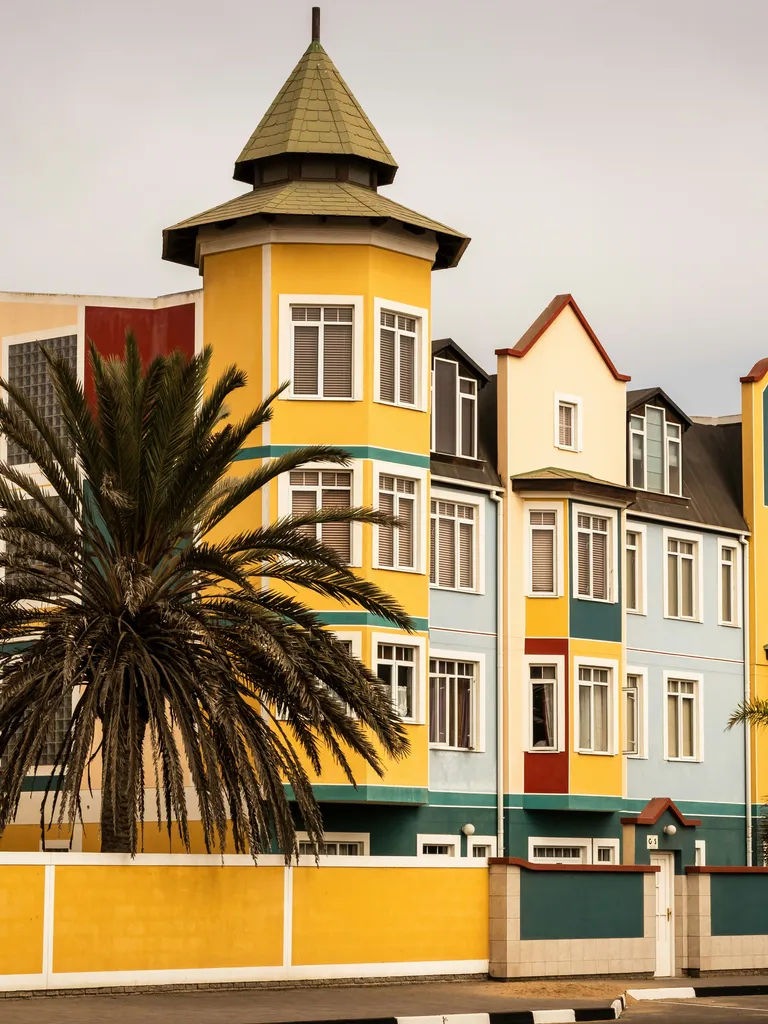
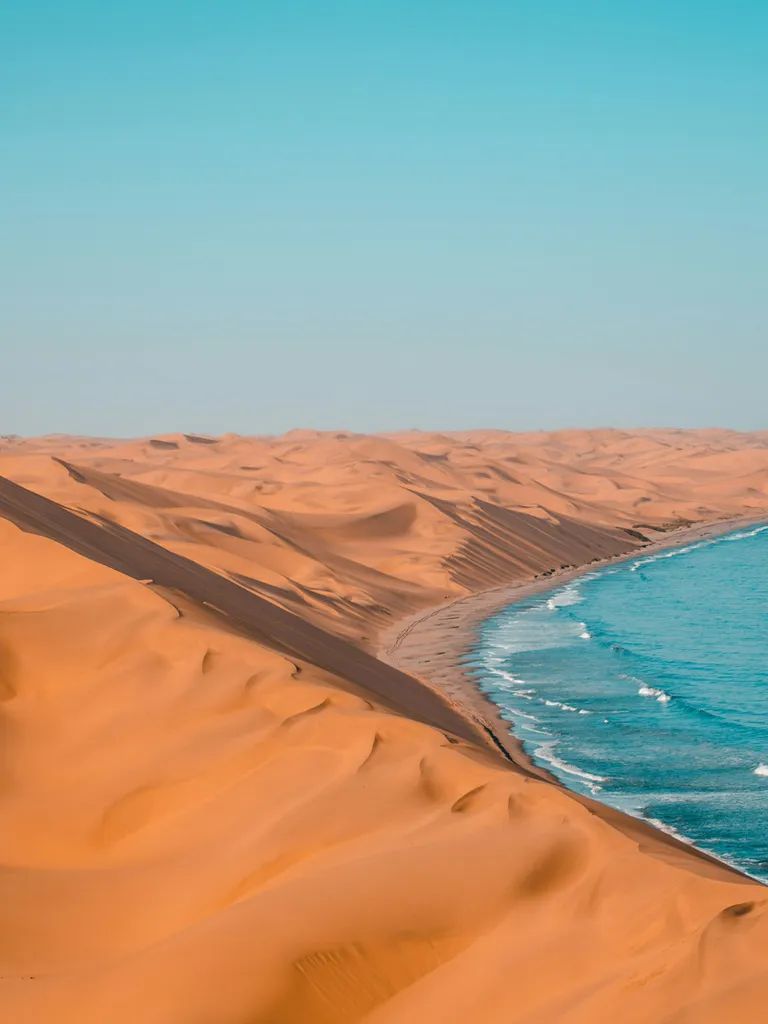
- Lifestyle relocators seeking Atlantic-coast Africa — Walvis Bay (the deepest natural harbour on Africa's Atlantic coast), Swakopmund (German-colonial-heritage coastal town), and Lüderitz combine with the Skeleton Coast, Sossusvlei, Etosha National Park, and Namib Desert to anchor one of Africa's strongest tourism propositions; Africa's third-most-peaceful jurisdiction; English-language administration; low population density.
Wrong fit:
- Fast-citizenship seekers — Standard naturalisation under the Namibian Citizenship Act 1990 requires 10 years of legal residence — the same 10-year period applies to spouses of Namibian citizens following the 2010 constitutional amendment that raised the prior two-year and five-year thresholds — with renunciation of prior citizenship in most cases; dual citizenship is generally restricted with limited exceptions for citizens by birth or descent; no citizenship-by-investment route exists.
- HNW residents requiring deep institutional infrastructure — Namibian Stock Exchange (NSX) capitalisation is materially smaller than JSE Johannesburg or Mauritius ; private-banking infrastructure runs through Standard Bank Namibia, FNB Namibia, Bank Windhoek, and Nedbank Namibia (mostly South-African-owned subsidiaries); specialist legal and tax-advisory depth is concentrated in Windhoek.
- Families needing multiple international-school options outside Windhoek — the international-school market is concentrated in Windhoek (Windhoek International School IB, Deutsche Höhere Privatschule German curriculum); Swakopmund offers the Swakopmund International School and the Namib High School with limited curriculum depth; Walvis Bay, Lüderitz, and other regional towns rely on the national curriculum.
- Anyone uncomfortable with the labour-market overhang — Namibia's headline unemployment is 19.1% (2024), but the broader measure, including discouraged workers, reaches 36.9%; youth unemployment exceeds 40%; income inequality (Gini 0.59) is among the world's highest; structural labour-market reform remains a multi-decade challenge.
- Investors seeking territorial taxation — Namibia operates a source-based personal-income tax regime: residents and non-residents are taxed only on Namibian-source income; foreign-source income (foreign pensions, dividends, interest) is generally exempt. While advantageous for retirees with foreign pensions, this is NOT a Beckham-style flat-tax inpatriate regime and requires careful structuring for HNW residents holding global income streams.
Pros and Cons of Relocating to Namibia
- 01Taxation, e.g.,No capital gains, inheritance, wealth taxNamibia has no capital gains tax, no inheritance or estate duty (abolished), no donation tax, and no wealth tax — among the most favourable HNW tax positions globally; source-based personal income tax exempts foreign pensions, dividends, interest, and rental income from Namibian taxation; corporate tax 30% (down from 32% effective 1 Jan 2024); 15% VAT.No CGT, no IHT, no wealth
- 02RetirementDedicated Retirement PR for 60+ from $218,000Retirement Permanent Residence administered by MHAISS: $218,000 (NAD 4,000,000) net financial-investment value for applicants aged 60+; PR-only (no temporary track); part of investment must be in Namibia; combines with no-CGT, no-IHT, no-wealth-tax for one of Africa's most favourable retiree tax positions.Retirement PR from $218k
- 03ResidencyInvestor Visa $215k in Namibian businessInvestor Visa requires $215,000 (NAD 3,950,000) in a Namibian business plus 10%+ shareholding; 5-year renewable work permit; permanent residence eligibility after 7 years of investment retention; alternative President's Links Estate real-estate route from $365,000 USD; coordinated through MHAISS + Namibia Investment Promotion and Development Board.Investor Visa from $215k
- 04SafetyGlobal Peace Index 2025 rank 50, 3rd in AfricaGlobal Peace Index 2025 rank 50 of 163 (score 1.79), third-most-peaceful African state after Mauritius and Botswana; upper-middle global peace tier; SWAPO governance continuity since 1990 independence; democratic transfers of power through 8 election cycles; RSF Press Freedom 2024 rank 22 globally — strongest in Africa.GPI rank 50, top-3 Africa
- 05ComplianceRoman-Dutch + English common law systemLegal system runs on Roman-Dutch civil law with English common law overlay inherited from South African colonial period; UK Privy Council historical precedent through SACU + SADC integration; commercial contracts enforceable through High Court of Namibia + Supreme Court of Namibia; familiar framework for international counsel.English common law base
- 06CurrencyCommon Monetary Area integration with South AfricaNamibian Dollar (NAD) pegged 1:1 to South African Rand since 1990 under Common Monetary Area framework; both NAD and ZAR circulate as legal tender; capital mobility within CMA (Namibia, Lesotho, Eswatini, South Africa) unrestricted; outflows beyond CMA require SARB exchange-control approval for amounts above modest thresholds.NAD pegged 1:1 to ZAR
- 07CryptoComprehensive crypto framework May 2023Namibia's Virtual Assets Act 2023 formally legalises and regulates VASPs effective May 2023 — one of the first Southern African countries with comprehensive crypto framework; Bank of Namibia primary regulator; NAMFISA supervises market conduct; crypto disposals taxed under source-based regime (foreign-source gains generally exempt); ahead of most Sub-Saharan African peers in clarity.Virtual Assets Act 2023
- 01Citizenship10-yr residence + renunciation typicalStandard naturalisation requires 10 years of legal residence (the 2010 constitutional amendment removed any shorter track for spouses, aligning the marriage route with the general naturalisation period); dual citizenship generally restricted; no CBI route.10-yr citizenship + reno
- 02MobilityNamibian passport rank 60, 75 visa-free destinationsNamibian passport at rank 62 globally with 74 visa-free or visa-on-arrival destinations (up 2 positions year-on-year); SADC visa-free movement; useful for African Union + Commonwealth access but materially weaker than Mauritian (rank 27) or Botswanan passports for global mobility.Passport rank 62, 74 VF
- 03StabilityHeadline 19%, broader 37% incl. discouraged workersNamibian headline unemployment is 19.1% (2024) but broader measure including discouraged workers reaches 36.9%; youth unemployment exceeds 40%; income inequality (Gini ~0.59) among the world's highest; structural labour-market reform remains a multi-decade challenge; affects local-services availability for HNW relocators.Unemployment 19-37%
- 04StabilityCPI 2025 rank 65, score 46/100 (down 3 YoY)Corruption Perceptions Index 2025 places Namibia at rank 65 of 182 globally with score 46/100, a 3-point YoY decline reflecting governance pressures during the leadership transition (Geingob death Feb 2024 → Mbumba Acting → Nandi-Ndaitwah elected Mar 2025); institutional baseline stable but trajectory negative.CPI rank 65 declining
- 05HealthcareComplex specialist care via Cape Town/JohannesburgMediclinic Windhoek + Lady Pohamba + Welwitschia private network handles routine + secondary care; complex specialist procedures (cardiac, oncology, organ transplant) route to Cape Town or Johannesburg via 2-hour flights; private insurance with evacuation $200-450/month per couple standard for expat residents; life expectancy 65.0 yrs (WHO 2024).Specialist medevac to RSA
- 06StabilityGDP $13B limits institutional depthNamibia GDP approximately $13 billion (World Bank 2024) cannot support deep financial-services, capital-markets, or specialist-services infrastructure; Namibian Stock Exchange dominated by dual-listed JSE Johannesburg primaries; private-banking through Capricorn Group + South-African-owned subsidiaries; specialist legal + tax counsel concentrated in Windhoek.Small economy, $13B GDP
- 07Real EstateForeign agricultural land ownership restrictedAgricultural (Commercial) Land Reform Act 1995 amendments restrict foreign ownership of agricultural (commercial) farmland — material for buyers targeting hunting farms, game lodges, or large-scale agricultural operations; urban residential, commercial, and industrial property remains freely purchasable by foreigners in Windhoek, Swakopmund, Walvis Bay, and other municipal areas.Foreign farm land cap
Namibia leads on Safety — WRI 78.0 / 100
Namibia posts a Safety score of 78, leading Uruguay at 70.3, São Tomé and Príncipe at 73, and decisively ahead of Sierra Leone at 77.8 (tied closely) and Vanuatu at 89 (ahead in peer group). The country ranks 50 of 163 in the Global Peace Index 2025 with a score of 1.79, the third-most-peaceful African state after Mauritius and Botswana, and a comfortable position in the upper-middle global peace tier. The Corruption Perceptions Index 2025 (released February 2026) places Namibia at rank 65 globally with a score of 46 of 100, a 3-point year-on-year decline reflecting governance pressures during the leadership transition following President Geingob's death in February 2024 and the subsequent succession through Acting President Nangolo Mbumba to elected President Netumbo Nandi-Ndaitwah in March 2025. Reporters Without Borders Press Freedom Index 2024 places Namibia at rank 22 of 180 with a score of 79.85 — among the strongest press-freedom environments in Africa and comparable to Western European democracies. Violent crime in Windhoek (Klein Windhoek, Olympia, Eros, Ludwigsdorf), Swakopmund, and Walvis Bay's expat-tier neighbourhoods is below regional averages; petty theft and property-related crime are the predominant operational concerns in urban centres. Hostility to expat residents is minimal; English-language administration and the multilingual population (Afrikaans, German, and Oshiwambo language families widely spoken) reduce friction for international relocators. The Namibian Police Force operates within a democratic institutional framework, and the SWAPO governance continuity since 1990 anchors a stable rule-of-law baseline.
Namibia leads on Retirement — WRI 70.0 / 100
Namibia posts a Retirement score of 70, leading São Tomé and Príncipe at 35, Sierra Leone at 22, and Vanuatu at 52 decisively in the WRI 2026 peer group, behind Uruguay at 86.3 in the immediate peer set. The proposition combines tax architecture, climate, and dedicated visa pathway in a way few African states match. Namibia has no capital gains tax, no inheritance or estate duty, no donation tax, and no wealth tax — a structurally favourable position for HNW retirees with substantial portfolios. The Retirement Permanent Residence pathway, administered by the Ministry of Home Affairs, Immigration, Safety and Security (MHAISS), grants direct permanent-residence status to applicants aged 60 and above with a net financial-investment value of $218,000 (NAD 4,000,000), part of which must already be invested in Namibia. Climate runs Mediterranean-equivalent along the Atlantic coast (Walvis Bay, Swakopmund, Lüderitz) with year-round 16-22°C temperatures and minimal precipitation; the Windhoek highland at 1,650 metres elevation delivers four-season climate with cool nights and warm dry days. Life expectancy is 65.0 years (WHO 2024), in the upper-middle range for Sub-Saharan Africa and improving year-on-year. Healthcare in Windhoek is anchored by Mediclinic Windhoek, Lady Pohamba Private Hospital, Roman Catholic Hospital, and the Welwitschia Hospital network, delivering Southern African regional-standard private care; complex specialist procedures (cardiac, oncology, organ transplant) typically route to Cape Town or Johannesburg via 2-hour flights. Mandatory private health insurance through Bankmed Namibia, Methealth Namibia, or NAMAF-regulated alternatives runs $200-450 per month per couple. Walvis Bay and Swakopmund coastal neighbourhoods host established expat-retirement communities, with a notable German-speaking demographic legacy from the colonial period.
Residence
Namibia applies a source-based personal income tax regime: residents and non-residents are taxed only on Namibian-source income, with foreign-source income generally exempt from local taxation. Tax residency triggers on the "ordinarily resident" test (centre of life in Namibia) and the 91-day physical-presence rule combined with the prior-tax-year residence pattern. There is no Controlled Foreign Company tax regime in domestic application. Residence permits are administered by the Ministry of Home Affairs, Immigration, Safety and Security (MHAISS, mhaiss.gov.na). Principal HNW-relevant routes: the Investor Visa with a minimum $215,000 (NAD 3,950,000) investment in a Namibian business plus 10%+ shareholding (5-year renewable work permit, PR after 7 years of investment retention); the Retirement Permanent Residence from $218,000 (NAD 4,000,000) net financial-investment value for applicants aged 60 and above (PR-only, no temporary track); a President's Links Estate real-estate route from $365,000 USD (5-year work permit alternative); employer-sponsored work permits processed by the Namibia Investment Promotion and Development Board (NIPDB) for skilled positions; and the standard work-permit framework under the Immigration Control Act 1993. Permanent residency follows 5 years of continuous lawful residence; standard naturalisation under the Namibian Citizenship Act 1990 requires 10 years total continuous residence (5 years for spouses of Namibian citizens) with renunciation of prior citizenship in most cases. Dual citizenship is generally restricted with limited exceptions for citizens by birth or descent.
Safety sits at 78 in the WRI 2026, leading most of the peer group. The Global Peace Index 2025 places Namibia at rank 50 of 163 with a score of 1.79, the third-most-peaceful African state after Mauritius and Botswana. The Corruption Perceptions Index 2025 places Namibia at rank 65 with a score of 46 of 100, down 3 points year-on-year. Reporters Without Borders Press Freedom Index 2024 places Namibia at rank 22 with a score of 79.85, the strongest press-freedom position in Africa. Violent crime is below regional averages; petty theft and property crime in Windhoek, Swakopmund, and Walvis Bay are the predominant operational concerns. The lived security experience for expat residents in Windhoek's Klein Windhoek, Olympia, Eros, and Ludwigsdorf, plus Swakopmund's Vineta and Mile 4, plus Walvis Bay's Long Beach and Lagoon districts, is good by international standards. SWAPO governance continuity since 1990 independence anchors institutional stability through 8 consecutive democratic elections.
Taxes on Personal Income
Namibia applies a source-based personal income tax regime administered by the Ministry of Finance through Inland Revenue. Residents and non-residents are taxed on Namibian-source income only at progressive rates: 0% on the first $2,700 (NAD 50,000) of annual income, 18% on the bracket from $2,700 to $5,400 (NAD 50,001-100,000), 25% from $5,400 to $16,200 (NAD 100,001-300,000), 28% from $16,200 to $27,000 (NAD 300,001-500,000), 30% from $27,000 to $43,200 (NAD 500,001-800,000), 32% from $43,200 to $81,100 (NAD 800,001-1,500,000), and 37% above $81,100 (NAD 1,500,000). Foreign-source income (foreign pensions, foreign dividends, foreign interest, foreign rental income) is generally exempt from Namibian taxation under the source-based regime. There is NO capital gains tax — a structural feature distinguishing Namibia from most jurisdictions. There is no inheritance tax (estate duty abolished), no donation tax, and no wealth tax. Dividends from Namibian companies paid to non-resident shareholders attract a 10% withholding tax; interest from Namibian sources paid to non-residents attracts a 10% withholding tax. Value-Added Tax (VAT) runs at 15% standard with zero-rating on direct exports and basic essentials. Corporation tax for non-mining companies is 30% from 1 January 2025 (reduced from 31% effective 1 January 2024, and from the prior 32%), with a further planned reduction to 28% scheduled for the 2026/27 financial year; mining sector-specific rates range 37–55% on diamond and uranium operations. The effective tax rate for a foreign-pension retiree resident in Namibia is 0% federally — the structural draw for the Retirement Permanent Residence relocation market.
Cost of Living
Namibia runs one of the lower cost-of-living profiles in Southern Africa, with significant Windhoek versus regional and coastal-resort spread. A single professional in central Windhoek (Klein Windhoek, Olympia, Eros, Ludwigsdorf) budgets $1,400-2,400 a month for a one-bedroom apartment at $650-1,100, utilities including water and electricity ($120-220), transit (private vehicle essential — no urban rail), and basic groceries; the same lifestyle in Swakopmund or Walvis Bay coastal districts runs $1,200-2,000, and in regional towns of Oshakati, Otjiwarongo, or Tsumeb $900-1,500. A family of three in central Windhoek budgets $2,800-4,800 a month including a two- or three-bedroom rental at $1,200-2,200, transit (typically a 4x4 vehicle for inter-region travel), groceries, and international school fees at the Windhoek International School (IB Diploma, $14,000-22,000 per year) or Deutsche Höhere Privatschule (German curriculum, $5,000-12,000 per year); the same family in Swakopmund or Walvis Bay runs $2,200-3,800 including the Swakopmund International School. Inexpensive restaurant meals average $8-15 per person; mid-range $25-45; supermarket prices are 10-20% below South African averages due to SACU-integrated supply chains. Private health insurance through Bankmed Namibia, Methealth, or NAMAF-regulated alternatives runs $200-450 per month per couple for comprehensive cover with South African specialist-network access. A mid-range second-hand vehicle imported from South Africa runs $11,000-20,000 and is the default transit mode. Annual property rates (municipal taxes) run 0.3-0.8% of valuation. Imported goods including electronics carry import duties and SACU customs union pricing; locally-produced food, accommodation, and services are materially cheaper than SADC alternatives.
Healthcare System
Namibia runs a public-private healthcare split through the Ministry of Health and Social Services (MoHSS) and the regulated private sector. Public coverage is open to citizens, permanent residents, and registered workers contributing to the Social Security Commission (SSC); facilities include Windhoek Central Hospital, Katutura State Hospital, and the regional referral hospitals in Oshakati, Rundu, Otjiwarongo, and Walvis Bay. Public-sector capacity is constrained outside Windhoek for specialist procedures, and expat residents almost universally rely on private hospitals: Mediclinic Windhoek (Mediclinic Southern Africa group), Lady Pohamba Private Hospital, Roman Catholic Hospital, Welwitschia Hospital Windhoek and Walvis Bay, and the Cottage Hospital Swakopmund. These deliver Southern African regional-standard care with specialist referrals to Cape Town or Johannesburg via 2-hour flights for complex cardiac, oncology, organ transplant, and advanced surgical cases. A specialist private consultation runs $50-130, a private hospital day rate $250-650, and a typical outpatient procedure $500-1,800. Mandatory private health insurance for non-citizen residents through Bankmed Namibia, Methealth, PSEMAS (Public Service Employee Medical Aid), or NAMAF-regulated medical aid schemes runs $200-450 per month per couple for comprehensive cover including evacuation rights to South African specialist networks. Life expectancy is 65.0 years (WHO 2024), in the upper-middle range for Sub-Saharan Africa and improving year-on-year. The HIV/AIDS prevalence among adults aged 15-49 is 11.6%, with antiretroviral coverage exceeding 90% under the Global Fund-supported national programme. Medical tourism is limited but growing in dental and cosmetic procedures at 60-70% discounts to OECD norms.
Education System
Namibia runs an English-language public education system administered by the Ministry of Education, Arts and Culture (MoEAC), with primary education compulsory for ages 6-13 and secondary education through Grade 12 culminating in the Namibia Senior Secondary Certificate (NSSC) under both Cambridge International and HIGCSE/AS-Level frameworks. Public schools are tuition-free for citizens, permanent residents, and most temporary-visa-holder dependents from primary through Grade 12. The private and international school market is concentrated in Windhoek: the Windhoek International School (IB Diploma curriculum, $14,000-22,000 per year), the Deutsche Höhere Privatschule (German curriculum + Abitur, $5,000-12,000 per year), the Windhoek Afrikaans Privaatskool, the Windhoek Gymnasium Private School, plus the British International School in Eros; Swakopmund hosts the Swakopmund International School and Namib High School with limited curriculum depth. International schools accept dependent-visa children immediately upon residency registration. At the tertiary level, the University of Namibia (UNAM) is the largest public institution with undergraduate, graduate, and medical-school programmes; the Namibia University of Science and Technology (NUST, formerly Polytechnic of Namibia) leads in engineering, IT, and business programmes; the International University of Management (IUM) is the principal private alternative. Tertiary tuition runs $700-2,800 per year for domestic students; international students pay 2-3x domestic rates. No Namibian institution sits in the global top 500 by QS or Times Higher Education rankings, though UNAM and NUST collaborate with Stellenbosch, Cape Town, and Western European universities on research and exchange programmes. The Namibia Qualifications Authority (NQA) provides federal-equivalent quality assurance across the tertiary system.
Banking & Finance
Namibia's banking system is supervised by the Bank of Namibia (BoN, the central bank) under the Banking Institutions Act 1998, with capital markets regulated by the Namibia Financial Institutions Supervisory Authority (NAMFISA). The system is dominated by the Big Four banks: Standard Bank Namibia, FirstRand Namibia (FNB), Bank Windhoek (Capricorn Group, the only majority-Namibian-owned major bank), and Nedbank Namibia. Capricorn Asset Management and Old Mutual Namibia anchor the asset-management sector. The Namibian Dollar (NAD) is pegged 1:1 to the South African Rand under the Common Monetary Area (CMA) framework that also includes Lesotho and Eswatini; both NAD and ZAR circulate as legal tender, and Namibia outsources core monetary policy to the South African Reserve Bank (SARB) through the peg. Account opening for non-citizen residents requires an Inland Revenue tax number (TIN), valid residence permit, proof of Namibian address, and source-of-funds documentation under AML standards; standard opening 1-2 weeks. Foreign credit history does not transfer; new residents build local credit from zero. Mortgage rates for residents run prime rate (currently 10.75%) plus 0-2% margin over 20-30 year maturities; non-residents face stricter 60-70% maximum LTV at 1-2% premium. The Namibian Stock Exchange (NSX) at approximately $200 billion total market capitalisation is dominated by dual-listed JSE Johannesburg primaries (Anglo American, Standard Bank, FirstRand, MTN) with limited domestically-primary listings. Capital mobility within the Common Monetary Area is unrestricted; outflows beyond CMA require SARB exchange-control approval for amounts above modest thresholds. reporting is in force; implementation is progressing.
Cryptocurrency Regulation
Namibia enacted the Virtual Assets Act 2023, formally legalising and regulating cryptocurrency and virtual-asset service providers (VASPs) effective May 2023 — making Namibia one of the first Southern African countries with a comprehensive crypto-asset framework. The Act establishes the Bank of Namibia (BoN) as the primary regulator for virtual-asset operations, with NAMFISA supervising market-conduct and consumer-protection aspects. Crypto-asset service providers, exchanges, custodians, and broker-dealers offering services to Namibian residents must obtain BoN licensing, demonstrate prudential capital adequacy, and comply with AML/CFT obligations under the Financial Intelligence Act 2012. Tax treatment of crypto-asset disposals by individuals is governed under the general source-based personal income tax regime: gains realised by Namibian tax residents from cryptocurrency trading or business activities are taxed at marginal rates (0-37%), while gains from foreign-source crypto-asset disposals are generally exempt under the source-based framework. Namibia has no general capital gains tax, so long-term passive holdings by individuals generally fall outside the income-tax net unless rising to the level of trading activity. Mining and staking income are taxed as ordinary income at marginal rates. Crypto-as-payment for goods and services follows standard 15% VAT on the underlying transaction. Bitcoin and major altcoins are NOT legal tender — the NAD/ZAR peg framework remains the sole legal-tender currency. Namibia is not a Web3 hub on the order of Switzerland or the UAE, but the Virtual Assets Act 2023 framework places it ahead of most Sub-Saharan African peers in regulatory clarity and provides a clear operational foundation for crypto-focused HNW relocators.
Real Estate Market
Namibia restricts foreign agricultural land ownership under the 1995 Agricultural (Commercial) Land Reform Act amendments, but foreign nationals may freely purchase urban residential, commercial, and industrial property in Windhoek, Swakopmund, Walvis Bay, Lüderitz, and other municipal areas. Acquisition costs total approximately 6-9% of transaction value: 5-8% Transfer Duty (progressive scale: 0% on first $5,400, 1% on $5,400-16,200, 3% on $16,200-32,400, 5% on $32,400-81,100, 8% above $81,100), 1-1.5% legal-and-conveyancing fees, 0.5-1% Deeds Office registration, and 0.5-1% bond-registration fees if mortgaged. Annual property rates and taxes run 0.3-0.8% of municipal valuation. Prime Windhoek (Klein Windhoek, Olympia, Eros, Ludwigsdorf, Hochlandpark) runs $1,800-3,200 per square metre on residential properties with garden plots; central Windhoek apartments $1,200-2,000 per square metre. Swakopmund coastal (Vineta, Mile 4, Long Beach) runs $1,500-2,800 per square metre with premium beachfront properties above $3,500; Walvis Bay (Long Beach, Lagoon, Meersig) runs $1,200-2,200 per square metre. President's Links Estate in Walvis Bay offers an investor-visa-bundled real-estate route at the $365,000 entry point. Lüderitz and Henties Bay coastal properties run $900-1,700 per square metre. Gross rental yields run 5-7% on long-term Windhoek apartment lets, 6-9% on Swakopmund and Walvis Bay holiday rentals during peak December-January and Jul-Aug seasons. Non-resident mortgage rates run prime rate (10.75%) plus 1-2% premium with 60-70% maximum LTV. The Namibian property market has appreciated approximately 15-25% from 2020 to 2025, lagging South African and Mauritian market growth but offering more attractive entry-point pricing for HNW relocators. Transactions typically close in 8-16 weeks from offer acceptance through Deeds Office registration.


