WorldPath AIWORLDPATH•AI
Africa

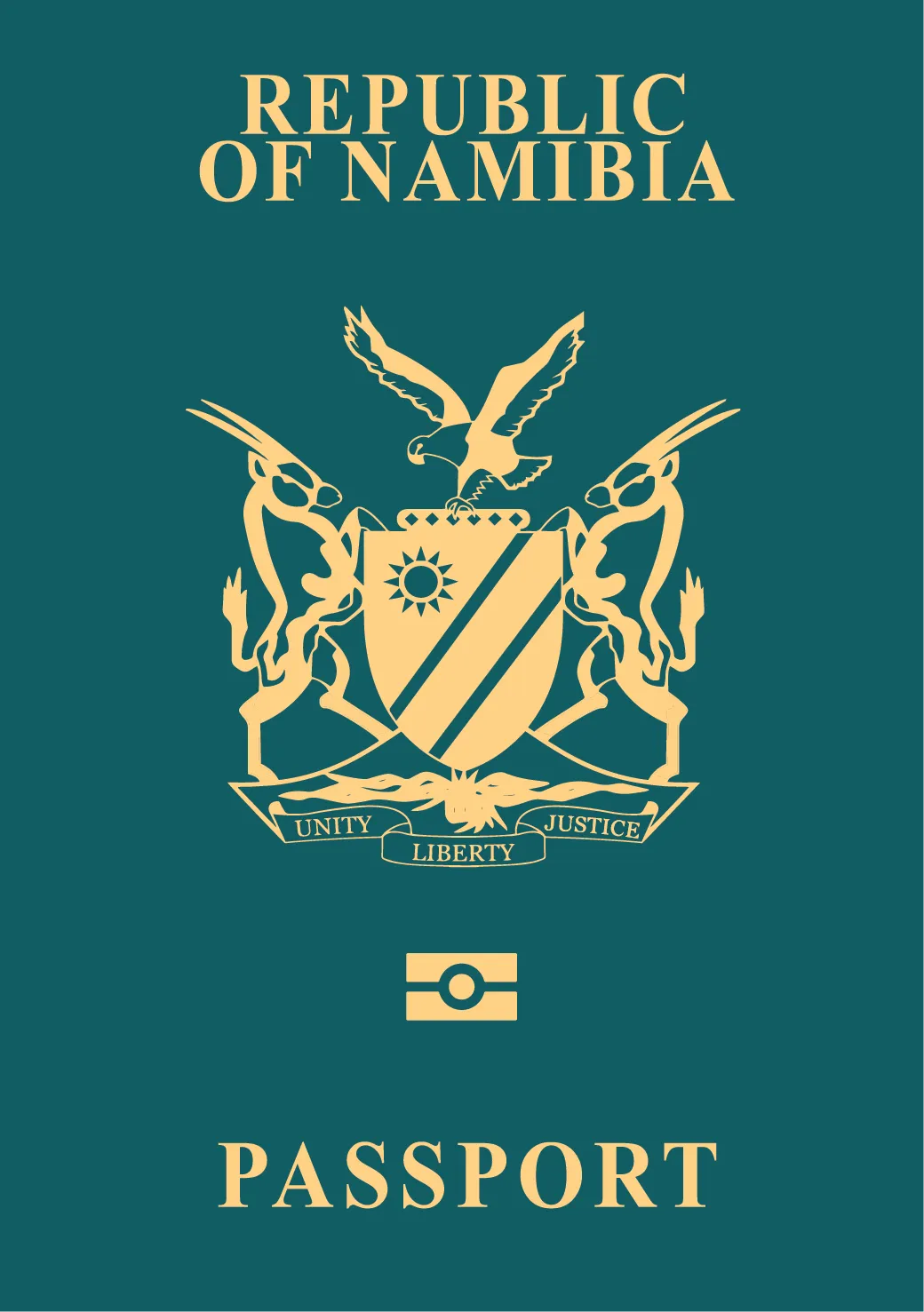
Namibia Passport

Ranked #62 Globally

The Namibia passport is a modest but steadily improving travel document. In 2026 it ranks #62 worldwide and lets holders enter about 74 countries and territories without a prior visa, or with a quick visa-on-arrival. Its strength is regional: Namibians move easily across southern Africa, because the country belongs to (the Southern African Development Community, a 16-nation regional bloc that promotes free movement among members). The passport also opens much of the Caribbean and a few Asian hubs. It does not, though, reach the , the United Kingdom, or the United States visa-free — those still need a visa arranged in advance. Namibia is a stable multi-party democracy independent since 1990, and in March 2025 it inaugurated its first female head of state. English is the official language, so the passport is printed mainly in English.

60th
Global Ranking
74
Destinations
38
Mobility Score
Namibia Passport - Passport Power 69th | worldpath.ai WRI

Namibia Passport Global Mobility Context

The Namibia passport earns its place through regional reach and a stable home country, not a long global list. It ranks #62 worldwide in 2026 and operates about 74 destinations. Within southern Africa, it is one of the more useful documents, ahead of the passports of Zambia, Zimbabwe, and Angola.

Most of the everyday value sits close to home. As a member of (the Southern African Development Community, a 16-nation southern-African bloc), Namibia joins regional efforts to let citizens cross member borders without a visa for short stays. Namibians travel freely to South Africa, Botswana, Zambia, Zimbabwe, and other neighbours, which matters for work, trade, and family.

The document meets modern security rules. Namibia moved to a biometric ePassport in January 2018 to satisfy the standards of the (the International Civil Aviation Organization, the United Nations agency whose rules airports use to read passport chips at e-gates). The chip stores the holder's photo and fingerprints.

Stability stands behind the passport. Namibia has held regular multi-party elections since its independence in 1990 and transferred power peacefully each time, including the March 2025 inauguration of its first female president. That predictability is part of why other countries extend visa-free access.
A biometric passport is a highly secured travel document or passport with a chip for document security enhancement, rendering it difficult to forge.

Namibia Passport at a Glance

Global rank (2026)

#62 worldwide in 2026. The rank counts how many places a holder can enter without a prior visa, and Namibia leads its neighbours Zambia, Zimbabwe, and Angola.

Visa-free destinations

About 74 countries and territories visa-free or with visa-on-arrival in 2026. The list is led by southern Africa and the Caribbean, plus Asian hubs such as Singapore, Malaysia, and Hong Kong.

Document type

Biometric ePassport with an electronic chip that stores the holder's photo and fingerprints. Namibia switched to the chip format in January 2018 to meet international border-reading standards.

Page count

Issued as a 32-page booklet for ordinary travel, with a 48-page option for frequent travellers who fill their visa pages faster.

Languages

English, the country's official language, with the photo page also rendered in French. English-first printing keeps the document easy to read at borders worldwide.

Adult validity

10 years for applicants aged 21 and over before renewal is due. A long validity means fewer renewal trips and a lower yearly cost across the life of the booklet.

Child validity (under 16)

5 years for applicants under the age of 21, shorter than the adult term because a young person's face and appearance change quickly as they grow.

Dual citizenship

Allowed for Namibians by birth or descent, confirmed by the courts. People who gain citizenship by naturalisation must give up their previous nationality.

Issuing authority

The Ministry of Home Affairs, Immigration, Safety and Security issues the passport to Namibian citizens through its passport offices and online application service.

History

Namibia became independent on 21 March 1990. It introduced the biometric ePassport in January 2018 and inaugurated its first female president in March 2025.

Namibia Passport Visa-Free Destinations by Region

Regional Mobility

Economic Mobility Score: 38%Country GDP: 13.37%
Visa Exceptions
Africa is the strongest region by far, driven by SADC ties across southern Africa. The Caribbean lifts the Americas score, while Europe is near zero because the Schengen Area, the UK, and Ireland all require a visa.

A Namibia passport reaches about 74 destinations in 2026 without a prior visa or with a visa given on arrival. The headline wins for most holders are southern Africa, where regional ties make travel simple, and the Caribbean, where many islands welcome Namibians for long stays. Asia adds useful business hubs such as Singapore, Malaysia, and Hong Kong. The clear gaps are the wealthy travel markets: the , the United Kingdom, the United States, Canada, and China all require a visa arranged before the trip.

Americas

The Caribbean is where this passport surprises people. Several islands give Namibians generous stays without a visa: Antigua and Barbuda and Dominica allow up to 180 days, while the Bahamas, Barbados, Grenada, and Saint Vincent and the Grenadines allow 90 days. On the South American mainland, Brazil and Ecuador admit Namibians visa-free for 90 days, and Panama and Belize are reachable too. The two large North American economies are the missing pieces: both the United States and Canada require a visa to be applied for in advance, with no waiver for Namibian citizens. For a holder planning a long trip, the Caribbean island chain offers more open doors than anywhere else outside Africa.

Europe

Europe is the weakest region for this passport. Namibians cannot enter the Schengen Area — the 27-country borderless travel zone covering most of the continent — without a visa, and the same is true for the United Kingdom and Ireland. A trip to France, Germany, Italy, or Spain means applying at a consulate before travel and showing funds, bookings, and insurance. The one open door is Russia, which admits Namibians visa-free for up to 90 days. For most holders, Europe is a plan-ahead destination rather than a spontaneous one, and this gap is the main reason the passport sits in the middle of the global table rather than near the top.

Asia-Pacific

Asia offers a small but valuable set of open doors. Singapore and Malaysia each admit Namibians for 30 days without a visa, and the Philippines does the same, giving holders three useful bases for business and transit in the region. Hong Kong and Macao, the two special administrative regions of China, are visa-free, even though mainland China itself requires a visa. Out in the Pacific, the island states of Micronesia, Kiribati, and Vanuatu are reachable visa-free or on arrival. Australia and New Zealand are not: both require their entry to be arranged online before departure, so the wider Pacific rim needs paperwork first.

Middle East

Coverage here is thin and best checked before each trip. A few destinations in the wider Middle East grant Namibians a visa on arrival or a quick electronic visa, while the larger Gulf states generally expect a visa to be arranged in advance. Because the rules in this region change often and depend on the exact reason for travel, a Namibian holder should confirm the current requirement with the destination's embassy close to the travel date rather than relying on a fixed list. This is not a strong region for the passport, and it carries few of the open doors that southern Africa and the Caribbean provide.

Africa

Africa is the heart of this passport's strength. As a member of (the Southern African Development Community), Namibia gives and receives wide visa-free access across the southern part of the continent: South Africa, Botswana, Zambia, Zimbabwe, Eswatini, Lesotho, Malawi, Mauritius, and Tanzania all open to Namibian holders, usually for stays of around 30 to 90 days. Beyond the southern bloc, Kenya, Rwanda, Mozambique, Tunisia, Benin, and the Gambia add further visa-free or visa-on-arrival entry. For a Namibian, much of the continent is effectively local travel, which makes regional business, study, and family visits far simpler than long-haul trips elsewhere.

Offshore Jurisdictions

The passport's offshore reach runs mainly through the Caribbean rather than the European financial centres. Holders can spend long periods in islands such as Antigua and Barbuda and Dominica, both of which double as Caribbean banking and residence hubs. By contrast, the Atlantic and European-linked offshore centres that strong passports rely on are largely closed without a visa. This makes Namibia a regionally focused document: its open offshore doors are clustered in the Caribbean, while the global network of low-tax islands used by internationally mobile families is mostly out of reach without prior paperwork.

Where a Visa Is Still Required

  • The Schengen Area — all 27 member countries require a visa applied for at a consulate before travel; there is no visa-free or visa-on-arrival option for Namibians.The
  • The United Kingdom and Ireland both require a visitor visa arranged in advance.
  • The United States and Canada each require a visa to be applied for ahead of the trip, with no waiver arrangement for Namibian citizens.
  • Mainland China — a visa is required for most visits, although Hong Kong and Macao remain visa-free.
  • Australia and New Zealand — entry must be arranged online before departure through each country's visa or travel-authorisation system.
  • Most of the Gulf and parts of the Middle East — several destinations require a visa obtained before travel; confirm the current rules for each country and trip.

How to Get a Namibia Passport

1

Get Permanent Residency

Almost everyone who holds a Namibia passport is a Namibian citizen, and for newcomers the journey to citizenship begins with legal residence. There is no investor-citizenship route and no donation route in Namibia: the passport follows citizenship, and citizenship follows years of lawful living in the country. The first step is therefore to secure the right to stay long-term.

Most foreign nationals start on a work or business permit tied to a job, an investment, or a profession, issued by the Ministry of Home Affairs, Immigration, Safety and Security. After building a record on these permits, a person can apply for permanent residence, which removes the need to keep renewing a temporary permit and is the platform from which citizenship is later requested.

A separate route exists for the spouse of a Namibian citizen. Marriage does not grant citizenship automatically; instead it opens a residence-based path. The foreign spouse builds lawful residence in Namibia and, after the required period, may apply for citizenship by marriage. Either way, the foundation is the same: a settled, legal life in the country comes before any passport.

2

Build Residency History

Namibia asks for a long period of residence before citizenship, and this waiting stage is the heart of the process. The standard rule is ten years of ordinary residence in the country before a naturalisation application. "Ordinary residence" means Namibia is the applicant's settled, habitual home — shown by living and working there, keeping a home, and treating the country as the centre of life rather than a temporary posting.

This ten-year rule is stricter than it once was. A constitutional amendment in 2010 raised the residence requirement for both naturalisation and marriage from the shorter periods used before — five years for naturalisation and two years for marriage — to ten years for each. The change makes Namibian citizenship a long-term commitment rather than a quick step.

Through these years the applicant is expected to keep clean immigration records, renew permits on time, and stay out of serious legal trouble. Good character and the absence of a criminal record are part of the test. Time spent outside the country can interrupt the count, so applicants planning to naturalise usually keep their travel and their paperwork in order across the full decade.

3

Apply for Citizenship

After ten years of ordinary residence, a person may apply to become a Namibian citizen by naturalisation. The application goes to the Ministry of Home Affairs, Immigration, Safety and Security and is decided under the Namibian Citizenship Act of 1990, the law that sets out who qualifies and on what terms. The applicant submits proof of the residence period, a police clearance, and identity documents.

Naturalisation in Namibia comes with a firm condition: a naturalised citizen must give up any other nationality. Unlike Namibians who are citizens by birth or descent, a person who naturalises cannot keep a second passport. Applicants weighing this route should be sure they are ready to renounce their original citizenship before they apply.

The spouse of a Namibian citizen follows a parallel path, applying for citizenship by marriage after the same ten-year residence period and showing a genuine, continuing marriage. People with a Namibian parent or grandparent may instead claim citizenship by descent, proving the family link with birth and marriage records rather than serving the long residence wait.

4

Apply for the Passport

Once citizenship is confirmed, the holder applies for the passport itself through the Ministry of Home Affairs, Immigration, Safety and Security. Namibia now runs an online application service alongside its passport offices, so much of the form-filling and booking can be done over the internet before an in-person visit to capture the photo and fingerprints.

The document issued is a biometric ePassport. Its chip follows the standard set by the (the International Civil Aviation Organization, the United Nations agency whose rules airports use to read passport chips at electronic gates). The applicant supplies a certified birth certificate, a Namibian identity document, and, for those born abroad, a citizenship certificate, along with the passport fee.

An ordinary passport is valid for 10 years for adults and 5 years for applicants under 21, and renewal is a straightforward reapplication near the expiry date. The booklet comes in a 32-page version for ordinary travel and a 48-page version for people who travel often and fill their visa pages quickly.

Namibia offers citizenship by descent for people with a close family link to the country, separate from the long naturalisation wait. This is the route for those whose roots are Namibian rather than those who move to the country and build residence over a decade.

The basis is ancestry. A person born outside Namibia can claim citizenship if a parent was a Namibian citizen at the time of their birth, passing nationality down the family line. The applicant proves the connection with official birth and marriage certificates that trace back to the Namibian parent. This descent link is registered rather than earned through years of residence.

Citizenship by descent carries an important advantage over naturalisation: it is treated as citizenship of origin, not acquired citizenship. The courts have confirmed that Namibians who are citizens by birth or descent may hold dual nationality, so a descent applicant does not have to give up another passport to claim the Namibian one.

The descent route asks for neither money nor years of residence — proving the Namibian parent on paper is the whole test. As with every Namibian passport, that proof of descent must be registered and the citizenship confirmed before the passport application can be filed with the Ministry of Home Affairs, Immigration, Safety and Security.

Comparison of Namibia Passport With Other Top Passports

Passport

Rank

Visa-free

Key edge

Singapore Passport

#1

192

Strongest passport in 2026 — the global mobility benchmark

France/Italy Passports

#4

185

EU citizenship — the right to live and work across 27 states

United Kingdom Passport

#7

182

English-speaking Commonwealth peer that still needs a visa from Namibia

United States Passport

#10

179

Largest economy; requires a visa from Namibian holders

The Namibia passport is best understood next to three reference points: the world's strongest passport, the European Union passports at the top of the table, and the English-speaking peers Namibians often compare against. Against all three, it gives up global reach, but it holds regional value in southern Africa that none of them match for a holder based there.

Versus the strongest passport. The top-ranked passport in 2026 reaches about 192 destinations, against roughly 74 here. The gap is also in which doors open: the leading document enters Europe, North America, and most of Asia visa-free, while the Namibian passport must be applied for ahead of time for nearly all of those markets. Its edge is the opposite corner of the map — southern Africa, where it travels more freely than almost any non-African passport.

Versus the European Union top tier. An (European Union) passport does two things that a Namibia passport cannot. It grants visa-free entry to about 185 destinations, and, more importantly, the right to live, work, and study across 27 member states. The Namibia passport grants no settlement rights abroad — it is purely a travel document. European mobility is the single biggest thing it lacks.

Versus English-speaking peers. Namibia shares English as an official language with the United Kingdom and the United States. Both reach well over 180 destinations and open Europe; the Namibia passport does not reach any visa-free destinations. The fairer comparison is closer to home: against Zambia, Zimbabwe, and Angola, it ranks higher, though it trails its neighbours, South Africa and Botswana.

Pros and Cons of the Namibia Passport

Pros7 strengths
Cons7 frictions
  • 01Document
    English as the Official Working Language
    Namibia's official language is English, so the passport is printed mainly in English and border officers worldwide can read it without translation. It also eases travel, study, and business across the English-speaking world.
    English
  • 02Mobility
    Wide Visa-Free Movement Across Southern Africa
    As a member of SADC (the Southern African Development Community), Namibia opens easy travel to South Africa, Botswana, Zambia, Zimbabwe, and other neighbours, making regional work, trade, and family visits simple.
    SADC access
  • 03Standing
    Backed by a Stable Multi-Party Democracy
    Namibia has held regular elections and transferred power peacefully since independence in 1990, including its first female president in 2025. Stability is part of why other countries extend visa-free access.
    Stable
  • 04Mobility
    Generous Long Stays Across the Caribbean
    Several Caribbean islands welcome Namibians for long visits without a visa, including Antigua and Barbuda and Dominica at up to 180 days, and the Bahamas, Barbados, and Grenada at 90 days.
    Caribbean 180d
  • 05Mobility
    Visa-Free Entry to Key Asian Business Hubs
    Singapore, Malaysia, and the Philippines each admit Namibians for 30 days without a visa, and Hong Kong and Macao are open too, giving useful bases for business and transit in Asia.
    Asian hubs
  • 06Rights
    Dual Citizenship for Citizens by Birth or Descent
    The courts have confirmed that Namibians who are citizens by birth or descent may hold a second nationality, so they can keep another passport alongside their Namibian one.
    Dual OK
  • 07Descent
    Citizenship by Descent Without a Residence Wait
    People with a Namibian parent can claim citizenship by descent using birth and marriage records, skipping the ten-year residence requirement that applies to naturalisation.
    By descent
  • 01Mobility
    Modest Global Mobility at Around 74 Destinations
    Ranked #62 worldwide in 2026 with roughly 74 visa-free or visa-on-arrival destinations, the passport sits in the middle of the global table, far below the 180-plus reach of top-tier documents.
    ~74 dest.
  • 02Mobility
    No Visa-Free Access to Europe
    Namibians need a visa for the Schengen Area, the United Kingdom, and Ireland, all arranged in advance. Europe is the single biggest gap in the passport's reach.
    No Schengen
  • 03Mobility
    No Visa-Free Access to the United States or Canada
    Both North American economies require a visa applied for ahead of travel, with no waiver for Namibian citizens. Trips there need consular paperwork and processing time.
    No US/Canada
  • 04Eligibility
    Ten Years of Residence to Naturalise
    A 2010 constitutional amendment raised the residence requirement for both naturalisation and marriage to ten years, making Namibian citizenship a long-term commitment rather than a quick step.
    10-year wait
  • 05Rights
    Naturalised Citizens Must Give Up Other Nationality
    Unlike citizens by birth or descent, a person who naturalises must renounce any other citizenship. There is no dual-nationality option on the naturalisation route.
    Renounce
  • 06Support
    Limited Consular Network Abroad
    As a smaller nation, Namibia maintains few embassies and consulates worldwide, so citizens may find less in-person government support when travelling than holders of a large-country passport.
    Small network
  • 07Eligibility
    No Investor or Fast-Track Citizenship
    Namibia offers no citizenship-by-investment or donation route. The only paths are long residence, marriage, or descent, so wealth alone cannot buy a faster way to the passport.
    No investor

Dual Citizenship and the Namibia Passport

Namibia treats dual citizenship differently depending on how a person became a citizen. This split is the single most important rule to understand before relying on the passport, and it traces back to the country's constitution and a pair of court decisions.

Citizens by birth or descent. Namibians who are citizens by birth or by descent may hold a second nationality. Although the Citizenship Act of 1990 appeared to bar dual citizenship, the High Court ruled in cases decided in 2008 and 2011 that citizens of origin cannot be stripped of their nationality. The practical result is that a born or descended Namibian can take up another passport without losing the Namibian one.

Naturalised citizens. The rule flips for people who gain citizenship by naturalisation. A naturalised citizen must give up any other nationality as a condition of becoming Namibian. This is why the route a person takes to citizenship matters so much: the same passport carries dual-citizenship rights for some holders and a renunciation requirement for others.

The practical rule at borders. A Namibian who lawfully holds two passports chooses which one to present when entering a country. Many use the Namibia passport for travel within southern Africa and their other passport for regions where it opens more doors, such as Europe or North America. There is no duty to tell either government which document was used for a given trip.

Bottom Line on the Namibia Passport

The Namibia passport is a solid regional travel document that ranks #62 worldwide in 2026 with about 74 visa-free or visa-on-arrival destinations. Its real strengths are local: wide, easy movement across southern Africa through ties, generous long stays across much of the Caribbean, visa-free entry to a few key Asian hubs, and the backing of a stable democracy with English as its official language. For a holder whose life and business are anchored in the region, it does the main job well.

Its limits are just as clear. The passport gives no visa-free entry to the , the United Kingdom, the United States, or Canada, and it grants no right to live or work abroad anywhere. The path to citizenship for newcomers is long — ten years of residence — and naturalised citizens must surrender any other nationality, though Namibians by birth or descent keep the right to a second passport. For someone whose priority is global mobility or settling in Europe or North America, this is not the right tool; for someone building a life across southern Africa, it is a dependable one.

Namibia Passport FAQ

What is Namibia's WRI score for 2026?

Namibia scores 55.5 out of 100 on the worldpath.ai WRI 2026, ranking 29th globally. The country leads its peer group on Safety (78) — driven by Global Peace Index 2025 rank 50, third-most-peaceful in Africa — and Retirement (70), backed by no capital gains tax, no inheritance tax, and the dedicated Retirement Permanent Residence from $218,000. Citizenship (35) is the lowest dimension, reflecting the 10-year naturalisation requirement.

Does Namibia have capital gains tax, inheritance tax, or wealth tax?

No. Namibia has no capital gains tax, no inheritance or estate duty, no donation tax, and no wealth tax. Combined with a source-based personal income tax regime that exempts foreign pensions, dividends, and interest from Namibian taxation, this makes Namibia one of the most favourable tax environments globally for HNW retirees and investors with substantial offshore portfolios.

How can a foreigner obtain residency in Namibia through investment?

The principal route is the Investor Visa: a minimum $215,000 (NAD 3,950,000) investment in a Namibian business with 10%+ shareholding grants a 5-year renewable work permit, with permanent residence eligibility after 7 years of investment retention. An alternative is the President's Links Estate real-estate route from $365,000, also yielding a 5-year work permit. Both are administered by MHAISS in coordination with the NIPDB.

What is Namibia's Retirement Permanent Residence programme?

The Retirement Permanent Residence, administered by the Ministry of Home Affairs, Immigration, Safety and Security, grants direct PR status to applicants aged 60 and above with a net financial-investment value of $218,000 (NAD 4,000,000), part of which must already be invested in Namibia. There is no temporary-visa track — the programme grants permanent residence immediately. It combines with the no-CGT, no-IHT, no-wealth-tax regime for one of Africa's strongest retiree propositions.

Is Namibia safe for expats?

Namibia ranks 50 of 163 on the Global Peace Index 2025 (score 1.79), the third-most-peaceful country in Africa after Mauritius and Botswana. Violent crime in Windhoek's expat neighbourhoods — Klein Windhoek, Olympia, Eros, Ludwigsdorf — and in Swakopmund and Walvis Bay is below regional averages. Petty theft is the predominant concern. SWAPO governance continuity since 1990 and eight consecutive democratic elections anchor a stable rule-of-law baseline.

What is the cost of living in Namibia for expats?

A single professional in central Windhoek budgets $1,400–2,400 per month, covering a one-bedroom apartment ($650–1,100), utilities, and groceries. A family of three runs $2,800–4,800 including international school fees. Swakopmund and Walvis Bay run 15–20% cheaper than Windhoek. Supermarket prices sit 10–20% below South African averages due to SACU supply-chain integration. Private health insurance adds $200–450 per month per couple.

Can foreigners buy property in Namibia?

Foreign nationals may freely purchase urban residential, commercial, and industrial property in Windhoek, Swakopmund, Walvis Bay, Lüderitz, and other municipal areas. Agricultural farmland is restricted under the 1995 Land Reform Act. Acquisition costs total 6–9% of transaction value, including Transfer Duty, legal fees, and Deeds Office registration. Prime Windhoek runs $1,800–3,200 per square metre; Swakopmund coastal $1,500–2,800. Gross rental yields average 5–7% on long-term Windhoek lets.

What are Namibia's personal income tax rates for residents?

Namibia taxes residents and non-residents on Namibian-source income only, at progressive rates from 0% on the first NAD 100,000 ($5,400) to 37% above NAD 1,500,000 ($81,100). Foreign-source income — pensions, dividends, interest — is fully exempt. There is no capital gains tax. For a retiree living on a foreign pension, the effective Namibian income tax rate is 0%, which is the core draw of the Retirement Permanent Residence programme.