WorldPath AIWORLDPATH•AI
Africa

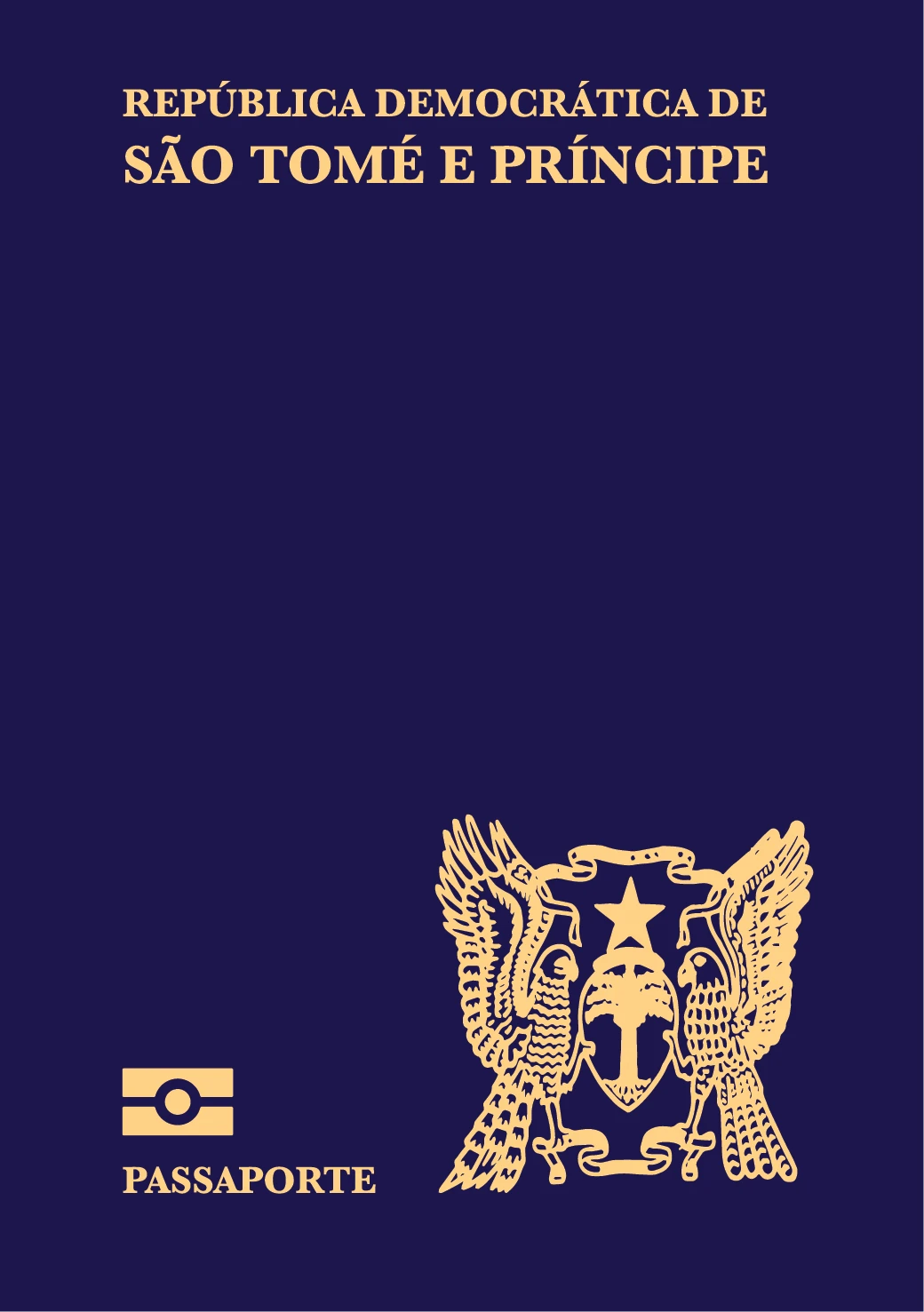
São Tomé and Príncipe Passport

Ranked #78 Globally

The São Tomé and íncipe passport is the travel document of a small island nation in the Gulf of Guinea, off the coast of Central Africa. In 2026 it ranks #78 worldwide and lets holders enter 59 countries and territories without a prior visa, or with a visa stamped on arrival. Most of that access sits in Africa, the Pacific islands, and parts of Latin America and Southeast Asia; the major economies of North America and Europe still require a visa. The country's deeper advantage is language and membership. It is one of nine members of the (Community of Portuguese Language Countries, a group of Portuguese-speaking states), which since 2021 has run an agreement that helps citizens move to fellow members such as Portugal and Brazil. Portuguese is the official language, and the nation has been a stable multiparty democracy since 1990.

78th
Global Ranking
59
Destinations
4.6
Mobility Score
São Tomé and Príncipe Passport - Passport Power 74th | worldpath.ai WRI

São Tomé and Príncipe Passport Global Mobility Context

This passport is not strong in the way a high-ranking document is. At roughly #78 in 2026 and 59 reachable destinations, its raw travel power is modest. Its real value lies elsewhere: in a shared language and agreements that turn one small country into a doorway to a wider group of nations.

The centre of that value is the (Community of Portuguese Language Countries), nine Portuguese-speaking states that include Portugal and Brazil. A mobility agreement signed in 2021 lets citizens of one member apply more easily to live in another. For a São Toméan, this opens a smoother path to residence in Portugal — a gateway to Europe — and in Brazil.

The travel the passport does unlock sits mostly in the Global South. Holders reach much of Africa, several Pacific island states, and parts of Latin America and Southeast Asia without a prior visa or with one on arrival. Singapore, Malaysia, South Africa, Rwanda, Ecuador, and Costa Rica are among the open doors.

Behind the document sits a settled state. The country has run multiparty elections since 1990 and ranks among the more stable democracies in Africa. It belongs to the African Union, the United Nations, and the Economic Community of Central African States, though free movement within that bloc is only partly in force.

The Democratic Republic of São Tomé and Príncipe ensures national identity and integrates all São Toméan citizens residing within or outside its territory.

São Tomé and Príncipe Passport at a Glance

Global rank (2026)

#78 worldwide in 2026 on the main travel-freedom index. The rank counts how many places a holder can enter without arranging a visa first; for this passport that number is modest.

Visa-free destinations

About 60 countries and territories visa-free or with a visa on arrival in 2026. Published counts range from roughly 58 to 63 depending on the source and date, so treat the figure as approximate.

Document type

A machine-readable passport that the country has been upgrading to a biometric ePassport, which stores the holder's photo and details on an electronic chip read at border gates.

Page count

An ordinary booklet for tourism and business travel. The exact page count is not published in official sources, so confirm the current specification with the issuing office before relying on it.

Languages

Portuguese, the country's official language and a legacy of its history as a former Portuguese territory. Portuguese is shared with eight other nations in its language community.

Adult validity

Issued for 5 years to a first-time adult applicant and for 10 years on renewal, according to consular guidance. A longer renewal term means fewer trips to the passport office over time.

Child validity (under 16)

Shorter than the standard adult term, because a child's photograph and appearance change quickly as they grow and the document must still match the holder at the border.

Dual citizenship

Generally allowed for people who are citizens from birth, a position settled in 2003. Rules for those who gain citizenship later are stricter, and the law caps how many nationalities a citizen may hold.

Issuing authority

The Government of São Tomé and íncipe issues the passport through its migration and borders service, with enrolment points at home and at a small number of locations abroad.

History

An independent nation since 12 July 1975, when it gained independence from Portugal. It has held multiparty elections since 1990 and is counted among Africa's more stable democracies.

São Tomé and Príncipe Passport Visa-Free Destinations by Region

Regional Mobility

Economic Mobility Score: 4.6%Country GDP: 0.82%
Visa Exceptions
Africa is the strongest region, with several visa-free and on-arrival options. Europe is almost entirely closed without a prior visa, and North America requires a visa, which holds the overall score down.

A São Tomé and íncipe passport opens 59 destinations in 2026 without a prior visa or with one issued at the border. The strongest clusters are in Africa, the Pacific, and parts of Latin America and Southeast Asia. The clearest wins for most holders are Singapore, Malaysia, South Africa, Rwanda, Costa Rica, Ecuador, and the Bahamas. The major gaps are also clear: the United States, Canada, the United Kingdom, the of Europe, and Australia all require a visa arranged before travel.

Americas

Latin America is the most useful part of the Americas for this passport. Several countries admit holders without a visa for tourism, usually for up to 90 days, including Costa Rica, Ecuador, Panama, Honduras, Nicaragua, El Salvador, and Guatemala. In the Caribbean, the Bahamas, Dominica, and Saint Vincent and the Grenadines are open. Bolivia issues a visa on arrival. The two large North American economies are the main exceptions: both the United States and Canada require a visa applied for in advance, with no waiver arrangement for São Toméan citizens. Brazil, despite the shared language, asks São Toméans to obtain a visa, though the two countries' membership of the same language community can ease longer-term residence.

Europe

Europe is almost entirely closed to visa-free travel on this passport. The Schengen Area — the 27-country zone where internal borders are largely removed — requires a visa arranged in advance, as do the United Kingdom and Ireland. This is the single biggest limit on the document's reach. The route into Europe runs through people, not tourism: as a member of the Portuguese-language community, a São Toméan can use the 2021 mobility agreement to apply for residence in Portugal more easily than most non-European nationals, and lawful residence there is itself a path toward longer-term status in the European Union.

Asia-Pacific

Asia and the Pacific hold some of this passport's best long-haul options. Singapore admits holders without a visa for 30 days, and Malaysia and the Philippines for 30 days each, covering three significant hubs. Several Pacific island states are open, including the Federated States of Micronesia, Samoa, the Cook Islands, and Tuvalu. Across Southeast Asia, Indonesia, Thailand, Laos, and Vietnam are reachable through an electronic visa applied for online before the trip, or a visa on arrival. The clear gaps are mainland China, which requires a full visa, and Australia and New Zealand, which both need their travel authorisation arranged in advance.

Middle East

The Middle East is a mixed, mostly paperwork-first region for São Toméan travellers. A few destinations grant entry through an electronic visa bought online or a visa stamped on arrival, including Iran, Oman, Bahrain, and Qatar, while Jordan offers an on-arrival or electronic option. Visa-free entry without any form is rare here. Because the rules change often and depend on the purpose of the trip, a holder should confirm the current requirement with the destination's embassy shortly before departure rather than assume a fixed entitlement.

Africa

Africa is the heart of this passport's everyday usefulness, and the region where it is strongest. Several countries admit São Toméans without any visa, including South Africa, Rwanda, Ghana, Benin, the Gambia, and Zambia, usually for stays of up to 90 days. A wider set grants a visa on arrival or accepts an electronic visa, among them Cape Verde, Mozambique, Mauritius, the Seychelles, Senegal, Kenya, Tanzania, and Ethiopia. The country is a member of the Economic Community of Central African States, an eleven-nation bloc, but the bloc's free-movement plan is only partly in effect, so a visa or on-arrival permit is still needed for several neighbours.

Offshore Jurisdictions

Access to the small offshore and island financial centres is thin on this passport, which sets it apart from the strong Caribbean and European documents. A handful of island destinations are reachable visa-free or on arrival, but the well-known Atlantic and Caribbean offshore hubs that cater to globally mobile families are generally not open without arranging entry first. For a holder whose interest is international banking or property in those jurisdictions, the passport offers little shortcut, and travel there usually depends on a separate visa or a second nationality.

Where a Visa Is Still Required

  • United States and Canada — both require a visa applied for in advance; there is no visa-waiver arrangement for São Toméan citizens.
  • Schengen Area, the United Kingdom, and Ireland — all of Western Europe's main destinations require a visa arranged before travel.
  • Australia and New Zealand — entry must be set up in advance through each country's online visa or travel-authorisation system.
  • Mainland China and India — a full visa is required, applied for before the trip.
  • Brazil and Angola — fellow Portuguese-speaking states, yet both still ask São Toméans for a visa or an electronic authorisation for ordinary travel.

How to Get a São Tomé and Príncipe Passport

1

Move and Build Legal Residence

The ordinary route to a São Tomé and íncipe passport is to become a citizen first, and citizenship for most newcomers comes after years of living there legally. Since August 2025, a second route exists: the Citizenship by Investment Programme under Decree Law 07/2025 grants citizenship for a non-refundable contribution to the National Transformation Fund from $90,000, processed remotely in 4-6 months with no residence requirement. For everyone else, the first stage is to enter the country lawfully and obtain a residence status that can be renewed and counted toward citizenship.

São Toméans speak Portuguese, and the country sits inside the Portuguese-language community, so applicants who already speak the language or come from a fellow member state often find the early steps simpler. A residence permit is granted for work, family, study, or other lawful reasons. The applicant must keep that status valid and actually live in the country, because the time spent as a resident is what later supports a citizenship claim.

An applicant also needs to be self-supporting. The law expects a person seeking citizenship to have lawful means to support themselves and to have stayed out of serious trouble with the law. Keeping clean records and proof of income during the residence years matters, because both are checked when the citizenship file is later reviewed.

2

Meet the Residence and Language Test

Naturalisation — the legal process of becoming a citizen after birth — has a residence threshold. Public summaries of the nationality law point to a minimum of about five years of lawful residence before an adult can apply, though the exact count and any conditions should be confirmed with the authorities, as small states revise these rules and the detail is not always published in English.

Language and integration are part of the test. An applicant is expected to understand Portuguese, or a local creole spoken in the islands, and to have lived in the country long enough to be familiar with its customs and way of life. This is less a formal exam than a judgement that the person has genuinely settled and can take part in national life.

There is one important caution at this stage. The path for people who gain citizenship later in life has historically asked the applicant to give up a previous nationality, unlike the rule for those who are citizens from birth. Anyone who wants to keep an existing passport should confirm the current renunciation rule before applying, because it can decide whether naturalisation is worthwhile for them.

3

Apply for Citizenship

Once the residence and language conditions are met, the applicant files for citizenship with the responsible government office. The file gathers proof of the residence years, identity documents, a clean criminal record, and evidence of lawful income. Because the country is small, applications are handled centrally rather than through a large network of regional offices.

The decision rests with the state, and naturalisation is granted rather than guaranteed. The authorities weigh whether the person has truly settled, whether the records are clean, and whether the legal conditions are fully met. A separate, faster track exists for people with close family ties to the islands, who may claim citizenship through a São Toméan parent or grandparent rather than through years of residence.

Approval produces an official record of citizenship. That document is the legal proof a person needs before any passport can be requested, and it is also the basis for the few rights that only citizens hold, such as standing for certain public offices reserved to those who hold no other nationality.

4

Apply for the Passport

With citizenship confirmed, the new citizen applies for the passport through the migration and borders service. The application records the holder's photo and, for the biometric version, the electronic details the chip will carry. The country has been moving its document onto this modern chip-based format, which foreign borders can read at automated gates.

In 2026 the government added a remote option for enrolment. An applicant who cannot reach an office in person may complete identity checks by video with the civil registry, a change aimed at citizens living abroad. In-person enrolment at offices at home and at a small number of overseas points remains available as well.

An adult passport is issued for five years on a first application and ten years on renewal, according to consular guidance. Renewal is a fresh application made near the expiry date. Because the country keeps only a small consular network overseas, holders living abroad should plan renewals early, since the nearest enrolment point may be in another country.

Comparison of São Tomé and Príncipe Passport With Other Top Passports

Passport

Rank

Visa-free

Key edge

Singapore Passport

#1

192

Strongest passport in 2026 — the global travel-freedom benchmark

Portugal Passport

#5

184

Fellow Portuguese-speaking state with a top-tier passport and EU rights

United Kingdom Passport

#6

184

Major economy that still requires a visa from this passport

United States Passport

#10

179

Large economy that still requires a visa from this passport

The São Tomé and íncipe passport is best read against two yardsticks: the strong global passports that show what wide travel freedom looks like, and its fellow Portuguese-speaking states, which share its language and mobility agreement but sit in very different positions. Against the first it is weaker on travel; against the second its value is the community it belongs to.

Versus the strongest passports. The top-ranked passport in 2026 reaches 192 destinations and the leading European passports around 185, against 59 here. The difference is not only in numbers but in rights: a European Union passport lets the holder live and work across 27 countries, while this document grants short visits to a much smaller list and no right to settle abroad on its own.

Versus its Portuguese-speaking peers. Portugal, a fellow member of the language community, holds one of the world's strongest passports and full European Union rights, while São Tomé and Príncipe holds one of the weaker ones. What links them is the 2021 mobility agreement: it gives a São Toméan a smoother route to residence in Portugal than most outsiders enjoy. The passport's worth, in other words, is partly the company it keeps.

Versus a large economy that still requires a visa. The largest economy in the world taxes its citizens on worldwide income and, for a São Toméan, still requires a visa arranged in advance. The contrast captures the passport's position: it is the document of a small, peaceful state that opens regional and Global South travel, but leaves the wealthy North behind a visa counter.

Pros and Cons of the São Tomé and Príncipe Passport

Pros7 strengths
Cons7 frictions
  • 01Standing
    Doorway to a Nine-Nation Language Community
    São Tomé and Príncipe belongs to the Community of Portuguese Language Countries, nine states that share a 2021 mobility agreement. Citizens get a smoother route to live in fellow members such as Portugal and Brazil.
    CPLP member
  • 02Rights
    An Easier Path to Residence in Portugal
    Through the language community's mobility agreement, holders can apply for residence in Portugal more readily than most non-European nationals. Portugal is itself a gateway to longer-term status in the European Union.
    Portugal route
  • 03Rights
    Portuguese Opens a Wider World
    The official language is Portuguese, shared with about 260 million people across eight other nations. A common language lowers the barrier to study, work, and settlement across the whole community.
    Portuguese
  • 04Rights
    Dual Citizenship Allowed From Birth
    People who are citizens from birth have been free to hold a second nationality since 2003, so a São Toméan abroad need not give up the passport of their country of residence.
    Dual OK
  • 05Standing
    A Peaceful, Long-Standing Democracy
    The country has held multiparty elections since 1990 and is regularly listed among Africa's more stable democracies. A settled political system makes the nationality a dependable one to hold.
    Democracy
  • 06Mobility
    Solid Regional and Global South Travel
    Holders reach 59 destinations without a prior visa or with one on arrival, strongest across Africa, the Pacific islands, and parts of Latin America and Southeast Asia, including Singapore and South Africa.
    59 dest.
  • 07Document
    New Remote Passport Enrolment
    From 2026 the government lets applicants who cannot attend in person complete identity checks by video, a help for the many citizens who live overseas and far from an enrolment office.
    Remote 2026
  • 01Mobility
    No Visa-Free Travel to Europe
    The Schengen Area, the United Kingdom, and Ireland all require a visa arranged in advance. Europe is the single largest gap in the passport's reach, closed to ordinary visa-free tourism.
    No Schengen
  • 02Mobility
    No Visa-Free Access to North America
    Both the United States and Canada require a visa applied for before travel, with no waiver for São Toméan citizens. The wealthy economies of the North sit behind a visa counter.
    No US/Canada
  • 03Mobility
    Modest Global Travel Power
    At #78 worldwide in 2026 and 59 destinations, the passport ranks well below the leaders, which reach 185 to 192. For the widest possible travel, it is a weak document.
    Rank 78
  • 04Eligibility
    Later Citizens May Lose Their Old Passport
    Unlike citizens from birth, people who naturalise have historically been asked to give up a previous nationality. Anyone wanting to keep an existing passport should confirm the current rule first.
    Renounce rule
  • 05Support
    Few Embassies and Consulates Abroad
    As a small nation, the country maintains only a thin consular network overseas, so citizens travelling or living abroad may have little in-person government help when something goes wrong.
    Tiny network
  • 06Document
    Isolated Island Travel and Renewals
    The country is a remote Atlantic island state with limited flight links. Renewing a passport or reaching an enrolment point can mean travelling to another country, raising the time and cost involved.
    Island travel
  • 07Eligibility
    Naturalisation Takes Years of Residence
    There is no quick ordinary route. Public summaries point to about five years of lawful residence plus a Portuguese-language test before an adult can apply, so citizenship is a long commitment.
    5-yr residence

Dual Citizenship and the São Tomé and Príncipe Passport

São Tomé and íncipe takes a split position on holding more than one nationality, and the rule that applies depends on how a person became a citizen. For those who are citizens from birth, dual nationality has generally been allowed since a constitutional change in 2003. For those who become citizens later, through naturalisation, the law has been stricter.

The rule for citizens from birth. A person born a São Toméan citizen may, in most cases, also hold the citizenship of another country. This matters for the large number of São Toméans who live abroad, especially in Portugal, because they can take on the nationality of their new home without surrendering their original one. Children born overseas to São Toméan parents can also claim the nationality, usually by registering the birth with a consulate.

The rule for naturalised citizens. People who gain citizenship through years of ordinary residence have historically faced a renunciation requirement, and Nationality Law 07/2022 caps citizenship grants at two existing foreign nationalities — since April 2026, applications from individuals holding three or more are on hold pending legislative amendment. The Citizenship by Investment route under Decreto-Lei 07/2025 requires no renunciation for eligible applicants. Because these provisions remain under review, anyone affected should confirm the current position before acting.

The practical rule at borders. A dual citizen chooses which passport to present when crossing a border. In practice a São Toméan who also holds, say, a Portuguese passport will use the stronger document for travel to Europe and the São Toméan one within the language community or the region. Holding the passport does not by itself create a tax bill, but a citizen who is a tax resident elsewhere still answers to that country's rules, so advice matters before relying on it for planning.

Final Assessment

The São Tomé and Príncipe passport is a modest travel document attached to a valuable network. On its own it ranks around #78 worldwide in 2026 and opens 59 destinations, with its strength in Africa, the Pacific, and parts of Latin America and Southeast Asia, and its biggest gap across Europe and North America. Judged only on visa-free reach, it is a weak passport.

Its real worth comes from what surrounds it. Membership of the Portuguese-language community, the shared language itself, and the 2021 mobility agreement together give a São Toméan an easier route to live in Portugal — and through it, a foothold in Europe — and in Brazil. The country is a stable democracy that lets citizens from birth keep a second nationality, though those who naturalise face stricter rules and should check the renunciation requirement first. For someone whose family or future is tied to the Portuguese-speaking world, the nationality is a meaningful asset; for someone seeking broad visa-free travel or quick access to the wealthy North, it is not the right document.

São Tomé and Príncipe Passport FAQ

Which countries can São Tomé and Príncipe passport holders visit visa-free?

The passport's 59 destinations include strong African coverage — South Africa, Kenya, Tanzania, Uganda, Ghana, Morocco, and Angola — plus Asian hubs Hong Kong and Singapore, and select Caribbean and Pacific states. This regional reach exceeds what many Caribbean CBI passports offer within Africa, making the document practical for investors with business interests across the continent rather than those prioritising European travel.

Can São Tomé and Príncipe passport holders travel to Europe without a visa?

No. STP passport holders need a Schengen visa for the EU and separate visas for the UK, Ireland, and other European states. The indirect route runs through CPLP membership: STP citizens can obtain Portuguese residency via a consular CPLP visa and, under Portugal's nationality law in force since May 2026, qualify for Portuguese citizenship — and full EU mobility — after 7 years of legal residence.

How can I get a São Tomé and Príncipe passport?

Two routes exist. The fastest is the Citizenship by Investment Programme under Decree-Law 07/2025: a non-refundable donation of $90,000 (single applicant) or $95,000 (family up to four) to the National Transformation Fund, processed remotely in roughly 4-6 months through licensed agents. The ordinary route is naturalisation after years of legal residence, requiring Portuguese-language proficiency and physical presence in the country.

How much does a São Tomé and Príncipe passport cost through investment?

The all-in cost is approximately $95,750 for a single applicant: a $90,000 donation, $5,000 submission fee, and $750 in document fees covering the passport, national ID, and citizenship certificate. A family of four pays approximately $100,750 total. Each additional dependent adds $5,000. This makes São Tomé and Príncipe the lowest-priced citizenship by investment program available worldwide in 2026.

How long is a São Tomé and Príncipe passport valid?

The São Tomé and Príncipe passport is valid for 7 years, after which it must be renewed. Citizenship itself is permanent and irrevocable once granted, passing by descent to future generations — passport expiry does not affect citizenship status. Since April 2026, passport issuance and renewal can be handled remotely through the Citizenship Investment Unit, with documents couriered internationally, so no travel to the islands is required.

Does São Tomé and Príncipe allow dual citizenship for passport holders?

Yes, with one limit. The CBI program under Decreto-Lei 07/2025 requires no renunciation of your existing nationality. However, Nationality Law 07/2022 bars citizenship grants to individuals already holding three or more foreign nationalities, and new applications from such applicants have been on hold since April 2026. Investors with one or two existing passports can acquire STP citizenship without affecting their current status.

What are the benefits of CPLP membership for São Tomé and Príncipe passport holders?

São Tomé and Príncipe is the only CBI jurisdiction inside the Community of Portuguese Language Countries. Its citizens access preferential residence frameworks in Portugal and Brazil, exemption from Portugal's A2 language test for naturalisation, and a 7-year track to Portuguese citizenship versus 10 years for most nationalities. Brazil offers CPLP citizens accelerated naturalisation after one year of permanent residency — advantages no Caribbean passport provides.

How does the São Tomé and Príncipe passport compare to Caribbean CBI passports?

Caribbean passports win on raw mobility: Dominica reaches 145 destinations from $200,000, Grenada 147 from $235,000, and St. Kitts and Nevis 155 from $250,000, all including Schengen access. The STP passport reaches 61 destinations but costs $90,000 — under half the cheapest Caribbean entry — and adds the CPLP pathway toward Portuguese and Brazilian residency, which no Caribbean program offers.