WorldPath AIWORLDPATH•AI
Europe

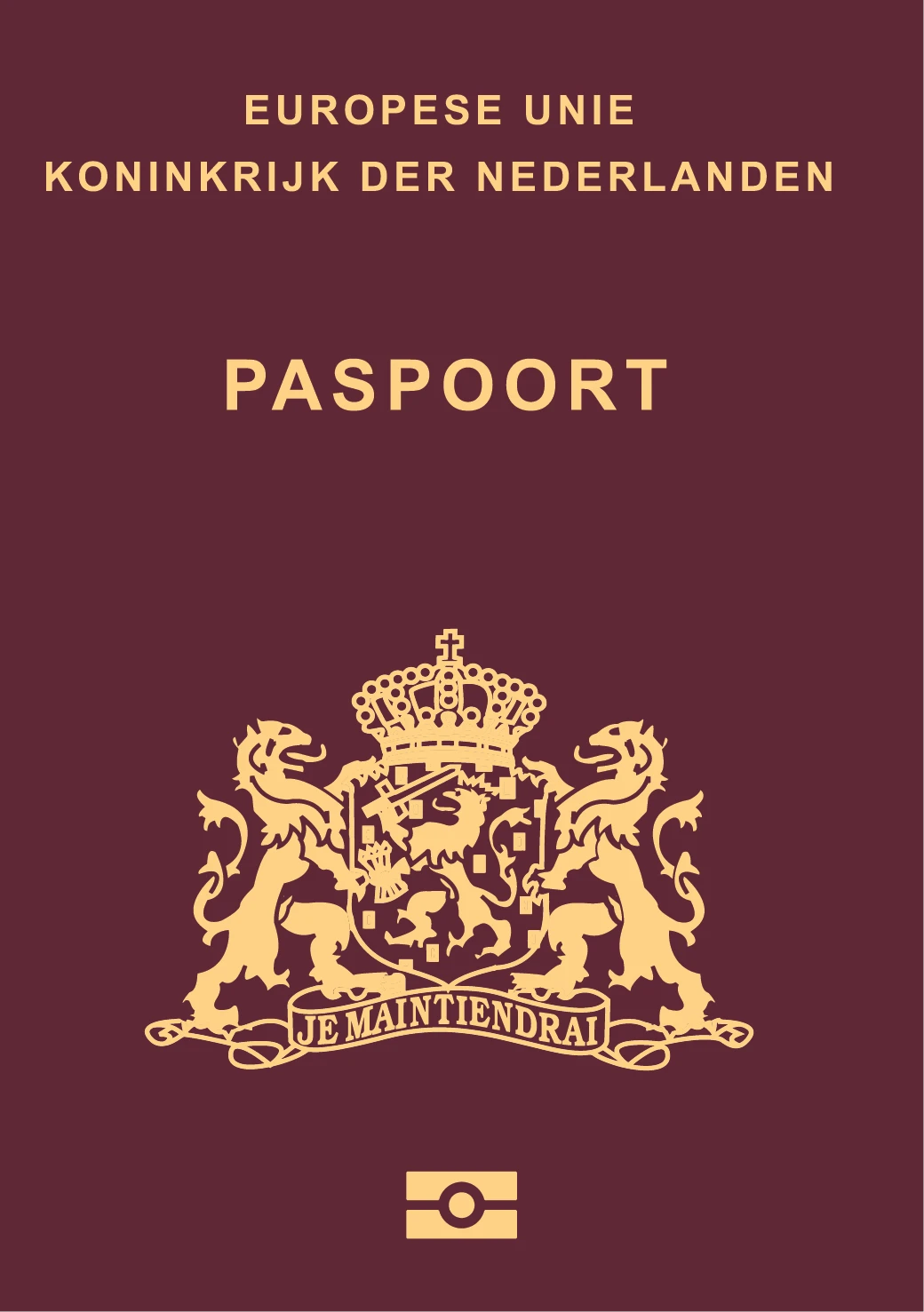
Netherlands Passport

Ranked #4 Globally

The Netherlands passport is one of the strongest travel documents in the world. In 2026 it ranks #4 globally, letting Dutch citizens enter 185 destinations without a prior visa or with a quick visa-on-arrival. The Netherlands is a founding member of the (European Union), the political and economic union of 27 European countries. That membership gives Dutch passport holders a right most travellers do not have: they can live, work, study, and retire in any of the other 26 EU states with no visa and no time limit. The passport is issued under rules set by the RvIG (Rijksdienst voor Identiteitsgegevens, the Netherlands Identity Data Service), and it carries a biometric chip that airport e-gates read across the world. This page explains, in plain language, where the passport takes you, what dual citizenship rules apply, and the one realistic route a newcomer can follow to earn it.

4th
Global Ranking
185
Destinations
96.5
Mobility Score
Netherlands Passport - Passport Power 3rd | worldpath.ai WRI

Netherlands Passport Global Mobility Context

The Netherlands passport is strong for three reasons: deep travel reach, the right to settle across a whole continent, and modern document security. In 2026 it sits at #4 on the main global ranking, sharing that spot with eleven other European countries. Dutch citizens can enter 185 destinations without lining up for a visa first.

The biggest edge is not on the travel list at all. As an (European Union) passport, it carries freedom of movement: the legal right to live, work, study, and retire in any of the other 26 EU member states with no visa and no quota. A Dutch citizen can take a job in Berlin, open a shop in Lisbon, or retire to Spain, treated as a local for work and residence. Most of the world's passports, even highly ranked ones, cannot do this.

The document itself is built to a high security standard. The chip follows the international 9303 rulebook (the shared standard airports use to read passport chips), so an e-gate in Tokyo or Toronto can read a Dutch chip in seconds. The data page and the chip together make the booklet hard to copy. The Netherlands also runs a stable, well-funded consular network, so a lost passport abroad can be replaced quickly.
Passports and identity cards are valid for 10 years in the case of adults and 5 years in the case of children under 18.

Netherlands Passport at a Glance

Global rank (2026)

#4 worldwide on the main global mobility index, tied with eleven other European countries including Belgium, France, Italy, Luxembourg, and Spain.

Visa-free destinations

185 destinations are open without a prior visa or with a visa-on-arrival, covering nearly every major economy outside a short list of restricted states.

Document type

Biometric ePassport — a paper-and-polymer booklet with an embedded contactless chip holding the holder's photo and fingerprints, harder to forge than older designs.

Page count

The standard booklet has 34 pages, with 28 free for visas and entry stamps. A 66-page business version exists for frequent travellers.

Languages

Printed captions appear in Dutch, English, and French, with translations into the other official languages on the final pages so border officers anywhere can read it.

Adult validity

Ten years for anyone aged 18 or over. After that the holder applies for a fresh booklet; there is no renewal of the old one.

Child validity (under 18)

Five years for children under 18, because a child's face and details change quickly and the document must stay a reliable match.

Dual citizenship

Restricted. New citizens by naturalisation must usually give up their old nationality, but several broad exemptions let many keep both.

Issuing authority

The mayor of the holder's home municipality issues the passport inside the country; abroad, the Minister of Foreign Affairs issues it through embassies and consulates.

History

The Netherlands has issued biometric ePassports since 26 August 2006, with the current Model 2011 design in use since 9 March 2014.

Netherlands Passport Visa-Free Destinations by Region

Regional Mobility

Economic Mobility Score: 96.5%Country GDP: 1.21%
Visa Exceptions
Europe shows 100% because a Dutch citizen can not only travel but live and work in all 27 European Union states, not merely visit. Asia-Pacific reach includes mainland China visa-free for 30 days through 31 December 2026. A few destinations need a quick online permit before arrival — the United States ESTA, Canadian eTA, UK ETA, Australian eVisitor, or New Zealand NZeTA — and a short list of states still require a full visa.

A Dutch traveller can reach almost every popular destination without arranging a visa in advance. Some countries ask for a fast online permit before boarding — the United States (a quick online pre-screening), the Canadian , the UK ETA, the Australian eVisitor, and a few e-visas. These take minutes online and are not full visas. Because the Netherlands belongs to the (European Union), Dutch citizens are not affected by Europe's new entry systems for outside visitors, the travel-permit scheme (European Travel Information and Authorisation System) and the border-record system (Entry/Exit System); those apply to non-EU travellers, not to the Dutch themselves.

Americas

Travel across the Americas is broad. The United States admits Dutch visitors for 90 days once they hold an approved ESTA (Electronic System for Travel Authorization, a quick online pre-screening). Canada works the same way through its eTA (Electronic Travel Authorization). Mexico gives 180 days and Brazil gives 90, both with no permit needed. The Caribbean is almost entirely open, from Jamaica and the Dominican Republic to the smaller island nations, with stays that commonly run 30 to 180 days.

Europe

Europe is where the Dutch passport does its heaviest lifting. Inside the — the borderless zone covering most of the continent — there are no passport checks at all, and a national ID card is enough to cross. Beyond simple travel, EU (European Union) citizenship lets a Dutch person live and work in any of the 27 member states permanently. The United Kingdom now asks for an ETA (Electronic Travel Authorization) for short visits, and the non-EU Balkan states such as Serbia and Montenegro allow 90-day stays on an ID card.

Asia-Pacific

Asia-Pacific reach is wide for a European document. Japan and South Korea each give 90 days visa-free, and mainland China is open for 30 days under a visa-free arrangement running through 31 December 2026. Singapore, Malaysia, Thailand, Indonesia, and the Philippines all admit Dutch visitors without a prior visa. Australia and New Zealand sit behind quick online permits — the eVisitor for Australia and the (New Zealand Electronic Travel Authority) for New Zealand.

Middle East

The Gulf and wider Middle East are largely reachable on arrival or visa-free. The United Arab Emirates and Qatar both grant 90 days with no advance paperwork, and Oman offers a short stay on entry. Saudi Arabia, Kuwait, Bahrain, Jordan, and Egypt use fast e-visas or visa-on-arrival counters. Israel asks Dutch visitors for an , its own online travel permit, before a stay of up to three months.

Africa

Africa is a mix of fully open borders and simple entry permits. South Africa, Morocco, Tunisia, Senegal, Botswana, and Mauritius admit Dutch travellers visa-free, often for 30 to 90 days. Kenya now uses an electronic travel permit, while Rwanda, Tanzania, Uganda, Ethiopia, Nigeria, and Ghana issue e-visas or visas on arrival. A short list of states, including Eritrea and the Central African Republic, still needs a full embassy visa arranged ahead of time.

Offshore Jurisdictions

The Netherlands has its own Caribbean territories — Aruba, Curaçao, Sint Maarten, and the Caribbean Netherlands — where Dutch citizens enter freely as nationals. Among foreign financial centres, the Cayman Islands allow up to six months, Bermuda starts at 21 days and can be extended, and the British Virgin Islands give a month. Hong Kong admits Dutch visitors for 90 days, useful for anyone combining a finance trip through Asia.

Where a Visa Is Still Required

  • A handful of states ask Dutch citizens for a full visa arranged in advance, including Russia, India (e-visa), China for stays beyond the 30-day visa-free window, and Saudi Arabia for some trip types.
  • Restricted or conflict-affected destinations such as North Korea, Afghanistan, Eritrea, Yemen, and the Central African Republic require an embassy visa and, in several cases, special clearance.
  • Online permits are not visas but are still mandatory before boarding: the United States ESTA, Canadian eTA, UK ETA, Australian eVisitor, and New Zealand NZeTA each apply to Dutch travellers.

How to Get a Netherlands Passport

1

Get a Residence Permit

There is no investor passport and no donation route to Dutch citizenship. The realistic path starts with a residence permit, and most newcomers get one through work, study, family, or self-employment. The IND (Immigratie- en Naturalisatiedienst, the Netherlands Immigration and Naturalisation Service) is the agency that decides residence and citizenship cases.

Skilled workers usually arrive through the highly skilled migrant route, where a recognised Dutch employer sponsors the permit against a set minimum salary. Students enrol at a Dutch institution and hold a study permit. Family members of a Dutch citizen or resident can join through family reunification.

United States citizens have an extra option: the (Dutch-American Friendship Treaty), a 1956 agreement that lets Americans get a residence permit as self-employed entrepreneurs. The main requirement is to run a Dutch business and keep at least 4,500 euros (about 4,900 US dollars) of capital invested in it. The permit first runs two years and can be extended for five.

Whatever the route, this first permit is temporary. It is the foundation for everything that follows, so the type of permit and the start date both matter for the citizenship clock later.

2

Build Residency History

Dutch citizenship by naturalisation normally requires five years of continuous, legal residence in the Netherlands. The clock runs from the day the first valid residence permit takes effect, so keeping permits current and unbroken is the core task of this stage.

Time spent on certain short-term or conditional permits may not count, so it is worth checking how each permit category is treated. Long trips outside the country can also interrupt the count if they break the continuity of residence.

During these years most applicants prepare for the civic integration requirement, known in Dutch as inburgering. This is a set of exams covering the Dutch language and knowledge of Dutch society, and passing it is a condition for citizenship. Starting early in the five-year window leaves room to retake any part if needed.

3

Apply for Citizenship

After five years of legal residence and a passed integration exam, the applicant files for naturalisation at their local municipality, which forwards the case to the IND (Immigratie- en Naturalisatiedienst, the Netherlands Immigration and Naturalisation Service). The IND has up to one year to decide.

Two requirements sit at the centre of the decision. First, the applicant must show Dutch language ability at level or higher — that is the basic conversational level on the common European scale, enough to handle everyday situations. Second, they must pass the wider integration exam on Dutch society and customs.

The applicant must also have a clean record and pose no threat to public order or national security. In most cases they are then asked to give up their existing nationality, with important exceptions covered in the dual citizenship section below.

Approved applicants attend a naturalisation ceremony and make a declaration of solidarity with the Kingdom of the Netherlands. Only after this ceremony does Dutch citizenship take effect.

4

Apply for the Passport

Once a person is a Dutch citizen, the passport is an administrative step rather than a fresh hurdle. They apply in person at their home municipality, or at a Dutch embassy or consulate if they live abroad.

The application captures the biometric details that go on the chip — a facial photo to set rules and, for adults, fingerprints. The fee and exact processing time are set by the municipality, and standard delivery usually takes about a week, with faster options in many places.

The adult passport is valid for ten years. A child's passport is valid for five, because a young face changes and the document must stay a reliable match. When a passport expires the holder applies for a new booklet; there is no renewal of the old one.

With the passport in hand, the new citizen has the full package: visa-free reach to 185 destinations and the (European Union) right to live and work across 27 countries.

The Netherlands grants citizenship by descent, meaning a child can be Dutch from birth through a Dutch parent rather than through naturalisation. This is automatic in many cases and does not require living in the country, but the rules are stricter than in some other nations, and they have tightened over the years.

A child born to a Dutch parent is generally Dutch at birth, whether born inside or outside the Netherlands. The rules now treat Dutch mothers and fathers equally, but older cases — especially births before 1985 — followed different rules, and some people have had to use special correction procedures to confirm a claim that the law of the time denied them.

Descent does not pass down endlessly. A key limit is the so-called ten-year rule: a Dutch citizen born abroad can lose Dutch nationality at age 28, or later automatically after ten years living outside the Netherlands and the (European Union, the bloc of 27 member states) without a Dutch passport renewal or a declaration. This means later generations born abroad can quietly fall out of the citizenship line if no one keeps it active.

Because of these limits, anyone claiming Dutch citizenship through a parent or grandparent should confirm the chain carefully. The check usually means proving each link with birth, marriage, and residence records, and confirming that no ancestor in the line lost nationality under the ten-year rule. A Dutch nationality certificate or a consulate can verify whether a claim still stands.

Comparison of Netherlands Passport With Other Top Passports

Passport

Rank

Visa-free

Key edge

Singapore Passport

#1

192

Top-ranked passport — slightly wider travel reach, no settlement rights

Italy/Spain/France Passports

#4

185

EU peers at the same #4 rank with identical live-and-work rights

Luxembourg Passport

#4

185

Fellow Benelux founding EU member and close neighbour

Switzerland Passport

#4

185

Non-EU Schengen contrast — top travel reach without EU citizenship

United States Passport

#10

179

Larger economy, lower rank, worldwide citizenship-based taxation

The Netherlands passport belongs to the European top tier. At #4 in 2026 with 185 visa-free destinations, it ties with eleven other European countries and trails only a small group at the very top. The points below compare it with the passports newcomers most often weigh against it.

Netherlands vs Singapore. Singapore holds the #1 spot in 2026 with 192 visa-free destinations, a few more than the Netherlands. But a Singapore passport is a pure travel document. The Dutch passport carries (European Union) citizenship, which adds the right to live and work in 27 countries — a benefit no Asian passport can match, even the top-ranked one.

Netherlands vs the EU peers. France, Italy, Spain, and Luxembourg all share the #4 rank and the same 185-destination reach, and all carry the same EU live-and-work right. The differences are practical rather than about mobility: the language of integration, the length and cost of the residence path, and the local tax treatment of new arrivals. The Netherlands stands out for its English-friendly cities and a defined treaty route for American entrepreneurs.

Netherlands vs the United States. The United States passport ranks #10 in 2026 with 179 visa-free destinations, behind the Netherlands. The US also taxes its citizens on worldwide income no matter where they live, while the Netherlands taxes based on residence. For an American weighing a second citizenship, the Dutch passport adds Europe-wide rights without the worldwide-tax reach that a US passport keeps.

Pros and Cons of the Netherlands Passport

Pros7 strengths
Cons7 frictions
  • 01Mobility
    Visa-Free Reach to 185 Destinations
    Ranked #4 worldwide in 2026 with visa-free or visa-on-arrival entry to 185 destinations, including the United States, Japan, South Korea, Singapore, and most of the Americas.
    185 dest.
  • 02Rights
    Live and Work in 27 EU States
    As an EU passport it grants freedom of movement: the right to live, work, study, and retire in any of the 27 European Union member states with no visa and no time limit.
    EU rights
  • 03Validity
    Ten-Year Adult Validity
    The adult passport is valid for a full ten years before renewal, among the longest standard validity periods and convenient for frequent travellers.
    10-year
  • 04Document
    High-Security Biometric Document
    The chip follows the international ICAO 9303 standard, so e-gates worldwide read it in seconds, and the chip-plus-data-page design is hard to forge.
    Biometric
  • 05Descent
    Citizenship by Descent Available
    A child born to a Dutch parent is generally Dutch from birth, inside or outside the country, so the nationality can pass to the next generation automatically.
    By birth
  • 06Support
    Strong Consular Network Abroad
    The Netherlands runs a well-funded embassy and consulate network, so a lost or stolen passport can be replaced quickly almost anywhere in the world.
    Consular
  • 07Tax
    Residence-Based Taxation
    The Netherlands taxes people on residence, not citizenship, so Dutch citizens living abroad are generally not taxed by the Netherlands on foreign income.
    Residence tax
  • 01Eligibility
    Renouncing Prior Citizenship Is the Default
    New citizens by naturalisation must usually give up their existing nationality. Broad exemptions exist, but anyone not covered must choose between passports.
    Give up old
  • 02Eligibility
    Five-Year Residence Requirement
    Naturalisation needs five years of continuous, legal residence first, and time on some short-term permits may not count toward the total.
    5 years
  • 03Eligibility
    Language and Integration Exams Required
    Applicants must reach Dutch language level A2 and pass a civic integration exam on Dutch society before they can naturalise.
    Exam
  • 04Eligibility
    No Investor or Fast-Track Route
    There is no citizenship-by-investment or donation programme. Money alone cannot buy a Dutch passport; the residence-then-naturalisation path is the only realistic route.
    No CBI
  • 05Tax
    Expat Tax Break Is Narrowing
    The 30% ruling, which let qualifying new arrivals receive part of their salary tax-free, stays at 30% in 2026 but drops to a flat 27% for everyone from 1 January 2027.
    27% ruling
  • 06Descent
    Descent Can Lapse Abroad
    A Dutch citizen born abroad can lose nationality after ten years living outside the Netherlands and the EU without renewing a passport, so descent claims need active upkeep.
    10-yr rule
  • 07Validity
    Short Child Passport Validity
    A child's passport lasts only five years, so families with young children face more frequent renewals and the fees that come with them.
    5-year child

Dual Citizenship and the Netherlands Passport

The Netherlands restricts dual citizenship. The stated government aim is to limit it as much as possible, on the view that a single nationality keeps a person's rights and duties clear. For people becoming Dutch through naturalisation, the default rule is that they must give up their old nationality. But the list of exemptions is wide enough that many new citizens keep both passports in practice.

Who keeps both. You are exempt from renouncing if you are married to or in a civil partnership with a Dutch citizen, if you are a recognised refugee, or if you were born in the Kingdom of the Netherlands and still live there. You are also exempt if your home country does not allow renunciation in practice, such as Iran or Morocco, or if its law strips your nationality automatically when you become Dutch, as with Suriname and China.

Born Dutch. Someone who is Dutch from birth — for example through a Dutch parent — can usually hold a second nationality without any renunciation step. The strict renunciation rule is aimed at the naturalisation route, not at people who were Dutch all along.

At the border. A dual citizen should enter and leave the Netherlands on the Dutch passport, and use the other country's passport when entering that country. Each state expects its own citizens to identify with its own document. Travelling this way avoids confusion at passport control and keeps both nationalities clean.

Keeping it active. Dual citizens born abroad should watch the ten-year rule, which can cause automatic loss of Dutch nationality after ten years living outside the Netherlands and the (European Union) without a passport renewal or a special declaration. Renewing the Dutch passport on time is the simplest way to keep the nationality alive.

Bottom Line on the Netherlands Passport

The Netherlands passport is a top-tier document that earns its #4 rank twice over. It opens 185 destinations on the travel side, and on the rights side it carries EU (European Union) citizenship — the freedom to live and work across 27 countries that ranks far above what a visa list alone can show. For a globally mobile person, that settlement right is the real prize.

Who it suits. It rewards people willing to put down roots. Five years of residence, a working knowledge of Dutch, and a passed integration exam are real commitments, not box-ticking. American entrepreneurs have a clear on-ramp through the Dutch-American Friendship Treaty, and English-friendly cities ease the early years for many newcomers.

The trade-offs. The main catch is the renunciation rule: unless an exemption applies, becoming Dutch usually means giving up your first passport. The narrowing expat tax break and the residence and language requirements add to the effort. There is no shortcut by investment. For those who accept the path, the payoff is one of the most useful citizenships in the world.

Netherlands Passport FAQ

What is the Netherlands' WRI score for 2026?

The Netherlands scores 96.5 on the WorldPath Weighted Relocation Index for 2026, placing it in the top tier of the global mobility dimension. The score reflects near-universal visa-free reach combined with the EU freedom-of-movement right — the ability to live and work across 27 member states — which most high-ranking passports outside Europe cannot replicate. No single travel document metric captures that settlement right; the WRI is designed to.

How many countries can Dutch passport holders visit without a visa in 2026?

Dutch passport holders can access 185 destinations without arranging a visa in advance, covering virtually every major economy. Some destinations — the United States, Canada, the United Kingdom, Australia, and New Zealand — require a fast online permit before boarding, but these are not full visas. The 185-destination figure places the Netherlands at #4 globally on Passport Index, tied with eleven other European countries, including France, Germany, and Switzerland.

How long does it take to get a Netherlands passport through naturalisation?

The minimum realistic timeline is six to seven years: five years of continuous legal residence, time spent completing the civic integration exam (inburgering), and up to one year for the IND to decide the naturalisation application. Clock-stopping events — gaps in permits, long absences, failed language exams — extend the timeline. Once citizenship is granted and the ceremony attended, the passport itself is issued within roughly a week at the home municipality.

Can you hold dual citizenship with a Netherlands passport?

Yes, in many cases. The Netherlands restricts dual citizenship for new naturalisees as a default, but broad exemptions cover: those married to or in a civil partnership with a Dutch citizen; recognised refugees; people born in the Kingdom who still reside there; and nationals of countries that do not permit renunciation in practice, such as Iran, Morocco, and China. Someone who is Dutch from birth through a Dutch parent is generally unaffected by the renunciation rule entirely.

Does the Netherlands passport give the right to work across the EU?

Yes — and that is its most valuable feature. As an EU passport, the Dutch document carries freedom of movement: the legal right to live, work, study, and retire in any of the other 26 EU member states with no employer sponsorship, no quota, and no time limit. A Dutch citizen can take employment in Germany or open a business in Portugal and be treated the same as a local. No non-EU passport, however highly ranked, provides this.

What is the DAFT visa and who qualifies for it?

The Dutch-American Friendship Treaty (DAFT) is a 1956 bilateral agreement that lets US citizens obtain a Dutch residence permit as self-employed entrepreneurs. The main requirement is registering a Dutch business and keeping at least €4,500 of capital invested in it. No language exam is required for the permit itself, and no Dutch employer needs to sponsor the applicant. The initial permit runs two years and is renewable, starting the five-year clock toward permanent residence and eventual naturalisation.

Is there a Netherlands citizenship by investment programme?

No. The Netherlands has no citizenship-by-investment or golden passport route. There is no donation, real estate, or fund-contribution pathway that accelerates or bypasses the residence requirement. The only realistic route to a Dutch passport for a newcomer is the standard naturalisation path: a valid residence permit, five years of continuous legal residence, passed civic integration exams, and a clean record. Money alone cannot shorten that timeline.

What happens to the Netherlands 30% ruling for expats from 2027?

The 30% ruling — which allows employers to pay qualifying foreign hires up to 30% of gross salary tax-free — remains at 30% through the end of 2026. From 1 January 2027, the rate drops to a flat 27% for anyone whose ruling started in 2024 or later. Employees already using the scheme before 2024 keep the full 30% rate for the remainder of their five-year term under transitional rules. For a senior executive relocating today, that distinction is worth calculating before signing an employment contract.

Related Information

Verified by

Sarah Mitchell
Senior Immigration Advisor
at WorldPath AI