Geopolitical Value
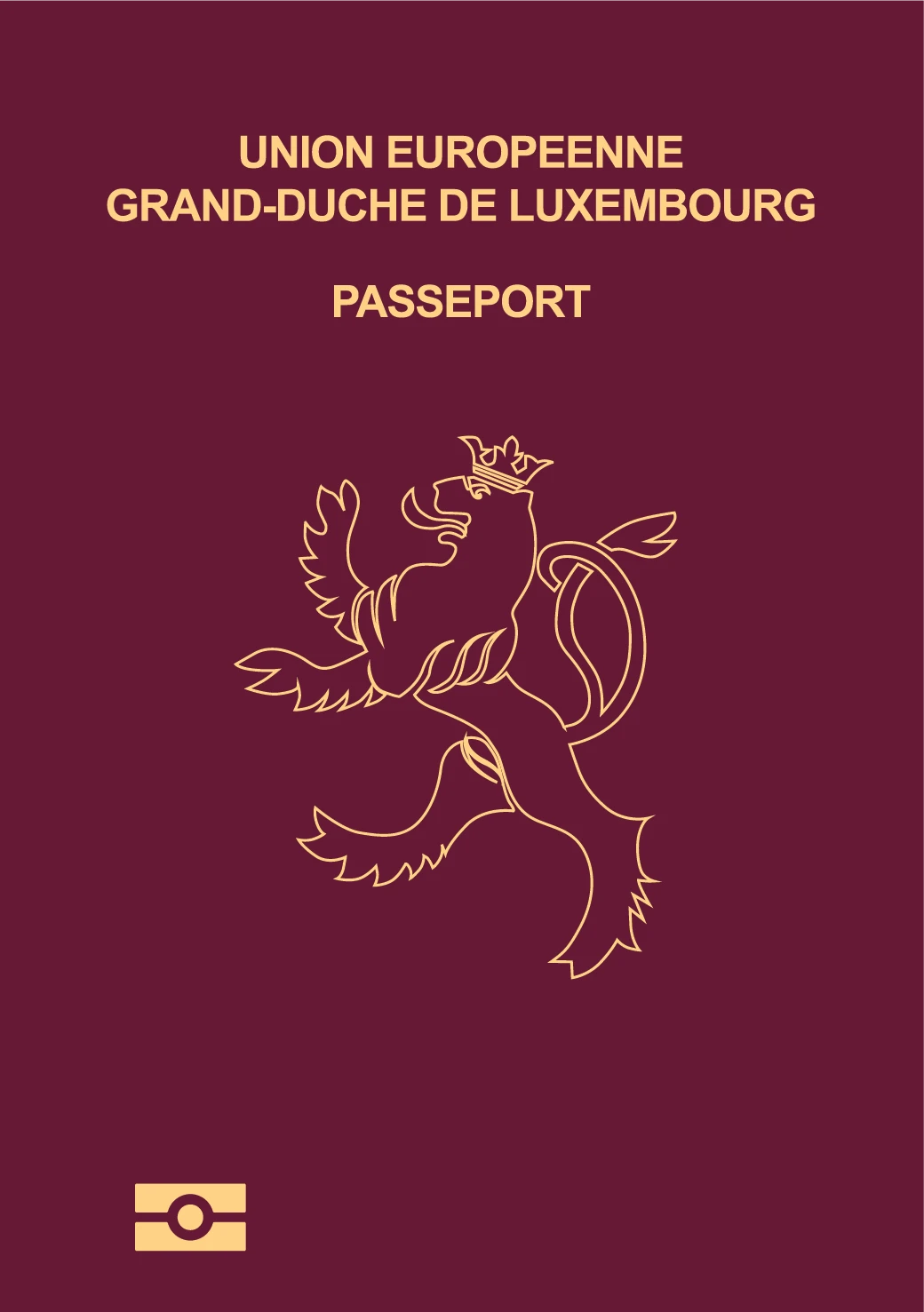
As of April 2026, the Luxembourg passport ranks 4th on the Passport Index, alongside Denmark, Spain, Sweden, and Switzerland, granting holders visa-free or visa-on-arrival access to 185 destinations worldwide. This places Luxembourg firmly in the global elite tier — above the United States (10th, 179 destinations) and the United Kingdom (7th), and on par with the strongest continental European passports. Luxembourg's ranking reflects the country's deep diplomatic integration as a founding EU member, NATO partner, and host of key European institutions, combined with its reputation as one of the world's most stable and transparent governance environments (CPI score: 81/100, Rank: 8).
For investors and global citizens, the Luxembourg passport is not merely a travel document — it is an EU passport with full freedom of movement, residence, and employment rights across all 27 EU member states, access to EEA markets, and visa-free entry to 185 countries, including the United States, United Kingdom, Japan, Singapore, Australia, and Canada. The passport's strength has remained consistent over the past decade, reflecting Luxembourg's unwavering geopolitical positioning as a pillar of European institutional architecture.
Practical Advantages
Luxembourg passport holders have access to virtually every significant global destination visa-free or with a visa on arrival. Full Schengen Area access means unrestricted travel across 27 European countries. US ESTA (non-immigrant entry for up to 90 days) is available, and the UK Electronic Travel Authorisation (ETA) will apply from 2025. Canada, Australia, New Zealand, Japan, Singapore, South Korea, Brazil, and the Gulf states all grant visa-free or e-visa access. China grants Luxembourg citizens a 15-day visa-free stay under the current reciprocal arrangement.
Practically absent from the Luxembourg passport's limitations: there are no major G20 economies that require Luxembourg citizens to obtain a visa in advance. This represents a meaningful distinction from second-tier EU passports. The passport's combination of EU residency rights and near-universal travel access creates exceptional operational flexibility for HNWI families, executives, and entrepreneurs.
Acquisition Pathways
Luxembourg does not offer citizenship by direct investment. The pathway to a Luxembourg passport runs through the Investor Residence Programme (established in 2017), followed by 5 years of qualifying continuous residence and naturalisation.
The investor residence route requires a minimum investment of €500,000 in an existing Luxembourg company (with a 5-year commitment and employment maintenance) or €3 million in a Luxembourg investment management structure with substance, or €20 million deposited in a Luxembourg financial institution for a minimum of 5 years. The residence permit is valid for 3 years and is renewable. After 5 years of lawful and uninterrupted residence, an investor may apply for naturalisation, subject to passing a Luxembourgish oral language exam and completing an integration course.
Full cost picture: minimum €500,000 investment (unavailable for recovery during commitment period) plus government processing fees of approximately €80, legal and advisory fees of €5,000–€15,000 for the residence application, and language training costs of €2,000–€5,000 for naturalisation preparation. Total realistic all-in cost through to passport issuance (6–7 years from initial investment): €520,000–€540,000 in fees and associated costs above the capital investment itself.
Programme review in April 2026: Luxembourg's government has been examining the utility of the Investor Residence Programme since late 2023. As of April 2026, the programme remains legally active but has seen minimal uptake (fewer than 20 applications in 7 years). Prospective applicants should verify the current programme status with a licensed Luxembourg immigration attorney before committing capital.
Value Assessment
For investors targeting EU residency and eventual passport, Luxembourg competes primarily with Portugal's Golden Visa (minimum €500,000 fund investment, 5-year pathway to citizenship), Malta's Citizenship by Naturalisation (€690,000+ total outlay, 1–3 year pathway), and Greece's Golden Visa (€250,000–€800,000 real estate, 7-year citizenship pathway).
The Luxembourg proposition is differentiated by three factors: the passport quality is marginally stronger than Portugal (3rd vs 4th in 2026), the country's financial infrastructure is unmatched for fund management and wealth structuring professionals, and the investment minimum is tied to commercial substance (company investment or fund placement) rather than real estate — avoiding the housing market controversy that led Spain to terminate its Golden Visa in April 2025 and Portugal to eliminate its real estate option in October 2023.
The trade-off is timeline: Luxembourg's path to passport takes 6–7 years with mandatory physical presence of at least 6 months per year, a Luxembourgish language test, and integration requirements. Malta offers a 1–to 3-year accelerated citizenship at a higher cost. For investors primarily seeking mobility over residency quality, Caribbean CBI programmes (St. Kitts, Dominica) remain faster and cheaper but deliver substantially weaker passports.
Dual Citizenship
Luxembourg has permitted dual and multiple citizenship since 2009 under the reformed Nationality Law. Individuals naturalising as Luxembourgers are not required to renounce their existing nationality. Conversely, Luxembourg citizens who acquire a foreign nationality retain their Luxembourg passport. US nationals can hold Luxembourg citizenship alongside their US passport with no restrictions from either side. UK nationals similarly face no barriers. For citizens of countries that prohibit dual nationality (including China and Saudi Arabia), home country rules must be assessed independently. The combination of Luxembourg's dual citizenship acceptance and EU passport quality makes naturalisation particularly strategic for investors from non-EU countries.
Final Assessment
The Luxembourg passport is the optimal target for high-net-worth individuals who need a top-tier EU passport for maximum global mobility, EU residency rights, and access to Europe's premier financial centre — and who can commit to 5+ years of genuine residence in Luxembourg. Its ideal holder profile includes fund managers and financial professionals already working or planning to work in the Luxembourg financial ecosystem, HNWI families seeking EU educational and healthcare access alongside top-10 passport strength, and investors from countries with restricted passports (Russia, China, Middle East) who value EU institutional stability above processing speed.
Compared to Malta (faster citizenship at a higher cost), Portugal (similar timeline, slightly weaker passport, lower cost of living), and Greece (lower investment, longer citizenship pathway, weaker passport at rank 4), Luxembourg offers the best passport outcome for those willing to genuinely integrate into the country.