WorldPath AIWORLDPATH•AI
Americas

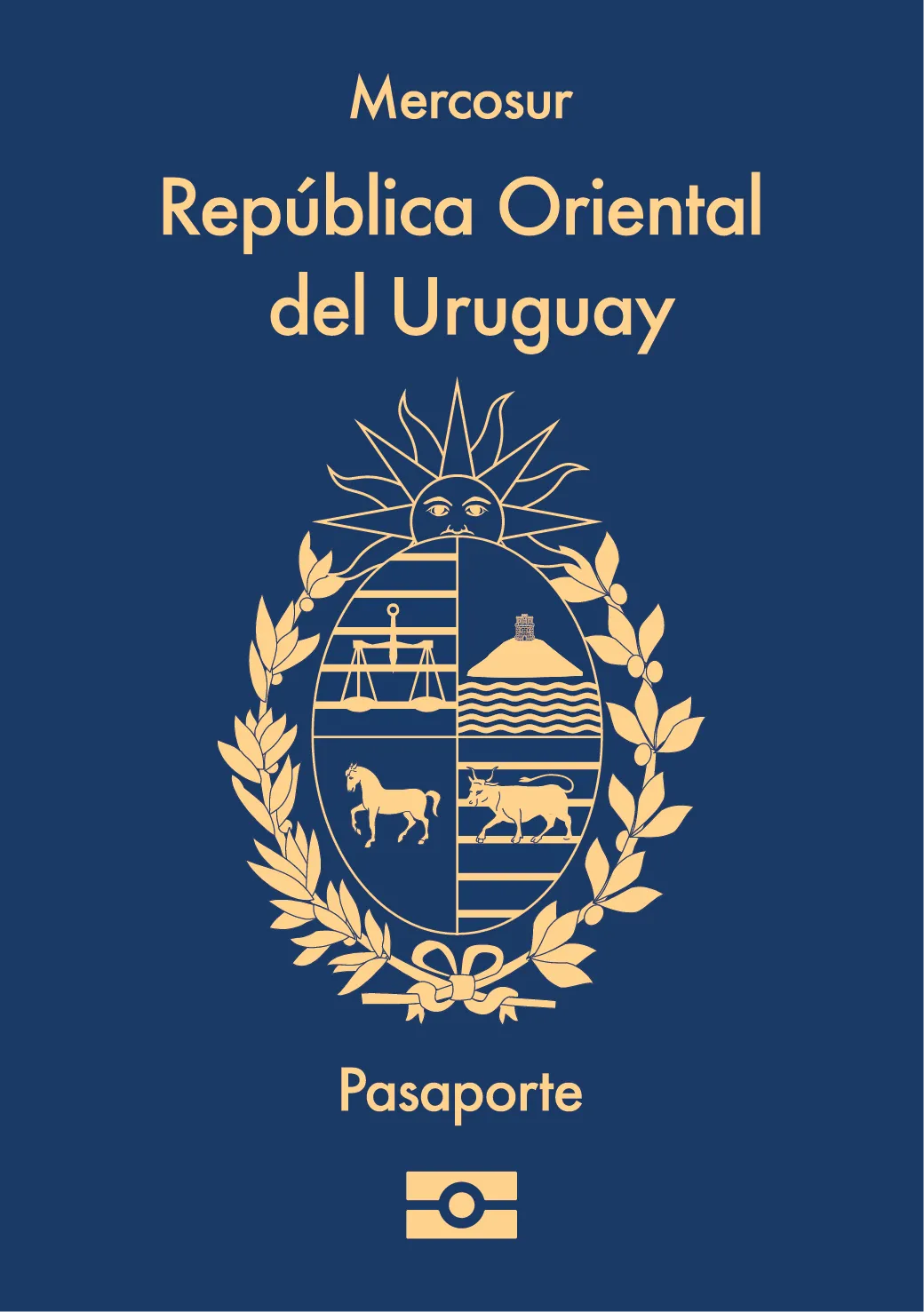
Uruguay Passport

Ranked #22 Globally

The Uruguay passport is the strongest mid-tier travel document in South America. In 2026 it ranks #22 worldwide and lets holders enter 156 countries and territories without arranging a visa first, or with a quick visa-on-arrival. That list includes the (the borderless travel zone covering most of Europe), the United Kingdom, Ireland, Japan, and every South American neighbour. Uruguay is a small, stable nation on the Atlantic coast between Argentina and Brazil, and a founding member of Mercosur (the Southern Common Market, a trade bloc of Argentina, Brazil, Paraguay, and Uruguay). It is rated the only full democracy in South America and the least-corrupt country in Latin America. Citizenship is open after just three to five years of residence, and Uruguay lets new citizens keep their original nationality. New tax residents can also claim a long holiday on foreign income.

22nd
Global Ranking
156
Destinations
78.39
Mobility Score
Uruguay Passport - Passport Power 30th | worldpath.ai WRI

Uruguay Passport Global Mobility Context

Uruguay's passport draws its strength from trusted institutions, not a large economy. The country is rated the only full democracy in South America and the least-corrupt nation in Latin America. That reputation makes other governments comfortable letting its citizens in. In 2026 it ranks #22 worldwide and opens 156 destinations.

The reach rests on two foundations. The first is Mercosur (the Southern Common Market, a trade bloc of Argentina, Brazil, Paraguay, and Uruguay), which lets Uruguayans live, work, and travel across most of South America. The second is visa-free access to the (most of Europe), the UK, Ireland, and Japan.

The document meets modern security rules. Since 16 October 2015 the (Direccion Nacional de Identificacion Civil, the National Directorate of Civil Identification) has issued a biometric ePassport. Its chip follows the international (International Civil Aviation Organization) standard airports use to read passports at e-gates.

Behind the travel benefits sits an open citizenship system. Uruguay grants citizenship after three to five years of residence, far quicker than most countries, and does not make new citizens give up a first nationality. That mix of a quick timeline and kept dual status is the passport's quiet advantage.

Es el documento que acredita la identidad del titular y lo habilita a viajar.

Uruguay Passport at a Glance

Global rank (2026)

#22 worldwide in 2026, the strongest passport in South America after none of its neighbours rank higher. The rank reflects how many places the holder can enter without a prior visa.

Visa-free destinations

156 countries and territories visa-free or with visa-on-arrival in 2026, including the 29-nation , the United Kingdom, Ireland, Japan, and all of South America.

Document type

Biometric ePassport with an electronic chip, issued since 16 October 2015. It follows the Mercosur (Southern Common Market) common passport design used across member states.

Page count

Standard booklet of around 48 pages for an ordinary passport, with an extended version of up to 66 pages available for people who travel often.

Languages

Spanish and English are printed on the current electronic passport. Earlier Mercosur-design booklets also carried Portuguese, reflecting the shared regional standard.

Adult validity

10 years for natural-born adult citizens before renewal. People naturalised as legal citizens receive a shorter three-year passport first, then a ten-year document on renewal.

Child validity (under 16)

Shorter than the adult term, because a child's photo and appearance change quickly. Children's documents are renewed more often than the standard adult booklet.

Dual citizenship

Allowed in practice. Uruguay does not recognise loss of nationality and does not ask new citizens to give up an existing passport, so holders keep both.

Issuing authority

The (Direccion Nacional de Identificacion Civil, the National Directorate of Civil Identification), an agency of the Ministry of the Interior, issues every Uruguayan passport.

History

Uruguay first issued passports in 1925. The modern booklet adopted the Mercosur regional design in 2014, and the biometric electronic version followed on 16 October 2015.

Uruguay Passport Visa-Free Destinations by Region

Regional Mobility

Economic Mobility Score: 78.39%Country GDP: 0.096%
Visa Exceptions
The Americas score is the highest region, built on Mercosur and full South American access, though the United States and Canada still require a visa. Europe is strong through the Schengen Area, the UK, and Ireland, with a paid ETIAS form planned from 2026.

A Uruguay passport reaches 156 destinations in 2026 without a prior visa or with a visa given on arrival. For most holders the headline wins are Europe's , the United Kingdom, Ireland, Japan, and the whole of South America through regional agreements. The single most-asked-about gap is the United States, which still requires a visa applied for in advance. Canada also requires entry to be arranged before travel.

Americas

Travel across the Americas is the deepest part of this passport's reach. Through Mercosur (the Southern Common Market) and its associate-member agreements, Uruguayans can enter Argentina, Brazil, Paraguay, Chile, Bolivia, Peru, Colombia, and Ecuador without a visa, and may use a national identity card instead of a passport for several of these neighbours. Mexico admits holders for up to 180 days and most of Central America and the Caribbean is visa-free. The clear exceptions sit in North America: the United States requires a visitor visa arranged in advance, and Canada requires either a visa or, for past visa holders, its electronic travel authorisation. For a South American passport this regional depth is its core strength.

Europe

Europe is the longest-haul prize on the list. Holders enter the Schengen Area, the 29-country borderless zone, for up to 90 days in any 180-day period, covering France, Germany, Italy, Spain, the Netherlands, and the Nordic states. The United Kingdom admits Uruguayans through its Electronic Travel Authorisation, a quick paid online form rather than a visa, and Ireland is visa-free. From 2026 the European Union plans to add (the European Travel Information and Authorisation System) for visa-free visitors, a similar online form valid for three years. Separately, Russia and Turkey each allow 90-day visa-free stays, which widens the European picture beyond the Schengen core.

Asia-Pacific

Asia gives the passport several useful entries. Japan admits Uruguayans for 90 days, one of the region's hardest borders to open, and South Korea is reachable through its electronic travel authorisation. Mainland China is visa-free for 30-day stays under a temporary exemption running through 31 December 2026, a notable and time-limited win. Southeast Asia is broadly open: Malaysia allows 90 days, Thailand 60 days, and Singapore 30 days, while Indonesia grants a visa on arrival. Australia and New Zealand sit outside the visa-free list and require their online entry permits to be arranged first, so the Pacific edge of the region needs paperwork.

Middle East

Coverage here is partial and best checked before each trip. Several destinations, including the United Arab Emirates and Qatar, grant Uruguayans a visa on arrival or a quick electronic visa, while Israel is visa-free for short tourism. Other states in the region still ask for a visa arranged in advance, and the exact rule often depends on the purpose and length of the visit. Because requirements in the Gulf change frequently, the safe approach is to confirm the current rule with the destination's embassy close to departure.

Africa

Africa is mostly a visa-on-arrival or electronic-visa region for this passport. Popular destinations such as Morocco are visa-free, while Egypt, Kenya, Tanzania, and several safari countries issue a visa on arrival or accept an electronic visa applied for online before the trip. Outright visa-free entry without any form is less common across the continent. As with the Middle East, the rules shift often, so a holder should confirm the requirement for the specific country and travel date rather than relying on a fixed list.

Offshore Jurisdictions

The passport reaches the offshore and financial-centre territories that matter to internationally mobile families. Holders can enter the British Virgin Islands, the Cayman Islands, Bermuda, and the Turks and Caicos Islands for tourism, and Hong Kong admits Uruguayans for 90 days as a regional banking and business hub. For a country whose residents often hold accounts and property abroad, this access keeps cross-border banking and family travel straightforward without extra visa steps.

Where a Visa Is Still Required

  • United States - a visitor visa must be applied for in advance; Uruguay left the US Visa Waiver Program in 2003 and has not yet rejoined as of 2026.
  • Canada - a visitor visa is required, though holders with a prior Canadian visa may qualify for the simpler electronic travel authorisation.
  • Australia and New Zealand - entry must be arranged in advance through each country's online visa or travel-authorisation system.
  • Parts of the Middle East and Africa - several destinations require a visa obtained before travel; confirm the current rule for each country and trip.
  • Mainland China after 31 December 2026 - the current 30-day visa-free exemption is temporary and may lapse unless it is extended.

How to Get a Uruguay Passport

1

Get Legal Residency

There is one official route to a Uruguay passport: become a Uruguayan citizen first, and citizenship begins with legal residence. Uruguay has no investor-passport or donation route, so the path runs through living in the country. The first step is to obtain residency, which Uruguay grants directly as permanent residence rather than through a temporary stage in most cases.

An applicant files with the National Migration Directorate and the Civil Identification authority, providing a birth certificate, a clean criminal-record check, and proof of income or means of support. Uruguay is known for accepting applicants without requiring a large investment, which sets it apart from programmes that demand a property purchase or government contribution.

Crucially, the clock that counts toward citizenship starts on the day of arrival to begin the residency process, not on the later date residency is formally granted. This timing rule, applied by the Electoral Court, is why Uruguay's effective wait to citizenship can be shorter than the headline residency period suggests.

2

Build Residency History

Uruguay sets two timelines for citizenship, both written into Article 75 of the Constitution. A person with a family in the country - a spouse, a registered partner, or dependent children resident in Uruguay - can apply after three years of habitual residence. A single applicant with no such tie applies after five years.

During this period the applicant must genuinely live in Uruguay. The practical test, applied by the Electoral Court, is that a person should not be absent for more than about six months at a stretch, or the residency clock can reset. Holders are generally expected to spend the bulk of each year in the country to show real settlement rather than a paper address.

Applicants also build the evidence of integration that the citizenship stage will require: a local address, ties such as work, study, or business, and enough conversational Spanish to handle an interview. Spanish is the national language, so day-to-day life and the citizenship process are both conducted in it.

3

Apply for Citizenship

Once the three-year or five-year residence is complete, the applicant petitions the Electoral Court for legal citizenship. Uruguay draws a constitutional line between two groups: natural citizens, who are born in Uruguay or descend from Uruguayans, and legal citizens, who are naturalised foreigners. A naturalised applicant becomes a legal citizen.

The application is assessed for good conduct and genuine settlement. The applicant attends an interview, demonstrates conversational Spanish, and provides two Uruguayan citizens as witnesses who can vouch for their character and integration. The Electoral Court verifies the residence period and the supporting evidence before granting the citizenship certificate.

One feature is specific to Uruguay: the political rights that come with legal citizenship, such as voting, are suspended for three years after the certificate is granted. Uruguay does not require the applicant to renounce any existing nationality, so the new citizen keeps their first passport throughout.

4

Apply for the Passport

With citizenship confirmed, the holder applies for the passport itself through the (Direccion Nacional de Identificacion Civil, the National Directorate of Civil Identification), the Ministry of the Interior agency that issues every Uruguayan passport. The application captures the photo and the biometric data stored on the new electronic passport's chip.

The passport issued is a biometric ePassport. Its chip follows the international (International Civil Aviation Organization) standard, the rulebook airports use to read passport chips at electronic gates, and the booklet carries the shared Mercosur (Southern Common Market) design recognised across the region. An appointment is booked online through the government portal, and the fee is paid at that time.

Validity depends on the citizenship type. A natural-born citizen receives a passport valid for ten years. A newly naturalised legal citizen is issued a shorter three-year passport first, after which renewals move onto the standard ten-year term. Either document is renewed by reapplying near the expiry date.

Uruguay offers citizenship by descent for people with Uruguayan ancestry, separate from the residence route. This is the path for those whose roots are in the country rather than those who move there to settle.

The basic rule reaches two generations. Under the Constitution, children of Uruguayan natural citizens acquire nationality wherever they are born. A 2015 reform, Law 19.362, extended that line to grandchildren of natural citizens born abroad, so a person with a Uruguayan parent or grandparent can claim natural citizenship. The applicant proves the connection with official birth and marriage certificates tracing back to the Uruguayan relative.

Because this is natural citizenship rather than naturalisation, it carries the full ten-year passport and is not subject to the three-year suspension of political rights that applies to legal citizens. There is no investment and no residence requirement; the qualification is the documented family link alone.

Uruguay does not recognise the loss of nationality, so a descent applicant does not give up another citizenship to claim this one. The certificate confirming Uruguayan nationality is the document needed before the (National Directorate of Civil Identification) can issue the passport.

Comparison of Uruguay Passport With Other Top Passports

Passport

Rank

Visa-free

Key edge

Singapore Passport

#1

192

Strongest passport in 2026 - the global mobility benchmark

France/Italy/Spain Passports

#4

185

EU citizenship - the right to live and work across 27 states

Portugal Passport

#5

184

Residence-then-citizenship path with a Lusophone link

United States Passport

#10

179

Large economy that still requires a visa from this passport

The Uruguay passport is best understood next to three groups: the strongest passports in the world, the (European Union) documents that grant settlement rights, and slower residence-based paths. Against the global leaders it gives up some mobility; against EU passports it gives up the right to live in Europe; against slower programmes it wins on speed.

Versus the strongest passports. The top-ranked passport in 2026 reaches about 192 destinations against 156 here, and Uruguay's #22 sits below the leading European documents in the low 180s. The gap is real but narrower than the rank suggests, because Uruguay covers the high-value destinations - the , the United Kingdom, and Japan - that most travellers actually use.

Versus an EU passport. An EU passport lets the holder live, work, and study across 27 countries, while a Uruguay passport grants only the right to visit Europe for 90 days at a time. What Uruguay offers in return is a far quicker route in - three to five years of residence against the longer waits and language tests of most EU naturalisations - and a tax-light base for foreign income.

Versus a residence-then-citizenship country. Like Uruguay, Portugal leads to its passport only after legal residence, but its citizenship typically takes around five years plus a language test and points to European Union rights at the end. Uruguay's three-year family route can be faster, keeps dual nationality without question, and adds a long foreign-income tax holiday, but the passport it produces is a strong regional document rather than an EU one.

Pros and Cons of the Uruguay Passport

Pros7 strengths
Cons7 frictions
  • 01Standing
    Backed by the Most Stable Democracy in the Region
    Uruguay is rated the only full democracy in South America and the least-corrupt country in Latin America. That institutional trust is why so many governments grant its citizens visa-free entry.
    Safest in LatAm
  • 02Eligibility
    Fast Three-to-Five-Year Route to Citizenship
    Citizenship is open after three years of residence for applicants with a family tie, or five years for single applicants, far quicker than most countries. The clock starts on the day of arrival.
    3-5 years
  • 03Mobility
    Strongest Passport in South America
    Ranked #22 worldwide in 2026 with visa-free or visa-on-arrival access to 156 destinations, the highest reach of any South American passport, including the Schengen Area, the UK, and Japan.
    156 dest.
  • 04Tax
    Long Holiday on Foreign Income for New Residents
    New tax residents can claim a multi-year exemption on foreign-source income - the year of arrival plus ten further years - one of the longest such windows offered by any stable country.
    Tax holiday
  • 05Rights
    Live and Work Across Most of South America
    As a founding member of Mercosur, the Southern Common Market, Uruguay lets holders live, work, and travel across Argentina, Brazil, Paraguay, and associate states with minimal paperwork.
    Mercosur
  • 06Rights
    Dual Citizenship Kept Without Renunciation
    Uruguay does not recognise loss of nationality and never asks new citizens to give up an existing passport, so holders keep both nationalities for life.
    Dual OK
  • 07Descent
    Citizenship Open to Children and Grandchildren
    People with a Uruguayan parent or grandparent can claim natural citizenship by descent under a 2015 reform, with no investment and no residence required - only documented family records.
    By descent
  • 01Mobility
    No Visa-Free Access to the United States
    The United States requires a visitor visa arranged in advance; Uruguay left the US Visa Waiver Program in 2003 and has not yet rejoined as of 2026. Canada also requires entry to be arranged first.
    No US visa-free
  • 02Mobility
    Lower Global Reach Than Top-Tier Passports
    At 156 destinations the passport trails the leaders, which reach about 184 to 192. For travellers who need the widest possible access it is a strong regional document rather than a leading global one.
    Mid-tier reach
  • 03Rights
    No Right to Live or Work in Europe
    Visa-free entry to the Schengen Area allows visits of up to 90 days only. Unlike a European Union passport, a Uruguay document grants no right to settle, work, or study long-term in Europe.
    No EU rights
  • 04Eligibility
    Spanish Is Required for Daily Life and Citizenship
    Uruguay is a Spanish-speaking society, and the citizenship process includes an interview conducted in Spanish. Newcomers without the language face a real adjustment before and during the application.
    Spanish needed
  • 05Validity
    Political Rights Suspended for Naturalised Citizens
    A legal (naturalised) citizen cannot vote for three years after the citizenship certificate is granted, and the first passport issued runs for three years before moving to the standard ten-year term.
    3-yr wait
  • 06Support
    Limited Consular Network Abroad
    As a small nation, Uruguay maintains relatively few embassies and consulates worldwide, so citizens may have less in-person government support when travelling than holders of a large-country passport.
    Small network
  • 07Mobility
    Europe Adds a Paid Pre-Travel Form
    From 2026 the European Union plans to require ETIAS, a paid online authorisation, for visa-free visitors. It is a quick form rather than a visa, but it adds a step and a small fee before each period of travel.
    ETIAS 2026

Dual Citizenship and the Uruguay Passport

Uruguay permits dual and multiple citizenship in practice. Its Constitution states that nationality is not lost by becoming a citizen of another country, so a Uruguayan who naturalises elsewhere keeps their Uruguayan status, and a foreigner who naturalises in Uruguay is not asked to renounce a first nationality. The system is designed to add a citizenship rather than replace one.

The practical rule at borders. A dual citizen chooses which passport to present when entering a country. Many holders use the Uruguay passport for visa-free trips around South America and into Europe, and their other passport elsewhere, such as for the United States where Uruguayans still need a visa. There is no duty to tell either government which document was used for a given trip.

The natural-versus-legal distinction. Uruguay separates natural citizens, who are born Uruguayan or descend from Uruguayans, from legal citizens, who are naturalised. The split matters: legal citizens wait three years for political rights and receive a shorter first passport, while natural citizens, including those who claim citizenship by descent, hold the full ten-year document from the start.

The tax angle. Uruguay taxes residents mainly on income earned inside the country, and new tax residents can claim a long holiday on foreign-source income. But citizenship by itself does not make a person a Uruguayan tax resident, and a citizen who is a tax resident elsewhere still answers to that country's rules. Professional advice matters before relying on the passport for tax planning.

Final Assessment

The Uruguay passport is the strongest travel document in South America, ranking #22 worldwide in 2026 with 156 visa-free or visa-on-arrival destinations. Its biggest strengths are the institutional trust behind it - the only full democracy in South America and the least-corrupt country in Latin America - a fast three-to-five-year route to citizenship, the right to live and work across Mercosur, and a long holiday on foreign income for new tax residents. Uruguay also keeps dual nationality without question.

Its limits are clear. The passport gives no visa-free entry to the United States and no right to live or work in Europe, and at 156 destinations it sits below the global leaders. Daily life and the citizenship interview both run in Spanish, and naturalised citizens wait three years for full political rights and a ten-year passport. For someone seeking a stable, low-tax base in the Americas, a quick and genuine route to a second citizenship, and broad regional mobility, Uruguay is a strong fit; for someone whose top priority is visa-free travel to North America or the right to settle in Europe, it is not the right tool.