WorldPath AIWORLDPATH•AI
Europe

Monaco Passport

Ranked #12 Globally

Monaco is a city-state on the French Riviera, smaller than many city parks, yet it issues one of the world's strongest passports. In 2026 it ranks #12 globally, giving holders visa-free or visa-on-arrival entry to 176 destinations. That is the highest rank of any European country outside the European Union (, the 27-nation political and economic bloc) and the (European Free Trade Association) group. Monaco is not an EU member and never signed the Schengen Agreement, the deal that scrapped border checks across most of Europe. Even so, its land border with France has no checkpoints, so in practice the country sits inside the Schengen zone. The Sovereign Prince grants citizenship by personal decision, not by automatic right, making this one of the hardest passports in the world to obtain by choice. This guide explains the passport's reach and the narrow path to holding one.

12th
Global Ranking
176
Destinations
88.44
Mobility Score
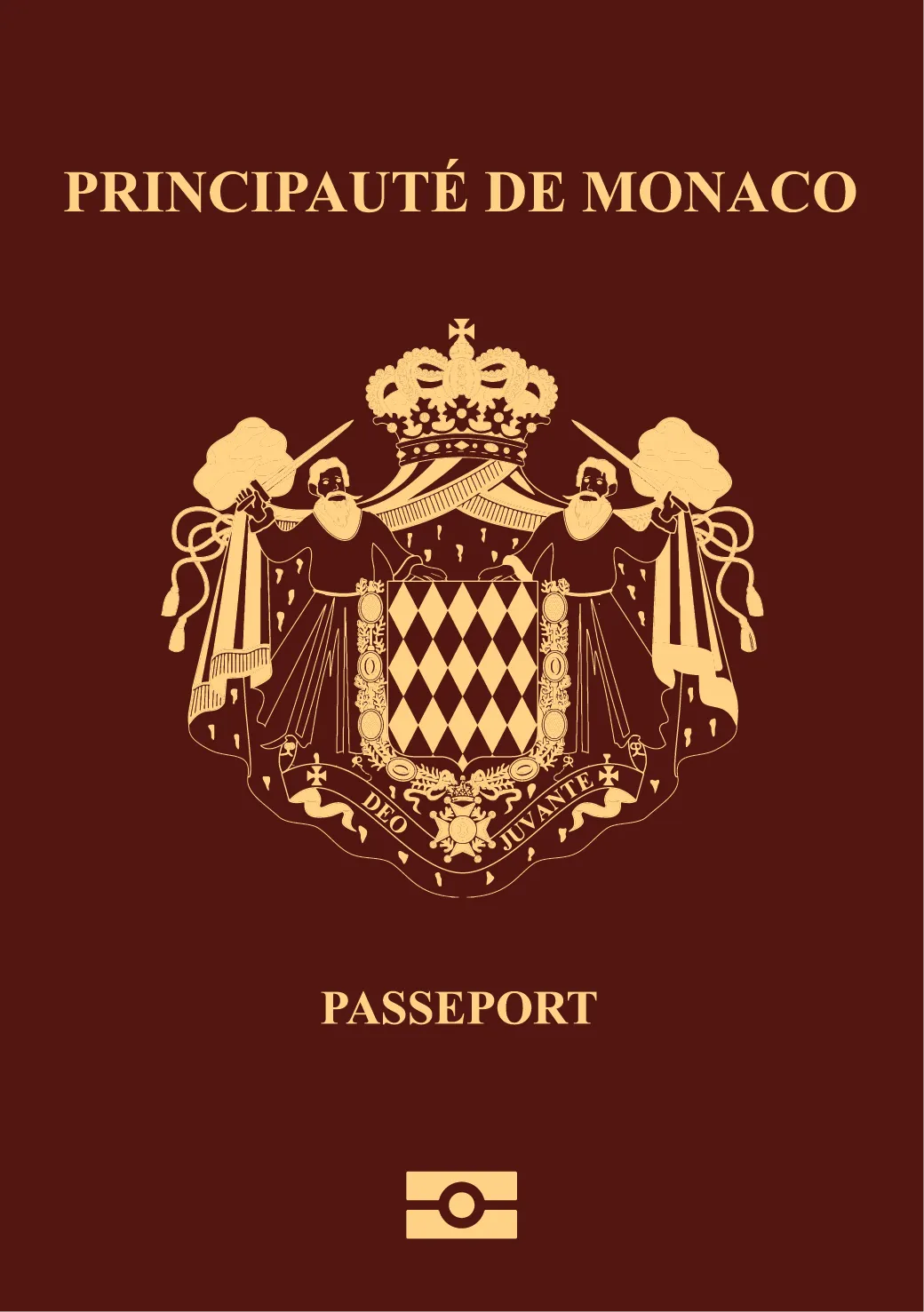
Cover of Monaco Passport

Monaco Passport Global Mobility Context

Monaco punches far above its size. The country covers about two square kilometres, yet its passport opens 176 destinations in 2026 without a prior visa. That places it #12 in the world and ahead of every European state outside the (European Union) and the (European Free Trade Association) trade group.

The strength comes from Monaco's standing as a stable, neutral, high-income country that other governments trust. It keeps friendly ties across Europe and beyond and is a full member of the United Nations. A border officer reads a Monégasque passport as belonging to a wealthy, low-risk state, so it is welcome at most checkpoints.

Geography adds a quiet advantage. Monaco shares an open border with France and runs its frontier controls jointly with French authorities under a 1963 treaty. The result is that holders move through the Schengen travel zone, the borderless area covering most of Europe, as smoothly as residents nearby, even though Monaco never joined Schengen.

The passport is a biometric ePassport. It holds an electronic chip with the owner's photo and data, built to the international (International Civil Aviation Organization) 9303 standard, the rulebook airports use to read passport chips at e-gates. The chip is hard to copy, so the document stays trusted.
A passport is an individual travel document which proves a person's identity. All Monégasque passports are electronic, with an embedded chip.

Monaco Passport at a Glance

Global rank (2026)

Monaco sits at #12 worldwide in 2026. It is the top-ranked passport of any European state that is neither an (European Union) member nor part of the free-trade group.

Visa-free destinations

Holders reach 176 destinations visa-free or with a visa on arrival, including the whole Schengen travel zone, the United States, the United Kingdom, Japan, and Singapore.

Document type

A biometric ePassport with an embedded electronic chip. The chip stores the holder's photo and data so border e-gates can read it quickly and check it is genuine.

Page count

The standard booklet carries 32 pages, in line with most modern travel documents, leaving ample room for entry and exit stamps.

Languages

French is Monaco's official language and the main language printed in the passport, alongside the standard data fields used on international travel documents.

Adult validity

Adult passports are valid for 10 years, the longest term allowed under the international rules that most countries follow.

Child validity (under 18)

Children aged 3 to 17 inclusive receive a 5-year passport; children under 3 receive a 3-year passport, because a young child's appearance changes too quickly for a longer-validity photo to remain accurate.

Dual citizenship

Limited. People who naturalise must usually give up their previous nationality. Monégasques by birth who later take a foreign nationality lose their Monégasque status.

Issuing authority

The Passport Department of the General Secretariat of the Government (Service des passeports, Secrétariat Général du Gouvernement) issues every Monégasque passport.

History

Monaco has issued passports for over a century as a sovereign state. Today's version is a biometric ePassport built to the international standard airports use to read chips.

Monaco Passport Visa-Free Destinations by Region

Regional Mobility

Economic Mobility Score: 88.44%Country GDP: 11.13%
Visa Exceptions
Europe is near-total for everyday movement because Monaco's border runs jointly with France, though Russia still requires a visa. China is visa-free only through 31 December 2026, and Australia, New Zealand, and India require an online permit or e-visa.

The places Monégasque travellers ask about most need little or no paperwork. The whole Schengen travel zone is open with no border clock that affects a Monaco resident living next to it. The United States admits Monaco passport holders under its Visa Waiver Program after an approved (Electronic System for Travel Authorization), a quick online pre-screening done before the flight, not a visa. The United Kingdom now asks for an (Electronic Travel Authorisation), a similar online permit, before arrival. Mainland China grants 30-day visa-free entry through 31 December 2026 under a temporary scheme. Japan and Singapore are open for short visits without a visa.

Americas

North and South America are broadly open to Monaco holders. The United States runs the ESTA pre-screening described above, while Canada asks for an eTA (Electronic Travel Authorization), its own online permit for arrivals by air. Across Central and South America, most countries, including Brazil, Argentina, Chile, and Mexico, give visa-free stays of 90 days. The Caribbean is largely open for tourism. A Monaco passport therefore covers nearly the full hemisphere with at most a fast online form, which suits holders who split time between Europe and the Americas.

Europe

Europe is where the Monaco passport is at its most seamless. Monaco is not an (European Union) member and never signed the Schengen deal, yet its territory is run as part of the Schengen zone through its customs union with neighbouring France. In day-to-day terms, a holder crosses into France and onward across the continent with no checks. The wider non-Schengen parts of Europe, such as Ireland, the western Balkan states, and the microstates, are also visa-free. One limit matters: Russia requires a visa, applied for online as an eVisa for short stays. From late 2026 the EU plans to switch on (European Travel Information and Authorisation System), an online travel permit for visa-free visitors, but Monégasques living within the zone are not treated as outside visitors for everyday movement.

Asia-Pacific

Asia-Pacific is well covered for short stays. Japan, South Korea, and Singapore admit Monaco holders visa-free, and the region's major tourist hubs in Southeast Asia are open or offer a visa on arrival. Mainland China is the headline: it grants 30-day visa-free entry through 31 December 2026 under a trial scheme, a rare opening for a non-EU passport that may or may not be renewed. Australia and New Zealand are not visa-free; both ask for an electronic travel permit applied for online before travel. India also requires an e-Visa rather than free entry, so the busiest South Asian destination needs a short application.

Middle East

The Middle East mixes free entry with quick permits. The United Arab Emirates, a frequent hub for travellers heading further east, admits Monaco holders without a prior visa. Israel and several Gulf states are also open for tourism. A handful of countries in the region issue a visa on arrival or an inexpensive e-visa rather than waving holders straight through. For most leisure and business trips out of Monaco, the region needs only light planning, with a short online step for the few states that ask for one.

Africa

Africa is the most mixed region for any strong passport, and Monaco is no exception. North African favourites such as Morocco and Tunisia are visa-free for tourism, and island destinations like Mauritius and the Seychelles are open. Many sub-Saharan countries grant a visa on arrival or an e-visa, including popular safari and beach destinations. A smaller group still asks for a visa arranged in advance, among them Algeria, Chad, Niger, and a few others. The practical message for a Monaco holder is to check each country, because access splits roughly between open, visa-on-arrival, and advance-visa countries.

Offshore Jurisdictions

Monaco holders reach the offshore and financial-centre territories that internationally mobile families use. The British Overseas Territories in the Caribbean, including the Cayman Islands, the British Virgin Islands, and Bermuda, admit visitors for stays measured in months. The Channel Islands and the Isle of Man, self-governing islands tied to the United Kingdom, are open, as is Gibraltar. For a community built around wealth management, this reach across well-known offshore hubs is one of the passport's quietly useful features, sitting alongside its strong mainstream coverage.

Where a Visa Is Still Required

  • Russia: a full visa, applied for online as an eVisa for short stays.
  • India: an e-Visa, not free entry; the application is done online before travel.
  • Australia and New Zealand: an electronic travel permit each, arranged online before the trip.
  • A group of African states, including Algeria, Chad, Niger, and Eritrea, require a visa arranged in advance.
  • China is visa-free only until 31 December 2026 under a temporary scheme; a visa may be needed again after that date.

How to Get a Monaco Passport

1

Become a Monaco Resident

Monaco has no investor-passport scheme and no donation route. The only path to the passport is to become a Monégasque citizen first, and that begins with legal residence. There is no fast-track for wealthy applicants to citizenship itself, though wealth is effectively required to settle here.

To get a residence card, the Carte de Séjour, an applicant must show they can support themselves in Monaco. In practice this usually means depositing a large sum, commonly cited at around EUR 500,000, with a Monaco bank, which then issues a reference letter. Some private banks ask for more. Applicants must also secure housing in Monaco, hold health insurance, and pass a clean criminal-record check.

Non- (European Union) applicants first obtain a long-stay visa for France, because Monaco's border controls run jointly with France. The residence file then goes to the Monaco authorities, who typically decide within a few months. The first card is issued for one year and is renewed over time as the holder keeps living in the country.

2

Live in Monaco for Ten Years

Citizenship by naturalisation requires at least 10 continuous years of legal residence in Monaco, counted from age 18. This is one of the longer residence requirements in the world, and the clock only runs while the applicant actually lives in the country as a card-holder.

Across those years, the resident is expected to put down real roots: keep a home in Monaco, spend meaningful time there rather than visiting briefly, and become part of local life. Familiarity with French and with Monégasque society and customs is expected, though there is no fixed exam; the picture is built from the whole application file.

Monaco residents pay no personal income tax, which is the main draw for settling here. One group is the exception. Under a 1963 treaty between France and Monaco, French nationals living in Monaco are taxed by France on their worldwide income, as if they still lived in France, unless they meet narrow historic exemptions.

3

Apply for Citizenship by the Prince's Grant

Naturalisation in Monaco is not a right. Even after 10 years of residence and a clean record, the decision rests personally with the Sovereign Prince, who grants citizenship as a favour rather than an entitlement. There is no appeal if the answer is no, and many long-term residents are never naturalised.

Approvals are rare. In a typical year only a small number of people, often fewer than twenty, are granted Monégasque nationality by the Prince. The framework sits in Law No. 1.155 of 18 December 1992, the country's nationality code, as later amended.

Applicants must normally renounce their existing nationality, or do so within six months of a positive decision, because Monaco generally does not allow people to naturalise while keeping another passport. The Prince may waive parts of the process for a person he judges worthy, but applicants cannot count on this.

4

Receive Citizenship and Apply for the Passport

Once the Sovereign Prince grants nationality, the new citizen can apply for the Monégasque passport. The application goes to the Passport Department of the General Secretariat of the Government (Service des passeports), which issues every Monaco travel document.

The passport is a biometric ePassport with an electronic chip, built to the international (International Civil Aviation Organization) 9303 standard so airport e-gates can read it. The published fee is EUR 90 for an adult booklet, EUR 60 for a child aged 3 to 17, and EUR 30 for a child under 3.

An adult passport is valid for 10 years. Children get shorter terms, 5 years for ages 3 to 17 and 3 years for under-3s, because a young child's appearance changes too fast for a long-validity photo. Renewal repeats the same short application at the Passport Department.

Alternative Route: Citizenship by Birth, Descent, and Marriage. Most Monégasque citizens hold their nationality from birth rather than from naturalisation. Monaco passes citizenship down by blood, a principle lawyers call jus sanguinis (citizenship through a parent). A child is Monégasque at birth if a Monégasque parent passes the status on, wherever in the world the child is born. Being born on Monaco's soil does not by itself make a child a citizen.

There is also a route through marriage, but it is slow. A foreign spouse of a Monégasque citizen may acquire nationality by declaration after a long period of marriage and shared life. For marriages celebrated from 1 July 2022, that period is 20 years; for earlier marriages it is 10 years. The longer waiting time was set by a 2021 law to limit nationality gained purely through marriage.

Nationality taken through marriage carries a catch: it generally cannot be passed on to the spouse's existing children, and remarriage after the Monégasque partner's death can end the claim. Because birth and descent account for most citizens, and marriage is tightly limited, there is no broad heritage or ancestry programme of the kind some other countries run for distant descendants.

Comparison of Monaco Passport With Other Top Passports

Passport

Rank

Visa-free

Key edge

Singapore Passport

#1

192

Top-ranked passport; broadest visa-free reach in 2026

Switzerland Passport

#4

185

Closest peer: wealthy, neutral non-EU European state

Italy/France Passports

#4

185

EU citizenship and the right to live in 27 states; France is Monaco's neighbour and tax counterpart

United States Passport

#10

179

Worldwide citizenship taxation versus Monaco's zero income tax

Monaco sits high on the 2026 ranking at #12, but the reason to weigh it against another strong passport rarely comes down to destinations, since almost every border is open. The contrasts below use a Monaco holder's lens: a wealthy microstate outside the (European Union) with zero income tax for residents, de-facto Schengen access through France, and citizenship controlled by the Sovereign Prince.

Versus Singapore. Singapore leads the 2026 index with about 192 destinations against Monaco's 176, a gap mainly in parts of Asia and Africa. For everyday travel both clear nearly every checkpoint, so the difference is small for a Europe-based holder.

Versus France and Italy. Both reach slightly more destinations and carry what Monaco cannot: the right to live and work in all 27 EU states. France is the sharpest contrast, as Monaco's neighbour that, under a 1963 treaty, taxes its own nationals living in Monaco.

Versus Switzerland. Switzerland is the closest peer: a wealthy, stable European country outside the EU, prized for safety and finance. Its passport reaches more destinations and, through (European Free Trade Association) membership, grants strong rights to live and work across Europe that Monaco lacks. But Switzerland taxes residents; Monaco does not.

Versus the United States. The United States passport reaches roughly 179 destinations, a little more than Monaco. The defining gap is tax: the United States taxes citizens on worldwide income wherever they live, while Monaco charges residents no income tax, except French nationals caught by the 1963 treaty.

Pros and Cons of the Monaco Passport

Pros7 strengths
Cons7 frictions
  • 01Mobility
    Strong Visa-Free Travel to 176 Destinations
    Monaco ranks #12 worldwide in 2026 with visa-free or visa-on-arrival access to 176 destinations, including the United States, the United Kingdom, Japan, and the whole Schengen zone.
    176 dest.
  • 02Tax
    No Personal Income Tax for Residents
    Monaco charges residents no personal income tax. This is the main reason wealthy people settle here, and it has held for over a century. French nationals are the one major exception.
    0% income tax
  • 03Standing
    Strongest Passport of Any Non-EU European State
    Among European countries outside the EU (European Union) and the EFTA trade group, Monaco's passport ranks highest for travel freedom, beating every other non-member on the continent.
    Top non-EU
  • 04Mobility
    De-Facto Schengen Access Through France
    Monaco never joined the Schengen zone but runs its borders jointly with France under a 1963 treaty, so holders move across most of Europe with no checks.
    Schengen via FR
  • 05Standing
    One of the World's Safest, Most Stable States
    Monaco is a long-standing, high-income principality with very low crime and a stable monarchy. Border officers read the passport as low-risk, which keeps it welcome.
    Safe & stable
  • 06Document
    Biometric ePassport Valid Ten Years
    The adult passport is a biometric ePassport built to the international ICAO 9303 chip standard, valid for 10 years, and read quickly at airport e-gates.
    10-yr ePassport
  • 07Mobility
    United States Travel Without a Visa
    Monaco belongs to the United States Visa Waiver Program, so holders visit for up to 90 days on a quick online ESTA approval instead of a full visa.
    VWP / ESTA
  • 01Eligibility
    Citizenship Granted Only by the Sovereign Prince
    Naturalisation is not a right. The Sovereign Prince decides each case personally, as a favour, and there is no appeal. Many long-term residents are never naturalised.
    Prince decides
  • 02Eligibility
    Ten Years of Residence Before You Can Apply
    Naturalisation requires at least 10 continuous years of legal residence from age 18. Only a small number, often under twenty, are granted nationality in a typical year.
    10 yr wait
  • 03Rights
    You Must Usually Give Up Your Old Passport
    People who naturalise must normally renounce their previous nationality. Monégasques by birth who later take a foreign nationality also lose their Monégasque status.
    No dual cit.
  • 04Cost
    Very High Cost Just to Become a Resident
    Residency typically needs a bank deposit commonly cited around EUR 500,000, plus housing in one of the world's most expensive places. Settling here is only realistic for the wealthy.
    EUR 500k+
  • 05Tax
    French Nationals Are Not Tax-Exempt
    Under a 1963 France-Monaco treaty, French nationals living in Monaco are taxed by France on their worldwide income, so the zero-tax benefit does not apply to them.
    French taxed
  • 06Rights
    No Right to Live or Work in the EU
    A Monaco passport gives visa-free travel across Europe but no automatic right to settle in the 27 EU states. For that, holders need a national permit or an EU passport.
    No EU right
  • 07Support
    Very Small Consular Network Abroad
    As a microstate, Monaco maintains only a small number of embassies and consulates. Travellers in distant countries may have limited Monégasque help if something goes wrong.
    Tiny network

Dual Citizenship and the Monaco Passport

Monaco takes a restrictive view of holding more than one nationality, which sets it apart from many European countries. The general rule is that a person should hold Monégasque nationality alone, not alongside another.

The naturalisation rule. Someone granted citizenship by the Sovereign Prince must normally give up their previous nationality, either before the grant or within six months of it. This means most new citizens cannot keep the passport they were born with. The aim is to ensure that a naturalised Monégasque holds a single, undivided nationality.

Losing Monégasque status. The rule runs both ways. A Monégasque who voluntarily takes a foreign nationality can lose their Monégasque status as a result. So a citizen cannot simply add a second passport on the side; doing so can cost them the first one.

The narrow exceptions. Some people do end up with two nationalities, mainly through birth and family rather than choice. A child born to a Monégasque parent who also passes on another nationality may hold both. The marriage route can also leave a spouse with their original nationality. These are limited situations, not a general right to dual citizenship.

At the border. A dual national who does hold a Monégasque passport should enter and leave Monaco on it. When travelling elsewhere, the traveller presents whichever of their passports gives the smoothest entry to that country. The two documents are used for different journeys, not mixed in one trip.

Bottom Line on the Monaco Passport

The Monaco passport is a strong travel document and a powerful tax position rolled into one, but it is among the hardest in the world to obtain by choice. Holders enjoy visa-free or visa-on-arrival access to 176 destinations, the #12 rank in 2026, and the smoothest possible movement across Europe through the open border with France.

Who it suits. It fits very wealthy people who can afford to settle in Monaco, value zero personal income tax, and are prepared to spend at least a decade as a resident before even being considered for citizenship. The lifestyle, safety, and stability are part of the appeal as much as the passport itself.

Who should look elsewhere. Anyone who needs the right to live and work across the (European Union), who wants to keep their current nationality, or who expects a clear, rules-based path to citizenship will find Monaco frustrating. The grant rests on the Sovereign Prince's discretion, and French nationals miss the central tax benefit entirely.

The realistic view. For most people, Monaco is a place to gain residence and a tax base, not citizenship. The passport is a long-odds prize at the end of a costly, decade-plus commitment, awarded to only a handful of people each year. Its strength is real, but the door is narrow and stays largely shut.

Monaco Passport FAQ

What is Monaco's WRI score for 2026?

Monaco scores 75.8 out of 100 on the WorldPath Relocation Index 2026, placing it #11 globally. The country leads on Retirement (95/100) and Investment (90/100), driven by zero personal income tax, zero capital gains tax, and one of Europe's deepest private-banking ecosystems at roughly €135 billion in assets. Its lowest dimension is Citizenship (30/100), reflecting the Sovereign Prince's discretionary naturalisation process and mandatory renunciation of prior nationality.

How many countries can I visit visa-free with a Monaco passport?

Monaco passport holders can travel visa-free or via visa-on-arrival to 176 destinations as of Q1 2026. This includes all 27 EU/Schengen states, the United States (90 days, Visa Waiver Program), the United Kingdom, Canada, Japan, Singapore, South Korea, Australia, and New Zealand. In practice, Monaco passport holders face virtually no meaningful visa barriers to any major global economy for business or leisure travel.

Can I get a Monaco passport by investment?

No. Monaco has no investor-passport programme and no donation route to citizenship. The only path is naturalisation after a minimum of 10 continuous years of legal residence from age 18, granted personally by the Sovereign Prince. Wealth is effectively required to establish residency — the minimum bank deposit is €500,000 — but financial investment alone does not trigger any citizenship entitlement.

How do I qualify for Monaco citizenship through marriage?

A foreign spouse of a Monégasque citizen may acquire nationality by declaration after 20 years of marriage, provided the couple continues to live together, the Monégasque spouse retains their nationality, and the applicant has not previously obtained Monégasque nationality through an earlier marriage. For marriages celebrated before 1 July 2022, the transitional period under Law No. 1.512 of 3 December 2021 remains 10 years.

Does Monaco allow dual citizenship?

Generally no. Anyone naturalised by the Sovereign Prince must renounce their previous nationality before or within six months of the grant. Monégasques who voluntarily acquire a foreign nationality risk losing their Monégasque status. Limited dual nationality can arise through birth — a child born to a Monégasque parent who also conveys another nationality — but this is an incidental outcome, not a recognised right.

Is Monaco residency better than Monaco citizenship for investors?

For most investors, yes. Residency delivers the full tax benefit — zero personal income tax, zero capital gains, zero wealth tax — from day one, with a €500,000 minimum bank deposit. Citizenship requires at least 10 additional years of residence, a discretionary grant from the Sovereign Prince awarded to only a handful of people annually, and mandatory renunciation of your existing passport. The financial case rests entirely on residency, not citizenship.

What is the cost of a Monaco passport in 2026?

The official fee is €90 for an adult booklet (valid 10 years), €60 for a child aged 3 to 17 (valid 5 years), and €30 for a child under 3 (valid 3 years). Payment is accepted in cash or by cheque made out to the Public Treasury only — no credit cards. Applications are submitted to the Passport Department of the General Secretariat of the Government and collected within five working days.

Is Monaco real estate a good investment?

Monaco has the world's highest residential property prices, averaging €53,000/m² in 2025, with the market appreciating an average of 5% per year over 30 years. Supply is structurally constrained by geography, and demand is driven by an ultra-wealthy international buyer pool. Gross rental yields average 2.9%. For investors prioritising capital preservation, status, and tax efficiency over yield, Monaco property is among the most resilient store-of-value assets globally — but entry costs (minimum €900,000 for a studio) require substantial capital.

Related Information

Verified by

Sarah Mitchell
Senior Immigration Advisor
at WorldPath AI