
Key Takeaways
- The appeal is real: A stunning Adriatic coastline, low cost of living, and accessible residency make Montenegro genuinely attractive
- It is small and developing: Montenegro is a small, developing country, with the infrastructure and institutional limitations that implies
- It is not in the EU: Montenegro is an EU candidate, not a member, so residency does not confer EU rights, though it uses the euro
- Residency is accessible: Routes including property ownership and company formation make obtaining residency relatively straightforward
- Cost of living is low: Everyday costs are low by Western European standards, a major part of the appeal
- Seasonality shapes life: The coast transforms between a quiet off-season and a crowded, expensive high season
- Lifestyle suits a specific person: Those valuing nature, tranquility, and affordability over big-city amenities and EU access thrive; others may not
- Verify current specifics: Residency rules, tax, and costs evolve, so the current position should be confirmed directly
The Genuine Appeal
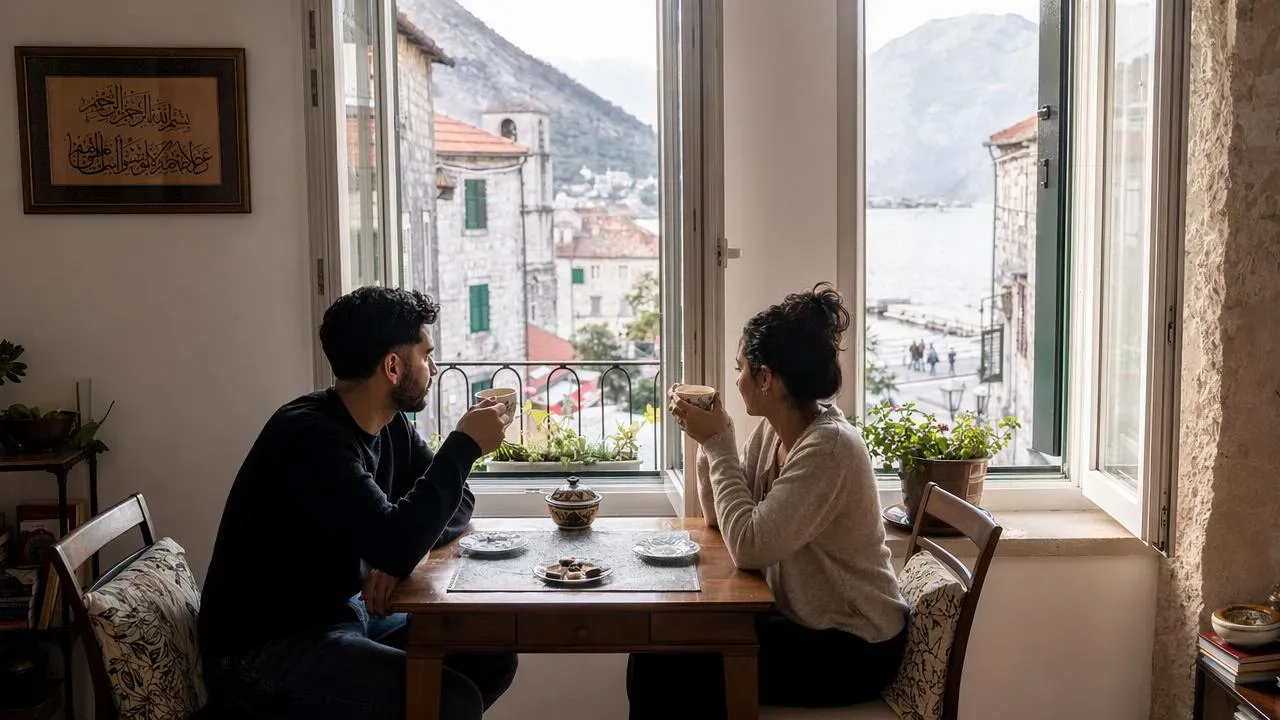
Montenegro's attraction is real, and it starts with the setting. The country's Adriatic coastline is genuinely spectacular — dramatic mountains meeting a clear sea, historic coastal towns, the striking Bay of Kotor, and a natural beauty that draws visitors and would-be residents alike. Inland, mountains and national parks add to the appeal for those who value nature and the outdoors. For anyone drawn to a beautiful, unspoiled-feeling Mediterranean-Adriatic environment, Montenegro delivers a setting that rivals far more expensive and crowded destinations, and this natural beauty is the foundation of its appeal.
The affordability is equally genuine. Montenegro offers a low cost of living by Western European standards — housing, food, dining, and everyday costs are all inexpensive relative to Western Europe, and even relative to more established Mediterranean destinations. This means a comfortable lifestyle can be had for considerably less than in Western Europe, which, combined with the natural beauty, creates the core proposition: a stunning setting at an affordable price. For retirees, remote workers, and others seeking to live well without a Western European cost base, this combination is genuinely compelling.
Residency is relatively accessible, which completes the appeal. Montenegro offers routes to residency that many find straightforward compared with more restrictive countries, including options connected to property ownership and to establishing a company in the country. This accessibility means that turning an attraction to Montenegro into an actual base is realistic, without the difficulty that residency involves in some other desirable destinations. For someone drawn to the setting and the affordability, the accessibility of residency makes Montenegro a practical option, not merely an aspirational one.
Taken together, these genuine attractions — the spectacular setting, the low cost of living, and the accessible residency — explain why Montenegro appears so appealing and why it has attracted growing interest from expats and investors. The brochure, in these respects, is not misleading: these attractions are real and substantial. But the honest picture requires setting these genuine appeals alongside the realities and limitations that the brochure tends to omit, because it is in those realities that the question "is Montenegro right for you?" is actually answered.
The Realities the Brochure Omits
The genuine appeal comes with genuine limitations, and an honest account must give these equal weight, because they determine whether Montenegro suits a particular person.
The most fundamental reality is that Montenegro is a small, developing country, with the infrastructure, services, and institutional characteristics that implies. Its infrastructure, healthcare, administrative systems, and general development are those of a small developing nation, not a wealthy Western European state, and expats accustomed to the latter will notice the difference. Bureaucracy can be slow and sometimes frustrating, services and infrastructure are more limited, and the conveniences of a large, wealthy, developed economy are not all present. None of this is disqualifying for the right person, but it is a real adjustment, and expecting Western European standards of infrastructure and administration in a country at Montenegro's stage of development leads to disappointment.
A second crucial reality: Montenegro is not EU. It is an EU candidate country, and it uses the euro as its currency, but it is not a member state, so residency in Montenegro does not confer EU rights — no right to live and work across the Union, none of the freedoms EU citizenship or even EU residency provides. This is a frequent point of confusion, precisely because Montenegro uses the euro, but the currency does not indicate membership. For anyone whose goal includes EU access, this is a fundamental limitation: Montenegro is a European country and an EU aspirant, but a base there is not an EU base, and its eventual EU membership, while a candidate, is not assured or imminent.
Reality | What It Means | Implication |
Small, developing country | Limited infrastructure, services, slower bureaucracy | Adjustment for those used to wealthy states |
Not in the EU | No EU rights despite using the euro | Not an EU base; membership not assured |
Strong seasonality | Coast quiet off-season, crowded and pricey in high season | Year-round reality differs from summer visits |
Small scale | Limited big-city amenities and cosmopolitan life | Suits nature and tranquility over urban buzz |
Seasonality is a third reality that shapes daily life. Montenegro's coast is heavily seasonal: tranquil, quiet, and affordable in the off-season, but crowded, busy, and more expensive during the tourist high season, when visitors flood the coastal towns. The experience of living there varies dramatically between these seasons, and someone whose impression of Montenegro was formed on a summer visit sees a very different place from the off-season reality, and vice versa. Understanding this seasonal transformation is important, because year-round living means experiencing both the crowded, expensive summer and the quiet, sometimes very quiet, off-season, and one's tolerance for each matters. Finally, Montenegro's small scale means limited big-city amenities and cosmopolitan life, which suits those who value nature and tranquility but may frustrate those wanting the buzz, variety, and services of a larger place.
The Cost of Living Reality
Cost of living is central to Montenegro's appeal, and it is genuinely low, but a realistic picture requires understanding both the affordability and its variations. The figures below are indicative and in US dollars; actual costs vary by location, season, and lifestyle, and should be treated as a realistic illustration to verify rather than precise amounts.
Monthly Expense (couple) | Approx. Cost (USD) |
Rent (coastal or central apartment) | $500–1,000 |
Utilities and internet | $100–200 |
Groceries | $300–500 |
Dining out and leisure | $250–500 |
Transport | $50–150 |
Health insurance (private) | $80–200 |
Miscellaneous | $80–200 |
Indicative monthly total | $1,360–2,750 |
The breakdown shows why Montenegro is attractive to the cost-conscious: a couple can live comfortably for well under what the same lifestyle would cost in Western Europe, with the biggest variables being housing and lifestyle choices. Housing costs vary considerably by location — prime coastal areas command more than inland or less sought-after spots — and by season, and dining and leisure scale with lifestyle. Even so, the overall cost base is low, and this affordability is real and central to the appeal.
Two qualifications matter, however. First, the coast's seasonality affects costs, with the high season pushing up prices for accommodation and services, so the affordable off-season picture is not the whole year. Second, as a developing country, Montenegro means that while everyday local costs are low, certain imported goods, specialised services, or Western-standard amenities may be less available or relatively more expensive, so the low cost base applies most to a locally-oriented lifestyle rather than one seeking to replicate Western consumption. For the expat who embraces local living, Montenegro is genuinely affordable; for one insisting on imported, Western-standard everything, the savings are smaller. Overall, though, the affordability is a genuine and major part of what makes Montenegro attractive, particularly for retirees and remote workers with Western incomes.
Who Montenegro Is — and Isn't — Right For
Bringing the genuine appeal and the realities together, whether Montenegro is right for you depends heavily on who you are and what you value, and the answer divides fairly clearly.
Montenegro is right for the person who values natural beauty, tranquility, and affordability, and who can embrace the pace and character of a small, developing country. The retiree seeking a beautiful, affordable, relaxed base; the remote worker wanting a stunning, low-cost setting; the person genuinely drawn to the Adriatic coast, the mountains, and a slower, nature-oriented life — these profiles can thrive in Montenegro, finding in it exactly the combination of beauty and affordability that the appeal promises, and accepting the developing-country realities as an acceptable trade for what they gain. For this person, Montenegro is a genuinely wonderful base, and the honest account only strengthens the case by confirming the appeal is real.
Montenegro is not right for the person who needs EU access, wealthy-country infrastructure and services, big-city amenities and cosmopolitan life, or who cannot comfortably adjust to a small, developing, seasonal country. Someone whose goal includes the right to live across the EU will not find it here, since Montenegro is not a member. Someone who needs the infrastructure, healthcare, and administrative efficiency of a wealthy state will find the developing-country reality frustrating. Someone wanting the buzz, variety, and services of a large city will find Montenegro's small scale limiting. For these profiles, Montenegro's genuine attractions do not outweigh its limitations, and other destinations would suit better.
The honest conclusion is that Montenegro is a genuinely excellent choice for a specific person and a poor one for another, and the deciding factors are clear: whether you value beauty, tranquility, and affordability over EU access, infrastructure, and urban amenities, and whether you can embrace rather than merely tolerate the realities of a small, developing, seasonal country. Answering these honestly, ideally after spending genuine time in Montenegro across different seasons rather than on a summer visit alone, is the way to know whether it is right for you. The country rewards those who genuinely fit it and disappoints those who do not, and the fit is knowable in advance with honest self-assessment.
Strategic Considerations
Several principles should guide anyone considering Montenegro.
Assess Your Fit Honestly
Montenegro suits those who value natural beauty, tranquility, and affordability and can embrace a small, developing country, and does not suit those needing EU access, wealthy-country infrastructure, or big-city amenities. Assess honestly which describes you, since the country rewards genuine fit and disappoints its absence, and the fit is knowable in advance.
Understand It Is Not the EU
Despite using the euro, Montenegro is an EU candidate, not a member, so residency confers no EU rights. If EU access is part of your goal, understand clearly that Montenegro does not provide it, and weigh this fundamental limitation before proceeding on any assumption to the contrary.
Experience It Across Seasons
Because Montenegro's coast transforms between a quiet off-season and a crowded, expensive high season, experience it across different seasons before committing, rather than judging it on a summer visit alone. Year-round living means both realities, and your tolerance for each should inform the decision.
Verify Residency, Tax, and Cost Specifics
Residency routes, tax treatment, and costs evolve, so verify the current specifics directly and take local advice, particularly on the residency route that fits you and any tax implications. The broad appeal is clear, but the specific current terms should be confirmed rather than assumed.
Risks and Considerations
The risk inventory for relocating to Montenegro includes:
- EU misunderstanding: Assuming Montenegro's euro use or European location means EU membership and rights is a fundamental error, as it is a candidate, not a member, and confers no EU rights.
- Developing-country adjustment: Expecting wealthy-country infrastructure, services, and administrative efficiency leads to frustration, as Montenegro's development stage means real limitations.
- Seasonality surprise: Judging Montenegro on a summer visit and being surprised by the very different off-season reality (or vice versa) is a common misjudgment.
- Cost variation: While generally affordable, costs vary by location and season, and a Western-standard, import-reliant lifestyle is less cheap than embracing local living.
- Residency and tax specifics: Residency routes and tax treatment have specific conditions and evolve, so relying on outdated or assumed terms is a risk that current verification addresses.
- Healthcare limitations: Healthcare is that of a developing country, so serious needs may require treatment elsewhere and private insurance is important, a genuine consideration especially for older expats.
- Scale limitations: The small scale means limited amenities, services, and cosmopolitan life, which frustrates those needing them, so scale expectations should be realistic.
- Currency and figure verification: Costs are incurred locally and figures here are presented in US dollars for clarity; actual amounts vary and should be confirmed against current local conditions.
WorldPath View
Montenegro is a genuinely wonderful base for the right person and a poor choice for another, and the honest answer to "is it right for you?" depends entirely on who you are and what you value. The appeal is real — a spectacular Adriatic setting, a low cost of living, and accessible residency — and the brochure does not exaggerate these. But so are the realities the brochure omits: a small, developing, non-EU country with limited infrastructure, a heavily seasonal coast, and the character of a place at its stage of development rather than a wealthy Western state.
For anyone considering Montenegro in 2026, three principles should guide the decision. First, assess your fit honestly, because Montenegro rewards those who value beauty, tranquility, and affordability and can embrace a small developing country, while disappointing those needing EU access, wealthy-country infrastructure, or big-city amenities. Second, understand clearly that Montenegro is not in the EU despite using the euro, so it confers no EU rights and is not an EU base, a fundamental point often confused. Third, experience it across seasons and verify the residency, tax, and cost specifics before committing, since year-round living differs sharply from a summer visit and the current terms should be confirmed rather than assumed.
The deeper point is that Montenegro's honest reality strengthens rather than undermines its case for the right person. Confirming that the beauty and affordability are genuine, while being clear-eyed about the developing-country realities, the non-EU status, and the seasonality, allows a prospective expat to make a properly informed decision. For the retiree, remote worker, or nature-lover who genuinely fits — valuing what Montenegro offers over what it lacks — it is a beautiful, affordable, and rewarding base. For those who need what it does not provide, other destinations serve better. The country is right for a specific person, and honest self-assessment, ideally with genuine time spent there across seasons, is the way to know whether that person is you.


