
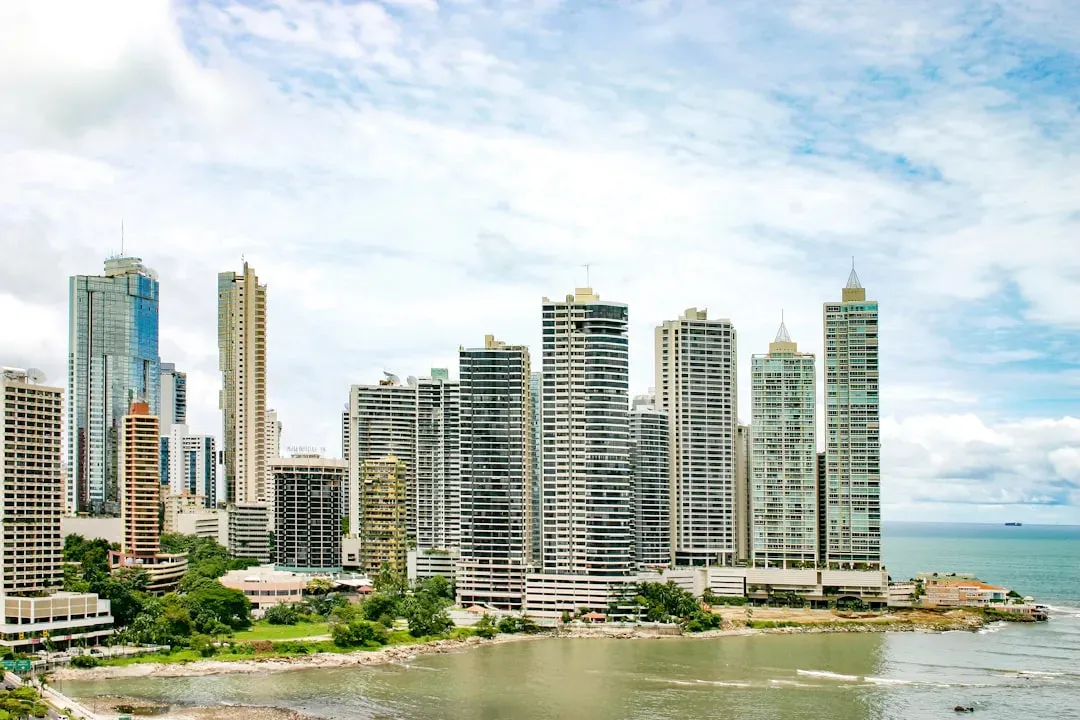
Panama Overview
Panama is a Central American republic at the southernmost tip of the isthmus connecting North and South America, occupying 75,420 km² between Costa Rica and Colombia. A presidential republic under the 1972 Constitution, with José Raúl Mulino serving as President since July 2024. The legal system runs on civil law derived from Spanish and French codes. Panama is a founding member of the United Nations, the Organization of American States, and the Central American Integration System (), and uses the US Dollar as legal tender alongside the symbolic Balboa (pegged 1:1 to USD since 1904). The Panama Canal, expanded in 2016, anchors the economy alongside banking, logistics, and a deep tourism / retiree-immigration sector — GDP reached $86.5 billion in 2025 with IMF projecting 4.1% annual growth through 2027.
On This Page
- 1.Panama Overview
- 1.1How Does Panama Compare?
- 1.2Who does Panama fit?
- 1.3Pros and Cons of Relocating to Panama
- 1.4Panama leads on Residency — WRI 88.0 / 100
- 1.5Panama leads on Retirement — WRI 85.0 / 100
- 1.6Residence
- 1.7Taxes on Personal Income
- 1.8Cost of Living
- 1.9Healthcare System
- 1.10Education System
- 1.11Banking & Finance
- 1.12Cryptocurrency Regulation
- 1.13Real Estate Market
- 2.Frequently Asked Questions
Quick Facts
- Passport Rank: 26
- Visa-Free Destinations: 148
- Capital: Panama City
- Population: 4.57 million (World Bank 2024)
- Area: 75,420 km²
- Currency: Panamanian Balboa (PAB) + US Dollar (USD); PAB pegged 1:1 to USD since 1904
- Official languages: Spanish (official); English widely used in business and Panama Canal Zone
- Religions: Evangelical 55%, Roman Catholic 33.4%, unaffiliated 10.1%, other 1.5%
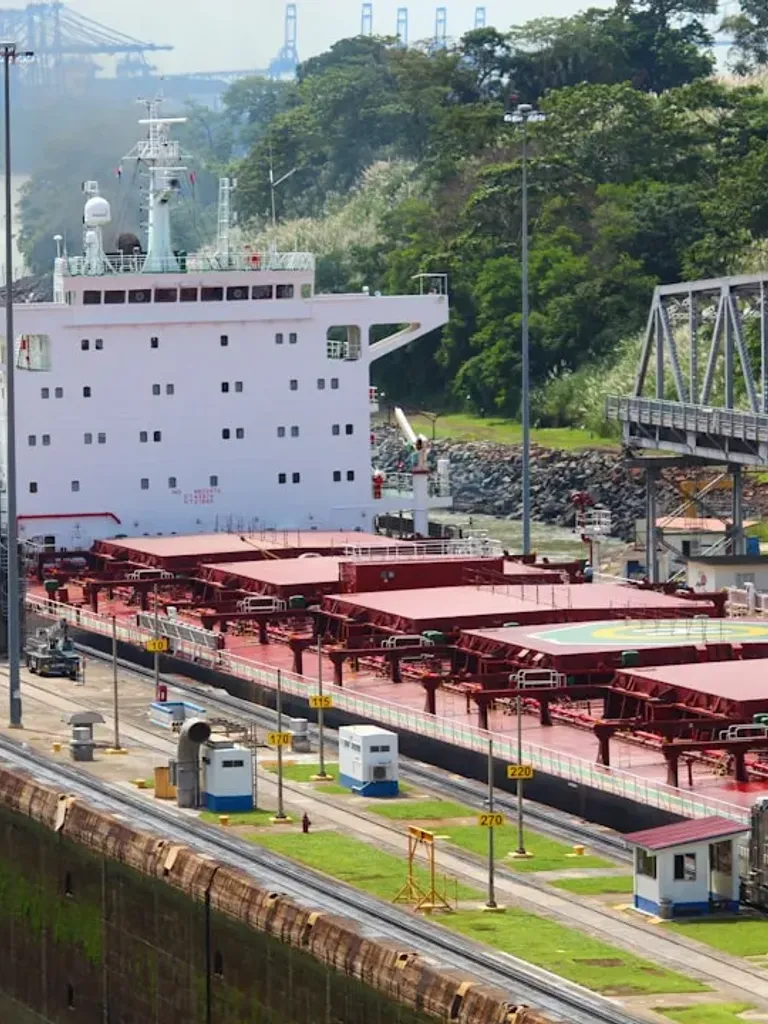
Key Indicators
- GDP (Nominal): $86.5 billion (World Bank 2025)
- Unemployment Rate: 9.5% (INEC Panama 2025)
- Human Development Index: 0.839 (Very High, Rank: 67, HDR 2024)
- GDP per Capita: $19,161 (World Bank 2025)
Safety & Governance
- Global Peace Index (IEP): 2.14 (Rank: 96, GPI 2025)
- Press Freedom Index (RSF): 58.55 (Rank: 53, RSF 2025)
- Corruption Perception (TI): 33/100 (Rank: 114, CPI 2024)
- Gini Coefficient (WB): 49.1 (World Bank, most recent)
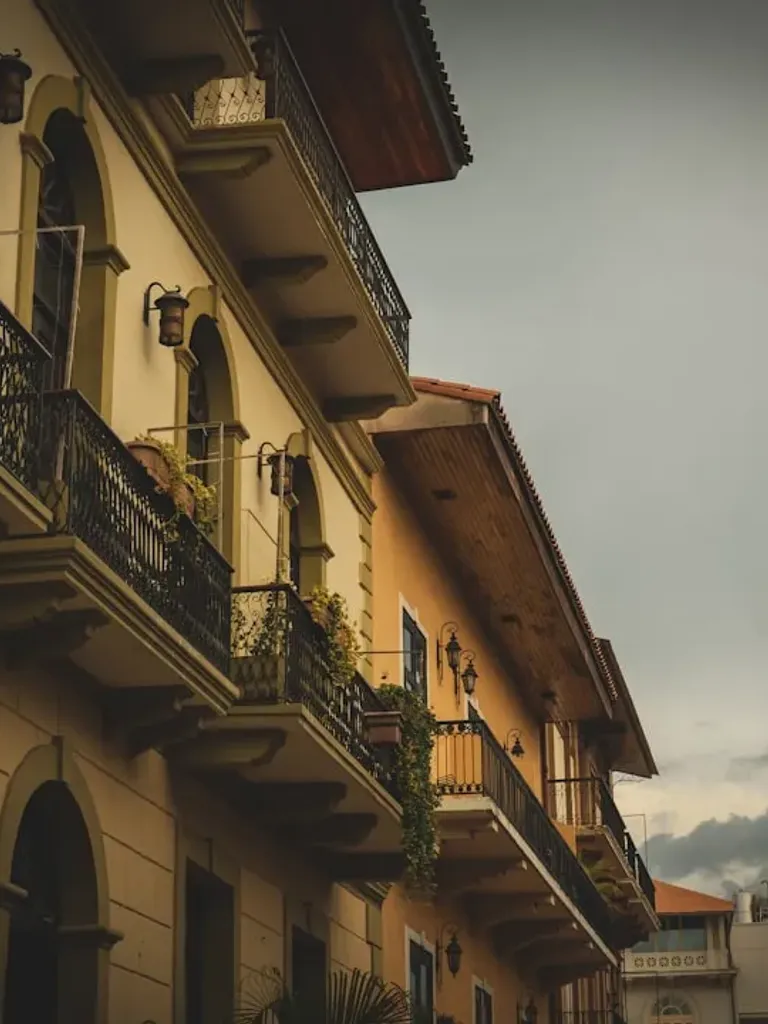
Health & Environment
- PM2.5 Air Pollution: 11.5 µg/m³ (WHO 2024)
- Air Quality Category: Moderate
- ND-GAIN Adaptation Index: 48.7 (Rank: 94, ND-GAIN 2023)
- Life Expectancy: 79.7 years (WHO 2024)
The proposition for an investor or relocator is unusually clean: territorial taxation that exempts all foreign-source income, residency starting at $1,000/month in foreign pension income (the Pensionado Visa — cheapest dedicated retiree visa globally), a Qualified Investor Visa from $300,000 in real estate granting permanent residency in 30-40 days, and a US-dollar economy that eliminates currency risk for North American capital. The cost is also clean: 25% personal income tax on Panama-source income above $50,000, Fitch downgrade to below investment grade in March 2024, Safety score in the lower half of the Latin American peer group, and education infrastructure that is shallow outside Panama City's international schools. Panama does not try to be for everyone — it is clear from the start who it is for.
How Does Panama Compare?
Summary
On the worldpath.ai WRI 2026, Panama (69.7) sits between Portugal (70.1) and Greece (69.2), in a peer group anchored by Japan (70.2) above and Spain (69.0) below. Panama leads the group decisively on Residency, ties with Portugal on Investment, and trails on Safety and Education infrastructure.
How Panama stacks up against its closest peers on the WRI 2026:
Where Panama wins: Panama tops the peer group on Residency at 88.0, well ahead of Greece at 74, Portugal at 72.8, Spain at 68, and Japan at 60. The driver is not subtle: the Pensionado Visa for foreign retirees requires only $1,000/month in lifetime pension income (or $750 if combined with $100,000 property purchase), the Qualified Investor Visa grants permanent residency in 30-40 days from $300,000 in real estate, and the Friendly Nations Visa covers 50+ nationalities under restructured 2021+ rules requiring $200,000+ real estate or Panama employment. Investment at 74.0 ties with Portugal at 72.2 and leads Greece at 66 and Spain at 65 — Panama's US-dollar economy, mature banking sector (recently exited the AML grey list in July 2025 and grey list in October 2023), and territorial tax structure underpin the score. Retirement at 85.0 sits second behind Spain at 88 and ahead of Greece at 79 and Portugal at 74.4.
Where Panama lags: Panama posts the lowest Safety score in the peer group at 74.9, behind Japan at 89, Spain at 85.6, Greece at 80.9, and Portugal at 76. The Global Peace Index 2025 places Panama at rank 96 with a score of 2.14, reflecting Caribbean drug-trafficking transit exposure and elevated property-crime rates in Panama City and Colón. Education at 42.0 is the lowest in the group (Japan 90 leads, Greece 68, Spain 68, Portugal 63.7); no Panamanian university sits in the global top 500, and the international school market is concentrated in a handful of Panama City institutions. Business at 68.0 trails Portugal at 73.6 and Japan at 72; the March 2024 Fitch downgrade to below investment grade reflects fiscal pressures and political fragmentation in the National Assembly. Japan's Education at 90 and Spain's Retirement at 88 mark specific niches Panama does not directly compete on.
Who does Panama fit?
Summary
Panama fits foreign retirees on the $1,000/month Pensionado Visa, investors using the Qualified Investor Visa from $300k real estate, North American HNW seeking USD-denominated relocation, and digital nomads / remote workers leveraging territorial taxation. It does not fit fast-citizenship seekers (5-year naturalization is restrictive in practice), buyers needing top-tier education infrastructure, or anyone allergic to Panama's drug-transit-driven property crime profile.
Right fit:
- Foreign retirees with modest pension income — Pensionado Visa requires $1,000/month in lifetime pension income (or $750 if combined with $100,000 property); +$250/month per dependent; no age minimum; only one day per calendar year required in Panama to maintain residency; territorial tax exempts foreign pensions.
- Investors using the Qualified Investor Visa — Executive Decree 722 (updated by Decree 193): $300,000 in Panamanian real estate, OR $500,000 in stock-market investment via licensed Panama brokers, OR $750,000 in 5-year fixed-term bank deposit; permanent residency in 30-40 days from documentation verification.
- North American HNW seeking USD-denominated relocation — US Dollar is legal tender (PAB pegged 1:1 since 1904), eliminating currency risk; Panama Canal Zone history means deep English-language professional services in Panama City; 3-hour flight to Miami.
- Digital nomads / remote workers — Short-Stay Visa for Remote Workers (Decree 198) since 2021 covers remote workers earning $36,000+ annually; 9-month initial term, renewable once; combines with territorial tax exemption on foreign-source income.
Wrong fit:
- Fast citizenship seekers — Panama requires 5 years of legal residence for naturalization but in practice the citizenship route is highly discretionary, with few annual approvals despite the headline timeline; no investment-to-passport route.
- Buyers requiring deep education infrastructure — no Panamanian university in the global top 500; international school market is concentrated in Panama City (International School of Panama, Balboa Academy, Knightsbridge Schools); secondary-level students bound for European or US universities typically transition abroad.
- Anyone allergic to property-crime exposure — Global Peace Index 2025 rank 96 reflects Caribbean drug-trafficking transit; central Panama City, Colón, and parts of the Atlantic coast show elevated property-crime rates compared to Costa Rica or Uruguay.
- Investors wary of sovereign credit risk — Fitch downgraded Panama to below investment grade in March 2024 citing fiscal pressures; Moody's and S&P maintain investment grade but with negative outlooks; political fragmentation in the National Assembly continues to constrain fiscal reform.
- Anyone needing EU-style social safety net — public healthcare is uneven outside Panama City; pension and unemployment infrastructure is meaningful for citizens but limited for foreign retirees who rely on private supplementation.
Pros and Cons of Relocating to Panama
- 01RetirementCheapest dedicated retiree visa globallyPensionado Visa requires only $1,000/month in lifetime pension income (or $750 with $100k property purchase); +$250/dependent; no age min; only 1 day/year required in Panama; territorial tax exempts foreign pensions; statutory resident discounts of 25-50% on Panama-sourced goods and services.Pensionado $1k/mo retiree
- 02Taxation0% on foreign-source income; 25% on Panama onlyTerritorial taxation: only Panama-source income taxed (0-25% progressive above $50k); all foreign pensions, dividends, capital gains, royalties exempt regardless of residence status; no inheritance tax, no wealth tax, no gift tax.Territorial tax
- 03CurrencyUSD is legal tender (PAB pegged 1:1 since 1904)US Dollar is legal tender alongside the symbolic Balboa (pegged 1:1 since 1904); eliminates currency-conversion friction for North American capital; deep dollarisation since the early 20th century makes Panama unique in Latin America.US Dollar legal tender
- 04InvestmentPermanent residency from $300k real estate, 30-40 daysQualified Investor Visa under Executive Decree 722 (updated by 193): permanent residency in 30-40 days from $300,000 real estate, $500,000 stock-market investment via licensed Panama brokers, or $750,000 in 5-year Panama bank deposit.QI Visa from $300k
- 05BankingFATF cleared 2023, EU AML cleared July 2025Panama removed from FATF grey list October 2023 and EU AML high-risk list July 2025 under Mulino government; International Banking Center (70+ banks) materially upgraded; CRS + FATCA compliant; OECD substance review ongoing post-Panama Papers.FATF + EU AML cleared
- 06MobilityPanamanian passport rank 26 globally, 148 visa-freePanama passport at rank 26 globally in 2026, up from rank 28; visa-free or visa-on-arrival access to 148 destinations including Schengen, the UK, Singapore, Hong Kong, and most of South America; dual citizenship permitted.Top-26 passport, 148 VF
- 07ResidencyFriendly Nations Visa covers 50+ nationalitiesFriendly Nations Visa (restructured 2021) covers 50+ qualifying nationalities including US, Canada, UK, most EU, Australia, Singapore; requires $200,000+ real estate OR Panama employment contract plus 2-year provisional residency period before permanent residency.Friendly Nations Visa 50+
- 01SafetySafety 74.9 — lowest in peer groupGlobal Peace Index 2025 rank 96 (score 2.14) reflects Caribbean drug-trafficking transit exposure and elevated property crime in Panama City and Colón; CPI 2024 rank 114 globally (score 33/100); women's safety in tourist zones generally strong but property crime is meaningful.GPI rank 96, drug transit
- 02Citizenship5-year naturalisation highly discretionaryNaturalisation requires 5 years of legal residence with Spanish proficiency but is highly discretionary in practice — few annual approvals despite the headline timeline; no investment-to-passport route; jure sanguinis routes via Panamanian-born ancestors limited.Citizenship discretionary
- 03EducationEducation score 42 — lowest in peer groupNo Panamanian university in the global top 500; international school market concentrated in Panama City (4-5 schools); MEDUCA public schools deliver mixed outcomes; secondary students bound for top European or North American universities typically transition abroad.Shallow education
- 04StabilityFitch downgraded to below investment gradeFitch Ratings downgraded Panama to below investment grade in March 2024 citing fiscal pressures; Moody's and S&P maintain investment grade with negative outlooks; political fragmentation in National Assembly constrains fiscal reform; 4.1% IMF GDP growth projection 2025-2027 partially offsets.Fitch downgrade Mar 2024
- 05HealthcareSpecialist care concentrated in Panama CityPrivate hospitals in Panama City deliver regional-standard care (Hospital Punta Pacífica is Johns Hopkins International affiliate); outside Panama City system thins materially; complex specialist cases route to Panama City or via 3-hour flights to Miami; mandatory health insurance $1,800-4,500/year.Healthcare PTY-centric
- 06LifestyleAtlantic coast hurricane + Caribbean seismic exposureAtlantic coast (Bocas del Toro, Colón) exposed to peripheral Atlantic hurricane season impacts; Caribbean seismic zone affects Atlantic-facing regions; Panama City and Pacific coast (Coronado, Pedasí) materially lower exposure but humidity year-round.Hurricane / quake risk
- 07ResidencyFriendly Nations Visa restructured in 2021Friendly Nations Visa significantly tightened in 2021: instant permanent residency via bank deposit was replaced by mandatory $200k+ real-estate investment OR Panama employment contract plus 2-year provisional residency period; cost and timeline increased materially for most applicants.Friendly Nations stricter
Panama leads on Residency — WRI 88.0 / 100
Panama posts the highest Residency score in the WRI 2026 peer group at 88.0, well ahead of Greece at 74, Portugal at 72.8, Spain at 68, and Japan at 60. The driver is the breadth and accessibility of Panama's residence-permit menu, administered by the Servicio Nacional de Migración (SNM, migracion.gob.pa) under the Ministry of Public Security. The Pensionado Visa requires only $1,000/month in lifetime pension income — the cheapest dedicated retiree visa globally — and grants immediate permanent residency with significant resident discounts on Panama-sourced goods and services (25% on entertainment, 30% on transit, 50% on hotels). The Friendly Nations Visa, restructured in 2021, covers 50+ qualifying nationalities (including the US, Canada, the UK, most of the EU, and Australia) and requires either $200,000+ in real estate or a Panama employment contract plus a 2-year provisional period before permanent residency. The Qualified Investor Visa under Executive Decree 722 (updated by 193) delivers permanent residency in 30-40 days from $300,000 in real estate, $500,000 in stock-market investment via licensed Panama brokers, or $750,000 in a 5-year fixed-term Panama bank deposit. Short-Stay Remote Worker Visa (Decree 198, since 2021) covers digital nomads earning $36,000+. All routes overlay Panama's territorial taxation, exempting foreign-source income entirely.
Panama leads on Retirement — WRI 85.0 / 100
Panama posts a Retirement score of 85.0, second in the WRI 2026 peer group behind Spain at 88 and ahead of Greece at 79, Portugal at 74.4, and Japan at 74. The proposition combines tax simplicity with infrastructure depth: territorial taxation exempts all foreign pension and investment income from Panamanian tax, the US Dollar is legal tender (eliminating currency-conversion risk for North American retirees), and the Pensionado Visa is the cheapest dedicated retiree visa globally at $1,000/month in lifetime pension income (reducible to $750 with a $100,000 property purchase). Residents on the Pensionado Visa receive statutory discounts on Panama-sourced goods and services — 25% on entertainment, 30% on bus / boat / train transit, 50% on hotels, 25% on restaurants. Climate is tropical year-round; the highlands of Boquete and Volcán in Chiriquí Province deliver temperate climate at altitude (1,200-1,800m) and have become established expat retirement enclaves alongside Panama City, Coronado, and Bocas del Toro. Life expectancy is 79.7 years (WHO 2024), broadly in line with Mediterranean Europe. Healthcare in Panama City matches Latin American regional standards through private hospitals (Hospital Punta Pacífica, affiliated with Johns Hopkins; Hospital Nacional; Hospital Paitilla); complex specialist care may route to the US via 3-hour flights to Miami.
Residence
Panama applies territorial taxation to both residents and non-residents: only Panama-source income is taxed, while all foreign-source income (pensions, investment dividends, capital gains on foreign assets, royalties on foreign IP) is exempt federally. Tax residency triggers on 183 days physically present in Panama in the calendar year, or having Panama as the centre of habitual residence and economic interests. There is no Controlled Foreign Company (CFC) regime; Panamanian-resident individuals are not taxed on the income of their foreign companies. Residence permits are administered by the Servicio Nacional de Migración (SNM, migracion.gob.pa) under the Ministry of Public Security. Permanent residence is granted immediately under the Pensionado, Qualified Investor, and (post-provisional-period) Friendly Nations Visa routes; ordinary naturalisation requires 5 years of legal residence with Spanish language proficiency, but in practice the citizenship route is highly discretionary with few annual approvals despite the headline timeline. The Ministerio de Relaciones Exteriores (mire.gob.pa) handles consular visas and bilateral visa exemption treaties.
Safety sits at 74.9 in the WRI 2026, the lowest in Panama's peer group. The Global Peace Index 2025 places Panama at rank 96 with a score of 2.14, and the Corruption Perceptions Index 2024 places Panama at 33/100 (rank 114 globally) — both reflect Caribbean drug-trafficking transit exposure, elevated property-crime in Panama City and Colón, and the legacy of the 2016 Panama Papers governance failures. Reporters Without Borders 2025 places Panama at rank 53 (score 58.55). Violent crime concentrates around drug-trafficking routes; expats in Panama City Costa del Este, Bocas del Toro, Boquete, and Coronado experience meaningfully lower crime exposure. The trade-off: institutional rule of law improved materially after the FATF grey-list removal in October 2023 and the EU AML grey-list removal in July 2025 under the Mulino government, but property-crime and judicial-speed remain the lived friction points.
Taxes on Personal Income
Panama applies territorial personal income taxation. Residents and non-residents are taxed only on Panama-source income at progressive rates: 0% on the first $11,000, 15% on the bracket from $11,000 to $50,000, and 25% above $50,000. All foreign-source income (foreign pensions, foreign investment dividends, capital gains on foreign assets, royalties on foreign-registered IP) is fully exempt regardless of residence status. There is no capital gains tax on personal Panama-source asset disposals outside the standard income brackets, no inheritance tax, no gift tax, and no wealth tax. Capital gains on Panama real-estate transactions are taxed at 10% of the gain, with a 3% advance withholding on the transaction price (creditable against the final liability). ITBMS (Panama's VAT-equivalent) runs at 7% on most goods and services, with reduced rates on certain essentials. Dividends from Panama-source income are taxed at 10% (5% if from foreign-source business activity within Panama); interest on Panamanian government securities and bank time-deposits is exempt. The effective tax rate on a foreign-pension retiree resident in Panama is 0% federally — the headline draw for the Pensionado Visa relocation market.
Cost of Living
Panama runs a moderate cost of living with significant Panama-City versus regional spread. A single professional in Panama City (Bella Vista, San Francisco, Costa del Este) budgets $2,000-3,200 a month for a one-bedroom rental, utilities, transit / vehicle, and basic groceries; the same lifestyle in Coronado, Boquete, or David runs $1,300-2,200, and in Bocas del Toro or rural Chiriquí $900-1,500. A family of three in central Panama City budgets $4,500-7,500 a month including a two-bedroom rental at $1,500-3,000, transport, groceries, and international school fees ($10,000-25,000/year); in Boquete or Coronado the same family runs $3,200-5,000. Inexpensive restaurant meals average $8-15 per person; Panama City Metro (the only metro in Central America) costs $0.35-0.65 per ride. Mandatory private health insurance for non-citizen residents (essential given public healthcare quality outside Panama City) runs $1,800-4,500 a year per couple. A second-hand mid-range vehicle runs $12,000-22,000 and is the default transit mode outside Panama City. USD is legal tender — no currency-conversion friction for North American capital.
Healthcare System
Panama's healthcare system runs a public-private split through the Caja de Seguro Social (CSS, public) and a deep private hospital sector concentrated in Panama City. Public coverage is open to citizens, permanent residents, and registered workers via CSS contributions; non-CSS expats typically rely on private insurance. Private hospitals in Panama City deliver Latin American regional-standard care: Hospital Punta Pacífica (Johns Hopkins International affiliate), Hospital Nacional, Hospital Paitilla, Centro Médico Paitilla, and Clínica San Fernando. A specialist private consultation runs $50-130, a private hospital day $300-900. Outside Panama City the system thins materially — provincial hospitals handle general medicine and stabilisation, but complex specialist care routes to Panama City or via 3-hour flights to Miami for the highest-acuity cases. Mandatory private health insurance for non-citizen residents runs $1,800-4,500 per year per couple; specialised plans with US hospital coverage run $4,000-9,000. Life expectancy is 79.7 years (WHO 2024), in the upper range for Latin America. Medical tourism is significant, with cosmetic and dental procedures attracting US and Canadian patients at 40-60% discounts to North American pricing.
Education System
Panama runs a Spanish-language public education system through the Ministerio de Educación (MEDUCA), with primary and secondary schooling free for citizens and permanent residents. Public schools deliver mixed outcomes — Panama City and Boquete public schools generally outperform provincial averages, but the system overall ranks below norms. The international school market is concentrated in Panama City: the International School of Panama (IB Continuum, $15,000-25,000/year), Balboa Academy (American + IB, $10,000-19,000), Knightsbridge Schools International (British + IB, $11,000-22,000), and the Crossroads Christian Academy serve the predominant expat demand. Boquete has a smaller but growing international school presence (Boquete International Christian Academy, Cedars International Academy). Secondary-level students bound for European, US, or Canadian universities typically transition abroad for their final years. At university level, no Panamanian institution sits in the global top 500; the Universidad de Panamá and the Universidad Tecnológica de Panamá run the largest undergraduate programmes, with Quality Leadership University and the Florida State University Panama campus offering English-language alternatives. Public schools accept children of any registered resident with no separate fees; medium of instruction is Spanish.
Banking & Finance
Panama's banking system is one of the deepest in Latin America, with the International Banking Center (Centro Bancario Internacional) housing 70+ licensed banks ranging from global Tier-1 (Citi, HSBC, Scotiabank, Banco Santander) to regional and offshore-specialised institutions. The Superintendencia de Bancos de Panamá (SBP) regulates federally; the US Dollar is legal tender (PAB pegged 1:1 since 1904), eliminating currency-conversion friction. Account opening for residents requires residence permit or visa, valid ID, proof of address, and source-of-funds documentation; offshore banking is regulated under the same SBP framework. Foreign credit history does not transfer; expats build local credit from zero. Mortgages for non-citizen residents typically require 25-35% down vs 15-25% for citizens, with fixed 25-30 year rates at 5.5-7.5% (May 2026). Capital mobility is fully unrestricted. Panama was removed from the FATF grey list in October 2023 and the EU AML grey list in July 2025 under the Mulino government — both materially upgrading the international standing of the financial-services sector. and are in force; the financial-services sector remains under ongoing OECD review post the 2016 Panama Papers. Account opening at traditional banks runs 2-6 weeks depending on KYC complexity.
Cryptocurrency Regulation
Panama has positioned itself as a Latin American Web3 jurisdiction through Law 168 of 2022, which was partially vetoed and remains in legislative limbo — comprehensive crypto regulation continues to evolve. In current practice, crypto-assets fall under general civil and tax law: capital gains on crypto held personally are not taxed under Panama's territorial regime (cryptocurrencies are typically classified as foreign-source intangibles when not held through a Panamanian exchange), and crypto-to-crypto swaps are not separately taxed. Crypto-as-payment for goods or services follows standard 7% ITBMS. The Superintendencia de Bancos de Panamá (SBP) and the Superintendencia del Mercado de Valores (SMV) jointly oversee crypto-asset service providers, requiring licensing for exchanges and custodians offering services to Panamanian residents. Bitcoin and major altcoins are legally tradeable through international and licensed Panama venues but are not legal tender. Panama is not a Web3 hub on the order of El Salvador, the , or Switzerland — the regulatory framework is less developed than regional -Caribbean peers, but combined with US-dollar economy + territorial taxation it remains attractive for crypto-focused HNW relocators seeking dollar-denominated Latin American exposure.
Real Estate Market
Foreigners can buy Panamanian residential and commercial property freely under the 1972 Constitution, with full ownership rights and the same fees as Panamanian citizens — except for properties within 10 km of land borders, which require Council of Ministers approval. Acquisition costs include 2% real-estate transfer tax (ITBI) on the higher of consideration or registered cadastral value, 1.5-2.0% notary and registry fees, and a 0.5-1.0% legal-fee allocation. Annual property tax (Impuesto de Inmuebles) runs 0.6-1.0% on the registered value above the $120,000 exemption for primary residence (above $30,000 for secondary properties), though properties qualifying for the Pensionado / Friendly Nations / Qualified Investor visa categories receive 20-year property-tax exemptions under specific programmes. Prime Panama City (Punta Pacífica, Costa del Este, Costa Bella, Marbella, San Francisco) runs $2,500-4,500/m²; outer Panama City and Coronado $1,200-2,500/m². Boquete and Volcán highlands $1,000-2,200/m² for mid-tier mountain-view villas; Bocas del Toro beachfront $1,500-3,500/m². Qualified Investor Visa real-estate path requires $300,000 minimum; Friendly Nations Visa real-estate path requires $200,000 minimum. Gross rental yields run 5-8% in Panama City Centro on long-term lets, 7-12% on short-term Bocas del Toro tourist rentals during peak season. Non-resident mortgage rates 5.5-7.5% fixed at 25-30 year maturity, 25-35% minimum down.


