
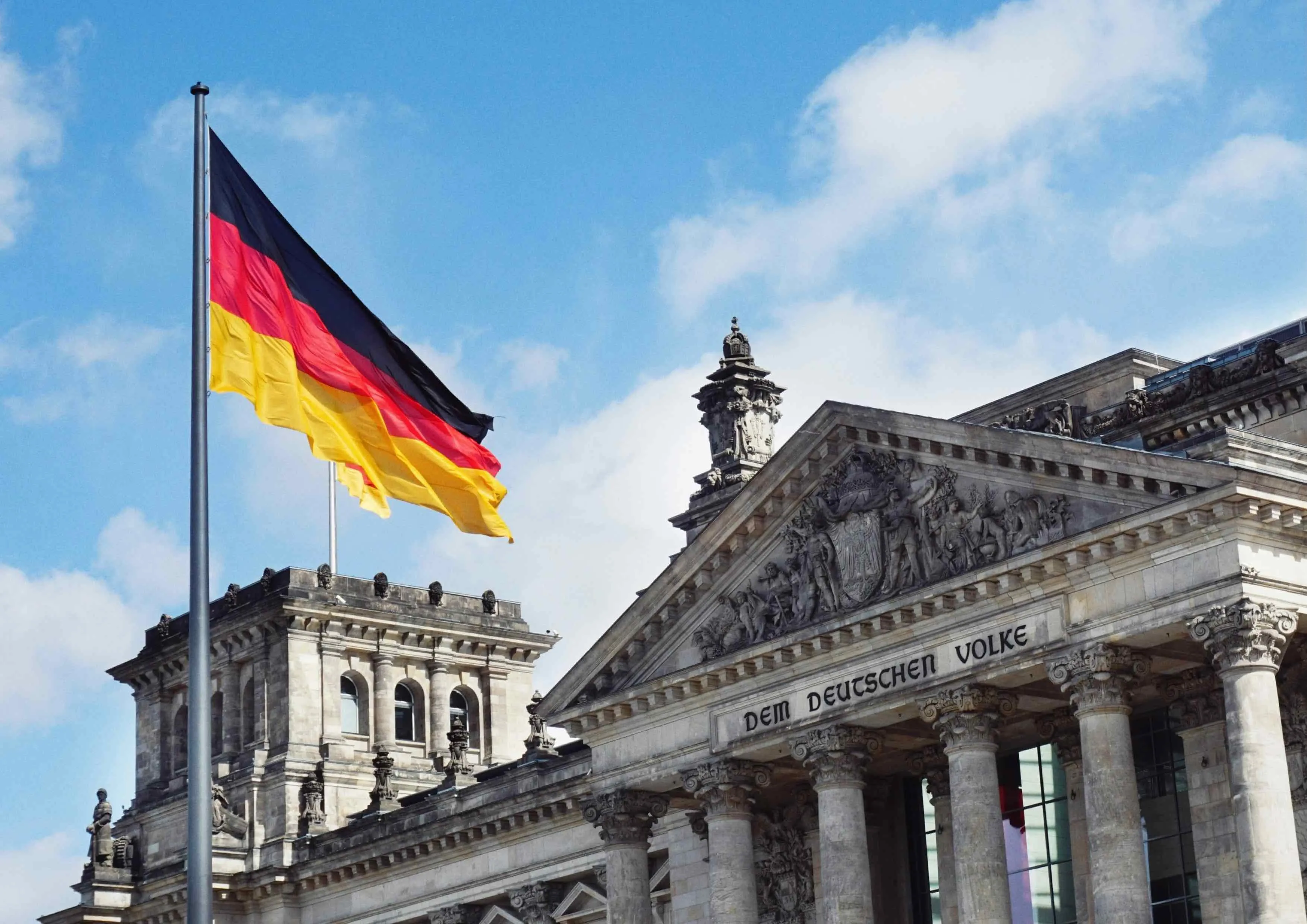
Germany Overview
Germany is the largest economy in Europe and a founding member of the European Union, the eurozone, the , , and the . A federal parliamentary republic of sixteen states, it runs on a civil-law system codified in the 1949 Basic Law and carries an AAA credit rating from all three major agencies — one of a shrinking number of sovereigns that still do. Power sits close to the regions: taxation, policing, and education are shared between the federal government in Berlin and the Länder, and Frankfurt hosts both the European Central Bank and the country's financial centre.
On This Page
- 1.Germany Overview
- 1.1How Does Germany Compare?
- 1.2Who does Germany fit?
- 1.3Pros and Cons of Relocating to Germany
- 1.4Germany leads on Education — WRI 82.0 / 100
- 1.5Germany leads on Safety — WRI 81.0 / 100
- 1.6Residence
- 1.7Taxes on Personal Income
- 1.8Cost of Living
- 1.9Healthcare System
- 1.10Education System
- 1.11Banking & Finance
- 1.12Cryptocurrency Regulation
- 1.13Real Estate Market
- 2.Frequently Asked Questions
Quick Facts
- Passport Rank: 4
- Visa-Free Destinations: 185
- Capital: Berlin
- Population: 83.5 million
- Area: 357,114 km²
- Currency: Euro (EUR)
- Official languages: German
- Religions: Roman Catholic 24%, Protestant 22%, Muslim 4%, other 5%, unaffiliated 45%
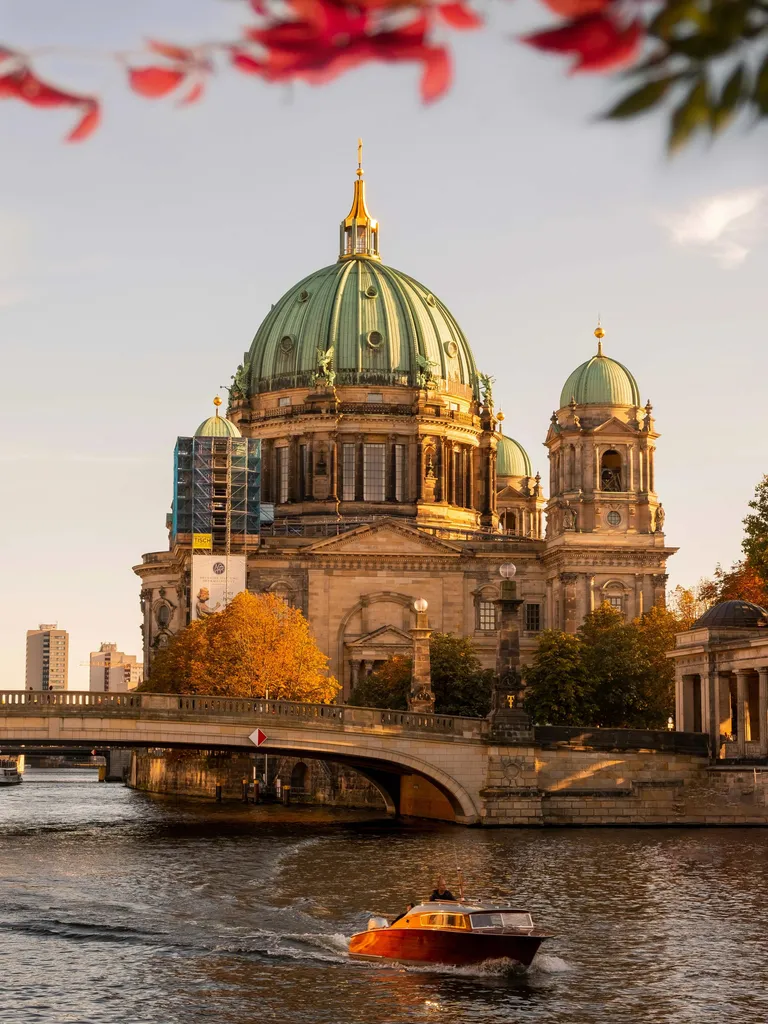
Key Indicators
- GDP (Nominal): $4.66 trillion (World Bank, 2024)
- Unemployment Rate: 6.4% (2026)
- Human Development Index: 0.959 (Very High, HDR 2025)
- GDP per Capita: $56,100 (World Bank, 2024)

Safety & Governance
- Global Peace Index (IEP): 1.533 (Rank: 20, GPI 2025)
- Press Freedom Index (RSF): 82.17 (Rank: 14, RSF 2026)
- Corruption Perception (TI): 77/100 (Rank: 10, CPI 2025)
- Gini Coefficient (WB): 30.1 (Eurostat, 2023)
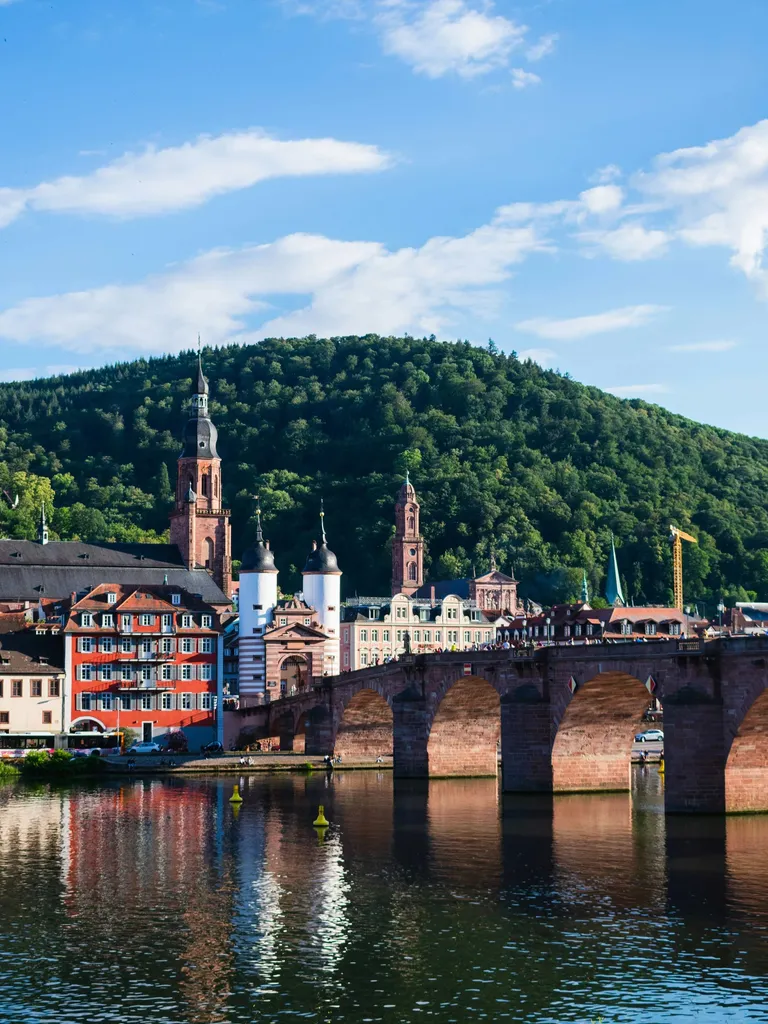
Health & Environment
- PM2.5 Air Pollution: 11 µg/m³ (2023)
- Air Quality Category: Good
- ND-GAIN Adaptation Index: 69.0 (Rank: 9, ND-GAIN 2024)
- Life Expectancy: 80.9 years (Destatis, 2024)
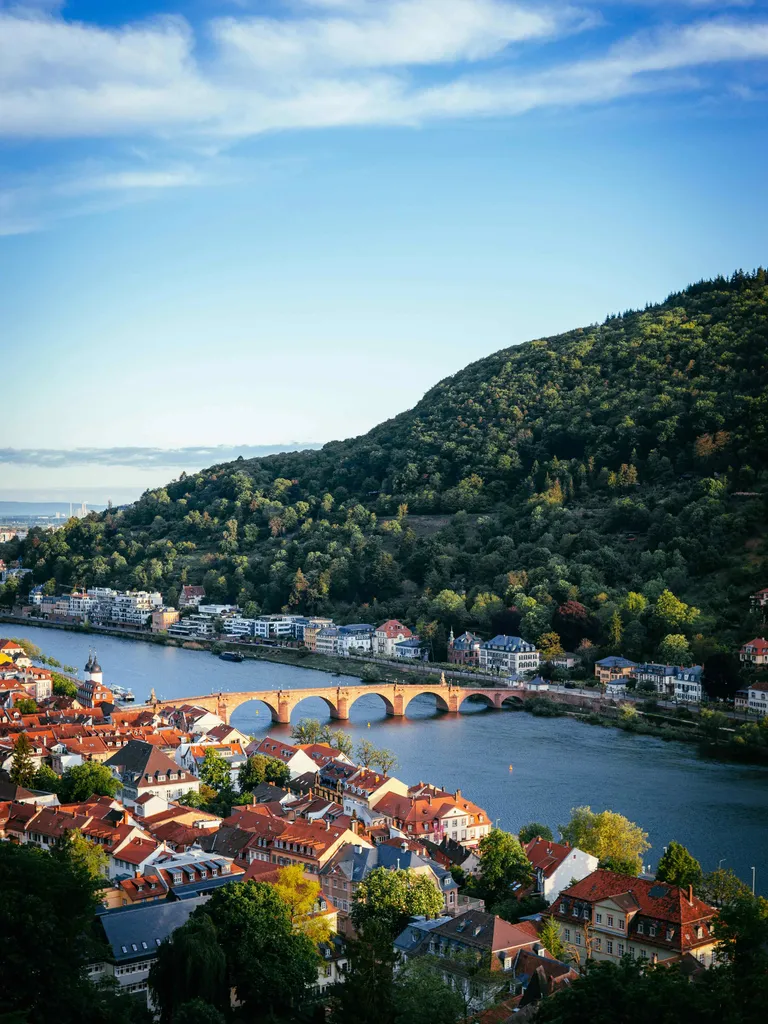
The proposition for a relocator is the inverse of the Mediterranean offer. There is no golden visa, no retiree route, and no flat-tax regime for new arrivals; residence is earned through work, study, or building a business, and income is taxed worldwide at rates near the top of the OECD. What Germany gives back is a deep labour market, a recently liberalised skilled-migration system, and — since June 2024 — a five-year path to citizenship that finally allows dual nationality. Germany does not try to be for everyone; it is clear from the start who it is for.
How Does Germany Compare?
Summary
Germany (66.8) sits between Antigua and Barbuda (68.5) and Cyprus (66.6) on the WRI 2026, with Spain (69.0) above and Vanuatu (63.8) below. Germany leads the peer group on Education and posts the second-highest Safety score, but trails on every dimension tied to capital-driven relocation: Investment, Residency, and Retirement all sit near the bottom of the group. Germany is built to be lived in, not to be relocated to on favourable terms.
How Germany stacks up against its closest peers on the WRI 2026:
Where Germany wins: Germany leads the peer group in Education at 82.0 — ahead of Spain at 68.0, Antigua and Barbuda at 58.0, Cyprus at 58.0, and Vanuatu at 22.0 — driven by tuition-free public universities open to international students and three institutions ranked in the global top 100. Safety at 81.0 places Germany second in the group, behind Vanuatu at 89.0 and Spain at 85.6 but ahead of Cyprus at 69.0 and Antigua and Barbuda at 62.0; the country ranks 20th globally on the 2025 Global Peace Index and 15th on the 2024 Corruption Perceptions Index (75/100), with homicide near 0.9 per 100,000. Citizenship at 70.0 leads Cyprus at 45.0 and Spain at 50.0, and trails Antigua and Barbuda at 82.0 and Vanuatu at 78.0; the June 2024 reform cut naturalisation to five years and now permits dual nationality, making Germany the strongest citizenship path in the peer group.
Where Germany lags: Retirement at 51.0 is the lowest score in the group — behind Spain at 88.0, Antigua and Barbuda at 78.0, Cyprus at 76.0, and Vanuatu at 52.0. Germany offers no retiree visa, no pensioner tax break, and no flat-tax regime for foreign passive income; worldwide taxation applies from day one. Residency at 56.0 trails Cyprus at 72.0, Antigua and Barbuda at 69.0, Spain at 68.0, and Vanuatu at 65.0: every peer in the group operates either a golden visa, a citizenship-by-investment route, or a passive-income residence path, none of which Germany offers. Investment at 69.0 is below Cyprus at 78.0, Vanuatu at 72.0, and Antigua and Barbuda at 71.0, though it leads Spain at 65.0; the absence of a stock-exchange depth comparable to peers and no investor visa route weighs the score down. Business at 60.0 is the second-lowest in the group, trailing Cyprus at 65.0, Antigua and Barbuda at 64.0, Spain at 62.0, and only ahead of Vanuatu at 55.0 — a counter-intuitive result explained by bureaucratic friction, slow immigration offices, and near-top-of-OECD tax rates that offset Germany's deep labour market and institutional strength.
Who does Germany fit?
Summary
Germany fits people who intend to work, build, or study, and who value institutional stability over tax efficiency. It is a poor fit for anyone trying to buy a residence, shelter income, or retire in the sun.
Right fit:
- Skilled professionals and specialists — the , now from about $53,000 in shortage occupations, plus a 21-month fast track to permanent residence.
- Founders and operators — the §21 self-employment permit for a business that meets a regional economic need, with no fixed capital threshold.
- Career-track migrants who want a passport — five-year naturalisation with dual nationality permitted since June 2024.
- Graduates and job-seekers — the points-based (), launched in 2024, gives twelve months in-country to find qualifying work.
Wrong fit:
- HNW investors buying residence — Germany runs no golden visa and no citizenship-by-investment; capital alone confers no status.
- Foreign retirees — there is no retirement or passive-income visa, and pensions are taxed under the standard regime.
- Anyone optimising for tax — worldwide taxation, a 45% top rate, and an exit tax on substantial shareholdings.
- Remote workers wanting a quick base — there is no dedicated digital-nomad visa.
- Relocators who won't learn the language — most residence steps and naturalisation require German, for a passport.
Pros and Cons of Relocating to Germany
Germany leads on Education — WRI 82.0 / 100
Germany leads on Education with a WRI score of 82.0, and the reason is structural: globally ranked higher education that costs almost nothing. Public universities charge no tuition to anyone, including non-EU students, in fifteen of the sixteen states; only Baden-Württemberg asks non-EU students for about $1,700 a semester. Three universities inside the global top 100 (the Technical University of Munich, LMU Munich, and Heidelberg) anchor the system, and the dual vocational track (Ausbildung) routes school-leavers into paid apprenticeships that feed a high-skill labour market. For relocating families, the international-school market is deep: roughly 100 schools across the major cities offer IB, British, and American curricula, with primary fees from about $8,000 to $37,000 a year. The honest caveat is the public school itself: it teaches in German, and the country's results in the 2022 international assessments fell to record lows, so expat children face either full immersion or private fees. Patience with the language is the price of the free system.
Germany leads on Safety — WRI 81.0 / 100
Germany leads on Safety with a WRI score of 81.0, and it is the kind of safety that stops worrying you the moment you arrive. The country ranks 20th of 163 for peacefulness (2025), 10th of 180 for clean government (2025), and 6th of 143 on rule of law — a combination of low violent crime, reliable courts, and policing that is present without being heavy. Intentional homicide runs near 0.9 per 100,000, an order of magnitude below the United States, and the deep institutional layer (an independent judiciary, a free press ranked 14th, a federal structure that disperses power) is what actually underwrites day-to-day security. The trade-off is real and worth stating: big-city petty crime around main stations is a genuine nuisance, and the politics have grown tense, with a snap federal election in 2025 and a sharper edge to the immigration debate. Neither changes the underlying picture, but both are visible to anyone who lives here.
Residence
Residence in Germany is organised around work, not capital. A residence permit (Aufenthaltstitel) flows from a job, a degree, a family , or a business that meets a regional economic need under §21 of the — there is no investor or passive-income route. The most-used channels are the EU Blue Card, now from about $59,000 in salary (roughly $53,000 in shortage occupations such as IT, engineering, and healthcare), and the points-based Opportunity Card, which gives a qualified job-seeker twelve months in-country. Tax residency is separate from immigration status: keeping a home available in Germany, or simply being present for more than six months, triggers taxation on worldwide income. There is no Singapore-style forced-savings fund, but employees pay into mandatory pension, health, unemployment, and long-term-care insurance, split with the employer. Permanent residence follows after five years for most, or as little as 21 months for Blue Card holders with B1 German. One catch for the wealthy: an exit tax on shareholdings of 1% or more, extended in 2025 to investment funds and ETFs, can follow you out the door.
Safety is the other half of the residency case, and it holds up. Germany ranks among the twenty most peaceful countries in the world; violent crime is low by large-economy standards, and the practical experience — walking home late, putting children on public transport alone, trusting that an emergency call is answered — matches the statistics. Women report feeling safe in most cities, with the usual caveats around nightlife districts and a handful of main-station areas in Berlin, Frankfurt, and Cologne. The friction is administrative, not physical: local immigration offices are slow, appointments can take months, and almost everything official happens in German. The country is safe to live in, but it is not easy to settle into.
Taxes on Personal Income
Personal income tax is progressive, running from 14% to a 42% rate that begins around $81,000 and a 45% top rate from about $323,000. A tax-free allowance of roughly $14,000 shelters the first slice of income. A 5.5% solidarity surcharge, abolished for most taxpayers in 2021, still applies to high earners, to all investment income, and to companies; church members add a voluntary 8 to 9%. Investment income is taxed separately at a flat 26.375%, and there is no annual wealth tax — suspended since 1997 and not revived. Inheritance and gift tax run from 7% to 50% by relationship, though a surviving spouse is exempt up to about $582,000 and each child up to $465,000. Foreign-sourced income is taxed because residents are taxed on worldwide income. An employee earning $500,000 faces an effective income-tax-and-surcharge burden of nearly 40%, broadly in line with France and well above Switzerland.
Cost of Living
Germany is mid-priced by Western European standards, but the spread between cities is wide and worth planning around. Munich is the most expensive place to live: a one-bedroom in the centre runs about $1,700 a month and citywide purchase prices clear $9,500 per square metre. Berlin is cheaper at roughly $1,500 for the same flat, and eastern cities such as Leipzig fall to about $800. A single professional should budget around $1,200 to $1,300 a month beyond rent; a family of three, two to three times that. Public transport is a genuine bargain — the nationwide Deutschlandticket covers all local and regional services for about $75 a month. Utilities run high, near $350 a month for an average apartment, and health insurance is a major line item rather than an afterthought: statutory contributions reach 17.5% of gross income up to the ceiling. Germany has no domestic-helper culture; that cost simply does not exist here.
Healthcare System
Healthcare is the rare corner of German officialdom that works smoothly from day one. Germany runs a universal, insurance-based system that covers roughly 90% of residents through statutory funds (GKV) and the rest through private insurance (PKV). Anyone employed or self-employed in Germany is covered from the first day; statutory contributions are about 17.5% of gross income, split with the employer up to an income ceiling near $81,000. Employees earning above roughly $90,000 a year, along with the self-employed and civil servants, may opt into private cover, where premiums run about $400 to $750 a month and buy faster specialist access and private rooms. Out-of-pocket exposure is deliberately small: prescription co-pays are capped at about $12 an item, and total co-payments cannot exceed 2% of household income in a year. The trade-off is queueing — statutory patients wait longer for elective specialist appointments than private ones, a gap most residents notice but few find serious.
Education System
Education in Germany runs on two parallel tracks. The public system is free and compulsory for every child resident in the country, regardless of nationality or visa status (homeschooling is not allowed), but it teaches in German, and integration support for non-German-speaking children typically tops out around B1. For families who want continuity, the international sector is well developed: about 100 international schools, some 80 offering the IB, cluster around Munich, Frankfurt, Berlin, and Hamburg, with annual fees of roughly $8,000 to $37,000 at primary level and $16,000 to $40,000 at secondary. Higher education is the system's headline: public universities charge no tuition, even to non-EU students, in every state but Baden-Württemberg, which asks non-EU students for about $1,700 a semester. Access does not depend on immigration status; a child on a dependent permit attends public school on the same terms as a citizen, and university admission turns on grades and German-language proficiency, not residence category. The catch is always the language.
Banking & Finance
Opening a bank account is straightforward in principle and slow in practice. A residence registration () and a tax ID are usually enough to open a current account, and digital banks such as N26 have made onboarding faster than the incumbents (Deutsche Bank, Commerzbank, and the regional savings banks, the Sparkassen). There are no exchange controls — the euro moves freely — but business accounts for foreign-owned companies face heavier scrutiny and can take weeks. Foreign credit history does not transfer; new arrivals build a domestic SCHUFA score from zero, which shapes everything from phone contracts to mortgage terms. Foreigners can borrow to buy property, typically with at least a 20% deposit and a small rate premium over residents; fixed rates in 2026 sit around 3.5% to 4% for a ten-year term. Germany applies standard EU anti-money-laundering and reporting, supervised by BaFin and the Bundesbank under the European Central Bank. The system is conservative, which cuts both ways.
Cryptocurrency Regulation
Germany regulates crypto through BaFin under the EU's Markets in Crypto-Assets framework (MiCA), which became fully binding at the end of 2025; the national implementing laws, FinmadiG and KMAG, give BaFin licensing and enforcement powers over any crypto-asset service provider operating in the country. The headline for individuals is the tax treatment, which is among the most favourable in Europe: privately held crypto sold after a one-year holding period is completely tax-free, with no cap on the gain. Sell inside a year, and the gain is taxed at your personal income rate, but only if total private-sale gains pass a small annual exemption of about $1,200. Staking and lending do not extend the one-year clock — the federal finance ministry confirmed this in 2022 and reaffirmed it in 2025 — though staking rewards are taxed as income when received. The combination of clear licensing and a tax-free long-term exit makes Germany a serious base for crypto holders, not a haven for quick speculation.
Real Estate Market
Germany places no restrictions on foreign buyers; a non-resident can purchase an apartment or house on the same terms as a citizen. The friction is in the transaction costs. A property transfer tax (Grunderwerbsteuer) set by each state runs from 3.5% in Bavaria to 6.5% in states like North Rhine-Westphalia and Brandenburg, on top of notary and registry fees near 1.5% and, where an agent is involved, a buyer's commission up to about 3.6%. All in, closing costs of 8% to 12% are normal. Prices are steep in the south: Munich averages about $9,500 per square metre, with Berlin nearer $6,300 and eastern cities well below that. Gross rental yields are correspondingly thin, around 3.4% nationally, though Berlin and Leipzig reach toward 5%. An annual property tax (Grundsteuer), recalculated under a nationwide reform that took effect in 2025, is modest by international standards. The structural feature to understand is tenant protection: rent controls (Mietpreisbremse) and strong eviction rules make Germany a renter's country, which is exactly why most Germans rent for life.


